


I lost 75,000 NGN on a single EUR/USD trade because I misread a candlestick.

Olumide Adeyemi
Perintis Dagangan Afrika Barat ·  Nigeria
☕ 12 minit baca
Apa yang akan anda pelajari:
- 1What Exactly Is a Candlestick?
- 2The Anatomy of a Candle: Reading Market Sentiment
- 3Essential Candlestick Patterns Every Nigerian Trader Must Know
- 4Common Mistakes Nigerian Traders Make (And How to Avoid Them)
- 5Putting It All Together: A Simple Trading Plan
- 6Brokers and Platforms: Setting Up Your Charts in Nigeria
- 7Final Thoughts: Candlesticks Are Your Foundation
I lost 75,000 NGN on a single EUR/USD trade because I misread a candlestick. The chart showed a long green candle, and I thought it was pure bullish strength. I bought in, only to watch the price reverse and wipe out my position in the next hour. I didn't understand that the long upper wick was screaming 'selling pressure.' That painful lesson cost me a month's savings, but it taught me that knowing the real meaning of candlesticks in forex isn't optional, it's survival. For us trading in Nigeria, where market moves can be sharp and opportunities fleeting, this is your foundation.
Forget the fancy terms for a second. A candlestick is just a story. It tells you what happened to the price of a currency pair, like EUR/USD or GBP/NGN, during a specific chunk of time. That chunk could be one minute, one hour, one day - you set it on your chart.
Each candle packs four crucial pieces of information into one visual snapshot: the opening price, the closing price, the highest price, and the lowest price for that period. The main block in the middle is called the 'body.' The thin lines poking out the top and bottom are the 'wicks' or 'shadows.'
Here’s the simple color code you need to burn into your memory:
- Green (or white) body: The price closed HIGHER than it opened. Buyers were in control for that period. The bottom of the body is the open, the top is the close.
- Red (or black) body: The price closed LOWER than it opened. Sellers won the battle. The top of the body is the open, the bottom is the close.
The wicks show the full drama - the extreme highs and lows the price reached before settling at the close. A long upper wick means buyers pushed the price up, but sellers smashed it back down. A long lower wick is the opposite.

Example: Let's say you're looking at a 1-hour candle for USD/NGN. The body is red. It opened at 1450.00, rallied to a high of 1460.00 (upper wick), crashed to a low of 1440.00 (lower wick), and closed at 1445.00 (bottom of the red body). In one glance, you see a failed rally and strong selling pressure.
This is the basic language. Mastering the meaning of candlesticks in forex starts with seeing these stories clearly, without the noise.
Now, let's get into the good stuff. The shape and size of a candle tell you who's winning the fight between buyers and sellers. This is where you start to feel the market's pulse.
Long Bodies Show Conviction
A candle with a long green body and tiny wicks is a stampede of buyers. They came in, took control, and pushed the price much higher by the close. No significant rejection. A long red body is the same story for sellers. When you see a series of these, you're looking at a strong trend. I once rode a trend in XAU/USD (gold) by simply following a run of long green daily candles, banking about 120 pips over three days.
Long Wicks Show Rejection and Indecision
This is what cost me that 75k. A long wick is a price extreme that was rejected. A candle with a small body but a very long upper wick (a 'shooting star' if it's at the top of a move) tells you buyers tried to push higher, but sellers aggressively defended that level and won by the close. The price got slapped down. The opposite, a long lower wick (a 'hammer'), shows sellers tried to push lower but buyers absorbed all that selling and pushed the price back up.
Small Bodies (Spinning Tops) Mean Indecision
When the body is small and centered with wicks on both sides, it means neither buyers nor sellers could gain the upper hand. The open and close were nearly the same. This often happens before a big move, as the market decides which direction to break. Don't trade during these periods; wait for the breakout.

Warning: Never look at a single candle in isolation. A long green candle in the middle of a strong downtrend is often a 'bull trap,' a brief rally that sucks in buyers before the fall continues. Context from the surrounding candles is everything. This is a core principle of any solid swing trading approach.

💡 Petua Winston
A candlestick shows you what DID happen, not what WILL happen. Trade the reality of the price action, not your hope for what comes next.
“A long wick is a price extreme that was rejected. It's the market saying 'not here, not now.'”
Single candles give you sentiment. Groups of candles form patterns that can signal potential reversals or continuations. You don't need to know 50 patterns. Know these five deeply.
1. The Doji: The Ultimate Standoff
A Doji has virtually no body - the open and close are identical. It looks like a cross or a plus sign. This is pure market indecision. When you see a Doji after a strong trend, pay attention. It often signals exhaustion and a potential reversal. I missed a major turn in GBP/USD once because I ignored a Doji at a key resistance level.
2. The Hammer and Hanging Man
These look identical - a small body at the top of the trading range with a long lower wick that's at least twice the body's height. The difference is the trend.
- Hammer: Appears at the bottom of a downtrend. It signals a potential bullish reversal. Sellers drove prices down, but buyers stepped in forcefully and pushed it back to near the open.
- Hanging Man: Appears at the top of an uptrend. It's a warning of a potential bearish reversal. It says the rally is tired.
3. The Engulfing Pattern
This is a powerful two-candle reversal signal. A bullish engulfing pattern happens in a downtrend: a small red candle is followed by a larger green candle that completely 'engulfs' the body of the previous red candle. It shows buyers have completely overwhelmed the prior sellers. The bearish version is the opposite at the top of an uptrend.
4. The Morning and Evening Star
These are three-candle patterns. A Morning Star is a bullish reversal at a bottom: a long red candle, a small-bodied candle (like a Doji) that gaps down, then a long green candle that closes well into the first red candle's body. It shows selling pressure, indecision, then strong buying. The Evening Star is the bearish counterpart at a top.
5. The Pin Bar (A Personal Favorite)
This isn't a formal Japanese name, but traders love it. It's a single candle with a very long wick and a small body at the opposite end (like a hammer or shooting star). It's a pure rejection candle. I've placed some of my best trades off pin bars at clear support and resistance levels. They give you a clear stop-loss level (just beyond the tip of the wick).
Remember, these patterns are probabilities, not guarantees. Always confirm with other factors like a key support/resistance level or an RSI indicator reading.
I've made these, my friends have made these. Let's save you the money.
Mistake 1: Chasing Tails (Trading Every Pin Bar or Doji). You'll see a hammer on the 5-minute chart and immediately jump in. The problem? It's in the middle of nowhere, with no support. Patterns need context. Only trade them at significant levels where the market is likely to pause or reverse.
Mistake 2: Ignoring the Trend. The most reliable candlestick patterns are those that align with the higher timeframe trend. A bullish engulfing pattern in a strong daily uptrend is a great buy-the-dip signal. The same pattern in a strong downtrend is more likely to fail. Always know the bigger picture.
Mistake 3: Not Understanding the Spread. When you're looking at candles on a low timeframe (like 1-minute or 5-minute), the broker's spread can distort what you see. A candle might close looking bullish, but the actual bid price (where you sell) might already be in negative territory due to the spread. This is especially crucial for scalping strategy. Choose a broker with tight, consistent spreads like Pepperstone or IC Markets.
Mistake 4: No Risk Management. You spot a perfect evening star pattern. You go all in. The pattern fails. Now you're facing a significant loss. A candlestick pattern is a signal for an entry, not a reason to abandon your position size calculator. Always use a stop-loss.

Pro Tip: Before you risk real Naira, practice identifying these patterns on a demo account. Go back on historical charts for USD/NGN or EUR/USD and label every hammer, doji, and engulfing pattern you see. Then see what happened next. This builds pattern recognition for free.
💡 Petua Winston
The most important candle is often the one that closes beyond the high or low of the previous 3-5 candles. That's true momentum, not just a wick.
“The goal isn't to predict the future with a single candle. The goal is to understand the ongoing auction between buyers and sellers.”
Theory is useless without application. Here’s a basic, repeatable plan using candlesticks.
Step 1: Find the Trend. Look at the daily chart. Are the candles making higher highs and higher lows (uptrend) or lower highs and lower lows (downtrend)? Use moving averages if it helps. Only look for trades in the direction of the daily trend. It increases your odds.
Step 2: Identify a Key Level. Zoom into the 4-hour or 1-hour chart. Find a clear level of support (where price bounced up before) or resistance (where price fell from before). These are the battlegrounds where candlestick patterns matter most.
Step 3: Wait for the Pattern. As price approaches your key level, switch to the 1-hour or 15-minute chart. Wait for a reversal candlestick pattern to form. A pin bar, a bullish engulfing, a hammer. The pattern shows the battle at the level is turning.
Step 4: Enter and Manage the Trade.
- Buy Entry: For a bullish reversal at support, place a buy order a few pips above the high of the bullish reversal candle (e.g., the top of the hammer's wick).
- Sell Entry: For a bearish reversal at resistance, place a sell order a few pips below the low of the bearish reversal candle.
- Stop-Loss: Place your stop-loss just beyond the extreme of the pattern's wick. If it's a hammer at support, put your stop below the bottom of the hammer's long wick.
- Take Profit: Aim for a risk-reward ratio of at least 1:2. If your stop-loss is 50 pips away, your take-profit target should be at least 100 pips away, preferably at the next logical resistance or support level.
My Example: On the EUR/USD daily chart, price was in an uptrend and pulled back to a previous support level around 1.0850. On the 4-hour chart, a clear bullish engulfing pattern formed. I entered a buy at 1.0865 (above the engulfing candle), stopped at 1.0830 (below the pattern), and took profit at 1.0965. Risk: 35 pips. Reward: 100 pips.
This plan forces discipline. You're not just reacting to every candle; you're waiting for the right story at the right place.
Executing precise entries and managing multiple take-profit levels off candlestick patterns is smoother with tools that integrate directly into your MT5 platform.
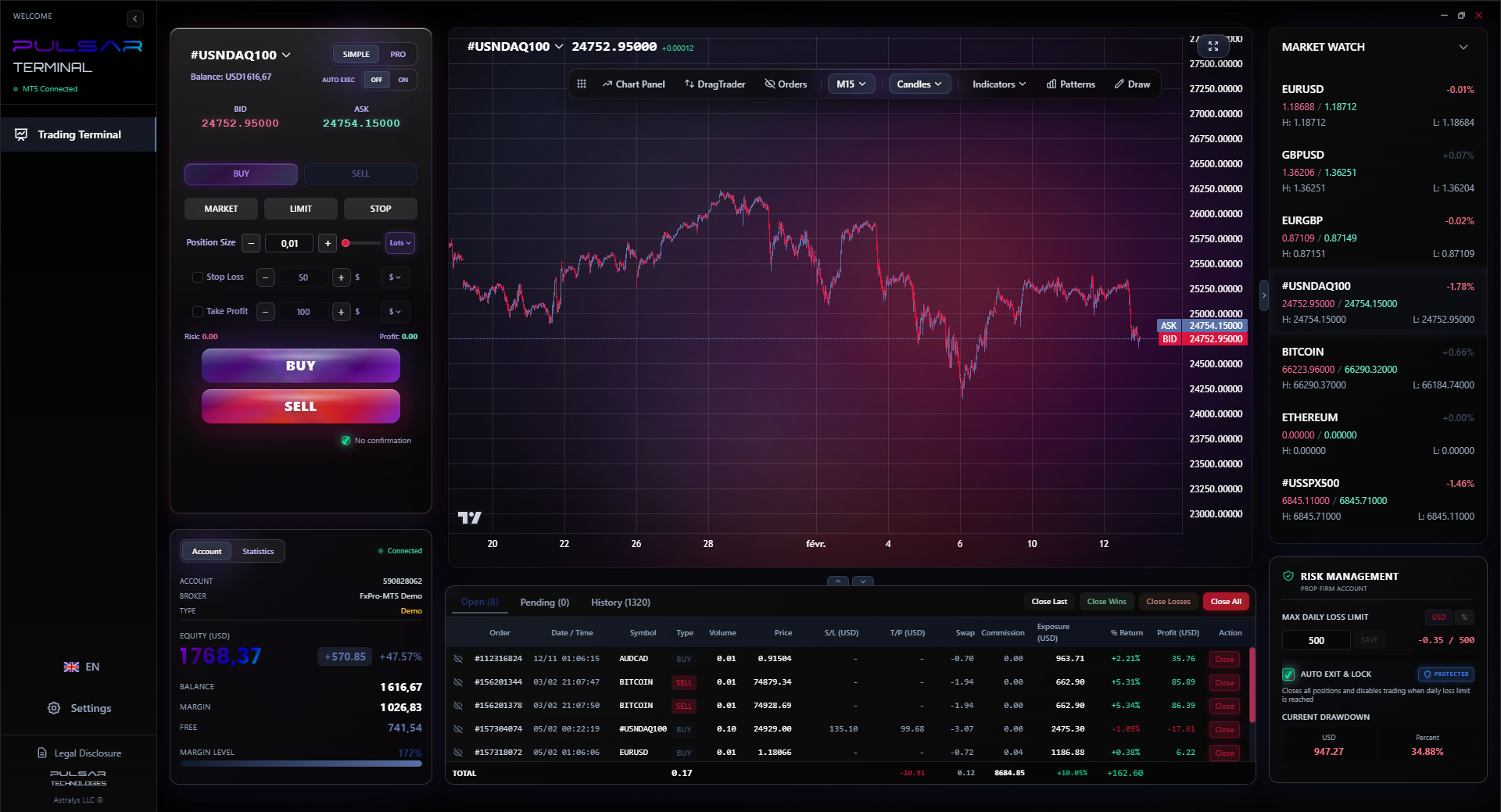
You need a reliable broker and a good platform to see these candles clearly. For Nigerian traders, the landscape is dominated by international brokers, as local specific regulation is still developing.
Choosing a Broker: Look for two things: solid international regulation (like FCA, ASIC, CySEC) and reliable Naira deposit/withdrawal options. High use might be tempting, but it's a double-edged sword that can lead to a margin call fast.
| Broker | Key Feature for Nigerian Traders | Min. Deposit (Approx.) | Good For |
|---|---|---|---|
| XM | Very low minimum deposit, great for starting small. | $5 | Beginners testing strategies. |
| Exness | Offers NGN accounts, unlimited use (use with extreme caution). | $10 (Standard) | Traders wanting local currency accounts. |
| IC Markets | Raw spreads, excellent execution speed. | $200 | Serious scalpers & day traders. |
| Pepperstone | Tight spreads, regulated via CMA Kenya for African clients. | No official min. | All traders seeking low-cost access. |
Trading Platforms:
- MetaTrader 4 (MT4) / MetaTrader 5 (MT5): The industry standard. Every broker offers it. It's where you'll do 90% of your candlestick analysis. You can customize candle colors, chart timeframes, and add indicators like the MACD indicator for confirmation.
- Broker Platforms: Some, like XTB's xStation, are very user-friendly. But MT4/MT5 is universal.
Payment Methods: You'll typically fund your account in USD or EUR, but brokers support local bank transfers, USSD, and fintech wallets like Flutterwave for Naira deposits (which are converted). Always check the conversion rates and fees.
💡 Petua Winston
If you can't immediately see the story a candle is telling, stay out. Confusion is the market telling you it's not ready to give you its money.
“I lost 75,000 NGN because I didn't understand that the long upper wick was screaming 'selling pressure.'”
The meaning of candlesticks in forex is the alphabet of the trading language. You can't write a sentence without knowing your letters. They won't give you a 100% win rate - nothing will. But they will give you a massive edge over traders who are just guessing.
Start simple. Spend a month just watching charts. Don't even trade. Just identify bodies, wicks, and the three main patterns: Doji, Hammer/Shooting Star, and Engulfing. See how price reacts at levels.
The goal isn't to predict the future with a single candle. The goal is to understand the ongoing auction between buyers and sellers. Are they aggressive (long bodies)? Are they hesitant (small bodies)? Did they try to push but got rejected (long wicks)?
Combine this knowledge with sound risk management. That's how you build consistency. That's how you protect your capital in this volatile, opportunity-rich market we trade in. Now, go look at a chart. The story is waiting.
FAQ
Q1Are green candles always bullish and red candles always bearish?
For the specific time period they represent, yes. A green candle means the price closed higher than it opened during that hour, day, etc. However, a single green candle in the middle of a strong long-term downtrend might just be a temporary bounce. The trend context matters more than the color of one candle.
Q2What is the best timeframe to use for candlestick analysis?
There's no single 'best' timeframe. Use multiple. Start with a higher timeframe (like Daily or 4-Hour) to identify the overall trend and key support/resistance levels. Then, drop to a lower timeframe (like 1-Hour or 15-Minute) to find your precise entry using candlestick patterns. This 'top-down' analysis keeps you aligned with the bigger picture.
Q3How reliable are candlestick patterns alone?
They are signals of probability, not certainty. A hammer pattern might have a 60-65% success rate in a vacuum. Their reliability skyrockets when they form at a clear technical level (like a major support zone) or when confirmed by other tools, like momentum indicators. Never risk money based on a pattern alone.
Q4Can I use candlestick patterns for scalping the Nigerian Naira (NGN) pairs?
Yes, but be extra careful. Pairs like USD/NGN can be very volatile and sometimes have wider spreads. Candlestick patterns on very low timeframes (1-minute, 5-minute) can be noisy and less reliable. If you're scalping, stick to major pairs like EUR/USD with ultra-tight spreads, and use patterns on the 5 or 15-minute charts, always with a strict stop-loss.
Q5Do I need to pay tax on forex trading profits in Nigeria?
Yes. According to Nigerian law, profits from trading are considered taxable income. The standard Capital Gains Tax rate is 10%. You are responsible for declaring this income and paying the tax. Keep clear records of all your trades, deposits, and withdrawals.
Q6What's the difference between a Hammer and a Hanging Man candle?
They look identical - a small body at the top with a long lower wick. The only difference is the market context. A Hammer forms after a price decline and signals a potential bullish reversal up. A Hanging Man forms after a price advance and signals a potential bearish reversal down. The name tells you the story: one is a tool for building up, the other implies a downfall.
Pelajaran Prof. Winston
:
- ✓Trade candlestick patterns only at clear support/resistance levels.
- ✓A Doji after a strong trend signals exhaustion, not a guaranteed reversal.
- ✓Always place your stop-loss beyond the tip of the pattern's wick.
- ✓The trend on the higher timeframe overrules any single candle signal.
Sejauh mana artikel ini berguna?
Klik bintang untuk menilai
Pandangan Dagangan Mingguan
Analisis & strategi mingguan percuma. Tiada spam.
Tentang Penulis
Olumide Adeyemi
Perintis Dagangan Afrika Barat
Salah seorang pendidik dagangan forex paling aktif di Nigeria. 8 tahun pengalaman dagangan dari Lagos. Pakar dalam strategi modal rendah dan cabaran prop firm untuk pedagang Afrika.
Komen
Anda mungkin juga suka

Cara Trading Forex Sukses: 7 Prinsip dari Trader Profesional
Cara trading forex sukses dengan 7 prinsip trader pro: manajemen modal, disiplin, journal trading, backtest. Data nyata, bukan janji profit palsu.
Jam Trading Forex Terbaik untuk Trader Indonesia: Panduan Lengkap dengan Tabel Waktu
Panduan jam trading forex untuk trader Indonesia. Tabel 4 sesi dunia, jam emas 20:00-00:00, sesi mana yang harus dihindari. Data akurat + tips dari trader berpengalaman.
Top 5 Sàn Forex Uy Tín Nhất 2026: Review Jujur dari Trader Indonesia
Top 5 sàn forex uy tín 2026 untuk trader Indonesia. Review jujur: spread, deposit, withdraw, dukungan lokal. Exness, XM, IC Markets & lebih.
All these calculators are built into Pulsar Terminal with real-time data from your MT5 account. One-click position sizing, automatic risk management, and instant calculations.
