


I was staring at my screen on April 20, 2020, watching the price of the US oil forex symbol do something I'd never seen.

David van der Merwe
Pedagang Pasaran Membangun ·  South Africa
☕ 10 minit baca
Apa yang akan anda pelajari:

I was staring at my screen on April 20, 2020, watching the price of the US oil forex symbol do something I'd never seen. It wasn't just falling. It was breaking. The WTI crude oil futures contract, the benchmark for the US oil price, was trading at $10, then $5, then it went negative. It settled at -$37.63 a barrel. Brokers scrambled, margin calls wiped out accounts that thought they were 'safe', and the entire market learned a brutal lesson about contract expiry and liquidity. That's the raw power and danger of trading oil. For us in South Africa, trading the US oil symbol isn't just about geopolitics, it's about understanding a beast that can giveth and taketh away with extreme prejudice.
Let's get this straight from the start. When you trade the US oil forex symbol, you are almost certainly not trading physical oil futures. You're trading a CFD (Contract for Difference) or a spread betting contract that mirrors the price of West Texas Intermediate (WTI) crude oil. Your broker creates this derivative for you.
The most common symbol you'll see is XTI/USD. Some brokers use USOIL, WTI, or CL. They all point to the same thing: the price of a light, sweet crude oil delivered to Cushing, Oklahoma, which is the US benchmark.
Why does this matter? Because the contract you're trading doesn't have the same logistical nightmares as the real thing. You don't need to take delivery of 1,000 barrels of oil in Oklahoma. But you are exposed to all the price volatility. Your profit or loss is the difference between your entry and exit price, multiplied by your contract size (usually per $0.01 or $0.001 move). It's crucial you understand your broker's specific contract specifications before you place a single trade.

Warning: Many new traders confuse the US oil symbol (WTI/XTI) with the UK oil symbol (Brent/UKOIL). They are correlated but not the same. WTI is more sensitive to US inventory data and pipeline flows. Trading one when you meant to trade the other is a classic, expensive mistake.
You might wonder why we're looking at a US commodity when our own economy has its own dramas. The answer is simple: opportunity and diversification. The Rand's volatility against the Dollar is a story we all know too well. Trading an asset priced in USD, like oil, can be a hedge against ZAR weakness. If the Rand depreciates and oil stays flat in Dollar terms, you've effectively gained in Rand value.
More importantly, oil moves. It has clear, news-driven catalysts that are easier to track than, say, the whims of a single JSE-listed stock. US Crude Oil Inventories data every Wednesday (SA evening) is a guaranteed volatility event. OPEC+ meetings, US drilling rig counts, and geopolitical tensions in the Middle East or Russia provide regular trading setups.
The Rand Cost of Volatility
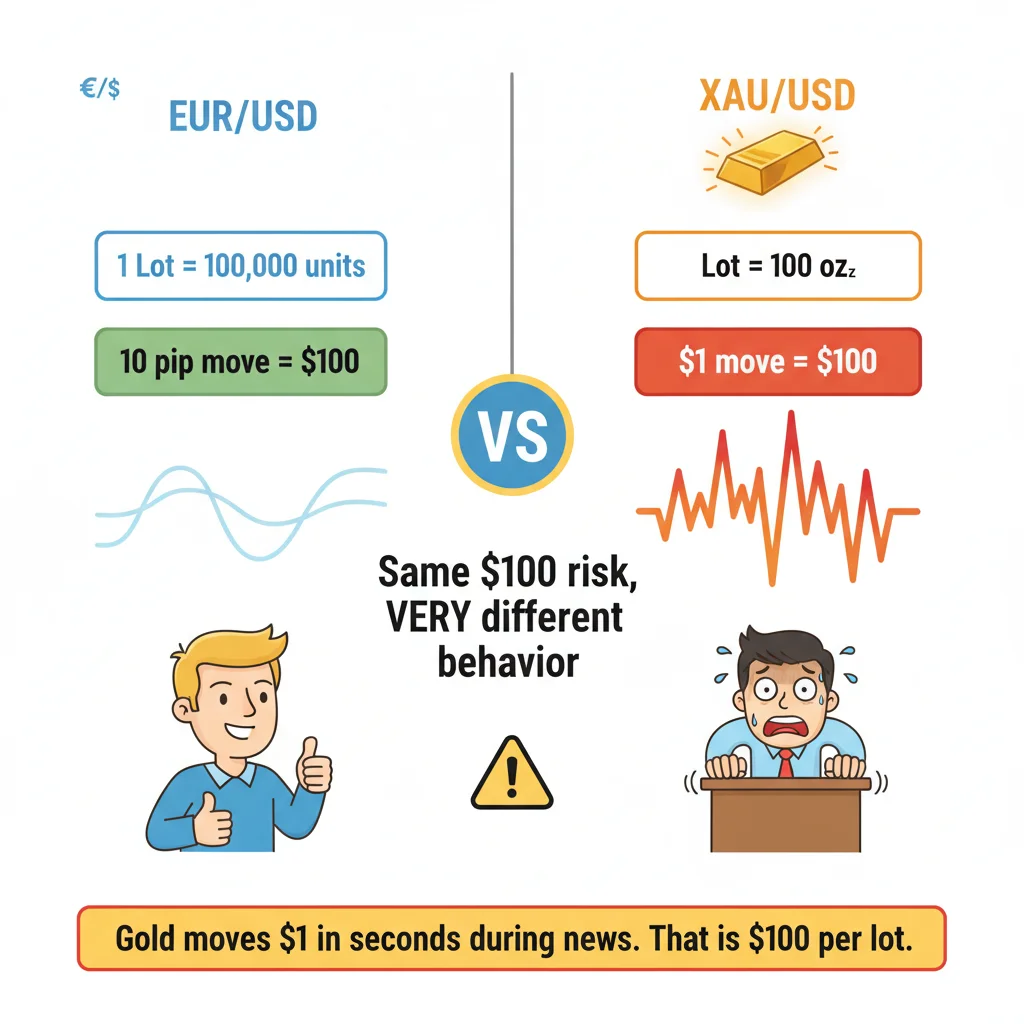
But here's the kicker for us: that volatility is priced in Dollars. A $2 move on oil might not sound like much, but on a standard 10-lot position, that's a $20,000 P/L swing. At an exchange rate of R18.50/$, that's R370,000. This is why your position size calculator is your best friend. You must convert your risk in Rands into a Dollar position size that won't give you a heart attack. I learned this the hard way early on by sizing a trade based on Dollar pips without converting to my home currency. The loss felt three times bigger than I'd mentally prepared for.

💡 Petua Winston
Oil trades on fear and greed more than any spreadsheet. Learn to read the sentiment in the headlines, not just the numbers on the chart.
“Trading the US oil symbol isn't just about geopolitics, it's about understanding a beast that can giveth and taketh away with extreme prejudice.”
Forget complex theories. Oil price moves come down to three forces fighting each other: Supply, Demand, and Sentiment.
1. Supply: This is the OPEC+ cartel's playground. Their production quotas are the single biggest manual control on price. A surprise cut announcement can send prices soaring 5% in minutes. Then you have US shale production, which acts as a counterweight. More rigs active usually means more supply coming. Inventory data from the EIA (Energy Information Administration) is the weekly report card on supply vs. demand.
2. Demand: This is all about global economic health. Strong manufacturing data from China or the US suggests more trucks on the road, more planes in the air, more factories running. Recession fears crush demand forecasts. As a rule of thumb, oil is a 'risk-on' asset when growth looks good.
3. Sentiment & Geopolitics: This is the wildcard. A drone strike on Saudi infrastructure, sanctions on Russian oil exports, or a hurricane in the Gulf of Mexico can disrupt supply instantly. The market prices in a 'risk premium' during tense times. I got caught short in early 2022 just before Russia invaded Ukraine. I was right on the supply/demand math, but totally wrong on the impending war sentiment. The loss was a 7% account hit, a blunt reminder that charts don't predict missiles.

Example: Let's say the EIA reports a crude inventory draw (drop) of 4 million barrels vs. an expected build of 1 million. This is bullish. The price might jump $1.50 immediately. On a 1-lot position where 1 point = $10, that's a $1,500 move (about R27,750) in seconds.
You can't trade the news effectively if you're sleeping. As South Africans, the US and European market sessions are our afternoon and evening. This is perfect for active trading.
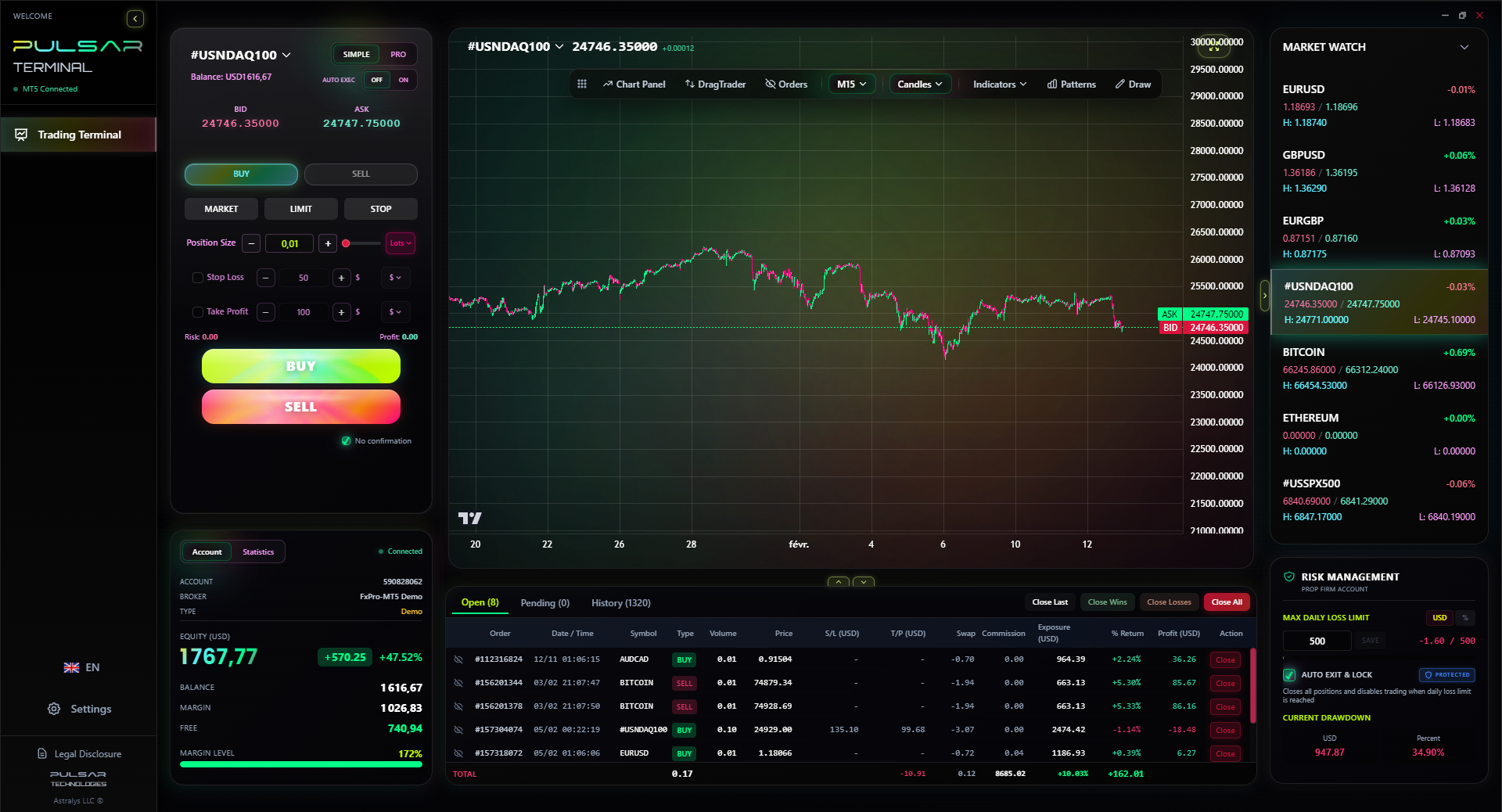
The EIA Inventory Play (Wednesday, 16:30 SAST): This is the weekly event. The strategy isn't about predicting the number, it's about reacting to the deviation from the forecast. The immediate spike is often retraced. I've had success waiting for the initial 30-60 second panic spike to fade, then entering in the direction of the actual data trend. A tool with fast order execution is non-negotiable here. A platform like Pulsar Terminal can be a lifesaver with its drag-and-drop orders when every second counts.
Technical Swings on the Daily Chart: Oil loves trends and clear technical levels. The 50 and 200-day moving averages act as magnets. After a big run-up, a pullback to the 50-day MA can be a reliable swing trading long entry, provided the fundamental story (like OPEC cuts) is still intact. I use the MACD indicator on the daily to gauge momentum and the RSI indicator to spot overbought/oversold conditions within the larger trend.
The OPEC+ Gap: When OPEC+ announces a surprise decision over a weekend, the market gaps open on Sunday evening. Trading the 'gap fill' is a common tactic. If it gaps up massively, there's often a retracement back down to gather liquidity before deciding on the next direction. This requires a cool head and strict stop-losses placed beyond the gap's origin.
💡 Petua Winston
Your first loss on an oil trade is often your smallest. Have the discipline to make it stay that way. No averaging down.
“A $2 move on oil might not sound like much, but on a standard 10-lot position, that's a R370,000 swing. This is why your position size calculator is your best friend.”
This is where I see most local traders blow up. Oil doesn't care about your analysis. It will gap through your stop loss on a Sunday open. Your rules must be ironclad.
-
Position Size for Survival: Never risk more than 1-2% of your account on a single oil trade. The volatility is too high. Use a calculator. If your account is R50,000 and you risk 1% (R500), with a stop loss of 50 points ($0.50), you can only afford a position size that loses R500 if those 50 points hit. This often means trading smaller lots than your ego wants.
-
Respect the Rollover: CFD brokers roll their oil contracts forward a few days before the underlying futures contract expires. There's usually a small adjustment (credit or debit) to your account. Don't hold a large position blind into a rollover date. Know your broker's schedule.
-
The Stop-Loss is Sacred: Place it at a level that, if hit, invalidates your trade thesis. Not where you can 'afford' to lose. And consider a trailing stop once you're in profit. Letting a R5,000 profit turn into a R2,000 loss is a psychological killer. Automating this with a tool that offers multi-TP/SL and trailing functions removes emotion.
-
Beware of Margin: Oil's margin requirement is usually lower than its volatility suggests. This is a trap. High use means a small move against you can trigger a margin call quickly. Ask me how I know. Use use like a sharp knife, carefully.

Pro Tip: Before major news (EIA, OPEC), brokers often widen spreads dramatically. Your stop-loss can get executed at a much worse price than you set (slippage). Either close positions before the news or use a guaranteed stop (if your broker offers it, for a fee). It's insurance worth paying for sometimes.

Managing multiple take-profit levels and a trailing stop on a volatile oil trade is stressful; Pulsar Terminal lets you set it all up with one drag-and-drop order directly on your MT5 chart.
Not all brokers are equal for trading commodities like oil. Here’s what to look for:
| Feature | Why It Matters for Oil Trading |
|---|---|
| Tight, Consistent Spreads | Oil spreads can balloon. You need a broker known for keeping them reasonable, especially on XTI/USD. Wide spreads eat your profit on scalping and increase your entry cost. |
| Reliable Execution & No Requotes | During news events, you need your orders filled at the price you see. Requotes or slow execution on a fast-moving oil chart will cost you money. |
| Local ZAR Account & Support | Funding in Rands and having local support during SA business hours solves a lot of headaches. You want easy deposits/withdrawals without crazy forex fees. |
| Adequate use & Margin Rules | Understand their specific margin requirements for oil and their policy on margin calls. Some are more aggressive than others. |
International brokers like IC Markets and Pepperstone are popular here for their raw spreads and access to MetaTrader. Exness is also widely used. Do your own due diligence. Check if they have a local FSP number for peace of mind. Open a demo account and test their oil symbol during a Wednesday EIA report. See how the platform behaves when the heat is on.
💡 Petua Winston
If you can't explain what specific supply or demand catalyst you're trading on, you're not trading. You're speculating. And the house always wins at that game.
“I was right on the supply/demand math, but totally wrong on the impending war sentiment. The loss was a blunt reminder that charts don't predict missiles.”
Let me save you some money and stress.
- Trading Without a Catalyst: Sitting and staring at a 5-minute oil chart, looking for patterns when there's no major news due, is often a waste. You're just gambling on noise. Oil needs a story. Wait for it.
- Ignoring Contango/Backwardation: This is the price difference between near-month and further-out futures contracts. When the market is in contango (future price higher), your long CFD position might get a small negative adjustment on rollover. It's a slow bleed you need to be aware of.
- Revenge Trading After a Loss: Oil moves fast. A bad loss on an EIA play can make you want to jump right back in. I've done it. The next trade is almost always emotional and worse. After a big loss, shut down the platform. Come back tomorrow.
- Confusing WTI and Brent: I once set up a beautiful trade on UKOIL (Brent) based on a WTI chart analysis. The correlation broke that day, and my 'sure thing' went south. Know which symbol is in your chart window.
- Forgetting the ZAR/USD Exchange Rate: This is the big one for us. A $300 profit sounds great until you realize the Rand strengthened 3% that week and you only made R4,800 instead of R5,550. It works both ways. Always do your final accounting in Rands.
FAQ
Q1What is the most common US oil forex symbol?
The most common symbol is XTI/USD. You'll also see it listed as USOIL, WTI, or sometimes CL (the futures ticker). They all track the West Texas Intermediate crude oil price.
Q2Can I trade oil with a South African broker?
Yes, but most local traders use international brokers with a strong presence in SA (like IC Markets, Pepperstone, Exness) because they often offer tighter spreads and better platforms for forex and commodities like oil. Always ensure the broker is regulated.
Q3What time is the US oil inventory data released in South Africa?
The EIA Weekly Petroleum Status Report is released every Wednesday at 16:30 South African Standard Time (SAST). This is the biggest weekly volatility event for the US oil forex symbol.
Q4Is trading oil more risky than trading forex like EUR/USD?
Generally, yes. Oil is a commodity with higher volatility and is prone to larger gaps (especially over weekends). News events can cause sharper, faster moves than major forex pairs. This demands stricter position sizing and risk management.
Q5How is profit and loss calculated on an oil CFD?
P/L = (Exit Price - Entry Price) x Contract Size. The contract size varies by broker. Commonly, 1 lot means a $10 move per $1 change in the oil price (or $1 move per $0.10 change). Check your broker's specs. Always convert the final Dollar P/L to Rands at your current exchange rate.
Q6What's the difference between WTI (US oil) and Brent (UK oil)?
WTI (XTI/USD) is the US benchmark, lighter and sweeter, delivered in Cushing, Oklahoma. Brent (UKOIL) is the international benchmark, sourced from the North Sea. They generally move together, but the spread between them can change due to regional supply/demand factors. Don't treat them as identical.
Pelajaran Prof. Winston
:
- ✓Trade XTI/USD CFDs, not physical barrels.
- ✓Always convert Dollar risk to Rand for sizing.
- ✓EIA data every Wednesday at 16:30 SAST.
- ✓Risk max 1-2% per trade due to volatility.
- ✓Know your broker's rollover schedule.
Sejauh mana artikel ini berguna?
Klik bintang untuk menilai
Pandangan Dagangan Mingguan
Analisis & strategi mingguan percuma. Tiada spam.
Tentang Penulis
David van der Merwe
Pedagang Pasaran Membangun
Pedagang berpangkalan di Johannesburg dengan 11 tahun dalam mata wang pasaran membangun. Pakar dalam pasangan ZAR, dagangan terkawal FSCA, dan analisis pasaran Afrika Selatan.
Komen
Anda mungkin juga suka

Cara Trading Forex Sukses: 7 Prinsip dari Trader Profesional
Cara trading forex sukses dengan 7 prinsip trader pro: manajemen modal, disiplin, journal trading, backtest. Data nyata, bukan janji profit palsu.
Jam Trading Forex Terbaik untuk Trader Indonesia: Panduan Lengkap dengan Tabel Waktu
Panduan jam trading forex untuk trader Indonesia. Tabel 4 sesi dunia, jam emas 20:00-00:00, sesi mana yang harus dihindari. Data akurat + tips dari trader berpengalaman.
Top 5 Sàn Forex Uy Tín Nhất 2026: Review Jujur dari Trader Indonesia
Top 5 sàn forex uy tín 2026 untuk trader Indonesia. Review jujur: spread, deposit, withdraw, dukungan lokal. Exness, XM, IC Markets & lebih.
All these calculators are built into Pulsar Terminal with real-time data from your MT5 account. One-click position sizing, automatic risk management, and instant calculations.
