


Most new traders in South Africa think they need to be glued to their screens at all hours to catch a move.

David van der Merwe
Pedagang Pasaran Membangun ·  South Africa
☕ 10 minit baca
Apa yang akan anda pelajari:
Most new traders in South Africa think they need to be glued to their screens at all hours to catch a move. That's a fast track to burnout. The truth is, knowing exactly what time the forex market opens and closes in SAST, and more importantly, when the good moves happen, is your first real edge. Let's set the record straight on market hours, the best times to trade for a South African schedule, and how to build a strategy that doesn't require you to trade the Tokyo session from Johannesburg.
The global forex market is a 24-hour beast, but it doesn't run on a single clock. For us in South Africa, we operate on South African Standard Time (SAST), which is GMT+2. This is your home base for all trading times.
The market officially opens for the week on Sunday at 10:00 PM SAST when the Sydney session kicks off. It runs non-stop until it closes for the weekend on Friday at 10:00 PM SAST. Some brokers might keep pricing going until 11:00 PM, but liquidity dries up fast after the New York close.
Now, the market isn't uniformly active all day. It moves in waves based on which major financial centers are open. Here’s the breakdown in SAST:
| Trading Session | SAST Opening | SAST Closing | Key Financial Center |
|---|---|---|---|
| Sydney | 11:00 PM (Sun) | 8:00 AM (Mon) | Australia/New Zealand |
| Tokyo (Asian) | 2:00 AM | 11:00 AM | Japan, Singapore, Hong Kong |
| London (European) | 9:00 AM | 6:00 PM | UK, Germany, France |
| New York (US) | 3:00 PM | 12:00 AM (Midnight) | USA, Canada |
I made the mistake early on of trying to trade the Asian session from 3 AM. The moves were slow, the spreads were wider on some exotics, and I was just tired. I learned that liquidity - the volume of trades - is what creates clean, tradable price action. You want to be trading when the big players are at their desks.

Warning: Just because your broker's platform is open 24/5 doesn't mean you should be trading all that time. Trading during low-liquidity periods (like the Sydney session solo) often leads to whipsaws and frustrating slippage.
This is the golden question. The most profitable times are when two major trading sessions overlap. This is when banks, hedge funds, and corporations in two regions are all active at once. Volume spikes, spreads often tighten, and you get clearer directional moves.
The London-New York Overlap (The Power Hours)
This is the main event. From 3:00 PM to about 7:00 PM SAST, both London and New York are fully open. This 4-hour window is typically the most volatile and liquid period of the entire trading day. Major economic data from both Europe and the US is often released during this time.
I've had my biggest wins - and my most humbling lessons - in this window. For example, trading a EUR/USD breakout during this overlap in 2022, I caught a 120-pip move from 1.0480 to 1.0600. The volume was so high the price just sliced through levels. But I've also been stopped out in seconds when news hit because the speed is relentless. If you have a day job, this after-work period is your prime trading time.
The Asian-London Overlap
From 9:00 AM to 11:00 AM SAST, the tail end of the Asian session meets the opening of London. This can be good for certain pairs like EUR/JPY or GBP/AUD. It's generally less explosive than the afternoon overlap but can offer solid trending opportunities as London traders react to the Asian session's price action.

Pro Tip: Your personality matters. If you're a scalping enthusiast, the London-New York overlap is your playground. If you're a patient swing trader, the London open (9 AM SAST) or New York open (3 PM SAST) can be perfect for entering longer-term positions based on daily chart setups.
Remember, you don't need to catch every session. Pick one or two that fit your life and master the rhythm of the market during those hours. Consistency beats marathon sessions every time.

💡 Petua Winston
The market pays you for patience, not persistence. Don't trade just because the platform is open. Wait for your specific session and setup.
“You don't need to catch every session. Pick one or two that fit your life and master the rhythm.”
Trading forex is completely legal here, but it's not the wild west. We have a strong regulatory framework designed to protect you. The main sheriff in town is the Financial Sector Conduct Authority (FSCA). Always, and I mean always, check that your broker is licensed by the FSCA. It's your first line of defense.
Here’s what FSCA regulation means for you:
- Client Money Protection: Brokers must keep your trading funds in segregated bank accounts. This means if the broker goes bust, your money isn't used to pay their debts.
- use Caps: Since 2021, retail use is capped at 30:1 for major currency pairs. This is a good thing. It might feel limiting, but it prevents you from blowing up your account with one bad trade. I learned about margin call danger the hard way with higher use overseas before this rule.
- Dispute Resolution: You have a formal channel to complain if something goes wrong.
The South African Revenue Service (SARS) is the other key player. Your trading profits are considered taxable income. Keep a detailed log of all your trades - entries, exits, and profits/losses. It’s a hassle, but a necessary one. I use a simple spreadsheet; it saved me during tax season.
Other bodies like the South African Reserve Bank (SARB) oversee cross-border flows, and the Financial Intelligence Centre (FIC) enforces anti-money laundering rules. When you sign up with a broker like Exness or Pepperstone that operates here, you'll go through KYC (Know Your Customer) checks because of these rules.
Let's talk numbers, because costs will eat into your profits faster than a bad trade. You're not just betting on price; you're paying to play.
The Main Costs:
- The Spread: This is the difference between the buy and sell price. It's how many brokers make their money. A tight spread on EUR/USD might be 0.6 pips, while a wider one could be 1.8 pips. On a standard lot (100,000 units), that 1.2 pip difference is $12 out of your pocket before you even start.
- Commissions: Some brokers offer "raw" accounts with tiny spreads but charge a commission per trade. For example, you might pay $7 round turn (to open and close) per standard lot. This can be cheaper overall if you trade large volumes.
- Swap Rates: If you hold a position overnight, you pay or earn a small interest fee based on the difference between the two currencies' central bank rates. It's crucial for long-term swing trading positions.
Broker Considerations for South Africans:
- FSCA License: Non-negotiable. Check the FSCA's website for the license number.
- ZAR Accounts: Many brokers, including XM and IC Markets, offer Rand-denominated accounts. This lets you deposit and withdraw in Rands without paying bank conversion fees on every transaction.
- Deposit Methods: Look for brokers supporting local EFTs (Electronic Funds Transfers). It’s usually the cheapest way to fund your account.
- Minimum Deposits: These vary wildly. You can start with as little as R200 ($10-ish) at some brokers, while others may require R4,000 or more. Don't deposit more than you can afford to lose just to meet a minimum.
My personal preference leans towards brokers with clear pricing structures. I'd rather pay a known commission than have it hidden in a wider spread.
💡 Petua Winston
Treat the FSCA's 30:1 use limit not as a restriction, but as a built-in safety feature. It's the seatbelt for your trading account.
“Trying to trade EUR/USD during the quiet Sydney session is like watching paint dry, with occasional, unpredictable splatters.”
Now, how do you turn this knowledge into a plan? Your strategy must align with the market's rhythm and your lifestyle.
For the 9-to-5 Worker: Your active trading window is the London-New York overlap (3 PM - 7 PM SAST). Focus on the major pairs like EUR/USD, GBP/USD, and USD/JPY. Use the first hour after you get home to analyze the daily chart, set your orders, and manage any positions you're already in. This is a great time for end-of-day breakout strategies or trading the reaction to US economic news.
For the Early Riser: If you're up at 6 AM, you can catch the tail end of the Asian session and prepare for the London open at 9 AM. This is a good time for analysis, setting pending orders for the European session, or trading AUD/USD or NZD/USD which are most active during Asian hours.
A Tool for Any Schedule: The Economic Calendar No matter when you trade, you must know when high-impact news (like US Non-Farm Payrolls or SA CPI) is scheduled. A surprise announcement can vaporize your stop-loss in milliseconds. I mark these events in my calendar and often avoid opening new positions just before them.
Technical Alignment: Use indicators that work with the volume profile of your chosen session. The MACD indicator on a 1-hour or 4-hour chart can work well for momentum during the busy overlaps. The RSI indicator can help identify overbought/oversold conditions during quieter periods. Always use a position size calculator to ensure your risk per trade is sane, especially during volatile overlaps.

Example: Let's say you have a R10,000 account and you're willing to risk 1% (R100) on a trade during the volatile 4 PM overlap. Your stop-loss is 20 pips away on EUR/USD. Your position size should be: R100 / (20 pips * R1.07 per pip*) ≈ 4.67 micro lots. (*Value per pip varies by pair and lot size).
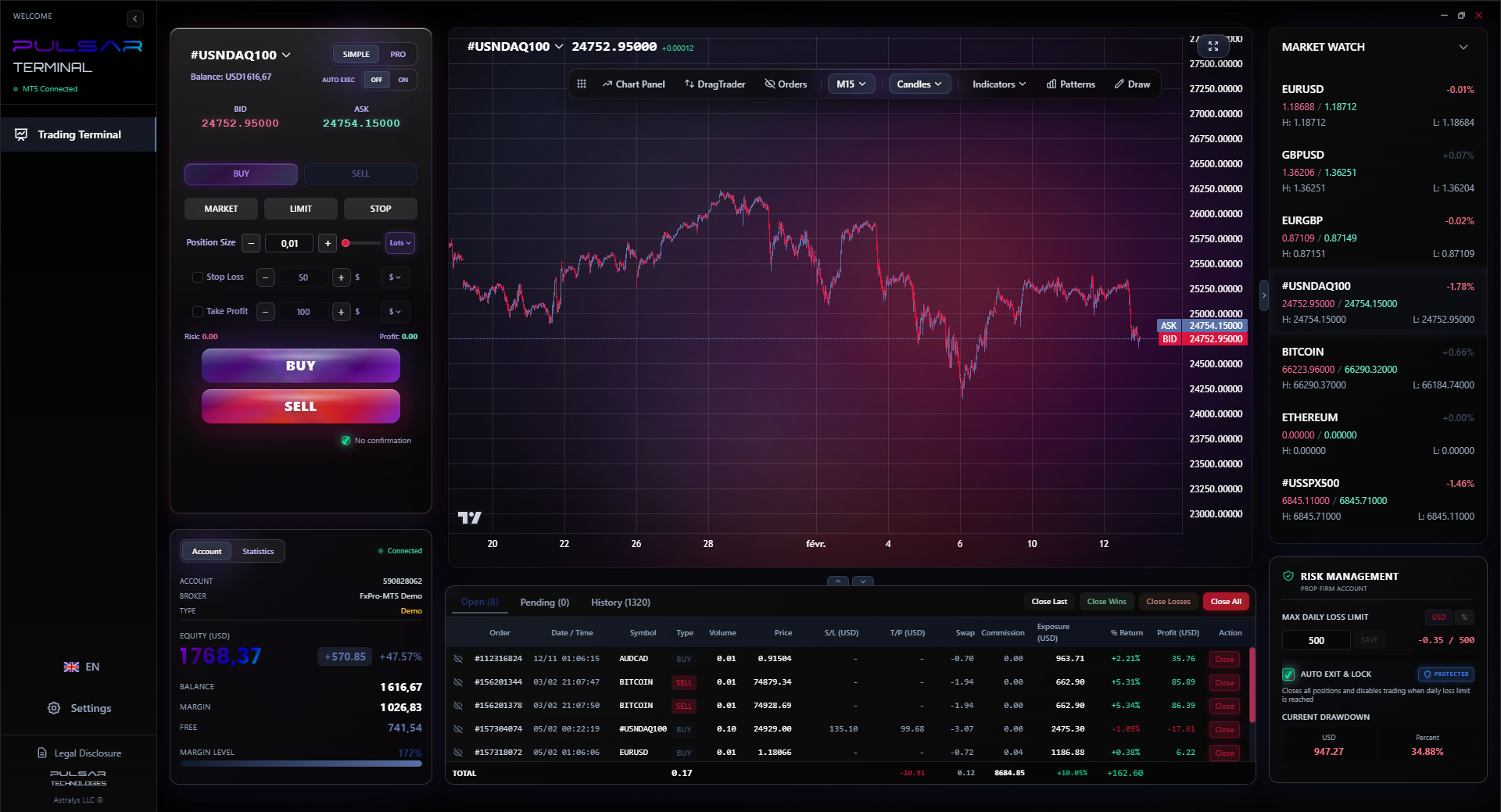
Managing multiple trades and setting precise stop-losses during the volatile London-New York overlap is easier with tools that automate risk management directly on your MT5 platform.
I've made most of these, so learn from my wasted Rands.
1. Trading the Wrong Session for Your Pairs: Trying to trade EUR/USD during the quiet Sydney session is like watching paint dry, with occasional, unpredictable splatters. The lack of volume leads to false breaks and choppy price action. Save your energy and margin for when the big players are active.
2. Ignoring the Overlap Volatility: On the flip side, not adjusting your position size for the London-New York overlap is dangerous. A 20-pip stop-loss that's safe at 10 AM might get taken out by sheer noise at 4 PM. Widen your stops or reduce your lot size during peak volatility.
3. Chasing Overseas "Unregulated" use: It can be tempting to use an offshore broker offering 500:1 use. The FSCA's 30:1 cap feels restrictive. But trust me, that high use is a debt trap, not a shortcut. It magnifies losses just as fast as gains. I once lost 40% of an account in one trade using 100:1 use on a gold (XAU/USD) trade that went slightly against me.
4. Forgetting About Time (and Taxes): The market closes Friday at 10 PM SAST. Any positions you leave open over the weekend are subject to gap risk when it reopens Sunday at 10 PM. Also, start your trade journal today. Trying to reconstruct a year of trades for SARS is a nightmare.
The key is to use the structure of the market hours to your advantage, not fight against them. Plan your trades when the market is alive, and use the quiet times to plan, analyze, and rest.
FAQ
Q1What time does the forex market open on Sunday in South Africa?
The forex market opens for the new trading week on Sunday at 10:00 PM South African Standard Time (SAST). This is when liquidity starts to build as the Sydney session begins.
Q2Is 30:1 use enough for forex trading?
Absolutely, and it's safer. With 30:1 use, a 3.33% move against you will wipe out your margin. That's a significant move, giving you room to be wrong. Higher use, while tempting, often leads to rapid account depletion from normal market noise. The FSCA cap protects retail traders.
Q3Can I trade forex part-time with a job in South Africa?
Yes, it's very feasible. The most active trading period (London-New York overlap) is from 3:00 PM to 7:00 PM SAST, which is after standard working hours. You can build an effective strategy focused solely on this 4-hour window, analyzing and placing orders when you get home.
Q4Do I pay tax on forex trading profits in South Africa?
Yes. The South African Revenue Service (SARS) views profits from active trading as income, which is taxable. It's crucial to keep detailed records of all your trades for your annual tax return. Many traders use dedicated software or spreadsheets to track their P&L.
Q5What is the most volatile trading session for SAST?
The London-New York overlap, from approximately 3:00 PM to 7:00 PM SAST, is consistently the most volatile. This is when the highest trading volume occurs, leading to stronger trends and faster price movements, especially around major economic data releases.
Q6Should I use a ZAR account or a USD account?
For most South African traders, a ZAR account is simpler. It allows you to deposit and withdraw in Rands without your bank charging currency conversion fees. Your profits and losses are also calculated in Rands, making accounting for SARS straightforward. A USD account might only be beneficial if you have a constant income in US Dollars.
Pelajaran Prof. Winston
:
- ✓Market opens Sunday 10 PM SAST, closes Friday 10 PM SAST.
- ✓Trade the London-New York overlap (3-7 PM SAST) for best action.
- ✓Only use FSCA-regulated brokers for fund safety.
- ✓Max use is 30:1 - use it wisely.
- ✓Always account for spreads and commissions in your strategy.
- ✓Keep a detailed trade log for SARS.
Sejauh mana artikel ini berguna?
Klik bintang untuk menilai
Pandangan Dagangan Mingguan
Analisis & strategi mingguan percuma. Tiada spam.
Tentang Penulis
David van der Merwe
Pedagang Pasaran Membangun
Pedagang berpangkalan di Johannesburg dengan 11 tahun dalam mata wang pasaran membangun. Pakar dalam pasangan ZAR, dagangan terkawal FSCA, dan analisis pasaran Afrika Selatan.
Komen
Anda mungkin juga suka

Cara Trading Forex Sukses: 7 Prinsip dari Trader Profesional
Cara trading forex sukses dengan 7 prinsip trader pro: manajemen modal, disiplin, journal trading, backtest. Data nyata, bukan janji profit palsu.
Jam Trading Forex Terbaik untuk Trader Indonesia: Panduan Lengkap dengan Tabel Waktu
Panduan jam trading forex untuk trader Indonesia. Tabel 4 sesi dunia, jam emas 20:00-00:00, sesi mana yang harus dihindari. Data akurat + tips dari trader berpengalaman.
Top 5 Sàn Forex Uy Tín Nhất 2026: Review Jujur dari Trader Indonesia
Top 5 sàn forex uy tín 2026 untuk trader Indonesia. Review jujur: spread, deposit, withdraw, dukungan lokal. Exness, XM, IC Markets & lebih.
All these calculators are built into Pulsar Terminal with real-time data from your MT5 account. One-click position sizing, automatic risk management, and instant calculations.
