


I was staring at the MT4 terminal, watching a client's account bleed on a USD/SGD trade gone wrong.

Daniel Harrington
Ketua Kandungan
☕ 12 minit baca
Apa yang akan anda pelajari:
- 1What Exactly Is a White Label Platform? (It's Not What You Think)
- 2MAS Regulations: The Singapore-Specific Rulebook
- 3The Real Costs: What You'll Actually Pay
- 4Choosing a Provider: The 5-Point Checklist
- 5Should You Do It? The Brutal Pros and Cons
- 6Singapore Market Specifics You Can't Ignore
- 7First Steps & Realistic Alternatives
I was staring at the MT4 terminal, watching a client's account bleed on a USD/SGD trade gone wrong. It was 2021, and the pair had just spiked 80 pips against him on a surprise MAS policy hint. My phone rang. It wasn't the client, but a fund manager asking if I could set up a branded trading desk for his team. That's the moment the penny dropped about white label forex trading platforms. In Singapore's hyper-competitive market, they're not just a tech product; they're a business model, a regulatory minefield, and for some, a golden ticket. Let's cut through the sales jargon and talk real numbers, MAS compliance, and whether you should even consider it.
Forget the fancy brochures. A white label forex trading platform is a rental agreement. You're renting a brokerage's technology, liquidity, and most critically, their regulatory license, and slapping your brand on it. You become the front-end - the face, the marketing, the client relationship. The provider handles the back-end: trade execution, platform maintenance, and compliance overhead.
Think of it like opening a franchise restaurant. You get the proven kitchen system (the trading engine), the supply chain (liquidity), and the operational manual (compliance framework). You provide the location, the staff, and the local marketing. Your profit comes from the markup you add to the spreads or commissions passed through from the provider.

Warning: The biggest misconception is that a white label makes you a broker. You're not. You're an introducing broker (IB) or a professional client of the actual licensed entity. This distinction is everything in Singapore. If you misrepresent this to clients, the MAS will come down on you like a ton of bricks.
I made this mistake early on. I partnered with a provider offering a slick white label solution, promising "your own brokerage." I spent months building a client base. Then, during a routine audit, we discovered the provider's liquidity feed was consistently slipping orders during high volatility. My clients' fills were terrible. I had zero control over it, my reputation was on the line, and the contract I'd signed gave me no recourse. The platform was branded as mine, but the engine was someone else's problem. I lost three major accounts over it. The lesson? Your brand is only as good as the provider's worst technology glitch or compliance shortcut. Do your due diligence like your trading career depends on it, because it does.

💡 Petua Winston
A white label provider's demo is their highlight reel. Demand a 30-day trial on their live servers during major news events. If the spreads widen to 20 pips on EUR/USD during the NFP, walk away.
This is where dreams of easy money hit the hard wall of Singaporean regulation. The Monetary Authority of Singapore (MAS) doesn't have a specific rulebook for "white labels." They regulate the entity holding the Capital Markets Services (CMS) license. That's your provider.
The License is Everything
Your white label provider must be MAS-licensed, or licensed by a top-tier regulator like the UK's FCA or Australia's ASIC, with a solid presence in Singapore. You cannot legally offer leveraged forex trading to Singapore residents without operating under such a license. Full stop. When you vet providers, the first document you ask for is their MAS CMS license number. Then you verify it on the MAS website.
Client Money and use Rules
MAS mandates strict client fund segregation. Your clients' money must be held in separate, trust accounts. This is non-negotiable. On use, while MAS doesn't set a hard retail cap like Europe's 30:1, they enforce strict risk-based rules. In practice, most reputable MAS-regulated brokers cap use at 50:1 for majors and 20:1 for minors. For metals like XAU/USD (gold), expect a 5:1 limit. Your white label solution must enforce these limits automatically.

Pro Tip: Negative balance protection is a MAS requirement. This means your clients can't lose more than they deposit. Ensure your white label contract explicitly states the provider is responsible for this. It protects you from catastrophic liability.
The minimum margin requirement is 5%. That means for a standard lot (SGD 100,000) on a USD pair, your client needs SGD 5,000 in margin. This isn't a suggestion; it's enforced at the platform level. Your position size calculator needs to reflect this.
Your role? You are responsible for ensuring your clients are suitable. MAS requires you to assess their knowledge, experience, and financial situation. You can't just sign up anyone with an NRIC. I keep a simple checklist: trading experience quiz, financial disclosure form, and a recorded video call explaining risks. It's boring, but it keeps the compliance officers happy.
“Your brand is only as good as your white label provider's worst technology glitch.”
Let's talk numbers, because the sales reps won't give you the full picture. Setting up a white label forex trading platform in Singapore isn't about a one-time fee. It's an ongoing revenue share.
Typical Cost Structure:
- Setup Fee: Can range from SGD 5,000 to SGD 50,000+ for a fully custom branded MT4/MT5 solution. This covers installation, branding, and basic configuration.
- Monthly Platform Fee: A fixed fee, say SGD 1,000 to SGD 5,000 per month, for server maintenance, support, and updates.
- Revenue Share: This is the big one. The provider takes a cut of the spreads or commissions generated by your clients. A common split is 70/30 in your favor, but it can vary wildly. If you're small, you might get 50/50.

Example: Your clients trade 100 standard lots of EUR/USD in a month. The provider's raw spread is 0.8 pips. They add a 0.5 pip markup, which is your revenue. 100 lots * 0.5 pips * $10 per pip = $500. On a 70/30 split, you keep $350, the provider takes $150. That's before your monthly platform fee.
You also have your own business costs: office space (even virtual), marketing, sales staff, and legal/compliance advice. I've seen guys blow SGD 20,000 on Facebook ads before getting a single funded client. Don't underestimate this.
Contrast this with the cost for the actual broker to get licensed. Minimum share capital for a new forex brokerage here is SGD 100,000. For a full CMS license, you're looking at minimum capital of SGD 1 million, plus legal fees that can hit another SGD 200,000. The white label model exists because paying a revenue share is cheaper than raising SGD 1.2 million and waiting 9 months for MAS approval.
💡 Petua Winston
Your revenue share percentage is negotiable. Your starting point is 70/30 in your favor. If you bring a proven track record or an existing client book, ask for 80/20. The first number they give you is never the best.
Not all white label providers are created equal. Here’s my checklist, forged from painful experience.
| Consideration | Why It Matters | What to Ask |
|---|---|---|
| 1. Regulatory License | This is your bedrock. If they falter, you're finished. | "Show me your MAS CMS license. Are client funds fully segregated with a top-tier bank?" |
| 2. Liquidity & Execution | Slippage and requotes will kill your client relationships. | "Who are your Tier-1 liquidity providers? Can I see historical execution reports for volatile periods (like NFP)?" |
| 3. Technology & Platform | MT4 is old but reliable. MT5 is more modern. cTrader is slick. | "Is it a true multi-asset platform? Can I offer stocks, indices, and crypto CFDs through the same login? How strong is the mobile app?" |
| 4. Commercial Terms | The fine print hides the demons. | "What's the minimum monthly volume commitment? What are the fees if I don't hit it? Who owns the client data if we part ways?" |
| 5. Support & Risk Tools | When things go wrong at 3 AM, you need help. | "Is support 24/5? Do you offer integrated risk management tools like trailing stops, guaranteed stop-loss orders, and detailed margin call reports?" |
I once almost signed with a provider because their spreads were 0.1 pip lower than the competition. Then I asked for a trial during the London open. The platform latency was over 200ms. In fast markets, that's a death sentence. Always, always get a demo and stress-test it yourself. Trade your own scalping strategy on it. See if it holds up.
Also, look at the brokers you already trust. Many, like IC Markets or Pepperstone, have established white label programs. Starting with a known entity with a proven track record is often safer than a boutique tech firm with flashy graphics.
“A white label isn't a trading strategy; it's an entrepreneurial venture with regulatory handcuffs.”
Let's be brutally honest about whether this is a good move for you.
The Pros (The Siren Song):
- Low Barrier to Entry: You don't need SGD 1 million. You can start with your reputation and a network.
- Recurring Revenue: Build a client book, and you earn a share of their trading activity for as long as they trade. It's the dream of passive income.
- Brand Building: You control the client experience, marketing, and educational content. You're not just a trader; you're a business owner.
- Access to Professional Tools: Good white labels give you and your clients access to institutional-grade charts, data, and sometimes even Volume Profile tools.
The Cons (The Reality Check):
- You're Liable, But Not in Control: Your clients yell at YOU when the platform crashes. You have to trust your provider 100%, and you have little use if they mess up.
- It's a Sales & Marketing Business: Your success depends 80% on your ability to attract and retain clients, and 20% on trading. Are you ready to be a full-time salesperson?
- Thin Margins: Unless you have high-volume clients, the revenue share after costs can be minimal. I know a guy who ran a white label for 18 months and netted less than his previous salary as a prop trader.
- Regulatory Burden: Even as an IB, you have MAS obligations on client suitability, reporting, and AML. Get it wrong, and you face penalties or a ban.
My take? A white label forex trading platform is a fantastic move if you're already a successful educator or signal provider with a large, trusting audience. It's a terrible move if you're just a good retail trader looking to make extra cash. The skill sets are completely different. I was in the latter camp, and I failed my first time because I hated sales. I succeeded later by partnering with someone who lived for it.
💡 Petua Winston
Never, ever use the word 'broker' to describe yourself. You are a 'trading desk,' 'asset manager,' or 'financial educator.' Let the licensed entity be the broker. This simple language choice keeps you on the right side of MAS.
Singapore isn't just another market. It's a global FX hub with its own quirks.
The SGD is a Big Deal: The USD/SGD is the 10th most traded pair globally. Your clients will want to trade it. Ensure your platform offers competitive spreads on it and other Asian pairs like AUD/SGD and SGD/JPY. The average daily FX volume here is a staggering US$1.485 trillion. The liquidity is there; your platform needs to access it.
Payment Methods: Clients expect local bank transfers via FAST, PayNow, and maybe even e-wallets like GrabPay. Credit card deposits are common. Your white label must support seamless SGD deposits and withdrawals. If it's USD-only with slow SWIFT transfers, you're dead in the water.
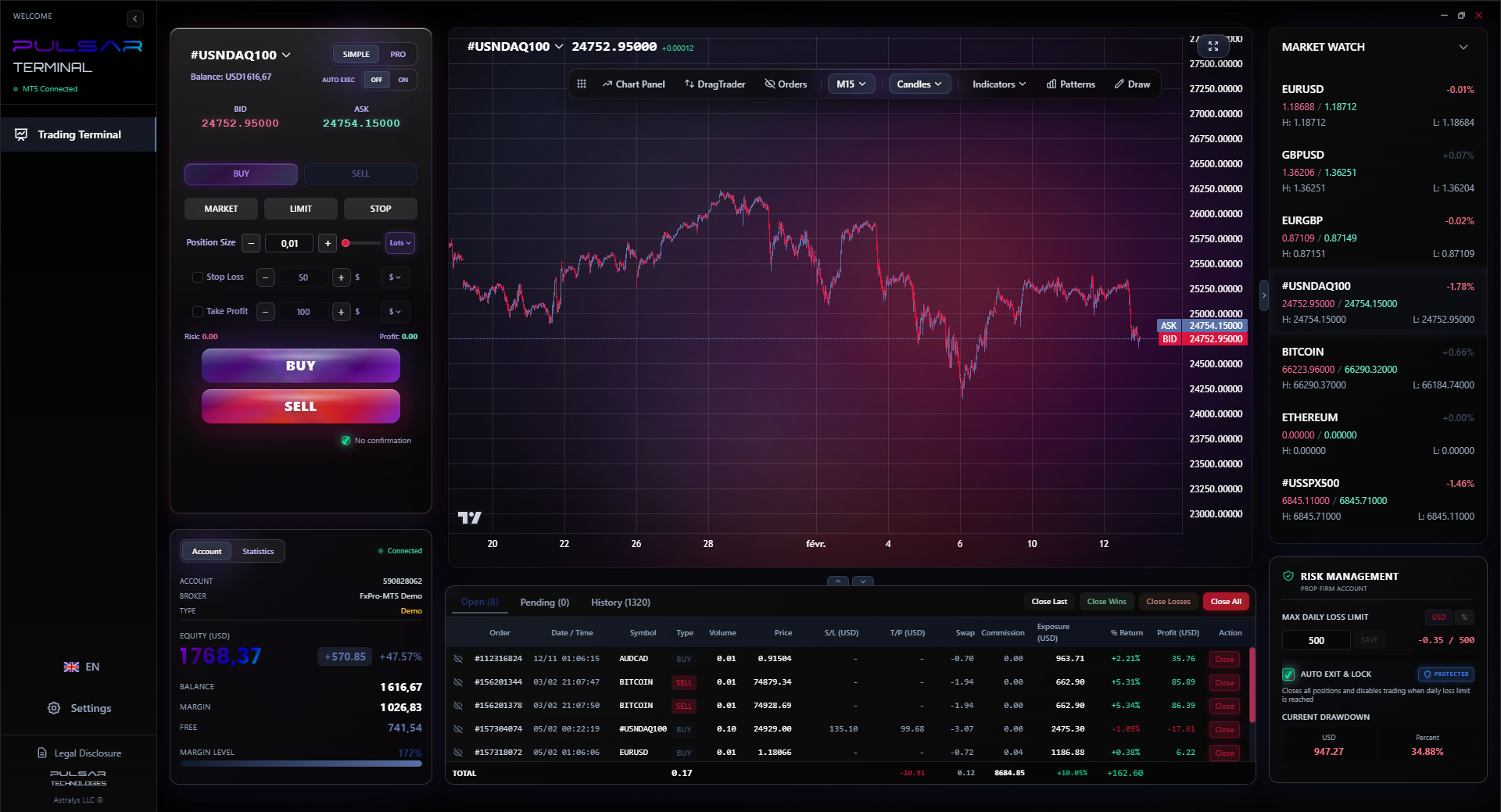
Platform Preference: MT4 and MT5 are king. Any provider that doesn't offer them is not serious about the Singapore retail market. However, the sophisticated prop firms and family offices might demand more advanced tools. This is where having a platform that supports advanced order types or integrates with a tool like Pulsar Terminal for grid trading and advanced charting can be a real differentiator.
Taxes: This isn't trading advice, but you need to know: Profits from forex trading are generally considered capital gains in Singapore and are not taxable for individuals. However, if the IRAS deems you to be carrying on a trade or business (which you, as a white label operator, definitely are), your business income is taxable. Get an accountant.
The competitive landscape is fierce. You're not just competing with other white labels; you're competing with giants like Saxo, Interactive Brokers, and OANDA. Your edge must be superior service, better education, or a niche strategy (e.g., specializing in swing trading Asian session breakouts).
Managing multiple client accounts or complex strategies on a standard platform is a headache; Pulsar Terminal's advanced order management and grid trading tools automate this directly on your MT5, giving you the institutional edge without the institutional cost.
“In Singapore, the MAS license is the bedrock. Everything else is just window dressing.”
If you're still keen, don't quit your day job yet. Follow this path:
- Self-Educate: Read every MAS notice on conduct for intermediaries. Understand the Securities and Futures Act.
- Network: Go to fintech meetups in Singapore. Talk to other IBs and white label operators. Ask them who they use and what their pain points are.
- Model the Business: Create a financial model. Assume it will take 6 months to get your first 10 active clients. How much capital do you need to survive? Be pessimistic with your revenue projections.
- Approach Providers: Shortlist 3-5. Use the checklist above. Get full proposals, including all contracts.
- Get Legal Advice: Spend SGD 3,000-5,000 on a Singapore finance lawyer to review the contract. It's the best money you'll ever spend.
Pro Tip: Before you commit to a full white label, ask the provider about their MAM (Multi-Account Manager) or PAMM system. This lets you manage client funds under your strategy within their brand. It's a lower-risk way to test the waters and build a track record. If you can attract and profitably manage SGD 500,000 this way, then maybe consider the white label jump.
Honest alternatives? If your goal is to monetize your trading knowledge:
- Join a Prop Firm: Many offer payout structures where you keep 70-90% of profits. No client recruitment, no regulatory headache. You just trade.
- Become an Affiliate/IB: Simply refer clients to a broker like XM or Exness for a commission. It's simpler, but your earning potential and control are lower.
- Create a Paid Community/Education Service: Sell courses, signals, or mentorship. This leverages your expertise without touching client money or regulatory licenses.
The white label route is the most complex, highest-risk, but also highest-potential-reward path. It's not a trading strategy; it's an entrepreneurial venture. Go in with your eyes wide open, your capital secured, and a very, very good lawyer on speed dial.
FAQ
Q1What is the minimum capital needed to start a white label forex platform in Singapore?
You don't need the broker's license capital (SGD 1M+). For you, the white label operator, expect initial outlays of SGD 10,000 to SGD 50,000 for setup fees, legal costs, and several months of operational runway (marketing, salaries, platform fees) before you see consistent revenue. The real capital is your time and network.
Q2Can I offer use higher than 50:1 with a white label in Singapore?
Almost certainly not with a reputable MAS-aligned provider. While MAS uses a risk-based framework, in practice, 50:1 for majors and 20:1 for minors is the standard for retail clients. A provider offering 500:1 is likely offshore and may not offer true MAS compliance, which is a massive risk for your business and clients.
Q3Who is legally responsible if my white label client loses money due to a platform error?
This is the grey zone. , the MAS-licensed entity (your provider) has final responsibility for execution and platform stability. However, your client has a contract with YOU. You will bear the brunt of the reputational damage and likely the client lawsuit. Your contract with the provider must clearly outline liability and compensation procedures for such events.
Q4Do I need a separate office and staff in Singapore to run a white label?
MAS doesn't mandate a physical office for an Introducing Broker (which is what you are). You can start virtually. However, you must have a registered Singapore business entity (e.g., a Pte Ltd company) and a resident director. As for staff, you can start solo, but handling compliance, marketing, and client support alone is a huge task.
Q5What's the difference between a white label and being an Introducing Broker (IB)?
An IB simply refers clients to a broker for a commission. The client opens an account directly with the broker (e.g., IC Markets). A white label is a step further: the client opens an account on a platform branded as yours, but the broker still holds the license and executes trades. The white label offers more brand control and often a closer client relationship, but with more operational responsibility.
Q6How long does it take to get a white label platform up and running?
From signing a contract to a live, branded platform, a basic MT4/MT5 setup can take 4-8 weeks. However, getting your business ready - setting up your company, banking, compliance procedures, and marketing materials - easily adds another 2-3 months. Plan for a 6-month runway before you're truly operational and acquiring clients.
Pelajaran Prof. Winston
:
- ✓Verify the MAS CMS license yourself. Never take a sales rep's word.
- ✓Budget for 6 months of zero revenue. The sales cycle is long.
- ✓Spend SGD 5k on a finance lawyer. The contract fine print will bury you.
- ✓Test execution during volatility. A 200ms latency is a business killer.
Sejauh mana artikel ini berguna?
Klik bintang untuk menilai
Pandangan Dagangan Mingguan
Analisis & strategi mingguan percuma. Tiada spam.
Tentang Penulis
Daniel Harrington
Ketua Kandungan
Ketua kandungan di The Trading Mentor. Pedagang berpengalaman yang bersemangat menjadikan konsep dagangan kompleks mudah difahami. Meliputi topik global, strategi, dan panduan platform.
Komen
Anda mungkin juga suka

Cara Trading Forex Sukses: 7 Prinsip dari Trader Profesional
Cara trading forex sukses dengan 7 prinsip trader pro: manajemen modal, disiplin, journal trading, backtest. Data nyata, bukan janji profit palsu.
Jam Trading Forex Terbaik untuk Trader Indonesia: Panduan Lengkap dengan Tabel Waktu
Panduan jam trading forex untuk trader Indonesia. Tabel 4 sesi dunia, jam emas 20:00-00:00, sesi mana yang harus dihindari. Data akurat + tips dari trader berpengalaman.
Top 5 Sàn Forex Uy Tín Nhất 2026: Review Jujur dari Trader Indonesia
Top 5 sàn forex uy tín 2026 untuk trader Indonesia. Review jujur: spread, deposit, withdraw, dukungan lokal. Exness, XM, IC Markets & lebih.
All these calculators are built into Pulsar Terminal with real-time data from your MT5 account. One-click position sizing, automatic risk management, and instant calculations.
