


If you're a Nigerian trader, you've probably heard someone say, 'Check the rate on Aboki.' I've seen too many new traders get this wrong.

Olumide Adeyemi
Pionier Tradingu w Afryce Zachodniej ·  Nigeria
☕ 12 min czytania
Czego się nauczysz:
- 1What Exactly Is the Aboki Forex App?
- 2The Nigerian FX Jungle: Where the App Fits In
- 3Information App vs. Real Trading: The Million-Naira Difference
- 4How Smart Nigerian Traders Actually Use the App
- 5Where Nigerians Actually Trade: Brokers & Platforms
- 6The Big Risks and Common Misconceptions
- 7Putting It All Together: A Strategic Approach for 2025
If you're a Nigerian trader, you've probably heard someone say, 'Check the rate on Aboki.' I've seen too many new traders get this wrong. They download the Aboki Forex app thinking it's a gateway to trade the Naira's wild swings against the dollar. Let me set the record straight right now: it's not. It's an information tool, and confusing it for a trading platform is a quick way to lose money. I'll break down exactly what this app is, how it fits into Nigeria's chaotic FX scene, and - more importantly - how you should actually be trading if you want to profit from currency moves.
First things first, let's clear up the confusion. The app you're likely using (abokiforex.app) is a pure information platform. Its main job is to give you real-time exchange rates. Think of it like a super-powered, hyper-local Bloomberg terminal for the Nigerian street.
It pulls data from two main sources: the official Central Bank of Nigeria (CBN) rate and the parallel market (what we all call the black market) rate. This dual view is its killer feature. While the CBN might say $1 is ₦1,450, the guy on the street in Lagos might be selling at ₦1,520. The Aboki Forex app shows you both, and that gap tells you a story about market pressure and dollar scarcity.
It also tracks ATM rates, has a built-in calculator, and can send you alerts. Handy, right? But here's the critical bit: you cannot buy or sell a single dollar through this app. It doesn't hold your money, it doesn't execute trades. It just shows you numbers. This is a crucial distinction from the old AbokiFX website that got into hot water with the CBN back in 2021. That site was accused of publishing rates that influenced the market; this app positions itself as a passive data aggregator.

Warning: Don't confuse information with execution. Knowing the rate is step one. Actually trading on that knowledge requires a licensed broker, a trading platform like MT5, and a solid scalping strategy or plan. The app won't do any of that for you.

💡 Wskazówka Winstona
The Aboki app shows you the weather. Your trading plan is your ship. Never let the weather report convince you to sail without a compass.
To understand why this app is so popular, you need to understand Nigeria's foreign exchange mess. It's a tale of two markets, and the gap between them has been a profit center (and a headache) for years.
The CBN has been trying to clean things up. In late 2023, they officially unified the exchange rate windows, basically saying, 'Let the market decide.' Then in 2024 and 2025, they rolled out a bunch of new rules. They brought licensed Bureau De Change (BDC) operators back into the official market but with handcuffs: they can only buy $25,000 per week from banks and must sell to you at a maximum 1% markup. They also launched a new electronic trading system (EFEMS) for the big banks, where the minimum trade is a whopping $100,000.
Why the Black Market Rate Still Matters
Despite all these rules, the parallel market thrives. Why? Because access to the official market is still restricted for the average person or small business. If you need dollars for business travel, school fees abroad, or medical bills, the official channels have limits (like $5,000 per quarter for certain needs). If your need is urgent or larger, you go to the parallel market. The rate there is the true 'street price' of the dollar, driven by pure supply and demand.
The Aboki Forex app gives you a front-row seat to this drama. Watching the spread between the CBN and parallel rates widen or narrow can signal tightening liquidity or changing CBN policy. For a trader, this isn't just local news; it's a fundamental driver of the USD/NGN pair, even though we can't trade it directly on international platforms. It affects inflation expectations, central bank policy, and overall economic sentiment, which flows into all your other trades.

Pro Tip: I use the app's alert function. I set a notification for when the parallel market rate hits a certain level against the CBN rate. A widening spread often precedes increased volatility in other African currency pairs and even commodities like oil. It's a canary in the coal mine.
“The Aboki Forex app is a powerful piece of local intelligence. But intelligence is useless without a good army to act on it.”
This is where I see the most costly mistakes. A guy sees the Naira crashing on the Aboki app and thinks, 'I need to short the Naira!' But you can't directly short the Naira on a standard forex broker like Exness or IC Markets. The USD/NGN pair isn't readily available to retail traders globally. So what are you actually trading?
You're trading proxies. You're trading your expectation of how the Naira's weakness affects other things. Here’s a real example from my book. In early 2024, the parallel market gap blew out to over ₦200. I didn't trade Naira. I looked for Nigerian demand for hard assets. I bought gold (XAU/USD). Why? Because in times of hyper-local currency fear, people buy gold. I entered at $2,025 and rode it to $2,180. That trade wasn't about the US dollar; it was a bet on Nigerian dollar scarcity. My research started with the rate on the Aboki app, but the trade happened on a completely different instrument. You can learn more about trading this mindset in our XAU/USD guide.
Let's break down the difference between using the app and actual trading:
| Feature | Aboki Forex App | Real Forex Trading Platform (e.g., MT5 with a broker) |
|---|---|---|
| Primary Function | Displays data (CBN & parallel rates) | Executes buy/sell orders on financial instruments |
| Your Money | Never deposited | Held in a trading account with a broker |
| Profit/Loss | You don't make any | You profit from price movements or lose your capital |
| Key Tools | Calculator, alerts, news | Charts, indicators, order tickets, position size calculator |
| Regulation | Information service | Broker should be regulated (e.g., FCA, CySEC, ASIC) |
So, the app informs your macro view. The trading platform is where you put that view to the test with real risk. Never mix up the two. I once tried to 'arbitrage' the rate by buying gift cards, thinking I was clever. I lost ₦150,000 in two weeks because I didn't understand the physical logistics. Stick to the liquid markets your broker offers.
Okay, so if we're not trading through it, how do we use it? As a sentiment gauge and a reality check. Here’s my routine.
First, I check it every morning alongside my normal charts. A stable or narrowing gap between CBN and parallel rates suggests some calm. A violently widening gap tells me there's stress in the system. This stress often correlates with risk-off sentiment in emerging markets. If I'm in a trade on the South African Rand (USD/ZAR) or the Kenyan Shilling, I get extra cautious.
Second, I use it for currency conversion for my own life. If I'm making a profit in USD from a trade on EUR/USD and need to bring some home to pay bills, I check the app to know what rate to expect from my currency dealer. It prevents me from getting ripped off.
Third, and most importantly, it keeps me grounded in the local economic reality. All the fancy MACD indicator crossovers on my screen can feel abstract. Seeing the Naira rate jump 5% in a day on the street reminds me that real, painful volatility exists. It stops me from over-leveraging. If the central bank is struggling to control its own currency, what makes me think my 500:1 use trade on GBP/JPY is a sure thing? It's a humility check.

Example: Let's say the CBN rate is ₦1,470/$, and the parallel rate on Aboki is ₦1,540/$. That's a ~4.8% gap. If that gap suddenly shrinks to 2% in a week, it might indicate successful CBN intervention or an inflow of dollars. That could be a short-term positive signal for Nigerian equities or bonds, which I might play through other ETFs or proxies. The app gave me the clue; my brokerage account executes the related idea.
💡 Wskazówka Winstona
If you feel an urgent need to 'do something' after checking the app's rates, that's your signal to do nothing. Trade the chart in front of you, not the anxiety in your head.

“Confusing the Aboki app for a trading platform is like confusing a weather report for a sailboat.”
Since the Aboki app won't let you trade, you need a real broker. This is a minefield in Nigeria because the local SEC doesn't regulate retail forex brokers. That means you're relying on international regulation. Your number one job is to pick a broker that is trustworthy, allows deposits/withdrawals in Naira, and doesn't disappear with your money.
Based on my 12 years and testing dozens, here are the ones that have consistently worked for me and my circles:
- Exness: My go-to for raw speed and withdrawals. Their integration with Nigerian bank transfers is scarily fast - I've had withdrawals hit my account in under 10 minutes. Spreads are tight, and they offer insane use (which is a double-edged sword). They're regulated by the FSA for our region. Check out our full Exness review for details.
- XM: Solid all-rounder. Great for beginners because you can start with a tiny amount. Their order execution is reliable, which is key when news breaks. They're regulated by multiple top-tier authorities.
- OctaFX: Very popular here. Good Naira support, and their platforms are stable. I've used them for longer-term swing trading positions without issue.
- IC Markets: For the serious volume trader. Their raw spreads and commission structure are among the best if you're trading big sizes. The deposit/withdrawal process is smooth. We've detailed their pros and cons in our IC Markets review.
You'll typically fund your account using a local bank transfer to the broker's Nigerian domiciliary account or use cryptocurrencies like USDT. Avoid using your Naira debit card for international broker payments; the CBN often blocks those transactions, and your card might get flagged.
Your trading platform will be MetaTrader 4, MetaTrader 5, or the broker's own software. This is where you'll apply your analysis, manage your risk with stop-loss orders, and hopefully, make your profits. Understanding the spread definition and how it affects your entry is crucial on these platforms.
Let's talk about where people get wrecked. The biggest risk isn't the market; it's misunderstanding the tools.
Misconception 1: "The Aboki app rate is the rate I can trade at." Nope. The rate you see is for physical cash or informal transfers. The rate you get on an international broker for major pairs (EUR/USD, GBP/USD) is the global interbank rate, plus a small spread. They have nothing to do with each other directly.
Misconception 2: "I can arbitrage between the app rate and my broker." You can't. You cannot deposit Naira from the parallel market into an international broker. Brokers require clean, traceable funds. Any attempt to physically move cash based on rate differences involves huge logistical risk, fraud, and potentially breaking financial laws. I learned this the hard way with that gift card fiasco I mentioned.
Misconception 3: "The app predicts the CBN's moves." It reflects the market's reaction to CBN moves, but it doesn't predict them. The CBN's decisions are political and economic. Relying on the app's rate trend to guess the next CBN policy is a guessing game.
The real trading risks remain the classic ones: over-use, poor risk management, and emotional trading. A volatile Naira rate on your Aboki app might make you feel like you need to be in a trade right now. That FOMO (Fear Of Missing Out) leads to chasing the market and ignoring your position size calculator. I've blown up a small account this way, forcing a margin call because I let the chaos on my phone screen dictate the chaos in my trading account.
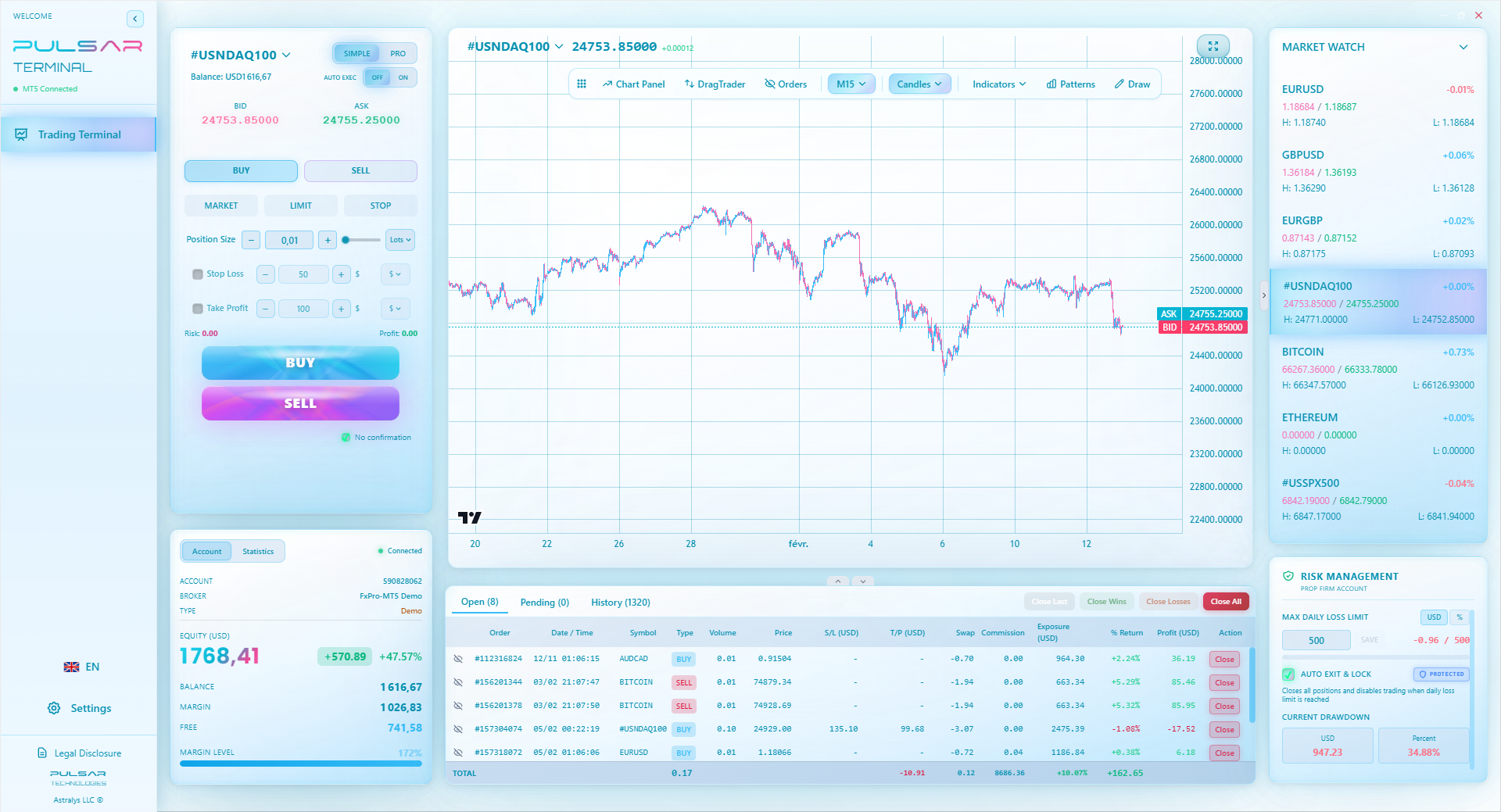
Managing the emotional stress of volatile markets is key, and tools like Pulsar Terminal help by automating risk management and letting you focus on the analysis, not the anxiety.
“I use the app's alert function not for trading signals, but as a canary in the coal mine for broader market stress.”
Here's how I structure my use of the Aboki Forex app within my overall trading plan now. Think of it as one input among many.
- Macro Overlay: The app is on a second screen. I'm not staring at it all day. I glance at it to understand the local financial weather. Is there a storm (huge gap)? Or is it calm (narrow gap)? This weather report influences how aggressively I trade correlated assets.
- Fundamental Confirmation: If I'm considering a trade based on, say, high Nigerian inflation data, I check the app. Is the street price of the dollar confirming this panic? If the parallel rate is relatively stable despite bad news, maybe the fear is already priced in. It's a sanity check.
- Withdrawal Planning: This is its most practical use. When I have a winning trade in USD and want to realize some profits in Naira, I use the app's rate to negotiate a fair price with my currency dealer. It ensures I'm not losing a chunk of my trading profits on the conversion back home.
- Disconnect Button: Crucially, I know when to ignore it. When I'm in a tight scalping strategy on the 5-minute chart of EUR/USD, the Naira parallel market rate is irrelevant noise. I close the app and focus on my charts, my RSI indicator, and my order flow.
The app is a powerful piece of local intelligence. But intelligence is useless without a good army to act on it. Your army is your regulated broker, your tested trading strategy, and your disciplined mind. Don't let the app become a distraction that pulls you away from the real work of trading.
FAQ
Q1Can I trade forex directly on the Aboki Forex app?
No, absolutely not. The Aboki Forex app (abokiforex.app) is strictly an information platform. It shows you exchange rates from the CBN and the parallel market, but it does not allow you to deposit money, place orders, or execute any trades. It's a news and data tool, not a brokerage.
Q2Is the Aboki Forex app legal in Nigeria?
Yes, as an information service, it is legal. It positions itself as a passive data aggregator. This is different from the previous AbokiFX website which the CBN accused of manipulating rates. The current app provides rates but does not help trading, which keeps it in a less contentious space.
Q3How accurate are the black market rates on the app?
They are generally reflective of the prevailing street rates in major hubs like Lagos and Abuja. However, they are aggregated estimates. The actual rate you get from a specific dealer might vary by a few Naira. It's an excellent guide, but always confirm with your dealer for a large transaction.
Q4As a forex trader, how does the Naira rate affect my EUR/USD trade?
Not directly, but through sentiment. A crashing Naira signals severe dollar demand and potential economic stress in a major African economy. This can contribute to a broader 'risk-off' mood in emerging markets, which can strengthen the US dollar (USD) globally. So, a plunging Naira on your Aboki app could be a confirming factor for a bullish USD view on your major forex pairs.
Q5What's the best way to fund an international forex broker from Nigeria?
The most reliable methods in 2025 are: 1) Local Bank Transfer to the broker's Nigerian domiciliary account (offered by brokers like Exness and OctaFX). 2) Cryptocurrency deposits (like USDT). Avoid using your Naira debit card for international broker payments, as CBN restrictions often block these transactions.
Q6Should I pay for the 'Pro' version of the Aboki Forex app?
For a trader, probably not. The free version gives you all the crucial rate information. The Pro version mainly removes ads. Since you're not using the app for trading execution, the free version provides all the market intelligence you need.
Q7Can I use the app's rates for my business accounting?
For informal tracking or estimates, yes. However, for official accounting, tax, or audit purposes, you must use the official CBN rate or the rate at which you legally sourced the currency through a licensed bank or BDC. The parallel market rate is not recognized for formal financial reporting.
Lekcja Prof. Winstona
:
- ✓The app is an info tool, not a broker. Zero trades happen there.
- ✓Use it to gauge local USD demand and macro stress.
- ✓Real trading requires a regulated international broker.
- ✓The parallel market gap is a sentiment indicator, not an entry signal.
- ✓Fund your broker via bank transfer or crypto, not Naira cards.
Jak przydatny był ten artykuł?
Kliknij gwiazdkę, aby ocenić
Tygodniowe analizy tradingowe
Darmowe tygodniowe analizy i strategie. Bez spamu.
O autorze
Olumide Adeyemi
Pionier Tradingu w Afryce Zachodniej
Jeden z najaktywniejszych edukatorów tradingu forex w Nigerii. 8 lat doświadczenia tradingowego z Lagos. Specjalizuje się w strategiach niskiego kapitału i wyzwaniach prop firm dla afrykańskich traderów.
Komentarze
Może Ci się też spodobać

Cara Trading Forex Sukses: 7 Prinsip dari Trader Profesional
Cara trading forex sukses dengan 7 prinsip trader pro: manajemen modal, disiplin, journal trading, backtest. Data nyata, bukan janji profit palsu.
Jam Trading Forex Terbaik untuk Trader Indonesia: Panduan Lengkap dengan Tabel Waktu
Panduan jam trading forex untuk trader Indonesia. Tabel 4 sesi dunia, jam emas 20:00-00:00, sesi mana yang harus dihindari. Data akurat + tips dari trader berpengalaman.
Top 5 Sàn Forex Uy Tín Nhất 2026: Review Jujur dari Trader Indonesia
Top 5 sàn forex uy tín 2026 untuk trader Indonesia. Review jujur: spread, deposit, withdraw, dukungan lokal. Exness, XM, IC Markets & lebih.
All these calculators are built into Pulsar Terminal with real-time data from your MT5 account. One-click position sizing, automatic risk management, and instant calculations.
