


Most traders obsess over the best time of day to trade, but they're missing the bigger picture.

Olumide Adeyemi
Pionier Tradingu w Afryce Zachodniej ·  Nigeria
☕ 11 min czytania
Czego się nauczysz:

Most traders obsess over the best time of day to trade, but they're missing the bigger picture. The truth is, your chances of success swing wildly depending on the month. I learned this the hard way in 2017, blowing a 15% account gain in a single, sleepy August week because I forced trades when the market was on holiday. Some months, the market throws fastballs you can hit for a home run. Other months, it just throws sand. Let's figure out which is which.
You might think a chart is a chart, whether it's January or July. It's not. Trading is a game of liquidity and participant activity. When big banks, hedge funds, and pension managers are at their desks, markets move with conviction. When they're on the beach in the Hamptons or visiting family for Christmas, markets get thin, weird, and prone to sharp, unpredictable spikes.
Think of it like Lagos traffic. During peak hours (high liquidity months), the flow is heavy but predictable. You can navigate it. At 3 AM on a Sunday (low liquidity months), it's empty, but one stray danfo bus can cause a massive, unexpected jam. Your trading strategy needs to account for this seasonal traffic.

Warning: Trading a scalping strategy that relies on tight spreads in August is a recipe for disaster. Spreads widen dramatically when liquidity dries up, eating into your profits before the trade even moves.
The core idea is volatility. Volatility means opportunity, but also risk. The best months to trade forex are typically those with sustained, predictable volatility, not the erratic, news-driven kind. This is where understanding the calendar isn't just helpful, it's a core part of your risk management. I once got caught in a massive, illiquid spike on USD/CHF one late December afternoon. My stop loss was technically hit, but at a price 25 pips away from where I set it. The market just skipped right over it. That lesson about low-liquidity environments cost me real money.

💡 Wskazówka Winstona
Mark August 1st on your calendar with a big red 'X'. Let it be a visual reminder to switch to defensive, small-ball trading for the next 31 days.
“The best months to trade forex are typically those with sustained, predictable volatility, not the erratic, news-driven kind.”
Let's walk through the year. I'll share what I've seen over the past decade, trading from Nigeria and watching how global flows interact with our own market hours (roughly 8 AM to 5 PM WAT for the most active local participation).
January - The Fresh Start
January is usually a strong month. Fund managers are back, allocating new capital for the year. You get clear trends, especially in pairs like EUR/USD and GBP/USD. The first week can be choppy as everyone finds their feet, but it quickly settles into good trading conditions. It's one of the best months to trade forex for trend followers.
February & March - The Engine Room
These are consistently good months. Liquidity is full, economic data flows are heavy (budgets, forecasts), and trends can develop nicely. It's a great time for swing trading positions over several days.
April & May - The Spring Shift
April can be tricky with Easter holidays causing pockets of low liquidity. May often sees a "Sell in May and go away" mentality start to creep into equity markets, which can cause risk-off flows that hit currencies like the AUD and NZD. Be mindful of these cross-market sentiments.
June - Mid-Year Volatility
June can be volatile. It's the end of the Q2, so there's portfolio rebalancing. Central bank meetings are often clustered here. It's a month for the alert, not the complacent. I remember a specific trade in June 2022 on XAU/USD (gold). I went long at $1830 based on a support bounce, but I ignored the heavy USD strength from Fed rhetoric. I was stopped out at $1815. The seasonal tendency for USD strength in a risk-off Q2-end environment overruled my chart pattern.
July & August - The Summer Lull
Here we are. The worst months for many traders. July starts okay but decays. August is famously thin. Major players are on holiday. Moves can be exaggerated by minimal volume, leading to false breakouts. My rule? I cut my position size by at least 50% in August. If you must trade, focus on the major sessions (London overlap) and avoid the Asian session like the plague. This is when using a broker with consistently good execution, like IC Markets or Pepperstone, really matters to avoid terrible slippage.
September - The Return
Volatility returns with a vengeance. Everyone's back, and they're eager to make moves. Liquidity floods back in. September is often one of the most volatile and trend-rich months of the year. Be prepared.
October - Notorious
October has a reputation for market crashes (1987, 2008). While that's extreme, it is a month where volatility remains high. It demands respect and tight risk management.
November & December - The Year-End Rollercoaster
November is often strong, driven by year-end positioning. December is split: the first two weeks can be good, but after the 15th, liquidity evaporates faster than water in the Harmattan. Trading the last week of December is gambling, not trading. Major banks have their books closed.
“Trading from a Nigerian perspective means your prime trading hours beautifully overlap with the world's most liquid period.”
Trading from Nigeria adds another layer. Our market access, internet stability, and the ever-present issue of the Naira mean you can't just blindly follow a global calendar.
First, your prime trading hours (when you're most likely awake and at your screen) are the European morning and the London open. This is great, as it overlaps with the most liquid period globally. The best months to trade forex for us are when this London session is fully active - so avoid the deep summer and year-end holidays.
Second, be hyper-aware of local Naira-related events. Budget announcements, CBN MPC meetings, and forex policy changes can cause unexpected volatility in how you fund your account or even in the USD/NGN pair if you have access to it. These events don't follow the Western calendar, so layer them on top.
Third, internet and power issues are our unique "low-liquidity" event. You don't want to be in a high-volatility trade in September when "NEPA takes light." I've been there, staring at a dead screen while my profit turned into a margin call. During high-volatility months, my number one rule is: have a backup power source and a mobile data hotspot ready to go. No excuses.

Pro Tip: Align your deposit schedule with the best trading months. If you're adding capital, do it in January or September, not August. You want your money working when the market is working, not sitting idle during the summer doldrums.
“Trading from a Nigerian perspective means your prime trading hours beautifully overlap with the world's most liquid period.”
Let's get specific. Don't just take my word for it. While exact numbers change yearly, the patterns are stubborn. Here's a simplified table showing the typical relative volatility and liquidity for major pairs like EUR/USD across the year. Think of it as a trader's weather forecast.
| Month | Volatility | Liquidity | Typical Character |
|---|---|---|---|
| Jan, Feb, Mar | High | Very High | Strong, directional trends. Good for swing trades. |
| Apr, May | Moderate | High | Choppier, prone to reversals. Be nimble. |
| Jun | High | High | Erratic, news-driven. Watch for quarter-end flows. |
| Jul, Aug | Low to Moderate | Low | Thin, prone to false breaks. Reduce size. |
| Sep, Oct | Very High | Very High | Explosive, high momentum. Tight stops are key. |
| Nov | High | High | Strong trends continue. |
| Dec | High (Early) to Very Low (Late) | High to Very Low | Split personality. Stop trading after mid-month. |
How do you use this? If you're a volatility trader, September and October are your peak seasons. If you're a beginner who needs clean, liquid markets to practice execution, stick to February, March, and November. Never, ever try to learn the ropes in August. The market's weird behavior will teach you all the wrong lessons.
I track the Average True Range (ATR) on my charts for each pair. I have a mental benchmark for what a "normal" daily range is for, say, GBP/USD (around 100 pips). In August, that might drop to 60 pips. In September, it can blow out to 150. Adjust your profit targets and stop losses accordingly. A 50-pip stop in September might be too tight; in August, it might be too wide.
💡 Wskazówka Winstona
Your first trade in September should be with a half-size position. The market returning from holiday can be jittery; don't assume it will hit the ground running smoothly.

“The number one mistake is trading out of boredom during slow months.”
This isn't about predicting the future. It's about adapting your tactics to the current market environment. Here’s how I change my approach.
During High Volatility Months (Sep, Oct, Jan, Jun):
- I increase my stop-loss distance. Volatile markets need room to breathe. A trade that would get a 20-pip stop in May might get a 35-pip stop in September.
- I might reduce my position size slightly to account for the wider stop, keeping my total risk per trade (in Naira) exactly the same. This is where a position size calculator is non-negotiable.
- I focus on breakouts and momentum strategies. Indicators like the MACD indicator can be good for catching the wave.
- I am extra vigilant about news events. High volatility plus a major news release is a dangerous cocktail.
During Low Volatility Months (Aug, late Dec):
- I cut my position size by 50% or more. This is my single most important rule. The opportunity isn't there, so why risk full capital?
- I switch to range-bound strategies. Look for currencies bouncing between clear support and resistance.
- I use indicators like the RSI indicator to spot overbought/oversold conditions within those ranges.
- I avoid trading during off-hours (Asian session) completely.
- I simply trade less. It's okay to watch. Preserving capital is a victory.

Example: Let's say my standard risk is ₦5,000 per trade. In September, with a 35-pip stop on EUR/USD, my position size might be 0.14 lots. In August, with a 25-pip stop, to keep my risk at ₦5,000, I'd trade only 0.10 lots. But because conditions are poor, I'd actually halve that again to 0.05 lots, accepting a smaller potential gain for much lower risk in a treacherous environment.
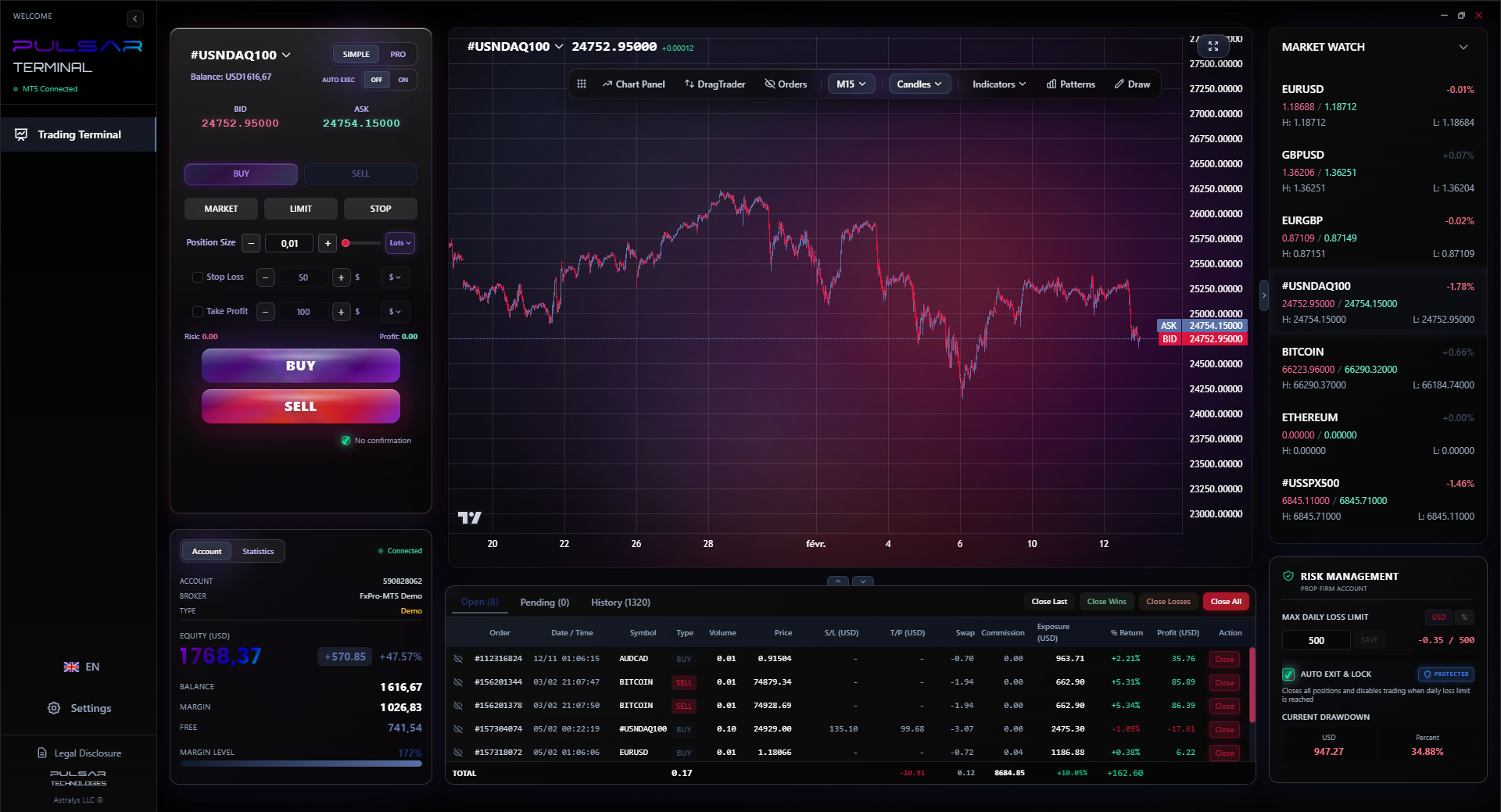
When adjusting your strategy for volatile months, managing multiple take-profit levels and trailing stops manually is stressful; Pulsar Terminal automates this directly on your MT5 chart.
“The number one mistake is trading out of boredom during slow months.”
The number one mistake I see, and the one I've made myself, is trading out of boredom during slow months.
You're used to taking 3-4 trades a week in September. November rolls around, it's still good. Then December hits. The market slows, but your habit doesn't. You sit at the screen, watching paint dry. Out of frustration, you start manufacturing setups. You take a marginal trade you'd normally skip. You widen your entry criteria. That's when the low-liquidity ghost spike comes out of nowhere and takes your money.
How do you avoid it?
- Schedule Your Trading Year. Literally mark your calendar. Circle September to November and January to March in green. Mark August and the last two weeks of December in red. In the red zones, your goal is to protect capital, not grow it.
- Find a Side Hustle for Slow Periods. Use August to backtest a new strategy, study price action, or write your trading journal. Improve your skills off the battlefield.
- Set a Hard Trade Limit. In August, I allow myself one, maybe two trades per week. And only if the setup is perfect. This enforced discipline saves me thousands of Naira every single year.
Remember, professional traders don't trade all the time. They wait for their pitch. The best months to trade forex are your sweet spot. The rest of the time, you're in the dugout, studying the pitcher.
“Professional traders don't trade all the time. They wait for their pitch.”
Alright, let's make this actionable. Here is a simple, 4-step plan you can start with today.
Step 1: Audit Your Past Trades. Go through your trade history from last year. Sort it by month. Calculate your win rate and average profit/loss for each month. I did this and found my win rate dropped 22% in August compared to September. Seeing the cold, hard numbers changes your behavior.
Step 2: Define Your Seasons. Based on what you've learned, label your year:
- Peak Season (Go Time): September, October, November, January, February, March.
- Shoulder Season (Be Careful): April, May, June, July, early December.
- Off Season (Defense): August, late December (after the 15th).
Step 3: Create Seasonal Rules. Write down 3 specific rules for each season. For example:
- Off-Season Rule: Max 2 trades per week. Position size at 25% of normal.
- Peak Season Rule: Can trade all valid setups. Use full position sizing from my calculator.
Step 4: Choose the Right Tools. In low-liquidity months, your broker's execution is critical. A broker with variable spreads might see them balloon. Consider a raw spread account from a broker like Exness or XM for more consistency, though always check their local reputation and deposit options. Your strategy matters too. Ditch the scalp in August. Pick up a longer-term chart and practice your analysis.
Stick to this plan for a year. It will feel restrictive at first, especially when you're forced to sit out. But by the end of the year, your equity curve will be smoother, and your confidence will be higher because you're working with the market's rhythm, not against it.

FAQ
Q1Is August really the worst month to trade forex?
For most retail traders, yes. The combination of low liquidity from major market participants being on holiday leads to wider spreads, erratic price spikes, and false breakouts. It's a month where preserving capital is a bigger win than trying to make a profit.
Q2What is the single best month to trade forex?
Historically, September often shows the highest volatility and strongest trends as traders return from summer holidays and reposition for the year's end. It's not automatically profitable - it's dangerous if you're not careful - but it typically presents the most and clearest opportunities.
Q3As a Nigerian trader, does the Harmattan or rainy season affect forex trading?
Not directly, but the indirect effects are huge. The Harmattan can disrupt internet services, and the rainy season can cause power outages. These are your personal 'low-liquidity events.' During high-volatility months (Sep-Oct), having a reliable inverter and mobile data backup is as important as your trading strategy.
Q4Should I avoid trading around Christmas and New Year?
Absolutely, especially in the week between Christmas and New Year. Liquidity is at its annual lowest. Price moves can be nonsensical and driven by a handful of trades. It's a great time to log off, recharge, and plan for January.
Q5Do these seasonal patterns work for gold (XAU/USD) and cryptocurrencies too?
Gold often sees increased volatility in January and September, but it's also heavily influenced by real-world events. Cryptocurrencies, being traded 24/7 globally, have weaker seasonal patterns but can still be affected by lower liquidity during traditional holiday periods. Always do your own analysis. You can learn more in our XAU/USD guide.
Q6How much should I reduce my trade size in a bad month like August?
There's no magic number, but I recommend cutting your standard position size by at least 50%. If you normally risk 1% of your account per trade, risk 0.5% or even 0.25%. The goal is to stay engaged without exposing yourself to the unique dangers of thin markets.
Q7Can I make money trading in August if I'm really good?
Skilled traders can make money in any condition, but they do it by recognizing the change in environment and adapting. They're not forcing their September strategies onto an August market. They trade smaller, pick their spots with extreme care, and often use different tactics like range trading. The 'edge' is much smaller.
Lekcja Prof. Winstona
:
- ✓September & October offer the year's highest volatility.
- ✓Cut position size by 50%+ in August & late December.
- ✓Align your capital deposits with high-activity months.
- ✓Internet/power stability is a Nigerian trader's unique risk.
Jak przydatny był ten artykuł?
Kliknij gwiazdkę, aby ocenić
Tygodniowe analizy tradingowe
Darmowe tygodniowe analizy i strategie. Bez spamu.
O autorze
Olumide Adeyemi
Pionier Tradingu w Afryce Zachodniej
Jeden z najaktywniejszych edukatorów tradingu forex w Nigerii. 8 lat doświadczenia tradingowego z Lagos. Specjalizuje się w strategiach niskiego kapitału i wyzwaniach prop firm dla afrykańskich traderów.
Komentarze
Może Ci się też spodobać

Cara Trading Forex Sukses: 7 Prinsip dari Trader Profesional
Cara trading forex sukses dengan 7 prinsip trader pro: manajemen modal, disiplin, journal trading, backtest. Data nyata, bukan janji profit palsu.
Jam Trading Forex Terbaik untuk Trader Indonesia: Panduan Lengkap dengan Tabel Waktu
Panduan jam trading forex untuk trader Indonesia. Tabel 4 sesi dunia, jam emas 20:00-00:00, sesi mana yang harus dihindari. Data akurat + tips dari trader berpengalaman.
Top 5 Sàn Forex Uy Tín Nhất 2026: Review Jujur dari Trader Indonesia
Top 5 sàn forex uy tín 2026 untuk trader Indonesia. Review jujur: spread, deposit, withdraw, dukungan lokal. Exness, XM, IC Markets & lebih.
All these calculators are built into Pulsar Terminal with real-time data from your MT5 account. One-click position sizing, automatic risk management, and instant calculations.
