


You want to know the best time for forex trading in India? Let me stop you right there.

Rajesh Sharma
Starszy Analityk Forex ·  India
India
☕ 11 min czytania
Czego się nauczysz:
- 1The Legal Minefield You Have to Navigate First
- 2Trading INR Pairs on Domestic Exchanges
- 3The Global Sessions (If You Go the Offshore Route)
- 4The Real Costs: Domestic vs. Offshore
- 5Brokers & Platforms for the Indian Trader
- 6Practical Strategies for Indian Time Zones
- 7Common Pitfalls & Mistakes to Avoid
- 8The Final Verdict: What's the Best Time?

You want to know the best time for forex trading in India? Let me stop you right there. Before we talk about clock ticks and candle wicks, we need to talk about the RBI, SEBI, and the legal minefield you're about to step into. The 'best time' is meaningless if you're trading on the wrong platform and risking your capital with an unregulated offshore broker. I've seen too many traders get this wrong from the start. Let's cut through the noise.
Here's the brutal truth most 'gurus' won't tell you: as an Indian resident, your legal options for forex are severely limited. The Reserve Bank of India (RBI) and SEBI call the shots under FEMA. You are legally allowed to trade currency derivatives (futures and options) on Indian exchanges like the NSE or BSE. The permitted pairs are INR-based: USD/INR, EUR/INR, GBP/INR, JPY/INR, and a few cross-currency pairs like EUR/USD.
That's it. Full stop.
Trying to trade spot GBP/JPY or AUD/USD through an international broker's offshore entity? Technically, you're violating FEMA rules. The Liberalised Remittance Scheme (LRS) that lets you send $250,000 abroad? It explicitly forbids using that money for margin trading or forex speculation. I'm not a lawyer, but I've had friends get their bank accounts flagged for moving money to brokers not on SEBI's list. The risk is real.
So, when we discuss the best time for forex trading in India, we're really discussing two parallel worlds: the legal, domestic market with its specific hours and pairs, and the grey-area, offshore market that follows global sessions. Your first decision isn't about a strategy; it's about which of these paths you're willing to walk, understanding the compliance risks of the latter.

Warning: The RBI maintains an 'Alert List' of unauthorized forex platforms. Funding an account with one of these could lead to serious regulatory headaches, including frozen transactions. Always check SEBI's authorized list first.
If you go the legal route, you're trading on the National Stock Exchange (NSE), Bombay Stock Exchange (BSE), or MSEI. Your trading day is dictated by their market hours.
The Official Trading Session
The currency derivatives segment on the NSE runs from 9:00 AM to 5:00 PM IST, Monday to Friday. That's your entire window. There's no 24-hour action here. Liquidity isn't constant; it has clear peaks and troughs.
When the Market Actually Moves
Don't just log in at 9 AM expecting fireworks. The first 30-45 minutes can be chaotic as overnight orders and global cues get priced in. The real meat often comes between 10:30 AM and 2:30 PM IST. Why? This window overlaps with the tail end of the European morning (5:30 AM - 7:30 AM GMT) and the opening of the Indian equity market, which drives demand for USD/INR. Major economic data from India is also typically released around 10:30 AM IST.
I learned this the hard way. Early in my career, I took a short position on USD/INR at 9:15 AM based on a weak global dollar. By 11 AM, strong local dollar demand from importers had pushed the pair 20 pips against me. I hadn't respected the local market's unique drivers. The lesson? On domestic exchanges, you're not just trading a currency pair; you're trading the Indian economy's daily dollar needs.
Volume dries up significantly after 4:00 PM IST. Trying to execute a large order in the last hour can result in terrible slippage. Your position size calculator is your best friend here - never assume liquidity is infinite.

Example: A standard lot on the NSE for USD/INR futures is $1000. If you're trading 5 lots, that's a $5000 position. A 20-pip move (0.0020) on USD/INR equals a ₹1000 profit or loss per lot. That's ₹5000 on your position. Manage your size accordingly.

💡 Wskazówka Winstona
The market's most predictable move is its first hour of liquidity after a closed session. Watch the 9:15-10:15 AM IST window on USD/INR for clues on the day's sentiment.
“On domestic exchanges, you're not just trading a currency pair; you're trading the Indian economy's daily dollar needs.”
Let's be realistic. Many Indian traders access the global forex market via brokers registered in Cyprus, Mauritius, or other jurisdictions. If that's your chosen path, your 'best time' is completely different and aligns with global liquidity.
You have three major trading sessions to know:
- Asian Session (Tokyo): Starts around 2:30 AM IST. Generally the quietest. Pairs like AUD/USD and USD/JPY can see action.
- London Session: Kicks off at 11:30 AM IST. This is the big one. Liquidity explodes. Over 30% of all global forex transactions happen here. All major pairs are active, especially EUR/USD and GBP/USD. This is where I've made most of my consistent money.
- New York Session: Begins at 7:00 PM IST. Massive volume, especially when it overlaps with London (7:00 PM to 11:30 PM IST). This 4.5-hour overlap is the absolute peak of the trading day. Volatility is high, trends can establish or reverse, and news from the US hits the tape.
For an Indian trader, this creates a brutal schedule. The London-New York overlap is from 7:00 PM to 11:30 PM IST. That's prime family time, dinner time, or frankly, sleep time if you have a day job. I've spent years trading this window, and it burns you out. The money can be good, but the cost is your circadian rhythm.
My advice? If you trade offshore, specialize. Don't try to catch the Asian, London, and New York moves. Pick one session that suits your life. For most Indians with jobs, the London open (11:30 AM IST) during lunch break or the early New York session (7:00 PM IST) after work are the only feasible windows. A focused scalping strategy during these 90-minute windows is often more sustainable than marathon sessions.

This is where the rubber meets the road. Your profitability is gutted by costs before you even make a trade. Let's compare.
Trading USD/INR on an Indian Broker (e.g., Zerodha):
- Brokerage: ₹20 per executed order (or 0.03%, whichever is lower).
- Transaction Charges: ~₹0.05 per lakh of turnover + GST.
- Exchange Fees: SEBI turnover fee of ₹10 per crore.
- Spread: Typically wider than the interbank market. You might see a 2-3 pip spread on USD/INR.
- use: Much lower, often capped at 1:10 or 1:20 by SEBI guidelines.
Trading EUR/USD on an Offshore Broker (e.g., IC Markets):
- Commission: Might be $7 per round turn per lot.
- Spread: Can be razor-thin, often 0.0-0.2 pips on raw accounts.
- No GST/Indian Taxes on the brokerage itself (but you are liable to pay tax on profits in India).
- use: Can be dangerously high (1:500, 1:1000). This is a double-edged sword.
Here's a personal example. In 2020, I was swing trading EUR/USD on an offshore platform. The tight spreads (0.1 pips) and low commission meant my break-even was tiny. A 10-pip move was pure profit. I compared it to a USD/INR trade where a 10-pip move first had to cover a 3-pip spread and fees. The offshore trade was objectively cheaper to execute.
But! That higher offshore use is a trap. A 1:500 use means a 0.2% move against you wipes out your margin. I've been on the wrong side of that. With a domestic broker at 1:10 use, the same move is only a 10% drawdown. It forces discipline. You can learn more about the dangers of high use in our guide on margin calls.
💡 Wskazówka Winstona
If you trade the London session (11:30 AM IST), place your key orders before it opens. The first 15 minutes are for gamblers, not traders.

“The London-New York overlap is from 7:00 PM to 11:30 PM IST. That's prime family time, dinner time, or frankly, sleep time if you have a day job.”
Your choice of broker fundamentally changes your trading experience and legal exposure.
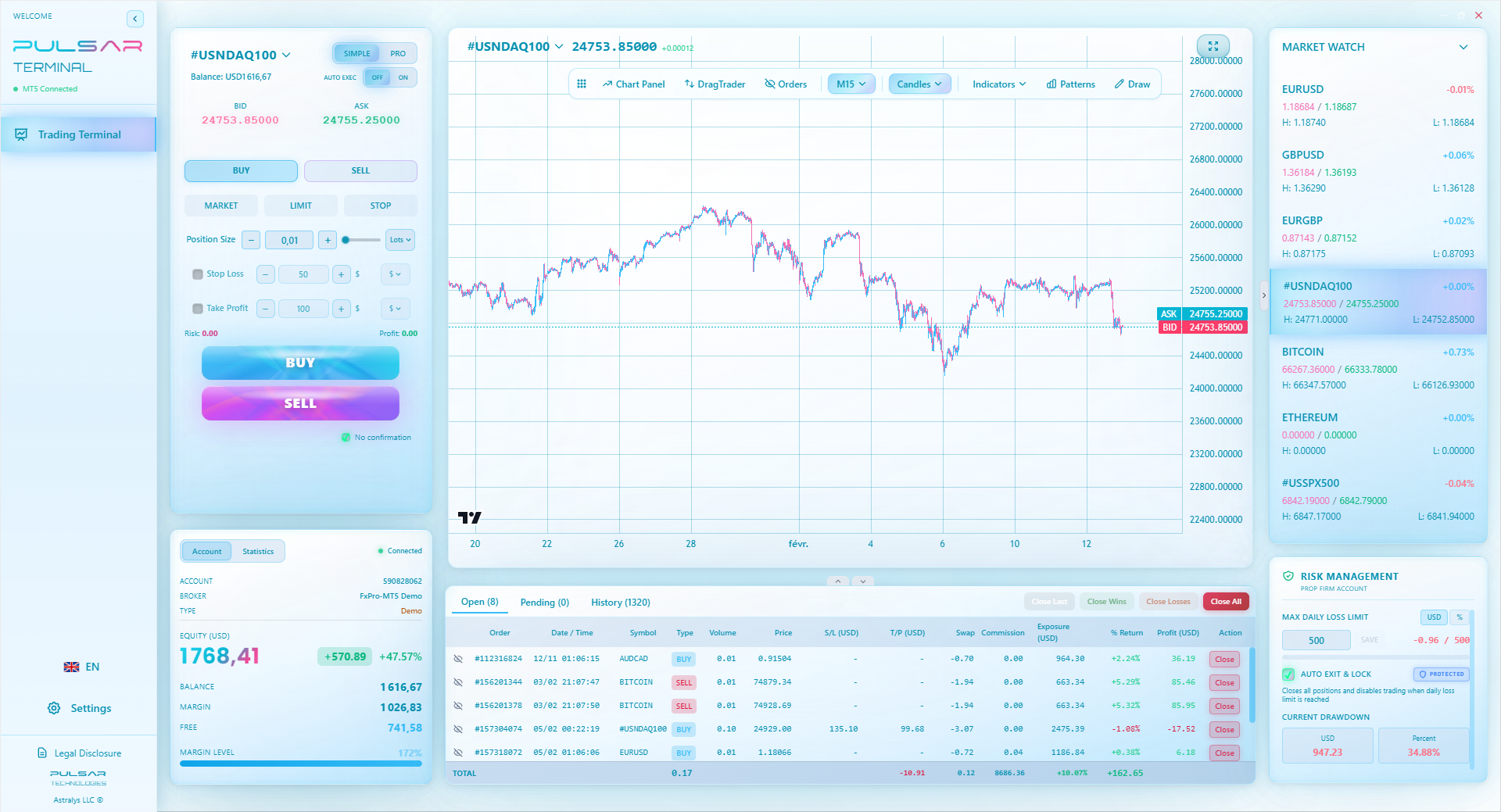
For Legal, Domestic Trading: You need a SEBI-registered broker. Platforms like Zerodha Kite or Upstox Pro are popular. They're reliable, integrated with Indian banks for instant transfers via UPI, and you're fully compliant. The downside? Their charting and order tools can feel basic compared to dedicated forex platforms like MT5. This is where a tool like Pulsar Terminal becomes interesting - it can add advanced functionality to your trading setup.
For Offshore Access (Proceed with Caution): Brokers like Exness, IC Markets, or XM accept Indian clients through their international entities. They offer MT4/MT5, which is the industry standard. Funding can be a hurdle - you might use international bank transfers or cryptocurrencies, which adds another layer of complexity and cost.
I've used both. For trading INR pairs and sleeping soundly regarding regulations, I use my domestic account. For analyzing and trading global pairs like XAU/USD (Gold), I maintain a small account with a reputable offshore broker, fully aware of the regulatory grey zone. Never put all your capital in one basket, especially an offshore one.

Pro Tip: Whatever broker you choose, test their customer support during Indian hours. Can you get help at 10 PM IST when the NY session is volatile? If not, that's a major red flag.
Let's get tactical. Based on the sessions, here’s how I structure my week.
Scenario 1: You have a 9-5 job and trade domestically (INR pairs).
- Best Time: Your lunch break, roughly 12:30 PM - 2:00 PM IST. This captures the heart of the Indian session and some European overlap.
- Strategy: Look for breakouts from the morning range. Use the 1-hour and 15-minute charts. Set your orders before lunch and use tight stop-losses. You're a day trader, not a scalper.
Scenario 2: You're a night owl trading global pairs offshore.
- Best Time: The London-New York overlap, 7:00 PM - 11:30 PM IST.
- Strategy: This is for higher timeframes. I use the 4-hour and 1-hour charts to identify trends established during the London session and look for continuation or pullback entries as New York comes in. This is where indicators like the MACD indicator on the 4-hour chart can help confirm momentum. Avoid the first 15 minutes of the NY open - it's pure noise.
Scenario 3: The Weekend Warrior (Planning Session).
- Time: Sunday evening, 5:00 PM IST onwards.
- Activity: The Asian markets open, and gaps can occur. I don't trade this. Instead, I analyze the weekly charts, plan my levels for major pairs like EUR/USD, and set price alerts. All my orders for the week are planned now, so I'm not making emotional decisions at 11 PM on a Tuesday.
The key is to match your strategy to your available, focused time. Don't try to scalp the 5-minute chart if you only have 30 minutes. You'll just chase noise.
“The best edge you have isn't knowing a secret time slot. It's trading when you are alert, prepared, and sticking to a plan.”
I've made these mistakes so you don't have to.
1. Chasing the 24-Hour Market: You can't trade all sessions. Fatigue leads to horrific decisions. I once took a long EUR/USD trade at 2 AM IST because of a news spike from New Zealand. I was half-asleep, ignored my rules, and took a 50-pip loss in minutes. Pick your session and stick to it.
2. Ignoring Domestic News: Even if you trade offshore EUR/USD, Indian market hours (9 AM - 5 PM IST) can see weird INR-related flows that indirectly affect other Asian currencies or even global risk sentiment. A sharp move in USD/INR can ripple.
3. Underestimating Slippage on Indian Exchanges: Liquidity isn't as deep as the interbank market. If you try to market-sell 10 lots of USD/INR at once, you might fill at a worse average price than expected. Use limit orders.
4. Tax Confusion: Profits from domestic futures & options are treated as business income (or speculative business income) and taxed per your slab. Profits from offshore trading? You're still liable to declare them as 'Income from Other Sources' in India. Keep careful records. The taxman doesn't care if your broker was in Cyprus.
5. The Prop Firm Trap: Many prop firms offering challenges are based offshore. Passing their challenge often requires aggressive risk management to hit profit targets while avoiding daily loss limits. Managing this manually is stressful. This is a specific scenario where automation tools that handle partial closures and trailing stops can be the difference between passing and blowing an account.
💡 Wskazówka Winstona
Your most important tool isn't an indicator; it's a clock. Set a timer for your trading session. When it rings, close the platform. Overtrading kills accounts.
Managing complex prop firm rules or multiple take-profit levels across late-night sessions is exhausting; Pulsar Terminal automates these tasks on MT5 so you can focus on analysis, not order management.
So, after all that, what's the best time for forex trading in India?
It's a trick question. There is no single best time. There's only the best time for YOU, based on your chosen market, your strategy, and your lifestyle.
- For the regulatory-compliant trader focusing on USD/INR: Your sweet spot is 10:30 AM to 2:30 PM IST.
- For the offshore trader focusing on EUR/USD or GBP/USD: Your golden hours are the London-New York overlap, 7:00 PM to 11:30 PM IST.
But more important than the clock is the consistency. The market doesn't care if you're tired. It will take your money just as fast at 11 AM as at 11 PM.
My strongest recommendation? Start with the legal, domestic route. Master the USD/INR pair. Learn how the spread, fees, and lower use affect your psychology and risk management. It's a tougher school with higher transaction costs, but it teaches discipline. Once you can consistently navigate that, then - and only then - consider if the allure of the global 24-hour market is worth the regulatory grey areas and sleepless nights.
The best edge you have isn't knowing a secret time slot. It's trading when you are alert, prepared, and sticking to a plan you made when the market was closed. Everything else is just noise.
FAQ
Q1Is forex trading legal in India?
Yes, but with strict limitations. You can legally trade currency futures and options (like USD/INR, EUR/INR) on SEBI-regulated Indian exchanges (NSE, BSE). Trading spot forex on major global pairs (like EUR/USD) through international brokers is in a regulatory grey area and not explicitly permitted under RBI's FEMA rules for speculative purposes.
Q2What time does the forex market open in India?
It depends. The legal domestic market (NSE, BSE) for currency derivatives is open from 9:00 AM to 5:00 PM IST. The global forex market operates 24 hours, but key sessions for an Indian trader are: Asian (from ~2:30 AM IST), London (from 11:30 AM IST), and New York (from 7:00 PM IST).
Q3Can I trade at night in India?
You cannot trade INR pairs on Indian exchanges at night. However, if you use an offshore broker, you can trade global pairs 24/5. The most volatile and liquid night session for Indians is the London-New York overlap from 7:00 PM to 11:30 PM IST.
Q4Which forex pair is most traded in India?
On domestic exchanges, USD/INR is by far the most traded and liquid currency futures contract. In the offshore grey market, Indian traders commonly focus on major pairs like EUR/USD, GBP/USD, and USD/JPY due to their high liquidity and lower spreads.
Q5What is the best strategy for Indian time zones?
For day jobs: Focus on the 12:30 PM - 2:00 PM IST window for INR pairs, trading breakouts from the morning range. For night trading: Focus on the 7:00 PM - 11:30 PM IST window for global pairs, using 1-hour and 4-hour charts to trade with the trend established by London.
Q6Do I pay tax on forex trading profits in India?
Yes. Profits from trading on Indian exchanges are treated as business income and taxed per your income slab. Profits from offshore trading are also taxable in India as 'Income from Other Sources.' You must declare this income in your ITR.
Q7Why are spreads higher on Indian brokers?
Spreads on USD/INR are higher because you're trading a futures contract on an exchange, not the interbank spot market. The liquidity pool is smaller and includes exchange fees. A 2-3 pip spread is common, compared to 0.1 pips or less on EUR/USD with a raw account offshore.
Lekcja Prof. Winstona
:
- ✓Legal INR trading is 9 AM-5 PM IST only.
- ✓Peak domestic liquidity is 10:30 AM-2:30 PM IST.
- ✓Global peak is 7 PM-11:30 PM IST (London-NY).
- ✓Domestic spreads are 2-3 pips; offshore can be 0.1.
- ✓Tax applies to profits from both markets.
Jak przydatny był ten artykuł?
Kliknij gwiazdkę, aby ocenić
Tygodniowe analizy tradingowe
Darmowe tygodniowe analizy i strategie. Bez spamu.
O autorze
Rajesh Sharma
Starszy Analityk Forex
Ponad 10 lat doświadczenia na rynkach indyjskich i południowoazjatyckich. Zaczynał od instrumentów pochodnych NSE, zanim przeszedł na międzynarodowy forex. Specjalizuje się w USD/INR i parach rynków wschodzących.
Komentarze
Może Ci się też spodobać

Cara Trading Forex Sukses: 7 Prinsip dari Trader Profesional
Cara trading forex sukses dengan 7 prinsip trader pro: manajemen modal, disiplin, journal trading, backtest. Data nyata, bukan janji profit palsu.
Jam Trading Forex Terbaik untuk Trader Indonesia: Panduan Lengkap dengan Tabel Waktu
Panduan jam trading forex untuk trader Indonesia. Tabel 4 sesi dunia, jam emas 20:00-00:00, sesi mana yang harus dihindari. Data akurat + tips dari trader berpengalaman.
Top 5 Sàn Forex Uy Tín Nhất 2026: Review Jujur dari Trader Indonesia
Top 5 sàn forex uy tín 2026 untuk trader Indonesia. Review jujur: spread, deposit, withdraw, dukungan lokal. Exness, XM, IC Markets & lebih.
All these calculators are built into Pulsar Terminal with real-time data from your MT5 account. One-click position sizing, automatic risk management, and instant calculations.
