


Let's clear this up right now: if you're searching for 'Capitec forex' because you want to trade EUR/USD from your phone, you're in the wrong place.

David van der Merwe
Trader Rynków Wschodzących ·  South Africa
☕ 10 min czytania
Czego się nauczysz:
- 1What Capitec Forex Actually Is (And Isn't)
- 2SARB Regulations: The Invisible Cage Around Your Money
- 3The Real Costs: Fees, Spreads, and What They Don't Tell You
- 4How South Africans Actually Trade Forex (The Legal Way)
- 5Side-by-Side: Capitec vs. Real Forex Brokers
- 6The Quickest Ways to Lose Money (And How to Avoid Them)
- 7Making Smart Choices: A Simple Decision Guide
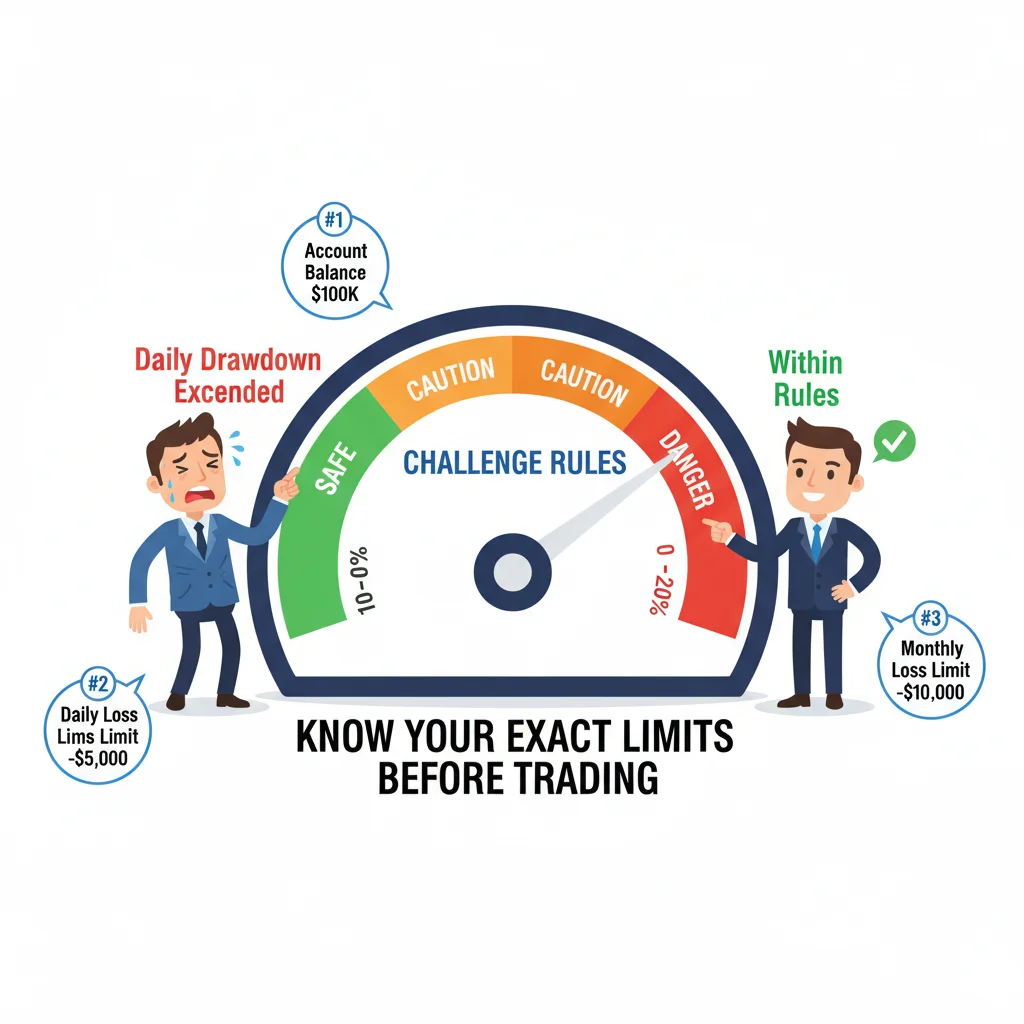
Let's clear this up right now: if you're searching for 'Capitec forex' because you want to trade EUR/USD from your phone, you're in the wrong place. I've seen this confusion cost new traders real money. Capitec is a bank for moving money internationally, not a speculative trading platform. This guide will break down exactly what Capitec offers, the brutal SARB regulations you can't ignore, and where you should actually go if you want to trade currencies. Most importantly, I'll show you why using the wrong tool for the job is the fastest way to a margin call.
This is the most critical misunderstanding. You don't log into a Capitec forex account, place a leveraged trade on GBP/JPY, and set a stop-loss. That's not happening.
Capitec's forex services are built for two things: international payments and card usage abroad. Think sending money to a family member in the UK, paying for an online course in dollars, or using your Capitec card while on holiday. It's a utility, not a trading terminal.
For businesses, they offer a 'Capitec Forex System' for things like FX Spot transactions and Foreign Exchange Contracts (FECs). This is for hedging - a company locking in a rate for a future import payment. It's risk management, not speculation. The mindset and skill set are worlds apart from trying to scalp the EUR/USD guide for 10 pips.
I made this mistake early on. I tried to 'trade' by timing international payments for a client, thinking I could outsmart the bank's spread. I'd watch the rate on my broker platform, then rush to make a payment on Capitec when it looked good. The result? The 'live' rate Capitec showed was indicative, and the final rate applied at processing was always worse. I 'lost' about R800 on a R50,000 transfer before I realized I was just gambling with expensive, slow execution. A proper broker like Exness or IC Markets would have executed in milliseconds for a cost of a few dollars.

Warning: Using bank forex for trading attempts is like using a tractor for a Formula 1 race. The mechanics are all wrong, the costs are hidden in the spread, and you will lose.
You can't talk about any forex activity in South Africa without the South African Reserve Bank (SARB) breathing down your neck. Their Exchange Control Regulations are not suggestions; they are the law. Ignoring them can freeze your assets.
Your Personal Allowances (The Limits)
Every year, you get a budget from the government for moving money offshore:
- Single Discretionary Allowance: R1 million. Use it for travel, gifts, online shopping. No tax clearance needed.
- Foreign Investment Allowance: R10 million. This is for investing offshore - buying stocks, property. You must have a Tax Compliance Status PIN from SARS.
Think of that R1 million as your yearly 'offshore spending' cap. Once it's gone, it's gone until January 1st.
The Paperwork Nightmare
This is where dreams of easy money transfers die. Want to send more than R1 million? You're now in 'Approval of International Transfer' (AIT) territory. You'll need to prove the source of the funds (payslips, sale agreements) and the purpose to SARS. It's a process that can take weeks.
A recent client learned this the hard way. He had a R2.5 million profit from a local business sale and wanted to diversify into US stocks. He assumed he could just transfer it. The bank stopped it cold. He spent three months getting documents in order, missing a significant market entry point. Planning is everything.

Pro Tip: Always keep your tax affairs in perfect order with SARS. That Tax Compliance Status is your golden ticket for any serious offshore movement. Trying to move large sums without it is a guaranteed roadblock.

💡 Wskazówka Winstona
Your bank's forex service is a toll road, not a race track. They charge for the convenience of crossing the border, not for giving you a competitive vehicle.
“Capitec is for moving value across borders. A broker is for speculating on the border's movement.”
Capitec's pricing looks simple on the surface, but the real cost is often buried. Let's compare sending R10,000 abroad versus trading R10,000 (or $500 equivalent) on a major pair.
| Service | Capitec (International Payment) | Typical FSCA Broker (e.g., Trading EUR/USD) |
|---|---|---|
| Upfront Fee | R175 (flat fee via app) | $0 (Commission may apply on ECN accounts) |
| Primary Cost | Hidden in the exchange rate spread | The quoted bid/ask spread (e.g., 0.8 pips) |
| Cost on R10k/$550 | Roughly R200 - R400 (2%-4% spread) | ~$0.44 (0.8 pips on $550) |
| Speed | 1-3 business days | Less than a second |
| Purpose | Transfer of value | Speculative trade |
See the difference? The bank's spread is enormous because they're providing a currency conversion service, not market access. They buy wholesale and sell to you retail.
On the bright side, Capitec's recent move to 0% fees on international card purchases is a genuine win for travellers. Saving R25 million for clients in six months is no small thing. But again, that's for swiping your card at a shop in London, not trading.
For receiving money, that R50 fee is decent. But remember, if someone sends you $1,000, you'll also get Capitec's conversion rate when it lands in your ZAR account, which includes their spread.
If you want to understand how small, real-time spreads work in trading, read up on the spread definition. It's a fundamental concept.
So if Capitec isn't for trading, what is? You use an FSCA-regulated broker. This is non-negotiable for protection. These brokers provide the MetaTrader 4/5 platforms, use, real-time charts, and direct market access.
You fund your trading account in ZAR (many brokers like XM and HFM offer this) via a local EFT from your Capitec account. This is just a normal bank transfer within South Africa, so it uses none of your offshore allowances. The broker then converts your ZAR to USD internally at a much better rate than a bank would.
Here’s the critical part: Your trading capital stays with the broker offshore. When you trade, you're buying and selling currency pairs in the international market. You're not 'transferring' Rands to Dollars each time. Only when you withdraw profits back to your Capitec account does it become an inbound international payment (costing you that R50 fee).
I use a simple rule: I only withdraw trading profits once a quarter. This minimizes those receiving fees and keeps my capital working. My last withdrawal was $2,000. It cost me R50 to receive, and the broker's conversion spread was negligible compared to the profit. Using a bank for the same transactional volume would have been catastrophic.
These brokers offer the tools you need: real charts, indicators like the RSI indicator, and proper order types. They are built for the job.
💡 Wskazówka Winstona
SARB allowances are like a yearly ration. Spend them on important life goals - education, property, travel - not on funding a speculative trading account where the fees eat the ration before you start.
“The SARB's regulations aren't there to stop you; they're there to make you plan, which is the one thing most failed traders never do.”
Let's end the confusion with a direct comparison.
Capitec Bank (Forex Services)
- Regulator: SARB (Prudential Authority) for banking, SARB Financial Surveillance for exchange controls.
- Primary Use: International payments, travel money, business hedging.
- Cost Structure: High hidden spreads (2-4%), flat fees (R175 send, R50 receive).
- Speed: Slow (days).
- Platform: Banking app or business forex portal.
- use: None. You can only convert money you have.
- Best for: Sending money abroad, using your card overseas, receiving foreign income.
FSCA-Regulated Forex Broker (e.g., Pepperstone, Exness)
- Regulator: Financial Sector Conduct Authority (FSCA).
- Primary Use: Speculative trading of currency pairs, CFDs.
- Cost Structure: Low, transparent spreads (often below 1 pip), possible commissions.
- Speed: Instant execution.
- Platform: MT4, MT5, cTrader.
- use: Up to 1:500 for retail clients (under FSCA rules).
- Best for: Actively trading the markets, scalping, swing trading.
Choosing the wrong one is a classic error. I once spent a week trying to reverse-engineer a hedging strategy for a small import business using only bank tools. It was a clumsy, expensive mess. We switched them to a simple forward contract through their bank for the core risk and used a small broker account for tactical, smaller hedges. The right tool for each part of the job.
Based on what I've seen blow up accounts, here’s your danger list:
- Using Your Offshore Allowance for Trading Capital: This is a terrible waste. You fund a broker with ZAR from within SA. If you first convert Rands to Dollars via Capitec and then send that to a broker, you've burned your allowance and paid a huge spread. Don't do it.
- Ignoring the SARB Limits: Think you can send R5 million abroad because you have it? Without the SARS tax clearance, you're stuck. Plan your large financial moves months in advance.
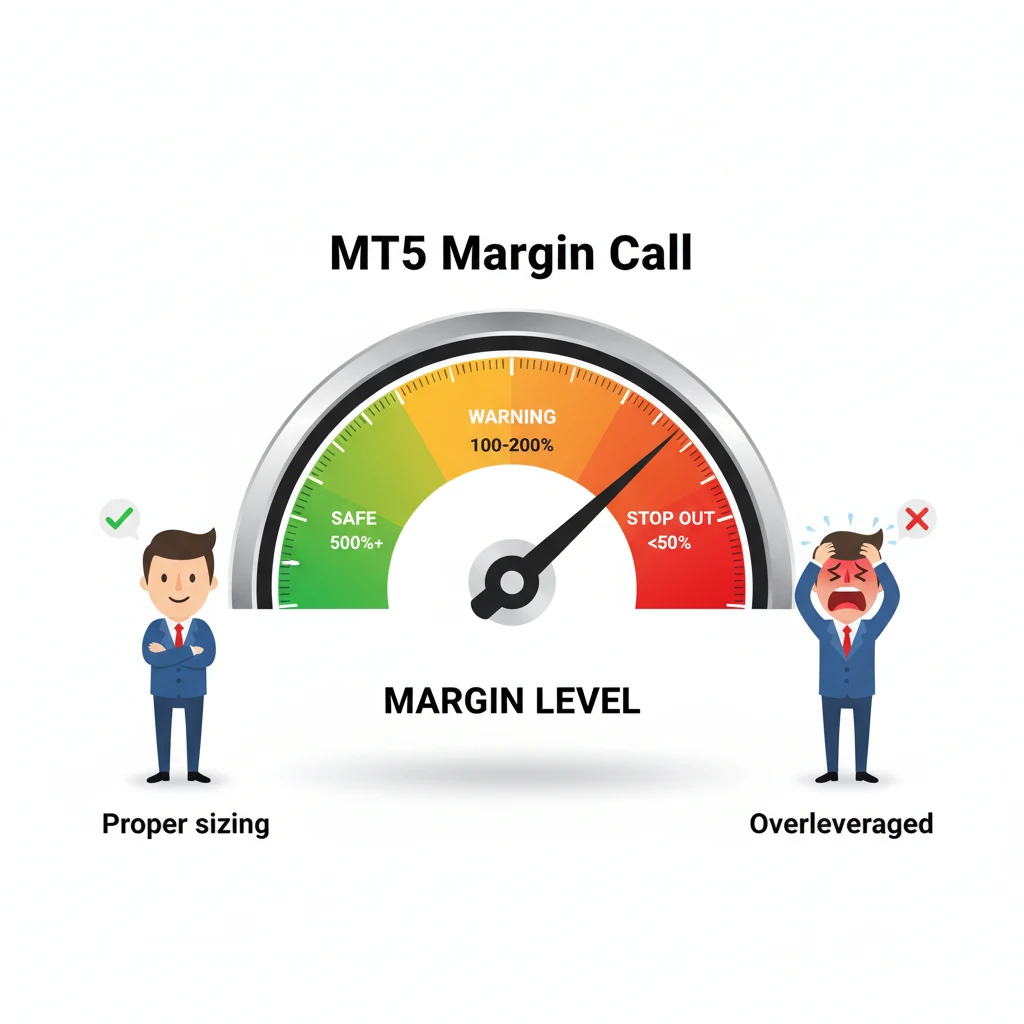
- Misunderstanding use: Just because a broker like Pepperstone offers 1:500 use doesn't mean you should use it. On a $1,000 account, that's $500,000 of exposure. A 0.2% move against you wipes you out. I used 1:100 on my first account and blew it in a week on a single XAU/USD guide trade. Now I rarely exceed 1:30.
- Not Calculating True Cost: Before any international payment, check the mid-market rate on Google or Reuters. Compare it to the rate Capitec gives you. The difference is your real cost. Sometimes, services like Wise (formerly TransferWise) are cheaper for pure transfers.
- Trading Without a Plan: This isn't Capitec-specific, but it's the root cause of all blow-ups. You wouldn't send R100,000 abroad without knowing the recipient's details. Why would you put R100,000 into a trade without a stop loss and profit target? Always use a position size calculator. My rule is to never risk more than 1% of my account on a single idea.

Example: You have a R100,000 trading account. 1% risk is R1,000. If your stop loss is 50 pips away on EUR/USD, your position size must be calculated so that a 50-pip loss equals R1,000. This keeps you in the game.
💡 Wskazówka Winstona
The spread at a bank is the price of certainty and compliance. The spread at a broker is the price of speed and opportunity. Know which one you're buying.
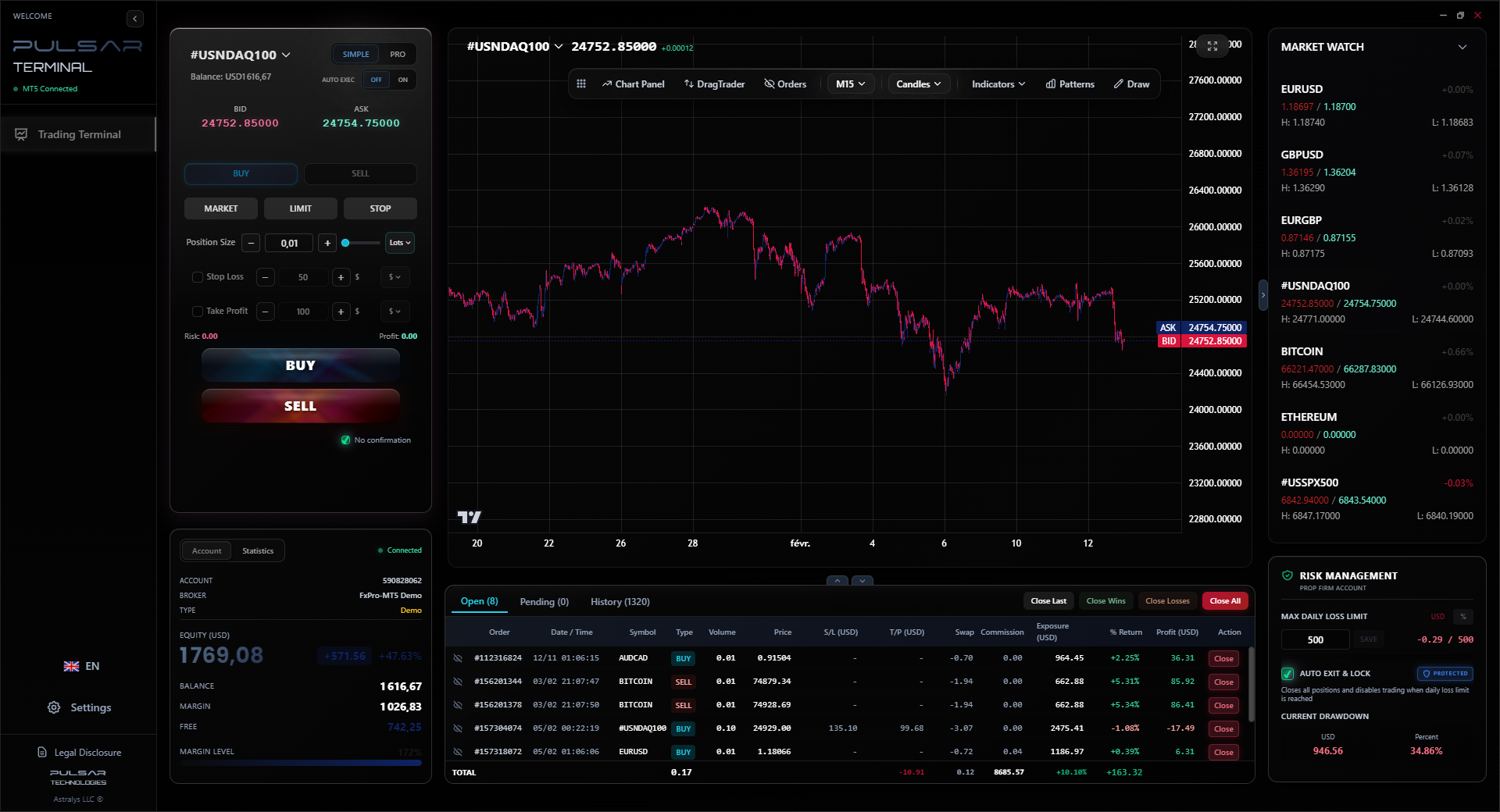
Managing risk on every trade is non-negotiable, and tools like Pulsar Terminal automate complex stop-loss and take-profit strategies directly on your MT5 platform, taking the emotion out of the equation.
“The hidden spread in a bank's exchange rate is often 100 times more expensive than a broker's spread. You're paying for a service, not getting market access.”
Still unsure which service to use? Follow this flow.
You should use CAPITEC forex services if:
- You need to pay an invoice to a foreign supplier.
- You're travelling and need to use your card or withdraw cash abroad.
- You're receiving a salary or payment from overseas into your SA account.
- You're a business needing to lock in a rate for a future known payment (hedging).
You should use an FSCA-REGULATED BROKER if:
- You believe the Rand will weaken against the Dollar and want to profit from that move.
- You want to trade currency pairs like GBP/JPY or AUD/CAD.
- You're looking for short-term opportunities based on news or technical patterns.
- You understand and accept the high risk of leveraged trading.
For remittances, check Capitec's new partnership with Mama Money via their app - it might be cheaper than a traditional SWIFT payment.
Remember, the goal is to match the tool to the task. Using a broker to send money to your sister in Australia is inefficient. Using Capitec to trade is financially suicidal. Know the difference, protect your capital, and always, always read the fine print on exchange rates.

FAQ
Q1Can I trade forex directly with my Capitec account?
No, you cannot. Capitec does not offer a leveraged, speculative forex trading platform. They provide currency exchange and international payment services. For active trading, you need an account with an FSCA-regulated forex broker.
Q2What is the cheapest way to send money overseas with Capitec?
For most people, using the 'Transact' feature on the Capitec app has a flat fee of R175. However, always compare the total cost (fee + exchange rate spread) against specialized money transfer services like Wise or the new Mama Money partnership in the Capitec app, as they sometimes offer better overall rates.
Q3How do I fund a forex trading account from South Africa?
You fund it in ZAR via a local EFT or debit card deposit to the broker's South African representative entity. This is a domestic transaction. Choose a broker like XM or Exness that accepts ZAR deposits. Do NOT first convert your Rands to foreign currency at a bank and then send it; that wastes your offshore allowance and incurs high bank fees.
Q4Does receiving trading profits from my broker use my SARB allowance?
No, receiving funds from overseas does not use any of your annual offshore allowances. It is an inbound transfer, for which Capitec charges a R50 receiving fee. Your allowances only apply to money you send out of South Africa.
Q5What happens if I exceed my R1 million Single Discretionary Allowance?
You will not be able to make further discretionary transfers for that calendar year. To send more, you would need to use your Foreign Investment Allowance (R10 million), which requires tax clearance from SARS - a lengthy process. Plan your large transfers carefully.
Q6Is Capitec's 'live rate' the same as a broker's market rate?
Almost never. Capitec's displayed rate is usually an indicative rate with a significant markup (spread) already included. The final rate is set at processing. A broker's quoted bid/ask spread is the actual live market rate with a much smaller markup, often less than 0.1% for major pairs.
Q7Can I use my Capitec card to deposit into a forex broker?
Sometimes, but it's not ideal. Some international brokers accept Visa/Mastercard deposits, but these may be processed as 'international transactions' by Capitec. It's clearer and often cheaper to use a broker with a local ZAR payment option via EFT.
Lekcja Prof. Winstona
:
- ✓Capitec forex is for payments, not trading.
- ✓SARB allowances are yearly: R1m discretionary, R10m investment.
- ✓Bank spreads cost 2-4%; broker spreads cost <0.1%.
- ✓Fund a broker in ZAR via local EFT.
- ✓use above 1:30 is a blow-up accelerator.
Jak przydatny był ten artykuł?
Kliknij gwiazdkę, aby ocenić
Tygodniowe analizy tradingowe
Darmowe tygodniowe analizy i strategie. Bez spamu.
O autorze
David van der Merwe
Trader Rynków Wschodzących
Trader z Johannesburga z 11-letnim doświadczeniem w walutach rynków wschodzących. Specjalizuje się w parach ZAR, handlu regulowanym przez FSCA i analizie rynku południowoafrykańskiego.
Komentarze
Może Ci się też spodobać

Cara Trading Forex Sukses: 7 Prinsip dari Trader Profesional
Cara trading forex sukses dengan 7 prinsip trader pro: manajemen modal, disiplin, journal trading, backtest. Data nyata, bukan janji profit palsu.
Jam Trading Forex Terbaik untuk Trader Indonesia: Panduan Lengkap dengan Tabel Waktu
Panduan jam trading forex untuk trader Indonesia. Tabel 4 sesi dunia, jam emas 20:00-00:00, sesi mana yang harus dihindari. Data akurat + tips dari trader berpengalaman.
Top 5 Sàn Forex Uy Tín Nhất 2026: Review Jujur dari Trader Indonesia
Top 5 sàn forex uy tín 2026 untuk trader Indonesia. Review jujur: spread, deposit, withdraw, dukungan lokal. Exness, XM, IC Markets & lebih.
All these calculators are built into Pulsar Terminal with real-time data from your MT5 account. One-click position sizing, automatic risk management, and instant calculations.
