


It was 3:15 PM on a Tuesday in October 2023, and the GBP/USD chart was screaming at me.
Sarah Collins
Strateg Tradingowy ·  United Kingdom
☕ 12 min czytania
Czego się nauczysz:
- 1The UK Regulatory Reality: Your Safety Net Isn't a Profit Net
- 2What Day Trading Forex Really Costs (The Numbers Hurt)
- 3Building a Day Trading Routine That Doesn't Burn You Out
- 4A Simple Strategy (With Real Trade Examples & Mistakes)
- 5Psychology: The Invisible Battle You Fight Every Day
- 6Choosing a UK Broker: Practical Advice, Not Promotions
- 7Is This Really For You? The Final Reality Check
It was 3:15 PM on a Tuesday in October 2023, and the GBP/USD chart was screaming at me. The Bank of England's governor had just finished speaking, and cable had spiked 40 pips in seconds. My finger hovered over the sell button, convinced it was a classic 'buy the rumour, sell the news' play. I clicked. Two minutes later, I was down £87 on a half-lot position as the rally continued. That's day trading the forex market: a constant test of your nerves, your strategy, and your ability to admit you're wrong. Let's strip away the YouTube glamour and talk about what it really takes to do this from a UK perspective.
First things first: trading from the UK means you're under the Financial Conduct Authority's (FCA) watch. This is a good thing for protection, but don't confuse it with a guarantee of success. The FCA's rules are designed to stop you from blowing yourself up too quickly, not to make you a profitable trader. That part is still entirely on you.
The key protections are straightforward. Your money is held in segregated client accounts, so if your broker goes under (rare with FCA firms, but possible), your cash isn't part of their bankruptcy estate. You get negative balance protection, meaning you can't owe the broker money if a trade goes catastrophically against you. And then there are the use limits.
The use Cap: Your Built-In Speed Limiter
These caps are non-negotiable for retail clients. For major pairs like EUR/USD, you're capped at 1:30. For minors and gold (XAU/USD), it's 1:20. It feels restrictive, especially when you see international brokers offering 1:500. I used to moan about it too. But after seeing a student wipe a £5,000 account using 1:100 use on a single EUR/GBP trade back in 2019, I get it. The cap forces you to put up more of your own capital per trade, which psychologically makes you treat each decision with more respect. It's a forced discipline mechanism.

Warning: The FCA's use rules apply to you if you're classified as a retail client. Some brokers offer 'professional' status with higher use, but you lose all the protections (negative balance, segregated accounts). It's a terrible trade-off for almost everyone.
Tax is the other big piece. Spread betting profits are tax-free. CFD trading profits are subject to Capital Gains Tax. This single fact shapes a lot of UK traders' choice of instrument. Why give HMRC a cut if you don't have to? Just remember, the underlying market risk is identical.

💡 Wskazówka Winstona
Your first profit target should always be to get your risk off the table. Move your stop loss to breakeven once you're up 1.5x your risk. Then you're trading with the market's money.
“Day trading the forex market is a constant test of your nerves, your strategy, and your ability to admit you're wrong.”
You're not just fighting the market; you're fighting the cost of doing business. If you don't understand these numbers down to the penny, you will lose. It's that simple.
Your main enemy is the spread. On a standard account with a broker like IG or OANDA, expect to pay an average of 1.0 to 1.4 pips on EUR/USD. On GBP/USD, it's often wider, 1.5 to 2.0 pips. That means your trade is in the red the moment you enter. If your scalping strategy aims for 5-pip profits, you've just given away 20-40% of your potential gain before you start.
To combat this, many switch to raw spread accounts. Here's a real example from my own trading last month. On Pepperstone's Razor account, I took a EUR/USD trade. The spread was 0.1 pips. Beautiful. But I also paid a commission of £2.25 per lot. On a 2-lot trade, that's £4.50 in commission to open and another £4.50 to close. My total cost was £9 on that round turn. You must factor this into your position size calculator before you even think about entering.
| Cost Type | Standard Account Example | Raw/ECN Account Example |
|---|---|---|
| EUR/USD Spread | 1.3 pips | 0.1 pips |
| Commission | £0 | £2.25 per lot per side |
| Cost on 1 Lot Trade | ~£9.50 (1.3 pips) | ~£4.60 (0.1 pip + £4.50 commission) |
Note: 1 pip on EUR/USD for a standard lot is ~£7.30. Costs vary by broker.
The hidden fees will bite you. Inactivity fees are common. I got stung by a £50 fee years ago with a broker I'd forgotten about after a losing streak. Some charge for withdrawals, or slap on a 1% fee for depositing in GBP if their base currency is USD. And then there's the biggest cost of all: the statistical probability that you'll lose. The FCA mandates that brokers display the percentage of retail clients losing money on CFDs. It's usually between 70-80%. Look at that number every single day before you log in.
“The FCA's use cap is a forced discipline mechanism. It makes you treat each decision with more respect.”
Forget the 24-hour market myth. For a UK day trader, there are only a few windows that matter, and your routine should be built around them. If you're trading from London, your core hours are 8:00 AM to 12:00 PM GMT. That's when London is fully awake and New York is coming online. The liquidity is highest, spreads are tightest, and you get genuine moves.
My old routine was a mess. I'd sit down at 6 AM, stare at the Asian session chop for two hours, make a bored trade, lose money, and be emotionally drained before the London open even happened. I was active, but I wasn't effective.
Here's the routine I've used for the past five years:
- 7:30 AM: Review. I'm not trading yet. I look at the daily and 4-hour charts for the 3-4 pairs I follow. I note key support/resistance. I check the economic calendar (Bank of England speeches, US CPI, etc.).
- 8:00 AM - 12:00 PM: Trading window. This is focus time. Phone off. I'm watching price action, managing open trades. I might take 1-3 trades max.
- 12:00 PM: Hard stop. I close all day trades. No exceptions. The London lunch lull and the wait for US data turns the market into a random walk.
- Afternoon: Analysis and admin. I review my trades. Why did they work? Why did they fail? I update my journal. This is when I do my research for the next day.
This routine protects you from overtrading. It forces you to be selective. The market will always be there tomorrow. Your capital won't be if you fritter it away on low-quality, off-session setups.

“The FCA's use cap is a forced discipline mechanism. It makes you treat each decision with more respect.”
I'm going to give you one concrete strategy, not ten vague ideas. It's a London Breakout strategy on the 15-minute chart, using the 1-hour for context. It's boring. It's mechanical. It works when you have the discipline to follow it.
The Rules:
- Identify the previous day's high and low on the 1-hour EUR/USD chart.
- At 8 AM London time, draw horizontal lines at those levels on your 15-minute chart.
- Wait for price to approach one of these levels. You need a clear, strong candle (engulfing or a strong momentum bar) to CLOSE beyond the level.
- Enter on a retest of that broken level (now support/resistance) or on the close of the breakout candle.
- Stop loss: 15 pips below the entry for a long, above for a short.
- Take profit: Aim for a 1:2 risk-reward ratio minimum (30 pips).
Real Trade – October 26, 2023:
- Previous day's high: 1.0690.
- At 8:45 AM, a strong bullish candle closed at 1.0693 on the 15M chart.
- I entered long on a tiny pullback to 1.0691.
- Stop Loss: 1.0676.
- Take Profit: 1.0721.
- Result: Price rallied cleanly. TP hit at 11:20 AM. Profit: +30 pips, +£219 on a 3-lot position.
Real Mistake – November 3, 2023:
- Same setup. Break of the previous high. I entered.
- Price immediately reversed. I moved my stop loss to breakeven too early, fearing a loss.
- Price hit my breakeven, then rallied 40 pips without me. I broke my own rule (never move a stop to breakeven before at least 10-15 pips in profit) and left money on the table. Greed for a 'no-loss' trade cost me a win.
This strategy doesn't need a dozen indicators. I might use a simple RSI indicator to check for overbought/oversold conditions at the key level, but price action is king. The hard part is the waiting and the acceptance of small, consistent losses when the breakout fails.
💡 Wskazówka Winstona
If you can't explain your trade setup in one simple sentence ('I'm buying because price bounced off the daily support with a bullish pin bar'), you shouldn't be in the trade. Complexity is the enemy of execution.
“You're not just fighting the market; you're fighting the cost of doing business. If you don't understand these numbers down to the penny, you will lose.”
Your strategy is 20% of the battle. Your psychology is the other 80%. I've had perfectly sound strategies destroyed by my own brain. Here are the three mental traps that will bankrupt you.
1. Revenge Trading. You lose £100 on a trade. Your brain screams, "Get it back now!" You jump into another trade twice the size, no analysis, pure emotion. I did this in 2017. Lost £200 on GBP/JPY. Furious, I slammed a 4-lot trade on EUR/USD five minutes later. Lost another £600. Turned a bad day into a catastrophic one in under an hour. The fix? After two consecutive losses, walk away. Shut the platform. The market isn't going anywhere.
2. The 'Just Breakeven' Prayer. You're in a losing trade. Instead of hitting your predetermined stop loss, you move it further away, praying for a miracle. You're now risking £200 to save £20. This is how you get a margin call. My rule is ironclad: I set my stop when I enter. I do not move it further away. Ever. I might trail it to lock in profit, but I never give a losing trade more room to breathe.
3. Overconfidence After a Win. This is sneakier. You nail three trades in a row. You feel invincible. You start thinking your position size calculator is for chumps. You increase your lot size by 300% because you're 'in the zone.' The next trade wipes out all three previous wins. Profitability is about consistent, boring repetition, not heroics.
The single best thing I ever did was start a trading journal. Not just 'bought EUR/USD, won.' I wrote down my emotional state: 'Felt rushed before London open,' 'Was distracted by an email,' 'Angry from previous loss.' After six months, patterns emerged. I lost money 70% of the time when I traded before my official 8 AM start. That data changed my behaviour more than any indicator ever could.
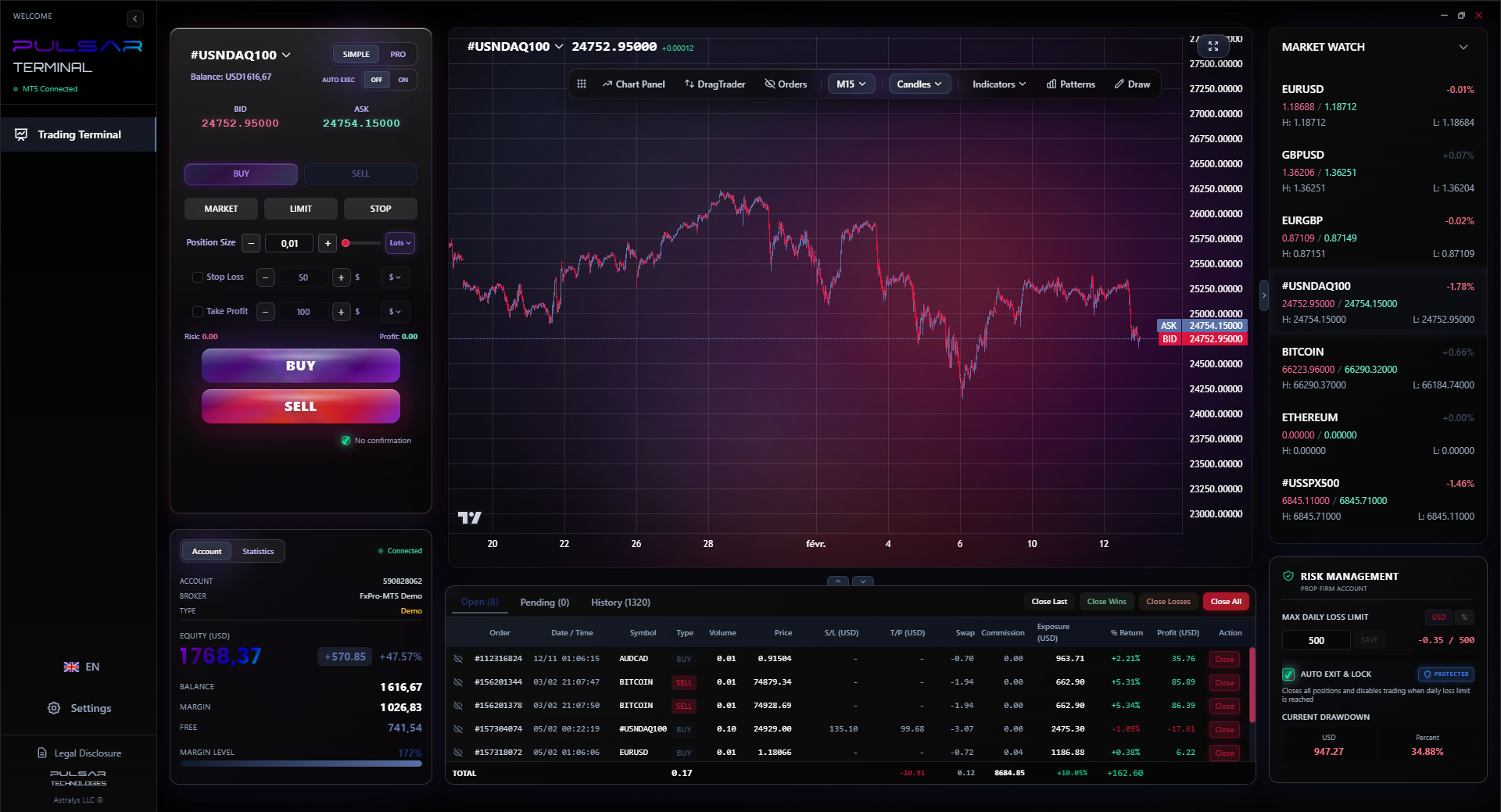
Managing the psychology of stop losses and take profits is easier when your tools automate the mechanical parts, letting you focus on the decision.
“You're not just fighting the market; you're fighting the cost of doing business. If you don't understand these numbers down to the penny, you will lose.”
With an FCA-regulated broker, you're choosing between different flavours of safety. The differences come down to costs, platform, and execution. Don't get swept up in bonus offers (which are heavily restricted by the FCA anyway).
You need to decide: raw spread + commission, or wider spread + no commission? If you're a high-volume day trader, the raw account is almost always cheaper. If you trade infrequently or with smaller sizes, a standard account might be simpler. Use the cost table in section two and do the math for your own typical trade size.
Execution is everything. A cheap broker is useless if your orders slip or get requoted during news events. I've tested most of the major players. For tight, reliable execution on major pairs, I've had good experiences with the likes of Pepperstone and IC Markets. Their systems handle fast markets well. Some brokers, even big names, can be sluggish for a scalping strategy.
Warning: Always verify the broker's FCA authorisation number on the official FCA Register. Clone firms are a real threat. If the website is 'www.igmarkets-uk.com' instead of 'www.ig.com', run.
Platform choice is personal. MetaTrader 4/5 is the industry standard, but cTrader is gaining ground for its cleaner ECN-style execution. Most UK brokers offer both. Start with a demo account that uses the platform you intend to trade on live. Don't learn on MT5 then switch to cTrader with real money.
Finally, check the non-trading fees. Does the broker charge for bank transfers? Is there an inactivity fee? Can you deposit in GBP without a conversion fee? These small things add up over a year of day trading the forex market.
💡 Wskazówka Winstona
Record your trading screen for an hour. Watch it back with the sound off. How many unnecessary trades did you almost take? That's your discipline gap.
“Profitability is about consistent, boring repetition, not heroics.”
Let's be brutally honest. Day trading the forex market is one of the hardest ways to make easy money. The learning curve is a cliff. The statistics are stacked against you. It will test your patience, your resilience, and your bank balance.
It is not a side hustle. It's a skilled profession that requires study, capital you can afford to lose, and an immense amount of emotional control. If you're coming into this thinking you'll quit your job in six months, you are almost certainly wrong.
The successful full-time traders I know (and there aren't many) treat it like a business. They have a business plan. They track their P&L like an accountant. They have working hours. They take holidays. They don't gamble; they execute a process.
My advice? Start smaller than you think. Aim for swing trading first, holding trades for days or weeks. It's less intense, gives you more time to think, and teaches you about market structure without the minute-to-minute panic. Use a demo account not to 'get rich on pretend money,' but to test a specific strategy for at least 100 trades. Collect data. Are you profitable? If not, why?
Day trading can be rewarding. The intellectual challenge is immense. The freedom is alluring. But go in with your eyes wide open. The market doesn't care about your mortgage, your dreams, or your effort. It only cares about your money. Your job is to protect it, one disciplined trade at a time.
FAQ
Q1What's the minimum amount I need to start day trading forex in the UK?
Technically, many FCA brokers like Pepperstone or XTB have no minimum deposit. Practically, you need enough to survive the inevitable losses and cover costs. With 1:30 use, to trade a single mini lot (0.1) on EUR/USD with a sensible 20-pip stop, you need at least £150-£200 in margin and risk capital. Starting with less than £500 is incredibly difficult and forces you to risk too high a percentage of your account per trade.
Q2Can I day trade forex tax-free in the UK?
Yes, but only through spread betting, not CFD trading. Profits from financial spread betting are currently exempt from Capital Gains Tax and Income Tax. This is a significant advantage for UK traders. However, the underlying economic risk and trading mechanics are identical to CFDs. You still need to be profitable before the tax benefit means anything.
Q3Do I need to pay the US Pattern Day Trader (PDT) rule?
No. The PDT rule, which requires a $25,000 minimum balance for US traders who execute more than 3 day trades in a 5-day period, does not apply to UK-based traders or UK-regulated brokers. Your trading frequency is limited only by your capital and the FCA's use rules.
Q4What's the most common mistake new UK day traders make?
Ignoring the cost of trading. They see a 10-pip win and think they made money, forgetting that a 1.5-pip spread and potential commission ate 15-20% of that gain. They overtrade to overcome these costs, which only increases them. Your first calculation for any trade should be: 'What is my total cost (spread + commission), and does my target offer enough profit after that cost to justify the risk?'
Q5Is the FCA's 1:30 use limit a disadvantage?
It feels like one when you start, but most experienced traders see it as an advantage. It prevents you from taking catastrophic, account-blowing risks on a single trade. It forces you to build your account through consistent gains rather than a lucky, highly-leveraged gamble. High use is a shortcut to blowing up, not to getting rich.
Q6Should I use a standard or a raw spread/ECN account?
It depends on your trade size and frequency. Do the math. If you trade 10+ lots per month, a raw account with a commission will almost always be cheaper. Use a position size calculator to work out your typical pip value. If you trade small sizes (under 0.5 lots) infrequently, the simplicity of a no-commission standard account might be better, even with a wider spread.
Lekcja Prof. Winstona
:
- ✓The London open (8AM-12PM) is your primary trading window. Ignore the Asian session noise.
- ✓Calculate your total trade cost (spread + commission) before every single entry.
- ✓After two consecutive losses, walk away. Revenge trading is an account killer.
- ✓Specialise in 1-2 major pairs. Know their personality better than your own.
- ✓Use a journal to track your emotions, not just your P&L.
Jak przydatny był ten artykuł?
Kliknij gwiazdkę, aby ocenić
Tygodniowe analizy tradingowe
Darmowe tygodniowe analizy i strategie. Bez spamu.
O autorze
Sarah Collins
Strateg Tradingowy
Londyńska strateg tradingowa z 12-letnim doświadczeniem na rynkach finansowych. Była analityczka w brokerstwie w City of London. Obejmuje pary GBP, rynki europejskie i handel regulowany przez FCA.
Komentarze
Może Ci się też spodobać

Cara Trading Forex Sukses: 7 Prinsip dari Trader Profesional
Cara trading forex sukses dengan 7 prinsip trader pro: manajemen modal, disiplin, journal trading, backtest. Data nyata, bukan janji profit palsu.
Jam Trading Forex Terbaik untuk Trader Indonesia: Panduan Lengkap dengan Tabel Waktu
Panduan jam trading forex untuk trader Indonesia. Tabel 4 sesi dunia, jam emas 20:00-00:00, sesi mana yang harus dihindari. Data akurat + tips dari trader berpengalaman.
Top 5 Sàn Forex Uy Tín Nhất 2026: Review Jujur dari Trader Indonesia
Top 5 sàn forex uy tín 2026 untuk trader Indonesia. Review jujur: spread, deposit, withdraw, dukungan lokal. Exness, XM, IC Markets & lebih.
All these calculators are built into Pulsar Terminal with real-time data from your MT5 account. One-click position sizing, automatic risk management, and instant calculations.
