


I was short USD/ZAR at 18.45.

David van der Merwe
Trader Rynków Wschodzących ·  South Africa
☕ 10 min czytania
Czego się nauczysz:
- 1What is the FOMC and Why It Moves Every Market (Including Ours)
- 2The Three Things You Must Watch (Beyond the Rate Decision)
- 3Practical Trading Strategies From a SA Perspective
- 4How to Not Get Wiped Out: Managing FOMC Risk
- 5Your FOMC Trading Day Setup
- 6Mistakes I've Made (So You Don't Have To)
- 7The Big Picture: What FOMC Means for Your SA Portfolio

I was short USD/ZAR at 18.45. The screen was quiet, my coffee was cold, and the FOMC statement was two minutes away. Then, the headline hit: 'Fed Holds Rates, Dot Plot Signals Two More Hikes in 2024.' Within 90 seconds, USD/ZAR ripped to 18.85. My stop-loss was vaporised. That 400-pip move against me wasn't just a bad trade, it was a lesson in respecting the raw power of the Federal Reserve. If you're trading from South Africa, the FOMC isn't a foreign event, it's a direct line to your P&L. Let's talk about how to handle it.
The Federal Open Market Committee (FOMC) is the branch of the US Federal Reserve that sets monetary policy. They decide the target for the federal funds rate, which is the interest rate banks charge each other for overnight loans. Sounds boring, right? It's anything but.
Think of it as the world's most important price of money. When the Fed changes this rate, it doesn't just affect American mortgages. It changes the flow of global capital. For us in South Africa, that means the Rand. Higher US rates make dollar-denominated assets more attractive. Money tends to flow out of emerging markets like ours and into the US, looking for that better, safer yield. That selling pressure on the ZAR is why you see USD/ZAR, EUR/ZAR, and GBP/ZAR jump around like crazy.
The committee meets eight times a year. Not every meeting is a 'live' one where they might change rates, but every single one has the potential for massive volatility because of the accompanying statement, economic projections, and the Chair's press conference. The big ones for us are the meetings with the press conference (every other meeting) and especially the quarterly meetings where they release the 'dot plot' – a chart showing where each committee member thinks rates should be in the future.

Warning: Don't confuse 'no change' with 'no move.' The market prices in expectations months in advance. If everyone expects a hold and the Fed holds, nothing much happens. But if the statement language changes from 'additional policy firming may be appropriate' to 'the Committee will proceed carefully,' that's a huge dovish shift. The move comes from the deviation from expectations, not the action itself.
The headline rate decision is just the trigger. The real meat, and where fortunes are made and lost, is in the details.
The Statement Language
This is a carefully crafted document. Traders and algorithms parse every comma. Look for changes in adjectives describing the economy ('solid' vs. 'modest' growth), inflation ('elevated' vs. 'has eased but remains elevated'), and their forward guidance. A single removed word like 'additional' can send the dollar tumbling.
The Dot Plot
This is the Fed's own interest rate forecast. It's released quarterly (March, June, September, December). When the median 'dot' for 2025 shifts up or down by even 0.25%, it recalibrates every financial model on the planet. In late 2023, the dot plot hinted at cuts, and the ZAR had a monster rally. When the 2024 plot came in more hawkish, it all reversed. This is your roadmap for the next 6-12 months.
The Powell Press Conference
This is where Jerome Powell, the Fed Chair, translates the FOMC's thoughts. He's live, unscripted, and the market hangs on his tone. Is he emphasising the fight on inflation (hawkish) or the risks to the labour market (dovish)? I once saw GBP/ZAR swing 250 pips because Powell used the word 'transitory' again when describing inflation, which the market took as a sign he wasn't worried enough.

Example: Let's say the Fed holds rates at 5.50%, as expected. But the new dot plot shows a median forecast of only two 0.25% cuts for 2024, down from three cuts projected in December. This is a hawkish surprise. Expect the US Dollar Index (DXY) to spike, and USD/ZAR to follow. A quick 100-200 pip surge in the first minute is common.

💡 Wskazówka Winstona
The market's reaction tells you what it *thinks* the Fed said, which is more important in the short term than what the Fed actually said. Trade the reaction, not the headline.
“The move comes from the deviation from expectations, not the action itself.”
You have two main paths: trading the volatility or waiting for the dust to settle. I've done both, and I'll tell you which one costs less in antacids.
The News Spike (High Risk, High Stress)
This is what I messed up in the intro. You place orders just before the news, hoping to catch the initial spike. The problem? Spreads widen massively. Your broker's spread on USD/ZAR might normally be 25 pips, but 30 seconds before the FOMC, it can blow out to 80-100 pips or more. You need a huge move just to break even. Also,, liquidity vanishes for a moment, causing slippage. Your stop at 18.50 might get filled at 18.65. I don't recommend this for most traders. It's a game for algos and institutions with direct market access.
The 'Wait and See' (My Preferred Method)
This is more of a swing trading approach. I don't trade the 2:00 PM SAST (8:00 PM EST) release. I watch. I let the initial panic and algorithmic frenzy play out over the next 15-90 minutes. The market often has a 'knee-jerk' reaction in one direction, then reverses as humans digest the info. I look for a clear rejection or acceptance of a key level on the 15-minute or 1-hour chart after the press conference concludes. The trend that establishes in the hours after the event is often the real one.
Trading the ZAR Crosses
While USD/ZAR gets all the attention, don't ignore EUR/ZAR and GBP/ZAR. Sometimes the dollar move is clear, but the Euro or Pound has its own central bank drama. EUR/ZAR can give you a cleaner read on pure dollar strength if you think the ECB is on hold. Use a position size calculator religiously here. The volatility is deceptive.

Pro Tip: If you must be in the market during the release, trade smaller. Halve your normal position size. The increased volatility means your standard 50-pip stop can be hit in seconds on noise, not a real change in trend. Protecting your capital is more important than catching the full move.
This is the most important section. FOMC days are where accounts blow up.
First, accept that your broker is not your friend during this time. They are protecting themselves. Expect:
- Widened Spreads: As mentioned, spreads balloon. Factor this into your entry and exit plans.
- Increased Margin Requirements: Some brokers will raise margin requirements for major pairs ahead of the event. Check your email. A surprise margin call is no fun.
- Order Execution Issues: Limit and stop orders may not be executed at your requested price. 'Requotes' and slippage are common.
My hard rule: No pending orders within 30 minutes of the release. I've had stop-loss orders triggered 50 pips beyond my level because of a momentary liquidity gap. The market fills the order at the next available price, which can be a disaster.
Instead, if I have an open position I want to protect, I might close half of it before the news. It locks in some profit or reduces my risk, and I avoid the execution nightmare. For new entries, I wait. The market will still be there an hour later.
Also, watch your emotions. The speed of the moves can trigger panic. Have a plan written down before 1:59 PM SAST. 'If X happens, I will do Y. If Z happens, I will stay out.' Stick to the script.
💡 Wskazówka Winstona
On FOMC day, your first loss is often your smallest. If your initial read is wrong, don't double down. Step back and reassess the new narrative forming.

“Some of my most profitable quarters have involved making no trades on FOMC days at all.”
Preparation is everything. Here’s my checklist for FOMC Wednesday.
- Economic Calendar: Know the exact time (2:00 PM SAST for the statement, 2:30 PM for Powell). Set alerts.
- Market Expectations: What is the CME FedWatch Tool saying? What are the major banks (Barclays, Goldman) forecasting? This sets your baseline.
- Key Levels: Identify major support and resistance on USD/ZAR, EUR/USD, and DXY on the 4H and daily charts. These are magnet zones for price reactions.
- Clean Charts: I close all my other charts. I have one screen with USD/ZAR, EUR/USD, and the DXY. Too many screens lead to confusion.
- News Source: Have a reliable, low-latency news feed (like Reuters or Bloomberg terminal if you can) to see the headline the millisecond it drops. Twitter (X) is fast but can be wrong.
I also keep a notepad open. I jot down the key phrases from the statement as I read them and note Powell's key sentences. This helps me avoid getting swept up in the initial emotional reaction.
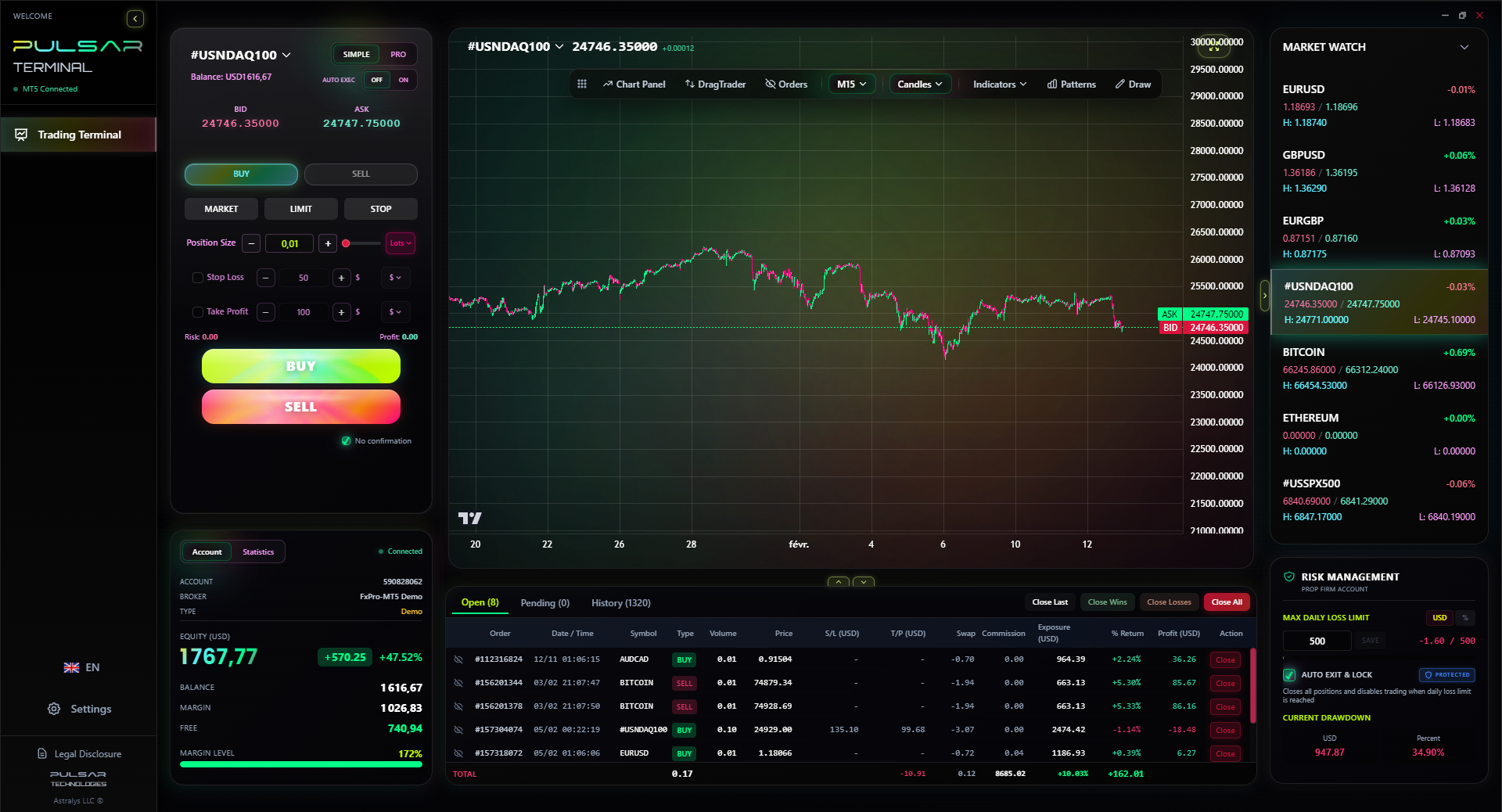
Using indicators during the event is tricky. The MACD indicator or RSI indicator will be completely whipsawed. I rely purely on price action and volume in the immediate aftermath. A tool that can help you manage the chaos, however, is one that lets you plan complex orders safely away from the spike. For example, setting a multi-level take-profit order with a trailing stop can be done in advance on a platform like MT5, but managing it manually during the frenzy is tough.
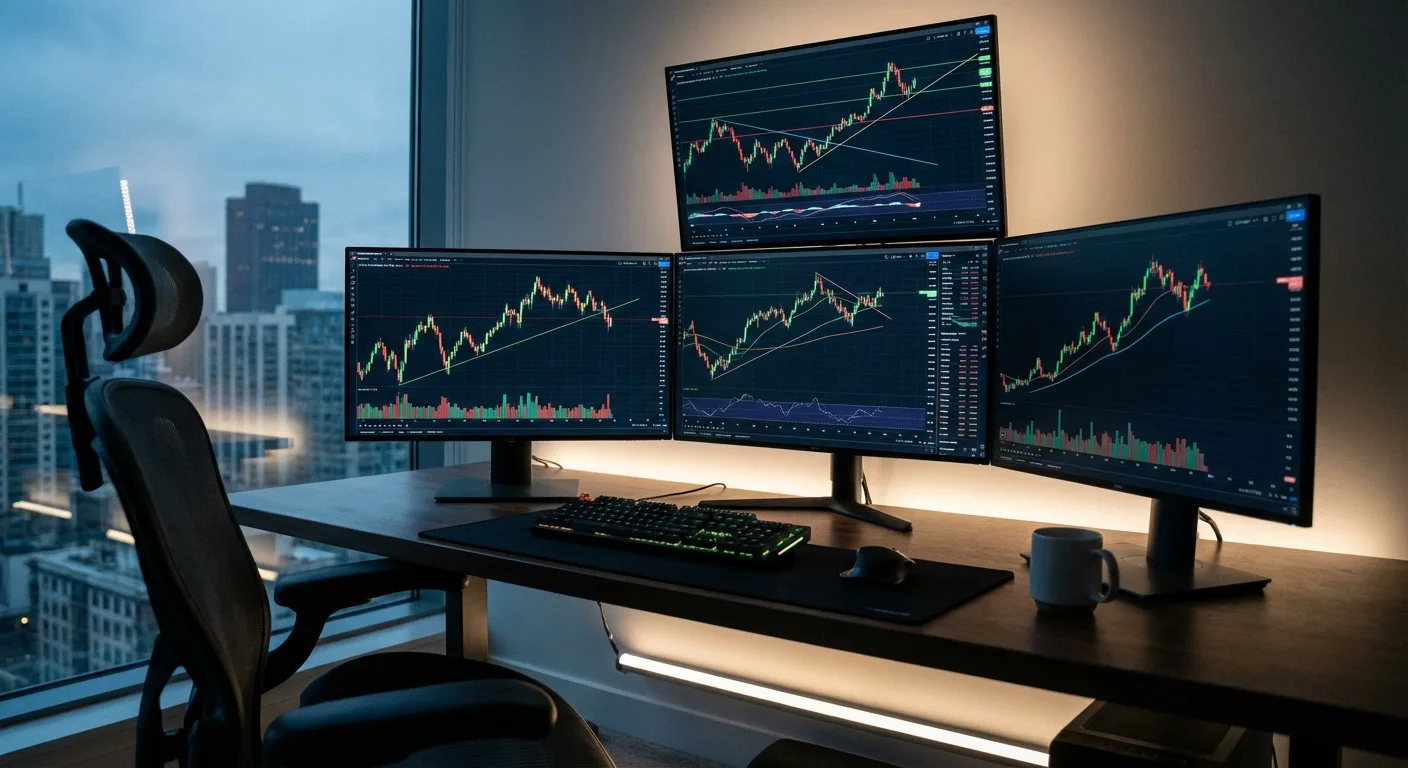
Manually managing complex orders like multi-level take-profits during FOMC chaos is nearly impossible, which is why tools that automate this on MT5 are essential for news traders.
Let me be brutally honest about my fails. It's the best way to learn.
Mistake 1: Adding to a Losing Position During the Spike. This is the killer. USD/ZAR is moving against me, I'm down 80 pips, and I think, 'It's overdone, I'll average down.' The move continues another 150 pips. I turned a bad trade into a catastrophic one. The initial FOMC move has momentum you can't fight. Don't try to be a hero.
Mistake 2: Trading Too Big. In 2022, I was convinced the Fed would be dovish. I put on a full-sized EUR/ZAR long position right before the statement. They were hawkish. I lost 1.8% of my account in 45 seconds. It took me two weeks of disciplined trading to make that back. The size must match the extreme risk.
Mistake 3: Ignoring the ZAR's Own Story. Sometimes, the FOMC is secondary. I once got caught in a USD/ZAR short on an FOMC day, but the SA Finance Minister was giving a budget speech at the same time, talking about rising debt. The ZAR sold off on local news, overpowering a slightly dovish Fed. Always check the local economic calendar.
The biggest lesson? It's okay to sit out. Some of my most profitable quarters have involved making no trades on FOMC days at all. I watch, I learn, I adjust my longer-term view, and I trade the cleaner opportunities that present themselves the next day. There's no rule that says you must trade the news.
💡 Wskazówka Winstona
The real trend often starts 60-90 minutes after the press conference ends, once the algorithms have exhausted themselves and human judgment returns. Patience is a position.
“Your stop at 18.50 might get filled at 18.65. I don't recommend this for most traders.”
Beyond the 5-minute chaos, the FOMC's direction sets the tone for months. A hawkish Fed (higher for longer) generally means a stronger dollar and pressure on the ZAR and other EM currencies. This affects everything.
If you're a longer-term trader or an investor with offshore exposure, these meetings are your quarterly navigation checkpoints. That dot plot tells you if the global 'risk-on' or 'risk-off' environment is likely to continue.
For example, a Fed pivot towards cutting rates is typically great for emerging market stocks and currencies. It might be a signal to look for long-term buying opportunities in ZAR crosses or the JSE Top 40 if you believe the local economy can benefit from cheaper global capital.
Think of each FOMC meeting as a chapter in a book. The immediate price spike is a dramatic sentence, but the policy path they outline is the plot for the next few chapters. Your job is to understand the plot, not just react to the punctuation.
Finally, remember your edge as a South African trader. You live the ZAR story every day. You feel the petrol price hikes, you hear the local economic chatter. Combine that local intuition with a solid understanding of the Fed's global mechanics, and you have a perspective a trader in London or New York might lack. Use it.
FAQ
Q1What time is the FOMC announcement in South Africa?
The FOMC statement is usually released at 8:00 PM Eastern Standard Time (EST). During South African Standard Time (SAST), which is 7 hours ahead of EST, this translates to 3:00 AM the following day. However, for the four main meetings per year that include the press conference, the timing has shifted. The statement is now typically released at 2:00 PM SAST (8:00 PM EST), followed by Chair Powell's press conference at 2:30 PM SAST. Always double-check the economic calendar on the day.
Q2Which forex pairs are most affected by the FOMC?
All USD pairs are affected, but the most volatile are typically EUR/USD, GBP/USD, and USD/JPY due to their high liquidity. For South African traders, USD/ZAR is the primary pair to watch, as ZAR is highly sensitive to US dollar strength and global risk sentiment. EUR/ZAR and GBP/ZAR are also very active, as they combine the Euro/Pound reaction to the Fed with the ZAR's emerging market sensitivity.
Q3Should I use a stop-loss during the FOMC news release?
It's risky. While a stop-loss is meant to protect you, the extreme volatility and widened spreads can cause 'slippage,' where your order is filled at a much worse price than your set level. Many experienced traders either close positions before the news or use much wider stops than normal to account for the volatility. If you do use one, be prepared for the possibility of it being triggered by a temporary spike.
Q4Can I trade gold (XAU/USD) during the FOMC?
Absolutely, but know that gold is extremely sensitive to US interest rate expectations. Since gold pays no yield, higher US rates make it less attractive, and vice versa. The moves can be huge. If you're interested, study our dedicated XAU/USD guide to understand its specific dynamics. The same risk management rules apply, if not more strictly, due to gold's volatility.
Q5What's the 'dot plot' and why does it matter?
The 'dot plot' is a chart released quarterly that shows each FOMC member's forecast for the appropriate federal funds rate. Each dot is one member's view. The market focuses on the median dot. It matters because it's the Fed's own forward guidance. If the median dot for next year shifts up, it signals they plan to keep rates higher for longer than the market expected, which is bullish for the USD. It's often more important than the immediate rate decision.
Q6Is trading the FOMC suitable for beginners?
Frankly, no. It's one of the most advanced and dangerous trading environments. The combination of high speed, volatile price action, and poor order execution makes it easy to lose money quickly. Beginners should use these events as learning opportunities: watch how the market reacts, practice analysing the statement and press conference, and paper-trade their reactions. Build experience with less volatile events first.
Lekcja Prof. Winstona
:
- ✓Trade the market's reaction, not the Fed's headline.
- ✓Widened spreads and slippage are guaranteed; plan for them.
- ✓Halve your position size if trading the volatility.
- ✓The 'dot plot' often matters more than the rate decision.
- ✓It's always okay to sit out and just observe.
Jak przydatny był ten artykuł?
Kliknij gwiazdkę, aby ocenić
Tygodniowe analizy tradingowe
Darmowe tygodniowe analizy i strategie. Bez spamu.
O autorze
David van der Merwe
Trader Rynków Wschodzących
Trader z Johannesburga z 11-letnim doświadczeniem w walutach rynków wschodzących. Specjalizuje się w parach ZAR, handlu regulowanym przez FSCA i analizie rynku południowoafrykańskiego.
Komentarze
Może Ci się też spodobać

Cara Trading Forex Sukses: 7 Prinsip dari Trader Profesional
Cara trading forex sukses dengan 7 prinsip trader pro: manajemen modal, disiplin, journal trading, backtest. Data nyata, bukan janji profit palsu.
Jam Trading Forex Terbaik untuk Trader Indonesia: Panduan Lengkap dengan Tabel Waktu
Panduan jam trading forex untuk trader Indonesia. Tabel 4 sesi dunia, jam emas 20:00-00:00, sesi mana yang harus dihindari. Data akurat + tips dari trader berpengalaman.
Top 5 Sàn Forex Uy Tín Nhất 2026: Review Jujur dari Trader Indonesia
Top 5 sàn forex uy tín 2026 untuk trader Indonesia. Review jujur: spread, deposit, withdraw, dukungan lokal. Exness, XM, IC Markets & lebih.
All these calculators are built into Pulsar Terminal with real-time data from your MT5 account. One-click position sizing, automatic risk management, and instant calculations.
