


Here's the biggest mistake I see new traders make: they think a 'forex lens' is some fancy indicator you can buy.

David van der Merwe
Trader Rynków Wschodzących ·  South Africa
☕ 8 min czytania
Czego się nauczysz:
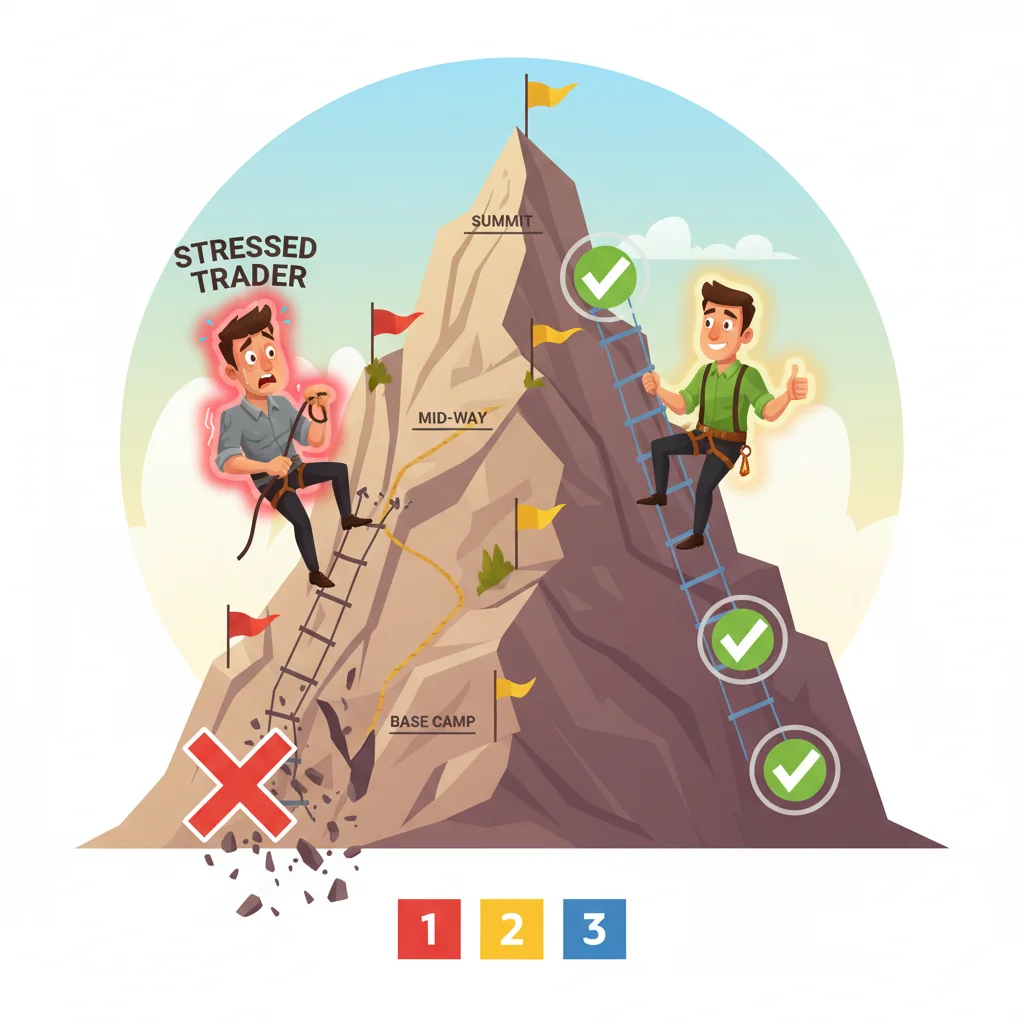
Here's the biggest mistake I see new traders make: they think a 'forex lens' is some fancy indicator you can buy. They search for a magic tool that'll show them all the winning trades. I wasted months on that hunt myself. The truth is, your forex lens isn't software. It's the mental framework you build to filter out the market's chaos and see the actual opportunities. It's how you decide what news matters, which chart pattern is real, and when to sit on your hands. Let me show you how to build yours, specifically for trading from South Africa.
Forget the marketing hype. A forex lens is your personal set of filters. It's the criteria you use to decide what information is important and what's just noise. When you look at a chart cluttered with 10 indicators, your lens helps you see only the two or three signals that matter to your strategy.
I learned this the hard way. Back in 2019, I was glued to the screen, reacting to every tweet and minor price flicker. I took a terrible trade on USD/ZAR because of a political headline, ignoring a clear support level. That loss of about R4,200 was my tuition fee. It taught me that without a lens, you're just gambling.
Your lens is built from three things: your strategy's rules, your risk tolerance, and an understanding of your own psychology. For us trading from SA, it also needs to account for local factors. Are you looking at the Rand through the lens of local liquidity (thin around SA public holidays)? Or through the lens of global risk sentiment? That choice changes everything.

Warning: Don't confuse a trading plan with a forex lens. Your plan is the map. Your lens is the ability to read the terrain and see if the map is still accurate. You need both.
Trading from SA isn't the same as trading from London or New York. Our time zone, our currency's volatility, and local broker conditions shape what we see. Your lens must be calibrated for this.
Account for ZAR Pairs and Timing
Major pairs like EUR/USD are most liquid during the London and New York overlaps. But if you're trading USD/ZAR or EUR/ZAR, you must watch the Johannesburg Stock Exchange (JSE) hours. Liquidity can dry up surprisingly fast after 5 PM SAST. I've been caught in a widening spread on GBP/ZAR trying to exit a late trade, adding unnecessary cost. A key part of your lens is knowing when to look for certain setups.
Filtering Global News
Not all news is created equal. Your lens should help you distinguish between market-moving events and background chatter. A US Federal Reserve announcement will rock every pair. A minor policy speech from a local official might cause a short-term ZAR blip, but it's often just noise. I keep a simple checklist: 1) Is it central bank related? 2) Does it directly impact commodity prices (gold, platinum)? 3) Is it a major geopolitical event? If it's not a 'yes' to one of these, it probably doesn't pass through my lens for action.
Choosing Your Broker Wisely
Your broker is the literal glass through which you see prices. A poor broker with unreliable feeds, massive spreads on ZAR pairs, or frequent requotes distorts your view before you even start. I've had good experiences with brokers like IC Markets for their raw spreads on majors, but always check their specific conditions for ZAR crosses. Your lens should include a filter for 'broker reliability' - it's a foundational layer. Don't just chase the biggest bonus offer.

💡 Wskazówka Winstona
Your trading lens is like a camera. A dirty lens (emotional bias) ruins even the most perfect scene (trade setup). Clean it with your trading journal before every session.
“If you can't articulate three rule-based reasons for a trade, you don't have a trade. You have a guess.”
Okay, so how do you actually apply this? Here are concrete methods.
The 'One Timeframe' Rule
Start by analyzing a higher timeframe to establish the trend. Are we in a clear uptrend on the daily chart? That's your primary lens. Then, drop to your trading timeframe (like the 1-hour or 4-hour). Only look for trades in the direction of that higher-timeframe trend. This simple filter eliminates about 50% of the tempting but dangerous counter-trend setups. It forces discipline.
The 'Two-Indicator' Maximum
Clutter is the enemy of clarity. Pick one trend-following indicator (like a moving average) and one momentum/oscillator indicator (like the RSI indicator). That's it. Your trade idea must be confirmed by the story both are telling. If the price is above your key moving average (bullish trend lens) but the RSI is screaming overbought (caution lens), you wait. This conflict is a signal in itself.
Volume as Your Reality Check
Price can lie, but volume often tells the truth. A breakout to a new high on low volume? That's a weak move likely to fail. Your lens should always include a quick volume check. It's like checking if there's actually fuel behind a price move. I missed this on a scalping strategy setup last year and got stopped out on a fake spike.

Pro Tip: Before you enter any trade, write down the three reasons why it passed through your lens. If you can't articulate three clear, rule-based reasons, you don't have a trade. You have a guess.
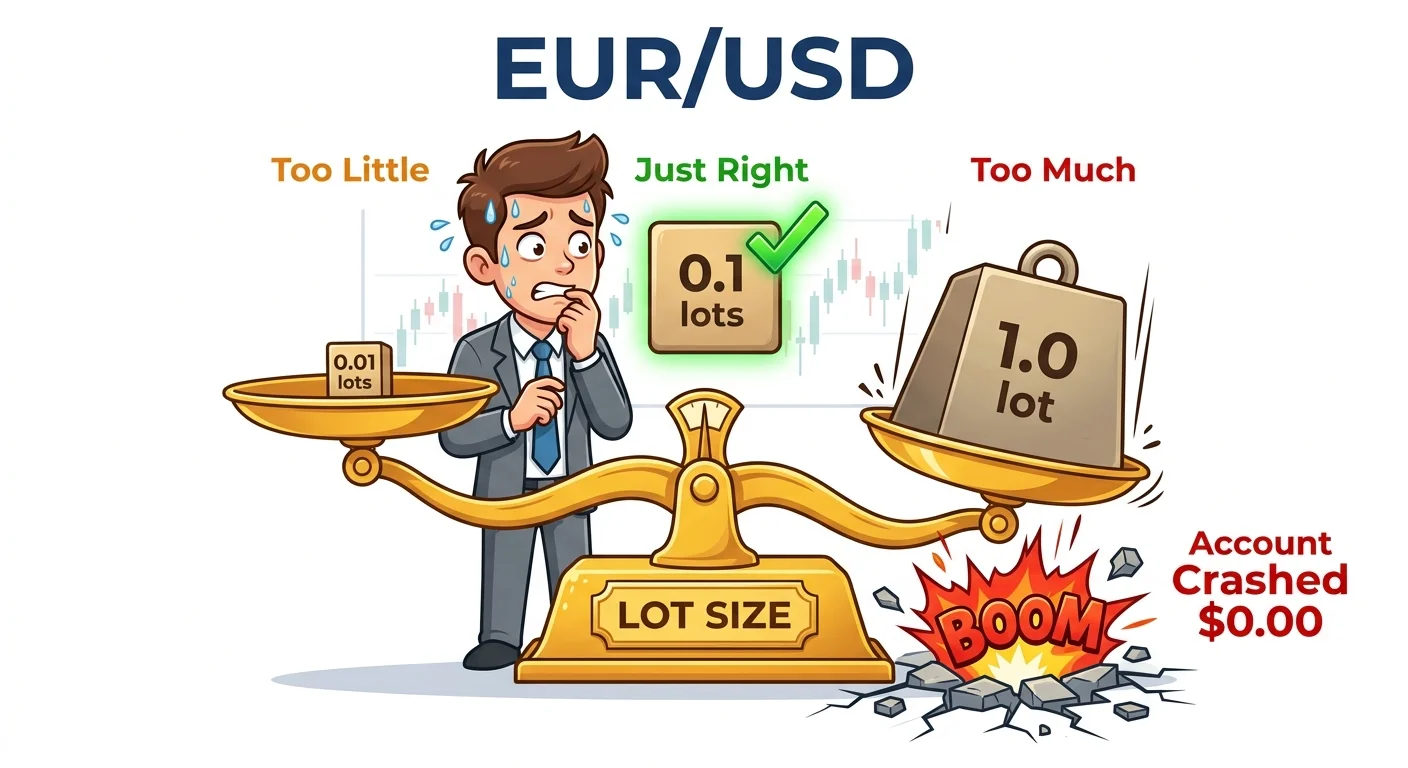
Your risk management is the most critical component of your forex lens. It's the filter that decides if a potential reward is worth the potential pain. This isn't just about setting a stop-loss.
First, use a position size calculator for every single trade. No exceptions. I calculate my position size based on a maximum 1% risk of my account per trade. This means if my account is R50,000, I'm risking R500. If my stop-loss is 50 pips away, my position size is automatically determined. This math removes emotion and forces you to see if the trade's setup (your stop distance) makes sense for your account size.
Second, view your stop-loss not as a failure point, but as the cost of being wrong. If your analysis says the trade is invalid if price hits here, that's where your stop goes. Don't 'widen your lens' to accommodate a worse entry. That's how you get a margin call.
Third, consider correlation. If you're in a long USD/ZAR trade, your lens should warn you that being long on EUR/USD at the same time is often taking opposing views on the US Dollar. You're doubling your risk to one story. A good lens helps you see your portfolio as a whole, not just individual trades.
💡 Wskazówka Winstona
The market pays you for your edge, not your opinion. Your lens must be built on statistical evidence from your past trades, not on what you 'feel' should work.
“Trading from SA means your lens must filter both global risk sentiment and local ZAR liquidity quirks.”
Even the best lens gets smudged. Here are the big distortions for South African traders.
Recency Bias: After three winning trades, you start seeing opportunities everywhere. Your lens becomes overly optimistic. The fix? Stick to your pre-defined daily or weekly loss limit. Once you hit it, walk away. No 'one more trade' to recover.
Anchor Bias: You get fixated on the price you entered. 'I'll close when I'm back to break-even' is a classic. Your lens should be focused on current price action and what the market is doing now, not what you paid. Use a breakeven stop to automate this and clear your view.
The 'Local News' Magnification: We naturally overweight news from our own backyard. A local strike or political scandal feels huge and can tempt you into a ZAR trade. But ask: is the global market even looking at this? Often, the answer is no. Check the DXY (US Dollar Index) and major pairs first. If they're quiet, that local news might not pass the global market's lens.
Platform Paralysis: Jumping between MT4, TradingView, and news feeds fractures your attention. Your lens needs a single, clean focal point. Organize your charts and tools in one place. This is where tools that integrate with your platform can be powerful, keeping your analysis unified.
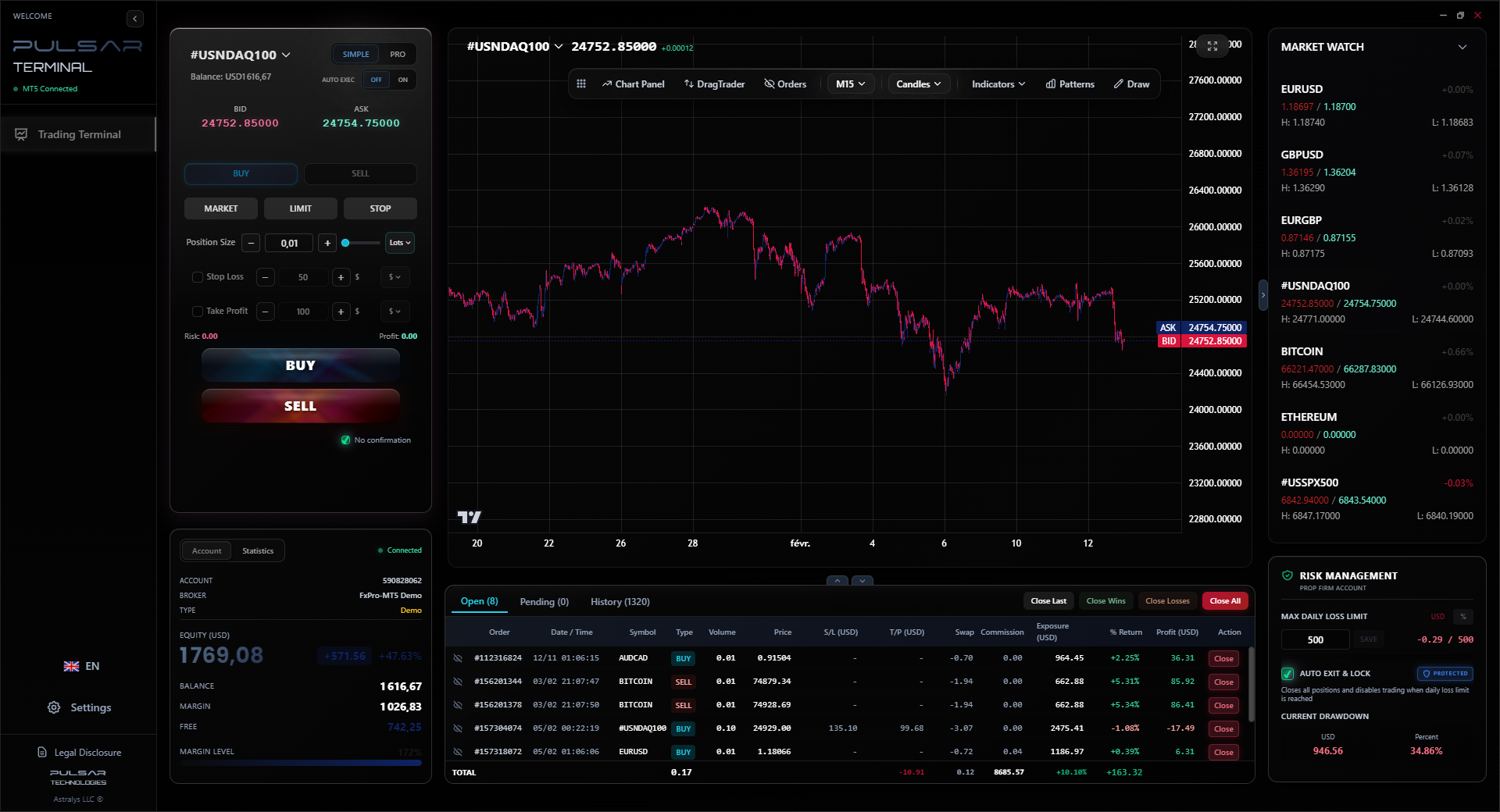
When your trading lens identifies a high-probability setup, tools like Pulsar Terminal let you execute complex order management—like multi-TP levels and trailing stops—with one click, so your focus stays on the market, not your platform.
Let's make this concrete. Here’s how my lens works on a typical Tuesday.
Pre-Market (7:00 AM SAST): I don't even look at charts. I scan my economic calendar. My lens filters for: High-impact events (red flags) and medium-impact events that are relevant to my watchlist (USD, ZAR, Gold). I note the times. Today, there's US CPI data at 2:30 PM SAST. That's a market-mover. My lens tells me: avoid new positions before this, and expect volatility after.
Analysis (8:00 AM): I open my charts. I look at the daily trend first for my main pairs (my XAU/USD guide trend filter is a simple 50 EMA). Gold is above it, trend is up. I switch to the 4-hour chart. I see a pullback to a previous support area. My momentum filter (MACD indicator) is starting to curl up from near the zero line. Volume on the down candles was declining. This passes my lens: Higher timeframe trend up, pullback to support, momentum confirming a potential reversal.
Execution & Management: I calculate my position size. Risk is 1%, stop is placed below the support low. My lens now shifts to management. I'm not watching the tick-by-tick movement. I've set my alerts. Because of the US data later, I might use a tighter trailing stop or take partial profits before 2:30 PM. My lens is actively filtering the 'noise' of normal fluctuations and focusing on the key risk event.
The goal isn't to be right on every trade. The goal is for every trade to be a clear, logical output of your system. That's the power of a honed forex lens.
FAQ
Q1Is a 'forex lens' just another term for a trading strategy?
Not quite. Your strategy is the specific set of rules for entries and exits (e.g., 'buy when RSI crosses above 30 on the 1-hour chart'). Your forex lens is the broader mindset that chooses which strategy to use, decides when market conditions are right for it, and filters out all the other signals that don't fit. It's the 'why' behind using the strategy today.
Q2How long does it take to develop a good forex lens?
There's no set time, but expect months of consistent practice and journaling. The key is deliberate review. After every trade - win or lose - ask: 'What did I see that made me take this? Did my filters work?' I started seeing real consistency after about 6 months and 100+ tracked trades of consciously applying and refining my filters.
Q3Can I use a forex lens for [swing trading](/en/strategies/swing-trading) and scalping?
Absolutely, but the lens settings change. A swing trader's lens focuses on higher timeframe trends, weekly support/resistance, and fundamental drivers. A scalper's lens is tuned to order flow, 1-5 minute chart patterns, and the spread definition. You might have different 'lens profiles' for different timeframes, but the core principle - filtering noise with strict rules - remains the same.
Q4Do I need expensive software to build my lens?
No. In fact, starting simple is better. A clean chart, one or two indicators, and a disciplined trading journal are more powerful than any expensive tool. The software is just the display. Your brain is the lens. Fancy tools can help later by automating parts of your process (like drawing key levels), but they don't create the lens for you.
Q5How does trading the South African Rand (ZAR) affect my lens?
Significantly. Your lens must account for higher volatility in ZAR pairs, especially around local political events and budget speeches. It also needs to factor in local market hours (JSE open/close) for liquidity. You'll learn that a 20-pip stop on EUR/USD might be reasonable, but on USD/ZAR, you often need a 50-80 pip buffer just for normal noise. Your risk filter must be adjusted accordingly.
Q6What's the first step to building my lens today?
Stop looking for new indicators. Pick one major currency pair (like EUR/USD) and one simple strategy (like trading bounces off the 200-period moving average on the 4-hour chart). Commit to only looking for that ONE setup for two weeks. Journal every time you see it and whether you took it. This forced focus is the grinding wheel that starts to shape your lens.
Lekcja Prof. Winstona
:
- ✓A trading lens filters noise, not finds signals.
- ✓Calibrate your lens for SA timezone and ZAR volatility.
- ✓Limit your chart to 2 core indicators maximum.
- ✓Use a position size calculator for every single trade.
- ✓Your stop-loss is the cost of being wrong, not a failure.
Jak przydatny był ten artykuł?
Kliknij gwiazdkę, aby ocenić
Tygodniowe analizy tradingowe
Darmowe tygodniowe analizy i strategie. Bez spamu.
O autorze
David van der Merwe
Trader Rynków Wschodzących
Trader z Johannesburga z 11-letnim doświadczeniem w walutach rynków wschodzących. Specjalizuje się w parach ZAR, handlu regulowanym przez FSCA i analizie rynku południowoafrykańskiego.
Komentarze
Może Ci się też spodobać

Cara Trading Forex Sukses: 7 Prinsip dari Trader Profesional
Cara trading forex sukses dengan 7 prinsip trader pro: manajemen modal, disiplin, journal trading, backtest. Data nyata, bukan janji profit palsu.
Jam Trading Forex Terbaik untuk Trader Indonesia: Panduan Lengkap dengan Tabel Waktu
Panduan jam trading forex untuk trader Indonesia. Tabel 4 sesi dunia, jam emas 20:00-00:00, sesi mana yang harus dihindari. Data akurat + tips dari trader berpengalaman.
Top 5 Sàn Forex Uy Tín Nhất 2026: Review Jujur dari Trader Indonesia
Top 5 sàn forex uy tín 2026 untuk trader Indonesia. Review jujur: spread, deposit, withdraw, dukungan lokal. Exness, XM, IC Markets & lebih.
All these calculators are built into Pulsar Terminal with real-time data from your MT5 account. One-click position sizing, automatic risk management, and instant calculations.
