


Most new traders think the forex market is a constant, 24-hour blur of opportunity.

David van der Merwe
Trader Rynków Wschodzących ·  South Africa
☕ 10 min czytania
Czego się nauczysz:
- 1What Exactly is the Forex Market Clock?
- 2The South African Time Zone: Your Secret Weapon
- 3The Best (and Worst) Times to Trade from SA
- 4Matching Your Strategy to the Session
- 5A Practical Daily Routine for a South African Trader
- 6Common Clock-Related Mistakes to Avoid
- 7Essential Tools & Resources for South Africans
Most new traders think the forex market is a constant, 24-hour blur of opportunity. That's a fast way to lose money. The truth is, the market has a distinct heartbeat, a rhythm dictated by the opening and closing of major financial centres. If you don't understand this forex market clock, you're trading blind. I'll show you how to read it, why the Johannesburg open is more important than you think, and how to structure your day around the world's money flow.
Forget a literal clock with hands. The forex market clock is the 24-hour cycle of trading activity, broken into four major sessions: Sydney, Tokyo, London, and New York. Because the sun never sets on the global economy, when one centre closes, another opens, creating a near-continuous trading day from Monday morning in New Zealand to Friday evening in New York.
For us in South Africa, this is a massive structural advantage. Our time zone (SAST, UTC+2) sits neatly between Asia and Europe. We're having our morning coffee when Tokyo is wrapping up, and we're well into our workday when London kicks into gear. This overlap, especially between London and New York, is where the magic (and the danger) happens.

Warning: Just because the market is 'open' doesn't mean you should be. Trading during the dead zone between the New York close and the Sydney open is like trying to surf on a flat sea. The spreads widen, liquidity dries up, and price can get jerked around by a single large order. I learned this the hard way trying to scalp the AUD/USD at 2 AM SAST. The lack of volume meant my stop-loss got hit by a meaningless spike that wouldn't have happened during a major session.
“If you don't understand the forex market clock, you're trading blind.”
Our location is a trader's gift, but only if we use it right. Let's map a typical weekday in SAST against the global sessions:
| Session | Major Centre | SAST (UTC+2) | Key Characteristics |
|---|---|---|---|
| Sydney | Australia | 12:00 AM - 9:00 AM | Quiet start. Focus on AUD, NZD, JPY pairs. Often sets the range for the day. |
| Tokyo | Japan | 3:00 AM - 12:00 PM | Asian liquidity kicks in. JPY pairs (like USD/JPY) become active. Can see breaks from Sydney's range. |
| London | UK/EU | 10:00 AM - 7:00 PM | The Big One. Volatility and volume surge. All EUR, GBP, CHF pairs come alive. This is where most major trends get their fuel. |
| New York | USA | 4:00 PM - 1:00 AM | Huge volume, especially at the open (4 PM SAST). Overlaps with London for 3 hours (4 PM - 7 PM SAST) - the most volatile and liquid window of the day. |
The Golden Overlap: London & New York
From 4 PM to 7 PM SAST, both London and New York are fully open. This is the peak of the forex market clock. Volume is at its absolute highest, which typically means tighter spreads and cleaner, more decisive price movement. Economic data from both continents is often released during this window. If you're going to place a major trade, this is the environment you want. The momentum here can define the entire trading day.
The Johannesburg Factor
While not a 'major' global centre, our own market open (around 9 AM SAST) can create interesting moves in the ZAR. If you're trading USD/ZAR or EUR/ZAR, pay close attention to local economic data releases at this time. A surprise SARB announcement or local CPI data can whip the rand around. I once caught a 450-pip move in USD/ZAR in under an hour following a more hawkish-than-expected SARB statement, entering at 18.2500 and exiting at 18.2950. It's a niche, but it's our niche.

💡 Wskazówka Winstona
The market's rhythm is its greatest truth. Trade with the tide of volume, not against it. A quiet market isn't challenging you to be clever; it's telling you to be patient.
“The London/New York overlap is the holy grail for any strategy requiring volume.”
This isn't about guessing. It's about aligning your strategy with the market's proven personality.
Best Times for Action (High Probability):
- 10:30 AM - 12:30 PM SAST: London is fresh, European data has hit, and momentum is building. Perfect for swing trading entries on EUR pairs.
- 4:00 PM - 6:30 PM SAST: The London/New York overlap. The holy grail for any strategy requiring volume. This is prime time for breakouts and trend-following. If you use a scalping strategy, this is your window.
- 9:00 AM - 10:00 AM SAST: If you trade ZAR crosses, this is when local banks and corporates are most active, providing genuine liquidity.
Times to Avoid (or Just Monitor):
- 1:00 AM - 9:00 AM SAST (Sydney/Tokyo overlap): Generally slow. Major pairs like EUR/USD often drift in a tight range. It's good for analysis, bad for execution.
- Friday after 7 PM SAST: Liquidity evaporates as New York winds down. Unpredictable gaps can happen over the weekend. Just close your positions and walk away.
- During Major News Events: Sounds counterintuitive, right? But if you don't have a specific news-trading plan, the 5 minutes before and after a high-impact release (like US Non-Farm Payrolls at 4:30 PM SAST) is a casino. Spreads balloon, and price can whipsaw violently. I've been stopped out on both sides of a trade in seconds during these events.

Pro Tip: Don't force trades. If you missed the London morning move, wait for the New York open. There's always another cycle. The market will be here tomorrow. Your capital might not be if you chase dead sessions.
“The London/New York overlap is the holy grail for any strategy requiring volume.”
You wouldn't use a fishing net in a trout stream. Don't use a scalping strategy in a sideways Tokyo session.
Asian Session (SAST Night/Early Morning): This is a range-bound environment. Look for pairs like AUD/JPY or USD/JPY that respect clear support and resistance levels. Strategies that fade the edges of the range (selling at resistance, buying at support) can work. Indicators like the RSI indicator showing overbought/oversold conditions are useful here. It's a patience game.
London Session (SAST Morning/Afternoon): This is where trends are born. Use trend-following indicators like the MACD indicator to confirm direction. Breakouts from the Asian range are common. If EUR/USD has been coiled between 1.0850 and 1.0880 all night, a sustained break above 1.0885 on increasing volume at 11 AM SAST is a high-probability signal.
London/New York Overlap (SAST Late Afternoon/Early Evening): This is pure momentum. Price moves fast. This is the best time for:
- Scalping: Aiming for 5-10 pips on quick moves.
- News Trading: If you're set up for it, with tight stops and fast execution.
- Trailing Stops: Once a trend is established here, a trailing stop can let your profits run. Managing these moves manually is stressful, which is why many pros use tools to automate it.
Your broker choice matters immensely here. You need fast execution and low latency. During these peak times, a 0.8 pip spread vs. a 0.1 pip spread makes a huge difference to your bottom line. I've had consistently better fills during volatile overlaps with brokers like IC Markets or Pepperstone compared to slower platforms.
💡 Wskazówka Winstona
Your most valuable asset is your attention. Allocate it like capital. Don't spend it on the market's graveyard shift.
“Your location is a trader's gift, but only if you use it right.”
Here's a sample structure that worked for me when I was trading full-time. Adapt it to your life.
6:30 AM SAST: Wake up. Check how the Asian session closed. Did USD/JPY break any key levels? What's the sentiment? Glance at XAU/USD (gold) as it's often influenced by Asia.
8:00 AM - 10:00 AM SAST: Planning Window. This is your most important hour. Don't trade yet. Analyze the daily and 4-hour charts. Where are the key levels? What's the economic calendar for London and New York? Use a position size calculator to pre-determine your risk for the day. Decide on your maximum loss limit before a single trade is placed.
10:15 AM SAST: London is open. Watch the first 15-30 minutes for direction. Look for failed or successful tests of the levels you identified.
12:00 PM - 3:30 PM SAST: Active Trading Window. Execute your planned trades based on the London momentum. Monitor open positions.
4:00 PM SAST: New York open. Assess if it confirms or contradicts the London move. This is a decision point: add to winning positions, close partial profits, or exit if the picture changes.
6:00 PM SAST: Start winding down. Avoid new entries unless you're a night owl trading the early US session. Review your trades. What went right? What went wrong? Journal it.
9:00 PM onwards: The market is alive, but it's thinning out. Unless you're monitoring a specific swing trade, log off. Your mental capital needs to recharge too.

Example: Let's say you risk 1% of a R100,000 account per trade (R1,000). You spot a setup on GBP/USD with an entry at 1.2650, a stop-loss at 1.2620 (30 pips risk). Your position size is R1,000 / (30 pips * ZAR per pip value). You calculate it, place the trade, and walk away. The routine removes emotion.
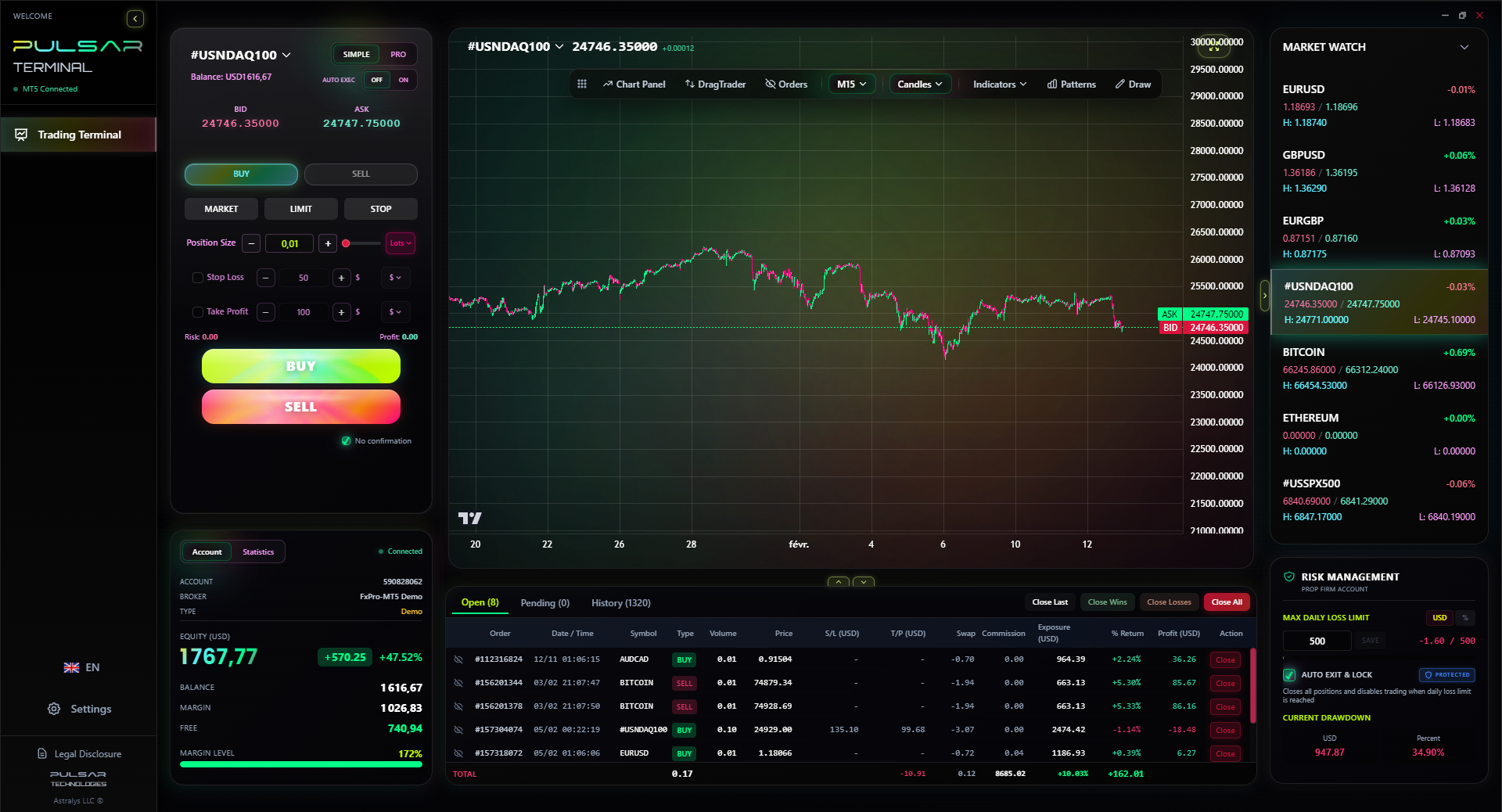
Sticking to a disciplined routine is easier when your trading tools help you manage risk automatically, like setting multiple take-profit levels or a trailing stop without staring at the screen.
“Your location is a trader's gift, but only if you use it right.”
I've made most of these. Learn from my lost rands.
- Trading All Session, Every Session: This leads to burnout and overtrading. You'll take low-quality setups just to be 'in the market'. Pick your session (I recommend London or the Overlap) and master it.
- Ignoring the Economic Calendar: Trading the USD pairs at 4:30 PM SAST without knowing the FOMC statement is due is professional suicide. The calendar is part of the clock.
- Forgetting About Daylight Saving Time (DST): The US and EU switch clocks on different dates. For a few weeks each year, the London/New York overlap shifts by an hour. Mark it in your calendar, or you'll be an hour early for the party.
- Not Adjusting Stops for Session Changes: A 15-pip stop that's safe in a quiet Tokyo session can be vaporized in the first minute of London. Widen your stops appropriately for the upcoming volatility, or use a volatility-based indicator to guide you.
- Chasing the ZAR Without a Local Edge: USD/ZAR can be tempting with its big moves, but it's less liquid than majors and more susceptible to local political shocks. If you don't follow SA politics and economics closely, you're at an information disadvantage.
Remember, the FSCA's 30:1 use limit is there for a reason. During volatile overlaps, high use can trigger a margin call incredibly fast. Respect the clock, and respect the use.
💡 Wskazówka Winstona
A routine isn't a constraint; it's the framework that keeps your psychology intact when the screens are flashing red.
“The greatest tool you have is the discipline to walk away.”
You don't need fancy software, but you do need the right basics.
Free Essential Tools:
- Economic Calendar: ForexFactory.com or Investing.com. Filter for 'High Impact' events. Set the time zone to SAST.
- Market Clock Widget: Many trading platforms have these. If not, a simple web search for 'live market session clock' will give you a visual of which centres are open.
- SARB Website: For official interest rates, statements, and economic data. This is your source of truth for ZAR fundamentals.
- Broker Analytics: Top brokers like XM or Exness offer decent client portals with news and basic analysis. Use them.
Your Mindset is a Tool: The greatest tool you have is the discipline to walk away. When your planned session is over, close the charts. The forex market clock ticks 24 hours, but you shouldn't. Protect your sleep, your focus, and your capital. The market will offer the same opportunities tomorrow, next week, and next year. Your job is to be rested, prepared, and solvent enough to take them.
FAQ
Q1What is the most volatile trading session for South African traders?
Hands down, the London/New York overlap from 4:00 PM to 7:00 PM SAST. This is when the highest volume of transactions occurs, leading to the tightest spreads and the most decisive price movements. It's the best time for strategies that rely on momentum and volume, but it also requires the most focus and disciplined risk management.
Q2Is it safe to trade with international brokers as a South African?
It can be, but you must do your homework. The safest route is to use an international broker that is also licensed by the South African FSCA. This gives you local regulatory protection. If you choose an offshore broker, ensure they are reputable and regulated in a strict jurisdiction like the UK (FCA) or Australia (ASIC). Remember, you'll be dealing with cross-border forex regulations governed by the SARB, so keep records for tax purposes.
Q3What is the best currency pair to trade during the Asian session?
Focus on pairs involving the Japanese Yen (JPY) or the Australian Dollar (AUD). USD/JPY, AUD/JPY, and AUD/USD typically see the most action as the Tokyo and Sydney markets are open. These pairs will often respect technical ranges set during this session, making them suitable for range-bound strategies.
Q4How does Daylight Saving Time affect my trading schedule?
It shifts your session times by one hour for part of the year. The UK (London) and the US (New York) switch to and from DST on slightly different dates. For example, when the US has switched but the UK hasn't, the London/New York overlap might run from 5:00 PM to 8:00 PM SAST instead of 4:00 PM to 7:00 PM. Always double-check the session times in March/April and October/November.
Q5Can I trade successfully only during South African business hours?
Absolutely. In fact, I'd recommend it for most developing traders. The London session (10 AM SAST onwards) provides more than enough opportunity. You can catch the build-up of European momentum, trade through the lunch lull, and even catch the first hour of the New York open by 4 PM. Trying to trade the Asian session late at night often leads to fatigue and poor decisions.
Q6Why is the ZAR sometimes so volatile at the Johannesburg open?
The 9 AM SAST open is when major South African banks, asset managers, and corporations actively adjust their currency positions based on overnight global moves and in anticipation of the local business day. This concentrated burst of liquidity and order flow, especially if combined with local economic data releases, can cause sharp, short-term moves in USD/ZAR and other rand pairs.
Q7Do I need to pay tax on my forex trading profits in South Africa?
Yes. SARS generally views frequent forex trading as income from a business, not capital gains. This means your net profits are added to your other income and taxed at your marginal income tax rate. It is crucial to keep careful records of all trades, deposits, and withdrawals. Consult a tax professional who understands trading, as the rules can be complex.
Lekcja Prof. Winstona
:
- ✓Align your trades with the London or London/NY overlap for highest probability.
- ✓Never trade the dead zone between NY close and Sydney open.
- ✓Use a position size calculator before every session.
- ✓Your SAST timezone is a strategic advantage - exploit it.
- ✓Routine beats impulse every single time.
Jak przydatny był ten artykuł?
Kliknij gwiazdkę, aby ocenić
Tygodniowe analizy tradingowe
Darmowe tygodniowe analizy i strategie. Bez spamu.
O autorze
David van der Merwe
Trader Rynków Wschodzących
Trader z Johannesburga z 11-letnim doświadczeniem w walutach rynków wschodzących. Specjalizuje się w parach ZAR, handlu regulowanym przez FSCA i analizie rynku południowoafrykańskiego.
Komentarze
Może Ci się też spodobać

Cara Trading Forex Sukses: 7 Prinsip dari Trader Profesional
Cara trading forex sukses dengan 7 prinsip trader pro: manajemen modal, disiplin, journal trading, backtest. Data nyata, bukan janji profit palsu.
Jam Trading Forex Terbaik untuk Trader Indonesia: Panduan Lengkap dengan Tabel Waktu
Panduan jam trading forex untuk trader Indonesia. Tabel 4 sesi dunia, jam emas 20:00-00:00, sesi mana yang harus dihindari. Data akurat + tips dari trader berpengalaman.
Top 5 Sàn Forex Uy Tín Nhất 2026: Review Jujur dari Trader Indonesia
Top 5 sàn forex uy tín 2026 untuk trader Indonesia. Review jujur: spread, deposit, withdraw, dukungan lokal. Exness, XM, IC Markets & lebih.
All these calculators are built into Pulsar Terminal with real-time data from your MT5 account. One-click position sizing, automatic risk management, and instant calculations.
