


I remember staring at the screen in late 2022, watching GBP/ZAR climb past 21.50.

David van der Merwe
Trader Rynków Wschodzących ·  South Africa
☕ 10 min czytania
Czego się nauczysz:
- 1What Exactly Are You Trading?
- 2The South African Rulebook: FSCA, SARB, and Taxes
- 3The Real Costs for South African Traders
- 4What Moves GBP/ZAR? It's a Two-Sided Story
- 5Trading Strategies That Can Work
- 6Choosing a Broker in South Africa
- 7My Biggest Mistake (And How You Can Avoid It)
- 8Getting Started Safely
I remember staring at the screen in late 2022, watching GBP/ZAR climb past 21.50. I was short, convinced the pair was overextended. My stop-loss was a tight 50 pips away, a number I'd plucked from thin air. An hour later, a surprise BoE comment sent it spiking to 21.85. I was out. That R4,200 loss wasn't just about money; it was a brutal lesson in respecting GBP/ZAR's unique volatility. Trading the Pound against our Rand isn't like EUR/USD. It's a different beast, shaped by local rules, massive spreads, and a volatility that can humble you fast. Let's talk about how to trade it properly, from a South African perspective.
GBP/ZAR is the exchange rate between the British Pound Sterling and the South African Rand. When you buy GBP/ZAR, you're betting the Pound will strengthen against the Rand. When you sell, you're betting the Rand will strengthen against the Pound.
It's classified as an exotic currency pair. Don't let that label intimidate you. It just means it's less liquid than majors like EUR/USD, which leads to wider spreads and sharper, sometimes unpredictable, moves. The price you see is how many Rands it takes to buy one Pound. If GBP/ZAR is at 23.5000, you need R23.50 to get £1.

Warning: Because it's exotic, your standard strategies might need adjusting. A 100-pip move on GBP/ZAR (from 23.00 to 24.00) is a 4.3% move. The same 100-pip move on EUR/USD (from 1.0800 to 1.0900) is less than 1%. The risk feels different, and your position size calculator is your best friend here.
I made the mistake early on of trading it with the same lot size I used for EUR/USD. A 200-pip move against me on GBP/ZAR wiped out a week's careful profits on other pairs. The lesson? Size for the pair, not your account.
You can't trade effectively here without knowing the local landscape. Ignorance isn't just risky; it can be expensive.
The FSCA is Your First Check
Every broker you consider must be licensed by the Financial Sector Conduct Authority (FSCA). This isn't optional. It ensures client money segregation, proper conduct, and gives you a recourse if things go south. I always check the FSP number on the FSCA's website before depositing a cent.
The big one for retail traders: use is capped at 30:1 by the FSCA. You'll see international brokers advertising 500:1. If you trade with them, you're outside South African protection. That 30:1 limit? It's there for a reason. On a volatile pair like GBP/ZAR, high use is a shortcut to a margin call. I learned this the hard way using an offshore account early in my career; a 400-pip swing on high use liquidated me.
SARB and Your Money
The South African Reserve Bank (SARB) controls how money leaves the country. You have a R1 million single discretionary allowance per year to move offshore. Need more? You'll need tax clearance from SARS for the additional R10 million foreign investment allowance. This matters when funding an international broker account. Always use authorized channels.
The Tax Man Cometh
Profits from forex trading are taxable income. It's not a hobby in SARS's eyes. You're responsible for declaring it. I keep a detailed trading journal partly for this reason - come tax season, I know exactly what my net profit is. Get an accountant who understands trading; it's worth the fee.

💡 Wskazówka Winstona
On volatile pairs like GBP/ZAR, use the Average True Range (ATR) indicator to set your stop-loss. A stop based on a multiple of the current ATR (e.g., 1.5x ATR) respects the market's actual volatility, not just an arbitrary number.
“That 30:1 use limit? It's there for a reason. On GBP/ZAR, high use is a shortcut to a margin call.”
Let's talk numbers. The advertised spread is just the entry fee.
Spreads & Commissions: On GBP/ZAR, don't expect 0.1 pip spreads. A 'good' spread might be 80-120 pips during active London hours. At night or during low liquidity, I've seen it blow out to 250 pips. That's R250 per standard lot before you're even in profit. Some brokers like IC Markets or Pepperstone offer raw spreads plus a commission, which can be cheaper for active traders. You need to do the math.
Swap Rates (Overnight Fees): This is the interest rate differential. If you're long GBP/ZAR, you might earn or pay a small amount each night you hold. If you're short, you likely will pay. These rates change and can add up over a long-term swing trading hold. I once held a short GBP/ZAR position for three weeks during a low-rate environment; the swaps ate nearly 15% of my eventual profit.
Bank Fees: Funding your account? It's not free. A typical international wire from a South African bank can cost between R130 and R500, depending on the bank and service type. That's a direct hit to your starting capital. Some local brokers like Khwezi Trade allow EFT deposits with lower fees.

Example: You deposit R10,000. A R250 bank fee is a 2.5% loss before you place a single trade. You need to make that back just to break even on the deposit.
You're trading two economies in one pair. You need to watch both shores.
The UK Side (GBP):
- Bank of England (BoE) Interest Rate Decisions: The big one. Hawkish talk lifts the Pound.
- UK Inflation Data (CPI): High inflation pressures the BoE to hike rates.
- UK GDP & PMI Data: Measures of economic health.
- UK Political Stability: Think Brexit volatility. Any political uncertainty tends to weaken Sterling.
The South African Side (ZAR):
- South African Reserve Bank (SARB) Interest Rate Decisions: Our rates are often higher, which can support the Rand... but not if other factors overwhelm it.
- South African CPI & GDP: Our economic health matters.
- Commodity Prices: ZAR is a commodity currency. Strong platinum, gold, and coal prices often strengthen the Rand. I watch the XAU/USD guide for clues on gold.
- Eskom & Load-Shedding: Sadly, a real market factor. Extended stages of load-shedding spook investors and weaken the Rand.
- Global Risk Sentiment: In 'risk-off' moods (markets are scared), money flees emerging markets like South Africa, weakening the ZAR. GBP/ZAR often rises.
The pair really sings when these forces align. In March 2023, with UK inflation hot and SA facing severe load-shedding, GBP/ZAR ripped from 21.00 to 22.80 in a matter of weeks. I caught part of that move long, but exited too early out of fear. The lesson? When the fundamental story is strong on one side and weak on the other, the trend can run much further than you think.
“My stop was placed technically, without a volatility buffer. A 300-pip stop might work on EUR/USD. On GBP/ZAR, it's often too tight.”
You need to adapt your approach for this pair's personality.
Trend Following: GBP/ZAR loves long, sustained trends. Using a simple combination like a 50-period and 200-period Exponential Moving Average (EMA) can help identify the direction. Wait for the price to pull back to the 50 EMA in a strong trend for a better entry. Trying to pick tops and bottoms is a sure way to get burned.
Breakout Trading: Key psychological levels like 23.00 or 24.00 are important. When price consolidates near these levels and then breaks with volume, it can lead to a strong move. I use the MACD indicator here to confirm momentum on the breakout, not to generate the signal itself.
News Trading (For the Brave): Trading SARB or BoE announcements is high-risk. The spread will widen massively just before the news. I don't recommend it for beginners. If you do, use pending orders placed well in advance, and expect slippage.
What Doesn't Work (From My Experience):
- High-Frequency Scalping: The wide spreads make classic scalping strategy very difficult. You need a much larger target to be profitable.
- Over-Reliance on Oscillators: The RSI indicator can sit in overbought territory for weeks during a strong trend. Using it alone for reversals is a recipe for frustration.
My most consistent results come from higher-timeframe swing trading, holding for days or weeks, and always, always respecting the wider stops this pair demands.
💡 Wskazówka Winstona
Before a major UK or SA data release, check the economic calendar. If you're in a trade, consider tightening your stop or closing part of your position. The ensuing volatility can trigger stops and reverse trends violently.
Your broker is your gateway. Here’s what I look for, in order of importance:
- FSCA Regulation: Non-negotiable. Verify the FSP number.
- Spreads & Costs on GBP/ZAR: Don't just look at EUR/USD. Check the typical spread on GBP/ZAR during the hours you trade. Ask about commissions.
- Deposit & Withdrawal Methods: Do they offer local EFT? How long do withdrawals take? What are the fees? A broker with instant, low-fee EFTs (like some local FSPs) saves a lot of hassle.
- Platform & Tools: MT4/MT5 is standard. Does the broker offer good charting tools and execution? Some, like Exness or XM, have user-friendly local support.
- Minimum Deposit: You can start small (R500-R1000), but remember, to trade GBP/ZAR with sensible risk, you need more capital. A R5,000 account is a more realistic starting point for serious practice.

Pro Tip: Open a demo account first. Test the spreads on GBP/ZAR at different times. Test the execution speed. Do this for at least two weeks before going live with real money.
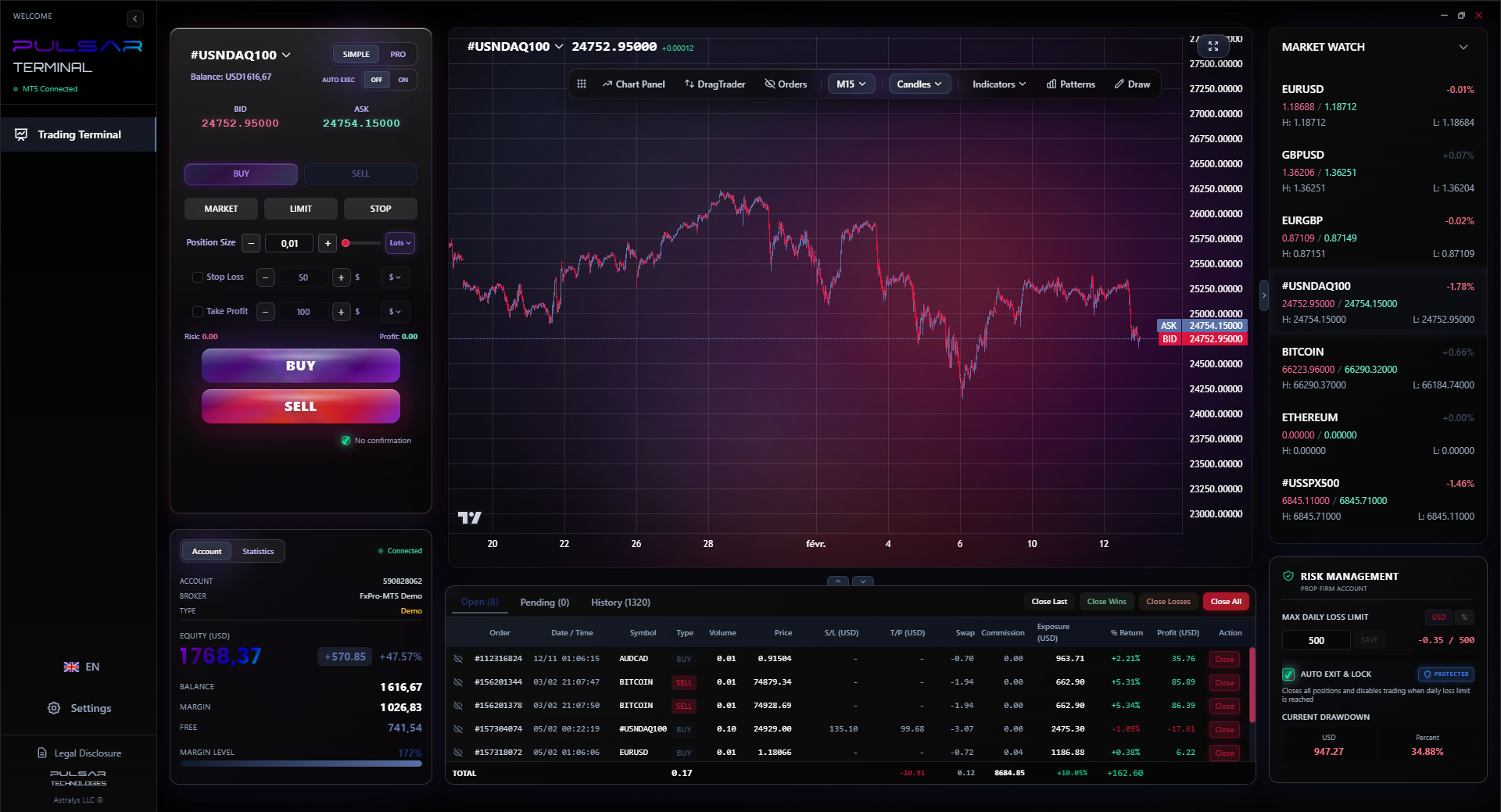
Managing multiple trades and setting precise stops on a volatile pair like GBP/ZAR is easier with tools that automate risk management directly on your MT5 platform.
“On GBP/ZAR, align your technical setup with the fundamental story.”
I want to share a specific, painful trade. It was October 2021. GBP/ZAR was at 19.80. The chart showed a clear double top pattern, and the RSI was diverging. I went all in with a short, my biggest position size ever. My stop was at 20.10, just above the recent high.
A week later, UK inflation printed a shocking number. The pair gapped up on the open to 20.25. I was stopped out for a loss of R8,700. But it didn't stop there. It kept rallying to 20.80.
My mistakes were classic:
- I ignored fundamentals for a pretty chart pattern. The fundamental backdrop for the UK was already strengthening. I was fighting the tide.
- My position size was reckless. I used a position size calculator but then ignored it because I was 'so sure'.
- My stop was placed technically, without a volatility buffer. A 300-pip stop might work on EUR/USD. On GBP/ZAR, it's often too tight. I should have used Average True Range (ATR) to set a wider, more realistic stop.
The lesson that stuck? On GBP/ZAR, align your technical setup with the fundamental story. If the fundamentals are neutral or against your trade, take a much smaller position or stay out. And always, always size your position for the pair's volatility, not your confidence level.
If you're new to forex pound to rand trading, here's a step-by-step path:
- Education First: Understand what a pip definition and spread definition mean, especially for exotics.
- Find a Regulated Broker: Use the list above as a starting point. Do your own FSCA check.
- Start with a Demo Account: Trade GBP/ZAR on demo for a minimum of 3 months. Experience its volatility without risk.
- Develop a Simple Plan: Choose one strategy (e.g., trend following on the 4-hour chart). Write down your rules for entry, exit, and position sizing.
- Start Live Small: Fund an account with money you can afford to lose completely. Start with a position size 1/10th of what your plan says. Get used to the emotion of real money.
- Keep a Journal: Note every trade, the reason for it, and your emotional state. Review it weekly. This is how you improve.
GBP/ZAR is a challenging but rewarding pair to trade. It connects our local economy to global flows in a very direct way. Respect its power, manage your risk ruthlessly, and never stop learning. Good luck.
FAQ
Q1Is forex trading legal in South Africa?
Yes, it is completely legal. It is regulated by the Financial Sector Conduct Authority (FSCA). You must trade with an FSCA-licensed broker to ensure your funds are protected under South African law.
Q2What is a good starting capital for trading GBP/ZAR in South Africa?
While you can open an account with R500, a realistic amount to trade GBP/ZAR with proper risk management is between R5,000 and R20,000. This allows you to withstand the pair's wide spreads and volatility without being forced to use dangerously high use.
Q3Why are the spreads on GBP/ZAR so wide?
GBP/ZAR is an exotic currency pair, meaning it has lower trading volume and liquidity than majors like EUR/USD. Fewer buyers and sellers at any given moment lead to a larger difference between the buy and sell price (the spread). It's the cost of trading a less common pair.
Q4How are my forex trading profits taxed in South Africa?
Profits from forex trading are considered taxable income by SARS. You must declare your net profit (total profits minus total losses and allowable expenses) on your annual tax return. It's highly recommended to keep detailed records and consult with a tax professional.
Q5Can I use a foreign broker instead of an FSCA-regulated one?
You can, but it comes with significant risks. You will not be protected by South African regulations like the 30:1 use cap or client money segregation rules. You may also face challenges with SARB exchange controls when moving money. For safety, an FSCA broker is strongly advised.
Q6What time of day is best to trade GBP/ZAR?
The most active and liquid times are during the overlap of the London and South African trading sessions (roughly 10:00 SAST to 17:00 SAST). This is when spreads are typically tightest and price action is most consistent. Avoid trading during major news releases unless you are very experienced.
Lekcja Prof. Winstona
:
- ✓Always verify your broker's FSCA license before depositing.
- ✓Size your positions for GBP/ZAR's volatility, not your confidence level.
- ✓Use ATR, not fixed pip amounts, to set stops on exotic pairs.
- ✓A R5,000 minimum is realistic for trading GBP/ZAR safely.
Jak przydatny był ten artykuł?
Kliknij gwiazdkę, aby ocenić
Tygodniowe analizy tradingowe
Darmowe tygodniowe analizy i strategie. Bez spamu.
O autorze
David van der Merwe
Trader Rynków Wschodzących
Trader z Johannesburga z 11-letnim doświadczeniem w walutach rynków wschodzących. Specjalizuje się w parach ZAR, handlu regulowanym przez FSCA i analizie rynku południowoafrykańskiego.
Komentarze
Może Ci się też spodobać

Cara Trading Forex Sukses: 7 Prinsip dari Trader Profesional
Cara trading forex sukses dengan 7 prinsip trader pro: manajemen modal, disiplin, journal trading, backtest. Data nyata, bukan janji profit palsu.
Jam Trading Forex Terbaik untuk Trader Indonesia: Panduan Lengkap dengan Tabel Waktu
Panduan jam trading forex untuk trader Indonesia. Tabel 4 sesi dunia, jam emas 20:00-00:00, sesi mana yang harus dihindari. Data akurat + tips dari trader berpengalaman.
Top 5 Sàn Forex Uy Tín Nhất 2026: Review Jujur dari Trader Indonesia
Top 5 sàn forex uy tín 2026 untuk trader Indonesia. Review jujur: spread, deposit, withdraw, dukungan lokal. Exness, XM, IC Markets & lebih.
All these calculators are built into Pulsar Terminal with real-time data from your MT5 account. One-click position sizing, automatic risk management, and instant calculations.
