


Every ad for a forex trading app in India makes it look like a shortcut to a Lamborghini.

Rajesh Sharma
Starszy Analityk Forex ·  India
India
☕ 11 min czytania
Czego się nauczysz:
- 1The Legal Minefield: What You Can (and Mostly Can't) Trade
- 2How Your Trading App is Designed to Make You Lose
- 3The Real Costs: Spreads, Commissions, and the Overnight Sleight-of-Hand
- 4App Features You Need vs. Flashy Gimmicks
- 5The Practical Nightmare: Funding and Withdrawals in INR
- 6Building a System, Not Just Using an App
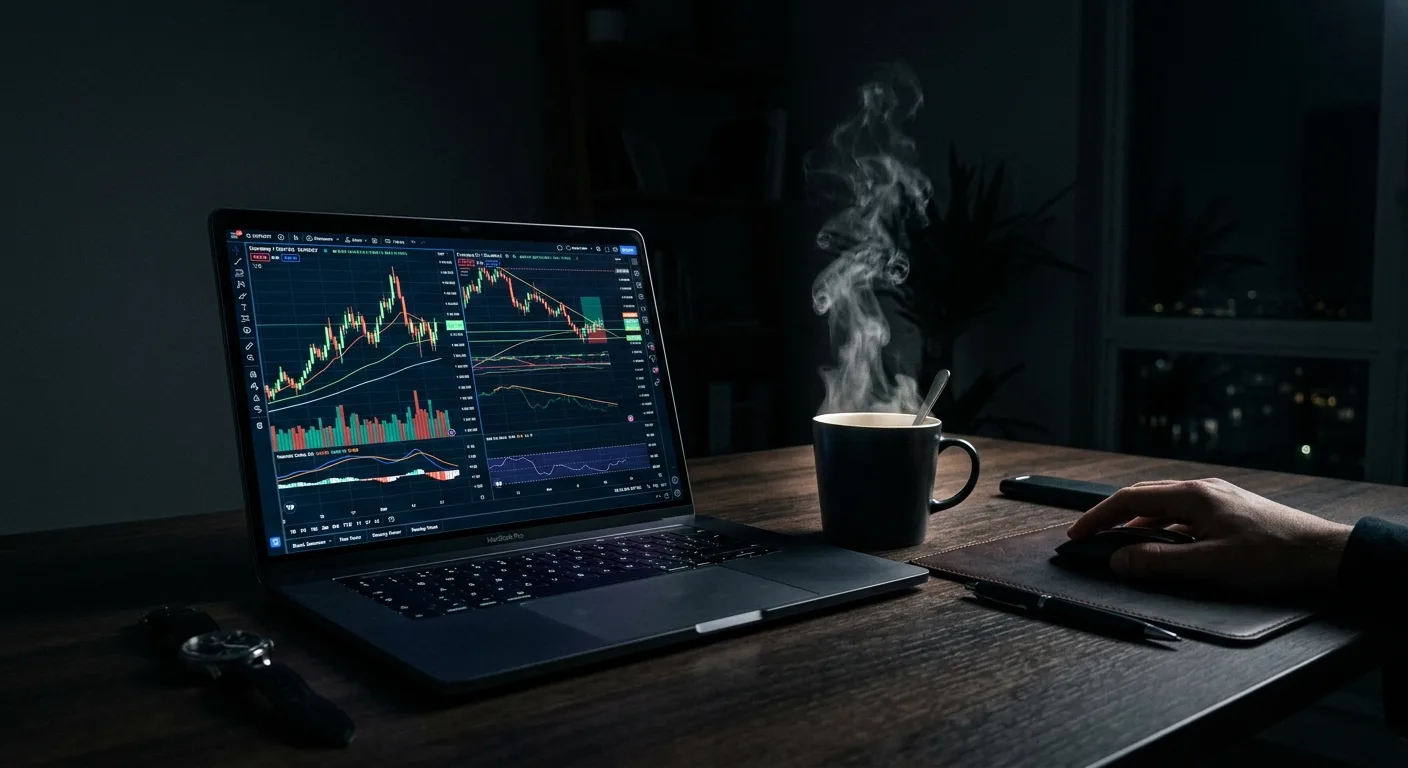
Every ad for a forex trading app in India makes it look like a shortcut to a Lamborghini. Swipe right to buy, swipe left to sell, watch the money roll in from your phone. It's a fantasy, and a dangerous one. I've seen more accounts blown up by slick app interfaces than by bad market calls. This isn't about finding the 'best' app. It's about understanding why the app itself, combined with Indian regulations and your own psychology, is often the reason you fail. Let's strip away the marketing and look at what you're really signing up for.
This is where most Indian traders get their first, nasty surprise. You can't just download any international app and start trading forex pairs. The Reserve Bank of India (RBI) and SEBI have strict rules. Basically, you cannot trade in currency derivatives on a foreign exchange. Your trades must be routed through Indian exchanges like the NSE, BSE, or MCX-SX.
What does that mean for your app choice? It means the universe of available instruments shrinks dramatically. You're mostly looking at trading USD/INR, EUR/INR, GBP/INR, and JPY/INR futures and options contracts. Forget easily trading exotic pairs or minor crosses through an international broker's slick app. That's a quick way to get your bank account flagged.
The brokers that offer these services on Indian exchanges have their own apps. They're often functional, but rarely award-winning in design. The real danger here is the temptation to bypass these rules. You'll find offshore brokers offering apps that let you sign up, deposit, and trade global forex pairs. This operates in a grey area at best. While individuals have found ways to fund these accounts, you have zero regulatory protection. If that broker disappears with your money, you have no recourse. I've had to explain this cold reality to clients who lost five-figure sums this way.

Warning: Using an international forex app to bypass Indian regulations doesn't make you a savvy trader. It makes you an unsecured creditor in a jurisdiction that can't help you. Your priority isn't use or spreads, it's the safety of your capital.
Your first filter for any forex trading app in India must be: Is this broker authorized to offer these services within the Indian regulatory framework? If the answer isn't a clear yes, walk away. The convenience of a pretty app isn't worth the risk of losing your entire deposit.

Think about the most addictive apps on your phone. Social media, games. What do they have in common? Notifications, bright colors, instant feedback, and variable rewards (sometimes you get a 'like', sometimes you don't). Now look at your trading app. Notifications for every pip movement? Flashy green and red candles? One-tap buy/sell buttons? It's the same playbook.
The Notification Trap
I made this mistake myself. Years ago, I had price alerts set on my phone for EUR/USD. Every 'ping' felt urgent, like I was missing out or needed to act. I turned a 3% planned position into a 12% mess because I kept reacting to noise, not my plan. That loss, about $1,200, was a tuition fee on mobile psychology. An app turns the market, which requires patience, into a slot machine in your pocket. You're conditioned to act, not to think.
The Illusion of Control
A mobile app gives you the feeling you're 'on top of' your trades. In reality, you're just more likely to micromanage them. That solid swing trade you placed based on the weekly chart? It looks terrifyingly volatile on the 5-minute chart on your phone screen. The urge to close it early for a small profit (or a panic loss) becomes overwhelming. I can't count how many times I've seen a perfectly good trade ruined because someone had app access during a boring commute.

Pro Tip: Use your app for monitoring and administration only. Place your trades on a desktop platform where you have full charting tools and a calmer environment. Use the app to check if stops are in place or to close a trade if and only if it hits your predefined desktop-analyzed target. Treat it like a bank app, not a trading terminal.
The best feature a forex trading app in India can have is a 'lock me out' function. Since it doesn't, you have to build that discipline yourself. Your phone is the single biggest threat to your trading plan. Understanding swing trading principles is useless if your app turns you into a nervous scalper.

💡 Wskazówka Winstona
If your trading app has more notifications than your messaging app, you've already lost. The market's most important moves are silent.

“The best feature a forex trading app in India can have is a 'lock me out' function.”
Apps make depositing money feel like a game. They hide the real cost of playing. In the Indian context, with exchange-traded currency derivatives, you're not paying a spread in the traditional forex sense. You're paying brokerage fees, transaction charges, and GST on those charges. It adds up faster than you think.
Let's say you trade one lot of USD/INR futures. Your broker might charge ₹20 per lot. The exchange charges another ₹5. Then, GST at 18% is applied to the total brokerage fee. So your round-trip cost isn't just the difference between buy and sell price on an app screen. It's this layered fee structure. On a small move, these fees can eat most of your profit.
Where apps get really sneaky is with overnight positions, or 'carry'. If you're used to international forex apps talking about swap rates, the Indian equivalent is the futures rollover. You don't pay a daily interest charge. Instead, each futures contract has an expiry (usually the last Thursday of the month). If you want to hold a long-term view, you must sell your expiring contract and buy the next month's. This 'rollover' has a cost based on the price difference between the two contracts. Your app might not highlight this cost clearly, leading to a nasty surprise at expiry.
Here’s a brutal comparison I did for a client between the perceived cost and real cost on a 1-month USD/INR futures hold:
| Cost Type | Perceived Cost (via App) | Real Cost (Actual) |
|---|---|---|
| Entry/Exit | Maybe a small 'fee' shown | Brokerage + Exchange Fee + GST (₹50-100 round trip) |
| Holding Overnight | "Free" or not mentioned | Rollover cost at expiry (can be ₹100+ per lot) |
| Total on 1 Lot | App shows minimal | Can easily be ₹150-200, wiping out 10+ point gain |
Always, always look for the detailed contract note your broker emails you. That's the truth. The app's clean P&L display is often a lie by omission. Before you even think about strategy, run your numbers through a position size calculator that includes all these fees. Otherwise, you're trading just to pay your broker.

Most app reviews focus on charts and drawing tools. For an Indian trader, those are secondary. Here’s what actually matters.
Need to Have:
- Reliable, Fast Order Execution: During volatility, can you get in and out? Test this with a small trade. A 2-second delay can cost you thousands.
- Clear, Detailed Contract Notes Access: Can you see the full breakdown of fees immediately within the app? If not, it's a red flag.
- strong Security (2FA): This is non-negotiable. If the app doesn't offer two-factor authentication, don't fund it.
- Easy Fund Withdrawal: Deposits are always easy. Test the withdrawal process with a small amount first. How long does it take? Are there hidden charges? I learned this the hard way with an early platform that took 7 working days and a 'processing fee' to return my own money.
- Reliable Alert System: For price levels, not every wiggle. You need alerts that work when the app is closed.
Nice to Have:
- Basic charting with timeframes relevant to your strategy.
- Watchlists for the specific INR pairs you trade.
Total Gimmicks to Ignore:
- Social Trading Feeds: Watching other 'gurus' lose money in real-time is not analysis.
- In-App 'Signals' or 'AI Recommendations': These are conflict-ridden garbage 99% of the time.
- Fantastically Animated Charts: They look cool but drain battery and focus.
- One-Click 'Copy Trade': You're surrendering your capital to a stranger. Enough said.
The best forex trading app in India is often the boring, stable one from a large, reputable domestic broker that gives you direct access to the exchanges. Fancy international apps packed with features you can't legally use are a distraction. Your goal is safe, reliable access to the market, not digital entertainment. For real analysis, you should be using a desktop platform. The app is just a remote monitor.
💡 Wskazówka Winstona
The 'convenience' of a mobile app is directly proportional to the frequency of your mistakes. Good trading requires friction.

“An app turns the market, which requires patience, into a slot machine in your pocket.”
This is the unsexy backend where dreams go to die. Funding an international broker's app from India is a puzzle of intermediaries, high fees, and potential rejection. Even for domestic brokers, the process can be clunky.
For Domestic Broker Apps: You'll typically use NEFT/RTGS/IMPS from your bank account to the broker's pooled client account. It's usually reliable but can take a few hours. The bigger issue is withdrawal. It often requires a physical form, a wait of 24-48 hours, and sometimes a reason. It's not like pulling cash from Paytm.
For International Broker Apps (The Grey Route): People use crypto, international payment gateways, or shady middlemen. Each layer takes a cut. I've seen total fees exceed 5% on a deposit. Then, when you want to withdraw, the reverse process begins. The broker might send money via wire to your Indian bank. Your bank, seeing an international forex transaction, may ask for documents you can't provide (like a contract note from a foreign exchange, which doesn't exist for you). Funds can get stuck or sent back.

Example: You deposit ₹1,00,000 via an intermediary to an offshore broker. Fee: 5% = ₹5,000. You trade well and grow it to ₹1,20,000. You withdraw. The broker wires $1,440 (approx.). Your bank charges an inbound wire fee of ₹500. The forex conversion rate they use is worse than market by 0.5%. That's another ₹600 lost. You receive ~₹1,18,900. You 'made' ₹20,000 but only gained ₹13,900 after the funding circus. And that's if it goes smoothly.
Your trading edge must be massive to overcome this friction. With a domestic broker app, the friction is lower, but you're limited to INR pairs. This is a fundamental choice. Chasing global pairs through a slick app isn't worth the financial and regulatory headache for 99% of Indian traders. Stick to the official channels, accept the instrument limits, and focus on getting good at trading what's legally available, like the USD/INR future.
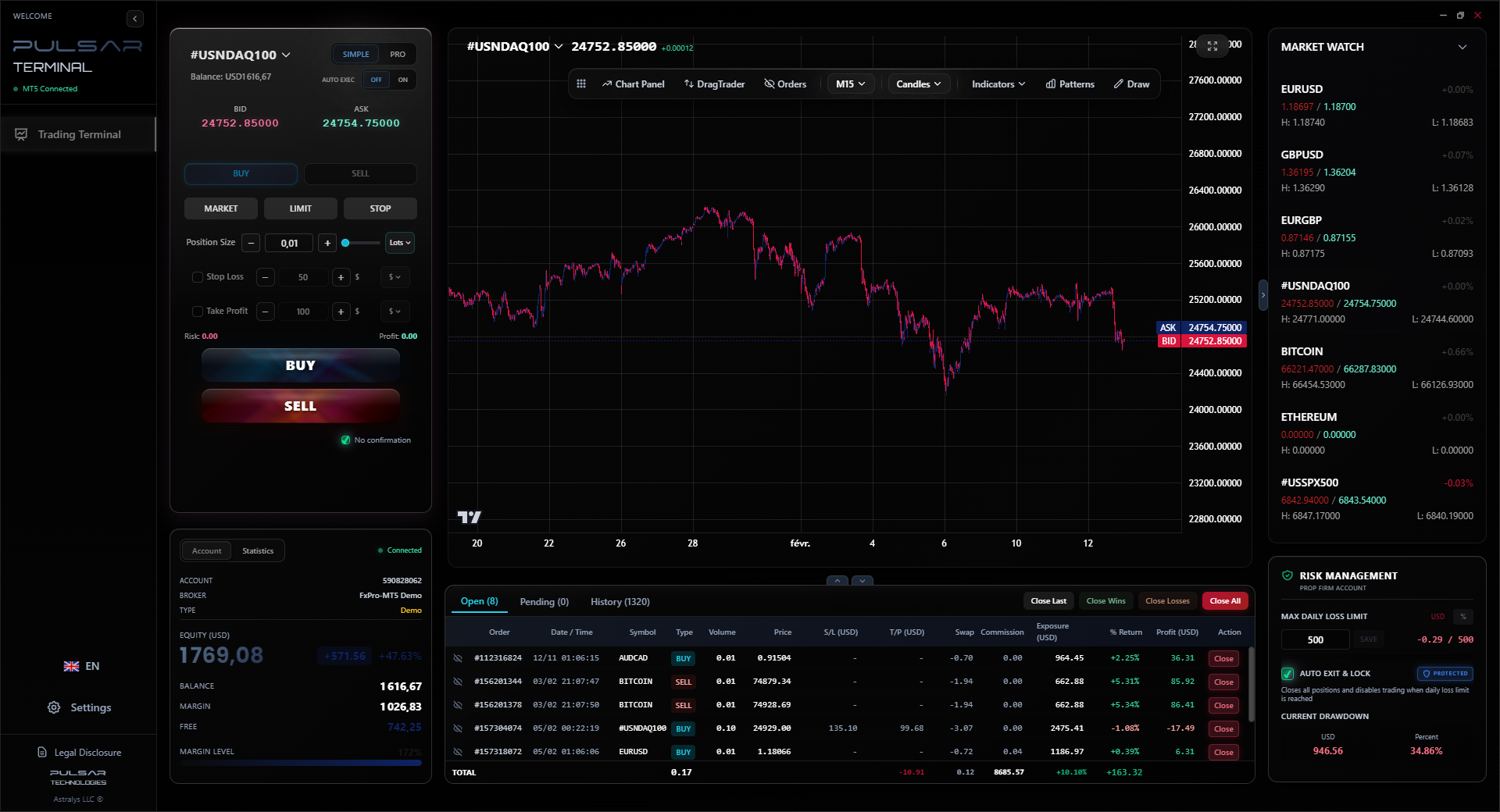
Managing the psychology of trading is hard enough without clunky tools; Pulsar Terminal's clean MT5 interface removes execution friction so you can focus on your plan.
The app is a tool. Your trading system is the blueprint. If you use a tool without a blueprint, you'll build a shaky house that collapses. Here’s how to integrate an app into a strong system.
1. Define the App's Role: Write it down. Example: "My phone app is for checking stop-loss placement twice daily and reviewing end-of-day P&L. It is NOT for entering new trades or modifying existing ones unless my desktop-based plan specifies a mobile contingency."
2. Create Friction: Turn off all push notifications except for order execution confirmations. Log out of the app after each check. Don't save your password in it. The extra 30 seconds to log in is a cooling-off period.
3. The Desktop-Only Rule: All analysis, planning, and order placement happens on a desktop computer. This is where you study charts, use indicators like the RSI indicator or MACD indicator properly, and decide your trades. The discipline of sitting at a desk psychologically separates trading from browsing.
4. Schedule Your Checks: Don't look at the app whenever you feel anxious. Schedule two or three specific times a day. Stick to the schedule.
I forced this system on myself after my mobile disaster. My trading didn't become less profitable, it became less stressful and more consistent. The app stopped being a source of anxiety and became a simple reporting tool. Your phone is the single greatest threat to your trading capital because it's always with you. You must build a fortress of discipline around its use. Otherwise, that sleek forex trading app in India is just a very efficient way to transfer your money to someone else's account.

FAQ
Q1Is forex trading legal in India using mobile apps?
Yes, but with major restrictions. You can only trade currency derivatives (like USD/INR futures) on recognized Indian exchanges (NSE, BSE, MCX-SX) through SEBI-registered brokers. Downloading an international broker's app to trade global forex pairs like EUR/USD is a regulatory grey area and offers you no legal protection. Your money is at significant risk.
Q2What is the minimum deposit for a forex trading app in India?
For domestic brokers offering exchange-traded currency derivatives, the minimum is tied to the margin required for one contract. For one lot of USD/INR futures, initial margin can range from ₹15,000 to ₹30,000, so you'd need at least that much to start. For international apps, they may advertise deposits as low as $10 (≈₹800), but remember the high hidden costs of funding and the legal risks involved.
Q3Which is the best forex trading app in India?
There's no single 'best' app. The most suitable app is from a large, reputable, SEBI-registered domestic broker (like those affiliated with major banks or financial houses) that provides stable, secure access to Indian exchanges. Focus on reliability and security over flashy features. Avoid apps that heavily promote signals, social trading, or access to illegal instruments.
Q4Can I use MetaTrader 5 (MT5) in India?
You can download the MT5 app, but its use is limited. Some domestic brokers offer MT5 for trading commodities or indices, but rarely for INR forex pairs due to exchange rules. Using MT5 with an offshore broker to trade forex is the common, but legally risky, workaround. Always check if your broker's MT5 server is legally serving Indian clients.
Q5How are profits from forex trading taxed in India?
Profits from trading currency derivatives on Indian exchanges are treated as speculative business income. They are added to your total income and taxed according to your income tax slab. You must account for all transactions and pay taxes accordingly. Profits from illegal trading via international apps are still taxable income, but declaring them creates a record of your illegal activity - a serious catch-22.
Q6Why does my P&L on the app not match the money in my account?
This is almost always due to fees. The app often shows your trading P&L based on entry and exit prices. It doesn't automatically deduct brokerage, exchange charges, GST, and (for futures) rollover costs. Your actual net credit/debit is in your ledger or contract note. This discrepancy is a major reason traders misunderstand their real performance.
Lekcja Prof. Winstona
:
- ✓Legal access beats slick apps every time.
- ✓Mobile notifications are profit killers.
- ✓Real cost is in the contract note, not the app.
- ✓Schedule app checks; never react impulsively.
Jak przydatny był ten artykuł?
Kliknij gwiazdkę, aby ocenić
Tygodniowe analizy tradingowe
Darmowe tygodniowe analizy i strategie. Bez spamu.
O autorze
Rajesh Sharma
Starszy Analityk Forex
Ponad 10 lat doświadczenia na rynkach indyjskich i południowoazjatyckich. Zaczynał od instrumentów pochodnych NSE, zanim przeszedł na międzynarodowy forex. Specjalizuje się w USD/INR i parach rynków wschodzących.
Komentarze
Może Ci się też spodobać

Cara Trading Forex Sukses: 7 Prinsip dari Trader Profesional
Cara trading forex sukses dengan 7 prinsip trader pro: manajemen modal, disiplin, journal trading, backtest. Data nyata, bukan janji profit palsu.
Jam Trading Forex Terbaik untuk Trader Indonesia: Panduan Lengkap dengan Tabel Waktu
Panduan jam trading forex untuk trader Indonesia. Tabel 4 sesi dunia, jam emas 20:00-00:00, sesi mana yang harus dihindari. Data akurat + tips dari trader berpengalaman.
Top 5 Sàn Forex Uy Tín Nhất 2026: Review Jujur dari Trader Indonesia
Top 5 sàn forex uy tín 2026 untuk trader Indonesia. Review jujur: spread, deposit, withdraw, dukungan lokal. Exness, XM, IC Markets & lebih.
All these calculators are built into Pulsar Terminal with real-time data from your MT5 account. One-click position sizing, automatic risk management, and instant calculations.
