


Look, I've had at least three guys slide into my DMs this year asking about 'MBA Forex 2021' opportunities.

Olumide Adeyemi
Pionier Tradingu w Afryce Zachodniej ·  Nigeria
☕ 11 min czytania
Czego się nauczysz:
- 1MBA Forex 2021 Was a Scam. Period.
- 2The Legal Landscape: SEC & CBN Rules (2024-2026)
- 3How to Start Trading Forex Legitimately
- 4Real Trading Costs for Nigerian Traders
- 5Profitable Strategies for Current Markets
- 6Taxes & Money Management (The Unsexy Stuff)
- 7Tools & Technology You Need
- 8The Future of Forex Trading in Nigeria

Look, I've had at least three guys slide into my DMs this year asking about 'MBA Forex 2021' opportunities. They heard whispers about quick money. Let me be brutally honest: if someone's pitching you on MBA Forex in 2024 or beyond, run. It wasn't a trading platform; it was a classic Ponzi scheme that collapsed, leaving people holding empty bags. The real latest news is that it's dead, buried, and a cautionary tale. But that doesn't mean forex itself is bad. Far from it. Today, I'll clear up the MBA Forex mess and show you exactly how to trade legally, profitably, and safely under Nigeria's new rules.
Let's not sugarcoat this. 'MBA Forex' or 'MBA Trading' wasn't about analyzing charts or managing risk. It was a recruitment-based scheme that promised insane, fixed returns for just bringing in deposits. I remember seeing their ads - they looked professional, used fancy terms, and preyed on the very real desire for financial freedom.
The model was simple and doomed: use new investors' money to pay 'returns' to earlier investors. There's no trading magic there. It's a house of cards. When the flow of new recruits dried up, the whole thing imploded. By late 2021/early 2022, it was over. Payments stopped, the 'leaders' vanished, and people lost life-changing amounts of money.
This is crucial to understand because these schemes poison the well for real trading. They make people think forex is a scam, when in reality, it's a legitimate, highly regulated global market. The difference is night and day. One is a secretive pyramid; the other is a transparent market where you see your fills, your spread, and your profit/loss in real-time on platforms like MT5.

Warning: Any 'investment' that focuses more on recruiting others than on explaining a trading strategy is a massive red flag. Real trading profits come from market movement, not your friend's sign-up bonus.
So, if MBA Forex was illegal, what's legal? Good question. Forex trading by individuals is perfectly legal in Nigeria. The game has changed, though, with major reforms from our regulators. You need to know these to stay on the right side of the law.
The SEC's Crackdown on Rogue Platforms
The Securities and Exchange Commission (SEC) got serious. Their 2024 rules on digital platforms, backed by the new Investments and Securities Act 2025 (ISA 2025), draw a clear line. It's now illegal to operate an online forex trading platform in Nigeria without SEC registration. This targets the shady brokers and scheme operators, not you, the retail trader.
This is good news for us. It means the brokers that survive and operate here, like the international ones we often use, have to be more transparent or risk being blocked. It cleans up the environment.
The CBN's FX Market Revolution
The Central Bank of Nigeria has been busy. Their goal? Unify the rates and bring transparency. Here's the breakdown:
- Single Exchange Rate (NAFEM): Gone are the days of multiple windows. By early 2025, the CBN merged everything into the Nigerian Autonomous Foreign Exchange Market (NAFEM). This is the official, market-driven rate you see quoted. All legitimate FX transactions must flow through here.
- New Rules for BDCs (Feb 2026): In a big move, the CBN re-admitted licensed Bureau de Change operators. They can now buy up to $150,000 weekly from banks at the market rate. The catch? They have to sell it or use it within 24 hours. This is meant to boost liquidity and kill speculative hoarding.
- Electronic Matching (2025-2026): The CBN is rolling out an Electronic FX Matching System. Think of it like a stock exchange for forex. By 2026, most big trades should happen here, making pricing fairer for everyone.
What does this mean for you, trading EUR/USD from Lagos? It means the macro environment is stabilizing. Wild, unpredictable Naira swings (though still possible) are being managed with more sophisticated tools. You should keep an eye on the NAFEM rate as a general economic indicator.

💡 Wskazówka Winstona
The market's job is to make you feel stupid right before it makes you right. Your job is to have the risk management in place to survive that feeling.
“MBA Forex 2021 wasn't a trading platform; it was a classic Ponzi scheme that collapsed, leaving people holding empty bags.”
Forget the MBA Forex nonsense. This is the real path. It's not get-rich-quick; it's a skill. And like any skill, it takes time and practice.
First, education. You can spend anywhere from ₦0 (YouTube, free webinars, babypips.com) to ₦350,000+ for high-end mentorship. I'm self-taught, but I've also paid for specific courses. My advice? Start free. Get the basics down: what a pip is, how use works, what causes a margin call. Then, if you want advanced scalping techniques, consider a paid course.
Second, choose a real broker. This is where people get tripped up. You want a broker regulated by a reputable foreign authority (like ASIC or CySEC) that accepts Nigerian clients. I've used a few. Exness is popular for its low minimum deposit ($10). IC Markets is a beast for raw spreads and execution speed. XM and Pepperstone are also solid choices with great support.

Pro Tip: Open a demo account first. Trade with virtual money for at least 3 months. Your goal isn't to profit on demo, but to not blow up the account. Learn your platform's order types, test your emotions, and build a simple strategy.
Third, start small. While some brokers let you start with $1, that's pointless for learning risk management. I tell my buddies to save up at least $500-$1000 as a starting capital. It's enough to feel the psychological pressure (which is real) but not so much that a 2% loss ruins your week. Always, always use a position size calculator. My rule: never risk more than 1% of your account on a single trade.
Here's a personal screw-up from my early days: I deposited $200, got lucky on a few gold (XAU/USD) trades, and ballooned it to $650. I felt like a genius. Then I got greedy, tripled my position size, and lost $300 in one afternoon on a single EUR/USD news spike. That was my expensive lesson in humility and risk management.
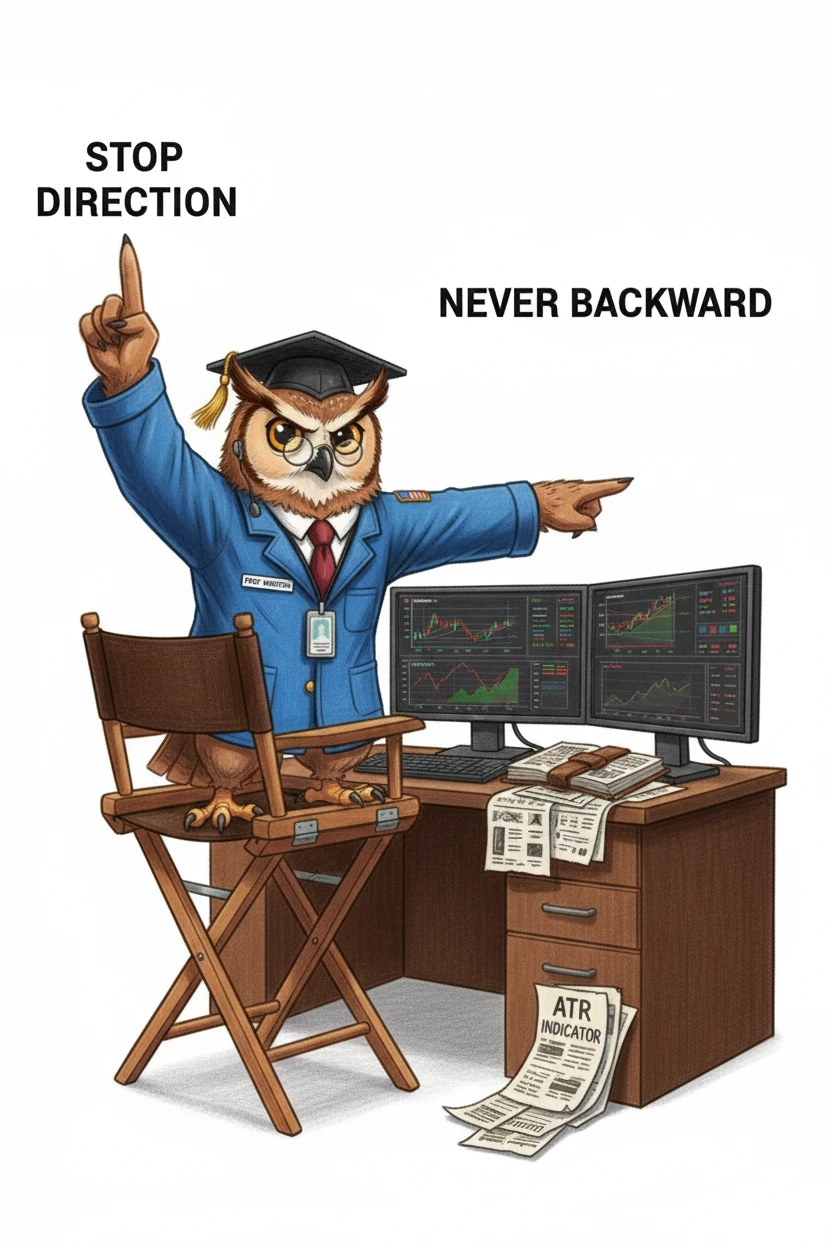
MBA Forex hid its costs in the eventual collapse. Real trading has transparent costs you must factor into every trade. If you don't, you won't be profitable.
| Cost Type | What It Is | Typical Range (Example) |
|---|---|---|
| Spread | Difference between buy/sell price. Broker's main fee. | 0.0 - 1.5 pips on major pairs like EUR/USD on ECN accounts. |
| Commission | Fixed fee per lot traded. Common on ECN accounts. | $3 - $7 per round turn (open & close) per standard lot. |
| Swap/Overnight Fee | Interest for holding a position past 5 PM EST. | Can be a credit or debit. Check your broker's swap table. |
| Payment Fees | Deposit/withdrawal charges. | Varies by method. Bank transfer often has highest fees. |
Let's break down a real trade I took last month on GBP/JPY:
- Account Balance: $5,000
- Risk per Trade (1%): $50
- Entry Price: 190.50
- Stop Loss: 190.00 (50 pips risk)
- Position Size: ($50 risk) / (50 pips) = $1 per pip. On GBP/JPY, a 1-pip move on a micro lot (0.01) is ~$0.08. So, I needed a position size of about 0.13 lots to risk $50.
- Spread at entry: 1.2 pips. That's an immediate $1.20 * 0.13 = ~$0.16 cost.
- Commission (my broker): $3.50 per lot, round turn. So 0.13 lots = $0.455.

Example: Before the market even moved, this trade cost me about $0.62 in spread + commission. That's why scalping with wide spreads kills you. You need the market to move just to break even.
Payment fees add up. Depositing via local bank transfer to an international broker can sometimes have hidden correspondent bank fees. Using cryptocurrencies or specialized payment processors like Payday or Korapay often has lower, more predictable costs. Always check your broker's deposit/withdrawal page for the latest info.
“Your trading plan should be a written document. When you're in a losing streak, the plan stops you from revenge trading.”
The market in 2024-2026 isn't the 2021 market. Macro themes dominate: global interest rate decisions, the Naira's stability, commodity prices. You need strategies that adapt.
I'm primarily a swing trader. I hold trades for days to weeks, catching larger trends. Here's a framework that works:
- Find the Macro Trend: Use the weekly chart. Is price above or below the 50-period moving average? That's your basic bias. Right now, with the CBN's actions, the Naira pairs (like USD/NGN on CFDs) are in a different regime - trends can be sharp but prone to sudden intervention. I stick to major pairs like EUR/USD for cleaner trends.
- Wait for a Pullback: Markets don't go straight up or down. They breathe. I wait for price to pull back into a key support or resistance area on the daily or 4-hour chart.
- Look for Confluence: This is where the magic happens. I want my pullback zone to align with something else. A 61.8% Fibonacci retracement level. A previous swing high/low that's now acting as support/resistance. Maybe the RSI indicator is dipping near 40 in an uptrend (showing momentum pause, not reversal).
- Enter on a Pin Bar or Engulfing Candle: I need price action confirmation. A bullish pin bar at support? That's my entry signal.
I used this exact setup on Gold (XAU/USD) in March. Weekly trend was up. It pulled back to $2,150 (a prior resistance-turned-support). The daily chart formed a bullish engulfing candle. I entered at $2,155, placed my stop at $2,130 (risking $25 per 0.1 lot), and rode it up to $2,220. That was a 65-pip move, netting about $650 on a 1-lot position after costs.
For shorter-term plays, combining the MACD indicator histogram turning positive with a break of a 15-minute chart structure can work for day trades. But remember, shorter timeframes mean costs (spreads) eat a larger percentage of your potential profit.
💡 Wskazówka Winstona
A trading journal isn't a diary of your brilliance. It's a logbook of your errors. The trader who reviews their mistakes most honestly improves the fastest.
Nobody likes talking about this, but ignoring it is how you get into trouble. Let's be clear: income from forex trading is taxable in Nigeria. It's considered personal income. You need to keep detailed records of all your trades - entries, exits, profits, losses. Your broker statements are your best friend here.
I'm not a tax advisor, but I work with one. He told me to treat it like a business. Keep separate bank accounts for your trading capital. Withdraw profits periodically, and set aside a percentage (say 20-25%) for potential tax obligations. The specific rate depends on your total annual income bracket.
Money management is what separates the survivors from the blown accounts. That 1% risk rule is gospel. Let me give you another painful example. Early on, I broke my rule. I was down for the month, saw a 'sure thing' on the USD/CAD news. I risked 5% of my account. The news was a dud, the trade went against me, and I was down a whole week's target in minutes. I felt sick. It took me two weeks of disciplined, small trades to dig myself out of that hole. Never again.
Your trading plan should be a written document. It should state your max daily loss (I use 3%), your max weekly loss (5%), your profit targets, and your strategy rules. When you're in a losing streak, the plan stops you from revenge trading.

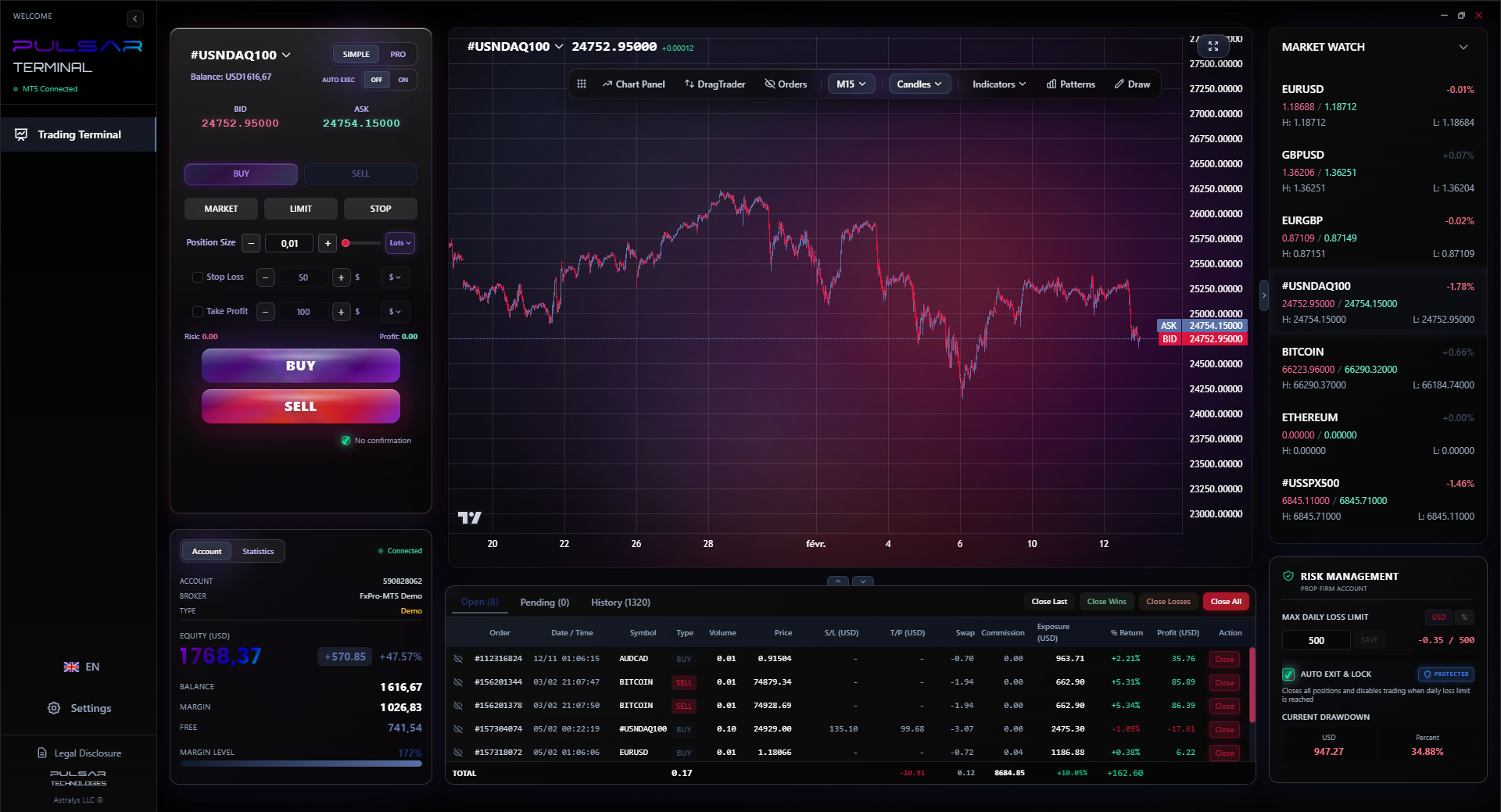
Sticking to your risk management rules is hard, but tools like Pulsar Terminal automate stop-losses, take-profits, and even daily loss limits directly on your MT5 charts.
“The era of easy-money schemes is over. The future belongs to disciplined, educated traders who treat this as a business.”
You don't need a Bloomberg terminal. But you do need reliable tech.
- A Stable Internet Connection: This is non-negotiable. A dropped connection during a volatile news event can be catastrophic. I use a primary fibre line with a 4G modem as a backup.
- A Proper Trading Platform: MetaTrader 5 (MT5) is the industry standard for a reason. It's stable, has heaps of indicators, and supports automated trading. Most legitimate brokers offer it.
- A Trading Journal: This is your single most important improvement tool. I use a simple spreadsheet: Date, Pair, Entry, Exit, P/L, Reason for Entry, Reason for Exit, Screenshot, Lesson Learned. Review it weekly.
- Economic Calendar: You must know when high-impact news (like US Non-Farm Payrolls or CBN rate decisions) is due. I use the free one on ForexFactory.com.
Having the right tools turns speculation into informed trading. It's the difference between guessing and having an edge.
So, what's the latest news on the legitimate forex scene for 2024 and beyond? It's actually promising.
The CBN's reforms, if sustained, should lead to greater Naira stability over time. A stable local currency reduces one major source of uncertainty for traders who earn in Naira but trade in dollars. The SEC's crackdown should, in theory, push more Nigerian traders towards reputable international brokers with better client protections.
The integration of electronic matching systems will make the underlying Nigerian FX market more efficient, which is positive for the overall economy. For us as retail traders, it means the environment is becoming more structured and less wild-west.
The key takeaway? The era of easy-money schemes like MBA Forex 2021 is over. The future belongs to disciplined, educated traders who treat this as a business. It's about continuous learning, rigorous risk management, and adapting to a regulated, technologically advanced market. The opportunity is bigger than ever, but it's only for those willing to put in the real work.
FAQ
Q1Is MBA Forex 2021 still operating or making payments?
No. MBA Forex 2021 collapsed as a Ponzi scheme. It is completely defunct. Any website or individual claiming to represent it now is attempting to run a new scam on the old name. Do not engage.
Q2Is forex trading illegal in Nigeria?
No, individual forex trading is legal. However, operating an unregistered forex trading platform or investment scheme (like MBA Forex was) is illegal under the SEC's 2024/2025 rules. You can trade with internationally regulated brokers.
Q3What is the minimum amount I need to start forex trading?
While some brokers allow deposits as low as $1-$10, a practical minimum to properly learn and apply risk management is between $500 and $1000. This allows you to trade sensible position sizes and absorb learning losses without blowing your account immediately.
Q4How do I know if a broker is legitimate and not a scam?
Check for regulation by a top-tier authority like the UK's FCA, Australia's ASIC, Cyprus's CySEC, or South Africa's FSCA. Read independent reviews (like our Exness review or IC Markets review). Avoid brokers promising guaranteed returns or offering unclear fee structures.
Q5Do I have to pay tax on my forex trading profits in Nigeria?
Yes. Profits from forex trading are considered taxable income. You are required to declare them and pay the appropriate personal income tax. Maintain detailed records of all your trades and broker statements for this purpose.
Q6What's the most important thing for a beginner to learn?
Risk management. Before you learn how to make money, learn how not to lose it. This means understanding position sizing (use a position size calculator), setting stop-losses on every trade, and never risking more than 1-2% of your capital on a single idea.
Q7How does the CBN's single exchange rate (NAFEM) affect my trading?
It doesn't directly affect your trades on EUR/USD or Gold. However, it's a crucial economic indicator. A more stable and transparent official Naira rate reduces macroeconomic volatility, which can indirectly lead to less erratic price action in related assets and a healthier trading environment overall.
Lekcja Prof. Winstona
:
- ✓MBA Forex was a scam; legitimate trading is skill-based.
- ✓Never risk more than 1% of your account per trade.
- ✓SEC rules now target illegal platforms, protecting traders.
- ✓Start with at least $500 to learn risk management properly.
- ✓Taxes apply to forex profits; keep detailed records.
Jak przydatny był ten artykuł?
Kliknij gwiazdkę, aby ocenić
Tygodniowe analizy tradingowe
Darmowe tygodniowe analizy i strategie. Bez spamu.
O autorze
Olumide Adeyemi
Pionier Tradingu w Afryce Zachodniej
Jeden z najaktywniejszych edukatorów tradingu forex w Nigerii. 8 lat doświadczenia tradingowego z Lagos. Specjalizuje się w strategiach niskiego kapitału i wyzwaniach prop firm dla afrykańskich traderów.
Komentarze
Może Ci się też spodobać

Cara Trading Forex Sukses: 7 Prinsip dari Trader Profesional
Cara trading forex sukses dengan 7 prinsip trader pro: manajemen modal, disiplin, journal trading, backtest. Data nyata, bukan janji profit palsu.
Jam Trading Forex Terbaik untuk Trader Indonesia: Panduan Lengkap dengan Tabel Waktu
Panduan jam trading forex untuk trader Indonesia. Tabel 4 sesi dunia, jam emas 20:00-00:00, sesi mana yang harus dihindari. Data akurat + tips dari trader berpengalaman.
Top 5 Sàn Forex Uy Tín Nhất 2026: Review Jujur dari Trader Indonesia
Top 5 sàn forex uy tín 2026 untuk trader Indonesia. Review jujur: spread, deposit, withdraw, dukungan lokal. Exness, XM, IC Markets & lebih.
All these calculators are built into Pulsar Terminal with real-time data from your MT5 account. One-click position sizing, automatic risk management, and instant calculations.
