


It was late 2021, and my screen was a sea of red.

David van der Merwe
Trader Rynków Wschodzących ·  South Africa
☕ 8 min czytania
Czego się nauczysz:
It was late 2021, and my screen was a sea of red. I'd just blown through R15,000 on a single EUR/USD trade, convinced I'd cracked the 'meta'. I'd spent weeks watching slick TikTok videos promising a 'secret institutional strategy'. The reality? I was just over-leveraged and following a trend that had already reversed. That loss, painful as it was, forced me to strip away the nonsense and figure out what 'meta forex' actually means for us trading from SA. It's not a magic formula. It's a mindset, a process, and it's brutally honest about what works right now.
Let's clear this up first. When traders talk about the 'meta', they're not talking about Mark Zuckerberg's company. In gaming, the 'meta' is the 'most effective tactic available' - the strategies that dominate the current version of the game. Forex is no different. The trading meta is the collection of strategies, price action patterns, and risk management approaches that are working consistently in the current market environment.
Right now, for example, the old 'buy the dip' strategy that worked so well in the zero-interest-rate era is dead. The meta has shifted. Central banks are hiking, inflation is sticky, and markets move on data prints like CPI and employment numbers with violent speed. The meta today is about trading the reaction to news, understanding central bank divergence, and managing positions around high-impact events. It's less about pretty chart patterns and more about anticipating the market's next logical move based on the macroeconomic script.

Warning: Be wary of anyone selling you a 'Meta Forex Course' as a finished product. The real meta is a living thing you have to track and adapt to yourself. A strategy that printed money in 2020 could be a surefire way to lose your capital in 2024.
My biggest mistake was treating a past meta as a permanent truth. I learned that the hard way. You need to be a student of the market's mood, which changes with liquidity, volatility, and which group (like commodity trading advisors or hedge funds) is dominating the price action.

💡 Wskazówka Winstona
The market's favourite game is convincing you the old rules still apply, right before it changes them. Your most valuable skill is knowing when to stop playing.
So, how do you find your edge trading from Cape Town or Johannesburg? You start by accepting your constraints and turning them into strengths. Our time zone (GMT+2) is actually a gift if you use it right.
The London-New York Overlap is Your Power Hour
Our afternoon, from around 3:30 PM to 6:00 PM SAST, is when London is still open and New York is waking up. Liquidity is at its peak, spreads are often at their tightest (check brokers like IC Markets or Pepperstone for raw spreads), and big moves happen. This is the best time for active strategies like scalping or catching intraday breakouts. I structure my day around this window.
Trade What You Can Actually Watch
If you have a day job, trying to scalp the Asian session at 4 AM is a path to burnout and sloppy decisions. Your personal meta must fit your life. For years, I fought this, trying to be a 24-hour trader. I failed. Now, I focus purely on the London open and the overlap. My sleep, my psychology, and my P&L have all improved dramatically.
Mind the ZAR Crosses
Trading USD/ZAR or EUR/ZAR? You're playing a different game. Liquidity can dry up, spreads widen viciously, and the market is driven by local politics, Eskom, and SARB decisions just as much as global flows. I keep ZAR trades much smaller and use a wider stop. A good tool here is a solid position size calculator to keep your risk in check when volatility spikes.
“Your trading psychology and risk rules are the most important part of your meta.”
Social media is flooded with charts covered in a dozen rainbow-colored indicators. It's visual candy, but it's often nutritional garbage. The core of a strong meta is built on a few reliable tools.
I rely on three things: price action (support/resistance), one momentum oscillator like the RSI indicator, and volume. That's it. My most profitable setup last year was simple: a clear break of a London session high or low, confirmed with RSI showing momentum, on above-average volume. I took 47 trades with that setup in Q4 2023, with a 62% win rate and an average risk-to-reward of 1:1.8. The profit wasn't from a complex algorithm, it was from disciplined repetition of a simple, high-probability idea.

Pro Tip: Before adding any indicator, ask: 'What market condition does this help me identify?' Is it trend, range, exhaustion? If you can't answer in one sentence, you don't need it. Clutter kills clarity.
Order execution is part of your toolset too. Knowing how to set a stop-loss that's beyond the market's normal noise, or how to scale into a winner, is more important than any indicator. This is where mastering your platform's tools, or using advanced aids, becomes part of your operational meta.
Here's the raw truth: Your trading psychology and risk rules are the most important part of your meta. You can have the best market read in the world, but if you risk 5% per trade or revenge trade after a loss, you'll blow up. I've done both.
My rule now is non-negotiable: 1% maximum risk per trade. Usually, it's 0.5%. This isn't just about survival, it's about psychological freedom. When you're only risking R500 on a R100,000 account (using a standard lot size as a reference), the fear of loss diminishes. You can execute the plan without sweating over every pip.
The Daily Loss Limit
This saved my account. I set a hard daily loss limit of 2%. If I hit it, I shut down the platform. No excuses, no 'one more trade to get it back'. This single rule stopped my losing streaks from becoming catastrophic. For traders working with prop firms, this discipline is everything to avoid a margin call on your challenge account.
Your emotional state is a data point. If you're tired, frustrated, or over-eager, that's a market condition as real as an overbought RSI. The meta for successful traders includes knowing when to step away. Some of my best decisions have been to not trade at all.
💡 Wskazówka Winstona
If you can't explain your edge in one simple sentence over a cup of rooibos, you don't have one. Complexity is the enemy of execution.
“Some of my best decisions have been to not trade at all.”
Markets evolve. The strategy that worked for six months will eventually stop working. Your job is to spot the transition.
Signs the meta is changing:
- Your high-probability setup starts failing repeatedly (more than 5-6 times in a row).
- Market volatility contracts or expands dramatically (check the Average True Range indicator).
- The character of moves changes (e.g., sharp, news-driven spikes replace smooth trend days).
- Correlations between instruments you trade break down.
When this happens, it's not time to abandon everything. It's time to go back to observation. Reduce your position size by 75%. Trade micro lots. Just watch and take notes. Is the market now ranging? Are breakouts failing and reversing? This reconnaissance phase is how you discover the new meta.
I got caught in August 2022 when the long-term trend in XAU/USD broke. My bullish bias was so strong I kept buying the dip as gold fell from $1800 to $1680. I lost nearly 8% of my account before I admitted the trend had changed. The meta had shifted from 'buy dips in an uptrend' to 'sell rallies in a downtrend.' I was trading the past.
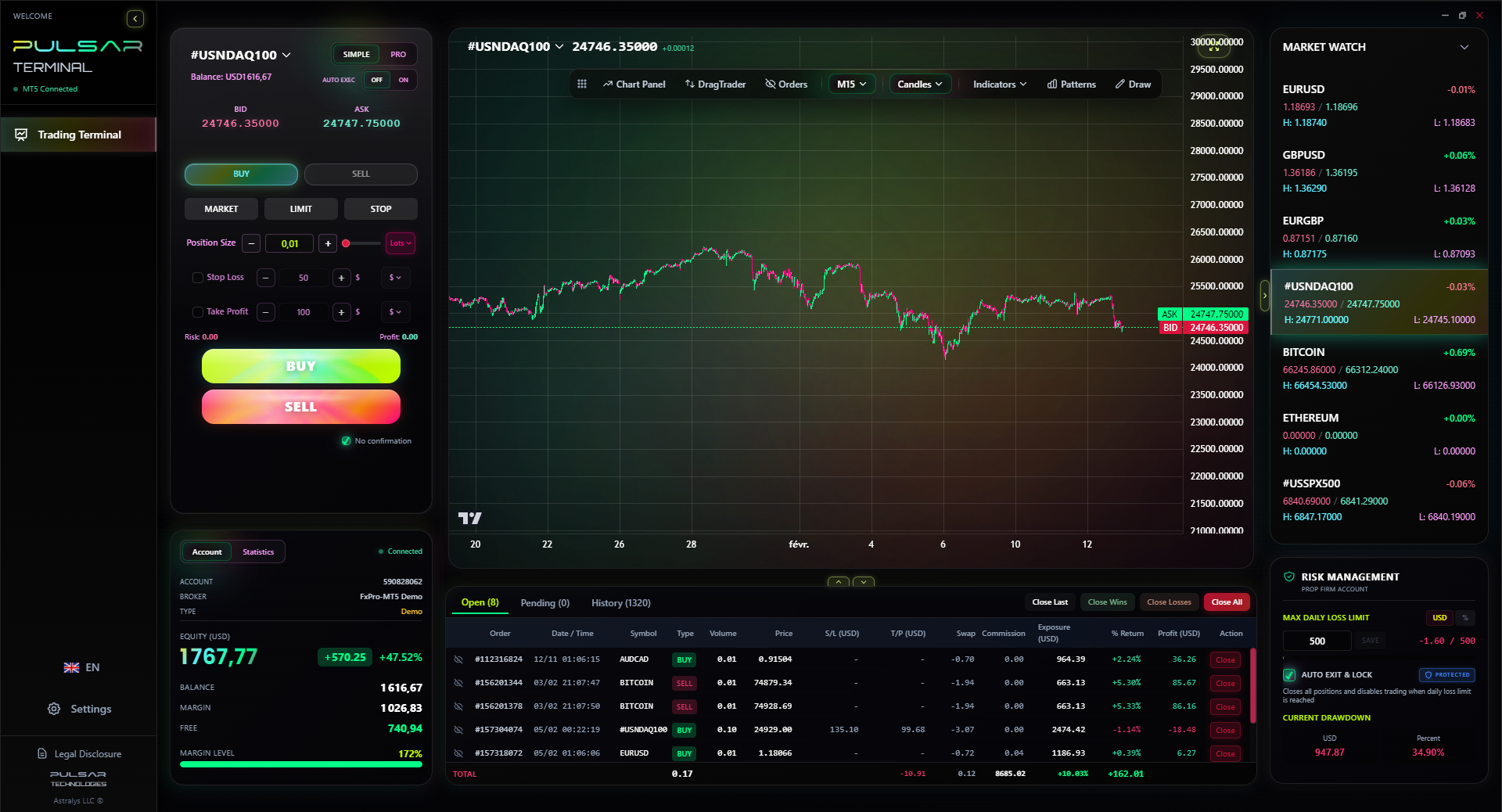
When the market meta shifts and you need to adapt quickly, having tools that let you manage complex orders and risk with precision is non-negotiable.
This is my practical routine, every Sunday evening. It keeps me aligned with the market, not my ego.
- Review the Week: I look at every trade. Not just P&L, but why I took it. Did it fit my defined setup? Was my psychology right?
- Scan the Landscape: I check the economic calendar for the week ahead. I note the high-impact events (US CPI, ECB decisions) and plan to reduce exposure around them.
- Check Market Health: I look at the major indices, bond yields, and the US Dollar Index (DXY). Is there a clear trend? Is fear or greed dominant? This gives me the macro backdrop.
- Test My Setup: I'll quickly scan the charts for my key pairs like EUR/USD. Are my support/resistance levels still valid? Is the price action respecting them? If not, I adjust.
- Plan the Session: For Monday, I identify 2-3 key levels to watch. I don't predict direction. I prepare my reaction: 'If price holds here with momentum, then I will look for an entry with a stop below that swing low.'
This routine takes about 90 minutes. It replaces impulsive trading with prepared execution. It turns the abstract concept of 'meta forex' into a concrete, actionable process you can follow from your desk in Durban or Pretoria.
FAQ
Q1Is 'meta forex' just another name for price action trading?
Not exactly. Price action is a methodology for reading charts. The 'meta' is the specific application of that methodology (or any other) that is working best in the current market environment. You could use price action in a trending 2021 market (buy pullbacks) and a ranging 2023 market (sell resistance, buy support). The core skill is the same, but the tactical meta changes.
Q2I'm a beginner in South Africa. How do I start finding the meta?
Start painfully small. Open a demo account or a live account with a small deposit. Don't try to find a strategy yet. For one month, just watch one major pair during the London session. Note where price reverses, where it accelerates. After a month, you'll start to see patterns - that's the beginning of seeing the meta. Then, paper trade a simple idea based on what you've seen.
Q3How much capital do I need to start trading the forex meta seriously?
It's less about the total capital and more about proper position sizing. You can start with R5,000, but you must trade micro lots (0.01). This lets you practice real risk management. The goal with a small account isn't to make a living; it's to learn the meta and grow your skills without the pressure of needing to pay bills from your trades.
Q4Do I need expensive software or AI to follow the meta?
Absolutely not. Some of the world's best traders use a bare chart. Fancy tools can help with efficiency, but they don't replace judgment. Focus on mastering the free tools on MT4/MT5 first. Understanding why price is moving will always beat blindly following a signal from a black box.
Q5How often does the major forex meta change?
There's no set schedule. Major shifts often coincide with changes in the macroeconomic regime - like the shift from low rates to high rates in 2022. These can last years. Within that, smaller tactical shifts (e.g., from clean trends to choppy ranges) can happen every few months. Your weekly review is how you spot these.
Q6Can I copy a successful trader's meta?
You can learn from their principles (risk management, discipline), but directly copying their exact trades is dangerous. Their entry timing, psychology, and account size are different. What works for them might not fit your life or risk tolerance. Use others as inspiration, but you must do the work to internalize the logic behind the trades.
Lekcja Prof. Winstona
:
- ✓The 'meta' is the Most Effective Tactic Available *now*, not forever.
- ✓Your time zone is a strategic asset, not a limitation.
- ✓Risk more than 1% per trade and you're gambling, not trading.
- ✓A daily loss limit of 2% is your circuit breaker against disaster.
Jak przydatny był ten artykuł?
Kliknij gwiazdkę, aby ocenić
Tygodniowe analizy tradingowe
Darmowe tygodniowe analizy i strategie. Bez spamu.
O autorze
David van der Merwe
Trader Rynków Wschodzących
Trader z Johannesburga z 11-letnim doświadczeniem w walutach rynków wschodzących. Specjalizuje się w parach ZAR, handlu regulowanym przez FSCA i analizie rynku południowoafrykańskiego.
Komentarze
Może Ci się też spodobać

Cara Trading Forex Sukses: 7 Prinsip dari Trader Profesional
Cara trading forex sukses dengan 7 prinsip trader pro: manajemen modal, disiplin, journal trading, backtest. Data nyata, bukan janji profit palsu.
Jam Trading Forex Terbaik untuk Trader Indonesia: Panduan Lengkap dengan Tabel Waktu
Panduan jam trading forex untuk trader Indonesia. Tabel 4 sesi dunia, jam emas 20:00-00:00, sesi mana yang harus dihindari. Data akurat + tips dari trader berpengalaman.
Top 5 Sàn Forex Uy Tín Nhất 2026: Review Jujur dari Trader Indonesia
Top 5 sàn forex uy tín 2026 untuk trader Indonesia. Review jujur: spread, deposit, withdraw, dukungan lokal. Exness, XM, IC Markets & lebih.
All these calculators are built into Pulsar Terminal with real-time data from your MT5 account. One-click position sizing, automatic risk management, and instant calculations.
