


For years, I thought trading the New York session from South Africa meant staying up all night for tiny moves.

David van der Merwe
Trader Rynków Wschodzących ·  South Africa
☕ 11 min czytania
Czego się nauczysz:
- 1Why the New York Session Isn't What You Think (It's Better)
- 2The South African Trader's Clock: Your New York Session Schedule
- 3The Pairs That Actually Move (And One You Must Understand)
- 4A Simple Strategy for the London-New York Overlap
- 5Brokers, Costs, and the 30:1 Reality Check
- 6The Mistakes That Cost Me Real Money
- 7Risk Management When Your Account is in ZAR
- 8Your New York Session Trading Routine
For years, I thought trading the New York session from South Africa meant staying up all night for tiny moves. I was wrong, and it cost me. The truth is, our time zone gives us a front-row seat to the world's most liquid trading window, but you have to know which new york session forex pairs to play and when. Let me walk you through the exact schedule, the pairs that actually move, and how to avoid the expensive mistakes I made trying to trade it.
Most guides talk about the New York session in abstract terms. From Cape Town or Johannesburg, it's concrete. Your trading day is winding down just as Wall Street's traders are finishing their coffee. This creates a unique dynamic we can exploit.
The session runs from 3:00 PM to 11:00 PM South African Standard Time (SAST). Forget New York's local open. For us, the magic is in the first four hours, from 3:00 PM to 7:00 PM SAST. That's when New York overlaps with the tail end of London. Liquidity is insane. Spreads on major pairs tighten to their daily lows. This is when institutional orders flood the market, creating clean, high-probability trends and breakouts. I used to try and trade the Asian session in the morning, battling wide spreads and false moves. Switching my focus to this afternoon overlap was a revelation. It's where the real money moves, and we're perfectly positioned to catch it without pulling an all-nighter.

Example: On a typical day, the EUR/USD spread on my broker might be 1.2 pips at 10 AM SAST. During the NY/London overlap, that same spread often crunches down to 0.3 pips. That's a 75% reduction in your initial cost, which makes a huge difference for a scalping strategy.

💡 Wskazówka Winstona
The market's first move after the New York open is often a trap. Let the amateurs pay for the liquidity. Your entry comes on the retest.
Let's get specific. Your trading calendar for the New York session should look like this. I keep this table taped next to my screen.
| SAST Time | Session Phase | What's Happening | What I'm Doing |
|---|---|---|---|
| 2:30 PM - 3:00 PM | Pre-New York | London is still open. US futures are active. | Setting alerts, reviewing daily charts, planning trades. No entries yet. |
| 3:00 PM - 4:00 PM | NY Open / Overlap | Maximum volatility. US economic data often released at 3:30 PM SAST. | Most active trading. Looking for breakouts on majors with the trend. |
| 4:00 PM - 7:00 PM | Core Overlap | Peak liquidity. Institutional flow dominates. | Executing my main trades. This is prime time for swing trading entries. |
| 7:00 PM - 9:00 PM | Pure New York | London is closed. Volatility can dip, then pick up with mid-session flows. | Managing open positions, trailing stops. Less aggressive with new entries. |
| 9:00 PM - 11:00 PM | Late New York | Liquidity dries up. Prone to erratic, news-driven spikes. | I'm usually done. Maybe monitoring, but rarely trading. It's choppy. |
A critical note: When the US is on daylight saving (roughly March-November), the New York open shifts to 2:00 PM SAST. That one-hour shift matters. I got caught out once because I forgot the change, entered a trade based on the usual open volatility, and missed the actual move. Mark the dates in your calendar.

Warning: The 3:30 PM SAST slot is a data minefield. High-impact US news (CPI, NFP, Fed decisions) drops then. You can make a fortune or get obliterated in seconds. I learned the hard way to either avoid trading 5 minutes before and after, or use a guaranteed stop-loss (if your broker offers it).
“The New York session, for us, is a concentrated opportunity. Treat it with the respect it deserves.”
Not all pairs are created equal during New York. You want to trade where the volume is. Here’s my breakdown from over a decade of screen time.
The Majors: Your Bread and Butter
Focus here. These pairs have the tightest spreads and most predictable behavior during the overlap.
- EUR/USD: This is the king. The sheer volume provides clean technical moves. I've had my most consistent wins here between 3:00 and 5:00 PM SAST. It respects support and resistance beautifully when New York volume kicks in. For a deep dive, check out our EUR/USD guide.
- GBP/USD: Similar to the Euro, but often more volatile. It can make bigger swings, which is great if you're right, painful if you're wrong.
- USD/JPY: Moves heavily on US Treasury yield dynamics and risk sentiment, which are key New York themes. Watch for a correlation with the S&P 500.
- USD/CHF & USD/CAD: Good alternatives. USD/CAD is heavily influenced by oil prices, which are actively traded in New York.
The Home-Turf Pair: USD/ZAR
This is where being a South African trader gives you an edge. You understand the local news, the political mood, the load-shedding headlines. USD/ZAR is an exotic, meaning wider spreads (often 50-100 pips), but the volatility during New York can be breathtaking. US dollar strength and global risk-off flows hit the Rand hard. I remember shorting USD/ZAR (betting on Rand strength) at 18.50 in late 2023, only to see it scream to 19.93 by April 2025. I was stopped out for a nasty loss. The lesson? With exotics, your position size calculator is your best friend. Trade it small, or use it as a hedge for your offshore portfolio.
Pairs to Avoid During This Session
- EUR/GBP, AUD/NZD, other cross-pairs: Liquidity evaporates. Spreads widen to a point where you're fighting an uphill battle from the start. I've been chopped to pieces in these during late New York.
- Gold (XAU/USD): A special mention. Gold is very active in New York as it's priced in USD. It's a fantastic alternative to currencies. We have a dedicated XAU/USD guide that covers its New York behavior.
Here’s a straightforward method I’ve used to profit from the 3:00-7:00 PM SAST window. It’s not fancy, but it’s effective.
The Concept: Trade the initial directional bias established by the London session, amplified by New York volume.
- Identify the London Trend: At 2:45 PM SAST, pull up a 15-minute chart of EUR/USD. Draw the clear high and low of the London session (8 AM - 4 PM London time). Is price near the top (bullish) or bottom (bearish) of that range?
- Wait for the New York Confirmation: From 3:00 PM SAST, watch for a strong 15-minute candle that breaks out of the London range. The volume on this candle should be visibly higher.
- Enter on the Retest: This is key. Don't chase the initial spike. Wait for price to pull back and retest the broken London session high (for a long) or low (for a short). Place your entry order there.
- Manage the Trade: Stop loss goes just on the other side of the London range. Take profit? I aim for a 1:1.5 risk-reward ratio minimum. The New York momentum can often carry it further.
Why This Works: London moves the market first. New York, with its fresh capital, often decides to either continue that move or reverse it. The breakout and retest during the overlap is a high-probability signal that New York is joining the party. I used to enter on the first tick of the New York open and get whipsawed. Waiting for that retest requires patience, but it filters out most of the false starts.

Pro Tip: Combine this with the MACD indicator on the 15-minute chart. I look for the MACD histogram to be above the zero line and rising as price retests for a long entry. It’s a good confluence filter.
💡 Wskazówka Winstona
“I used to trade the open like a maniac. The first 5-15 minutes are often a liquidity grab - a fake-out.”
Trading this session profitably hinges on your broker's conditions. The FSCA's 30:1 use cap for retail traders, introduced in 2021, changed the game. It’s a good thing. It forced me to trade with proper size. Before that, I blew up an account using 100:1 on USD/ZAR. That single trade taught me more about margin call risk than any book.
You need a broker with tight spreads during our key hours. Here’s the real deal on a few popular ones for South Africans:
- IC Markets: My primary for raw spreads. Their Raw Spread account shows EUR/USD around 0.0 pips with a $7 round-turn commission. During the overlap, it’s consistently good. Check our full IC Markets review.
- Pepperstone: Their Razor account is similar. Fantastic execution speed, which matters when news hits at 3:30 PM SAST. Pepperstone review here.
- XM: A solid all-rounder with a low $5 minimum deposit. Spreads are competitive, not the absolute lowest, but their service is excellent for beginners. XM review.
- Exness: Sometimes offers higher use through their global entity, but understand you’re then outside FSCA protection. Do your homework. Exness review.
The Cost Equation: On a $10,000 account trading one mini lot (0.1) of EUR/USD:
- At a 2-pip spread (poor broker, off-peak): Your cost to enter is $20.
- At a 0.3-pip spread (good broker, NY overlap): Your cost is $3. That $17 saved is pure profit you don't have to make back. It’s crucial.
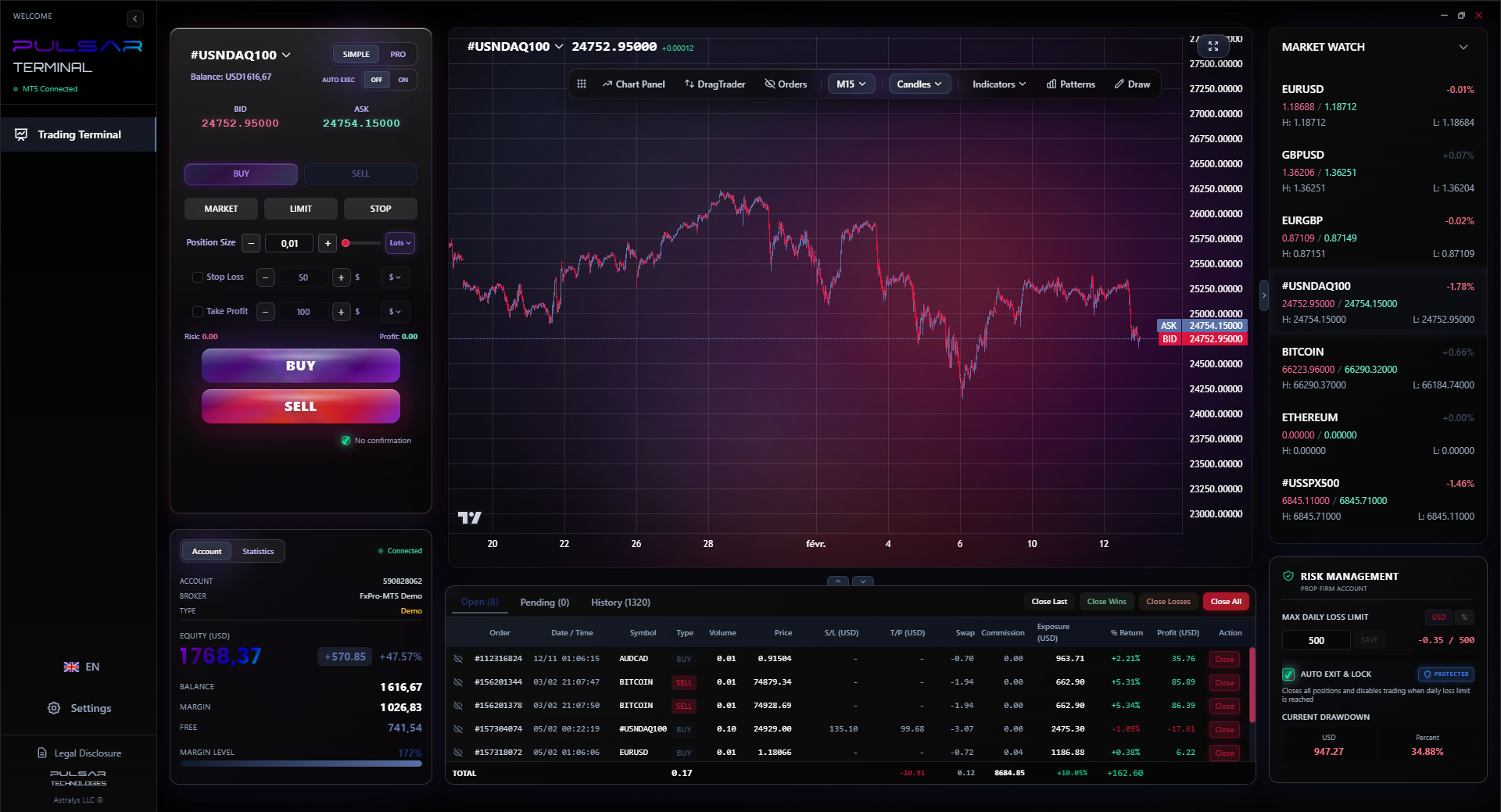
Managing multiple trades and moving stops to breakeven during the fast-paced New York overlap is much easier when your tools automate the process.
Let's get vulnerable. These errors set me back years.
Mistake 1: Trading the Open Like a Maniac. At exactly 3:00 PM SAST, I'd start clicking market orders on any pair moving. The first 5-15 minutes are often a liquidity grab - a fake-out. I'd get stopped out and miss the real move. Fix: Wait 30 minutes. Let the market show its hand.
Mistake 2: Ignoring the SAST/US Daylight Saving Shift. I mentioned it earlier, but it's worth repeating. I once had a perfect RSI indicator divergence setup on GBP/USD, entered at my "usual" 3:05 PM, only to realize New York had opened an hour earlier. The move was over, and I was left in choppy, directionless price action. Lost 2% of my account nursing that loser.
Mistake 3: Over-trading USD/ZAR Because It's "My" Pair. Familiarity breeds overconfidence. I'd take signals on USD/ZAR I wouldn't touch on EUR/USD because I felt I understood the Rand. The wider spread definition alone makes it a harder game. I now limit my USD/ZAR trades to one per week, max.
Mistake 4: Holding Through the 7:00 PM SAST Liquidity Drop. After the London close, the market character changes. A nice trending position can suddenly reverse in thin volume. I'd watch profits evaporate. Fix: If I have a good profit by 6:45 PM SAST, I move my stop to breakeven. No exceptions. Protecting capital is job number one.
“Wider spreads on exotics like USD/ZAR aren't a fee; they're a head start for the market against you.”
This is a silent account killer for South Africans. Your broker account might be in USD, but your income and brain think in Rands.
Let’s say you deposit R10,000 when USD/ZAR is at 18.00. That’s about $555. You trade well, and your account grows to $600. But during this time, the Rand strengthens to 16.00. You withdraw: $600 * 16 = R9,600. You made a profit in dollars but took a loss in your home currency because of exchange rate movement.
How I manage this:
- Use a ZAR-denominated account if your broker offers it (many do now). It removes the forex risk on your trading capital. This was a game-saver for me.
- If you must use a USD account, mentally account for the USD/ZAR rate. When I calculate my 1% risk per trade, I do it in ZAR first, then convert to USD at the current rate.
- Consider hedging. A small, long-term position in USD/ZAR in your trading account can offset the currency risk on your deposit. It’s advanced, but something to research as your account grows.
The volatility of our own currency is a risk factor you must add to your spreadsheet. Ignoring it is like trading without a stop loss.
💡 Wskazówka Winstona
If you wouldn't hold the trade through the 7:00 PM SAST liquidity drop, you should have a profit-protecting stop in place by 6:45 PM. Automate this habit.
Here’s the daily flow that works for me. Consistency here breeds consistency in results.
Morning (Before 3:00 PM SAST):
- Review the daily and 4-hour charts of my 3-4 favorite pairs. What’s the broader trend?
- Scan the economic calendar. What US data is due at 3:30 PM SAST? I note the high-impact events.
- No trading. This is planning time only.
2:30 PM - 3:00 PM SAST (Prep Time):
- Set price alerts at key London session highs/lows.
- Get my charts ready. Clear any clutter.
- Decide my maximum position size for the day using my position size calculator.
3:00 PM - 7:00 PM SAST (Execution Window):
- Watch the initial volatility. No impulsive entries.
- Look for my setup (like the overlap strategy mentioned).
- Execute 1-2 planned trades maximum. Quality over quantity.
- Place stops and limits immediately.
After 7:00 PM SAST (Management Mode):
- Move stops to breakeven on winning trades.
- No new entries unless a truly exceptional setup appears.
- By 9:00 PM, I’m usually reviewing the day’s trades in my journal and logging off.
The goal isn’t to be glued to the screen for 8 hours. It’s to be intensely focused, disciplined, and active for the 3-4 hours that matter most. The New York session, for us, is a concentrated opportunity. Treat it with the respect it deserves, and it can become the cornerstone of your trading profitability.
FAQ
Q1What is the best time to trade forex in South Africa?
The absolute best time is the London-New York session overlap, from 3:00 PM to 7:00 PM SAST (2:00 PM to 7:00 PM during US daylight saving). This 4-hour window has the highest liquidity and volatility, providing the cleanest trends and tightest spreads for major pairs like EUR/USD.
Q2Is USD/ZAR a good pair to trade during the New York session?
It can be, but with major caveats. It's very active during New York due to global dollar flows, but it's an exotic pair with wide spreads (often 50-100 pips). This makes it riskier and less suitable for short-term strategies. Trade it with a much smaller position size than you would a major pair, and always use a stop loss.
Q3What use can I use trading from South Africa?
If you use an FSCA-regulated broker, the maximum use for retail forex traders is capped at 30:1. Some international brokers may offer higher use (like 100:1 or 500:1), but your funds will not be under the protection of South African regulations. The 30:1 limit is a prudent risk management tool.
Q4Do I have to stay up until 11 PM SAST to trade the New York session?
Absolutely not. In fact, I recommend against it. The most productive trading occurs in the first half of the session (3:00 PM - 7:00 PM SAST). After London closes at 7:00 PM SAST, liquidity drops and price action can become choppy and unpredictable. Focus on the overlap period.
Q5How do I handle US news releases at 3:30 PM SAST?
With extreme caution. High-impact news (Non-Farm Payrolls, CPI, Fed decisions) can cause massive, instantaneous spikes. You have two safe options: 1) Avoid trading altogether 5-10 minutes before and after the release. 2) If you must trade, use extremely tight stop losses or a 'guaranteed stop loss' (if your broker offers it), knowing you'll pay a premium for it.
Q6Should I open a USD or ZAR trading account?
For most South African traders, a ZAR-denominated account is simpler and safer. It eliminates the currency risk between your trading capital (USD) and your living expenses (ZAR). If your broker offers it and you plan to fund and withdraw in Rands, a ZAR account is the way to go.
Lekcja Prof. Winstona
:
- ✓Focus on the 3:00-7:00 PM SAST overlap for maximum liquidity.
- ✓Stick to major pairs (EUR/USD, GBP/USD) for tight spreads.
- ✓Trade USD/ZAR with position sizes 50-75% smaller than your norm.
- ✓Always adjust for the US daylight saving time shift.
- ✓Use a ZAR-denominated account to remove forex risk on your capital.
Jak przydatny był ten artykuł?
Kliknij gwiazdkę, aby ocenić
Tygodniowe analizy tradingowe
Darmowe tygodniowe analizy i strategie. Bez spamu.
O autorze
David van der Merwe
Trader Rynków Wschodzących
Trader z Johannesburga z 11-letnim doświadczeniem w walutach rynków wschodzących. Specjalizuje się w parach ZAR, handlu regulowanym przez FSCA i analizie rynku południowoafrykańskiego.
Komentarze
Może Ci się też spodobać

Cara Trading Forex Sukses: 7 Prinsip dari Trader Profesional
Cara trading forex sukses dengan 7 prinsip trader pro: manajemen modal, disiplin, journal trading, backtest. Data nyata, bukan janji profit palsu.
Jam Trading Forex Terbaik untuk Trader Indonesia: Panduan Lengkap dengan Tabel Waktu
Panduan jam trading forex untuk trader Indonesia. Tabel 4 sesi dunia, jam emas 20:00-00:00, sesi mana yang harus dihindari. Data akurat + tips dari trader berpengalaman.
Top 5 Sàn Forex Uy Tín Nhất 2026: Review Jujur dari Trader Indonesia
Top 5 sàn forex uy tín 2026 untuk trader Indonesia. Review jujur: spread, deposit, withdraw, dukungan lokal. Exness, XM, IC Markets & lebih.
All these calculators are built into Pulsar Terminal with real-time data from your MT5 account. One-click position sizing, automatic risk management, and instant calculations.
