


Here's a fact that might surprise you: for every R10,000 you send overseas through a major South African bank, you could be paying up to R500 in hidden fees before the money even leaves the country.

David van der Merwe
Trader de Mercados Emergentes ·  South Africa
☕ 10 min de leitura
O que você vai aprender:
- 1What Absa Forex Branches Actually Do (And Don't Do)
- 2The Real Costs & Fees (The Ones You Won't Find Easily)
- 3SARB's Exchange Controls & Absa as the Enforcer
- 4Absa Products for Traders & Investors
- 5Step-by-Step: Sending Money to Your Brokerage
- 6Alternatives to Absa Forex Branches
- 7Common Pitfalls & Mistakes to Avoid
- 8Final Verdict for South African Traders

Here's a fact that might surprise you: for every R10,000 you send overseas through a major South African bank, you could be paying up to R500 in hidden fees before the money even leaves the country. I learned this the hard way early in my career. This isn't just about Absa forex branches; it's about understanding the entire environment of moving money in and out of South Africa. As a trader, your edge isn't just in your charts - it's in managing every rand of cost. Let's break down what Absa actually offers, when to use them, and when to run for the hills.
First, let's clear up a massive point of confusion. When you walk into an Absa forex branch, you're not walking into a retail forex brokerage. You won't find MT5 terminals or use to trade EUR/USD. That's a different world entirely.
Absa's forex services are built for two main things: international payments (sending money for tuition, buying property abroad, business invoices) and physical foreign exchange (getting cash or a prepaid card for travel). They're an 'authorised dealer,' a gatekeeper for the South African Reserve Bank's (SARB) exchange controls. Their job is to ensure every dollar leaving the country has a paper trail and complies with the law.
I made the mistake years ago of trying to fund an international brokerage account through a standard bank transfer without the proper clearance. The money got stuck for weeks, and I missed a solid setup on the EUR/USD guide. The lesson? Banks like Absa are compliance engines first, service providers second.

Warning: Don't confuse Absa's forex services with active trading. They don't offer CFDs, margin trading on currency pairs, or the platforms traders use. For that, you need an FSCA-regulated broker like those we review, such as Exness or IC Markets.
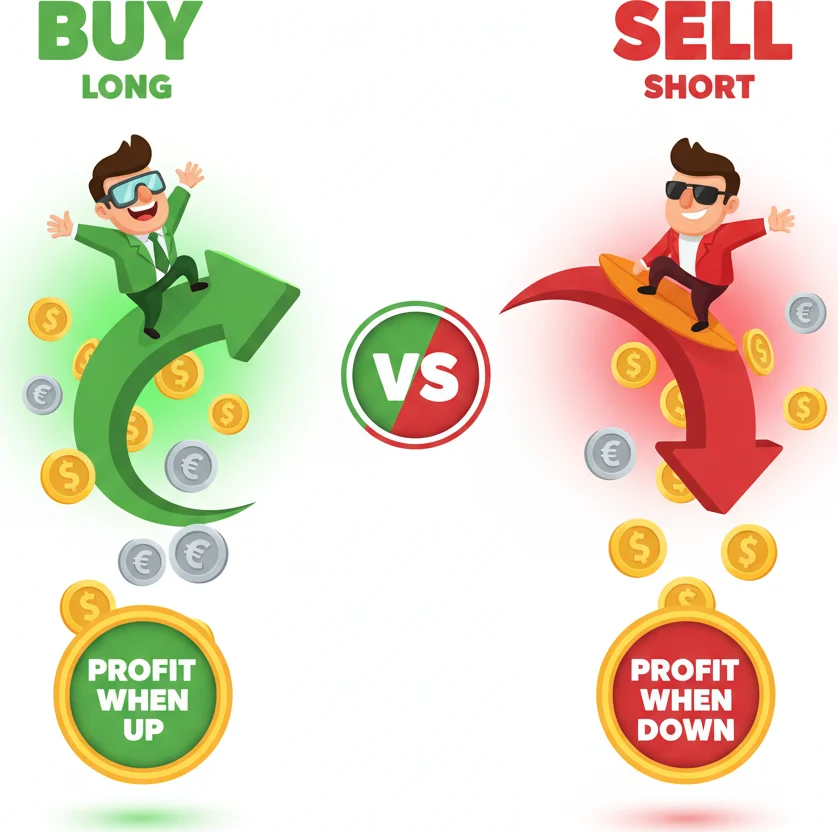
This is where they get you. The advertised fees are just the tip of the iceberg. Based on my own transactions and client reports, here’s what a R100,000 transfer to the US for something like a prop firm challenge fee might actually cost you at Absa.
The Stated Fees:
- Commission: 0.55% = R550 (capped, so this is it).
- Electronic Fee: R100.
- Total 'Visible' Fees: R650
The Hidden Cost (The Exchange Rate Margin): This is the killer. Absa doesn't give you the pure mid-market rate. They add a margin. For USD, let's say it's a conservative 1.5%. On R100,000, that 1.5% margin is R1,500. It's not a separate line item; it's baked into the rate they quote you.
The Possible Extra: Correspondent bank fees: R150 - R1,500. Let's assume R300.
Real Total Cost: R650 + R1,500 + R300 = R2,450.
That's 2.45% of your money, gone before it reaches its destination. I once paid nearly R4,000 on a larger transfer before I understood this. Now I always check the mid-rate on a site like XE.com first, then ask for their quote. The difference is the real fee.

Example: If the mid-market rate is 18.50 ZAR/USD, a 1.5% margin means Absa's rate might be ~18.78. On R100,000, you'd get ~$5,325 instead of ~$5,405. That missing $80 is the margin cost.

💡 Dica do Winston
Always calculate the total cost as a percentage: (Amount Sent - Amount Received) / Amount Sent. If it's over 2%, you're probably being inefficient.
“View Absa as part of your infrastructure, not your trading desk. They are the regulated pipeline.”
This is the non-negotiable framework. Absa forex branches are SARB's frontline. You can't bypass this.
The Allowances (Your Legal Limits):
- Single Discretionary Allowance (SDA): R1 million per calendar year. No tax clearance needed. Use it for travel, gifts, online subscriptions. This is the easy one.
- Foreign Investment Allowance (FIA): R10 million per year. This requires a Tax Compliance Status (TCS) PIN from SARS. This is what you use to fund an international trading account, buy foreign stocks, or invest offshore.
I messed up my first FIA application by not having all my SARS affairs in order. A pending audit froze everything. The process through Absa was smooth once I had the PIN, but getting that PIN took months. Plan ahead.
The Big Rule for Traders: You cannot use these allowances to speculate against the ZAR. In theory, funding a forex account to short ZAR pairs could be questioned. In practice, for diversified trading, using your FIA to fund an account with a global broker is standard. The key is documentation. Absa will ask for details about the receiving entity.
use Limits: Remember, the 30:1 use cap from the FSCA applies to brokers in South Africa. If you use your FIA to fund an international broker, their local rules apply. This is a critical distinction in your position size calculator inputs.
Currency Investment Account
This is their most useful product for us. It's a local account that holds foreign currency. No monthly fee, no minimum. Why use it?
- Parking Funds: You convert ZAR to USD when the rate is good (using your allowance), and it sits there earning a tiny bit of interest (LIBID minus a margin). Then, when you need to send money to your IC Markets account, you transfer USD from this Absa account. You avoid doing the FX conversion twice.
- Hedging: If you have profits in USD from trading, you can bring them back into this account without converting to ZAR immediately, protecting you from a weakening rand.
I use mine as a buffer. Profits from my broker come into this USD account first. I decide later if I want to bring rands home or keep it offshore.
Multi-currency Cash Passport
A prepaid travel card loaded with 7 currencies. For business travel to check on prop firm seminars or conferences, it's okay. The exchange rate loading it is still subject to that margin, but it's secure. Not a trading tool.
Forex Derivatives (For Businesses)
Forward contracts, swaps. These are for corporates with genuine foreign currency exposure. As a retail trader, you're unlikely to qualify or need these, as your broker provides similar hedging through your trades.
💡 Dica do Winston
Your Currency Investment Account isn't for yield. It's a strategic airlock between ZAR and the global market. Use it to control the timing of your FX conversions.

“I once paid nearly R4,000 on a transfer before I understood the hidden costs. Now I always check the mid-rate first.”
Here's the exact process I follow now, refined after several expensive learning moments.
- Get Your SARS TCS PIN. Do this first. It can take time. Ensure you are fully tax compliant.
- Convert ZAR to USD in your Absa Currency Investment Account. Do this online or in-branch, using your R10 million FIA. You are now 'invested' in USD within South Africa.
- Initiate the SWIFT Transfer. From your USD Currency Investment Account, send to your broker's client trust account. You will need the broker's full bank details (address, SWIFT, account number, reference).
- The Fees at This Stage: You'll pay the 0.55% commission (min R190, max R820) on the USD amount, converted to ZAR. Since the money is already in USD, you avoid the massive exchange rate margin on the transfer amount. You might still pay a correspondent bank fee.
- Documentation: Absa may ask for a letter from you stating the purpose is 'foreign investment' and possibly details of the receiving broker. Have your broker's regulatory information handy.
This method cuts the biggest cost (the FX margin on the transfer). The difference on a $10,000 transfer can be over R2,000 saved.

Pro Tip: Always ask for the SWIFT network option 'OUR' (meaning you pay all fees). This ensures the full amount arrives at your broker. If you choose 'SHA' (shared), correspondent banks can deduct fees unpredictably, and your broker might receive less, causing a funding discrepancy.
💡 Dica do Winston
The 'OUR' SWIFT instruction is worth the extra fee. Knowing the exact amount that will land in your broker's account removes a major variable from your funding math.
Banks aren't the only game in town. For active trading, they're not even the main game.
1. International FSCA-Regulated Brokers with ZAR Accounts: This is a fantastic workaround. Brokers like Pepperstone or XM (if they offer ZAR accounts) let you deposit and withdraw in rands directly. The broker handles the FX at their institutional rate, which is often better than retail bank rates. You trade in USD-based instruments, but your account equity is displayed in ZAR. It simplifies everything and keeps your funds within the South African system. Perfect for scalping strategies where you move in and out frequently.
2. Specialized FX Transfer Companies: For pure currency conversion and transfer (funding an overseas broker), companies like Wise (formerly TransferWise) or CurrencyFair often offer far better exchange rates and lower transparent fees than banks. They work by matching currency flows internally. I've used them to fund accounts and saved about 1% overall compared to the bank route. They still require you to have your SARB allowances in order.
3. The Prop Firm Loophole (Be Careful): Some prop firms offer fee payments via credit card or local ZAR EFT. This lets you pay your challenge fee in rands without using your allowance. However, any profit payouts will likely be sent back to you in USD or EUR, which then triggers the need for a foreign receiving stream with your bank. It's not a way to avoid regulations, just a convenience for entry.
The choice depends on your goal. For active trading, a local broker with a ZAR account is often the most efficient. For building offshore capital, the Absa Currency Account + SWIFT method is a controlled, compliant path.
“Your edge lies in using that pipeline as efficiently as possible - minimizing costs so you can focus on the trading.”
I've made or seen these all. Don't repeat them.
- Not Factoring in the Full Cost: Looking only at the commission. The exchange rate margin is the real tax. Always calculate the total cost as a percentage.
- Missing Tax Clearance: Trying to send more than R1m without a SARS TCS PIN. The transaction will be rejected, freezing your money for days.
- Using the Wrong Allowance Code: When applying, you must specify if it's SDA or FIA. Using SDA for an investment transfer will cause problems later with SARS.
- Poor Timing: Converting ZAR to USD when the rand is strong (like below 18.00) makes a huge difference. I once rushed a transfer at 19.50 to meet a deadline, only to see the rate drop to 18.80 a week later. That cost me thousands in future buying power. Be patient if you can.
- Ignoring Platform Tools: If you do trade through a platform that connects to SA brokers, using tools that automate risk management is key. Managing a trailing stop manually while also worrying about bank transfers is a distraction.
- Underestimating Time: A SWIFT transfer can take 2-5 business days. Don't plan to arbitrage a news event that requires funded capital tomorrow. It won't work.
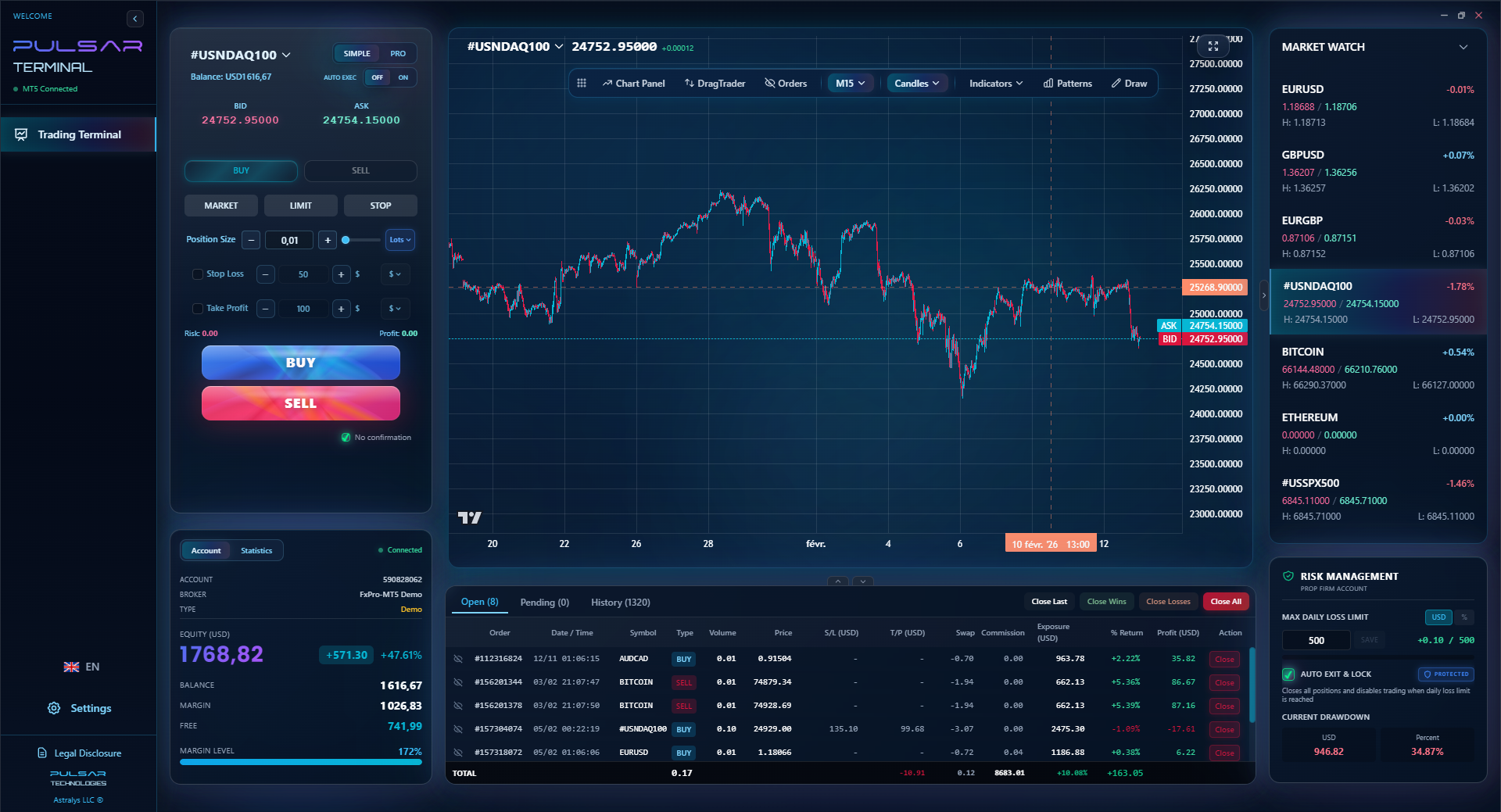
Once your capital is efficiently routed through the right channels, focus on execution: tools like Pulsar Terminal automate complex order management on MT5, so you can trade precisely without distraction.
Pulsar Terminal
A ferramenta MT5 tudo-em-um: ordens drag-and-drop, multi-TP/SL, trailing stop, grid trading, Volume Profile e proteção prop firm. Usado diariamente por 1.000+ traders.
So, are Absa forex branches useful? Yes, but in a specific, limited way.
Use Absa forex services when:
- You need to exercise your R10 million Foreign Investment Allowance to build offshore capital.
- You want a compliant, secure path to fund an international brokerage account.
- You need a Currency Investment Account to hedge your USD profits or park foreign currency efficiently.
- You require physical forex or a travel card.
Do NOT use Absa for:
- Active forex/CFD trading. That's not their product.
- The cheapest possible FX conversion. Shop around with specialists.
- Urgent transfers where timing is critical to a trade.
My overall take? View Absa as part of your infrastructure, not your trading desk. They are the regulated pipeline that connects your South African life to the global financial markets. Your edge lies in using that pipeline as efficiently as possible - minimizing costs, understanding the rules cold, and ensuring every rand you send abroad has the best possible chance of working hard for you. Get the banking and compliance right, so you can focus entirely on the trading. That's where the real money is made.
For the actual trading, your focus should be on your strategy, your psychology, and the tools that give you an edge on the charts. That's a separate world from the branch network, but both are essential to your success.
FAQ
Q1Can I trade forex with use at an Absa forex branch?
No. Absa forex branches do not offer leveraged retail forex or CFD trading platforms. They provide currency exchange, international payments, and foreign currency accounts. For leveraged trading, you need an FSCA-regulated broker like those offering MT4/MT5.
Q2What is the difference between the R1m and R10m allowance?
The R1 million Single Discretionary Allowance (SDA) is for travel, gifts, and small purchases - no tax clearance needed. The R10 million Foreign Investment Allowance (FIA) is for investing offshore, like funding a trading account, and requires a Tax Compliance Status PIN from SARS. Using the wrong one for a large transfer will cause issues.
Q3How long does an international transfer via Absa take to reach my broker?
Typically 2 to 5 business days via SWIFT. It's not instant. Factors like currency, correspondent banks, and time of submission affect it. Never assume funds will be available for trading on the same day.
Q4Is it cheaper to use Absa or a forex broker with a ZAR account?
For active trading, a broker with a ZAR account is usually simpler and can be cheaper overall. You deposit/withdraw in rands, avoiding individual bank FX margins on each transaction. For moving large sums offshore as investment, using Absa's Currency Account strategically can minimize costs.
Q5Will Absa ask me why I'm sending money to a forex broker?
Yes, as part of their KYC and exchange control duties, they will likely ask for the purpose. 'Foreign investment' is a valid reason under your FIA. You may need to provide details of the broker's regulatory status. Be transparent.
Q6What is the biggest hidden cost when using Absa for forex?
The exchange rate margin (or 'spread') they add to the mid-market rate. This can be 1-4% and is not listed as a separate fee. On a large transfer, this margin often costs more than all the other visible fees (commission, electronic fee) combined.
Q7Can I use my Absa Currency Investment Account to receive trading profits?
Yes, this is an excellent use for it. You can have your international broker wire your profits (in USD, EUR, etc.) directly into this account. This lets you keep the funds in foreign currency, avoiding immediate conversion to ZAR and potential further bank fees on the incoming transfer.
Lição do Prof. Winston
Pontos-chave:
- ✓The real fee is the 1-4% exchange rate margin, not the commission.
- ✓Use your R10m FIA for investments; get your SARS PIN first.
- ✓A Currency Account avoids double conversion costs.
- ✓For active trading, a ZAR-denominated broker account is simpler.
- ✓SWIFT transfers take 2-5 days; plan your funding accordingly.
Quão útil foi este artigo?
Clique em uma estrela
Insights de Trading Semanal
Análises e estratégias semanais grátis. Sem spam.
Sobre o autor
David van der Merwe
Trader de Mercados Emergentes
Trader sediado em Joanesburgo com 11 anos em moedas de mercados emergentes. Especialista em pares ZAR, trading regulado pela FSCA e análise do mercado sul-africano.
Comentários
Aviso de risco
A negociação de instrumentos financeiros envolve riscos significativos e pode não ser adequada para todos os investidores. O desempenho passado não garante resultados futuros. Este conteúdo é apenas para fins educacionais e não deve ser considerado aconselhamento de investimento. Sempre conduza sua própria pesquisa antes de negociar.
Você também pode gostar

Cara Trading Forex Sukses: 7 Prinsip dari Trader Profesional
Cara trading forex sukses dengan 7 prinsip trader pro: manajemen modal, disiplin, journal trading, backtest. Data nyata, bukan janji profit palsu.
Jam Trading Forex Terbaik untuk Trader Indonesia: Panduan Lengkap dengan Tabel Waktu
Panduan jam trading forex untuk trader Indonesia. Tabel 4 sesi dunia, jam emas 20:00-00:00, sesi mana yang harus dihindari. Data akurat + tips dari trader berpengalaman.
Top 5 Sàn Forex Uy Tín Nhất 2026: Review Jujur dari Trader Indonesia
Top 5 sàn forex uy tín 2026 untuk trader Indonesia. Review jujur: spread, deposit, withdraw, dukungan lokal. Exness, XM, IC Markets & lebih.
Obter Pulsar Terminal
Todas essas calculadoras estão integradas ao Pulsar Terminal com dados em tempo real da sua conta MT5.
Obter Pulsar Terminal