


Everyone in Nigeria is looking for the 'best forex strategy' like it's a magic spell.

Olumide Adeyemi
Pioneiro do Trading na África Ocidental ·  Nigeria
☕ 8 min de leitura
O que você vai aprender:
- 1Why Most Nigerian Traders Fail (And It's Not Lack of Skill)
- 2The Foundation: A Resilient Mindset, Not a Fancy Indicator
- 3A Practical Swing Trading Framework That Works Here
- 4Adapting for Naira Liquidity and Broker Limitations
- 5My Biggest Mistake (And What It Taught Me)
- 6Putting It All Together: Your Weekly Trading Routine

Everyone in Nigeria is looking for the 'best forex strategy' like it's a magic spell. They want the one secret that prints money, ignoring the real obstacles: Naira volatility, generator fuel costs, and internet that drops at the worst possible moment. I spent years chasing that same holy grail, blowing up accounts with complicated systems that couldn't survive a Lagos brownout. Let me save you the trouble. The best forex strategy for Nigeria isn't about a perfect entry. It's about a resilient plan built for our specific reality.
We blame the market, the broker, or bad luck. But the core issue is a mismatch between strategy and environment. I learned this the hard way in 2019. I was running a scalping strategy on GBP/JPY, requiring lightning-fast execution. I entered a trade, and just as price hit my take-profit, 'NEPA took light.' By the time my inverter kicked in, the trade had reversed and hit my stop loss. I lost $87 on a trade that should have made $120. The strategy was technically sound. My environment wasn't.
The Three Local Killers
First, infrastructure. A strategy requiring constant screen time is a liability here. Second, broker costs. The spreads on exotic pairs involving the Naira (like USD/NGN if you can find it) or even GBP/AUD can be monstrous with international brokers, eating your profits before you start. You need a broker with consistently tight spreads on the majors. I've found brokers like IC Markets and Pepperstone reliable for this, but you must always check execution during our peak hours.
Third, and most deadly, is psychological pressure. When you're trading to pay for fuel or data, you're not trading the chart. You're trading out of desperation. This leads to overriding stops, revenge trading, and the classic 'let's double the lot size to recover' move that never ends well.

Warning: If your trading plan doesn't have a backup for power and internet failure, it's not a plan. It's a prayer.
“The best forex strategy for Nigeria isn't about a perfect entry. It's about a resilient plan built for our specific reality.”
Forget about buying the latest indicator from an Instagram guru. Your first investment is in your mindset. I treat my trading like a small business. I have operational costs: internet subscription, generator maintenance, a dedicated power bank for my router. If my trading capital can't cover these for at least 6 months, I'm underfunded and will make emotional decisions.
I set a weekly 'salary' I can withdraw if profitable, not a life-changing sum. In 2022, I aimed for a consistent 3% weekly return on a $1,000 account. That's $30. Seems small, right? But compounded, that's serious growth, and it's a target that doesn't force you into stupid risks. The moment you start dreaming of Lamborghinis from a $200 account, you've already lost.
This mindset shift allows you to adopt the only type of strategy that works long-term here: patient, higher-timeframe trading. It reduces your screen time dependency, minimizes the impact of temporary internet glitches, and aligns with the reality of living in Nigeria.

💡 Dica do Winston
Your generator is part of your trading capital. Factor its fuel cost into your weekly 'business expenses.' If a week's profit doesn't cover fuel and data, you're not profitable.

“A strategy requiring constant screen time is a liability here.”
This is the core of what I use. It's boring. It's not flashy. But it survives NEPA. It's a swing trading approach focused on the 4-hour (H4) and daily charts.
The Core Logic: I'm only looking for 2-3 high-quality setups per week. I place the trade, set my stop loss and take profit, and walk away. I check back maybe twice a day. This means a 30-minute power cut doesn't ruin me.
My Setup Checklist:
- Find the Trend on the Daily Chart. I use simple price action. Higher highs and higher lows for an uptrend. That's it. No complicated indicators. If I can't see it clearly, I don't trade.
- Wait for a Pullback on the H4 Chart. I want price to retrace into a key support (in an uptrend) or resistance (in a downtrend) area. This area is often a previous swing high/low or a round number.
- Look for a Reversal Signal. This is where my confirmation comes in. I wait for a bullish engulfing candle at support, or a bearish one at resistance. Sometimes I use a basic RSI indicator reading oversold in an uptrend pullback.
- Enter on a Break of the Pullback's High/Low. My entry is conservative. I don't chase the initial candle. I wait for price to break the high of the bullish engulfing candle, then enter.
Risk Management is Non-Negotiable: I risk a maximum of 1% of my account on any single trade. For a $1,000 account, that's $10. I use a position size calculator every single time. My stop loss is placed just below the recent swing low (for longs). My take profit is set at a 1:2 or 1:3 risk-to-reward ratio. I set it and forget it.

Example: On EUR/USD, I identify an uptrend on the daily. Price pulls back to 1.0850 on the H4, a previous support. A bullish engulfing candle forms. Its high is 1.0865. I place a buy limit order at 1.0866. Stop loss at 1.0830 (36 pips risk). Take profit at 1.0942 (76 pips profit, just over a 1:2 RR). Risk is $10, so my position size is $10 / (36 pips * $1 per pip on a micro lot) = 0.28 lots. I round down to 0.25 lots. Trade managed.

“I turned a small, understandable loss into a catastrophic one because of my ego.”
Funding and withdrawing is a core part of your strategy. If you can't get your profit out, you didn't make any profit.
Local vs. International Brokers: Many 'local' platforms have insane markups and are borderline unregulated. I strictly use reputable international brokers that accept deposits from Nigerian debit/credit cards or bank transfers. The process can take a day or two, and you'll lose some on the bank's exchange rate, but your capital is safer. Brokers like XM and Exness have worked reliably for me and many traders I know for deposits and withdrawals.
Currency Pairs: Stick to major pairs. EUR/USD, GBP/USD, USD/JPY. Their spreads are tightest, and liquidity is highest. Avoid exotics. The spread on something like USD/ZAR or USD/NGN (on CFD brokers) can be 50+ pips. You'd need a massive move just to break even. The volatility in XAU/USD (Gold) can be tempting, but ensure your broker offers fair spreads on it, especially during rollover.
use is a Trap: Nigerian traders are often offered insane use like 1:1000. This is a death sentence. With my swing strategy, I never use more than 1:10 use. High use amplifies the impact of every small move against you, leading to a quick margin call. Your strategy should be built on patience, not use.
💡 Dica do Winston
Test every strategy's 'power cut rule.' Enter a demo trade, close your laptop for an hour, and see what happened. If it's a disaster, the strategy isn't for Lagos.

“I turned a small, understandable loss into a catastrophic one because of my ego.”
I need to be honest about a major loss. In early 2023, I had a perfect swing setup on GBP/USD. I was in profit, about 40 pips to my take profit. Then, the CBN announced some forex policy change. The Naira went haywire, and my broker's spreads on ALL pairs, including GBP/USD, widened instantly from 1.5 pips to over 25 pips. My stop loss was technically hit during this spread spike, closing me out for a loss.
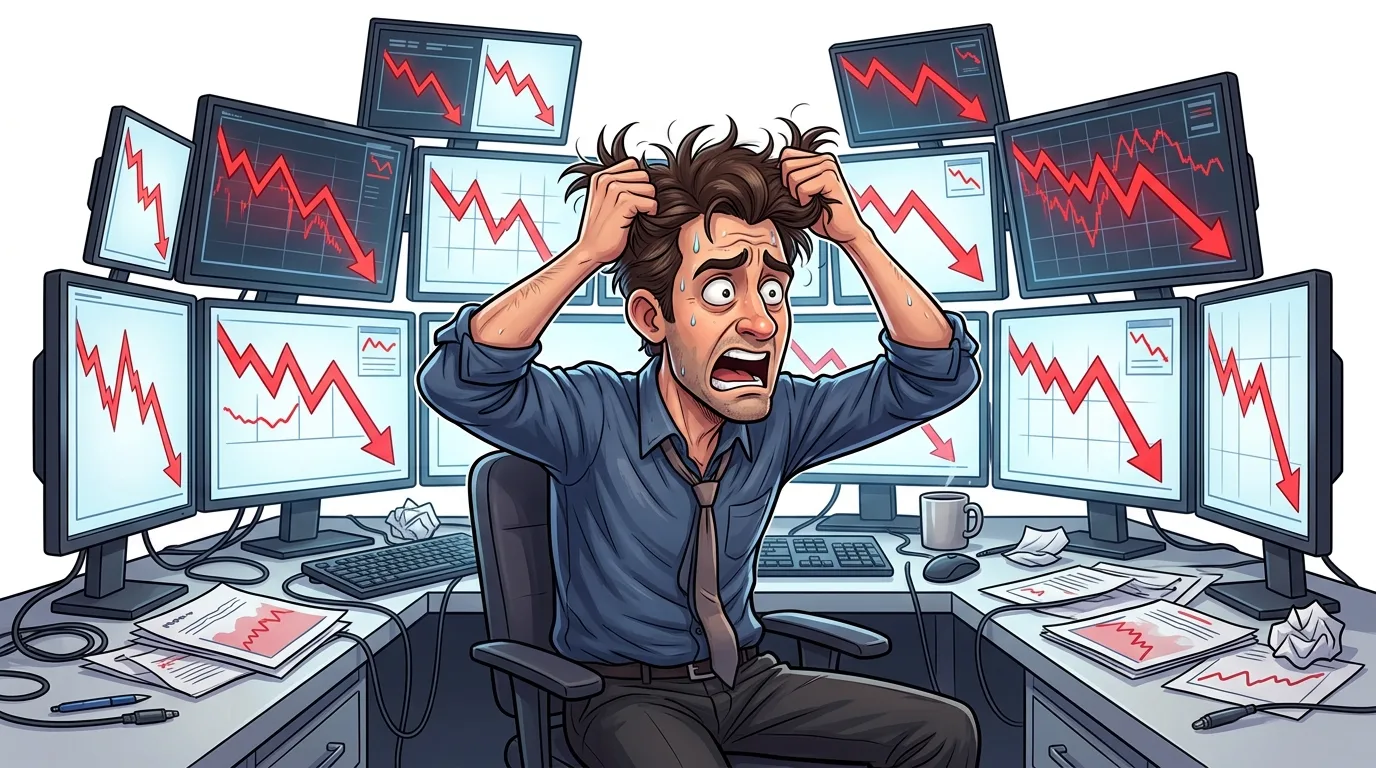
I was furious. I blamed the broker, the CBN, everything. In my anger, I broke all my rules. I re-entered the trade with double the size, trying to get my money back immediately. I didn't wait for a setup. I just clicked 'buy.' The market kept going against me. I lost 7% of my account in one afternoon.
The Lesson: External shocks will happen. Policy changes, liquidity dry-ups, unexpected news. Your strategy must include a plan for this. Now, I avoid trading during major local economic announcements. I also understand that stop losses are not magic. During extreme volatility, they can be executed at a worse price (slippage). The real lesson was my reaction. I turned a small, understandable loss (due to spread widening) into a catastrophic one because of my ego. The best forex strategy for Nigeria includes a plan for your own emotional breakdowns.
After my emotional revenge trading disaster, I realized I needed tools to enforce discipline; Pulsar Terminal's drag-and-drop order system lets me set my entire trade plan—entry, multiple take-profits, stop-loss—instantly, so I can't hesitate or second-guess myself.
Pulsar Terminal
A ferramenta MT5 tudo-em-um: ordens drag-and-drop, multi-TP/SL, trailing stop, grid trading, Volume Profile e proteção prop firm. Usado diariamente por 1.000+ traders.

“In our environment, sustainability is the only thing that leads to real profit.”
Here’s how this 'boring' strategy looks in practice, built for Nigerian life.
Sunday Evening: Market review. I analyze the weekly and daily charts for all major pairs. No trading, just planning. I note key support and resistance levels.
Monday - Thursday: I scan the H4 charts for 30 minutes in the morning (before work) and 30 minutes in the evening. I'm only looking for setups that match my checklist. If I see one, I set the entry, stop, and target. Then I close the platform. I might set a price alert on my phone.
Friday: I close any remaining trades before the New York session closes to avoid weekend gap risk. I review my week. How many trades? What was my win rate? Did I follow my rules? I calculate my weekly 'salary' and withdraw it if I'm above my target.
The Infrastructure Routine: I ensure my laptop and phone are charged. My router has a backup battery. I have a note of my broker's support number and account ID in case I need to call in to close a trade during an outage (it's happened).
This routine removes the chaos. It turns trading from a stressful, screen-glued activity into a managed, side-business operation. It's not sexy. But it's sustainable. And in our environment, sustainability is the only thing that leads to real profit.

FAQ
Q1What is the best time to trade forex in Nigeria?
The London session (11 am - 3 pm Nigerian time) and the overlap with New York (3 pm - 5 pm) offer the best liquidity and movement. This fits well with a swing trading approach where you analyze in the morning, set trades, and they can execute during these active hours without you staring at the screen.
Q2Can I start forex trading in Nigeria with 20,000 Naira?
Technically, yes. Some brokers allow it. But practically, it's extremely difficult. After accounting for potential losses, bank transfer fees, and the psychological pressure of trying to grow such a small amount, the odds are stacked against you. I recommend saving until you have at least $300 (approx. 450,000 Naira) to start with realistic risk management.
Q3Is swing trading better than scalping for Nigerians?
Absolutely, 100%. Scalping requires perfect, uninterrupted execution and tight spreads. Our infrastructure makes this a constant battle. Swing trading's longer timeframes forgive minor internet hiccups and don't require you to be glued to the screen, making it far more resilient for our context.
Q4How do I handle stop losses with our volatile internet?
Set them immediately when you enter the trade. Don't wait. Use a broker with a reliable mobile app. If your internet drops, your stop loss is already resting on the broker's server and should execute if price hits it, even if you're offline. Always test this with a demo account first.
Q5Which currency pair is best for beginners in Nigeria?
Start with EUR/USD. It has the lowest spreads, highest liquidity, and tons of free analysis available. Its moves are generally smoother than pairs like GBP/JPY. Mastering one pair is better than dabbling in ten. Read a dedicated EUR/USD guide to understand its unique behaviors.
Q6How do I know if a forex strategy is realistic for Nigeria?
Ask these questions: Does it require being online 6 hours a day? (If yes, reject it). Does it rely on tick-by-tick execution? (Reject it). Does it work on the 1-hour chart or higher? (Good). Does it have clear rules for entry, exit, and risk that don't need last-second decisions? (Excellent).
Lição do Prof. Winston
Pontos-chave:
- ✓Swing trading on H4/Daily charts survives infrastructure gaps.
- ✓Never risk more than 1% per trade on a properly funded account.
- ✓Stick to major pairs (EUR/USD) for tight, reliable spreads.
- ✓Use use under 1:10; it's a tool, not a catalyst.
- ✓Your trading plan must include a backup for power failure.
Quão útil foi este artigo?
Clique em uma estrela
Insights de Trading Semanal
Análises e estratégias semanais grátis. Sem spam.
Sobre o autor
Olumide Adeyemi
Pioneiro do Trading na África Ocidental
Um dos educadores de trading forex mais ativos da Nigéria. 8 anos de experiência operando a partir de Lagos. Especialista em estratégias de baixo capital e desafios de prop firms para traders africanos.
Comentários
Aviso de risco
A negociação de instrumentos financeiros envolve riscos significativos e pode não ser adequada para todos os investidores. O desempenho passado não garante resultados futuros. Este conteúdo é apenas para fins educacionais e não deve ser considerado aconselhamento de investimento. Sempre conduza sua própria pesquisa antes de negociar.
Você também pode gostar

Cara Trading Forex Sukses: 7 Prinsip dari Trader Profesional
Cara trading forex sukses dengan 7 prinsip trader pro: manajemen modal, disiplin, journal trading, backtest. Data nyata, bukan janji profit palsu.
Jam Trading Forex Terbaik untuk Trader Indonesia: Panduan Lengkap dengan Tabel Waktu
Panduan jam trading forex untuk trader Indonesia. Tabel 4 sesi dunia, jam emas 20:00-00:00, sesi mana yang harus dihindari. Data akurat + tips dari trader berpengalaman.
Top 5 Sàn Forex Uy Tín Nhất 2026: Review Jujur dari Trader Indonesia
Top 5 sàn forex uy tín 2026 untuk trader Indonesia. Review jujur: spread, deposit, withdraw, dukungan lokal. Exness, XM, IC Markets & lebih.
Obter Pulsar Terminal
Todas essas calculadoras estão integradas ao Pulsar Terminal com dados em tempo real da sua conta MT5.
Obter Pulsar Terminal