


You’re in the UK on a Skilled Worker visa, you’ve got some capital, and you’re wondering if you can legally trade forex on the side.

Sarah Collins
Estrategista de Trading ·  United Kingdom
☕ 9 min de leitura
O que você vai aprender:

You’re in the UK on a Skilled Worker visa, you’ve got some capital, and you’re wondering if you can legally trade forex on the side. The short answer is yes, but with a massive, career-defining 'but'. The line between a legal personal investment and an illegal business activity is thinner than the spread on EUR/USD during the London open. I’ve seen traders get this wrong, and the consequences go far beyond a blown account. Let’s break down exactly what you can and cannot do, and how to trade without risking your visa status.
Your Skilled Worker visa has one core rule: you cannot be self-employed or run a business. Your primary work must be the job you're sponsored for. Forex trading sits in a grey area that UK Visas and Immigration (UKVI) and HMRC scrutinise.
Personal investing is generally okay. Think of it like buying shares in Apple and checking your portfolio once a month. It's passive. The moment your activity looks like a business - systematic, frequent, and organised - you're on dangerous ground. There's no official hourly limit, but if you're placing multiple trades a day, using complex strategies, or generating a significant portion of your income from it, you're waving a red flag.
I made this mistake early in my career, not with a visa but with tax classification. I was scalping the EUR/USD, taking 10-15 trades a day. My accountant sat me down and said, "To HMRC, this isn't investing. This is a trading business." The tax implications shifted entirely. For a visa holder, that reclassification isn't just about tax; it's about compliance.

Warning: If your trading looks like a second job, UKVI could view it as unauthorized work. This can lead to visa curtailment, refusal of future applications, and even removal from the UK. It's that serious.
The key is intent and scale. Are you trading spare capital for long-term growth, or are you actively managing a 'fund' with daily profit targets? The latter will get you into trouble.
This is where theory meets reality. How you're taxed directly signals to authorities what you're doing. Get this wrong, and you're basically self-reporting a visa breach.
Capital Gains Tax (The 'Safe' Zone)
If your trading is considered speculative investing, profits are subject to Capital Gains Tax (CGT). This is the classification you want.
- Annual Exempt Amount: For the 2024/25 tax year onwards, it's £3,000. Only gains above this are taxed.
- CGT Rates: For higher-rate taxpayers, it's 20% (24% from April 2025). Much lower than income tax.
Income Tax (The 'Danger' Zone)
If HMRC deems your trading a 'trade' - meaning it's frequent, organised, and profit-seeking like a business - profits get hit with Income Tax and possibly National Insurance.
- Income Tax Rates: Up to 45%.
- Trading Allowance: You get a £1,000 tax-free allowance if it's a 'side hustle'. But claiming this literally labels you as having a side business, which contradicts your visa conditions.
- Personal Allowance: £12,570. If trading is your main profession, you'd use this, but it can't be your main profession on a Skilled Worker visa.
I learned this the hard way. One year, my forex profits were around £18,000. I filed under CGT. HMRC opened an enquiry. They asked for my trading logs, frequency, and strategy notes. After a stressful 3 months, they reclassified it as a trade due to the volume (over 200 trades that year). My tax bill nearly doubled, and I paid a penalty. For a visa holder, that HMRC enquiry letter alone could trigger a UKVI review.

Example:
- Scenario A (Passive): You make £8,000 in gains over a year from 20 trades. After your £3,000 CGT allowance, you pay 20% on £5,000 = £1,000 in tax.
- Scenario B (Active Trade): Same £8,000 profit, but from 300 trades. HMRC calls it a business. After your £12,570 personal allowance (if you have no other income), you pay 20% on £8,000 = £1,600 in tax. But more critically, you've just documented a business activity to the government.
A note on instruments: Spread betting profits are generally tax-free for UK residents, which is attractive. But again, if it's deemed a business, that exemption can vanish. CFDs fall under CGT rules. Always use a position size calculator to understand your exposure, as overtrading is a key trigger for reclassification.

💡 Dica do Winston
The market's liquidity doesn't care about your visa status. Your risk management must account for both financial loss and legal peril. One bad trade can blow your account; one misstep with HMRC can blow your life in the UK.
“For a visa holder, that HMRC enquiry letter alone could trigger a UKVI review.”
So, how do you actually trade without crossing the line? You need concrete rules for yourself.
1. Frequency & Time Commitment: This is the biggest tell. Avoid daily trading. Swing trading over days or weeks is far more defensible as 'investment activity'. If you're spending more than a few hours a week analysing and managing trades, you're drifting into business territory. Your sponsored job must demonstrably come first.
2. Profit Scale: If your forex profits start rivaling or exceeding your sponsored salary, it's a major red flag. Keep it supplemental. Aiming for consistent, modest growth is key.
3. Organisation & Systems: Running a complex system with automated scripts, managing multiple accounts, or using strategies typical of professional firms (like advanced grid trading) looks like a business operation. Stick to manual analysis on a single account. Using tools like the MACD indicator or RSI for analysis is fine; running a fully automated EA portfolio is not.
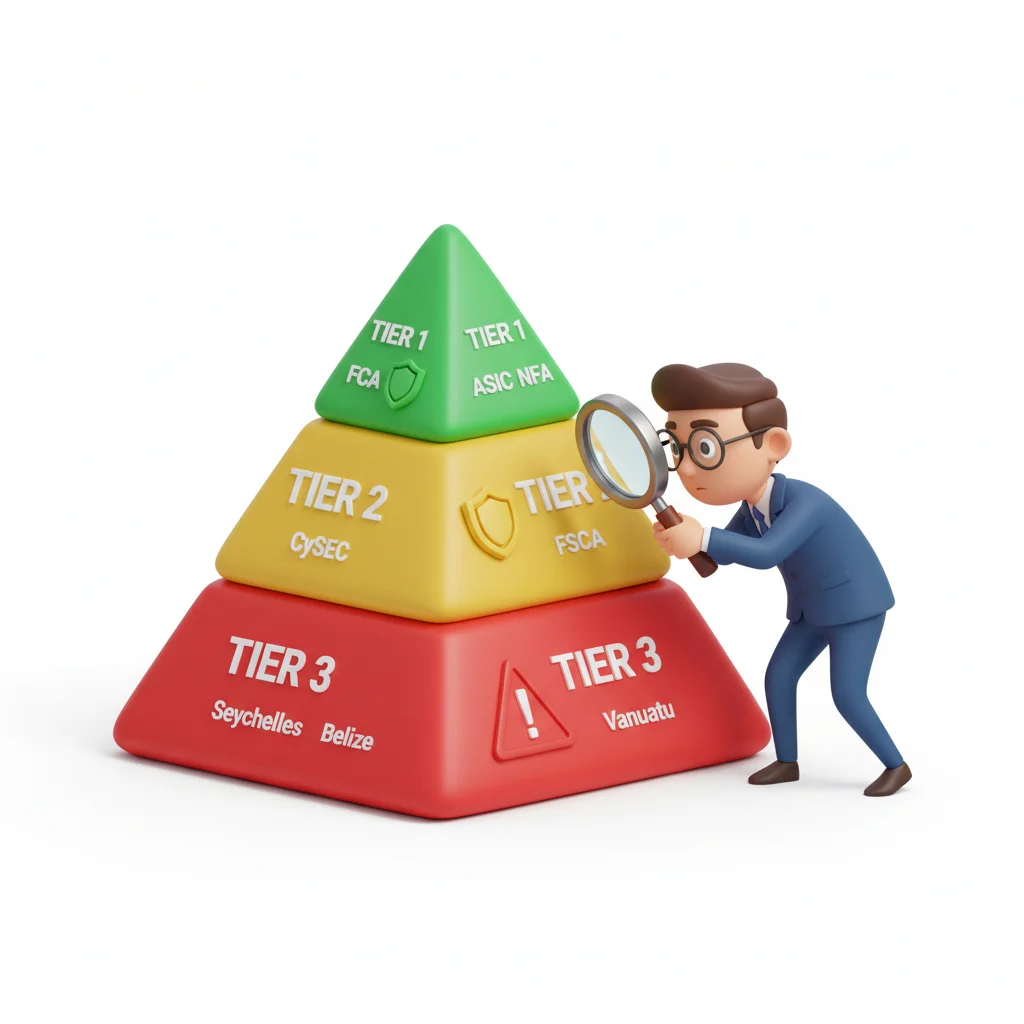
4. Broker Choice & use: You must use an FCA-regulated broker. Not just for safety, but because they enforce the retail use caps (1:30 for majors) that naturally limit your activity scale. Trading with an unregulated offshore broker offering 1:500 use is not only risky but suggests you're pursuing a level of speculation inconsistent with passive investing. Brokers like Pepperstone and IC Markets offer FCA-regulated entities with these compliant limits.

Pro Tip: Keep a trading journal. Not just for performance, but as evidence of your intent. Note your rationale for each trade as a long-term investment decision. This could be vital documentation if you ever need to prove your activity was passive to UKVI or HMRC.
Opening the account is straightforward, but your paper trail matters.
Account Opening: When you sign up with an FCA broker, you'll go through standard KYC (Know Your Customer). You'll provide your passport, proof of address (a UK utility bill or bank statement), and possibly proof of employment. Your visa status is part of your legal residency information. There's no specific barrier to opening an account as a visa holder.
Funding & Withdrawals: Use your personal UK bank account. Never use a business account or an account in someone else's name. Consistent deposits from your salary account are fine. Large, irregular deposits from overseas accounts could raise questions about the source of funds. Common methods include bank transfer, debit card, or PayPal.
The Documentation Trail: Your bank and broker statements become a permanent record. If you're ever asked by UKVI to prove you've complied with visa conditions, these statements will be examined. A pattern of daily deposits/withdrawals and constant activity looks professional. Monthly or quarterly activity looks like an investor. Think about the story your statements tell.
I advise clients to use a separate, dedicated bank account for trading funds. It keeps things clean. When you withdraw profits, let them sit in that account or move them to savings. Don't create a complex web of transfers that looks like you're managing business cash flow.
💡 Dica do Winston
Your greatest edge as a visa-holder trader is patience. You are forced to avoid the casino of daily noise. Use it. The 1-hour chart is your enemy; the weekly chart is your safe harbour.
“Your goal is preservation of capital and slow growth, not monthly profitability.”
Maybe you've caught the bug and want to make this your career. The Skilled Worker visa path won't allow it. Here are your realistic options:
1. The Innovator Founder Visa: This has replaced the old Start-up visa. You need a genuine, original, viable business idea endorsed by an approved body. A proprietary trading firm or a fintech education business could qualify, but "I want to trade my own account" likely won't be endorsed. You need a scalable business plan.
2. The Global Talent Visa: For leaders or potential leaders in academia, research, arts, or digital technology. Exceptional retail traders need not apply. This is for recognised professionals.
3. Spouse/Dependent Visa: If your partner has a visa that allows work (like a Skilled Worker or Student visa), you may have full work rights as their dependent. Check the specific conditions.
4. Self-Sponsorship (The Long Game): This is complex but possible. You establish a UK limited company that obtains a Skilled Worker sponsor licence. The company then sponsors you for a visa to work for it in a genuine, skilled role. You can't sponsor yourself to just be a trader; the role must meet skill and salary thresholds (now £38,700+). The company could have trading as part of its activities, but it must be a real business with proper structure and compliance. This is a costly, administrative heavy lift, not a side project.
The brutal truth? For most, the only way to trade full-time legally is to first obtain Indefinite Leave to Remain (ILR) and then British citizenship. Until then, treat forex as a strictly limited, passive investment.

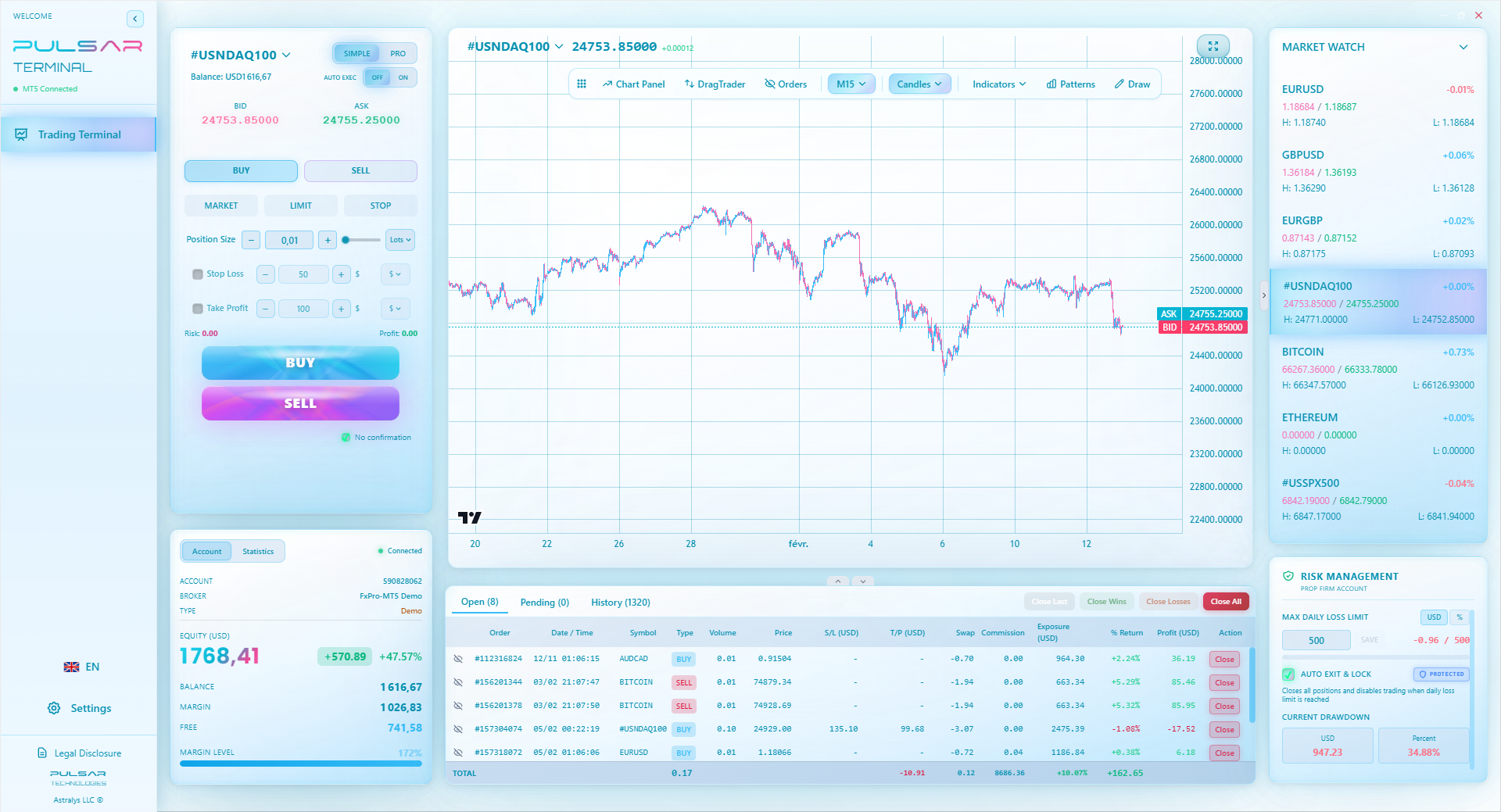
Managing complex trades with multiple targets and stops is a hallmark of professional activity, but tools like Pulsar Terminal allow you to plan and execute sophisticated strategies with precision on MT5, keeping your actual screen time—and risk of appearing 'active'—to a minimum.
Pulsar Terminal
A ferramenta MT5 tudo-em-um: ordens drag-and-drop, multi-TP/SL, trailing stop, grid trading, Volume Profile e proteção prop firm. Usado diariamente por 1.000+ traders.
Let's map the quickest ways to get into trouble, so you can avoid them.
- Pitfall 1: The Prop Firm Challenge. Passing a prop firm evaluation seems like a clever hack - you trade their capital. But most prop firms pay you as a self-employed contractor (via profit splits). Receiving regular self-employed income is a direct visa breach. Even if you use a tool like Pulsar Terminal to nail the prop firm daily loss protection rules, the income structure is the problem.
- Pitfall 2: Teaching/Signals as a Side Hustle. Selling trading signals, running a YouTube channel with monetisation, or mentoring for fees constitutes self-employment. A hard no.
- Pitfall 3: Ignoring Tax Returns. You must declare all income, including forex gains, to HMRC. Not declaring it is tax evasion. Declaring it incorrectly (as CGT when it's really a trade) can lead to penalties and that dreaded HMRC enquiry.
- Pitfall 4: Chasing Losses. This is a universal trading sin, but for you, it's doubly dangerous. A losing streak can tempt you to trade more frequently or with larger size to recover, pushing you into 'business activity' territory and increasing your risk of a margin call.
The safest approach? Adopt a boring, long-term mindset. Focus on a few major pairs like EUR/USD or XAU/USD. Use wide stops. Aim for a few high-conviction trades per quarter, not per day. Your goal is preservation of capital and slow growth, not monthly profitability.
FAQ
Q1Can I trade forex full-time on a Skilled Worker visa?
Absolutely not. Full-time trading would be considered self-employment or running a business, which is prohibited under the conditions of your Skilled Worker visa. It would risk visa curtailment.
Q2Do I need to tell my employer I'm trading forex?
There's no legal requirement, but check your employment contract. Some contracts, especially in finance, have clauses about declaring personal trading activity to avoid conflicts of interest. Your visa sponsorship is tied to your employer, so any activity that breaches your contract could jeopardise your job and thus your visa.
Q3Is there a specific limit on how much money I can make from trading?
No, there's no defined profit limit. The issue is one of proportion and nature. If your trading profits become a primary source of income or are generated through business-like activity, it becomes a problem. Keeping profits a small fraction of your salaried income is prudent.
Q4Can I use a prop firm while on this visa?
Extremely risky. Most proprietary trading firms treat you as a self-employed trader for payouts. Receiving this income directly contradicts your visa conditions which forbid self-employment. The trading activity itself might also be viewed as a secondary business.
Q5How do I report forex profits on my Self Assessment tax return?
You must file a Self Assessment return if your gains exceed the CGT allowance (£3,000) or if you have any trading income. You'll report capital gains on the 'Capital Gains Summary' pages. If you believe it's a trade (which you likely don't), you'd use the 'Self-employment' pages. If in doubt, hire an accountant experienced with trader tax status - it's worth the fee to avoid a costly mistake.
Q6Does spread betting affect my visa status differently than CFD trading?
The visa concern is about the activity, not the specific instrument. Whether you're spread betting or trading CFDs, if the frequency, organisation, and scale look like a business, it's a problem. The tax treatment differs (spread betting is usually tax-free), but UKVI cares about compliance with work restrictions, not tax law.
Q7What happens if UKVI finds out I've been trading actively?
The likely outcome is visa curtailment (cancellation). You would be given a short period to leave the UK or apply for a different visa (which would likely be refused based on the breach). It could also lead to a re-entry ban and severely impact future applications to the UK or other countries.
Lição do Prof. Winston
Pontos-chave:
- ✓Frequency is the #1 visa risk trigger.
- ✓Swing trade, never scalp, on a visa.
- ✓Tax classification signals your activity to authorities.
- ✓Prop firm income is usually self-employment.
- ✓ILR is the only safe path to full-time trading.
Quão útil foi este artigo?
Clique em uma estrela
Insights de Trading Semanal
Análises e estratégias semanais grátis. Sem spam.
Sobre o autor
Sarah Collins
Estrategista de Trading
Estrategista de trading sediada em Londres com 12 anos em mercados financeiros. Ex-analista numa corretora na City de Londres. Cobre pares GBP, mercados europeus e trading regulado pela FCA.
Comentários
Aviso de risco
A negociação de instrumentos financeiros envolve riscos significativos e pode não ser adequada para todos os investidores. O desempenho passado não garante resultados futuros. Este conteúdo é apenas para fins educacionais e não deve ser considerado aconselhamento de investimento. Sempre conduza sua própria pesquisa antes de negociar.
Você também pode gostar

Cara Trading Forex Sukses: 7 Prinsip dari Trader Profesional
Cara trading forex sukses dengan 7 prinsip trader pro: manajemen modal, disiplin, journal trading, backtest. Data nyata, bukan janji profit palsu.
Jam Trading Forex Terbaik untuk Trader Indonesia: Panduan Lengkap dengan Tabel Waktu
Panduan jam trading forex untuk trader Indonesia. Tabel 4 sesi dunia, jam emas 20:00-00:00, sesi mana yang harus dihindari. Data akurat + tips dari trader berpengalaman.
Top 5 Sàn Forex Uy Tín Nhất 2026: Review Jujur dari Trader Indonesia
Top 5 sàn forex uy tín 2026 untuk trader Indonesia. Review jujur: spread, deposit, withdraw, dukungan lokal. Exness, XM, IC Markets & lebih.
Obter Pulsar Terminal
Todas essas calculadoras estão integradas ao Pulsar Terminal com dados em tempo real da sua conta MT5.
Obter Pulsar Terminal