


You're looking for a forex broker in Nigeria.

Olumide Adeyemi
Pioneiro do Trading na África Ocidental ·  Nigeria
☕ 10 min de leitura
O que você vai aprender:
- 1Is Forex Trading Legal in Nigeria? (The 2025 Update)
- 2The Real Costs of Trading: Spreads, Commissions & Naira Pain
- 3use: Your Greatest Tool and Fastest Road to Zero
- 4Funding Your Account: Crypto, Cards & The Hidden Fees
- 5What Actually Matters in a Broker (Beyond the Hype)
- 6Red Flags: How to Spot a Scam or a Bad Broker
- 7Your Action Plan: A Step-by-Step Checklist

You're looking for a forex broker in Nigeria. You've seen the ads promising easy money, zero spreads, and insane use. But what's the real story? Is it even legal anymore? Let me cut through the noise. I've traded here for over a decade, watched regulations flip, and seen too many accounts blown up by shiny promises. This isn't about finding the 'best' broker. It's about finding the right one for you, without getting your pocket picked by hidden fees or left stranded by a regulator's new rule.
This is the first question, and the answer just got a lot more serious. Yes, trading is legal for you as an individual. But the game changed in March 2025 with the new Investments and Securities Act (ISA).
Before this, it was the wild west. You could sign up with almost any international broker, send your money via crypto or wire, and trade. The SEC (Securities and Exchange Commission) mostly watched from the sidelines. Not anymore.
The ISA 2025 makes it illegal for any platform to offer online forex trading services to Nigerians without being formally registered with the SEC. The goal is investor protection, which is good. The reality is a period of uncertainty while brokers scramble to comply.
What does this mean for you right now?
- Local vs. International: Nigerian-regulated brokers (authorized by the CBN and SEC) will become a clearer, safer choice for compliance. But their offerings might be limited.
- Your Existing International Account: If you're with an offshore broker like Exness or IC Markets, you probably won't get kicked out overnight. But the long-term viability is a question mark. Will they register with the SEC? Many might not bother.
- Tax Man Cometh: This is the big one they don't advertise. Any profit you make, whether with a local or international broker, is subject to a 10% Capital Gains Tax in Nigeria. The government is getting better at tracking this. Don't think you're invisible.

Warning: Signing up with a new, unregulated offshore broker post-2025 is a much riskier bet. Your path to recourse if something goes wrong is very, very thin. The regulatory landscape isn't just changing, it's hardening.
Forget the 'zero spread' marketing. Let's talk about what you'll actually pay. Your profit is what's left after costs, and in Nigeria, you have a unique extra cost: currency conversion.
Spreads & Commissions
This is the broker's cut. You have two main account types:
- Standard Accounts: No commission, but the spread (difference between buy/sell price) is wider. A 'good' spread on EUR/USD is 1.0-1.5 pips. I've seen Nigerian-focused brokers offer 2-3 pips, which is a rip-off.
- Raw/ECN Accounts: Tighter spreads (often 0.0-0.3 pips) but you pay a commission per lot. For example, a broker might charge $3.50 per side per 100k lot. This is often cheaper for active traders.
Here’s a quick comparison of real costs for a 1 standard lot (100,000 units) trade on EUR/USD:
| Cost Type | Standard Account (1.2 pips) | Raw/ECN Account (0.1 pip + Commission) |
|---|---|---|
| Spread Cost | $12.00 | $1.00 |
| Commission | $0.00 | $7.00 ($3.50 per side) |
| Total Trade Cost | $12.00 | $8.00 |
As you can see, the raw account is cheaper, even with the commission. But you need a broker that offers true ECN access.
The Naira Conversion Killer
This is where I've lost money without even placing a trade. You fund your account in Naira. The broker (or your bank/payment processor) converts it to USD.
Their exchange rate is almost always worse than the official CBN rate. I’ve seen margins of 15-25 NGN per dollar. On a $500 deposit, that's an instant 7,500-12,500 Naira loss before you click buy.
My mistake: In 2020, I rushed to fund an account during a volatile Naira period. I paid a 28 NGN/$ premium. I needed to make 3% just to break even on the deposit. Always check the conversion rate offered.

Pro Tip: Some brokers like HF Markets offer Naira-denominated accounts. Your balance and P&L are in Naira, eliminating conversion risk on every trade. The trade-off? You're stuck with their spreads, which might be higher.
“High use amplifies your emotions. Fear and greed become unmanageable.”
I see it all the time. A new trader in Nigeria sees a broker offering 1:2000 use and thinks, 'With just 50,000 Naira, I can control 100 million Naira!'
Let me be blunt: that's a suicide pact, not a strategy.
Yes, brokers like Exness offer insane use (even 'unlimited'). FXTM and others offer 1:1000+. It's a marketing tool to attract undercapitalized traders. Here’s what that 1:1000 really means:
With a $100 account at 1:1000 use, you can open a $100,000 position. A move of just 10 pips against you (a tiny blip on the chart) wipes out your entire account. That can happen in seconds. I’ve done it. In 2017, I blew a $250 account on a GBP/USD news spike using 1:500 use. The trade was right directionally an hour later, but my account was already gone.
A Smarter Way to Think About use
Don't use the maximum. Use what your strategy and position size calculator dictate.
- Scalping? You might use higher use (1:50 to 1:100) for very short-term, precise plays. But your stop loss is equally tight.
- Swing Trading? 1:10 to 1:30 is plenty. Your stops are wider, so you need less use to avoid a margin call.
- Beginner? Start at 1:10. No higher. Practice controlling the position, not the use.
The new SEC rules may cap use for locally registered brokers. This would actually protect most of you from yourselves. High use amplifies your emotions. Fear and greed become unmanageable.

💡 Dica do Winston
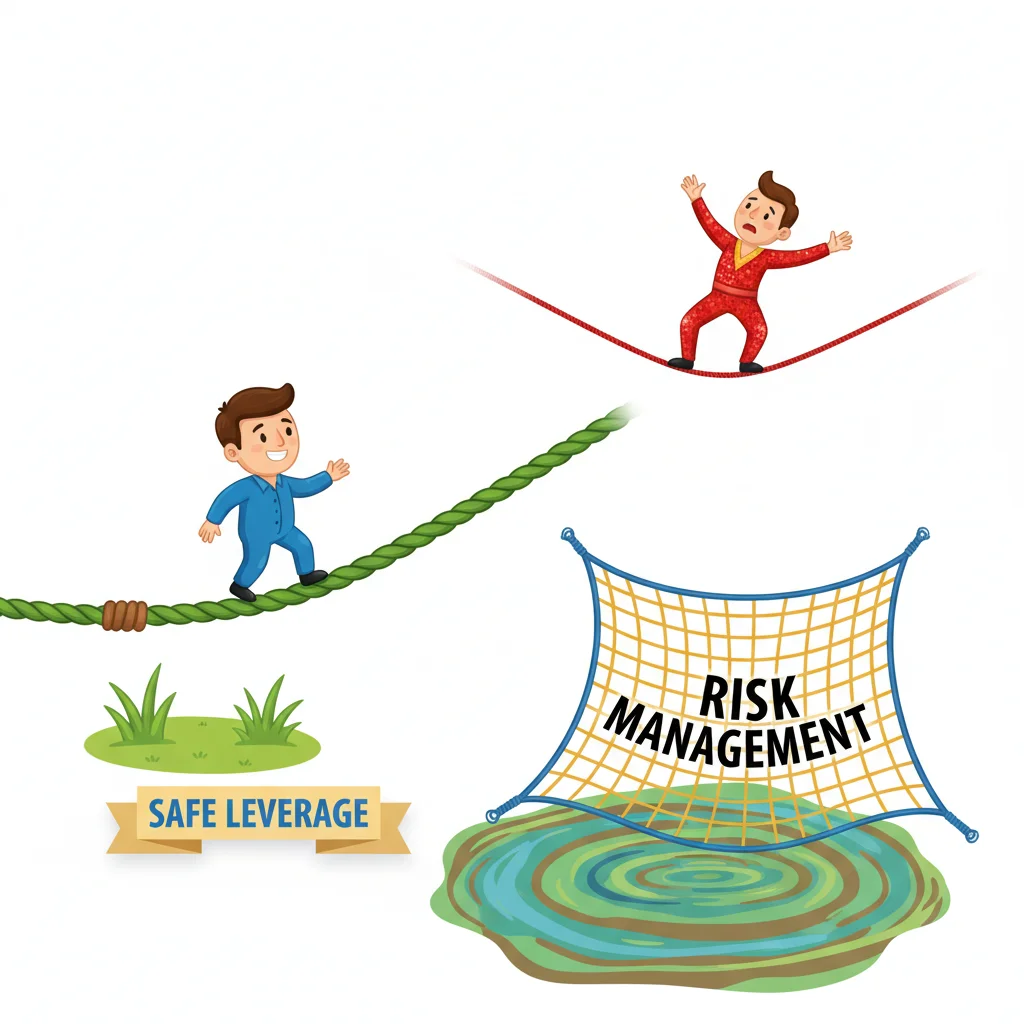
A broker offering you 1:1000 use isn't doing you a favor. They're selling you a rope. Your job is to not hang yourself with it.
Getting money in and out is the most frustrating part of trading in Nigeria. Bank wires are slow, expensive, and attract questions. Cards get declined. Here’s the breakdown.
Crypto (USDT, Bitcoin): This is the king for a reason. It's fast (usually under an hour), and bypasses banks. Almost every major international broker accepts it. The catch? You need to already own crypto, which means using a local exchange like Binance, which has its own conversion fees from Naira.
Credit/Debit Cards (Visa/Mastercard): Instant deposit, which is great. But Nigerian banks are notoriously trigger-happy with international forex merchant blocks. I’ve had deposits fail 3 times in a row. Withdrawals back to the card can take 7-10 business days.
Bank Transfer: Avoid unless you have no other choice. Fees are high ($25-$50), it takes 3-5 business days, and you’ll get the worst official conversion rate.
Local Payment Processors: Some brokers partner with local processors. This can be smooth, but check the minimums. Some have a minimum of 4,000 NGN, which isn't bad.

Example: You want to deposit $500.
- Via Crypto: You buy USDT for ~795,000 Naira (at a premium). Send to broker. Cost: ~5,000 Naira in spread/fees on the crypto buy.
- Via Card: You attempt a 795,000 Naira charge. Bank may block it. If it goes through, broker uses their rate, say ₦1,620/$. You get $490. Instant loss of $10.
- Via Local Processor: You send 795,000 Naira. They credit $500 at a fair rate. This is often the best if available.
Always do a small test withdrawal before depositing large amounts. If they can't get your money back to you easily, they're not your broker.
“Your profit is what's left after costs, and in Nigeria, you have a unique extra cost: currency conversion.”
Forget the fancy cars in their ads. Look for these five things.
- Execution Speed & Slippage: This is critical for any strategy, especially scalping. During high volatility (like news events), does your market order get filled at the price you see, or 5 pips away? I tested this in 2022. On a major news day, my entry on EUR/USD with a slow broker had 4.2 pips of negative slippage. On IC Markets, it was 0.7 pips. That’s real money.
- Platform & Tools: MT4/MT5 is standard. But what about tools for analysis? Can you easily set a trailing stop or multiple take-profits? Manually moving a stop-loss is amateur hour. You need automation.
- Customer Support: Try their live chat at 10 PM on a Sunday. Ask a technical question about swap rates or order types. If you get a copy-paste answer from someone who clearly doesn't trade, that's a red flag. Your broker is your business partner. Would you partner with a ghost?
- Instrument Range: Do you only want majors like EUR/USD and XAU/USD? Or do you want African CFDs, like NGNGROUP (NGX All-Share Index)? Not all brokers offer local assets.
- Regulation (The New Priority): Post-2025, this is moving to the top. A broker regulated by the SEC Nigeria, CySEC (EU), or ASIC (Australia) has stricter rules about segregating your funds from theirs. It's not perfect, but it's a safety net. An offshore regulator with a fancy website means nothing.
💡 Dica do Winston
The smoothest deposit process often belongs to the shadiest brokers. Always test the withdrawal first with a small amount. Your exit strategy is more important than your entry.
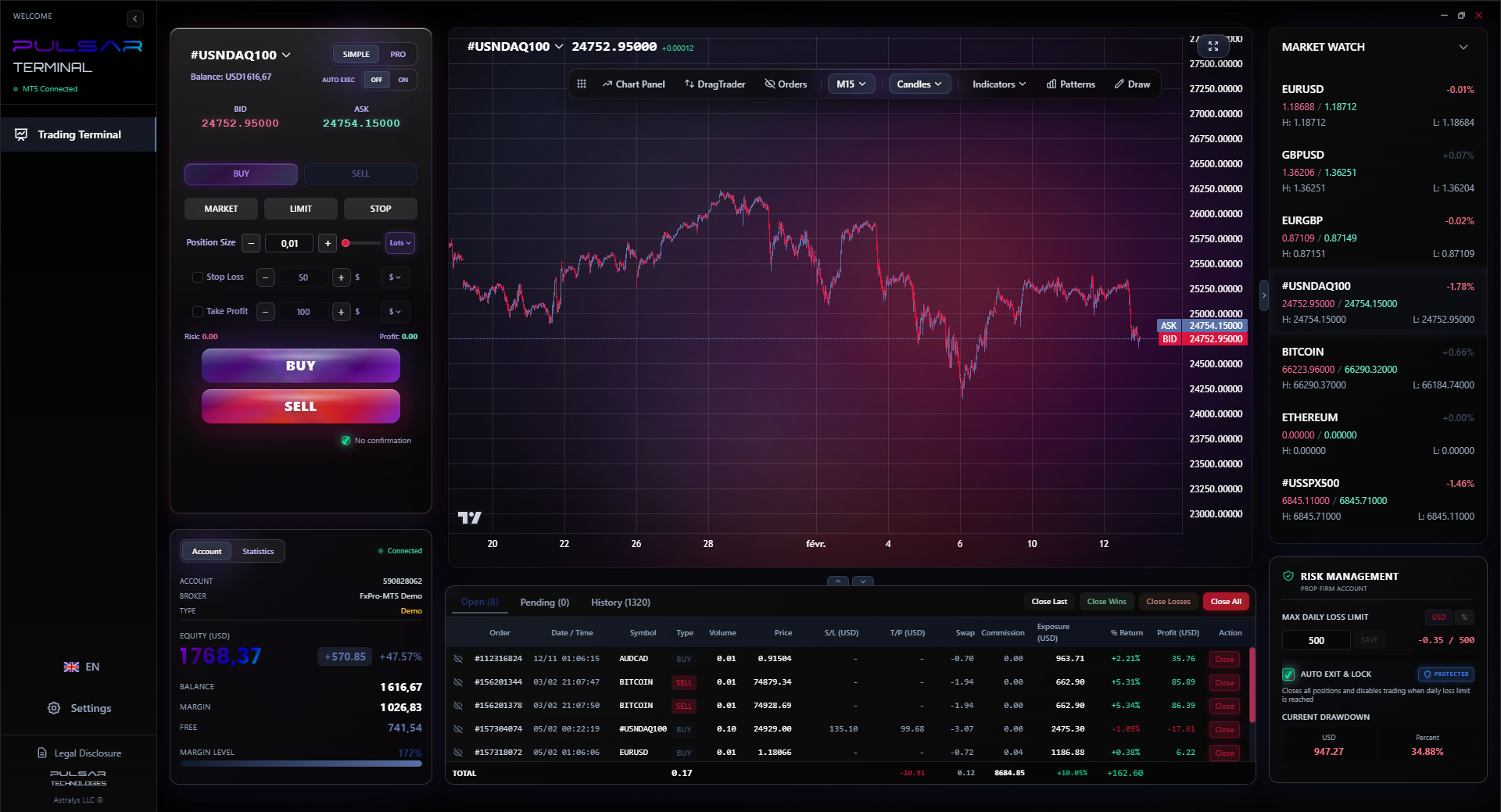
Managing complex trades and protecting your capital from a single bad move is what separates pros from amateurs. Tools like Pulsar Terminal automate this on MT5 with features like multi-take-profit orders, trailing stops, and automatic breakeven triggers, so your strategy executes flawlessly even when you're not glued to the screen.
Pulsar Terminal
A ferramenta MT5 tudo-em-um: ordens drag-and-drop, multi-TP/SL, trailing stop, grid trading, Volume Profile e proteção prop firm. Usado diariamente por 1.000+ traders.
The Nigerian forex space has its share of sharks. Here’s how to not get bitten.
- ‘Guaranteed’ Profits or Signals: If it was guaranteed, they'd be trading it, not selling it to you for 10,000 Naira a month. Full stop.
- Difficulty Withdrawing: The first sign of a scam. Excuses like ‘processing’, ‘verification’, or ‘bank issues’ that drag on for weeks. Your profit is not their priority.
- Unrealistic Bonuses: ‘Deposit $100, get a $200 bonus!’ These come with impossible trading volume requirements (lot targets) designed so you can never withdraw the bonus or your own capital. Read the terms. They’re a trap.
- No Clear Regulation: If you can't easily find their license number and verify it on the regulator's website (like SEC Nigeria's portal), walk away.
- Pressure to Deposit More: Your ‘account manager’ calls you saying you need to add funds to avoid a margin call on a losing trade, instead of just letting the stop-loss work. This is a classic boiler-room tactic.
I fell for the bonus trap in 2015. A 50% deposit bonus sounded great. I didn't read the 40x volume requirement. I turned $1,000 into $1,800, but couldn't withdraw a single dollar because I hadn't traded $40,000 worth of volume. I had to watch the account slowly bleed on forced trades until it hit zero. A very expensive lesson.

“The right broker doesn't make you a profitable trader. But the wrong broker will ensure you never become one.”
Okay, let's get you set up without the headache.
- Define Your Style: Are you a day trader, swing trader, or long-term? This dictates your broker needs (use, spreads, platform).
- Shortlist 3 Brokers: Based on this guide. Mix one international heavy-hitter like Pepperstone, one with strong local presence, and one wildcard.
- Open Demo Accounts: Not for a day. For a month. Trade your real strategy on all three. Test execution, spreads during Lagos vs. London sessions, and platform stability.
- Test the Withdrawal: On your chosen broker, open a live account with the minimum deposit. Make a small profit (even $10). Then immediately request a withdrawal of your initial deposit + profit. If this process is smooth, you have a keeper. If it's a drama, close the account and move on.
- Start Small & Use a Position Size Calculator: Your first live account should be money you can afford to lose. Never use rent or school fees. Ever.
- Keep Records for Tax: Use a simple spreadsheet. Date, instrument, P&L in USD, and the CBN exchange rate for that day. The 10% tax is coming. Be ready.
The right broker doesn't make you a profitable trader. But the wrong broker will ensure you never become one. They are the foundation. Build on solid ground, not marketing sand.
💡 Dica do Winston
If your 'account manager' knows less about the [MACD indicator](/en/indicators/macd) divergence than you do, you don't have an account manager. You have a salesperson.
FAQ
Q1What is the best forex broker in Nigeria for beginners?
There's no single 'best.' For a beginner, look for: 1) A strong regulatory footprint (SEC Nigeria, ASIC, FCA), 2) A user-friendly platform like MT5, 3) Responsive customer support, and 4) The ability to open a micro or cent account so you can trade with very small amounts (like $10). Avoid brokers that push high use on you.
Q2Can I use international brokers like Exness or XM in Nigeria?
Q3How do I avoid high fees when funding my trading account?
Use brokers that offer Naira-denominated accounts to avoid per-trade conversion. If using USD accounts, funding via cryptocurrency (USDT) often has lower percentage fees than bank cards or wires, but you must factor in the buy/sell spread on the crypto exchange itself. Always compare the final Naira amount you pay to the USD you receive.
Q4What use should I use as a beginner?
Start with 1:10. Maximum. I'm serious. It forces you to focus on proper position sizing and risk management. High use (1:100, 1:500) magnifies losses faster than you can blink. It's a tool for experienced traders with specific strategies, not a shortcut for beginners.
Q5Are there forex brokers with Naira accounts?
Yes, a growing number offer them. HF Markets is a prominent example. This eliminates your currency risk on each trade's profit and loss, as everything is calculated in Naira. Be sure to check if their spreads on Naira accounts are competitive with their USD account spreads.
Q6How is forex trading taxed in Nigeria?
Profits from forex trading are subject to Capital Gains Tax (CGT) at a rate of 10%. You are responsible for declaring this income and paying the tax. Keep clear records of all your trades, including the CBN exchange rate on the day you close a profitable position.
Q7What is the minimum deposit for forex trading in Nigeria?
It varies wildly. Some brokers like XTB and Fusion Markets have no minimum. Others like FBS allow $1. More common minimums are $50-$100 for standard accounts. The key is to start with the broker's minimum, not your entire budget. Treat the first deposit as a tuition fee for learning the real platform.
Lição do Prof. Winston
Pontos-chave:
- ✓Post-2025, SEC registration is the new benchmark for broker legitimacy.
- ✓The real cost includes spread/commission PLUS the Naira/USD conversion spread.
- ✓Test a broker's withdrawal process before making a large deposit.
- ✓Use use as a precision tool, not a blunt force weapon. Start at 1:10.
- ✓All trading profits are subject to a 10% Capital Gains Tax in Nigeria.
Quão útil foi este artigo?
Clique em uma estrela
Insights de Trading Semanal
Análises e estratégias semanais grátis. Sem spam.
Sobre o autor
Olumide Adeyemi
Pioneiro do Trading na África Ocidental
Um dos educadores de trading forex mais ativos da Nigéria. 8 anos de experiência operando a partir de Lagos. Especialista em estratégias de baixo capital e desafios de prop firms para traders africanos.
Comentários
Aviso de risco
A negociação de instrumentos financeiros envolve riscos significativos e pode não ser adequada para todos os investidores. O desempenho passado não garante resultados futuros. Este conteúdo é apenas para fins educacionais e não deve ser considerado aconselhamento de investimento. Sempre conduza sua própria pesquisa antes de negociar.
Você também pode gostar

Cara Trading Forex Sukses: 7 Prinsip dari Trader Profesional
Cara trading forex sukses dengan 7 prinsip trader pro: manajemen modal, disiplin, journal trading, backtest. Data nyata, bukan janji profit palsu.
Jam Trading Forex Terbaik untuk Trader Indonesia: Panduan Lengkap dengan Tabel Waktu
Panduan jam trading forex untuk trader Indonesia. Tabel 4 sesi dunia, jam emas 20:00-00:00, sesi mana yang harus dihindari. Data akurat + tips dari trader berpengalaman.
Top 5 Sàn Forex Uy Tín Nhất 2026: Review Jujur dari Trader Indonesia
Top 5 sàn forex uy tín 2026 untuk trader Indonesia. Review jujur: spread, deposit, withdraw, dukungan lokal. Exness, XM, IC Markets & lebih.
Obter Pulsar Terminal
Todas essas calculadoras estão integradas ao Pulsar Terminal com dados em tempo real da sua conta MT5.
Obter Pulsar Terminal