


I bought a popular Udemy forex course for ৳1,200 back in 2019, convinced it held the secret.

Daniel Harrington
Diretor de Conteúdo
☕ 10 min de leitura
O que você vai aprender:
- 1Why Bangladeshi Traders Look to Udemy
- 2What to Actually Look For in a Course (The Checklist)
- 3My Personal Udemy Experiments: The Good, The Bad, The Ugly
- 4You Can't Just Rely on Udemy: Essential Supplements
- 5Breaking Down Course Categories & Their Pitfalls
- 6Making the Final Decision: To Buy or Not to Buy?
- 7The Final Verdict for Bangladeshi Traders
I bought a popular Udemy forex course for ৳1,200 back in 2019, convinced it held the secret. The instructor promised a 'simple system' for 50-pip daily gains. After two months of following it religiously, I was down ৳25,000. The strategy was a basic moving average crossover, but the course completely skipped over risk management for our volatile market hours. It was a global course, with zero mention of Bangladesh Bank's remittance rules or how local liquidity crunches at 3 PM Dhaka time can wreck a tight stop-loss. That failure taught me more about evaluating a course than any success ever could.
Let's be real, the appeal is obvious. When you're in Dhaka, Chittagong, or Sylhet, access to structured, affordable financial education is limited. Local workshops can be expensive and often hype-driven. Udemy steps in with that irresistible offer: pay once, own forever, learn at your own pace. For a few thousand Taka, you get what feels like a personal mentor in your pocket.
It solves a real problem. Maybe you work a 9-to-5 and can only study after iftar during Ramadan. Perhaps you're a student with a tight budget. The platform's model fits our need for flexibility and perceived value. I've met traders in Motijheel coffee shops who've built entire libraries of Udemy courses, hoping the next one will click.
But here's the catch I learned the hard way. The platform is a global marketplace. An instructor from London or New York has zero obligation to understand the specific frictions we face. They won't tell you about the importance of choosing a broker with local payment support like Exness or XM for smoother deposits and withdrawals. Their examples will use EUR/USD during London open, not discuss how USD/BDT volatility or political news here can indirectly affect your forex pairs.
“The value of a Udemy course isn't in a secret strategy; it's in getting a structured education you can't easily find locally.”
Don't just look at the rating and student count. You need to dig deeper. After my initial flop, I developed a checklist that saved me from more bad buys.
Instructor Credibility is Everything
Is the instructor a full-time, anonymous 'guru' or do they have a verifiable track record? Look for someone who trades live, not just backtests. Check if they engage with student questions in the Q&A. An instructor who posts updates about how their strategies are holding up in current markets (like the 2023 USD surge) is a good sign. Avoid anyone whose primary pitch is about getting rich quick.
Curriculum Depth Over Flash
A solid course structure is your best friend. It should logically progress:
- Market Mechanics & Psychology: This is non-negotiable. If it jumps straight into indicators, skip it.
- Risk Management FIRST: This section needs to be massive. It must cover position sizing (use our position size calculator), setting stop-losses, and defining your risk-per-trade (I never risk more than 1% of my capital, a rule that saved me in 2022).
- Analysis Techniques: A balanced mix of price action, support/resistance, and maybe 1-2 indicators like the RSI indicator or MACD indicator.
- Building & Testing a Strategy: It should show you how to build a trading plan, not just give you one.
- Brokerage & Execution: A bonus if they discuss spreads, execution types, and how to choose a platform.

Warning: Be extremely wary of courses that dedicate multiple sections to "robot" or "EA" building unless that's your specific goal. For most beginners, this is a distraction from learning core skills.
The Support System
Does the course offer a community? A dedicated Discord or Facebook group where the instructor is active can be useful. This is where you can ask Bangladesh-specific questions, like "How does load-shedding affect my trade management?" or get opinions on local brokers like IC Markets.

💡 Dica do Winston
A course that spends less than 20% of its content on risk management is teaching you how to drive a car without mentioning the brakes. Close the tab.
“I bought a course for ৳1,200 and lost ৳25,000 following it. That failure taught me more about evaluating education than any success.”
I've spent over ৳15,000 on various courses over the years. Here are two starkly different experiences.
The Bad (The One I Mentioned): "Forex Mastery: 50 Pips Daily" (৳1,200). The strategy was a 5 EMA/20 SMA crossover on the 15-minute chart. It looked great in the curated examples. In reality, during Asian session lulls (when many of us trade), it produced constant whipsaws. I took 7 consecutive losing trades, each losing about ৳3,500, before I stopped. The course had one 10-minute video on "money management" that just said "don't risk too much." Useless. It never mentioned how to adjust a scalping strategy for higher spreads.
The Good: "Price Action Trading: A Complete Guide" (৳2,300 on sale). This was a game-changer, but not for the reason I expected. The instructor spent 8 full hours on market structure, candlestick patterns, and, crucially, trade journaling. He didn't give a 'system.' He gave a framework. I applied his supply/demand zone concepts to GBP/USD on the H1 chart. In Q4 2021, I identified a clear demand zone at 1.3410. I entered a buy at 1.3415 with a stop at 1.3385 (30 pips). My first target was 1.3470 (55 pips), and I moved my stop to breakeven once it hit 1.3440. The trade ran to 1.3520. That single trade, using proper risk management, made back my course fee and then some. The value was in the mindset, not a magic formula.

Pro Tip: Always check the 'Last Updated' date on the course page. Forex changes. A course from 2016 that hasn't been updated won't cover recent market structure shifts or new MT5 features. Look for courses updated within the last 18 months.
“I bought a course for ৳1,200 and lost ৳25,000 following it. That failure taught me more about evaluating education than any success.”
A Udemy course is a foundation, not the whole house. For Bangladeshi traders, you must add local context and practical tools.
1. Understand the Local Context:
- Remittance Rules: Know the limits and processes for sending funds to international brokers. This affects your capital management.
- Trading Hours: Our prime evening hours (8 PM - 12 AM Dhaka time) overlap with the London close and New York session. Volatility can spike. A course won't teach you how this specific overlap impacts the EUR/USD guide pair.
- Internet Reliability: Have a plan for load-shedding or poor connectivity. Can you manage trades via mobile? Do you know your broker's mobile app?
2. Paper Trade Relentlessly: Use a demo account for at least 2-3 months. Test the course's strategies in real-time market conditions, not on the instructor's hand-picked charts. Track every trade in a journal.
3. Integrate Advanced Tools (When Ready): As you graduate from basics, you'll need better charting and order management. This is where companion tools become vital. Manually moving stop-losses to breakeven or managing a multi-level take-profit grid is stressful and error-prone.
4. Follow Global & Local News: Set up alerts for major economic calendars (US NFP, ECB meetings) AND for Bangladeshi financial news. Political stability here can influence regional currency sentiment.
💡 Dica do Winston
The most valuable section of any course is often the one on trade journaling. If they skip it, they're not serious about your long-term success.
“You must be the one to localize your learning. The course won't ask 'How does this work at 10 PM in Dhaka?' for you.”
Udemy courses fall into types. Here’s what each is good for, and where they typically fall short for us.
| Course Type | What It Promises | The Reality & Pitfall for BD Traders |
|---|---|---|
| The "Complete Beginner" Course | Zero to hero. Covers everything from what a pip definition is to basic strategies. | Often too superficial. The risk management section is weak. It might teach a 2% risk rule without explaining how that translates to lot size with a $200 account, leading to a margin call. |
| The "Strategy-Specific" Course (e.g., "Fibonacci Mastery," "ICT Scalping") | Deep dive into one method. | High risk of confirmation bias. You'll start seeing the pattern everywhere. It rarely teaches when the strategy doesn't work, which is crucial. |
| The "Psychology & Mindset" Course | Focus on trading discipline, fear, greed. | Often the most valuable long-term, but beginners skip it because it doesn't give a 'setup.' It's abstract until you've blown up an account. |
| The "Algorithmic/EA" Course | Teach you to code or use automated trading robots. | The most dangerous for newbies. It distracts from learning market fundamentals. The EAs shown are often over-optimized on past data and fail in live markets. |
For most Bangladeshi traders starting out, I'd recommend a solid "Complete Beginner" course from a reputable instructor, immediately paired with a dedicated "Psychology" course. This combo builds skill and the mental fortitude to use it. Save the specialized strategy courses for later, once you have a baseline to evaluate them against. For example, a swing trading course is useless if you don't first understand how to identify a trend.
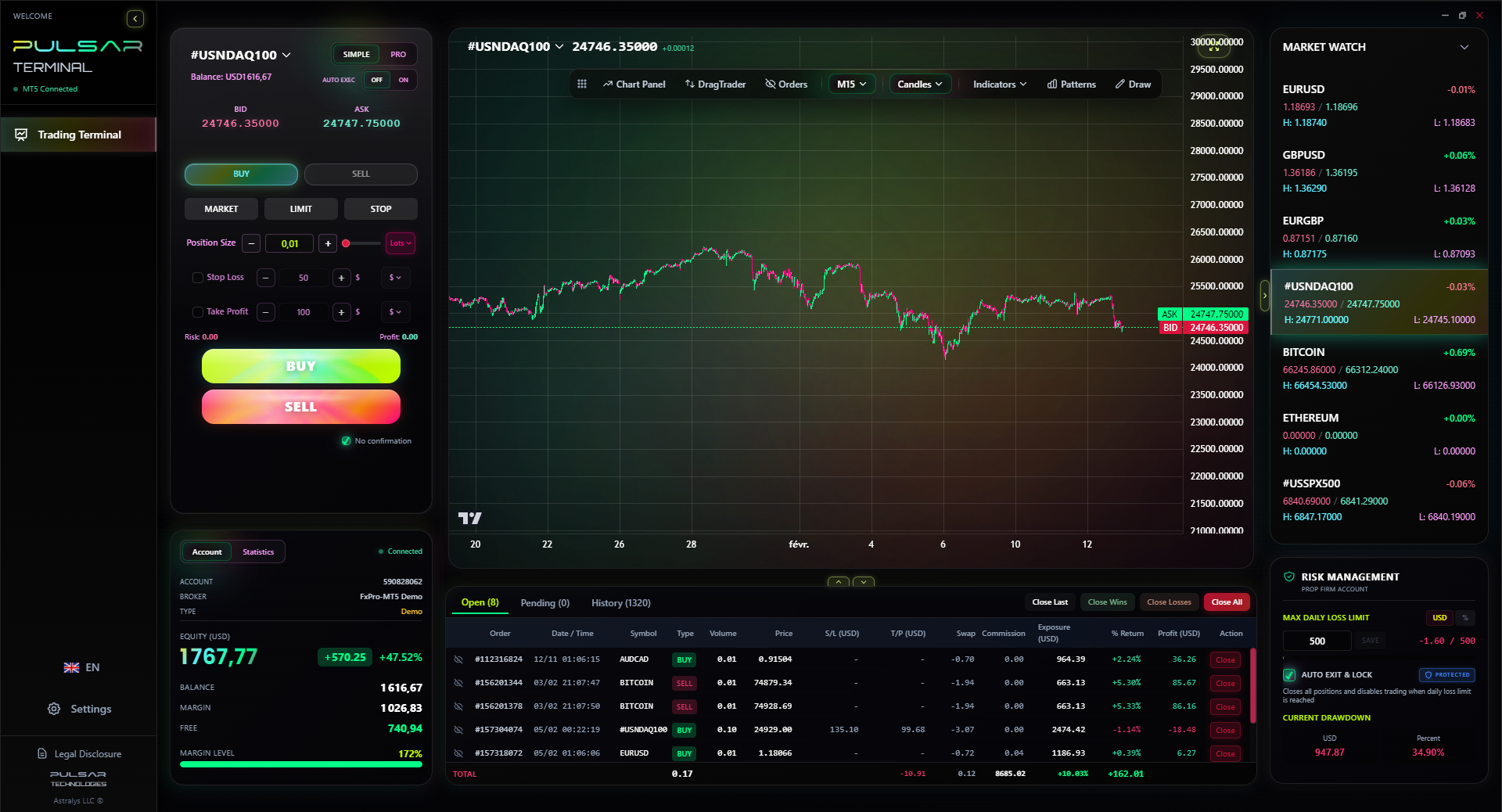
Manually managing complex order strategies from a course is tough; Pulsar Terminal automates multi-level take-profit and stop-loss orders directly on your MT5 charts.
Pulsar Terminal
A ferramenta MT5 tudo-em-um: ordens drag-and-drop, multi-TP/SL, trailing stop, grid trading, Volume Profile e proteção prop firm. Usado diariamente por 1.000+ traders.
“You must be the one to localize your learning. The course won't ask 'How does this work at 10 PM in Dhaka?' for you.”
Okay, you've found a course with a good instructor, recent updates, and a solid curriculum. Before you hit 'Buy,' do this final audit.
1. Preview, Preview, Preview: Watch every single free preview video. Don't just watch the intro. Listen to the instructor's teaching style. Is it clear? Engaging? Or do they sound like they're reading a script? Check the video quality - it matters for seeing chart details.
2. Scour the Reviews (The Smart Way):
- Ignore the 5-star reviews that just say "Great course!"
- Read the 3 and 4-star reviews. These often have detailed feedback like "Section on indicators was great, but the risk management part was light."
- Search reviews for keywords: "Bangladesh," "Asia session," "small account," "broker." See if any local traders have commented.
- Check the Q&A section. See if the instructor answers questions thoughtfully and in a timely manner.
3. Never Pay Full Price: Udemy has sales almost constantly. A ৳12,000 course will regularly drop to ৳1,500-৳2,500. Put it in your cart and wait for a sale notification. Patience saves money.
4. Set Realistic Expectations: Buying a course is like buying a high-quality textbook. It gives you the information, but you have to do the homework, the revision, and the practice exams (demo trading). It will not make you profitable in 30 days. I tell my mentees: budget 6 months of dedicated study and practice before expecting consistent results.

Example: Let's say you have a ৳20,000 trading account. A good course should teach you that risking 1% means your max loss per trade is ৳200. If your stop-loss is 20 pips, your position size must be calculated so that a 20-pip loss equals ৳200. This is where our position size calculator is essential. A vague course says "risk 1%." A good course shows you how.
💡 Dica do Winston
See a course promising 'guaranteed profits' or 'no loss' strategies? That's not education, it's marketing. Your BDT is better spent on a good book.
“Think of a Udemy course as the theory class. The live market is your practical lab. You need both to pass.”
So, are Udemy forex trading courses worth it for someone in Bangladesh? My answer is a cautious yes, but with major caveats.
They are an affordable, accessible starting point for building foundational knowledge - something that's hard to find locally. The value isn't in discovering a secret strategy; it's in getting a structured education in market basics, technical analysis, and, if you choose well, risk management.
However, you must actively localize your learning. The course won't do that for you. You have to be the one asking, "How does this apply during my trading hours?" "How do I manage risk with my smaller capital?" "Which broker's spread definition works best for this strategy?"
Think of a Udemy course as the theory class. The live market is your practical lab. Your trading journal is your lab report. You need all three to pass. I started with a loss from a bad course, but the process of figuring out why it was bad was my real education. If you go in with that mindset - as a critical student, not a passive consumer - you can extract real value from the platform. Just remember, the certificate of completion means nothing. The only certificate that matters is a consistently profitable trading statement.
FAQ
Q1What is the best Udemy forex trading course for complete beginners in Bangladesh?
There's no single 'best' course, as it depends on learning style. Look for a highly-rated 'Complete Forex Bootcamp' style course updated within the last year, with a large section on risk management and psychology. Prioritize instructors who show live trading examples over pure theory. Always watch the previews to see if their teaching style clicks with you.
Q2Can I really learn forex trading from a Udemy course alone?
No, absolutely not. A Udemy course provides the foundational theory and structure. You must supplement it with endless demo trading to practice, studying local market hours and news, understanding Bangladesh's fund transfer rules, and developing your own trading psychology. The course is the map; you still have to drive the car through Dhaka traffic.
Q3How much should I expect to pay for a good Udemy forex course?
Never pay the 'full' price (often ৳10,000-৳15,000). Udemy has frequent sales where most courses drop to ৳1,200 - ৳2,500. Be patient and wait for a sale. A higher price doesn't guarantee better quality, so rely on your checklist (instructor credibility, curriculum, reviews) over the price tag.
Q4Are the trading strategies taught in Udemy courses profitable in the Bangladesh time zone?
Not automatically. Many strategies are taught using London or New York session examples. You must test and adapt them for the Asian session or the London/NY overlap that happens in our evening. Strategies requiring high volatility may fail during Dhaka's afternoon lull. This adaptation phase in a demo account is critical.
Q5What should I do after finishing a Udemy forex course?
- Open a demo account immediately. 2. Start a detailed trade journal. 3. Paper trade the course's concepts for a minimum of 2-3 months, focusing on executing the risk management rules perfectly. 4. Join a trading community (not a signal group) to discuss ideas. 5. Only consider a small live account (e.g., ৳5,000-৳10,000) after you have a string of profitable demo weeks and a solid trading plan.
Q6Do Udemy courses help with choosing a broker for Bangladesh?
Rarely. They might discuss broker types (ECN vs Market Maker) in general. It's up to you to research which international brokers reliably accept deposits from Bangladesh and offer local support. Check reviews for brokers like Pepperstone or IC Markets to see feedback from other South Asian traders.
Lição do Prof. Winston
Pontos-chave:
- ✓Risk management sections are non-negotiable; skip weak ones.
- ✓Always test strategies in your time zone (Asia/London overlap).
- ✓Never pay full Udemy price; sales are constant.
- ✓A course is a foundation, not a complete trading system.
Quão útil foi este artigo?
Clique em uma estrela
Insights de Trading Semanal
Análises e estratégias semanais grátis. Sem spam.
Sobre o autor
Daniel Harrington
Diretor de Conteúdo
Diretor de conteúdo do The Trading Mentor. Trader veterano apaixonado por tornar conceitos complexos de trading acessíveis. Cobre temas globais, estratégias e guias de plataformas.
Comentários
Aviso de risco
A negociação de instrumentos financeiros envolve riscos significativos e pode não ser adequada para todos os investidores. O desempenho passado não garante resultados futuros. Este conteúdo é apenas para fins educacionais e não deve ser considerado aconselhamento de investimento. Sempre conduza sua própria pesquisa antes de negociar.
Você também pode gostar

Cara Trading Forex Sukses: 7 Prinsip dari Trader Profesional
Cara trading forex sukses dengan 7 prinsip trader pro: manajemen modal, disiplin, journal trading, backtest. Data nyata, bukan janji profit palsu.
Jam Trading Forex Terbaik untuk Trader Indonesia: Panduan Lengkap dengan Tabel Waktu
Panduan jam trading forex untuk trader Indonesia. Tabel 4 sesi dunia, jam emas 20:00-00:00, sesi mana yang harus dihindari. Data akurat + tips dari trader berpengalaman.
Top 5 Sàn Forex Uy Tín Nhất 2026: Review Jujur dari Trader Indonesia
Top 5 sàn forex uy tín 2026 untuk trader Indonesia. Review jujur: spread, deposit, withdraw, dukungan lokal. Exness, XM, IC Markets & lebih.
Obter Pulsar Terminal
Todas essas calculadoras estão integradas ao Pulsar Terminal com dados em tempo real da sua conta MT5.
Obter Pulsar Terminal