


Singapore's retail forex traders lose over S$250 million annually, according to MAS estimates.

Daniel Harrington
Diretor de Conteúdo
☕ 8 min de leitura
O que você vai aprender:
- 1Why Singapore is a Forex Trader's Secret Weapon
- 2The Legal Stuff: Brokers, Regulation, and What's Allowed
- 3The Real Costs of Trading in SGD
- 4Trading the USD/SGD: The Local Pair No One Understands
- 5The 3 Mistakes That Wipe Out Singapore Traders
- 6Building a Strategy That Works For You, Here
- 7Your Action Plan: Getting Started in Singapore
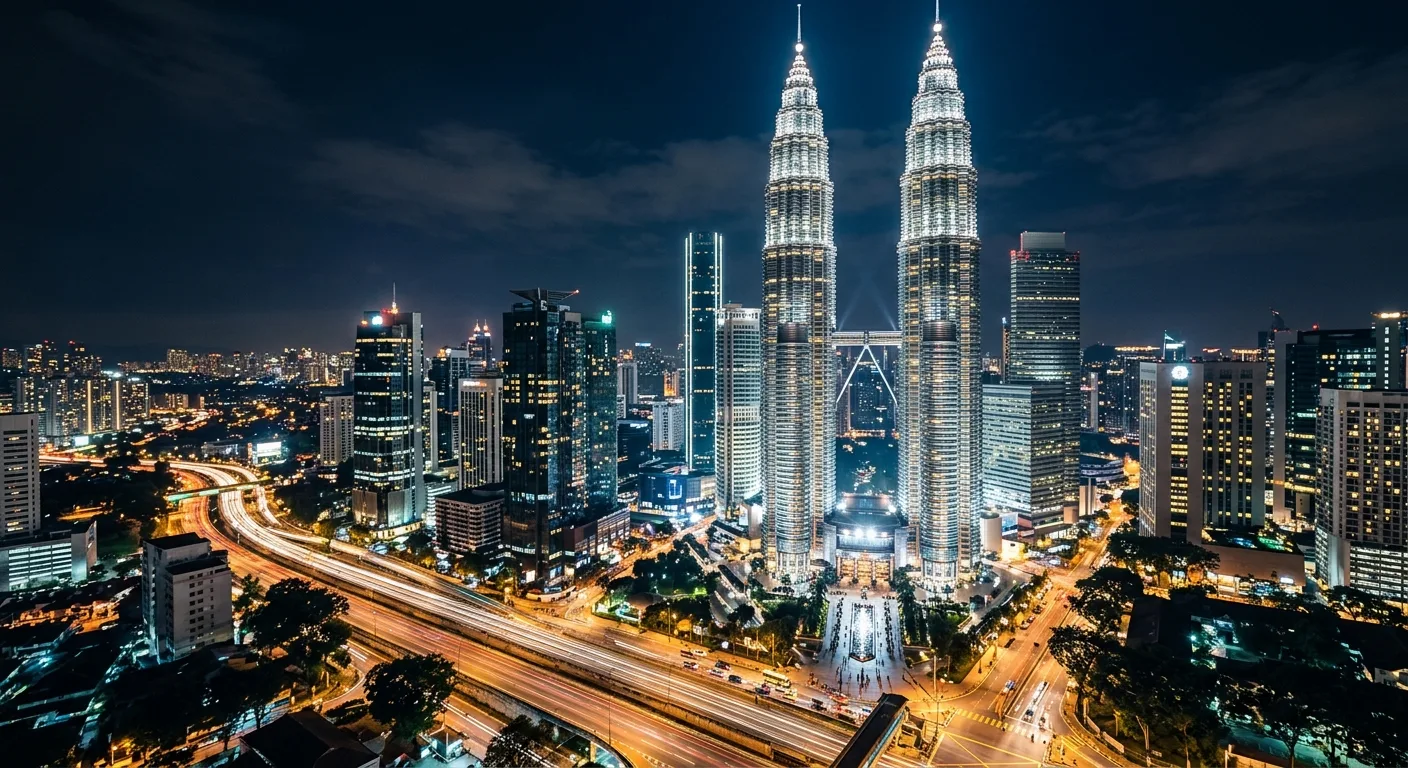
Singapore's retail forex traders lose over S$250 million annually, according to MAS estimates. Yet, the smart 10% who survive operate in one of the world's most advantageous trading environments. It's not about working harder; it's about knowing the local rules that give you an edge. I've traded from a shophouse in Chinatown and a Marina Bay Sands hotel room, and the difference between winning and losing here comes down to a few critical, Singapore-specific details most guides completely miss.
Forget what you know about trading from the US or Europe. Singapore is a different beast. The Monetary Authority of Singapore (MAS) is pragmatic, not paternalistic. They don't ban use like the CFTC or ESMA. Instead, they enforce strict capital requirements on brokers, which indirectly protects you. The result? You can access use up to 1:20 on major pairs with a retail account at a reputable broker. More importantly, your trading profits are tax-free. That's right. The Inland Revenue Authority of Singapore (IRAS) considers forex trading gains from leveraged transactions as capital in nature, not income. I once closed a S$18,500 profit on a USD/SGD swing trade. Not a single cent went to the taxman. That's a 20-30% immediate performance boost compared to traders in most other countries.
The Time Zone Edge
Your location is a strategic asset. The Asian session (6 am to 3 pm SGT) is when liquidity builds. You get the first crack at reacting to news from Japan, China, and Australia. By the time London wakes up, you've already been in the market for hours. I've built my entire swing trading routine around the 8 am SGT London open overlap, catching the initial volatility spike with defined risk.

Pro Tip: Set your charts to Singapore Time (UTC+8). Align your analysis with local market opens. Watching the USD/JPY react at 9 am SGT when Tokyo gets going is far more useful than staring at New York time.

“Your trading profits are tax-free. That's a 20-30% immediate performance boost compared to traders in most other countries.”
This is where you can't afford to get sloppy. Trading with an unlicensed broker isn't just risky, it's stupid when Singapore has such a strong framework. The MAS licenses two types of entities for forex: Banks (like DBS, UOB) and Capital Markets Services (CMS) license holders. You want a broker with a CMS license. It means they hold significant paid-up capital and segregate client funds. I learned this the hard way early on. I deposited S$5,000 with an offshore "bucket shop" that offered 1:500 use. The spreads were fantastic until I tried to withdraw my S$7,200 profit. It took 3 months of emails and threats to finally get it. Never again.
Stick with the big, regulated players. IC Markets and Pepperstone have strong Asian presences and are popular among serious Singapore traders for their raw spreads. For beginners, XM offers great educational resources tailored to the region. Remember, use up to 1:20 is the retail limit. If a broker offers you more as a retail client, they're not playing by MAS rules.

Warning: Avoid brokers that cold-call you offering "guaranteed profits" or "managed accounts." This is the most common scam targeting Singapore residents. A legitimate MAS-licensed broker will never call you unsolicited to sell you a trading strategy.

💡 Dica do Winston
The MAS's 1:20 use limit isn't a restriction, it's a life jacket. The traders begging for 1:500 are the same ones who will be begging for their capital back in six months.
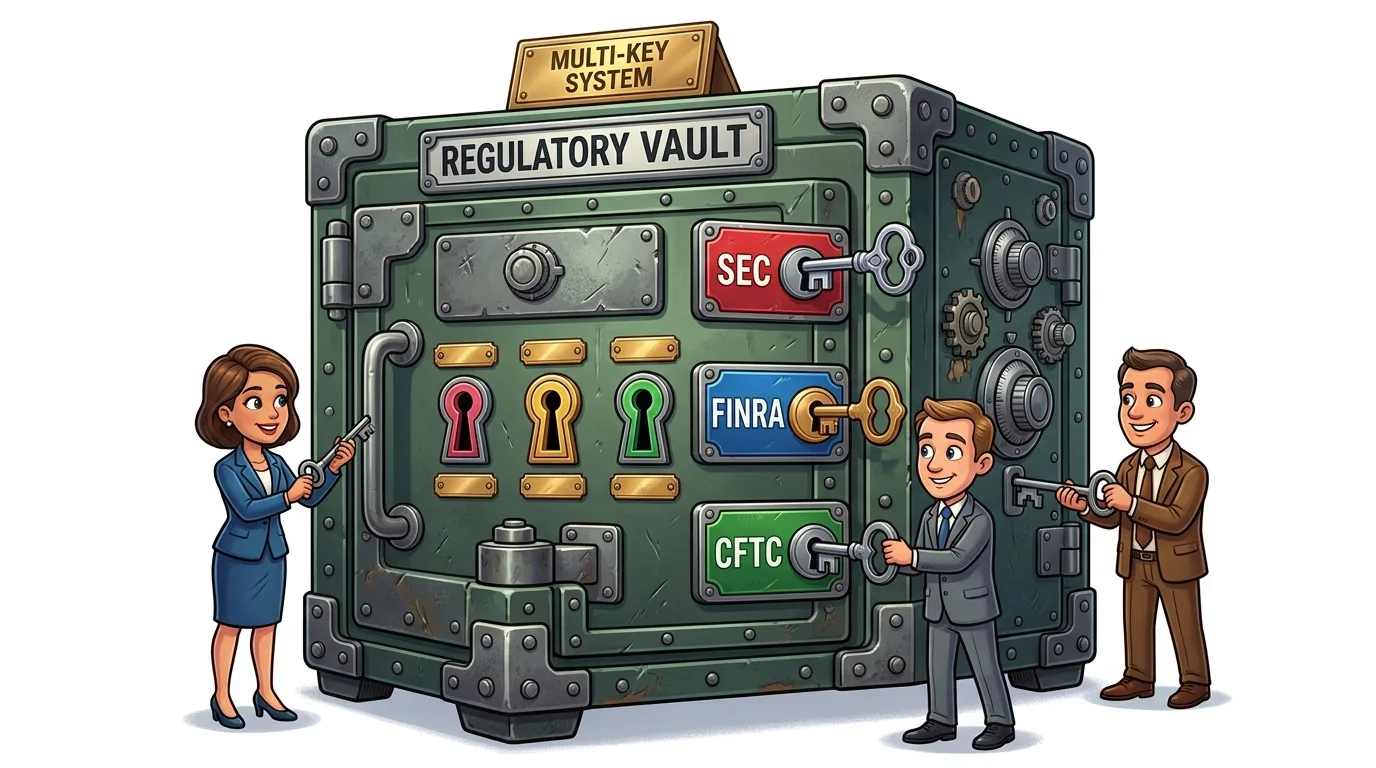
“Trading with an unlicensed broker isn't just risky, it's stupid when Singapore has such a strong framework.”
Your profit starts with what you don't lose to costs. Trading forex in Singapore has a unique cost structure. First, you're likely funding your account in SGD. When you trade a pair like EUR/USD, your broker converts your SGD to USD. This carries a small conversion fee, usually 0.3-0.7%. It's hidden, but it adds up. I switched to funding my account directly in USD via a TransferWise (now Wise) borderless account and saved hundreds a year.
The second cost is the spread on USD/SGD. It's not a major pair like EUR/USD, so the spread is wider, often 3-5 pips during quiet hours. If you're scalping, this will eat you alive. I tried scalping USD/SGD in 2015 and gave up after a month. The 4-pip spread meant I needed a 5-pip move just to break even. It's a sucker's game.
| Cost Factor | Typical Impact (SGD) | How to Mitigate |
|---|---|---|
| SGD to USD Conversion | 0.5% on deposit/withdrawal | Fund account directly in USD |
| USD/SGD Spread | 3-5 pips | Avoid trading it directly; use majors |
| Broker Commission | $3-$7 per lot | Choose a raw spread account |
| Bank Transfer Fees | $10-$30 per withdrawal | Use e-wallets like Neteller or Skrill |
Always, always use a position size calculator. A S$10,000 account risking 1% per trade is S$100. With a 5-pip stop loss on USD/SGD, that's a position size that can quickly lead to a margin call if you miscalculate.
“Trading with an unlicensed broker isn't just risky, it's stupid when Singapore has such a strong framework.”
The USD/SGD is a proxy for Asian risk sentiment and US monetary policy. It doesn't move on Singapore data alone. The MAS manages the SGD against a basket of currencies (the S$NEER), not as a free float. They allow gradual appreciation to control inflation. This creates a beautiful, trending market. Trying to pick tops and bottoms is a fool's errand. The trend is your friend, literally, because the central bank is your friend.
I made my biggest single trade on USD/SGD in 2022. The Fed was hiking, the MAS was tightening. The pair was in a clear downtrend (SGD strengthening). I went short at 1.3850 with a 40-pip stop. I rode it down for weeks, adding to the position on bounces, and finally took profit at 1.3450. A 400-pip move netted me over S$15,000. The key was patience and aligning with the fundamental policy direction.
Don't overcomplicate it. A simple trend-following system using the MACD indicator on the daily chart works better here than any fancy strategy. And for heaven's sake, pay attention to MAS monetary policy statements (they happen quarterly). They give you the roadmap.
💡 Dica do Winston
Your biggest trading advantage in Singapore is the 8 am SGT London open. The quiet Asian session gives you time to plan. The volatile London open gives you the move. Connect the two.
“The USD/SGD is a proxy for Asian risk sentiment and US monetary policy. It doesn't move on Singapore data alone.”
I've seen these destroy more accounts than any black swan event.
- Trading During Public Holidays: Singapore has unique holidays. When the SG market is closed but others are open (like on Hari Raya Puasa), liquidity in USD/SGD dries up. Spreads can widen to 20 pips or more. I got caught in this in 2019, entering a trade before a long weekend. The spread widened so much on open that I was instantly stopped out for a loss twice my planned risk.
- Ignoring the China Factor: The Singapore economy, and thus the SGD, is deeply tied to China. Weak Chinese PMI data will weaken the SGD faster than any local news. If you're long USD/SGD, you better be watching the Shanghai Composite.
- Using Local Bank Trading Desks: DBS, UOB, and OCBC offer forex trading. The spreads are criminal. I'm talking 10-15 pips on majors. They're for corporates hedging invoices, not for you. It's the most expensive way to trade.
The antidote? Discipline. Use a trading journal. And get your psychology right. The market doesn't care that you're trading from a condo in Orchard Road.

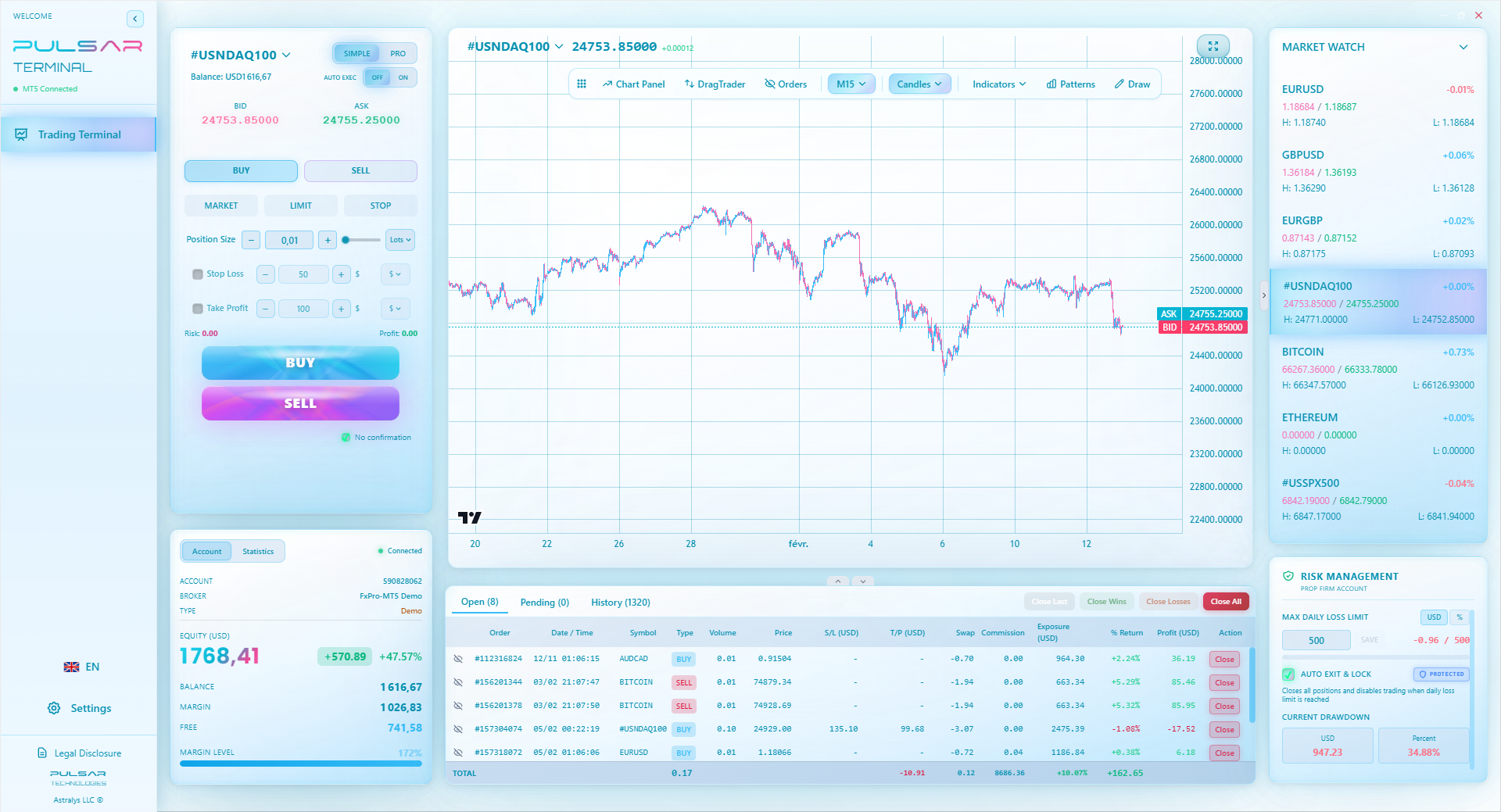
When trading volatile sessions like the London open from Singapore, managing multiple trades and stops manually is a headache; Pulsar Terminal's drag-and-drop order management and multi-TP/SL tools on MT5 turn that chaos into a single click.
Pulsar Terminal
A ferramenta MT5 tudo-em-um: ordens drag-and-drop, multi-TP/SL, trailing stop, grid trading, Volume Profile e proteção prop firm. Usado diariamente por 1.000+ traders.
“The USD/SGD is a proxy for Asian risk sentiment and US monetary policy. It doesn't move on Singapore data alone.”
Copying a strategy from a YouTuber in the UK won't work. You need to adapt. The Asian session is quieter, often range-bound. This is perfect for learning. Use the morning (6 am - 12 pm SGT) to analyze, plan, and set alerts. The real momentum often comes with the London open at 4 pm SGT.
A Simple, Effective Singapore Session Routine
- 6:00 am SGT: Check overnight moves from the US. Review your watchlist (I focus on AUD/USD, USD/JPY, and XAU/USD as they're most active in Asia).
- 9:00 am SGT: Tokyo is in full swing. Look for breaks of the early Asian range. Volume picks up.
- 12:00 pm - 3:00 pm SGT: Often the quietest period. Avoid entering new trades. This is when I do my admin, review trades, and update my journal.
- 4:00 pm SGT: London opens. Volatility spikes. This is where your pre-planned trades from the morning analysis get executed.
I combine this session awareness with basic technicals. The RSI indicator showing divergence on the H4 chart during the London session has given me some of my highest-probability entries. The goal isn't to trade 24 hours. It's to trade the 2-3 hours where your edge is highest.
💡 Dica do Winston
If you wouldn't hold the trade through a Singapore public holiday, don't enter it the day before. The spread widening will hunt you down and take your stop loss.

“Forex trading in Singapore amplifies who you are. If you're disciplined, it rewards you. If you're greedy, it will ruin you.”
Here's your checklist, in order:
- Education First, Money Later: Don't deposit a cent until you've paper traded for at least two months. The MAS has a great resource called "MoneySense" with basic investing info. Start there.
- Pick Your Broker: Based on your style. For tight spreads and fast execution: IC Markets or Pepperstone. For extensive educational content and support: XM. Open a demo account with all of them.
- Start Small, Think Big: When you go live, start with a micro account. Risk no more than 0.5% per trade. Your first goal is to survive for 6 months, not to get rich.
- Get Your Tech Sorted: A stable internet connection is non-negotiable. Use a VPN if you're trading on public Wi-Fi at a coffee shop. And keep a separate, old-school notebook as a backup trade journal. Tech fails.
- Join a Community (Carefully): Find other Singapore-based traders. Not for signals, but for accountability. Avoid Telegram groups selling "sure-win" signals. They're all scams.
Forex trading in Singapore offers a legitimate path to building capital, thanks to the sensible regulatory environment and tax benefits. But it amplifies who you are. If you're disciplined, it rewards you. If you're greedy, it will ruin you. I've been both. Choose to be the former.

FAQ
Q1Is forex trading legal and tax-free in Singapore?
Yes, and yes. Forex trading is completely legal for individuals through MAS-licensed brokers. Critically, profits from leveraged forex trading are considered capital gains, which are not taxable in Singapore. You keep 100% of your profits.
Q2What is the maximum use I can use in Singapore?
For retail traders, the MAS-regulated limit is 1:20 use for major currency pairs. This is a sensible cap that allows for meaningful positioning while preventing the catastrophic losses seen in jurisdictions with 1:500 use.
Q3Which forex broker is best for Singapore residents?
There's no single 'best' broker. It depends on your needs. For low costs and advanced platforms, IC Markets or Pepperstone are excellent. For beginners wanting more hand-holding and education, XM is a solid choice. The key is ensuring they hold a valid MAS CMS license.
Q4Why is the USD/SGD spread so wide sometimes?
The USD/SGD is a less liquid pair than majors like EUR/USD. Its spread naturally widens significantly during Asian public holidays when Singapore markets are closed, and during periods of extreme volatility or low liquidity (like late Friday New York session). Avoid trading it during these times.
Q5Can I trade forex with my local Singapore bank (DBS, UOB)?
Technically, yes. Practically, you shouldn't. Banks offer forex services primarily for large corporate hedging, not speculative retail trading. Their spreads are typically 5-10 times wider than a dedicated forex broker, instantly putting you at a huge disadvantage.
Q6What's the minimum amount needed to start forex trading in Singapore?
You can open a live micro account with as little as $100 SGD with some international brokers. However, I strongly recommend starting with at least $1,000 SGD. This allows for proper position sizing and risk management (e.g., risking $10 per trade at 1%) without being wiped out by a few small losses.
Q7How do I fund my international forex broker account from Singapore?
The most common and cost-effective methods are bank wire transfers (though slow and may have fees) or e-wallets like Neteller, Skrill, or FasaPay. To avoid currency conversion fees, consider using a multi-currency account like Wise to convert your SGD to USD cheaply before sending it to your broker.
Lição do Prof. Winston
Pontos-chave:
- ✓Tax-free profits are your #1 edge. Exploit it.
- ✓Never trade without checking the SG public holiday calendar.
- ✓Use 1:20 use max. More is suicide, not opportunity.
- ✓Fund your broker in USD, not SGD, to save 0.5%.
Quão útil foi este artigo?
Clique em uma estrela
Insights de Trading Semanal
Análises e estratégias semanais grátis. Sem spam.
Sobre o autor
Daniel Harrington
Diretor de Conteúdo
Diretor de conteúdo do The Trading Mentor. Trader veterano apaixonado por tornar conceitos complexos de trading acessíveis. Cobre temas globais, estratégias e guias de plataformas.
Comentários
Aviso de risco
A negociação de instrumentos financeiros envolve riscos significativos e pode não ser adequada para todos os investidores. O desempenho passado não garante resultados futuros. Este conteúdo é apenas para fins educacionais e não deve ser considerado aconselhamento de investimento. Sempre conduza sua própria pesquisa antes de negociar.
Você também pode gostar

Cara Trading Forex Sukses: 7 Prinsip dari Trader Profesional
Cara trading forex sukses dengan 7 prinsip trader pro: manajemen modal, disiplin, journal trading, backtest. Data nyata, bukan janji profit palsu.
Jam Trading Forex Terbaik untuk Trader Indonesia: Panduan Lengkap dengan Tabel Waktu
Panduan jam trading forex untuk trader Indonesia. Tabel 4 sesi dunia, jam emas 20:00-00:00, sesi mana yang harus dihindari. Data akurat + tips dari trader berpengalaman.
Top 5 Sàn Forex Uy Tín Nhất 2026: Review Jujur dari Trader Indonesia
Top 5 sàn forex uy tín 2026 untuk trader Indonesia. Review jujur: spread, deposit, withdraw, dukungan lokal. Exness, XM, IC Markets & lebih.
Obter Pulsar Terminal
Todas essas calculadoras estão integradas ao Pulsar Terminal com dados em tempo real da sua conta MT5.
Obter Pulsar Terminal