


Here's a number that should make you pause: over 90% of the 'forex gurus' you see on YouTube targeting Nigeria have never traded with real money for a living.

Olumide Adeyemi
Pioneiro do Trading na África Ocidental ·  Nigeria
☕ 9 min de leitura
O que você vai aprender:
- 1The Nigerian YouTube Forex environment: Signal Sellers vs. Real Educators
- 2How to Find Quality Content (And What to Search For)
- 3The Specific Dangers & Scams to Avoid in Nigeria
- 4From Video to Platform: Building Practical Skills
- 5Managing Naira-Specific Risks & Costs
- 6Curating Your Personal Forex Education Playlist
- 7When to Close YouTube and Start Trading
Here's a number that should make you pause: over 90% of the 'forex gurus' you see on YouTube targeting Nigeria have never traded with real money for a living. They're selling a dream, not a skill. I've been trading through Nigeria's bull runs, crashes, and every CBN policy flip since 2014. YouTube can be an incredible free university or a fast track to blowing your account. This guide cuts through the noise. I'll show you how to use YouTube to actually learn, not just get hyped, and how to connect those lessons to trading the Naira and global pairs from Lagos, Abuja, or Port Harcourt.
Scroll through YouTube with 'forex Nigeria' and you'll see two distinct worlds. On one side, you have the flashy Lamborghini crowd. They're always in a rented studio, talking about 'withdrawals' and 'funded accounts,' pushing you to join their Telegram for 'VIP signals.' I fell for this early on. Paid 50,000 NGN for a signal group in 2017. The guru's 'can't lose' EUR/USD trade hit stop loss in 20 minutes, and he blamed 'unexpected news.' That was my tuition fee.
The other side is quieter. These are actual traders or analysts breaking down charts, explaining economic events like CBN rate decisions, and teaching concepts like position size calculator use. They're not selling anything but maybe a Patreon for extra analysis. The difference is in the content: one promises results, the other teaches process.

Warning: Any channel whose primary call to action is 'Join my signal group' or 'DM me for mentorship' is a business, not an education channel. Their profit comes from your subscription, not their trading.
You need to learn to tell them apart instantly. The real value is in the educational channels that dissect losses as thoroughly as wins.
Forget searching 'forex get rich quick.' Your search terms need to be specific. You're not just learning forex; you're learning to trade as a Nigerian.
Search for Local Market Context
Start with terms like 'CBN monetary policy forex impact,' 'Trading USD/NGN analysis,' or 'Oil price effect on Naira.' This connects global forex theory to your reality. When the CBN hiked rates to 27.5% in 2024, I searched for 'interest rate parity explained.' Found a fantastic video that helped me understand why the Naira might strengthen (in theory), setting up a longer-term view on USD/NGN.
Search for Specific Skills
Move beyond basics. Search 'MACD indicator divergence practical example,' 'RSI indicator overbought in trending market,' or 'how to read forex order flow.' This is where YouTube shines. Seeing an indicator drawn on a chart in real-time is better than any textbook.
Vet the Creator
Check their history. Do they have years of consistent content? Do they show live trading (with realistic sizes)? Do they discuss risk management in every video? A good sign is when they say, 'Here's a trade I took last week, and here's why I was wrong.' I follow a few analysts who primarily focus on XAU/USD guide (gold). Their deep, unsexy technical breakdowns have saved me from chasing shiny price moves dozens of times.

Pro Tip: Use YouTube's 'Playback Speed' feature. Crank good educational content to 1.5x or 1.75x speed. You'll digest information faster and the hype-men's voices become amusingly squeaky, which is a bonus.

💡 Dica do Winston
The most valuable YouTube video is one where the trader explains a loss in detail. Seek those out. The wins will teach you nothing you need to know.
“Over 90% of the 'forex gurus' you see on YouTube targeting Nigeria have never traded with real money for a living.”
The scams here are tailored to our environment. They play on economic anxiety, the desire for dollar-denominated income, and sometimes, plain greed.
1. The 'Domiciliary Account Funding' Scam: A 'guru' claims to have a special method to fund your international broker account using your domiciliary account, bypassing 'restrictions.' They might ask for your login details to 'help.' This is outright theft. Fund your Exness review or IC Markets review account directly through their secured payment gateways.
2. The 'Prop Firm Bypass' Service: With prop firms being popular, scammers offer to 'pass your challenge for you' for a fee (e.g., 100k NGN). They take your money, fail the challenge, and vanish. Or worse, they pass it using extreme risk, and you get a funded account that blows up in two days, leaving you liable.
3. The Fake Investment/Ponzi Scheme: This is the big one. Channels posing as educational content slowly pivot to offering 'managed accounts' or 'forex investment pools' with guaranteed 10-20% monthly returns. Remember the SEC warning: unless they are a licensed fund manager, this is illegal. They pay old investors with new investors' money until the whole thing collapses.
4. The Overleveraged 'Strategy': Videos showing 'how to turn $10 to $1000 in a day!' using 1:1000 use. They show the one winning trade, not the 9 losing ones that wiped the account. With Nigerian inflation high, the pressure to make quick money is real, but this is a surefire path to a margin call.
My rule? If it sounds too good to be true in Nigeria's current economy, it's a lie. Full stop.
Watching isn't learning. Doing is. Here’s how to bridge the gap.
1. The Pause and Replicate Method: When a video shows a chart setup, pause it. Open your own MT5 platform from a broker like Pepperstone review or XM review, pull up the same pair and timeframe, and try to find the same setup they’re describing. Draw the trendlines, mark the support/resistance. Don’t just watch, do.
2. Paper Trade the Idea: See a video on a specific scalping strategy for EUR/USD? Don’t use real money. Use a demo account and try to execute that strategy for a week. Keep a journal. Note: 'Strategy from XYZ video, worked 3/10 times. Slippage was an issue during London open.'
3. Backtest with Screen Recording: For a swing trading idea, go back on the chart to January. Hit record on your screen (OBS is free). Explain the setup out loud as if you’re making the video, then move the chart forward candle by candle. Did it work? This forces true understanding.
I learned price action this way. Watched a 45-minute video on pin bars at key levels. Spent the next 4 weekends backtesting it on GBP/JPY, losing virtual money, tweaking, until the concept clicked. That skill has made me more money than any signal ever could.
💡 Dica do Winston
If you can't explain the trade setup in your own words, without the video playing, you don't understand it. You've just memorized a picture.
“Your first goal is capital preservation, not outperforming inflation. That comes later.”
Trading from Nigeria isn't just about pips; it's about currency conversion, inflation, and local fees. YouTube gurus in the US or UK never mention this.
Your Real Costs: That 'low 0.8 pip spread definition' on EUR/USD? Great. But did you fund your account in Naira? Your bank or payment processor likely charged a 2-5% conversion fee on deposit AND on withdrawal. Your broker's conversion rate might include a markup. A winning trade can become a loser after all the Naira in, Naira out math.
Solution: Use brokers that offer Naira-denominated accounts or allow deposits via local channels like Paystack with minimal fees. Some, like Exness review, have this option. It removes the USD/NGN volatility from your funding equation.
Inflation is Your Silent Enemy: With inflation historically high (over 30% in 2024), your trading capital is eroding in value if it's sitting in Naira in your bank account. This creates psychological pressure to trade aggressively to 'beat inflation.' That's a terrible reason to enter a trade. Your first goal is capital preservation, not outperforming inflation. That comes later.
Taxes: Remember the 10% Capital Gains Tax on gross profits. Factor that into your profit targets. A 15% return year sounds good until you give 10% to FIRS. Your trading strategy's edge needs to account for this.

Example: You deposit 500,000 NGN. Bank fee: 2.5% = 12,500 NGN gone. You trade well, grow to 600,000 NGN (100k profit). Withdraw. Another 2% fee? 12,000 NGN. Tax on 100k profit: 10,000 NGN. Your real profit is now 65,500 NGN. That's a 13.1% net return, not the 20% your platform showed.
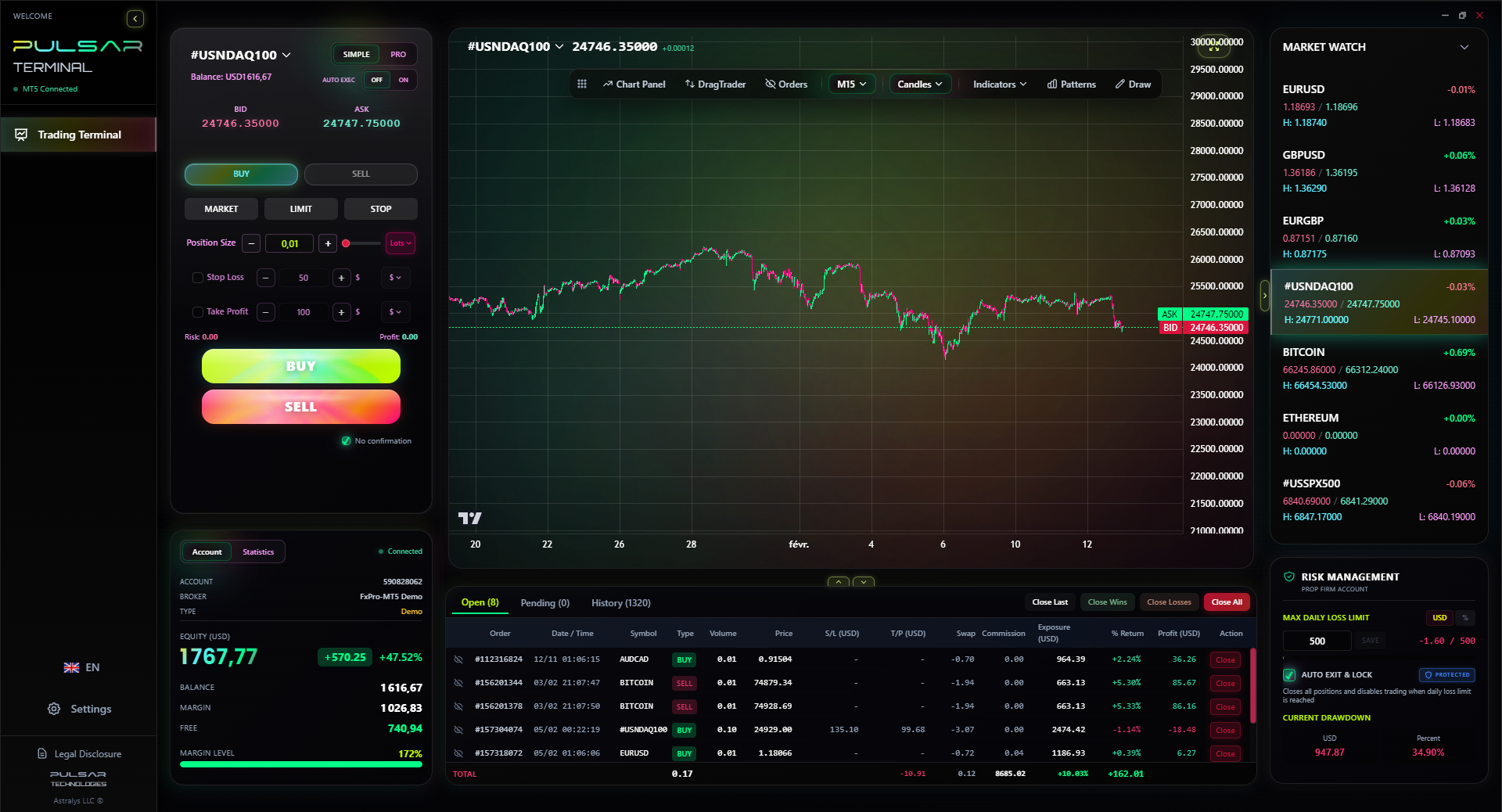
Managing Naira-specific risks requires precise trade execution and strict stop-loss discipline, which is where a tool like Pulsar Terminal on MT5 can automate your rules and remove emotional, costly mistakes.
Pulsar Terminal
A ferramenta MT5 tudo-em-um: ordens drag-and-drop, multi-TP/SL, trailing stop, grid trading, Volume Profile e proteção prop firm. Usado diariamente por 1.000+ traders.
Don't get lost in the algorithm. Build your own syllabus.
Foundation Playlist (2-3 channels max): Find one channel that excels at pure technical analysis. Find another that focuses on fundamental analysis (CBN decisions, oil, global CPI). A third could be on trading psychology. Subscribe ONLY to these. Avoid the clutter.
The 'Why I Lost' Library: Save every video you find where a trader honestly reviews a losing trade. These are gold. They normalize failure and teach more than any winning trade show.
Platform Tutorials: Have a playlist specific to your trading platform. 'How to set multiple take-profits on MT5,' 'Creating custom alerts on TradingView for USD/NGN.' This is manual labor that pays off.
My Personal Starter List (Concepts, Not Channels):
- 'Understanding the Non-Farm Payroll (NFP) report'
- 'How to draw true support/resistance (not just lines)'
- 'Risk-Reward ratio: practical examples'
- 'Central Bank balance sheets explained simply'
- 'Correlation between USD/NGN and Brent Crude'
Build this, and you control your learning path, not some random YouTube algorithm designed for maximum watch time, not maximum education.
💡 Dica do Winston
Your first live account should be so small that telling your friends about a loss would be embarrassing. That's the right size to learn without fear.
“YouTube got you to the door. You have to walk through it.”
YouTube is a means to an end, not the end itself. Paralysis by analysis is real. You'll know it's time to shift focus when:
- You can watch a 'guru' video and pinpoint the logical flaw in their strategy within the first minute.
- You're spending more time journaling and reviewing your demo trades than watching new videos.
- You start seeing the same concepts repeated across different channels - you've absorbed the core principles.
At this point, your learning should be 20% from new external content and 80% from reviewing your own trades, reading price action, and managing your live, small-risk account. The real market - with its pip definition movements, slippage, and emotional pressure - is the only teacher that matters now. YouTube got you to the door. You have to walk through it.
Start small. Trade a micro lot (0.01) on a major pair like EUR/USD guide. The goal isn't profit; it's to feel the psychology of a live trade. Did you move your stop loss? Did you close early out of fear? This data is more valuable than 1000 hours of videos. I started my first live trade with $50, risking $5. I lost it in two days. That $5 loss taught me more about myself than a year of watching others.
FAQ
Q1Is forex trading legal in Nigeria using YouTube-learned strategies?
Yes, absolutely. Trading forex for yourself is legal. The CBN and SEC don't regulate your personal learning or trading. The illegality comes from unlicensed individuals or firms soliciting money from the public to trade for them. Learning from YouTube and applying it to your own account is perfectly fine.
Q2What's a realistic monthly return I should expect as a beginner in Nigeria?
If you're expecting anything positive in your first year, you're already setting yourself up for failure. A realistic goal is to lose less than 5% of your capital while you learn. After 1-2 years of consistent practice, a good, disciplined trader might aim for 5-10% per year on their risk capital. Anyone on YouTube promising you 20%+ per month is selling you a fantasy that will cost you real Naira.
Q3Which is better for Nigerians: MT4, MT5, or a broker's own app?
MT5 is generally better than MT4 (more timeframes, better hedging accounting). However, for pure forex, both work. A broker's own app (like xStation) can be great for execution speed and user experience. The key is to pick one platform and learn it inside out. Don't platform-hop. Your skills need a consistent home.
Q4How do I handle the 10% capital gains tax on forex profits?
You are responsible for declaring your profits and paying the 10% tax to the Federal Inland Revenue Service (FIRS). Keep careful records of all your trades, deposits, and withdrawals. At the end of the year, calculate your net profit (total withdrawals minus total deposits) and pay 10% of that. Consider consulting a local accountant familiar with forex trading.
Q5Can I really start trading forex in Nigeria with just 20,000 NGN?
Technically, yes. Brokers like FBS allow deposits from $1. But practically, it's almost pointless. After fees and the psychological pressure to grow a tiny account (which leads to over-leveraging), you're likely to lose it quickly. I recommend a minimum of 100,000 - 200,000 NGN as starter capital. This allows for sensible position size calculator use and lets you breathe without needing every trade to win.
Q6Are 'forex challenges' to get a funded account worth it?
They can be, but treat them as an advanced exam, not a beginner's lottery ticket. The rules are strict (daily loss limits, max drawdown). You need a proven, disciplined strategy first. Practice the challenge rules on a demo for months before attempting a real one with your money. Many fail because they try to use a 'YouTube strategy' they haven't mastered under pressure.
Lição do Prof. Winston
Pontos-chave:
- ✓Vet YouTube gurus: real educators teach process, not just profits.
- ✓Your real profit is after Naira conversion fees and 10% tax.
- ✓Search for local context: 'CBN policy' not 'get rich quick'.
- ✓Start live trading only after consistent demo success.
- ✓Build a curated playlist, don't follow the algorithm.
Quão útil foi este artigo?
Clique em uma estrela
Insights de Trading Semanal
Análises e estratégias semanais grátis. Sem spam.
Sobre o autor
Olumide Adeyemi
Pioneiro do Trading na África Ocidental
Um dos educadores de trading forex mais ativos da Nigéria. 8 anos de experiência operando a partir de Lagos. Especialista em estratégias de baixo capital e desafios de prop firms para traders africanos.
Comentários
Aviso de risco
A negociação de instrumentos financeiros envolve riscos significativos e pode não ser adequada para todos os investidores. O desempenho passado não garante resultados futuros. Este conteúdo é apenas para fins educacionais e não deve ser considerado aconselhamento de investimento. Sempre conduza sua própria pesquisa antes de negociar.
Você também pode gostar

Cara Trading Forex Sukses: 7 Prinsip dari Trader Profesional
Cara trading forex sukses dengan 7 prinsip trader pro: manajemen modal, disiplin, journal trading, backtest. Data nyata, bukan janji profit palsu.
Jam Trading Forex Terbaik untuk Trader Indonesia: Panduan Lengkap dengan Tabel Waktu
Panduan jam trading forex untuk trader Indonesia. Tabel 4 sesi dunia, jam emas 20:00-00:00, sesi mana yang harus dihindari. Data akurat + tips dari trader berpengalaman.
Top 5 Sàn Forex Uy Tín Nhất 2026: Review Jujur dari Trader Indonesia
Top 5 sàn forex uy tín 2026 untuk trader Indonesia. Review jujur: spread, deposit, withdraw, dukungan lokal. Exness, XM, IC Markets & lebih.
Obter Pulsar Terminal
Todas essas calculadoras estão integradas ao Pulsar Terminal com dados em tempo real da sua conta MT5.
Obter Pulsar Terminal