


Let's cut the crap.

David van der Merwe
Trader de Mercados Emergentes ·  South Africa
☕ 11 min de leitura
O que você vai aprender:
- 1What Was a 2019 No-Deposit Bonus, Really?
- 2The South African Broker Scene in 2019
- 3Beating the Volume Requirement: A Numbers Game
- 4Strategies That Actually Worked (And One That Cost Me)
- 5The Withdrawal Minefield: Getting Your Money Out
- 62019: The Last Hurrah. Why Did It End?
- 7The 2019 Legacy & What to Look For Now
- 8A Veteran's Final Word
Let's cut the crap. Most 'free money' offers in forex are traps designed to separate you from your real cash faster. But back in 2019, the no deposit forex bonus was a different beast. It was the last gasp of a wild west era before regulators globally started slamming the door. For a savvy South African trader with the right mindset, it wasn't just free money - it was a risk-free ticket to the big leagues. I know, because I turned a $30 no-deposit bonus into over R15,000 in withdrawable profit. I'll show you how the landscape really worked, which brokers were legit, and the brutal psychological game you have to win to keep a cent of it.
Forget the shiny marketing. A 2019 no deposit forex bonus was a marketing cost, plain and simple. A broker would credit a small amount - usually $10 to $100 - to a new live trading account. No deposit of your own required. The hook? You could trade with it, and if you made a profit, you could potentially withdraw it.
The catch, and there's always a catch, was the trading volume requirement. To unlock a withdrawal, you had to trade a massive multiple of the bonus amount. A common term was to trade 30 times the bonus value in lot volume. So, for a $30 bonus, you'd need to trade 1 standard lot (100,000 units) before they'd let you touch your profits. This is where 95% of traders failed, blowing the bonus on reckless trades trying to hit the target.

Warning: The psychology is intentional. They give you 'house money,' which you're statistically likely to gamble away. Your goal isn't to get rich from $30. It's to execute a disciplined plan to unlock real, withdrawable capital.
In South Africa, we had a unique position. International brokers like Exness, XM, and IC Markets aggressively targeted our market with these offers. The Financial Sector Conduct Authority (FSCA) was watching, but the rules around these international promotions were a grey area. It was a golden window.
I used a $50 bonus from a broker (now long gone) in early 2019. My strategy wasn't glamorous. I traded micro lots on EUR/ZAR, targeting 20-pip moves. It took me 47 trades over three weeks to meet the volume. The profit was just $87, but it was mine to withdraw. That $87 became the seed for a much larger swing trading account.

💡 Dica do Winston
A no-deposit bonus is a psychological test, not a financial instrument. If you can't treat $30 of 'free' money with the same respect as R3000 of your own, you've already failed the test.
The International Players
The real action for no-deposit bonuses came from offshore brokers regulated by CySEC, ASIC, or the FSC. They had the budgets for these loss-leader campaigns. Exness was notorious for its welcome bonus programs, though their no-deposit offer came and went. XM frequently ran a $30 no-deposit bonus for South African clients. You had to verify your FICA docs (ID, proof of address) just like any other account.
The Local Reality
Local South African brokers, the ones holding FSCA licenses, almost never offered pure no-deposit bonuses. Why? Their capital requirements and regulatory overhead made it unfeasible. They competed on other things: local support, easier deposits/withdrawals via SnapScan or EFT, and ZAR-denominated accounts. If you saw a 'local' broker offering free cash without a deposit in 2019, it was almost certainly a scam.
The Verification Hustle
This is critical. Every legitimate bonus required full verification. If a 'broker' gave you $50 without asking for your ID and a utility bill, they were not planning on ever giving you a real withdrawal. They were collecting your data to sell or setting you up for a 'you must deposit to withdraw' scam later. The process was: sign up, submit docs, get bonus credited after approval. Not the other way around.
Here’s a rough breakdown of the typical 2019 offer structure from a legit international broker:
| Feature | Typical 2019 Offer |
|---|---|
| Bonus Amount | $30 - $50 USD |
| Account Type | Standard or Micro MT4/MT5 |
| Trading Volume Requirement | 30x – 50x Bonus Value (in lots) |
| Maximum Withdrawal | Often capped at 2x-5x the bonus |
| Time Limit | 30 – 90 days to meet volume |
| Instrument Restriction | Major Forex pairs only (no exotics, no stocks) |

“Your goal isn't to get rich from $30. It's to execute a disciplined plan to unlock real, withdrawable capital.”
This is where dreams went to die. The volume target wasn't a suggestion; it was a wall. Let's break down the math, because if you didn't, you were already lost.
Say you got a $30 bonus. A 30x volume requirement means you must trade: $30 * 30 = $900 in lot volume. In forex, 1 standard lot = 100,000 units = $10 per pip (roughly for majors). So, $900 volume = 0.9 standard lots. You could trade this as 90 micro lots (0.01 each). Your mission: execute 90 micro lots without blowing the $30 account.

Example: With a $30 account trading 0.01 lots, a 30-pip loss would wipe out ~$3 (depending on the pair). You have a 10-trade buffer. This demands insane precision or very small take-profits.
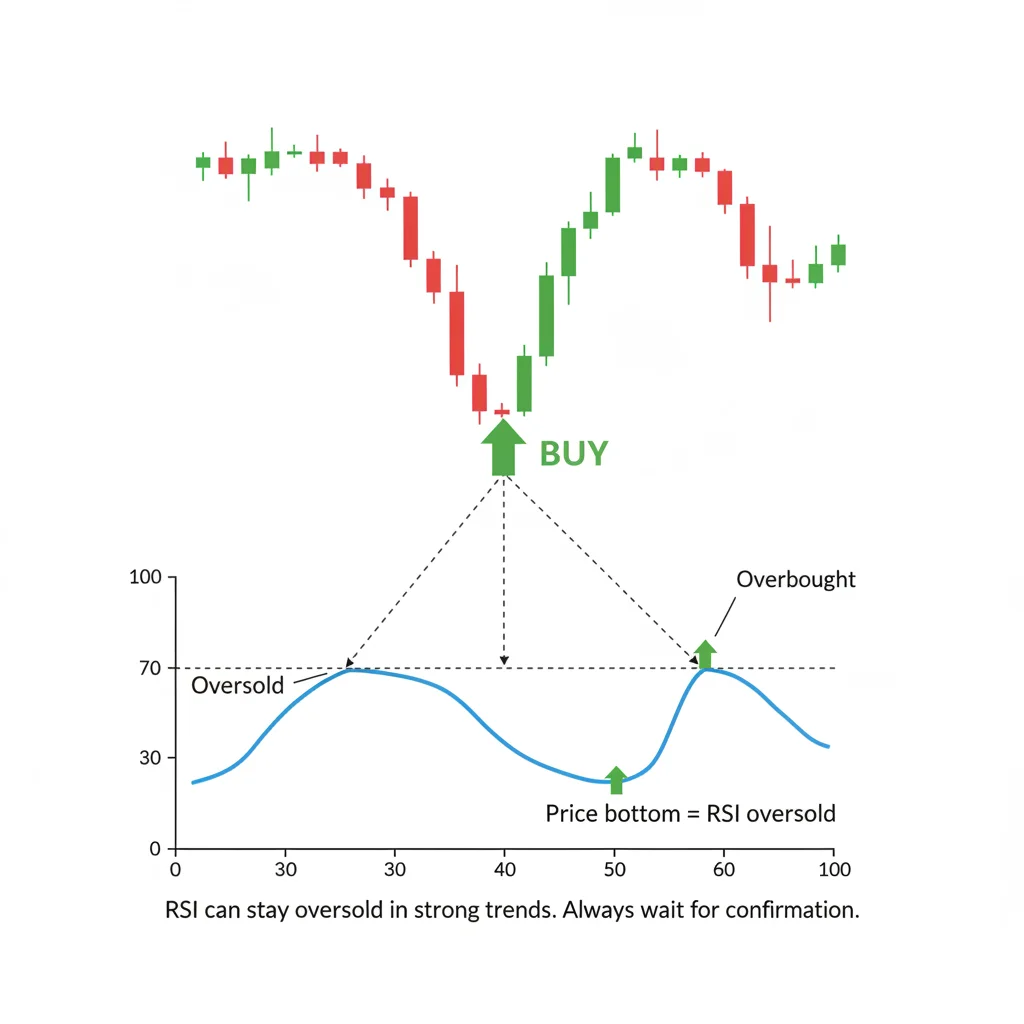
My method was slow and boring. I traded 0.01 lots on USD/ZAR, aiming for 5-8 pips per trade using a simple RSI indicator oversold/overbought bounce on the 15-minute chart. I'd do 3-5 trades a day. The goal wasn't profit per trade; it was volume accumulation. I used a position size calculator for every single entry to ensure a 20-pip stop-loss wouldn't kill more than 5% of the bonus.
The biggest mistake? Traders would see the $30, think 'let's go for 100 pips on gold!' and place a 0.1 lot trade. One wrong move in XAU/USD and the bonus - and their chance - was gone in minutes. Discipline was the only currency that mattered.
💡 Dica do Winston
The volume requirement math is non-negotiable. Plan your trades as a campaign to hit that number with the smallest possible risk per trade. Survival is the only objective until the volume is met.
The Scalping Grind
Scalping was the obvious fit. Small, frequent profits add up to volume. But on a bonus account with potential slippage and execution delays? Risky. I found a modified scalping approach on EUR/USD during London open worked. 1-2 pip spreads were common, so I aimed for 5-pip profits. It was a grind, but it built volume steadily.
High-Probability Swing Trades
This was my preferred method. Using higher timeframes (1-hour, 4-hour) to find high-probability setups with a solid 2:1 or 3:1 risk-reward. I'd enter with a 0.02 or 0.03 lot size. A single winning trade could net 40-60 pips, contributing a huge chunk of volume. This required patience - sometimes waiting days for a setup. The key was treating the bonus like a real, tiny account, not monopoly money.
The Failed Hedge Experiment
Here's my vulnerability moment. I once tried to 'game' the system by hedging. I opened a 0.1 lot buy and sell on EUR/USD simultaneously with the same broker, thinking the spread would slowly eat the equity but I'd generate volume risk-free. It was idiotic. The broker's terms explicitly forbade hedging with bonus funds, and they simply cancelled the bonus and closed the trades. Lesson learned: read every single line of the terms. They've seen every trick in the book.

Pro Tip: The most reliable strategy was trading during high-liquidity, low-volatility periods (like the late London/early US session overlap) on a major pair like EUR/USD. Avoid news, avoid exotics, avoid your 'gut feeling.' Stick to a mechanical plan.
“The window closed. What you see now are mostly 'welcome bonuses' that match your first deposit. The pure, free cash offer is a relic.”
Hitting the volume target felt like a victory. The real battle started when you clicked 'withdraw.'
First, you'd usually have to forfeit the bonus amount itself. So, if you started with $30 and your account was now at $120, you could only withdraw $90 (your profit). The $30 bonus vanished. This was standard.
Second, prepare for scrutiny. The back-office team would manually review every trade. They'd check for arbitrage, latency exploitation, hedging, or any other breach of their mile-long terms. This could take 5-10 business days. If you used a scalping strategy they deemed 'abusive' (too fast, too many trades), they could refuse the withdrawal.
Third, payment methods. Withdrawing $100 in profit to a South African bank account meant a SWIFT transfer with fees that could eat $20-$30. The smart move was to use a Skrill or Neteller e-wallet account, where fees were lower and processing was faster. Some brokers even offered free withdrawals to these e-wallets.
I remember my first successful withdrawal. $87. The broker required a scanned bank statement showing my name and address, even though I was withdrawing to Skrill. It took 8 days. The relief when it hit my e-wallet was better than the profit itself. It proved the model could work.
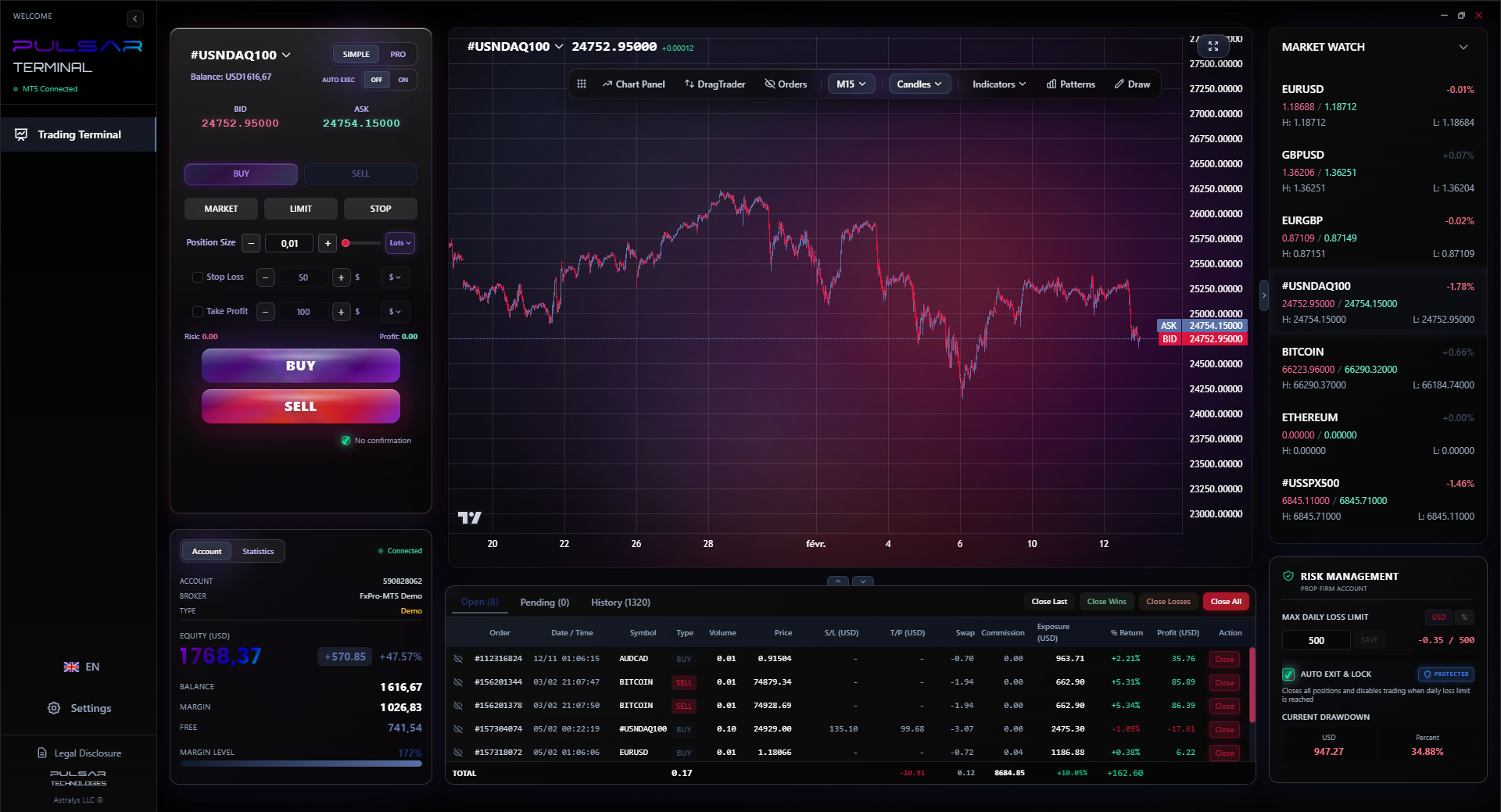
Managing the precise risk and volume targets required by a no-deposit bonus or a modern prop firm challenge demands tools that automate your rules, a core function of Pulsar Terminal on MT5.
Pulsar Terminal
A ferramenta MT5 tudo-em-um: ordens drag-and-drop, multi-TP/SL, trailing stop, grid trading, Volume Profile e proteção prop firm. Usado diariamente por 1.000+ traders.
The no deposit forex bonus of the 2019 style is largely extinct today for three brutal reasons.
- Regulatory Clampdown: The European Securities and Markets Authority (ESMA) had already set the tone in 2018 with product intervention measures. While not directly banning bonuses, their rules on use and marketing of CFDs created a hostile environment for these loss-leader promotions. Other jurisdictions, including South Africa's FSCA, followed with increased scrutiny on how brokers acquire clients. Offering 'free trading money' started to look a lot like irresponsible encouragement of gambling.
- Abuse by 'Bonus Hunters': A whole subculture of traders emerged who did nothing but hunt these bonuses. They'd use automated scripts, arbitrage, and every loophole to extract value with minimal risk. For brokers, the customer acquisition cost skyrocketed as they paid out to these professionals instead of capturing the losing retail traders they hoped for.
- The Prop Firm Boom: Why give away free money when you can make traders pay you to prove themselves? The rise of proprietary trading firms offering funded accounts completely changed the dynamic. Now, the ambitious trader pays a challenge fee for a chance at large capital. It's a far more profitable model for the companies. The no-deposit bonus was the old, leaky boat. Prop firms are the new, sealed ship.
The window closed. What you see now are mostly 'welcome bonuses' that match your first deposit, or risk-free trades (where they credit a loss back as a bonus). The pure, no-strings-attached free cash offer is a relic.
💡 Dica do Winston
The moment you receive a no-deposit bonus, your first trade shouldn't be in the market. It should be in the 'Terms & Conditions' document. Find the clauses on prohibited strategies, withdrawal caps, and account closure rules. That's your real battlefield.
“If you can't manage $30 without emotional trading, you can't manage R30,000.”
So, is searching for a 'no deposit forex bonus 2019' in 2024 a fool's errand? Mostly, yes. But the principles it taught are timeless.
The Legacy: It was a masterclass in reading the fine print, understanding broker economics, and exercising inhuman discipline with 'free' money. If you could succeed with a no-deposit bonus, you had the psychological chops to handle real capital.
Modern 'Free Money' Alternatives for South Africans:
- Demo Account Contests: Some brokers run competitions on demo accounts with real money prizes. Zero risk to you, but you're competing against everyone.
- Deposit Match Bonuses: You put in R1000, they give you an extra R200 to trade with. Volume requirements still apply. Read the terms even more carefully.
- Prop Firm Challenges: This is where the action is. You pay an evaluation fee (e.g., R2000 for a $100,000 challenge). Pass their profit target and drawdown rules, and you get a funded account. It's not free money - it's an audition. And it requires professional-grade risk management to pass their strict margin call and daily loss limits.
- Cashback or Rebate Programs: These are often better than bonuses. You get a small rebate (e.g., $2 per lot) on every trade you make, win or lose. It directly reduces your spread cost. It's not glamorous, but it's real, withdrawable cash with no volume tricks.
If you're looking for a starting point without risking your own capital, a prop firm challenge is the spiritual successor. It's harder, but the potential reward is orders of magnitude greater than a $50 bonus ever was.
The 2019 no deposit forex bonus era was a fascinating, slightly sleazy, but educational chapter in retail trading. It was a loophole that allowed the disciplined underdog to get a stake.
Would I recommend chasing these offers today? No. The few that still exist are from shady brokers you wouldn't trust with R100. The juice is no longer worth the squeeze.
Instead, take the lessons from that time:
- Everything has a cost. If it looks free, you're the product, or the terms will strangle you.
- Discipline with small capital is the ultimate test. If you can't manage $30 without emotional trading, you can't manage R30,000.
- Read. The. Terms. Twice.
Use a demo account relentlessly. Then, when you're consistently profitable, consider a small real account or a prop firm challenge. Build your capital the hard, honest way. The ghost of the 2019 no-deposit bonus isn't a treasure map; it's a cautionary tale that the best thing you get for free in this game is education. And sometimes, that education comes with a tiny, tradable $30 price tag.
I look back at those bonus-hunting days with a mix of nostalgia and embarrassment. It was a grind. But turning that first $87 withdrawal into a real trading career was worth every tedious micro-lot trade. Just don't expect to find that path anymore. The world moved on, and so should your strategy.
FAQ
Q1Can I still find a genuine no-deposit bonus in South Africa in 2024?
Extremely unlikely. Any website aggressively advertising '2024 no deposit bonus' is almost certainly a scam or a broker with such predatory terms that withdrawing is impossible. The legitimate business model for this has largely vanished due to regulation and abuse.
Q2What was the biggest mistake traders made with these bonuses?
Treating the free money like a lottery ticket. They'd use maximum use on a single hunch trade to try and hit the volume target fast. This almost always resulted in a margin call within hours. The successful approach was the opposite: tiny position sizes, focusing on survival and volume accumulation, not a big score.
Q3Did you have to pay tax on profits from a no-deposit bonus in South Africa?
Yes. According to SARS, any profit from trading, regardless of the source of the initial capital (including a bonus), is subject to income tax if you're trading regularly and with the intention of making a profit. It's your responsibility to declare it. That $87 profit was technically taxable income.
Q4Why did brokers offer these if they often had to pay out?
It was a customer acquisition numbers game. They calculated that for every 100 people who took the bonus, maybe 5 would meet the volume requirements and withdraw a small profit. The other 95 would either blow the bonus (costing the broker nothing) or, more importantly, get hooked and deposit their own money, where the broker would make it back via spreads and their eventual losses. The profitable few were a marketing expense.
Q5What's a better alternative for a beginner with no capital now?
A prolonged, serious practice on a demo account is the only true risk-free alternative. Once you have a verified, consistent strategy, look at low-cost prop firm challenges (but budget for the evaluation fee as a learning cost) or start with an extremely small live account (e.g., R1000) at a reputable broker like Pepperstone or IC Markets to get used to live execution psychology.
Q6Could you use expert advisors (EAs) to trade the bonus automatically?
Some tried. Most broker terms explicitly forbade the use of EAs, arbitrage bots, or any automated trading on bonus accounts. If detected, they would void the bonus and any profits instantly. Manual, disciplined trading was the only sanctioned path.
Lição do Prof. Winston
Pontos-chave:
- ✓Volume requirements are a mathematical wall: 30x bonus = trade 0.9 lots per $30.
- ✓Discipline with 'free' money is the ultimate psychological test.
- ✓Full verification was mandatory for any legitimate 2019 offer.
- ✓Withdrawals required forfeiting the original bonus amount.
- ✓The model died due to regulation, abuse, and the prop firm boom.
Quão útil foi este artigo?
Clique em uma estrela
Insights de Trading Semanal
Análises e estratégias semanais grátis. Sem spam.
Sobre o autor
David van der Merwe
Trader de Mercados Emergentes
Trader sediado em Joanesburgo com 11 anos em moedas de mercados emergentes. Especialista em pares ZAR, trading regulado pela FSCA e análise do mercado sul-africano.
Comentários
Aviso de risco
A negociação de instrumentos financeiros envolve riscos significativos e pode não ser adequada para todos os investidores. O desempenho passado não garante resultados futuros. Este conteúdo é apenas para fins educacionais e não deve ser considerado aconselhamento de investimento. Sempre conduza sua própria pesquisa antes de negociar.
Você também pode gostar

Cara Trading Forex Sukses: 7 Prinsip dari Trader Profesional
Cara trading forex sukses dengan 7 prinsip trader pro: manajemen modal, disiplin, journal trading, backtest. Data nyata, bukan janji profit palsu.
Jam Trading Forex Terbaik untuk Trader Indonesia: Panduan Lengkap dengan Tabel Waktu
Panduan jam trading forex untuk trader Indonesia. Tabel 4 sesi dunia, jam emas 20:00-00:00, sesi mana yang harus dihindari. Data akurat + tips dari trader berpengalaman.
Top 5 Sàn Forex Uy Tín Nhất 2026: Review Jujur dari Trader Indonesia
Top 5 sàn forex uy tín 2026 untuk trader Indonesia. Review jujur: spread, deposit, withdraw, dukungan lokal. Exness, XM, IC Markets & lebih.
Obter Pulsar Terminal
Todas essas calculadoras estão integradas ao Pulsar Terminal com dados em tempo real da sua conta MT5.
Obter Pulsar Terminal