


It was October 2022, and the GBP/USD was in freefall.

Olumide Adeyemi
Pioneiro do Trading na África Ocidental ·  Nigeria
☕ 11 min de leitura
O que você vai aprender:

It was October 2022, and the GBP/USD was in freefall. The pound had just crashed to a record low against the dollar. My phone was buzzing with messages from a WhatsApp group: 'Buy now! It can't go lower!' 'This is a gift from God!' I watched as another friend, convinced he'd found the bottom, dumped ₦500,000 into a long position. Two days later, he was margin called. That moment, more than any profitable trade, taught me who a forex trader really is. It's not who you think.
Ask the average Nigerian on the street, and their idea of a forex trader is shaped by Instagram. It's a young guy in a sleek car, holding a phone showing six-figure profits, talking about 'securing the bag' while on vacation. This fantasy is sold by signal sellers and 'mentors' charging ₦50,000 for a Telegram group. The reality is profoundly different.
A forex trader is fundamentally a risk manager. Your primary job isn't to predict the market. Your job is to not lose all your money. I learned this the hard way in 2018. I had a perfect technical setup on EUR/USD, entered at 1.2350 with a 50-pip stop loss. The trade immediately went my way, hitting +30 pips. Greed took over. I moved my stop loss to breakeven, 'locking in profit.' The price reversed, stopped me out at breakeven, and then rocketed 150 pips in my original direction. I didn't just miss a win. I actively managed myself out of it. That's not trading. That's gambling with extra steps.
The real work happens in the silence: calculating position size so a 50-pip loss doesn't cripple your account, reviewing losing trades without blaming 'market manipulators,' and sitting on your hands for days when no clear opportunity exists. The glamour is the reward for maybe 5% of participants. The grinding reality of discipline is the entry fee everyone ignores. Most Nigerians pay that fee with their entire trading capital.

Warning: The biggest red flag in Nigerian forex circles is anyone who only shows profits. Every real trader has a losing streak. If they're not talking about their losses and what they learned, they're selling you a dream, not an education.

“A forex trader is fundamentally a risk manager. Your primary job isn't to predict the market. Your job is to not lose all your money.”
You can know every candlestick pattern and indicator setting, but without these core skills, you're just a well-informed loser.
Emotional Discipline is Your Edge
This is the non-negotiable. The market is designed to trigger your fear and greed. A winning trade makes you feel brilliant, tempting you to add more size. A losing trade hurts your pride, tempting you to 'average down' or revenge trade. I keep a journal. One entry from last year reads: 'Frustrated after morning loss. Entered USD/JPY trade 15 minutes before BoJ announcement. No edge. Just emotion. Lost 2%. Stupid.' That 2% took three careful trades to earn back. Your psychology isn't a side project. It's the main project. Tools like a solid scalping strategy can provide a disciplined framework, but you still have to execute it.
Risk Management: The Math of Survival
This is where 90% of accounts blow up. You think, 'If I risk ₦5,000 per trade, I can take 20 trades before I'm out.' That's not risk management. That's delayed failure. Proper risk management means no single trade can damage your account's ability to continue. The golden rule? Risk 1-2% of your capital per trade. Not per day, per trade. On a ₦100,000 account, that's ₦1,000-₦2,000. Use a position size calculator for every single entry. It feels tedious until it saves your life.
Analytical Humility
You need a method, but you must know its limits. Relying solely on the RSI indicator for overbought/oversold signals in a strong trend will get you crushed. Believing news headlines tell the whole story is naive. A real trader synthesizes technicals, understands the broad fundamental driver (like the CBN's forex policies), and accepts that sometimes, the market will do things that make no sense to your analysis. The skill is in knowing when your analysis has a high-probability edge and when you're just guessing.

💡 Dica do Winston
Your first profit target should always be your risk. If you risk ₦1,000, aim to make ₦1,000. This 1:1 risk-reward ratio keeps you in the game long enough to find the big runners.
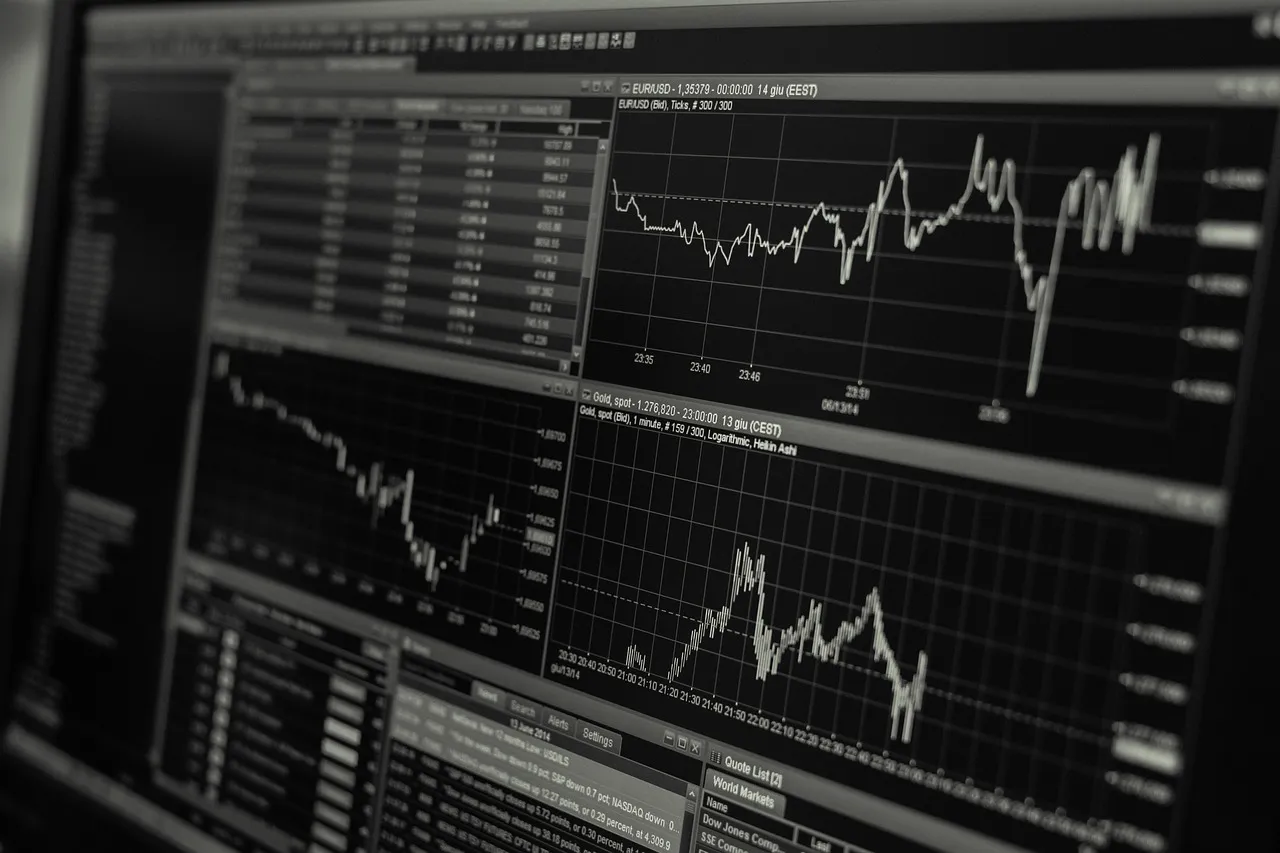
“The glamour is the reward for maybe 5% of participants. The grinding reality of discipline is the entry fee everyone ignores.”
Trading from Nigeria isn't the same as trading from London or New York. We face unique headwinds that define who a successful forex trader is here.
First, the infrastructure problem. Light goes off at the worst possible moment. Internet data is expensive and can be glitchy. A trader I know once got stopped out on a winning trade because of 'network fluctuation.' His broker's server didn't receive his modify order in time. Your trading plan must account for this. Use brokers with reliable local support and strong mobile platforms. I've found Exness and XM to have decent stability for Nigerian traders, but always have a backup - like a phone with a different network's data ready to go.
Second, the social and financial pressure is immense. With unemployment high, many see forex as a get-rich-quick scheme. Family members might give you '₦200,000 to turn into ₦1 million in a month.' This pressure forces desperate, high-risk behavior. A true professional trader separates their trading capital from all other life finances. No rent money, no school fees money in that account. Ever.
Finally, there's the information environment. We're flooded with noise: 'CBN will float the naira tomorrow!' 'Dollar is crashing this week!' A real trader learns to filter this out. They focus on the actual price action of major pairs like EUR/USD or XAU/USD (gold), which are less susceptible to local rumors. They understand that a pip movement in these markets means the same thing in Lagos as it does in Frankfurt.
“The glamour is the reward for maybe 5% of participants. The grinding reality of discipline is the entry fee everyone ignores.”
Who is a forex trader in terms of daily life? It breaks down into three camps.
The Part-Time Grinder: This is most people, and it's a viable path. You have a day job. You trade in the evenings, focusing on longer timeframes like swing trading where you don't need to watch the screen every minute. Your goal isn't to replace your income immediately. It's to build a track record and a second income stream. Success here requires extreme time management and the discipline to not check your phone constantly during work hours.
The Full-Time Professional: This is the goal, but it's a destination, not a starting point. You don't go full-time with a ₦500,000 account expecting to pay bills. You go full-time when your trading capital is large enough that consistent 1-2% monthly returns can sustain your lifestyle. This also means you treat it like a business: fixed hours, continuous education, separate accounts for taxes, and a salary you pay yourself from profits.
The 'Pretend' Trader (The Majority): This person is always in a trade. They're chasing signals, blaming brokers when they lose, and funding their account with the last of their savings. They talk a lot about 'the setup' but can't define their risk per trade. They are consumers of the forex industry, not participants in the market. The line between a grinder and a pretend trader is simple: one has a written plan and a track record of following it, the other has excuses.

Example: Let's compare monthly expectations on a ₦1,000,000 account.
| Trader Type | Realistic Monthly Return | Annual Return | Key Activity |
|---|---|---|---|
| Part-Time Grinder | 2% - 5% | ₦240,000 - ₦600,000 | Analyzing 4H/Daily charts, 5-10 trades/month |
| Full-Time Pro | 3% - 8% | ₦360,000 - ₦960,000 | Multiple sessions/day, deep analysis, 20+ trades/month |
| Pretend Trader | -20% to +50% (Volatile) | Blown Account | Constant trading, emotional decisions, no risk rules |
The pretend trader might hit +50% one month, creating an Instagram post. The following month, the -30% loss never gets mentioned.
💡 Dica do Winston
Keep a 'stupid tax' journal. Every time you break your rules and lose money, write down the amount and the reason. Seeing the cumulative total of your indiscipline is a powerful motivator to stop.

“You don't go full-time with a ₦500,000 account expecting to pay bills. You go full-time when your trading capital is large enough that consistent 1-2% monthly returns can sustain your lifestyle.”
So you want to become the real deal? Here's the unsexy, step-by-step path. I wish someone had given me this list ten years ago.
Phase 1: Education & Demo Trading (3-6 Months Minimum) Forget real money. Your first investment is time. Learn what a spread is and how it affects your entries. Understand what a margin call actually is. Pick one major currency pair and study it. Use a demo account to test everything. Your goal in this phase isn't profit. It's to make every mistake possible with virtual cash. Blow up ten demo accounts. It's free.
Phase 2: Developing a Trading Plan This is a written document. It must answer: What markets do I trade? What timeframes? What is my exact entry criteria? Where is my stop loss? Where is my take profit? What is my maximum daily and weekly loss limit? How much do I risk per trade? This plan is your constitution. You can't break it.
Phase 3: Micro-Live Trading (6+ Months) Fund a live account with money you can afford to lose completely. I'm talking ₦20,000 - ₦50,000. Your goal is to execute your plan perfectly for 6 consecutive months, not to make money. The profit at this size is irrelevant. The psychological shift from demo to live is huge. You'll feel it. This phase is about building the neural pathways for discipline under real risk.
Phase 4: Scaling & Professionalism Only after a proven, documented track record of consistency do you add more capital. This is where you refine your process, maybe incorporate more advanced order types, and consider tools that enhance your efficiency. You start thinking about the business side: record-keeping, tax implications, and perhaps strategies to pass a prop firm challenge where risk rules are absolute.

“You don't go full-time with a ₦500,000 account expecting to pay bills. You go full-time when your trading capital is large enough that consistent 1-2% monthly returns can sustain your lifestyle.”
The market doesn't beat most traders. They walk into these traps willingly.
The Overleveraging Trap: Nigerian brokers often offer use up to 1:2000. This is a weapon aimed at your own head. use amplifies gains, but it amplifies losses faster. Using high use because your account is small is a surefire plan to get a margin call. Start with low use (1:10 or 1:20) until you are consistently profitable. use is for optimizing capital, not creating it from thin air.
The Indicator Trap: You load your chart with 10 different indicators: MACD, RSI, Bollinger Bands, Stochastic. They all give different, conflicting signals. You're paralyzed. Price action gets lost in the noise. Pick one or two you understand deeply. I use the MACD indicator for trend momentum and simple support/resistance lines. More tools don't make you a better carpenter.
The 'Holy Grail' System Trap: Someone is selling a robot or a secret manual for ₦150,000 that guarantees 80% wins. If it worked, why would they sell it? They'd be using it to print money. Every profitable edge eventually erodes. Your edge is your discipline and risk management, not a secret code.
The Prop Firm Hustle Trap: Prop firms like FTMO are popular. They're a great capital solution for proven traders. But Nigerians jump into the challenges with untested strategies, treating the challenge fee like a lottery ticket. You need a strategy that's already worked for months on your own account. The prop firm's rules, like a strict daily loss limit, are just an extension of the risk management you should already have. Tools that automate these protections are useful.

Pro Tip: Before you fund any broker, test their execution with a tiny deposit. Place a few trades and see how their spreads behave during major news events (like US Non-Farm Payrolls). Check reviews from other Nigerians. IC Markets and Pepperstone are known for tight spreads, but always verify the conditions for your specific deposit method and location.
💡 Dica do Winston
Before you scale up your position size, scale up your patience. Prove you can be consistently profitable for twice as long as you think you need to.

Managing a prop firm challenge requires iron-clad discipline on daily loss limits, a task perfectly suited for automated tools within your trading platform.
Pulsar Terminal
A ferramenta MT5 tudo-em-um: ordens drag-and-drop, multi-TP/SL, trailing stop, grid trading, Volume Profile e proteção prop firm. Usado diariamente por 1.000+ traders.

“The market transfers money from the impatient, undisciplined, and overconfident to the patient, disciplined, and humble.”
After 12 years, I can draw a clear picture of who a successful forex trader is. They're often unassuming. They might have a regular job. They are obsessed with process, not profits. They keep detailed journals. They take full responsibility for every loss. They understand that a winning month might be just 3% after fees and spreads, and they're proud of it because it was done according to plan.
They have a life outside of trading. This is critical. Your mental stamina comes from being a whole person, not a chart-staring zombie. They manage their risk so well that a bad week is an inconvenience, not a catastrophe.
In Nigeria, the successful trader has navigated the extra obstacles of power, data, and social pressure. They've stopped trying to 'get rich' and started focusing on 'being right' in their process. The money follows, slowly and steadily. They are not gamblers hoping for a windfall. They are business owners managing a risky enterprise. The market doesn't give you money because you're smart. It transfers money from the impatient, undisciplined, and overconfident to the patient, disciplined, and humble. The question isn't 'who is a forex trader?' It's 'which side of that transfer do you want to be on?'

FAQ
Q1Can I start forex trading in Nigeria with ₦20,000?
Technically, yes. Some brokers accept it. But realistically, no. After accounting for the spread (the broker's fee), a small move against you will wipe out a large percentage of your capital. You also can't practice proper risk management (e.g., risking 1% is just ₦200). You're better off using that ₦20,000 for education and trading a demo account aggressively until you can save a more meaningful stake, like ₦100,000 minimum.
Q2Is forex trading a scam?
The global forex market itself is not a scam; it's the largest financial market in the world. However, the industry around it in Nigeria is flooded with scams. These include fake investment schemes (Ponzi), signal sellers with fake results, and 'mentors' who can't trade but are great at marketing. The trading activity is legitimate, but you must be extremely careful who you learn from and which broker you use.
Q3How many hours a day does a forex trader work?
It depends on your style. A swing trader analyzing daily charts might only spend 30-60 minutes a day checking setups and managing trades. A scalper might be glued to the screen for 2-4 hours during the most volatile market overlaps (like London/New York session). The key is that the time is focused and structured, not just staring at charts randomly.
Q4What is the most important quality for a forex trader?
Discipline. It's more important than intelligence, analysis, or capital. Discipline to follow your trading plan when you're scared after a loss. Discipline to not over-use when you're excited after a win. Discipline to close your laptop when you've hit your daily loss limit. Without it, all other knowledge is useless.
Q5Can forex trading replace my 9-5 job in Nigeria?
It can, but it should not be the initial goal. Treat trading like starting any other high-risk business. You need substantial saved capital (not for trading, but for living expenses for 12+ months) and a proven, documented track record of profitability over 1-2 years on a live account. Jumping from your job because you made profit for two months is the fastest way to blow your savings and your confidence.
Q6Which forex pair is best for beginners in Nigeria?
Start with a major pair that has low spreads and high liquidity, like EUR/USD or GBP/USD. These pairs move in clearer trends, have tons of free analysis available, and their spreads won't eat your account. Avoid exotic pairs that involve the Naira or pairs with very wide spreads when you're learning.
Lição do Prof. Winston
Pontos-chave:
- ✓Risk only 1-2% of capital per trade.
- ✓Demo trade for 3-6 months minimum.
- ✓A written plan is non-negotiable.
- ✓use above 1:20 is dangerous for beginners.
- ✓Profit follows process, not the other way around.
Quão útil foi este artigo?
Clique em uma estrela
Insights de Trading Semanal
Análises e estratégias semanais grátis. Sem spam.
Sobre o autor
Olumide Adeyemi
Pioneiro do Trading na África Ocidental
Um dos educadores de trading forex mais ativos da Nigéria. 8 anos de experiência operando a partir de Lagos. Especialista em estratégias de baixo capital e desafios de prop firms para traders africanos.
Comentários
Aviso de risco
A negociação de instrumentos financeiros envolve riscos significativos e pode não ser adequada para todos os investidores. O desempenho passado não garante resultados futuros. Este conteúdo é apenas para fins educacionais e não deve ser considerado aconselhamento de investimento. Sempre conduza sua própria pesquisa antes de negociar.
Você também pode gostar

Cara Trading Forex Sukses: 7 Prinsip dari Trader Profesional
Cara trading forex sukses dengan 7 prinsip trader pro: manajemen modal, disiplin, journal trading, backtest. Data nyata, bukan janji profit palsu.
Jam Trading Forex Terbaik untuk Trader Indonesia: Panduan Lengkap dengan Tabel Waktu
Panduan jam trading forex untuk trader Indonesia. Tabel 4 sesi dunia, jam emas 20:00-00:00, sesi mana yang harus dihindari. Data akurat + tips dari trader berpengalaman.
Top 5 Sàn Forex Uy Tín Nhất 2026: Review Jujur dari Trader Indonesia
Top 5 sàn forex uy tín 2026 untuk trader Indonesia. Review jujur: spread, deposit, withdraw, dukungan lokal. Exness, XM, IC Markets & lebih.
Obter Pulsar Terminal
Todas essas calculadoras estão integradas ao Pulsar Terminal com dados em tempo real da sua conta MT5.
Obter Pulsar Terminal