


Most Nigerian traders are looking for the wrong thing.

Olumide Adeyemi
West African Trading Pioneer ·  Nigeria
☕ 12 min read
What you'll learn:
- 1What Nigerian Traders Get Wrong (And It Costs Them)
- 2The Non-Negotiable Criteria for 2026
- 3Top Broker Contenders Reviewed (The 2026 Reality)
- 4Platforms: Why MT5 is the King in Nigeria
- 5use and Risk: Walking the Tightrope
- 6Deposit & Withdrawal: The Reality Check
- 7My Personal Setup (And Past Mistakes)
- 8Final Verdict and Your Action Steps

Most Nigerian traders are looking for the wrong thing. They chase the broker with the biggest bonus or the slickest Instagram ads, and they get burned. The real search isn't for flashy promises; it's for a reliable partner that won't disappear with your money and lets you execute your strategy without getting ripped off on spreads or withdrawals. I've seen too many 'students' lose capital to platform freezes during NFP or endless 'verification' loops when trying to cash out. Let's cut through the noise. I'll show you what actually matters when picking the best broker for forex in Nigeria, based on cold, hard numbers and my own painful lessons.
The first mistake is prioritizing anything over safety and fair execution. I get it. A 100% deposit bonus looks tempting. A referral program promising free cash for inviting your friends is appealing. But these are marketing tools designed to hook you, not make you a better trader. I learned this the hard way early on. I deposited 150,000 NGN with a broker offering a 'welcome bonus'. The catch? I had to trade 20 lots before I could withdraw any of my own money. I was over-trading just to hit a volume target, blew my account, and lost it all.
The second major error is ignoring withdrawal reliability. It doesn't matter if you have a 500% paper profit if you can't get your money out. Nigerian traders face unique hurdles: CBN policies on forex, local bank delays, and outright scams from unregulated entities. Your broker's deposit and withdrawal process for Naira is not a minor feature; it's a core component of their service.
Finally, there's a misunderstanding about regulation. Not all regulations are created equal. A broker registered with the Corporate Affairs Commission (CAC) in Nigeria is not the same as one licensed by a top-tier financial authority like the UK's FCA or Cyprus's CySEC. The former is a basic business registration; the latter involves strict client fund segregation and compensation schemes. You need to know the difference.

Warning: A broker advertising primarily on WhatsApp and Instagram with too-good-to-be-true offers is a massive red flag. Legitimate businesses don't operate that way.

1. Legitimate Regulation (The Real Kind)
This is your first filter. In 2026, you should only consider brokers holding a license from a reputable offshore authority. Why offshore? Because Nigeria's SEC doesn't yet license international forex brokers in a complete way. Look for licenses from:
- Cyprus Securities and Exchange Commission (CySEC): Common for EU/global brokers serving Nigeria. Offers strong client fund protection.
- Financial Sector Conduct Authority (FSCA) of South Africa: Geographically and operationally relevant for Africa.
- International Financial Services Commission (IFSC) of Belize: Common for brokers offering higher use.
Avoid brokers with only a CAC registration or vague claims of 'international regulation'. Check the license number on the regulator's official website.
2. Seamless Naira Deposits & Withdrawals
Your broker must support local bank transfers (USSD, bank app) and popular fintechs. In 2026, expect to see:
- Direct Naira deposits to a Nigerian corporate bank account.
- Integration with Flutterwave, Paystack, or similar gateways.
- Support for USSD codes for deposits.
Processing time is key. Deposits should be instant. Withdrawals? Anything beyond 24-48 business hours for local bank transfers is unacceptable. I keep a spreadsheet. With my current broker, a withdrawal of 85,000 NGN hit my Zenith account in 3 hours. That's the standard you want.
3. Raw, Transparent Trading Costs
Forget advertised 'from 0.0 pip' spreads. Look at the typical spread on the majors during London and New York sessions. For EUR/USD, you want a consistent 0.8 - 1.2 pips on a standard account. For USD/NGN futures or CFDs (if offered), understand the swap rates (overnight financing costs), as they can be hefty.
Here’s a quick cost comparison table for a standard lot (100,000 units) trade on EUR/USD:
| Cost Type | Good Broker | Expensive Broker |
|---|---|---|
| Spread (1.0 pip vs 2.5 pips) | $10 | $25 |
| Commission (if applicable) | $5 - $7 | $0 (but wider spread) |
| Total Cost per Round Turn | $15 - $17 | $25 |
That's a $8-$10 difference on one trade. Over 100 trades, that's $1,000 of your potential profit gone. Use a position size calculator to see how costs eat into your risk/reward.

💡 Winston's Tip
Your broker's customer service number is part of your risk management. If you can't get a human on the phone during a crisis, you're under-capitalized for that platform.
“A broker registered with the CAC in Nigeria is not the same as one licensed by a top-tier financial authority.”
Based on the criteria above, here’s my take on the major players for Nigerian traders. I have personal experience trading with three of these.
Exness: They've made a huge push into the Nigerian market. Their standout feature is the easiest Naira deposit/withdrawal system I've used. It's often instant. They offer a dedicated Nigerian website and support. Regulation is primarily via the FSCA. Spreads are tight on their Raw Spread accounts, but be mindful of the account types. Their standard account has wider spreads but no commission. I used them for a scalping strategy due to their low latency execution on major pairs. Read our full Exness review for a deeper dive.
IC Markets: A favorite for serious technical traders. Their raw spreads from 0.0 pips on EUR/USD (with commission) are among the best globally. They are regulated by CySEC and the ASIC (though the ASIC entity doesn't serve Nigeria). Funding can be trickier; you'll likely deposit in USD via credit/debit card or international transfer, which may involve your bank's forex rates. This adds a layer of cost and complexity. Their MT4/MT5 platforms are rock-solid. I've run complex multi-currency correlation strategies here without a single requote.
XM: A solid all-rounder with strong CySEC regulation. They frequently run deposit bonus promotions but (and this is crucial) their bonuses come with realistic trading volume conditions, not the predatory ones I warned about earlier. They offer a huge range of instruments. Their customer support is responsive. Spreads are competitive, not the absolute lowest, but fair. They accept Naira deposits directly. For a trader moving from beginner to intermediate, XM is a very safe and capable choice. Check our XM review for more details.
Pepperstone: Another top-tier execution broker with ASIC and FSCA regulation. Similar to IC Markets in offering razor-sharp spreads and excellent execution technology (cTrader and MT5). Naira deposits aren't as seamless as Exness, often requiring a USD conversion. Where Pepperstone shines is for algorithmic and swing trading strategies due to their advanced charting tools and reliable API. Our Pepperstone review covers their prop firm partnership features, which are becoming relevant for many Nigerians.

Pro Tip: Don't just pick one from this list and go. Open demo accounts with at least two. Test their platform speed during high volatility (like at 2:30 pm EST when US data drops). Test a dummy withdrawal process. This due diligence is part of your job as a trader.
MetaTrader 5 (MT5) has won the platform war in Nigeria, and for good reason. MT4 is still around, but MT5 is superior for forex and CFD trading: more timeframes, more technical indicators, a built-in economic calendar, and a better strategy tester for your Expert Advisors (EAs).
Almost every reputable broker for the Nigerian market offers MT5. Your choice of broker might come down to whose MT5 server gives you the best execution. On a trade during the 2025 ECB announcement, I entered a sell on EUR/USD at 1.0824 with my broker. A friend using a different broker's MT5 got filled at 1.0821. That 3-pip difference on entry was pure execution quality, not platform fault.
Beyond the base MT5, some brokers add valuable tools. This is where your trading edge can be built. Look for integrated solutions that provide advanced volume analysis or automated trade management, which are not native to MT5. The ability to set a trailing stop or multiple take-profit levels without manually moving lines is a game-saver.

Example: Let's say you're trading XAU/USD (Gold). You buy at $2,180, with a stop at $2,170 and a first profit target at $2,200. On basic MT5, you'd have to manually move your stop to breakeven if price hits $2,190. An advanced tool can automate that, protecting your capital while you sleep. This is critical for managing a margin call risk.
💡 Winston's Tip
Track your effective cost per trade (spread + commission) in a spreadsheet for one month. If it's above 1.8 pips on EUR/USD for a standard account, you're at a significant disadvantage.
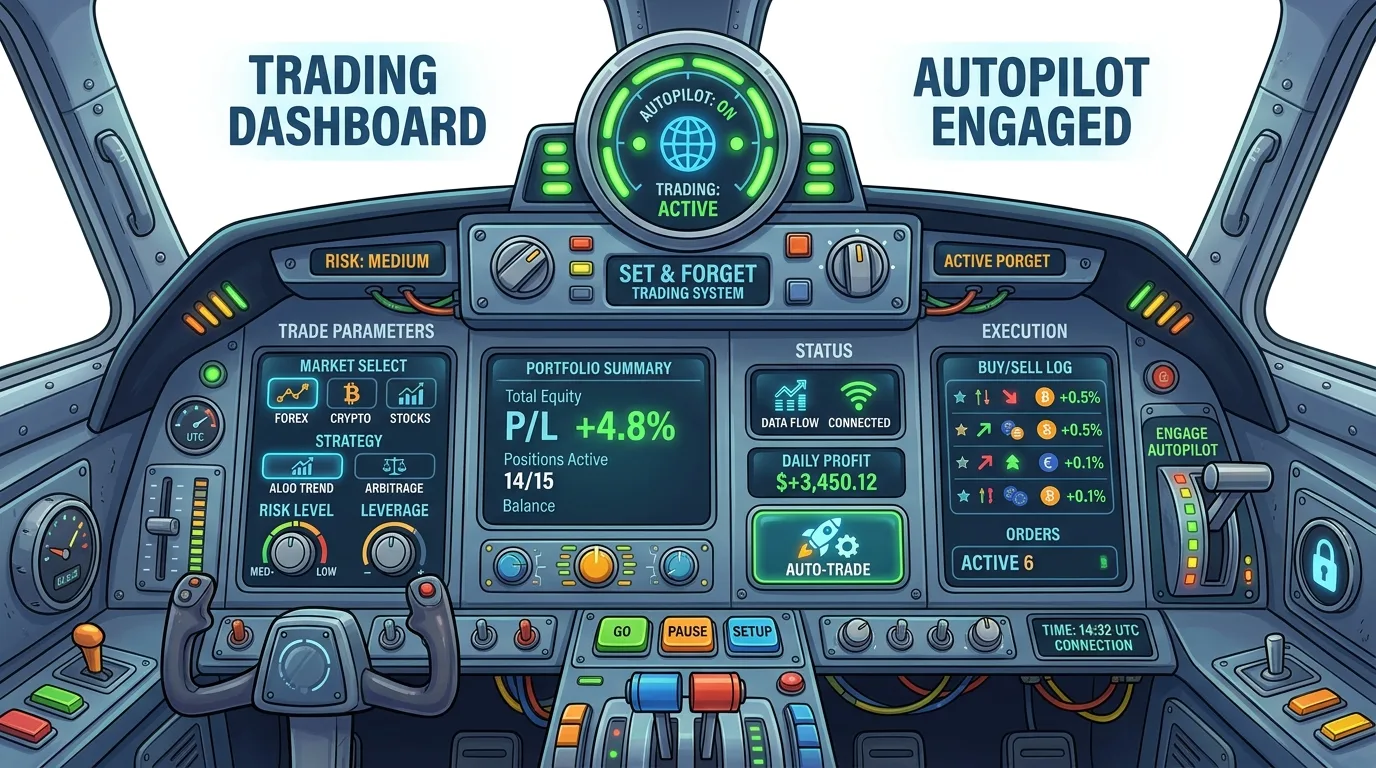
“use is a tool for efficiency, not for amplifying small accounts into lottery tickets.”
Nigerian brokers, particularly those regulated under IFSC or FSCA, often offer use up to 1:2000. That's not a feature; it's a weapon, and most traders shoot themselves with it.
Here's the raw math that new traders ignore. With 1:1000 use on a $100 account, you can control a $100,000 position. A 10-pip move against you (a tiny fluctuation) on a standard lot is a $100 loss. You're wiped out. I've done it. In 2019, I used 1:500 use on a GBP/JPY trade, convinced my analysis was perfect. A sudden spike wiped out 95% of my account in 90 seconds. The analysis wasn't the problem; my insane position size was.
European-regulated brokers (like those with CySEC) cap use at 1:30 for major forex pairs for retail clients. This feels restrictive, but it's designed to keep you in the game. My most consistent profitability period began when I forced myself to use a maximum of 1:50 use, regardless of what my broker offered.
Your broker's use offering should be a secondary consideration. Your own risk management rules must be primary. Decide your maximum risk per trade (e.g., 1% of your account) and use a calculator to determine your lot size before you consider the use available. use is a tool for efficiency, not for amplifying small accounts into lottery tickets.

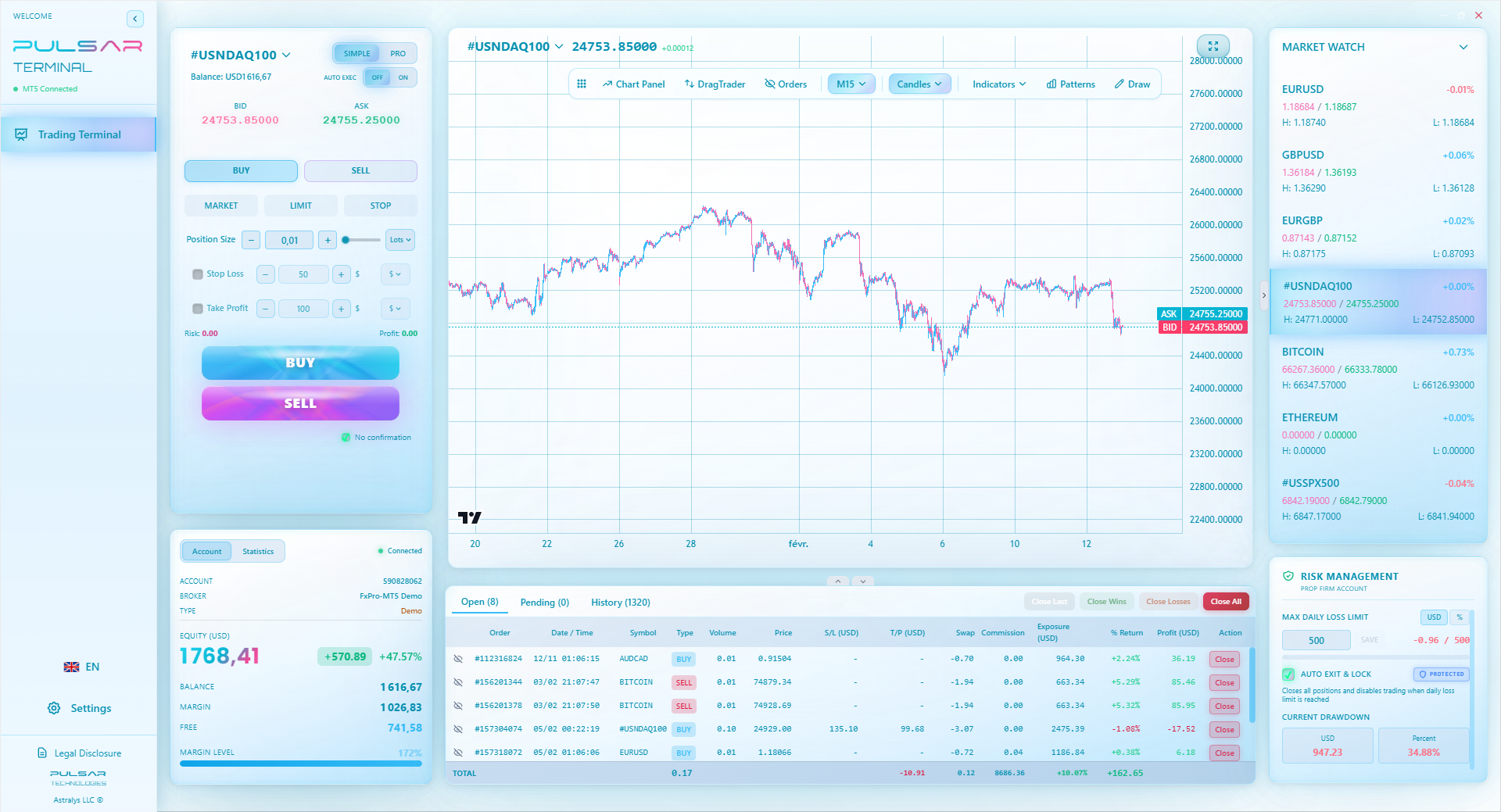
Managing complex trades with multiple take-profit levels and trailing stops is manual and stressful on basic MT5, but tools like Pulsar Terminal automate this directly on your chart.
Pulsar Terminal
The all-in-one MT5 companion: drag-and-drop orders, multi-TP/SL, trailing stop, grid trading, Volume Profile, and prop firm protection. Used by 1,000+ traders daily.
This is where the rubber meets the road. All that trading is pointless if getting your profit out is a nightmare.
The Ideal Flow:
- You initiate a withdrawal in your broker's client portal in Naira.
- The broker's local Nigerian entity processes it.
- Funds are sent via direct bank transfer or to your fintech wallet.
- You receive funds within 24 hours, with a clear transaction record.
The Red Flags:
- Third-Party Payments: If the account name you're asked to pay into doesn't match the broker's licensed corporate name, abort.
- Excessive Fees: A small processing fee is normal. Being charged 5% or more for a withdrawal is robbery.
- Documentation Loops: Being asked for the same KYC documents repeatedly after initial verification is a stalling tactic.
- Promised Crypto-Only Withdrawals: Some shady outfits try to push withdrawals in USDT to obscure trails. A legitimate broker offers bank transfers.
I maintain a small live account with any new broker I test specifically to run a full deposit-and-withdrawal cycle before moving significant capital. The cost of that test is the best insurance you can buy.
💡 Winston's Tip
Before you deposit, google '[Broker Name] withdrawal problem Nigeria'. The results are more educational than any broker's marketing material.
“I chose a broker for the wrong reason and ignored the foundational cost metric. The spread is everything.”
I'll show you my hand. As of 2026, I split my capital between two brokers.
Primary Broker (70% of capital): IC Markets. I use their Raw Spread account on MT5. I'm willing to deal with the USD deposit process because the execution quality and spreads are paramount for my core EUR/USD and index trading strategies. I use their VPS service to run my EA 24/5. The cost savings on spreads over thousands of trades far outweighs the minor forex conversion fee on funding.
Secondary Broker (30% of capital): Exness. This is my 'liquidity' hub. When I need to quickly move Naira in or out, or test a new idea with smaller capital, I use Exness. The speed is unmatched. I once withdrew 250,000 NGN at 10 AM and it was confirmed by my bank by 11:30 AM. I don't use their highest use offerings; I keep my account use set to 1:100.
The Mistake I Don't Want You to Make: In 2022, I was seduced by a 'prop firm challenge' broker partner. The spreads were wide, but I thought I could trade around them. I passed the challenge, funded the live account, and immediately found my scalping strategy was unprofitable because the effective spread + commission was 3 pips on EUR/USD. I gave back all the profits in two weeks. I chose a broker for the wrong reason (the prop firm link) and ignored the foundational cost metric. The spread is everything for certain strategies.
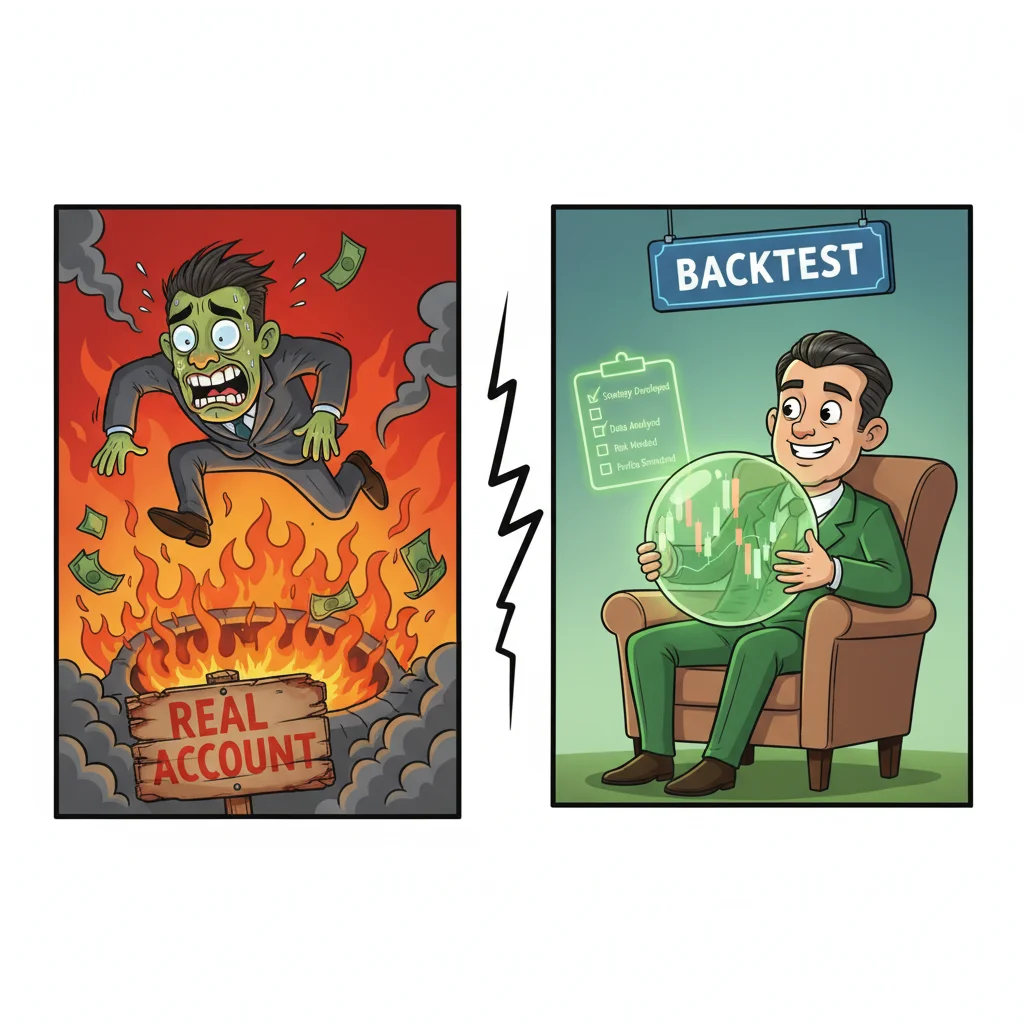
So, who is the single best broker for forex in Nigeria? There isn't one. There's the best broker for you, based on your strategy, experience, and needs.
- For Absolute Beginners & Those Who Prioritize Naira Fluidity: Start with Exness. The low barrier to entry, local support, and seamless transactions let you focus on learning to trade, not on funding headaches.
- For Technical/Scalping Traders & Algorithmic Trading: IC Markets or Pepperstone are superior. The raw pricing and professional execution environment are worth the extra step in funding. Use our IC Markets review to compare their specific offerings.
- For the Balanced, Risk-Averse Trader: XM is a fantastic, reliable choice. Strong regulation, fair costs, good support, and direct Naira funding. You won't get the absolute cheapest spreads, but you'll get peace of mind.
Your Action Plan:
- Define your primary trading strategy (e.g., daily chart swing trading).
- Identify the 2-3 brokers from above that fit that strategy's cost and platform needs.
- Open a demo account with each. Trade actively for two weeks. Note execution speeds, spreads during your trading hours, and platform stability.
- Make a small live deposit (maybe 20,000 NGN) with your top choice. Execute at least 5 trades and then do a full withdrawal. If it passes this test, scale up.
Choosing your broker is your first major trade. Do the analysis, manage your risk, and don't get emotional about bonuses or ads. Your capital depends on it.

FAQ
Q1Is forex trading legal in Nigeria?
Yes, forex trading is legal for individuals in Nigeria. However, the Central Bank of Nigeria (CBN) restricts local banks from facilitating payments to/from unlicensed international brokerages for retail forex trading. This is why you must use a broker with a proper local payment processing system. You are not breaking the law by trading with a regulated international broker.
Q2What is the minimum deposit for forex trading in Nigeria?
It varies widely. Some brokers like Exness allow you to start with as little as 500 NGN. Others like IC Markets have a minimum of $200 (approx 300,000 NGN). Don't focus on the minimum. Deposit an amount you can afford to lose completely while you learn. 50,000 - 100,000 NGN is a sensible starting point for live trading after thorough demo practice.
Q3Which is better for Nigerian traders, MT4 or MT5?
MT5 is objectively better and is now the industry standard. It has more features, handles more asset classes, and is where all new development is focused. While MT4 is still available and familiar, any new Nigerian trader in 2026 should start directly on MT5 to avoid having to migrate later.
Q4How do I avoid forex trading scams in Nigeria?
Avoid any 'broker' or 'investment manager' that: 1) Promises guaranteed daily profits. 2) Operates mainly on WhatsApp/Instagram. 3) Asks you to pay into a personal bank account (GTB, Zenith, etc.) instead of a corporate account. 4) Cannot provide a verifiable regulatory license number from a body like CySEC or FSCA. Always verify the license on the regulator's official website.
Q5Can I use my Nigerian debit card to fund my trading account?
Yes, with many brokers. Brokers like Exness and XM allow direct Naira card deposits. For brokers like IC Markets that primarily accept USD, your Nigerian Visa/Mastercard will still work, but your bank will convert the Naira to USD at their rate, often with an additional fee. Local bank transfers are usually cheaper.
Q6What is the best time to trade forex in Nigeria?
The most volatile and liquid sessions overlap with Nigeria's afternoon and evening. The London session (8 AM - 5 PM GMT) is active from 9 AM Nigerian time. The London/New York overlap (1 PM - 5 PM GMT) from 2 PM - 6 PM Nigerian time is the most active period, ideal for day trading. The Asian session (11 PM - 8 AM GMT) is quieter.
Q7How are my trading profits taxed in Nigeria?
As of 2026, there is no specific capital gains tax on individual forex trading profits in Nigeria. However, tax laws can change. It is your responsibility to declare any significant income to the Federal Inland Revenue Service (FIRS) under the Personal Income Tax Act. Consult a local tax professional for definitive advice.
Prof. Winston's Lesson
Key Takeaways:
- ✓Regulation is your safety net, not a marketing checkbox.
- ✓Test withdrawals before committing serious capital.
- ✓Effective trade cost (spread + commission) must fit your strategy.
- ✓MT5 is the non-negotiable platform standard for 2026.
- ✓Never let available use dictate your position size.
How useful was this article?
Click a star to rate
Weekly Trading Insights
Free weekly analysis & strategies. No spam.
About the Author
Olumide Adeyemi
West African Trading Pioneer
One of Nigeria's most active forex trading educators. 8 years of experience trading from Lagos. Specializes in low-capital strategies and prop firm challenges for African traders.
Comments
Risk Disclaimer
Trading financial instruments carries significant risk and may not be suitable for all investors. Past performance does not guarantee future results. This content is for educational purposes only and should not be considered investment advice. Always conduct your own research before trading.
You Might Also Like

Cara Trading Forex Sukses: 7 Prinsip dari Trader Profesional
Cara trading forex sukses dengan 7 prinsip trader pro: manajemen modal, disiplin, journal trading, backtest. Data nyata, bukan janji profit palsu.
Jam Trading Forex Terbaik untuk Trader Indonesia: Panduan Lengkap dengan Tabel Waktu
Panduan jam trading forex untuk trader Indonesia. Tabel 4 sesi dunia, jam emas 20:00-00:00, sesi mana yang harus dihindari. Data akurat + tips dari trader berpengalaman.
Top 5 Sàn Forex Uy Tín Nhất 2026: Review Jujur dari Trader Indonesia
Top 5 sàn forex uy tín 2026 untuk trader Indonesia. Review jujur: spread, deposit, withdraw, dukungan lokal. Exness, XM, IC Markets & lebih.
Get Pulsar Terminal
All these calculators are built into Pulsar Terminal with real-time data from your MT5 account. One-click position sizing, automatic risk management, and instant calculations.
Get Pulsar Terminal