


Let's cut the nonsense.

David van der Merwe
Emerging Markets Trader ·  South Africa
☕ 10 min read
What you'll learn:
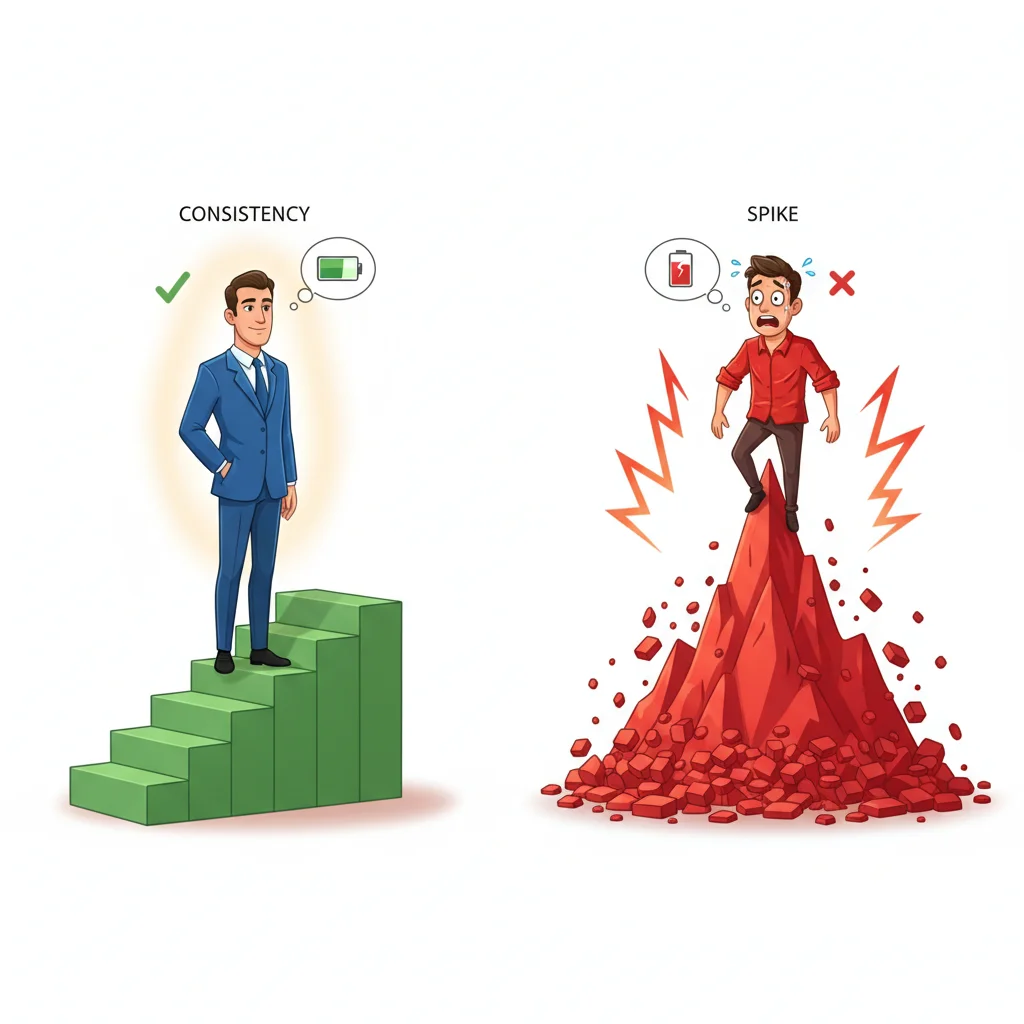
Let's cut the nonsense. Most people who try to make money using forex trading end up broke. The online gurus selling 'secret systems' are usually richer from their courses than their trades. But here's the controversial part: it is possible to build a real, sustainable income from forex, but the path looks nothing like the get-rich-quick fantasy. It's a grind that requires treating it like a skilled profession, not a casino. I've been on both sides of this coin - blowing up accounts and, eventually, funding a lifestyle. In this guide, I'll show you the only realistic framework for how to make money using forex trading from South Africa, covering the local regulations, broker pitfalls, and the mental game most people ignore.
Your first mindset shift is the most important. You are not a 'trader.' You are the CEO, risk manager, and sole employee of a small business. The product is your capital allocation. If you approach this like a hobby - dabbling after work, chasing adrenaline - your account will be gone in months. I learned this the hard way in 2015. I made R23,000 in two weeks scalping the EUR/USD. I felt invincible. I then lost R35,000 in three days because I broke every rule, treating profits like lottery winnings instead of business revenue.
A business has a plan. It has overheads (spreads, commissions). It measures performance not by one big win, but by consistent profitability over quarters. Your trading plan is your business plan. Your emotional discipline is your quality control. Most South Africans get into forex because they see dollar signs, not because they want to run a demanding, analytical business. That's why the failure rate is so high.

Warning: The South African Revenue Service (SARS) views trading profits as income. You must declare it. Keep careful records of every trade from day one. Trading through an international broker doesn't make you tax-exempt.
“Most people who try to make money using forex trading end up broke.”
Before you place a single trade, get these pillars locked down. Skipping any one is like building on sand.
Your Legal and Regulatory Backbone
You must use a broker authorised by the Financial Sector Conduct Authority (FSCA). This isn't a suggestion; it's your primary protection against fraud and ensures recourse if something goes wrong. Many flashy international brands aren't FSCA-licensed, meaning your funds aren't protected under South African law. I made the mistake early on of chasing lower spreads with an unregulated offshore entity. Getting my capital out took six months of stressful emails. Stick with FSCA-regulated brokers like those we've reviewed, such as Exness or XM, who have local operations.
Capital You Can Afford to Lose (The Real Meaning)
Your trading capital should be money that, if lost entirely, doesn't change your lifestyle. It shouldn't be rent money, your child's education fund, or savings for a car. This mental separation is critical. Start small. R5,000 is a perfectly legitimate starting amount to prove your strategy. The goal isn't to turn R5,000 into R50,000. The goal is to grow it by 2-5% a month, consistently, without blowing it up.
The Toolset: More Than Just MT5
You need a reliable setup. A stable internet connection, a computer that won't freeze, and a broker with a solid platform. But the real tool you need is a journal. Every trade gets logged: entry, exit, reason, emotional state, screenshot. I review mine every Sunday without fail. It's how you find your repetitive mistakes. For advanced charting and order management that MT5 lacks, a companion app like Pulsar Terminal can be a game-saver, but master the basics first.

💡 Winston's Tip
Your first R10,000 profit is the most dangerous money you'll ever make. It convinces you you're smarter than the market. That's when the real lesson begins.
“Your first mindset shift is the most important. You are not a 'trader.' You are the CEO, risk manager, and sole employee of a small business.”
Forget searching for the 'best' strategy. There isn't one. There's only your strategy - one that fits your personality, schedule, and risk tolerance. Your edge is your small, statistical advantage. It's not about being right 100% of the time; it's about making more when you're right than you lose when you're wrong.
Find Your Timeframe
Are you a surgeon or a gardener? A surgeon (scalper) makes many quick, precise cuts, aiming for small profits. A gardener (swing trader) plants a trade and tends to it over days, aiming for larger moves. I'm a gardener. My personality couldn't handle the stress of scalping. I hold trades for 2-5 days on average. Most new traders fail because they mismatch their strategy with their personality.
A Simple, Testable Approach
Here's a basic framework you can build on. I used a variation of this for years:
- Identify the Trend: Use the daily chart. Is price mostly making higher highs and higher lows (uptrend) or the opposite? Only take trades in the direction of the daily trend. This one filter improves your odds dramatically.
- Wait for a Pullback: In an uptrend, wait for price to dip back into a support area (like a previous swing high or a key moving average).
- Look for a Confluence Signal: This is where your edge comes in. Maybe it's a bullish candlestick pattern at that support, or the RSI indicator dipping below 30 and turning back up. Don't use ten indicators. Master one or two.
- Execute with Precision: Place your entry, your stop-loss (always), and your take-profit. Your risk (stop-loss) should be defined before you enter. A good starting rule: never risk more than 1% of your account on a single trade. Use a position size calculator every time.

Example: Your account is R10,000. 1% risk = R100. You want to buy USD/ZAR at R18.50, with a stop-loss at R18.40. That's a 10-cent risk. Since a 1-cent move in USD/ZAR is roughly R1 per standard lot (100,000 units), you can calculate your position size. (R100 risk) / (10 cents risk) = R10 per cent. So your position size should be 10 mini lots (or 0.1 standard lots).
This isn't glamorous, but it's repeatable. The profit comes from executing this simple plan hundreds of times, not from one magical trade.
“Your first mindset shift is the most important. You are not a 'trader.' You are the CEO, risk manager, and sole employee of a small business.”
This is the chapter that makes or breaks you. Analysis gets you into a trade; risk management keeps you in the game. I don't care how brilliant your entry signal is, if you don't manage risk, you're finished.
The 1% Rule is Your Religion
Never, ever risk more than 1% of your total account equity on a single trade. On a terrible day where you get 5 losses in a row, you're only down 5%. You can recover from that. Risk 5% per trade, and that same bad day wipes out 25% of your account. The psychological damage is irreparable. This single rule forced me to survive long enough to become profitable.
Stop-Losses: Not a Suggestion, a Law
A stop-loss is not a 'maybe.' It's an automated order that says, 'My hypothesis for this trade was wrong, and I exit here.' Your stop should be placed at a logical level where the market structure invalidates your trade idea. Then you walk away. Letting a loss run because 'it might come back' is the number one account killer. A related danger is the margin call, which is what happens when you ignore stops and your broker forcibly closes you out.
Protect Your Capital Like a Hawk
Use trailing stops to lock in profit as a trade moves your way. Set breakeven stops once a trade is sufficiently in profit. These are defensive maneuvers that turn risky trades into risk-free ones. The goal isn't to win big on every trade; it's to protect your capital so you can trade tomorrow. This defensive mindset is what separates professionals from amateurs.
💡 Winston's Tip
If you can't explain your trade's thesis in one simple sentence ('Price is pulling back to daily trend support'), you shouldn't be in it.
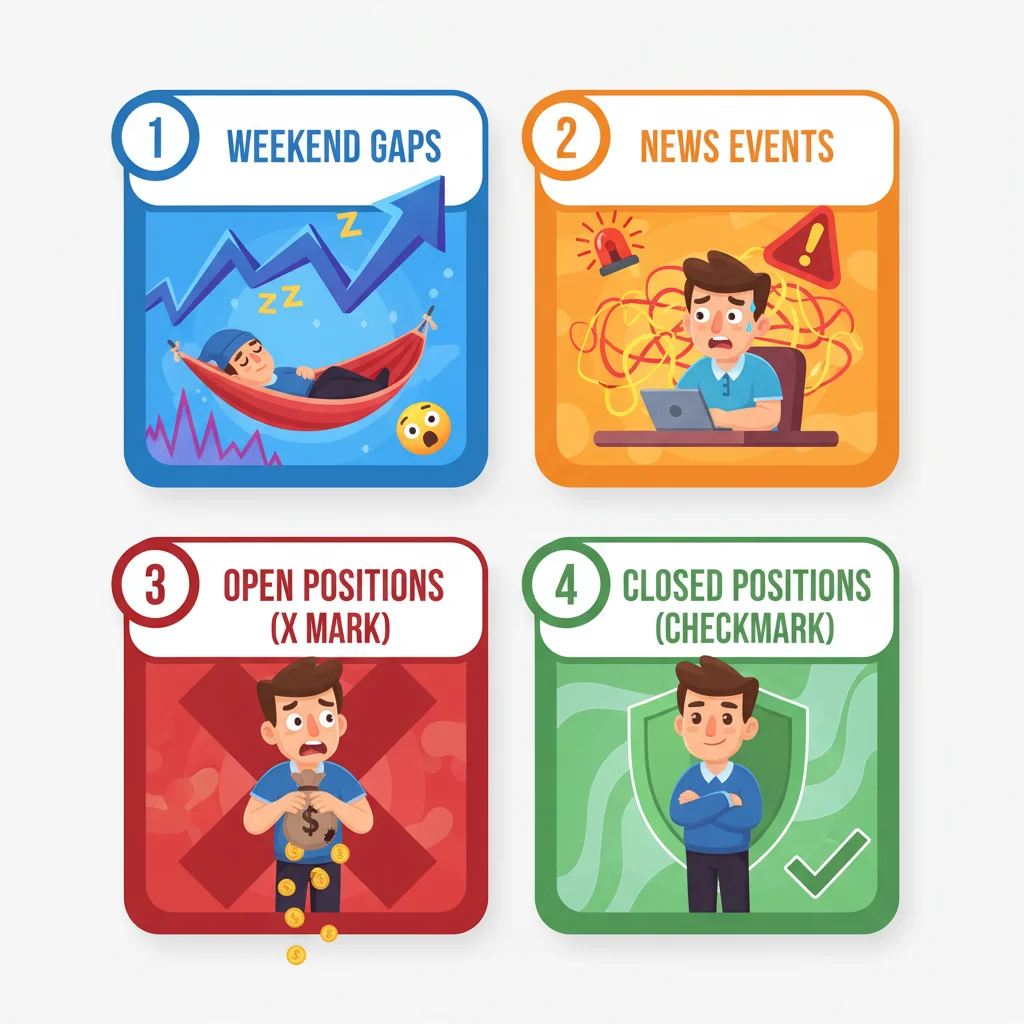
“Analysis gets you into a trade; risk management keeps you in the game.”
You are your own worst enemy. Greed, fear, ego, and impatience will destroy a technically perfect plan. I've taken stupid revenge trades after a loss. I've closed winning trades early out of fear. Everyone does. The difference is acknowledging it and building systems to counter it.
The Two Deadly Sins
- Overtrading: This is trading out of boredom, or to 'get back' at the market. Your strategy gives you 2-3 good signals a week, but you take 10 trades because you're staring at the screen. This dilutes your edge and racks up spreads and commissions.
- Revenge Trading: After a loss, you immediately jump into another trade, often with a larger size, to win back the money. This is emotional, not analytical. It leads to disaster. My rule: after two consecutive losses, I shut down the platform for the rest of the day.
Building Mental Discipline
Your trading plan must include psychological rules. Predefine your daily loss limit (e.g., 3% of account). Once hit, you're done. Schedule your trading hours and stick to them. Don't check your phone constantly. This is a marathon, not a sprint. The mental fatigue from constant screen time leads to terrible decisions. Sometimes, the most profitable thing you can do is walk away and clear your head.
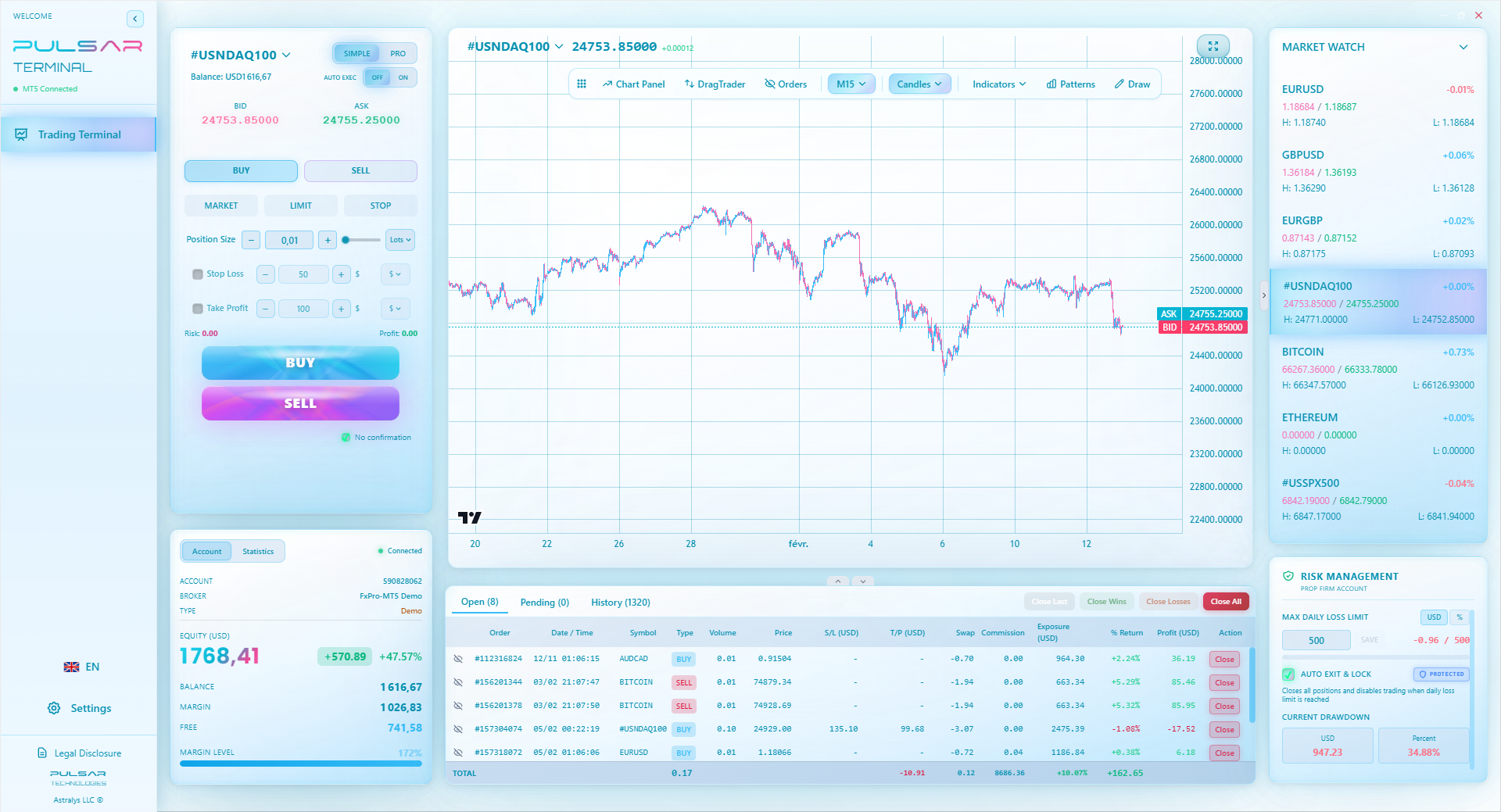
Managing complex trades and protecting profits with trailing stops is manual and stressful on standard MT5, which is where a tool like Pulsar Terminal automates it all directly on your charts.
Pulsar Terminal
The all-in-one MT5 companion: drag-and-drop orders, multi-TP/SL, trailing stop, grid trading, Volume Profile, and prop firm protection. Used by 1,000+ traders daily.
“Analysis gets you into a trade; risk management keeps you in the game.”
Let's map this to a realistic first-year journey for a South African trader.
Months 1-3: The Demo Phase Open a demo account with an FSCA broker. Don't pretend it's fake money. Trade your R50,000 demo account as if it's your R5,000 real account. Practice the strategy framework above. Your goal isn't profit; it's consistency. Can you follow your rules for 50 trades in a row? Journal every single one.
Months 4-6: Live, But Microscopic Fund a live account with your risk capital. Start trading the smallest possible position size - often a micro lot (1,000 units). Your goal is to make 1% net profit for the month. Just 1%. The experience of seeing real money fluctuate is completely different. You'll feel the fear and greed. This phase is about learning to manage yourself.
Months 7-12: Scaling Consistency If you've been net profitable for 3 consecutive months, you can consider increasing your position size slightly - but not your risk per trade. It should still be 1%. Maybe you move from risking R50 per trade to R75. Slowly, slowly. This is where you might explore more advanced concepts like correlations, or tools that help with order management for more complex strategies like swing trading.
The Local Factor: USD/ZAR and Volatility Many South Africans are drawn to trading USD/ZAR. It's familiar. But be warned: it can be less liquid and more volatile than majors like EUR/USD, leading to wider spreads, especially around local news. It can gap significantly overnight. If you trade it, understand its unique rhythms. Sometimes, trading the more liquid global majors through a good international broker like IC Markets can offer better technical conditions.
💡 Winston's Tip
The market doesn't owe you anything. That loss it just gave you? That's tuition. Make sure you learn the lesson it was trying to teach.
“You are your own worst enemy. Greed, fear, ego, and impatience will destroy a technically perfect plan.”
Let's bulletproof you against the classic mistakes I see every week.
- Pitfall: Chasing 'Hot Tips' or Signals. Someone on Telegram or a paid service says 'BUY GBP/JPY NOW.' You do it, with no understanding of why. You're outsourcing your brain. If it wins, you learn nothing. If it loses, you blame them. Solution: Trade your own plan only. If you learn from a mentor, understand the why behind their calls.
- Pitfall: Switching Strategies Every Month. You have three losing trades with your trend-following method, so you abandon it for a mean-reversion strategy. This is the 'strategy hop.' You never give any edge time to work. Solution: Backtest and demo trade a strategy for at least 100 trades before judging it. Then stick with it for another 100 live trades.
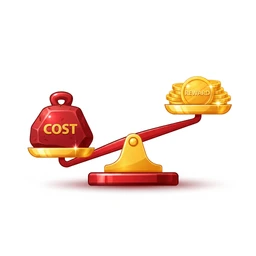
- Pitfall: Ignoring Total Cost. The spread and commission are your business overheads. Trading a high-spread exotic pair with a 5-minute scalping strategy means you have to overcome huge costs just to break even. Solution: Factor in costs. Choose brokers with tight spreads on your chosen pairs, and trade during peak liquidity hours.
- Pitfall: No Life Outside Trading. You become consumed. Your mood depends on your daily P&L. This creates unbearable pressure and leads to panic. Solution: Have a life. Exercise. Have hobbies. Trading is what you do, not who you are. This perspective is crucial for clear decision-making.
FAQ
Q1Can I really make a living from forex trading in South Africa?
Yes, but it's a steep climb. Don't expect to replace a full-time salary in the first 2-3 years. You need substantial risk capital (think R100,000+) to generate meaningful monthly income while adhering to the 1% risk rule. Most successful 'full-time' traders have years of experience and built their capital slowly while having another income source.
Q2How much money do I need to start forex trading in South Africa?
You can technically start with R500 at some brokers, but it's not advisable. With R500, a 1% risk is R5, making position sizing nearly impossible. A more realistic minimum is R5,000. This allows for proper risk management and psychological breathing room. Start small to learn, not to get rich.
Q3Which is the best forex broker for South Africans?
There's no single 'best.' It depends on your needs (spreads, platform, asset offering). The non-negotiable is FSCA regulation. Do your own research on brokers like Pepperstone, Exness, or XM who have strong local presences. Read our detailed reviews, then open a demo account to test their platform yourself.
Q4Is forex trading taxable in South Africa?
Absolutely. SARS considers trading profits as income (unless you qualify as an investor, which is a high bar). You must declare your net profit (profits minus losses, spreads, commissions) in your annual tax return. Keep detailed records from day one. Consult a tax professional familiar with trading income.
Q5What's the biggest mistake new South African traders make?
Trading USD/ZAR with too much emotion and not enough technique. They have a view on the Rand from the news and trade it like a patriot, not a analyst. They also often use unregulated brokers offering 'too good to be true' bonuses. Stick to regulated entities and treat all currency pairs, including your own, as cold, technical charts.
Q6How long does it take to become profitable?
Throw out the '30-day genius' idea. A realistic timeline for consistent, modest profitability is 12-18 months of dedicated, disciplined practice. This includes demo trading, live trading with tiny sizes, and continuous learning. It's a skill like any other profession.
Prof. Winston's Lesson
Key Takeaways:
- ✓Risk max 1% per trade, always.
- ✓FSCA regulation is non-negotiable.
- ✓Profit comes from hundreds of executions, not one magic trade.
- ✓Journal every trade to find your patterns.
- ✓Trade the chart, not your opinion on the Rand.
How useful was this article?
Click a star to rate
Weekly Trading Insights
Free weekly analysis & strategies. No spam.
About the Author
David van der Merwe
Emerging Markets Trader
Johannesburg-based trader with 11 years in emerging market currencies. Specializes in ZAR pairs, FSCA-regulated trading, and South African market analysis.
Comments
Risk Disclaimer
Trading financial instruments carries significant risk and may not be suitable for all investors. Past performance does not guarantee future results. This content is for educational purposes only and should not be considered investment advice. Always conduct your own research before trading.
You Might Also Like

Cara Trading Forex Sukses: 7 Prinsip dari Trader Profesional
Cara trading forex sukses dengan 7 prinsip trader pro: manajemen modal, disiplin, journal trading, backtest. Data nyata, bukan janji profit palsu.
Jam Trading Forex Terbaik untuk Trader Indonesia: Panduan Lengkap dengan Tabel Waktu
Panduan jam trading forex untuk trader Indonesia. Tabel 4 sesi dunia, jam emas 20:00-00:00, sesi mana yang harus dihindari. Data akurat + tips dari trader berpengalaman.
Top 5 Sàn Forex Uy Tín Nhất 2026: Review Jujur dari Trader Indonesia
Top 5 sàn forex uy tín 2026 untuk trader Indonesia. Review jujur: spread, deposit, withdraw, dukungan lokal. Exness, XM, IC Markets & lebih.
Get Pulsar Terminal
All these calculators are built into Pulsar Terminal with real-time data from your MT5 account. One-click position sizing, automatic risk management, and instant calculations.
Get Pulsar Terminal