


Let's get one thing straight: most traders use leading indicators completely wrong.

Rajesh Sharma
Senior Forex Analyst ·  India
India
☕ 10 min read
What you'll learn:
- 1What Are Leading Indicators, Really?
- 2A No-Nonsense Review of Popular Leading Indicators
- 3The 3 Biggest Mistakes You're Probably Making
- 4A Practical Framework for Using Leading Indicators
- 5The Power Combo: Leading Indicators + Price Action + Volume
- 6Leading vs. Lagging: Why You Need Both
- 7A Simple, Effective Chart Setup for Indian Markets
- 8The Final Word: Are Leading Indicators Worth It?

Let's get one thing straight: most traders use leading indicators completely wrong. They slap a Stochastic or RSI on their chart, see it hit an 'oversold' level, and jump in expecting a reversal. Then they watch in horror as the price keeps dropping, taking their capital with it. The promise of predicting the future is seductive, but it's also the fastest way to lose money if you don't understand the mechanics. I'm here to cut through the nonsense and show you what leading indicators in trading can and cannot do, based on over a decade of getting it wrong before I got it right.
Forget the textbook definitions. In practical terms, a leading indicator is a tool that tries to give you a signal before a new price move happens. It's trying to be a crystal ball. The most common ones are oscillators like the RSI indicator, Stochastic, and the Williams %R. They measure momentum and speed of price movement, not the direction itself.
Here's the critical part everyone misses: they don't predict price. They predict momentum. If a stock or currency pair is rising very fast, the RSI climbs. When it gets above 70, it's not saying 'price will fall.' It's saying 'the speed of the upward move is unsustainable and might slow down.' That slowdown could be a reversal, or it could just be a pause before another leg up. I learned this the hard way shorting every RSI reading above 80 on the Nifty 50, only to see it climb to 85 and stay there during a powerful bull run.

Warning: No leading indicator is 100% accurate. They generate false signals, especially in strong trending markets. Using them alone is a recipe for disaster.
Think of them like the tachometer in a car. When it hits the redline, it warns you the engine is stressed, but it doesn't tell you if the car will speed up, slow down, or the engine will blow. You need other information - like looking at the road (price action) and the fuel gauge (volume, trend).

💡 Winston's Tip
An oversold reading in a bull market isn't a signal to sell. It's a signal to look for a place to buy.
Relative Strength Index (RSI)
This is the granddaddy. It measures the magnitude of recent price changes. The classic signals are overbought (above 70) and oversold (below 30). But here's my take: the standard 14-period RSI is almost useless on its own. It's too slow and gets stuck in extremes during trends. I've had more success using a 2-period RSI for extreme readings on a 5-minute chart, or looking for RSI divergence - when price makes a new high but RSI makes a lower high. That's a much stronger potential reversal signal.
Stochastic Oscillator
It compares a closing price to its price range over a period. It's more sensitive than RSI. The killer mistake? Trading the crossover in the middle of the range. The only time I pay attention to the Stochastic is when both the %K and %D lines are above 80 or below 20. Even then, it's just an alert to look for a confirming price action signal, like a pin bar or a break of a minor trendline.
Commodity Channel Index (CCI)
Designed for commodities but works on anything. It measures the current price level relative to an average. Readings beyond +100 or -100 are considered extreme. I find CCI useful for identifying the end of a corrective move within a larger trend. For instance, in a strong uptrend on USD/INR, a pullback that drives CCI below -100 can be a great 'buy the dip' signal.

Example: On a Bank Nifty 15-minute chart, price pulls back to a key support level. The 14-period CCI drops to -125. Instead of selling, you look for a bullish engulfing candle at the support as confirmation to go long. The CCI gave the alert; price action gave the entry.
The MACD Indicator (It's a Hybrid)
People argue about this. The MACD indicator is often called a lagging indicator because it's a moving average derivative. But its signal line crossovers and its position relative to the zero line can act as a leading signal for momentum shifts. I treat it as a trend-confirmation tool first, and a potential leading signal second.

“No leading indicator predicts price. They predict momentum.”
- Trading the Indicator, Not the Chart: This is suicide. You see RSI at 75, you sell. You don't check if price is in a strong uptrend, breaking out of consolidation, or sitting at a major support level. The indicator becomes your entire strategy. I've blown a ₹50,000 account doing exactly this in my first year. The chart is king. The indicator is an advisor.
- No Confluence: A single indicator signal is weak. A strong trade has confluence. This means your leading indicator signal aligns with other factors: a key support/resistance level, a candlestick pattern, or a trendline. For example, a Stochastic oversold signal at a major Fibonacci retracement level during an uptrend is a high-probability setup.
- Ignoring the Trend: Leading indicators are notoriously bad in strong trends. They will scream 'overbought' for weeks in a parabolic rally. If you try to short every overbought reading in a bull market, you will get run over. Always know the higher timeframe trend. A simple 200-period Exponential Moving Average can save you from this fate. If you're looking for a systematic way to manage this, understanding strategies like swing trading that respect the larger trend is crucial.
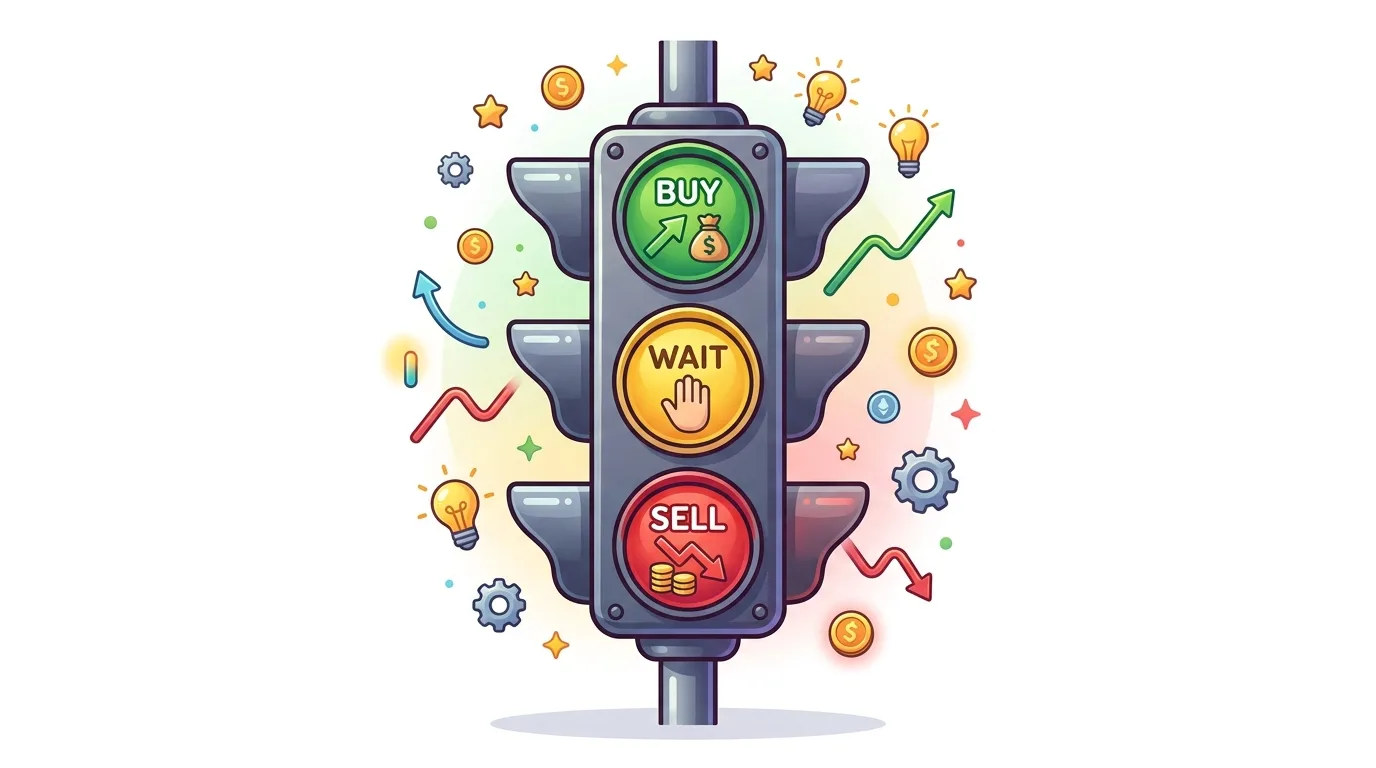
Stop using indicators in isolation. Here's a simple, 4-step framework I teach my students:
- Identify the Environment: Is the market trending strongly, ranging, or volatile? Use a higher timeframe (like the 1-hour or 4-hour) to decide. In a strong trend, leading indicators are best for spotting pullback entries, not reversals.
- Find Key Levels: Mark your support and resistance. Use horizontal lines, trendlines, or Fibonacci levels. Your trade should be oriented around these levels, not the indicator. A good position size calculator is essential here to manage your risk relative to the distance to these levels.
- Get the Alert: Let your chosen leading indicator (I recommend starting with just RSI or CCI) give you an alert. Is it showing overbought/oversold? Is there a divergence? This tells you momentum may be shifting.
- Wait for Price Confirmation: This is the non-negotiable step. Do NOT enter on the indicator signal. Wait for price to confirm. This means a bullish candlestick pattern at support for a long, or a bearish pattern at resistance for a short. The indicator says 'get ready.' Price says 'go.'

Pro Tip: Reduce the sensitivity for ranging markets, increase it for trending markets. For RSI, try a 7-period setting in a range, and a 21-period setting in a trend to filter out noise. You'll get fewer, but better, signals.
💡 Winston's Tip
If your indicator and the price chart disagree, the chart is always right. Fire the indicator, not the trade.
“A single indicator signal is weak. A strong trade has confluence.”
This is where the magic happens. A leading indicator is one piece of the puzzle.
Leading Indicator + Price Action: This is your core combo. An oversold RSI reading is meaningless unless price forms a hammer or bullish engulfing candle. A bearish RSI divergence is a warning, but a break below a swing low is the confirmation to enter a short trade.
Leading Indicator + Support/Resistance: The most reliable signals occur at confluent areas. If the USD/INR pair approaches a major resistance level that has held three times before, and the 1-hour RSI simultaneously shows a bearish divergence, your probability of a successful short trade skyrockets.
The Volume Check: This is the missing link for many. If you see a potential reversal signal from your indicator and price action, check the volume. A reversal on high volume is far more credible than one on low volume. A breakout from a range with a high spread and surging volume confirms institutional participation.
Let me give you a real example from last month. I was watching XAU/USD (Gold). On the 4-hour chart, it was in an uptrend but pulling back. It approached a previous support zone around $2320. The 14-period CCI on the 1-hour chart dipped below -100 (oversold). That was my alert. I then waited for price action: a clear bullish pin bar formed right on the $2320 level. That was my confirmation. Entry: $2322. Stop loss: $2314 (below the pin bar). Target: previous high at $2350. The trade worked perfectly. The CCI didn't make the trade; it told me where to look. The pin bar and the support level made the trade.

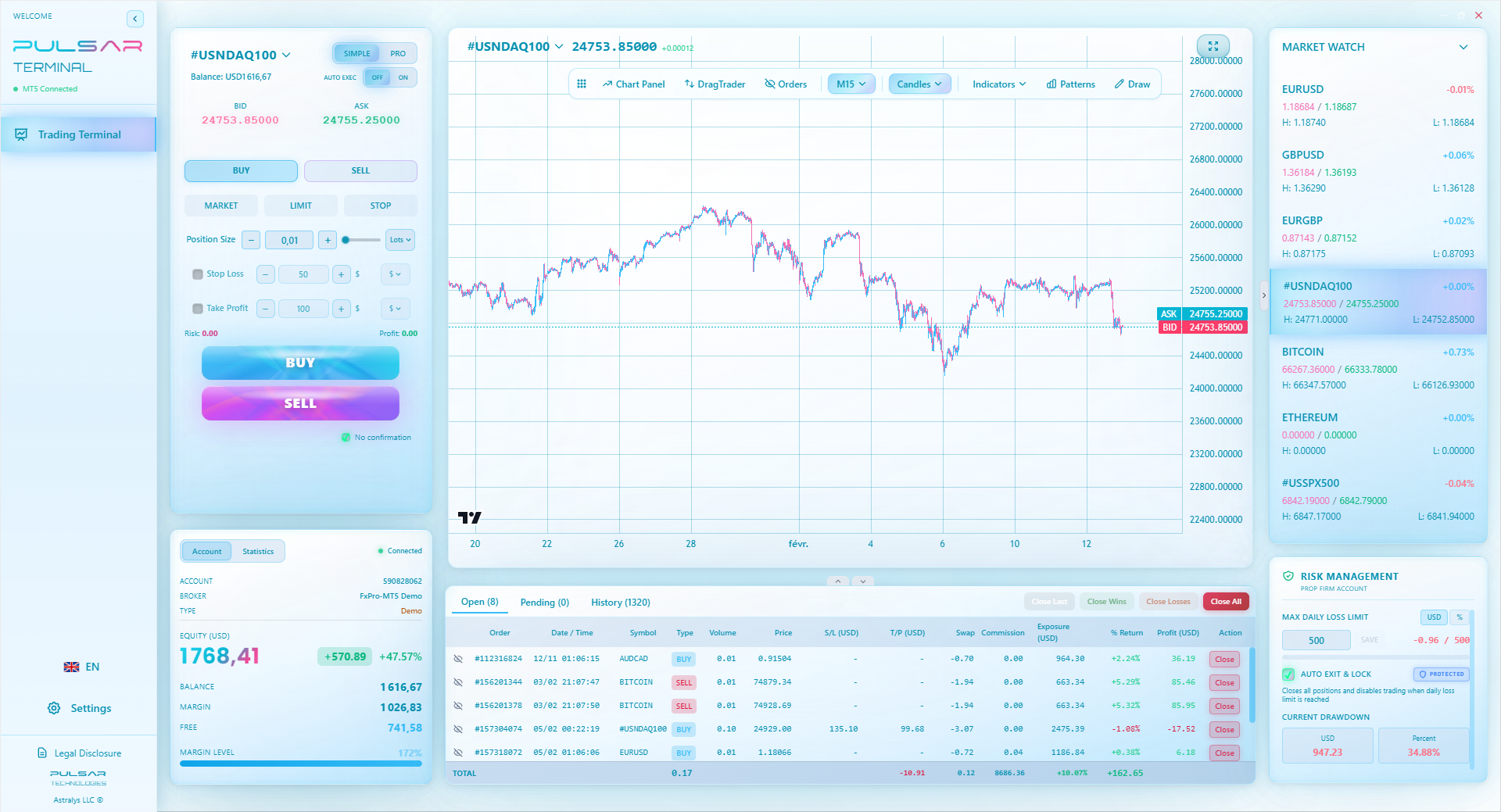
When you spot a high-probability divergence setup, you need to act fast and manage the trade precisely—tools like Pulsar Terminal let you set multi-level take-profits and trailing stops directly on your MT5 chart with a single drag.
Pulsar Terminal
The all-in-one MT5 companion: drag-and-drop orders, multi-TP/SL, trailing stop, grid trading, Volume Profile, and prop firm protection. Used by 1,000+ traders daily.
This is a classic debate, and it's pointless. You need both types in your toolkit.
| Feature | Leading Indicators (e.g., RSI, Stochastic) | Lagging Indicators (e.g., Moving Averages, MACD) |
|---|---|---|
| Primary Job | Predict potential momentum shifts & reversals. | Confirm the trend direction & its strength. |
| Signal Timing | Tries to signal before the move. | Signals after the move has begun. |
| Best For | Identifying entry points in ranges, spotting divergences. | Trend identification, defining dynamic support/resistance. |
| Biggest Weakness | Prone to false signals, especially in trends. | Late to the party; you miss the initial move. |
Think of it like building a house. Lagging indicators (like moving averages) are the foundation and frame - they tell you the structure and direction of the market. Leading indicators are the electrical wiring and plumbing - they help you find the precise points to make connections (entries/exits) within that structure. Trying to build with just wiring (leading indicators) gives you a dangerous, unstable mess. This is a core principle whether you're scalping for quick profits or holding positions for longer periods.

“The traders who succeed are the ones who understand their severe limitations.”
Keep it clean. Cluttered charts lead to confused decisions. Here’s my go-to setup for trading Nifty, Bank Nifty, or USD/INR:
- Price Chart: Use candlesticks. Always.
- Primary Lagging Tool: A 20-period Exponential Moving Average (EMA). It acts as dynamic support/resistance and a trend filter. Price above it, bias is up. Price below it, bias is down.
- Primary Leading Tool: The RSI indicator (14-period). Keep it in a sub-window below. I only draw horizontal lines at 30, 50, and 70.
- Secondary Confirmation: Volume. Most platforms have it as a default histogram.
That's it. Three things. With this, you can assess trend (20 EMA), momentum state (RSI), and participation (volume).
How to use it? If Nifty is above the 20 EMA (uptrend) and pulls back to it, I wait for the RSI to dip towards or below 50 (showing the pullback's momentum). If I then see a bullish reversal candle (like a hammer) forming on or near the 20 EMA, and volume picks up, that's a high-probability long entry. I place my stop loss below the recent swing low created by the pullback. This simple method has saved me from countless bad trades.
Your broker's platform matters here. A clean, fast platform like IC Markets or Pepperstone makes executing this plan seamless, especially with tight spreads on major indices.
💡 Winston's Tip
The best leading indicator in the world is a clear, tested support or resistance level. Everything else is just commentary.
Yes, but not as a standalone system. They are fantastic auxiliary tools. They provide an objective measure of momentum that can help you avoid buying into an exhausted move or selling into a panicked washout.
The traders who succeed with leading indicators are the ones who understand their severe limitations. They use them as a warning system, not an entry trigger. They demand confirmation from the price itself. They respect the larger trend.
If you take one thing from this guide, let it be this: Your leading indicator is your co-pilot. The price chart is the pilot. You wouldn't let the co-pilot take off or land the plane. Your job is to watch both, but , you must trust the instruments that show you the actual terrain - the price. Master this relationship, and you'll be miles ahead of the crowd who are still blindly following every oscillator crossover into a margin call.
FAQ
Q1What is the most accurate leading indicator?
There isn't one. Accuracy depends entirely on market conditions. The RSI is reliable for spotting divergences in ranging markets. The Stochastic can be good for short-term overbought/oversold conditions. The 'accuracy' comes from your skill in filtering its signals with price action and trend analysis, not from the indicator itself.
Q2Can I make a living just trading with RSI or Stochastic?
Absolutely not. Anyone who tells you otherwise is selling a fantasy. Trading a single oscillator in isolation will fail over the long run because it doesn't account for trend, volatility, or market structure. It's a component of a strategy, not a complete strategy.
Q3How many leading indicators should I use on one chart?
One, maybe two. More than that leads to 'indicator paralysis' where they give conflicting signals and you freeze. Choose one primary leading indicator (like RSI) and master it. You can add a second (like CCI) for confirmation, but only if you have a clear rule for how they work together.
Q4Why does my indicator give a buy signal, but the price keeps falling?
This is a false signal, and it happens all the time. Leading indicators measure momentum, not price direction. In a strong downtrend, an 'oversold' reading can stay oversold for a long time as price continues to drop. The indicator signaled a slowdown in selling momentum, not a guaranteed reversal. This is why you must wait for price confirmation (e.g., a bullish candle closing above a prior high) before entering.
Q5Are leading indicators better for forex or stocks?
The principles are the same. However, currency pairs like EUR/USD often trend more persistently than individual stocks, so leading indicators can give more false reversal signals in forex. In stocks, especially with news events, indicators can help gauge overreactions. The tool doesn't change; how you apply its signals within the context of that specific market does.
Q6What timeframe is best for leading indicators?
They work on all timeframes, but their meaning changes. On a 1-minute chart, an overbought RSI might last 5 minutes. On a daily chart, it could last for weeks. Higher timeframes generally provide more reliable signals. I recommend starting on the 1-hour or 4-hour chart to avoid the noise of lower timeframes.
Prof. Winston's Lesson
Key Takeaways:
- ✓Leading indicators signal momentum, not price direction.
- ✓Never enter a trade based solely on an indicator alert.
- ✓Always seek confluence with price action and key levels.
- ✓In strong trends, leading indicators are best for finding pullbacks.
How useful was this article?
Click a star to rate
Weekly Trading Insights
Free weekly analysis & strategies. No spam.
About the Author
Rajesh Sharma
Senior Forex Analyst
Trading Indian and South Asian markets for over 10 years. Started with NSE currency derivatives before moving to international forex. Specializes in USD/INR and emerging market pairs.
Comments
Risk Disclaimer
Trading financial instruments carries significant risk and may not be suitable for all investors. Past performance does not guarantee future results. This content is for educational purposes only and should not be considered investment advice. Always conduct your own research before trading.
You Might Also Like

Cara Trading Forex Sukses: 7 Prinsip dari Trader Profesional
Cara trading forex sukses dengan 7 prinsip trader pro: manajemen modal, disiplin, journal trading, backtest. Data nyata, bukan janji profit palsu.
Jam Trading Forex Terbaik untuk Trader Indonesia: Panduan Lengkap dengan Tabel Waktu
Panduan jam trading forex untuk trader Indonesia. Tabel 4 sesi dunia, jam emas 20:00-00:00, sesi mana yang harus dihindari. Data akurat + tips dari trader berpengalaman.
Top 5 Sàn Forex Uy Tín Nhất 2026: Review Jujur dari Trader Indonesia
Top 5 sàn forex uy tín 2026 untuk trader Indonesia. Review jujur: spread, deposit, withdraw, dukungan lokal. Exness, XM, IC Markets & lebih.
Get Pulsar Terminal
All these calculators are built into Pulsar Terminal with real-time data from your MT5 account. One-click position sizing, automatic risk management, and instant calculations.
Get Pulsar Terminal