


If you ask ten Nigerian traders for the best forex broker, you'll get twelve different answers, and half of them will be sponsored.

Olumide Adeyemi
Пионер трейдинга в Западной Африке ·  Nigeria
☕ 9 мин чтения
Что вы узнаете:
- 1The Nigerian Forex Reality Check
- 2My Non-Negotiable Criteria for a Nigerian Broker
- 3Broker Breakdown: The Contenders for Nigerian Traders
- 4Confessions: My Personal Broker Mistakes (So You Don't Make Them)
- 5Funding Your Account: The Smart Way
- 6MT5, Tools, and Making Your Platform Work for You
- 7The Final Verdict & Your Next Steps

If you ask ten Nigerian traders for the best forex broker, you'll get twelve different answers, and half of them will be sponsored. Everyone's pushing a 'perfect' platform, but they're not the ones who'll get a margin call when your deposit gets stuck. I've traded here for over a decade, and I've learned the hard way that the 'best' broker isn't about flashy ads. It's about who lets you get your money in, trade without ridiculous slippage, and, most importantly, get your profits out. Let's set the record straight on what actually matters for a Nigerian trader.
First things first, let's clear the air. Trading forex as an individual in Nigeria is legal. Full stop. The Central Bank of Nigeria (CBN) and the SEC are the main players, but here's the kicker: the SEC hasn't rolled out specific rules for online retail forex trading yet. That leaves a bit of a grey area, which is why you see so many international brokers happily accepting Nigerian clients.
The big development is the Nigerian Foreign Exchange (FX) Code that kicked in late 2024. It's aimed at the big institutional players, not you and me placing a EUR/USD trade. Its goal is a more transparent financial system, which is good for the long-term health of the Naira, but it doesn't change your day-to-day broker choice.
So, what does this mean for you? You're looking for a broker that's regulated somewhere reputable (like CySEC, FCA, ASIC) and has a proven track record of serving Nigerian traders smoothly. Your protection comes from that international regulation, not a local Nigerian forex license that doesn't really exist for us retail folks.

Warning: Any broker claiming to be 'fully licensed by the Nigerian SEC for forex trading' is stretching the truth at best. The SEC licenses stockbrokers and capital market operators, not specific forex brokers in the way we trade. Always verify their primary regulation is from an established international body.
After blowing up an account years ago partly due to broker issues (more on that later), I made a list. These are the things I will not compromise on anymore.
Regulation You Can Actually Trust
This is your safety net. I don't care how low their spreads are; if they aren't regulated by a top-tier authority, it's a hard pass. Look for brokers holding licenses from the Cyprus Securities and Exchange Commission (CySEC), the Australian Securities and Investments Commission (ASIC), or the Financial Conduct Authority (FCA) in the UK. These guys have strict rules about client fund segregation. It means your money is held in separate accounts from the broker's operating funds. If the broker goes under (it happens), your capital isn't part of their bankruptcy estate.
Naira Deposits & Withdrawals That Just Work
This is the single biggest headache for Nigerian traders. You need a broker with multiple, reliable local payment channels. We're talking direct bank transfers, USSD, and seamless integration with payment processors like Flutterwave, Paystack, or Interswitch. The process should be straightforward: deposit Naira, it converts to USD in your trading account. Request a withdrawal, get Naira back in your bank account. Delays of more than 24-48 hours for local withdrawals are a red flag. I once waited 9 days for a payout from a broker that 'supported Nigeria' – never again.
Realistic Spreads on Major Pairs
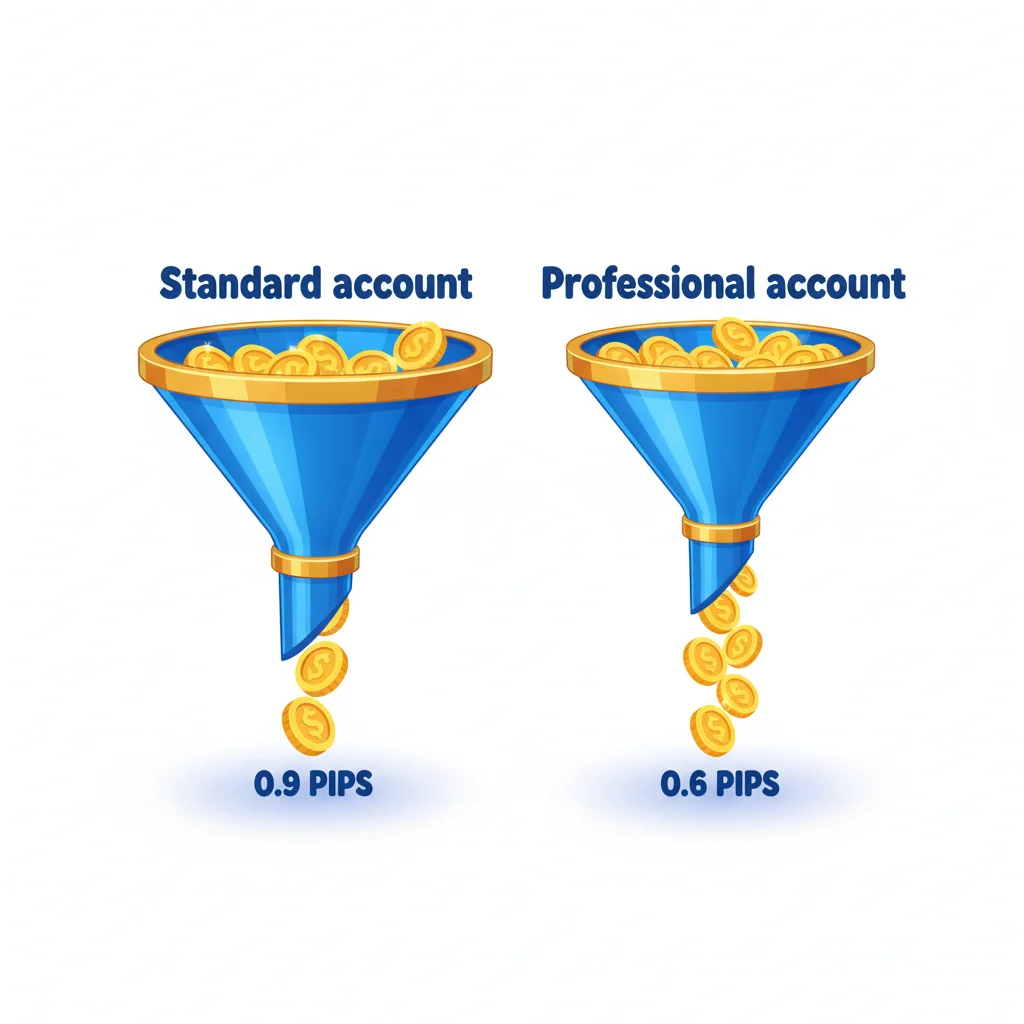
Everyone wants low spreads, but beware of 'too good to be true.' A broker offering 0.0 pips on EUR/USD with a Naira deposit option is probably making money through massive slippage or horrible withdrawal fees. For a realistic benchmark, look for average spreads under 1.5 pips on EUR/USD during the London session. Use a position size calculator to see how the spread actually impacts your potential profit on each trade. A 3-pip spread vs. a 0.8-pip spread can be the difference between a winning and a breakeven scalping strategy.

💡 Совет Уинстона
Your first test of a broker isn't their spreads. It's their withdrawal process. A small, successful withdrawal tells you more than a year of demo trading.
“The 'best' broker isn't about flashy ads. It's about who lets you get your money in, trade without ridiculous slippage, and get your profits out.”
Based on my experience and constant chatter in trading groups, these are the platforms that consistently come up. Remember, 'best' depends on your style.
| Broker | Why It Works for Nigeria | The Catch | Best For... |
|---|---|---|---|
| Exness | Legendary for local deposits/withdrawals. Speed is their thing. | Their standard account spreads can be wider. The 'Raw Spread' account is better but may have commissions. | Beginners & traders who prioritize fast, hassle-free money movement above all. Read our full Exness review. |
| IC Markets | Raw spreads from 0.0 pips on majors. True ECN environment. | Their local payment processing can sometimes be slower than Exness (think 12-24 hours vs. instant). | Scalping and high-volume traders who need the tightest possible spreads. See our IC Markets review. |
| XM | Massive welcome bonus culture (be careful with bonus terms!). Huge educational resources. | Spreads are not the tightest. The bonus can affect withdrawal conditions if you don't read the fine print. | New traders who want lots of learning materials and don't mind slightly higher costs for structure. Check the XM review. |
| Pepperstone | Top-tier ASIC regulation. Excellent execution speed and Razor account for tight spreads. | Naira deposit options exist but aren't as deeply integrated as the top two. A great 'second broker' option. | Experienced traders who value regulation and execution quality and have a reliable forex card for funding. Our Pepperstone review has details. |

Pro Tip: Don't put all your capital in one broker. I keep 70% in my main (IC Markets for my style) and 30% in a secondary (Exness). It diversifies withdrawal risk and lets you compare execution live.
I wish I started with this knowledge. Here are two expensive lessons from my early days.
The 'Too-Good-To-Be-True' Bonus Trap: In 2018, I deposited $500 with a broker offering a 100% deposit bonus. My account showed $1000. I traded gold (XAU/USD) and got it to $1800. Time to withdraw my profit, right? Nope. The bonus terms had a 25x volume requirement. I had to trade a volume of ($500 bonus * 25) = $12,500 lots before I could touch my original $500. I was trading 0.1 lots. You do the math. I ended up overtrading to hit the target and blew the account. The 'bonus' was a leash. Now, I always trade no-bonus, raw accounts.
The Slippage Disaster: This was on a now-defunct broker. I was swing trading GBP/JPY. Placed a stop-loss at 148.50. News hit, and the market gapped. My stop was filled at 149.85 – a 135-pip slippage. On a 2-lot position, that was a $2700 loss instead of the $400 I had planned for. The broker's 'explanation' was 'extreme market volatility.' A reputable broker with better liquidity providers would have had far less slippage. This is why I now value brokers like IC Markets or Pepperstone for their deep liquidity pools, especially for a volatile pair like GBP/JPY. Understanding spread and slippage is just as important as your entry signal.
💡 Совет Уинстона
If a broker's main selling point is a huge deposit bonus, walk away. You're the product, not the customer. They make money from your overtrading.
“I avoid depositing with a debit card linked to my main bank account. Some banks flag forex broker transactions as 'suspicious' and can block your card.”
Getting money in and out is the real test. Here's my current method, refined over years.
For Deposits: I use a direct bank transfer to my broker's local Nigerian partner. It usually reflects in under an hour. I avoid depositing with a debit/credit card linked to my main bank account. Why? Some banks flag international forex broker transactions as 'suspicious' and can block your card. Use a separate account or a dedicated payment method.
For Withdrawals: Always withdraw to the same method you deposited with. This is Anti-Money Laundering (AML) 101 and speeds things up. If you deposited via bank transfer, withdraw to the same bank account. My rule is to do a small test withdrawal first whenever I use a new broker or method. Withdraw $50. If it comes in 24 hours, you're good. Then scale up.
The Tax Question: As of now, Nigeria does not have a specific capital gains tax on individual forex trading profits. However, you are required to declare all income. The landscape could change, so keep clean records of all your deposits and withdrawals. A spreadsheet is your friend.

Example: Let's say you make a 300,000 Naira profit in a month. You withdraw it successfully. While no specific forex tax is deducted, that income could be considered part of your total annual income for personal income tax purposes. Consult a local accountant for the latest advice.
Most of the brokers we've discussed offer MetaTrader 4 or 5. MT5 is becoming the standard, and it's what I use. It handles more order types and has better backtesting capabilities.
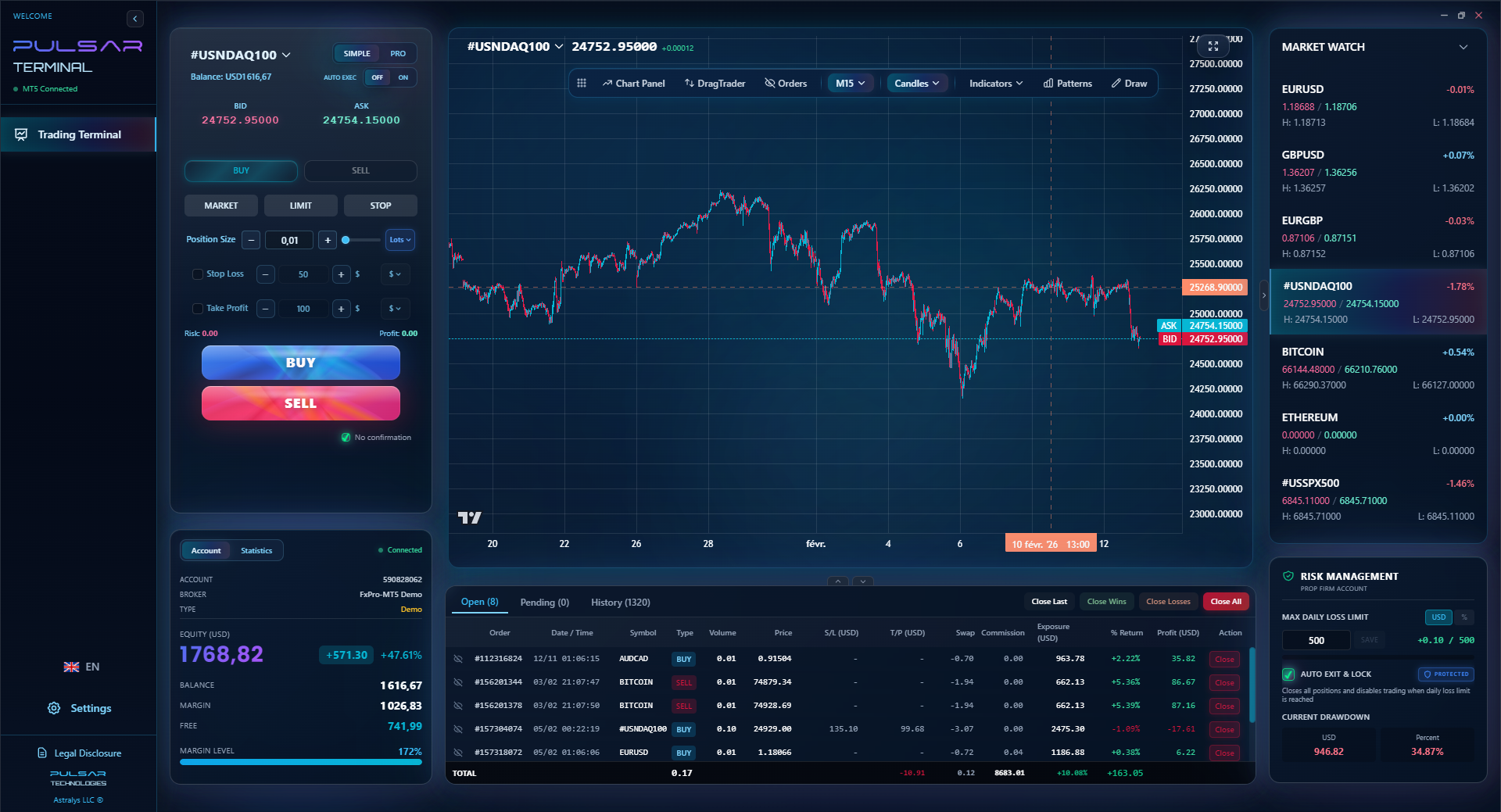
But the vanilla MT5 platform is pretty basic. This is where third-party tools become a force multiplier. I use a companion app that plugs right into MT5. Why? Because managing trades on a volatile day is stressful. I can set a trailing stop that automatically moves, or place a grid of orders around a key level without manually opening 10 charts.
For analysis, I've moved beyond just the RSI indicator and MACD indicator. Understanding where big volume trades are happening is key. Tools that show Volume Profile directly on my MT5 charts have been a game-changer for identifying true support and resistance. It helps you see the market structure, not just the noise. Having these tools integrated means I'm not jumping between five different apps; everything is on one screen, which is crucial for maintaining focus.
Managing complex trades and using advanced tools like Volume Profile directly on MT5 is what turns a good setup into a great trade, and that's where Pulsar Terminal shines.
Pulsar Terminal
Универсальный инструмент для MT5: drag-and-drop ордера, мульти-TP/SL, трейлинг-стоп, грид-трейдинг, Volume Profile и защита для проп-фирм. Используется 1000+ трейдерами ежедневно.
“A 3-pip spread vs. a 0.8-pip spread can be the difference between a winning and a breakeven scalping trade.”
So, who is the best forex broker in Nigeria? For the majority of new and intermediate traders, Exness is the safest starting point. Their unparalleled local payment processing removes the biggest barrier to entry. You can focus on learning to trade, not on chasing customer support about your deposit.
As you evolve and your volume increases, you might outgrow them. That's when you graduate to a broker like IC Markets for their razor-sharp ECN pricing, especially if you're getting into advanced strategies that require precision.
Your action plan:
- Pick one broker from the list above (I'd suggest starting with Exness or IC Markets).
- Open a demo account AND a live cent account (where $1 = 100 cents). Trade the demo for strategy, trade the cent account to test deposits, withdrawals, and execution with real, but risk-free, money.
- Make a small deposit, trade for a month, and then do a test withdrawal. If that process is smooth, you've found a contender.
- Never stop learning. The market changes, and so should you. A good broker is just the foundation. Your discipline and strategy build the house on top of it. And always know what a margin call is and how to avoid it – that's on you, not your broker.
FAQ
Q1Is forex trading illegal in Nigeria?
No, it is completely legal for individuals to trade forex in Nigeria. The Central Bank of Nigeria (CBN) and the Securities and Exchange Commission (SEC) oversee financial markets, but there is no law prohibiting retail forex trading.
Q2Which broker is best for beginners in Nigeria?
For a total beginner, Exness is often the easiest due to its extremely reliable and fast Naira deposit/withdrawal system. Removing the funding hassle lets you focus on learning. Their platform is also very straightforward.
Q3How do I avoid forex trading scams in Nigeria?
Stick to internationally regulated brokers (CySEC, ASIC, FCA) with a long track record. Avoid any 'broker' that promises guaranteed profits, asks for direct payment to a personal account, or has no verifiable regulatory license. If it sounds too good to be true, it is.
Q4Can I trade with dollars in Nigeria?
Your trading account with an international broker will be denominated in USD (or EUR, GBP). You deposit Naira, the broker or their payment processor converts it to USD to fund your account. All your trading and profits are in dollars, but you withdraw Naira.
Q5What is the minimum amount to start forex trading in Nigeria?
You can start with as little as $10 (about 15,000 Naira) on a cent account or a micro account. Seriously, start small. The goal of your first deposit is to learn the process and test the broker, not to get rich.
Q6Do I pay tax on forex trading profits in Nigeria?
There is currently no specific 'forex trading tax.' However, your trading profits are considered part of your total annual income, which is subject to Personal Income Tax. You should declare it. Always consult a local tax professional for the most current advice.
Урок проф. Уинстона
Ключевые выводы:
- ✓Verify international regulation (CySEC, ASIC) before depositing a single Naira.
- ✓Test withdrawals are more important than demo accounts for broker trust.
- ✓Avoid bonus-focused brokers; they incentivize bad trading habits.
- ✓Start with a cent account to test funding and execution with real, low-risk money.
Насколько полезна эта статья?
Нажмите на звезду
Еженедельные торговые инсайты
Бесплатный еженедельный анализ и стратегии. Без спама.
Об авторе
Olumide Adeyemi
Пионер трейдинга в Западной Африке
Один из самых активных преподавателей форекс-трейдинга в Нигерии. 8 лет торгового опыта из Лагоса. Специализируется на стратегиях с малым капиталом и челленджах проп-фирм для африканских трейдеров.
Комментарии
Предупреждение о рисках
Торговля финансовыми инструментами сопряжена со значительным риском и может не подходить всем инвесторам. Прошлые результаты не гарантируют будущих доходов. Данный контент носит исключительно образовательный характер и не является инвестиционной рекомендацией. Всегда проводите собственное исследование перед торговлей.
Вам также может понравиться

Cara Trading Forex Sukses: 7 Prinsip dari Trader Profesional
Cara trading forex sukses dengan 7 prinsip trader pro: manajemen modal, disiplin, journal trading, backtest. Data nyata, bukan janji profit palsu.
Jam Trading Forex Terbaik untuk Trader Indonesia: Panduan Lengkap dengan Tabel Waktu
Panduan jam trading forex untuk trader Indonesia. Tabel 4 sesi dunia, jam emas 20:00-00:00, sesi mana yang harus dihindari. Data akurat + tips dari trader berpengalaman.
Top 5 Sàn Forex Uy Tín Nhất 2026: Review Jujur dari Trader Indonesia
Top 5 sàn forex uy tín 2026 untuk trader Indonesia. Review jujur: spread, deposit, withdraw, dukungan lokal. Exness, XM, IC Markets & lebih.
Скачать Pulsar Terminal
Все эти калькуляторы встроены в Pulsar Terminal с данными в реальном времени с вашего счёта MT5.
Скачать Pulsar Terminal