


Here's the uncomfortable truth most 'gurus' won't tell you: forex and commodity trading in India isn't a get-rich-quick scheme.
Rajesh Sharma
Старший форекс-аналитик ·  India
India
☕ 10 мин чтения
Что вы узнаете:

Here's the uncomfortable truth most 'gurus' won't tell you: forex and commodity trading in India isn't a get-rich-quick scheme. It's a regulatory minefield where the odds are structurally stacked against you. The biggest risk isn't the market - it's your own psychology and a fundamental misunderstanding of the rules. I've seen too many traders, myself included in the early days, make expensive mistakes that could have been avoided. This guide will walk you through the harsh realities, the legal framework you can't ignore, and the one skill that separates the survivors from the statistics.
Let's get this out of the way first. If you're thinking about trading EUR/USD or Gold with an international broker, you're already on the wrong side of the law. The Reserve Bank of India (RBI) and SEBI have drawn a very clear, very restrictive line in the sand.
For forex, you are only allowed to trade INR-based pairs. Think USD/INR, EUR/INR, GBP/INR on SEBI-regulated exchanges like the NSE. That's it. Trading major pairs like EUR/USD through an offshore broker is illegal under FEMA. The RBI even publishes an 'Alert List' of unauthorized entities. Getting caught can mean penalties, frozen accounts, and a world of hassle. It's not worth it.
Commodity trading is a bit more straightforward but still tightly regulated by SEBI. Your playground is the Multi Commodity Exchange (MCX) and NCDEX for futures and options on everything from Crude Oil and Natural Gas to Gold and Silver. The spot market is a different beast, regulated by states, and not where most retail traders operate.

Warning: Using a VPN to sign up with an international forex broker like Exness or IC Markets for currency trading is a direct violation of Indian law. You might get away with it for a while, but you have zero legal recourse if that broker decides to withhold your funds.
The first rule of survival is knowing the battlefield. In India, the battlefield for forex and commodity trading is defined by regulators, not by your ambition.
“The biggest risk isn't the market - it's your own psychology and a fundamental misunderstanding of the rules.”
Forget the 'zero commission' ads. Your real enemy is the silent drip of transaction costs and taxes. Most beginners calculate their profit based on entry and exit price, completely ignoring the overhead that turns a winning trade into a breakeven or a loser.
The Tax Bite
Your trading profits are treated as business income. That means they get added to your salary and taxed at your slab rate. Yes, you can deduct legitimate expenses (brokerage, data feeds, even a portion of your internet bill), but the net profit is fully taxable. There's a common misconception about the ₹2.5 Lakh exemption - that's your basic income tax exemption, not a trading-specific freebie.
For commodities, there's an extra layer: the Commodity Transaction Tax (CTT).
| Instrument | CTT Rate | Who Pays? |
|---|---|---|
| Futures (Non-Agri) | 0.01% of turnover | Seller |
| Options (Premium) | 0.05% of premium | Seller |
| Options (Exercised) | 0.0001% of settlement | Buyer |
It seems small, but on a ₹10 lakh futures trade, that's ₹100 gone before you even account for brokerage or the spread. And agricultural commodities? They're CTT-exempt.
The Brokerage & GST Combo
Your broker's commission or fees have an 18% GST slapped on top. This isn't optional. Every ticket you punch has this cost embedded. When you're scalping for small moves, these costs become the dominant factor in your profitability. A series of ten 5-pip wins can be completely erased by costs if your position size isn't accounting for them.
I learned this the hard way in 2018. I had a great run on MCX Crude, making what I thought was ₹78,000 over two weeks. When I sat down with my accountant, between brokerage, CTT, GST, and income tax, my actual take-home was closer to ₹42,000. The government and my broker made almost as much as I did. It was a brutal lesson in gross vs. net.

💡 Совет Уинстона
The market doesn't know you exist. Your ego, your hopes, your rent payment - they mean nothing to the price chart. Trade the chart, not your narrative.

“You can have a 70% win rate and still go bankrupt.”
Market wizards and complex strategies get all the press. But the graveyard of retail trading accounts is filled with corpses that died from one simple cause: poor position sizing and no risk management. You can have a 70% win rate and still go bankrupt.
Here's the math that kills people. Let's say you have a ₹1 lakh account. You see a 'sure thing' setup in USD/INR. You get greedy and put on a trade risking ₹5,000 (5% of your account). You lose. Your account is now ₹95,000. To get back to ₹1 lakh, you need a 5.26% return. Not too bad. But what if you have a bad week and lose three in a row? Account at ₹85,737. To recover, you now need a 16.6% return. The hole gets deeper, the pressure mounts, and you start doubling down to 'get back to even.' That's when the real disaster happens - a single trade wipes out 30-40% of your remaining capital. I've been there. In 2015, trying to recover from a loss on XAU/USD (back when I foolishly used an offshore account), I broke every rule and turned a ₹50,000 loss into a ₹2.1 lakh disaster in 48 hours. It was entirely due to emotional position sizing.

Pro Tip: Your maximum risk on any single trade should never exceed 1-2% of your trading capital. Use a position size calculator for every single entry. This isn't a suggestion; it's the oxygen mask you need to survive long enough to learn.
The second killer is ignoring the margin call. On leveraged derivatives, a small move against you can trigger an automatic liquidation. You don't get to 'wait it out.' The exchange closes your position, locks in the loss, and that's that. Your broker isn't your friend in this moment; they're protecting their capital.
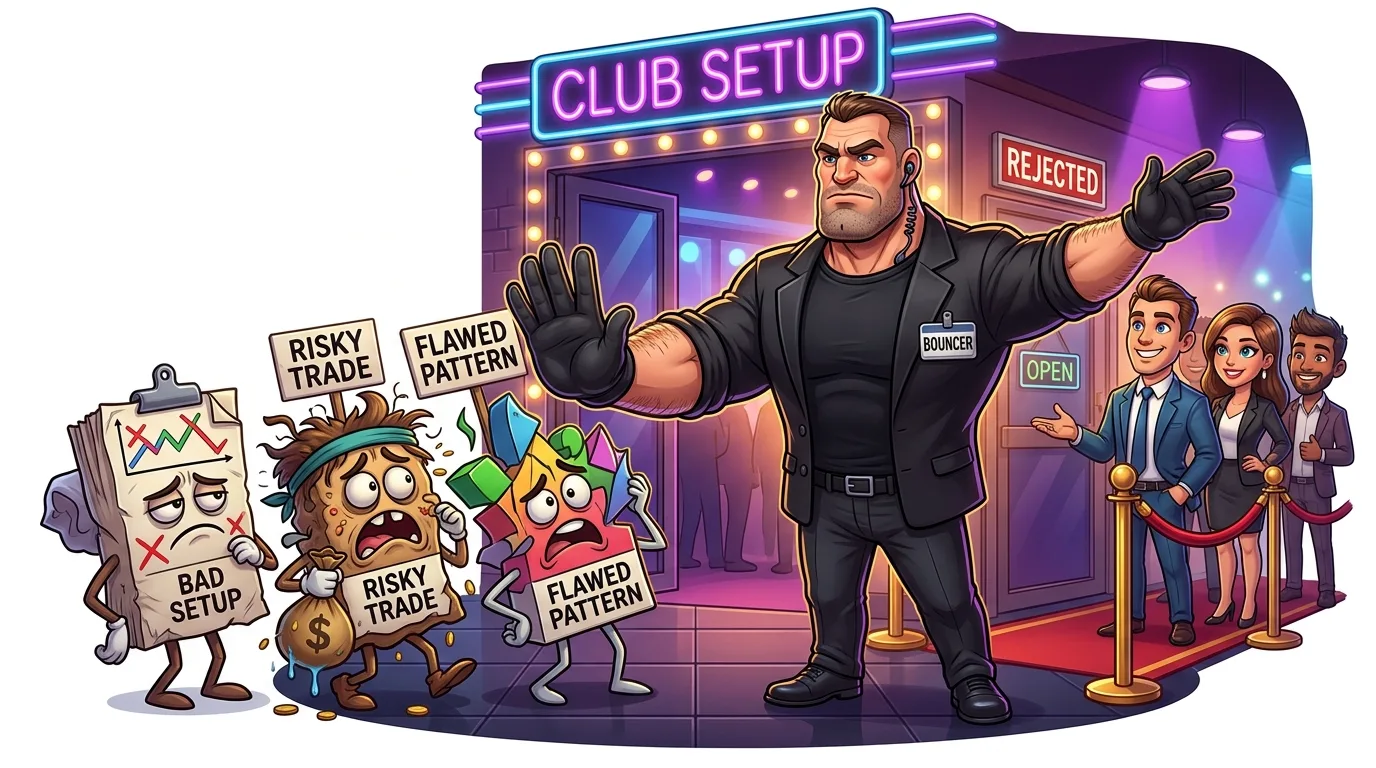
“You can have a 70% win rate and still go bankrupt.”
Within the Indian framework, these are two different games with different rhythms.
INR Forex (USD/INR, EUR/INR): This market is heavily influenced by macroeconomics. RBI policy announcements, dollar inflows/outflows, and global risk sentiment are the main drivers. It can be slow for long periods, then explode on news. The spread can be wider than you're used to hearing about for majors like EUR/USD. Liquidity is deepest in USD/INR. It's a market for patient, fundamentally-oriented traders, not for frantic scalpers.
Commodities (MCX Gold, Crude, Natural Gas): This is where the action is for most Indian traders. MCX prices largely follow international benchmarks (like COMEX Gold or NYMEX Crude), but with an Indian twist - the currency conversion (INR/USD) and local demand/supply. You get 24-hour trading in many contracts. It's volatile, news-driven (EIA inventory reports, OPEC meetings), and perfect for technical traders. The liquidity in main contracts like Gold and Crude is excellent.
My personal bias? I found my edge in commodities. The charts behaved more technically, and the volatility offered clearer swing trading opportunities. The forex pairs felt too 'managed' and politically driven for my style. But that's me. You need to paper trade both to see which market rhythm suits your psychology.
💡 Совет Уинстона
A losing trade executed according to your plan is a successful exercise in discipline. A winning trade born from a reckless gamble is a failure that cost you a lesson.

“Your goal in the first year is not to make money. Your goal is to not lose money.”
Forget the 10-indicator setups flashing on YouTube. A sustainable approach is boringly simple. Here's the three-part framework I've used for the last 8 years.
- The Trigger: This is your entry signal. Keep it objective. It could be a price breaking a key weekly high or low. It could be a specific crossover on the MACD indicator on the 4-hour chart. It must be binary - yes or no. No 'maybe.'
- The Risk Gate: Before you even think about entering, you define your stop-loss. Where does this trade idea prove wrong? Place your stop there. Then, using your 1% risk rule, calculate your position size. Only now do you know if the trade is viable. If the stop is so wide that your position size is tiny, you might skip it. That's fine.
- The Exit Plan: Have a profit target based on a measured move or a key support/resistance level. Consider taking partial profits. The hardest part is letting winners run while protecting gains. This is where a tool that automates trailing stops or partial closures becomes useful for removing emotion.
Let me give you a real example from last month on MCX Gold (DEC contract).
- Trigger: Price consolidated between ₹72,100 and ₹72,800 for 3 days. Break above ₹72,850 was my long trigger.
- Risk Gate: Stop-loss placed at ₹72,300 (a 550 rupee risk per 10 grams). My capital allowed a 2.5-lot position to keep risk at 1.2%.
- Exit Plan: First target at ₹73,500 (take 50% off), trail the rest with a stop moved to breakeven. The trade hit the first target, ran to ₹74,100, and was stopped out at ₹73,000 on the trail. Net result: a solid, managed win. The system executed it. I just followed the plan.
This framework works because it reverses the default psychology. You start with what you can lose, not what you can win.

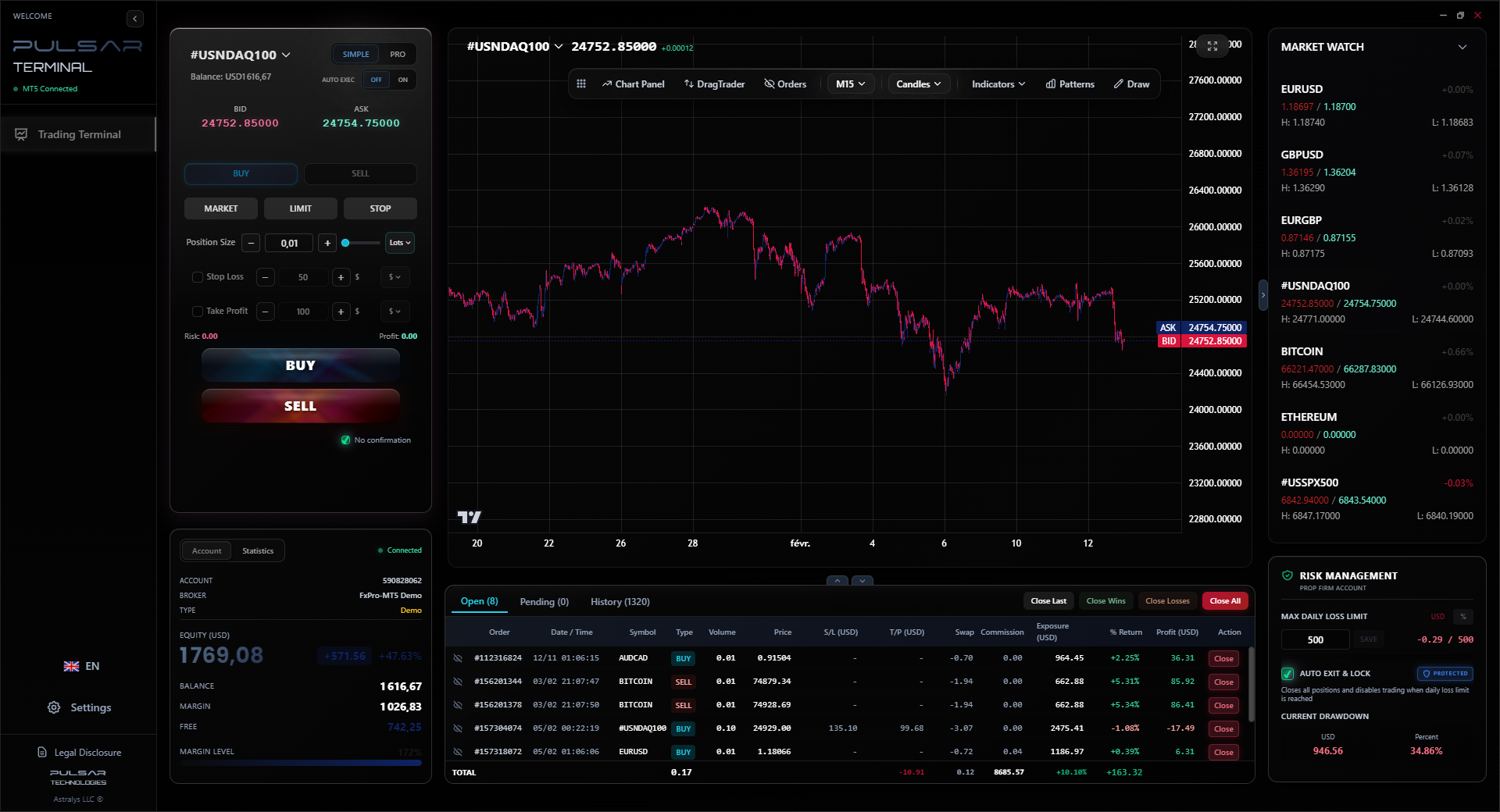
Executing a multi-part exit plan without emotion is nearly impossible manually, which is why tools like Pulsar Terminal that automate trailing stops and partial closures directly on MT5 are game-changers for discipline.
Pulsar Terminal
Универсальный инструмент для MT5: drag-and-drop ордера, мульти-TP/SL, трейлинг-стоп, грид-трейдинг, Volume Profile и защита для проп-фирм. Используется 1000+ трейдерами ежедневно.
“Your goal in the first year is not to make money. Your goal is to not lose money.”
Your broker is a utility, not a partner. For trading INR pairs and commodities, you must use a SEBI-registered broker. Full stop. Names like Zerodha, Upstox, Angel One, and ICICI Direct are the giants here.
Don't get seduced by fancy platforms alone. You need to scrutinize:
- Reliability: Does their platform crash during high volatility (like RBI announcements or EIA data)? This is a deal-breaker.
- Margin Requirements: These can change overnight based on exchange directives. Know the margin for your intended position size, plus have a buffer.
- Execution & Slippage: How do they handle your market orders? In fast markets, a bad fill can ruin a good trade.
I've used several over the years. The discount brokers are great for cost, but their in-house charting and tools can be basic. You might need a third-party charting software for serious analysis. The full-service brokers cost more but sometimes offer better research (though I'm skeptical of most broker research).
Your relationship with your broker is transactional. You pay for order routing and custody. That's it. Never rely on their 'tips' or 'calls.' Their business model is based on your activity, not your profitability.
💡 Совет Уинстона
Your first ₹50,000 in trading capital is tuition, not investment. Expect to pay it all to learn. If you get any back, consider it a scholarship.

“The ones who make it are the most brutally honest with themselves about what they can and cannot control.”
If you're new, here's your mandatory to-do list before risking real money.
- Open a Demo Account: Use a demo with a major Indian broker. Get a feel for their platform, how orders are placed, how margins work. Trade the demo for a minimum of 3 months. Treat the virtual money as if it's real.
- Journal Relentlessly: For every demo trade, record: Entry/Exit, Reason for Trade (what was your trigger?), Emotion at entry/exit, Outcome. After 100 trades, look for patterns. Are you losing on impulsive trades? Are you cutting winners too short? The journal tells the truth your ego hides.
- Start Absurdly Small: When you go live, start with capital you can afford to lose completely. I'm talking ₹25,000-₹50,000. Your goal in the first year is not to make money. Your goal is to not lose money. To survive. To learn the real-time emotional hit of seeing your 1% risk actually disappear on a screen. If you can preserve that small capital for 6 months, you've passed the first real test.
Forex and commodity trading in India can be a legitimate business. But it's a business of risk management, not prediction. The market will humble you. The regulations will constrain you. Your own mind will betray you. The ones who make it aren't the smartest or the luckiest. They're the most disciplined, the most patient, and the most brutally honest with themselves about what they can and cannot control.
FAQ
Q1Is forex trading legal in India?
Yes, but only for INR-based currency pairs (like USD/INR, EUR/INR) traded through SEBI-regulated brokers on Indian exchanges like the NSE. Trading international pairs (like EUR/USD) through offshore brokers is illegal under FEMA.
Q2What is the Commodity Transaction Tax (CTT)?
CTT is a direct tax on the sale of non-agricultural commodity derivatives in India. For futures, the seller pays 0.01% of the trade value. For options, the seller pays 0.05% of the premium. It's an additional cost that directly reduces your profitability.
Q3How are trading profits taxed in India?
Profits from both forex and commodity trading are typically treated as 'Business Income' and added to your total income, taxed at your applicable income tax slab rate. You can deduct related expenses like brokerage and CTT.
Q4Can I use international brokers like Exness or IC Markets?
For trading forex currency pairs, no - it's illegal for an Indian resident. These brokers may be used for trading other international instruments (like global stocks), but you must ensure you are complying with RBI's Liberalised Remittance Scheme (LRS) rules for sending money abroad.
Q5What's the biggest mistake new commodity traders make?
Ignoring position sizing and use. They trade too large a position for their account size. A small move against them triggers a margin call or a devastating loss they can't recover from. Always risk 1% or less per trade.
Q6Which is better for beginners, forex or commodities?
There's no universal answer. Commodities (MCX) often have more consistent volatility and clearer technical patterns, which some find easier. INR forex can be slower and more fundamental. The best advice is to paper trade both extensively on a demo account to see which market 'personality' suits your temperament.
Q7Do I need a professional software for charting?
Broker platforms have basic tools. For serious technical analysis - using advanced tools like Volume Profile or complex drawing tools - many professional traders use third-party software. This is an expense to consider after you've mastered the basics.
Урок проф. Уинстона
Ключевые выводы:
- ✓Risk a maximum of 1-2% per trade, no exceptions.
- ✓INR forex only. Offshore forex is illegal.
- ✓Factor in CTT & GST; they turn winners into breakevens.
- ✓Demo trade for 3 months before using real money.
- ✓Your broker is a utility, not a guru.
Насколько полезна эта статья?
Нажмите на звезду
Еженедельные торговые инсайты
Бесплатный еженедельный анализ и стратегии. Без спама.
Об авторе
Rajesh Sharma
Старший форекс-аналитик
Более 10 лет торгует на индийских и южноазиатских рынках. Начинал с валютных деривативов на NSE, затем перешёл на международный форекс. Специализируется на USD/INR и парах развивающихся рынков.
Комментарии
Предупреждение о рисках
Торговля финансовыми инструментами сопряжена со значительным риском и может не подходить всем инвесторам. Прошлые результаты не гарантируют будущих доходов. Данный контент носит исключительно образовательный характер и не является инвестиционной рекомендацией. Всегда проводите собственное исследование перед торговлей.
Вам также может понравиться

Cara Trading Forex Sukses: 7 Prinsip dari Trader Profesional
Cara trading forex sukses dengan 7 prinsip trader pro: manajemen modal, disiplin, journal trading, backtest. Data nyata, bukan janji profit palsu.
Jam Trading Forex Terbaik untuk Trader Indonesia: Panduan Lengkap dengan Tabel Waktu
Panduan jam trading forex untuk trader Indonesia. Tabel 4 sesi dunia, jam emas 20:00-00:00, sesi mana yang harus dihindari. Data akurat + tips dari trader berpengalaman.
Top 5 Sàn Forex Uy Tín Nhất 2026: Review Jujur dari Trader Indonesia
Top 5 sàn forex uy tín 2026 untuk trader Indonesia. Review jujur: spread, deposit, withdraw, dukungan lokal. Exness, XM, IC Markets & lebih.
Скачать Pulsar Terminal
Все эти калькуляторы встроены в Pulsar Terminal с данными в реальном времени с вашего счёта MT5.
Скачать Pulsar Terminal