


Here's a hard truth: 90% of the 'forex articles' you'll find online are either useless or dangerous.

Olumide Adeyemi
Пионер трейдинга в Западной Африке ·  Nigeria
☕ 9 мин чтения
Что вы узнаете:

Here's a hard truth: 90% of the 'forex articles' you'll find online are either useless or dangerous. They're written by people who've never placed a real trade, promising you a 'secret system' that will make you a millionaire by next week. In Nigeria, where the hunger for financial freedom is real, this noise is deafening. I've lost money following bad advice from flashy blogs before I learned to filter the signal from the static. This guide isn't just another article; it's a filter. I'll show you what to look for, what to run from, and how to use good information to actually build something that lasts.
Open Instagram or Facebook in Lagos, and you'll be flooded. 'Master Forex in 3 Days!' 'From 50k to 5 Million Naira Guaranteed!' It's a carnival, and the ringmasters are selling dreams, not education. The problem with most forex articles targeting Nigerians is they prey on hope, not intellect. They sell the destination - the Benz, the mansion - and skip the grueling, unsexy journey of learning. I fell for it early on. I paid 150,000 Naira for a 'signal group' that just copied and pasted analysis from free websites. The trades were late, the logic was absent, and my account bled.
Real trading education feels boring in comparison. It's about risk management, psychology, and repetitive practice. A valuable forex article won't make your heart race with get-rich-quick fantasies. It'll make you nod slowly and think, 'Okay, that makes sense. I can test that.' The first skill you need isn't identifying a bullish flag; it's identifying a trustworthy source.

Warning: If an article's main image is a guy posing on a private jet or stacking dollar bills, close the tab. Immediately. They are selling a lifestyle, not a skill. The real pros I know are more concerned with their weekly win rate and position size calculator than photoshoots.
“Real trading education feels boring in comparison to the get-rich-quick fantasy.”
So how do you spot the 10% of content that's worth your time? It comes down to specificity and humility. Look for these signs.
The Hallmarks of Quality
First, real articles use real numbers. Not 'huge profits,' but 'a 2:1 risk-reward ratio on a 50-pip stop loss.' They talk about losing trades as much as winning ones. I remember a key article I read years ago where the trader detailed a failed swing trading setup on GBP/JPY. He showed his entry, his reasoning, and exactly how the market proved him wrong. That taught me more than a hundred '10 Trades That Made Me Rich' posts.
Second, they focus on mechanics. How do you set a stop loss? What's the actual process for determining entry? They explain the 'why' behind the 'what.' For instance, a good piece on the MACD indicator won't just say 'buy when the lines cross.' It will discuss convergence/divergence, the settings used (like 12,26,9), and, crucially, the market conditions where it tends to fail.

Pro Tip: Bookmark articles that include phrases like 'common mistake I made,' 'this didn't work because,' or 'here's my backtest data.' The author's willingness to show vulnerability is a strong indicator of experience.

💡 Совет Уинстона
The most profitable article I ever read was three pages long and 80% of it was about how to keep a trading journal. The strategy was the easy part. The discipline to record why you failed was the gold.

“Your chart and your trade log are the most important texts you'll ever read.”
This is a minefield. Many 'review' sites are just affiliate marketing fronts. They get paid more for every sign-up, so their 'top broker' list changes based on who's paying the highest commission this month. I learned this the hard way when I deposited with a broker touted as 'best for Nigerians' only to face withdrawal delays and unresponsive support.
A genuine review should be a balanced report card. It must cover:
| What to Look For | Why It Matters in Nigeria |
|---|---|
| Withdrawal Speed & Methods | Can you get your money via local bank transfer? How many days does it take? This is non-negotiable. |
| Customer Support | Do they have a Lagos phone number or WhatsApp? Can they explain things in plain English (or Pidgin)? |
| Regulation | Are they licensed by a reputable authority? This is your safety net. |
| Spreads & Fees | Specifically on the pairs you trade. A low spread definition on EUR/USD means nothing if they kill you on GBP/NGN. |
Do your own cross-referencing. Don't just read one review. Look for consistent complaints or praises across multiple independent sources, like our deep dives on Exness review, IC Markets review, and XM review. If every user review says 'withdrawals are fast,' that's a data point. If the only positive words are on a single 'review' site, be very suspicious.
“Your chart and your trade log are the most important texts you'll ever read.”
You don't need to read everything. You need to curate a small, powerful library of reliable forex articles and tools. Start with the foundations and build out.
Core Categories to Bookmark:
- Market Mechanics: Find one definitive guide on how forex actually works - what a pip definition is, how use works, what causes a margin call. Get this 100% clear in your head.
- Instrument-Specific Guides: Don't jump from pair to pair. Pick one or two majors and learn their personality. A deep guide on EUR/USD guide or XAU/USD guide (Gold) is worth 100 vague articles on 'forex trading.'
- Strategy Deep Dives: Find detailed explanations of a few strategies, like a scalping strategy or the aforementioned swing trading guide. Understand the rules, the required screen time, and the typical risk per trade.
- Indicator Manuals: Pick two or three indicators and master them. Understand the math behind the RSI indicator and how to spot divergences. Know what the MACD histogram is really telling you. Depth beats breadth every time.
Your goal is to have a folder of 10-15 truly excellent references, not 500 open tabs of confusing, contradictory advice. Re-read them every few months. You'll understand new layers each time as your experience grows.
💡 Совет Уинстона
If you wouldn't take medical advice from a website covered in pop-up ads, don't take trading advice from one either. The presentation tells you everything about the author's priorities.

“The glamour of big wins distracts from the grind. Focus on the parts of an article that talk about losing.”
Your spidey-sense should tingle when you see these. They've saved me countless hours and naira.
- No Risk Discussion: If an article or strategy doesn't dedicate at least 30% of its content to where to place a stop loss and how much to risk, it's garbage. Period. Trading is first about survival.
- 'Guaranteed' Profit or 'Risk-Free': The only thing guaranteed in forex is that you can lose money. Anyone offering a guarantee is lying. Run.
- Overly Complex Systems: Charts covered in 15 different colored indicators, arrows, and scripts. This is often used to intimidate you into thinking the author is a genius. Real edge is often simple and boring.
- Pressure to Act NOW: 'Limited-time offer to join my mentorship!' 'The market is about to move, buy this course today!' This is pure sales manipulation. The market will be there tomorrow.
- Vague Language: 'The market looks poised for a big move.' Poised according to what? Where? How big? Vague = worthless. Demand specifics.
I once followed a 'breakout' strategy from a popular blog that was all hype and no substance. The rules were fuzzy. I took three trades, lost on all of them, and couldn't even figure out why because the instructions were so poorly defined. That was a 60,000 Naira lesson in valuing clarity over charisma.
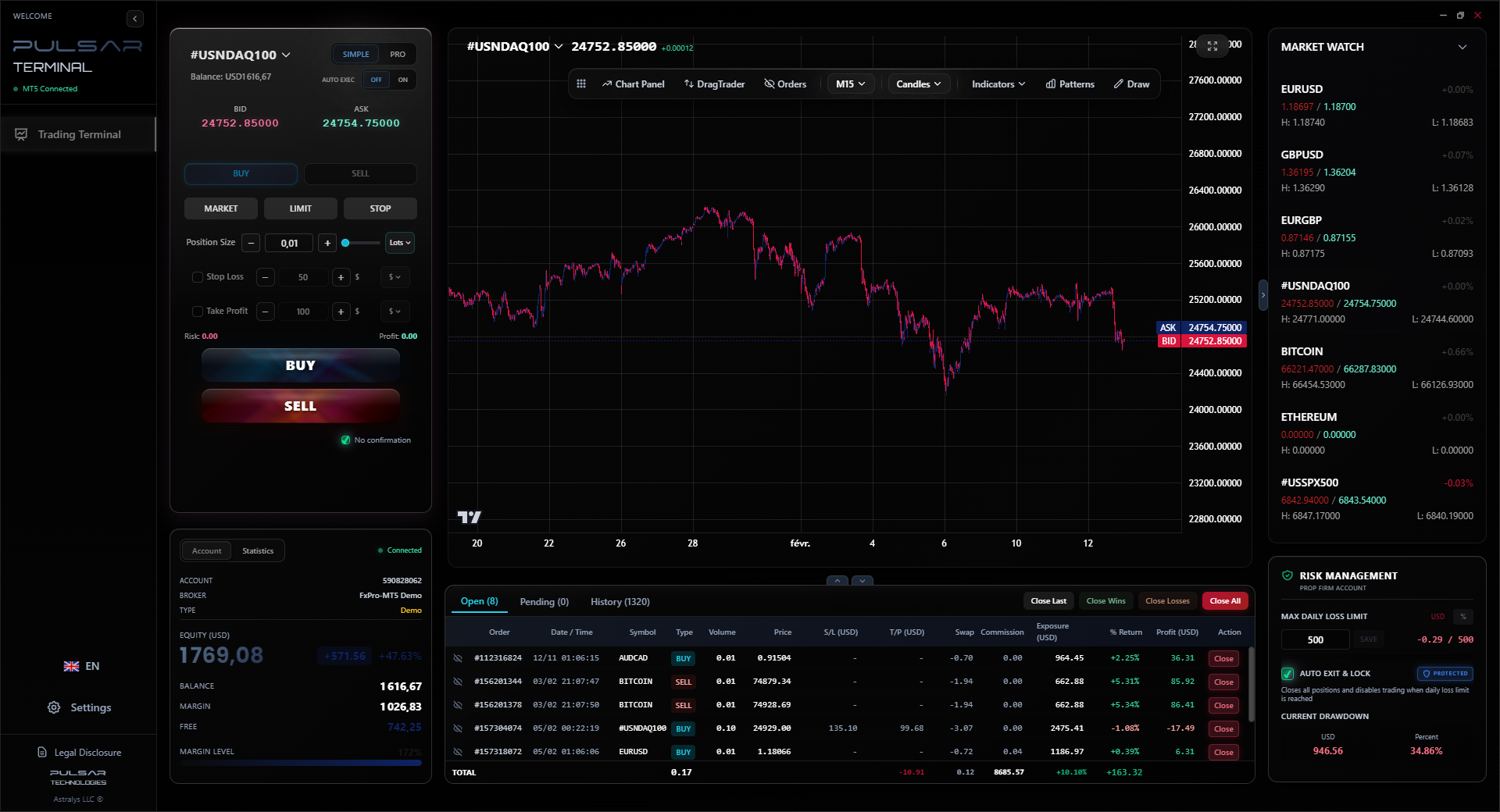
When testing strategies from articles, precise order execution and risk management are non-negotiable, which is where a tool like Pulsar Terminal transforms your MT5 platform.
Pulsar Terminal
Универсальный инструмент для MT5: drag-and-drop ордера, мульти-TP/SL, трейлинг-стоп, грид-трейдинг, Volume Profile и защита для проп-фирм. Используется 1000+ трейдерами ежедневно.
“The glamour of big wins distracts from the grind. Focus on the parts of an article that talk about losing.”
Consuming forex articles is passive. Trading is active. You need a system to turn information into execution. Here's my simple funnel.
Step 1: The Demo Lab. Read one concept - say, support and resistance. Don't read another thing. Go to your demo platform (I recommend starting with a broker like Pepperstone review for their strong demo accounts) and do nothing but mark up support and resistance lines on the 1-hour chart for a week. Don't trade. Just identify them.
Step 2: The Single-Test. Now, read a simple strategy that uses those levels. Maybe a bounce trade. On your demo, set an alert for when price approaches a key level. Practice entering, setting a stop loss beyond the level, and setting a take profit. Do this 20 times. Record every outcome in a journal.
Step 3: Analyze & Refine. Look at your journal. Did the strategy work more often on EUR/USD or GBP/JPY? Did it fail more during the London open or the New York session? This is your own data, infinitely more valuable than any article.
Step 4: Scale Up Slowly. Only after consistent demo success should you go live with tiny, almost insignificant amounts of real money. The goal here isn't profit; it's to feel the psychological pressure of real risk. This process turns abstract articles into concrete, personal skill.

Example: Let's say you read about the RSI. Instead of just nodding, test it. On demo, take 10 trades where you buy only when RSI crosses above 30 from below on the 4H chart, with a stop loss at the recent low. Log the results. That's how knowledge becomes yours.
💡 Совет Уинстона
Print out your top 5 articles. Read them with a highlighter. The parts you highlight today will be different from the parts you highlight in six months. That's how you measure your growth.
“Depth and consistency from a few sources beats shallow noise from many.”
The forex market evolves. New regulations pop up, broker conditions change, and global events shift correlations. You can't just read a few articles in 2024 and be set for life. But you also can't live on Forex Factory forums - it's a recipe for anxiety and confusion.
My method is simple: Scheduled, Focused Reading.
- Monday Morning: 30 minutes. I scan the weekly outlook from 2-3 fundamental analysis sources I trust. I'm not looking for trade ideas; I'm looking for the big themes (e.g., 'Central Bank X is likely hawkish this week').
- Post-Session Review: 15 minutes at the end of my trading day. I might read one technical analysis piece on a pattern I saw forming (like a head and shoulders) to see how others interpreted it.
- Bi-Weekly Deep Dive: Every other weekend, I allow myself 1-2 hours to read a long-form guide or research paper on a specific topic I'm trying to improve, like advanced order flow or correlation hedging.
The key is to make your reading intentional. Go in with a question ('How do I better manage a trending market?'), find articles that address it, and get out. Don't get sucked into the endless scroll of news and opinions. Your chart and your trade log are the most important texts you'll ever read.
FAQ
Q1Are free forex articles worth anything, or should I only pay for courses?
The best foundational knowledge is almost always free. The paid courses often just repackage it with fancier graphics. The real value of paid education is structure and mentorship, but you must vet the educator relentlessly. Start with free, high-quality articles and only consider paying once you know exactly what gap in your knowledge you need filled.
Q2I see a lot of articles about prop firm challenges. Are they a good path for Nigerians?
They can be, but tread carefully. They are a test of strict discipline, not just skill. The rules are brutal. Many articles gloss over the intense psychological pressure and the specific rules (like max daily loss limits). If you go this route, your research should focus on articles about challenge psychology and precise rule adherence, not just trading strategies. It's a different game.
Q3How can I tell if a trading strategy from an article will work in Nigeria's market conditions?
Test it during the market hours you can trade. If you're in Lagos and can only trade the London session, a strategy designed for the volatile Tokyo session might not fit. Also, watch for strategies that require ultra-low latency or spreads - our internet and broker conditions might not support it. Always test on demo under your real-world constraints.
Q4What's the biggest mistake Nigerians make when reading forex articles?
Believing the headline and skipping the risk management section. We see 'Make 100 Pips a Day!' and get excited, but ignore the part where it says 'with a 50-pip stop loss and a 2% max risk.' The glamour distracts from the grind. Focus on the parts that talk about losing.
Q5Should I follow the trade signals or 'calls' given in some articles?
Almost never. By the time you read it, the move is often over. More importantly, you don't learn the reasoning. It creates dependency. Use them as educational examples - 'Why did the author call that level support?' - not as a signal service. Your own analysis is the only thing that will make you a consistent trader.
Q6How many sources should I follow?
Fewer than you think. Find 3-5 writers or analysts whose logic consistently resonates with you and who emphasize risk. Following 50 sources leads to 'analysis paralysis,' where you're too confused by conflicting views to ever pull the trigger. Depth and consistency from a few beats shallow noise from many.
Урок проф. Уинстона
Ключевые выводы:
- ✓Filter 90% of content out immediately; focus on the 10% with specifics.
- ✓Always test a strategy 20+ times on demo before believing it.
- ✓The author's discussion of risk is more important than their profit claims.
- ✓Build a personal library of 10-15 core references, not 500 open tabs.
Насколько полезна эта статья?
Нажмите на звезду
Еженедельные торговые инсайты
Бесплатный еженедельный анализ и стратегии. Без спама.
Об авторе
Olumide Adeyemi
Пионер трейдинга в Западной Африке
Один из самых активных преподавателей форекс-трейдинга в Нигерии. 8 лет торгового опыта из Лагоса. Специализируется на стратегиях с малым капиталом и челленджах проп-фирм для африканских трейдеров.
Комментарии
Предупреждение о рисках
Торговля финансовыми инструментами сопряжена со значительным риском и может не подходить всем инвесторам. Прошлые результаты не гарантируют будущих доходов. Данный контент носит исключительно образовательный характер и не является инвестиционной рекомендацией. Всегда проводите собственное исследование перед торговлей.
Вам также может понравиться

Cara Trading Forex Sukses: 7 Prinsip dari Trader Profesional
Cara trading forex sukses dengan 7 prinsip trader pro: manajemen modal, disiplin, journal trading, backtest. Data nyata, bukan janji profit palsu.
Jam Trading Forex Terbaik untuk Trader Indonesia: Panduan Lengkap dengan Tabel Waktu
Panduan jam trading forex untuk trader Indonesia. Tabel 4 sesi dunia, jam emas 20:00-00:00, sesi mana yang harus dihindari. Data akurat + tips dari trader berpengalaman.
Top 5 Sàn Forex Uy Tín Nhất 2026: Review Jujur dari Trader Indonesia
Top 5 sàn forex uy tín 2026 untuk trader Indonesia. Review jujur: spread, deposit, withdraw, dukungan lokal. Exness, XM, IC Markets & lebih.
Скачать Pulsar Terminal
Все эти калькуляторы встроены в Pulsar Terminal с данными в реальном времени с вашего счёта MT5.
Скачать Pulsar Terminal