


I was staring at my screen in my Koramangala apartment, watching the USD/INR tick.
Rajesh Sharma
Старший форекс-аналитик ·  India
India
☕ 9 мин чтения
Что вы узнаете:
I was staring at my screen in my Koramangala apartment, watching the USD/INR tick. It was March 2024, and the RBI had just dropped its 'hedging purposes only' bomb on currency derivatives. My broker's chat window was blowing up with panicked messages from other traders. One guy had a 50-lot position in EUR/INR that he couldn't exit without taking a massive hit. That moment crystalized the reality of forex trading in Bangalore: you're not playing in the global casino. You're in a carefully regulated, INR-only sandbox. And if you don't understand the rules, they will break you.
Forget everything you've seen on YouTube about trading EUR/USD with 1:500 use. In India, that's not just risky, it's illegal. The Foreign Exchange Management Act (FEMA) is the law of the land, and the Reserve Bank of India (RBI) and SEBI are the strict headmasters.
The core rule is simple: you can only trade INR-based pairs. USD-INR, EUR-INR, GBP-INR, JPY-INR. That's your universe. Want to trade gold against the dollar (XAU/USD)? Not allowed. Want to speculate on the Aussie dollar? Nope. Your world revolves around the Rupee.

Warning: Using an offshore broker like Exness, IC Markets, or Pepperstone to access global pairs is a direct FEMA violation. The RBI publishes an 'Alert List' of unauthorized platforms. Getting your funds frozen or facing legal action isn't a theoretical risk, it's a documented outcome.
The official stance, reiterated strongly in 2024, is that currency derivatives are for hedging. Not speculation. While retail traders still participate, this philosophy shapes everything from product design to regulatory scrutiny. You're not a cowboy; you're a risk manager, in the eyes of the law.
I learned this the hard way early on. I funded an international account in 2015, lured by the tight spreads on majors. It worked until it didn't. A withdrawal was held for 'compliance review' for three months. I got my money back, but the stress wasn't worth it. I closed it and moved my trading entirely to SEBI-regulated channels.

💡 Совет Уинстона
In a restricted market like India, your edge isn't a secret indicator. It's superior risk management and patience. The guy who survives ten small losses to catch one big, planned win is the one who lasts.
“Your forex world in Bangalore revolves around the Rupee. That's not a limitation, it's your defined battlefield.”
Your playground is the currency derivatives segment of Indian exchanges. The National Stock Exchange (NSE) is the big dog here, with the most liquidity in pairs like USD-INR.
The Brokers
You need a SEBI-registered broker who's a member of these exchanges. These are domestic firms, not the flashy international brands. They operate under strict rules: client funds in separate accounts, physical presence in India, and regular audits. Don't look for the lowest spread; look for reliability, a decent trading platform (many offer NEST Trader or their own terminals), and clear compliance.
The Mechanics
You'll be trading futures and options contracts on currency pairs. A standard USD-INR futures contract is for $1000. The price is quoted in INR per USD. So if USD-INR is at 83.50, the contract value is 83,500 INR. use is modest, typically around 20:1 on exchange. Compare that to the 1:500 offered illegally offshore, and you see the philosophical difference: controlled risk versus wild speculation.
The Costs
Forget commission-free trading. You pay brokerage fees (often a percentage of turnover or a flat fee per lot), exchange transaction charges, SEBI turnover fees, and GST on all of it. These costs eat into scalping strategy profits quickly, making hyper-active trading less viable than in offshore markets.

Example: Let's say you buy one lot of USD-INR futures at 83.00. The contract value is 83,000 INR. With 20:1 use, your margin requirement might be around 4,150 INR (5% of contract value). A move to 83.50 is a 50 paisa gain. Since one paisa move on a $1000 contract is 10 INR, that 50 paisa move equals a 500 INR profit before costs. Now subtract brokerage, taxes, and charges.
“A 5% move against you on 20:1 use is a 100% loss. Math doesn't care about your conviction.”
Trading USD-INR isn't like trading EUR/USD. The drivers are local.
Liquidity and Sessions: The market is most active during Indian trading hours (9 AM to 5 PM IST). It reacts to RBI intervention, domestic equity flows (FII buying/selling), and crude oil prices (a major import). Overlap with London hours adds some action, but New York session moves are often already priced in.
The RBI is the 800-pound gorilla in the room. They don't target a specific exchange rate but manage volatility. They'll step in to buy or sell dollars if things get too choppy. This creates 'walls' in the order book that can stop your trade dead. I've seen a clean breakout pattern get obliterated by a sudden 20-paisa spike from suspected RBI action. You can't fight the central bank.
Correlations: USD-INR often has an inverse relationship with the Nifty 50. Strong foreign inflows into equities can strengthen the Rupee (lower USD-INR). Panic selling in stocks can see the Rupee weaken as money flees. Watch the MACD indicator on both charts sometimes for clues.
Volatility often spikes around RBI policy announcements, the Union Budget, and global risk-off events. The pip (or paisa, in our case) value is constant, but the ranges can be unpredictable. Using a position size calculator is non-negotiable here, especially with the use available.
“A 5% move against you on 20:1 use is a 100% loss. Math doesn't care about your conviction.”
Forget trying to import a fancy EA from MyFXBook. The low use, higher costs, and unique market structure favor a more patient, swing-oriented approach.
I've had the most consistent results with a simple breakout-and-retest strategy on the 4-hour chart of USD-INR.
- Identify the Range: USD-INR spends a lot of time in consolidations. Mark clear support and resistance.
- Wait for the Break: A strong candle closing outside the range on above-average volume.
- Wait for the Retest: This is the key. Price often snaps back to the broken level (support becomes resistance or vice-versa). This retest is your entry signal.
- Manage the Trade: Place a stop-loss just beyond the opposite side of the old range. Aim for a target of 1.5x to 2x your risk.
Why this works: It respects market inertia and gives you a high-probability entry with a clear risk point. It's boring. It requires patience. But in a market where the RBI can cap your upside, catching the middle of a sustained move is better than chasing breakouts.
I used this in October 2025. USD-INR had been stuck between 82.80 and 83.20. It broke above 83.20 on strong dollar inflows. It retested 83.22 a day later (a clean backtest of the breakout). I entered long at 83.25. SL at 82.95. Target at 83.85. It ran to 83.78 over the next week before reversing. I took partial profits at 83.60 and trailed the rest. Net gain: about 35 paisa per lot, or 350 INR per lot after costs.

Pro Tip: Combine this with the RSI indicator for confluence. If the breakout happens with RSI already above 70, the retest might fail. Wait for RSI to cool off during the pullback before entering. This saved me from several fakeouts.
💡 Совет Уинстона
Treat every RBI policy announcement date as a 'no trade' day for your first two years. The volatility is manufactured, not technical, and it will chew you up. Watch and learn instead.
“The regulatory trend is clear: more oversight, not less. You're not a cowboy; you're a risk manager, in the eyes of the law.”
This is where many Bangalore traders trip up. All profits from trading currency derivatives are treated as Business Income or Speculative Business Income if you're not hedging an actual underlying exposure.
What this means:
- Your profits get added to your total income and taxed at your applicable slab rate (can be 30%+).
- You can deduct business expenses: brokerage, data fees, internet, even a portion of rent if you have a dedicated home office.
- You must maintain proper books of accounts if your turnover exceeds a specified limit.
- You pay taxes on realized profits annually. There's no long-term capital gains benefit here.
You need a CA. Find one who understands trading. I didn't my first year, tried to file myself under 'capital gains,' and got a notice. The penalty and back-interest were more painful than my worst trading loss that year. Now my CA handles it, and I sleep better.
Record every trade. Every brokerage statement. Every contract note. The income tax department is getting more sophisticated. Assume they will see your exchange-reported profits.
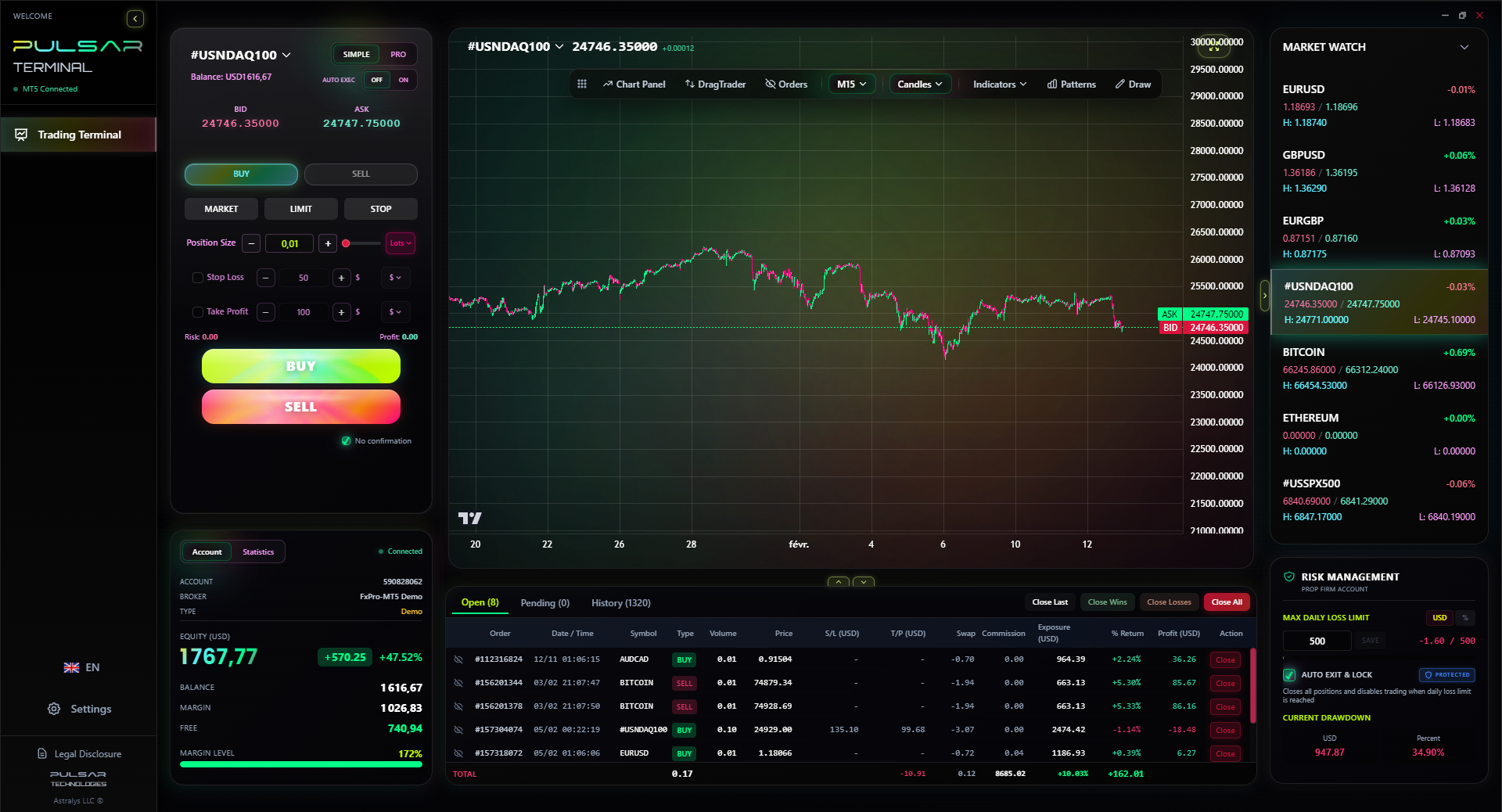
Managing multiple lots and setting precise stop-losses on USD-INR swings is critical, and tools like Pulsar Terminal streamline this directly on your trading platform.
Pulsar Terminal
Универсальный инструмент для MT5: drag-and-drop ордера, мульти-TP/SL, трейлинг-стоп, грид-трейдинг, Volume Profile и защита для проп-фирм. Используется 1000+ трейдерами ежедневно.
“The regulatory trend is clear: more oversight, not less. You're not a cowboy; you're a risk manager, in the eyes of the law.”
Let's run through the classic mistakes I've made and seen in every trading community from Whitefield to Indiranagar.
- Chasing Offshore Mirage: The siren song of 1:1000 use and hundreds of pairs. It's illegal, and the platforms can vanish with your money. Stick to your XM review or IC Markets review for educational purposes only.
- Overleveraging on 20:1: Even 20:1 can wipe you out if you treat it like 100:1. A 5% move against you is a 100% loss. Use a fraction of the available margin.
- Ignoring Event Risk: RBI policy days, Budget day. The spreads widen, volatility is insane, and liquidity dries up. Just don't trade. I lost two weeks of profits in 30 minutes on a surprise RBI intervention because I was 'sure' of my direction.
- Scalping Against Costs: With all the fees and taxes, trying to scalp for 5-10 paisa profits is a loser's game. The math rarely works. Aim for bigger swings.
- No Risk Management: This is universal, but crucial here. Define your risk per trade (I use 1% of my trading capital). Set your stop-loss BEFORE you enter. A margin call on an exchange is brutal and immediate.
💡 Совет Уинстона
Your first profitable trade is your most dangerous. It convinces you you're a genius. Your system isn't proven until it survives a month where USD-INR goes nowhere and whipsaws relentlessly. That's the real test.
“Your local advantage? You feel the market news as it breaks. Use that intuition to inform your charts.”
The regulatory trend is clear: more oversight, not less. The SEBI proposals for higher broker net worth (50 million INR) and the RBI's strictures on derivative purposes signal a mature, safety-first market.
For you, starting today:
- Education First: Learn technical analysis properly. Understand support/resistance, trendlines, and basic indicators. The principles work on USD-INR charts.
- Open a Demo Account: Every major Indian broker offers one. Trade the USD-INR futures demo for at least two months. Get a feel for the pace, the lot size, the costs.
- Choose a Broker: Go with a well-established, SEBI-registered name. Research their platform, customer service, and fee structure. Don't pick the cheapest, pick the most reliable.
- Start Absurdly Small: When you go live, trade one lot. Just one. Your goal for the first six months is not to make money, but to not lose money. Learn to execute your plan, manage emotions, and handle the accounting.
Forex trading in Bangalore is a legitimate, challenging endeavor. It's not a get-rich-quick scheme. It's a skilled profession with strict boundaries. Respect the rules, respect the market's unique character, and you can build a real edge. Ignore them, and you're just donating your capital to more disciplined participants.
The local advantage you have? You live in the timezone. You feel the market news as it breaks. You can sense when dollar demand is picking up at the corporate level. Use that local intuition to inform your technical analysis. That's your edge over a trader in New York trying to trade the INR.
FAQ
Q1Is forex trading legal in Bangalore?
Yes, but only in a specific way. You must trade INR-based currency pairs (like USD-INR, EUR-INR) through a SEBI-registered broker on Indian exchanges like the NSE. Trading non-INR pairs (like EUR/USD) or using international brokers is illegal under FEMA.
Q2What is the minimum amount needed to start forex trading in India?
It depends on the broker and the contract. One standard USD-INR futures contract has a value of roughly 83,000-84,000 INR. With typical 20:1 use, the margin required to hold one lot could be around 4,000-5,000 INR. However, you should have significantly more capital than just the margin to withstand volatility.
Q3Can I trade with high use like 1:500 in India?
Absolutely not. High use (1:100, 1:500, etc.) is offered only by illegal, offshore platforms. Legal use on Indian exchange-traded currency derivatives is around 20:1. Using offshore platforms for high use is a direct violation of RBI rules.
Q4How are forex trading profits taxed in India?
Profits from currency derivatives trading are taxed as Business Income (or Speculative Business Income) and added to your total annual income. You are taxed at your applicable income tax slab rate (which can be 30% or more). You can deduct related business expenses.
Q5What is the best trading strategy for USD-INR?
Given the market structure and costs, swing trading strategies that aim for larger moves (30-50 paisa or more) tend to work better than scalping. Strategies based on breakouts from consolidation ranges with a retest for entry, using 4-hour or daily charts, are commonly used by successful traders. Patience is key.
Q6Can NRIs based in Bangalore trade forex?
Yes, NRIs can trade, but they must also use the same legal framework - SEBI-registered brokers and INR pairs. SEBI eased some norms for NRIs in 2025 to boost participation. They cannot use their NRI status to access illegal offshore platforms.
Q7What happens if I use an international broker like Exness or IC Markets?
You are breaking Indian law (FEMA). Risks include: the platform refusing to process your withdrawal, your bank blocking the transaction, your account being frozen, and potential legal action or penalties from the RBI. The RBI actively publishes alerts against such platforms.
Урок проф. Уинстона
Ключевые выводы:
- ✓Only trade INR pairs on SEBI brokers
- ✓Legal use is ~20:1, not 500:1
- ✓Profits are taxed as business income
- ✓Swing trading beats scalping here
- ✓RBI intervention is a non-negotiable risk
Насколько полезна эта статья?
Нажмите на звезду
Еженедельные торговые инсайты
Бесплатный еженедельный анализ и стратегии. Без спама.
Об авторе
Rajesh Sharma
Старший форекс-аналитик
Более 10 лет торгует на индийских и южноазиатских рынках. Начинал с валютных деривативов на NSE, затем перешёл на международный форекс. Специализируется на USD/INR и парах развивающихся рынков.
Комментарии
Предупреждение о рисках
Торговля финансовыми инструментами сопряжена со значительным риском и может не подходить всем инвесторам. Прошлые результаты не гарантируют будущих доходов. Данный контент носит исключительно образовательный характер и не является инвестиционной рекомендацией. Всегда проводите собственное исследование перед торговлей.
Вам также может понравиться

Cara Trading Forex Sukses: 7 Prinsip dari Trader Profesional
Cara trading forex sukses dengan 7 prinsip trader pro: manajemen modal, disiplin, journal trading, backtest. Data nyata, bukan janji profit palsu.
Jam Trading Forex Terbaik untuk Trader Indonesia: Panduan Lengkap dengan Tabel Waktu
Panduan jam trading forex untuk trader Indonesia. Tabel 4 sesi dunia, jam emas 20:00-00:00, sesi mana yang harus dihindari. Data akurat + tips dari trader berpengalaman.
Top 5 Sàn Forex Uy Tín Nhất 2026: Review Jujur dari Trader Indonesia
Top 5 sàn forex uy tín 2026 untuk trader Indonesia. Review jujur: spread, deposit, withdraw, dukungan lokal. Exness, XM, IC Markets & lebih.
Скачать Pulsar Terminal
Все эти калькуляторы встроены в Pulsar Terminal с данными в реальном времени с вашего счёта MT5.
Скачать Pulsar Terminal