


Everyone in Nigerian trading groups talks about getting free forex trading books like they're some magic key to riches.

Olumide Adeyemi
Пионер трейдинга в Западной Африке ·  Nigeria
☕ 10 мин чтения
Что вы узнаете:
- 1Why Free Books Alone Won't Make You a Profitable Trader
- 2The Free Resources That Actually Helped Me (With Nigerian Context)
- 3The Crucial Lessons No Free Book Will Teach You
- 4From Theory to Practice: Building Skills Without Spending ₦350k
- 5Pitfalls to Avoid with Free Education
- 6What to Do After You've Consumed the Free Stuff
- 7Setting Realistic Expectations: A Nigerian Trader's Timeline
Everyone in Nigerian trading groups talks about getting free forex trading books like they're some magic key to riches. I spent my first year collecting every PDF I could find, convinced I was getting ahead for free. The truth? Most of those free books are either outdated, written for completely different markets, or missing the crucial Nigerian context that makes or breaks trades here. Let me save you the frustration I went through and show you what's actually worth your time.
I remember downloading 'Forex For Dummies' and thinking I had it all figured out. The concepts made sense on paper. Then I tried applying them to USD/NGN during one of our liquidity crunches, and nothing worked like the book said it would. That's the first hard lesson: free forex trading books are almost never written with the Nigerian market in mind.
They don't account for our unique volatility, the impact of CBN policies on currency pairs, or how parallel market rates affect sentiment. I lost about ₦80,000 trying to follow a 'support and resistance' strategy from a free book during a period when the CBN was intervening. The book said to buy at support. The market didn't get the memo.
Another problem? Most free materials are theory-heavy and light on practical execution. They'll explain what a pip definition is, but not how to calculate your actual risk in naira when trading EUR/USD with a broker that uses USD accounts. They won't teach you about the 10% capital gains tax on profits and how to account for that in your risk management.

Warning: Relying solely on free materials from 2015 about the London/New York sessions won't help you navigate the specific liquidity patterns that affect Nigerian traders during our market hours.
The real value comes from combining book knowledge with local market understanding. I learned more from tracking USD/NGN on my broker's platform for a month than from three free books about generic forex principles.

💡 Совет Уинстона
Print out a chart of USD/NGN for the last year. Mark every major CBN announcement. That chart, which you made yourself, will teach you more about market reaction than ten free e-books.
“Most free forex trading books are almost never written with the Nigerian market in mind.”
After wasting months on irrelevant materials, I finally found some genuinely useful free resources. But the key was learning how to adapt them.
BabyPips School of Pipsology - This is the gold standard free course, and for good reason. It's structured, complete, and starts from absolute zero. The problem? It's American-centric. My workaround: as I went through each lesson (like on the MACD indicator), I would immediately pull up a USD/NGN or GBP/NGN chart and apply the concept there. Instead of just learning about interest rates, I'd research how CBN rate decisions historically moved our pairs.
Broker Education Hubs - Brokers like Exness, XM, and IC Markets have decent free webinars and articles. The advantage here is that some actually host sessions with analysts who cover emerging markets. I attended one Exness webinar where the analyst specifically mentioned Nigerian external reserves data (which was $43.4 billion in 2025) as a factor for commodity currencies. That connection between global analysis and local data was priceless.
Specific, Timeless Free Books - There are a few. 'Trading in the Zone' by Mark Douglas (you can find the PDF) is about psychology, which is universal. 'The Disciplined Trader' is another. These don't teach strategies, but they address the mental game, which is 80% of trading anywhere, including Nigeria. Reading these helped me hold onto a winning XAU/USD trade for an extra $300 profit when I normally would have exited early out of fear.

Pro Tip: When studying any free material, keep a notebook specifically for 'Nigerian Adaptations.' Write down how each concept might play out differently here given our regulations, market hours, and economic drivers.
“I learned more from tracking USD/NGN for a month than from three free books about generic forex principles.”
This is where I blew up my first live account. I had the book knowledge, but I was missing the on-the-ground reality of trading from Nigeria.
Local Regulations & Tax Implications
No free forex trading book will sit you down and explain the Investments and Securities Act (ISA) 2025 and what it means for using international platforms. None will remind you that profits are subject to a 10% capital gains tax. I didn't properly account for this in my early profit calculations. After a good month where I made what I thought was ₦150,000, I was unpleasantly surprised to remember the taxman's share. Now I use a simple rule: I immediately set aside 10% of any withdrawn profit into a separate account. It's not a trading cost, but it's a real-life financial cost.
Funding & Withdrawal Realities
Books talk about 'depositing funds.' They don't talk about the CBN's stance on using official FX windows for trading (it's prohibited), or the realities of using fintech apps, crypto transfers, or domiciliary accounts. They don't mention that withdrawal fees can eat 3-5% of your profit if you're not careful. I learned to always check a broker's local withdrawal options and fees before depositing. A broker might have tight spreads, but if it costs $50 to get your money back to Nigeria, that kills your edge on smaller accounts.
Market Timing & Volatility
Our market doesn't perfectly align with the major sessions. The most volatility for pairs involving NGN might happen during Lagos hours when a CBN circular drops, not during the New York open. You need to understand local liquidity. I now know that trying to scalp EUR/NGN on a Friday afternoon in Nigeria is often pointless because liquidity dries up. This is knowledge gained from screen time, not books.

Example: A free book says 'trade the London session overlap.' For EUR/USD, fine. But for a Nigerian trading GBP/NGN, the key volatility might be at 10 AM WAT when local banks and corporates are active, regardless of London's status.
“I learned more from tracking USD/NGN for a month than from three free books about generic forex principles.”
You don't need a pricey mentorship to develop real skill. Here's the blueprint I wish I had followed.
1. Paper Trade with a Purpose: Don't just randomly trade a demo. Use your demo account to test specific concepts from the free resources. Read about the RSI indicator overbought/oversold levels? Spend a week only taking demo trades based on RSI divergences on USD/NGN charts. Record every trade, the rationale, and the outcome.
2. Master One Setup: This was my turning point. I stopped jumping from strategy to strategy. I took a simple price action setup from a free source (a pin bar rejection at a key level) and practiced it for three months straight on the 4-hour chart of XAU/USD. I took only those trades. My demo consistency went from 40% to about 65% on that single setup. Then I applied it to a live micro account.
3. Risk Management is Non-Negotiable: This is the most important practical skill. Use a free position size calculator. Decide your risk per trade (I risk 1% of my account, never more). And stick to it. No free book can give you the discipline to do this when you're down for the week and see a 'sure' opportunity. I learned this after a single revenge trade cost me 15% of my account. The pain taught me more than any chapter on risk ever could.
4. Journal Religiously: Your trading journal is your most valuable book, and it's free to create. Note your entry, exit, reason, emotional state, and screenshots. Review it weekly. I found that 70% of my losses were from trades taken outside my planned London session window. That pattern only became clear in the journal.
💡 Совет Уинстона
“The real value comes from combining book knowledge with local market understanding.”
The path of free education is littered with traps. Here's how to sidestep them.
The 'Strategy Hopper' Trap: You read a free PDF about a 'secret' moving average strategy. You try it for two days, it loses, so you download another book about Fibonacci trading. This cycle never ends. Commitment to learning one thing deeply is faster. I wasted six months hopping. Stay put.
Outdated Information: Many free books are from the early 2000s. Trading has changed. Spreads are tighter, brokers are different, and regulations have evolved. Always check the publication date. If it's talking about 50-pip spreads as normal, it's ancient history.
Ignoring Broker-Specific Mechanics: A book might explain a complex multi-leg option strategy. But does your chosen broker (Pepperstone, Exness, etc.) even offer those instruments to Nigerian clients? And if they do, what are the margin requirements? Always cross-reference strategies with what's actually available and practical on your platform.
Underestimating Psychology: Free materials often make trading sound purely mechanical. They don't prepare you for the fear when you're in a losing trade, or the greed that makes you override your stop loss. This is why combining free technical books with free psychology books (like Mark Douglas) is essential.
The biggest pitfall? Thinking free education means zero cost. It costs time and effort. Be prepared to invest hundreds of hours of focused screen time and study to make those free materials pay off.
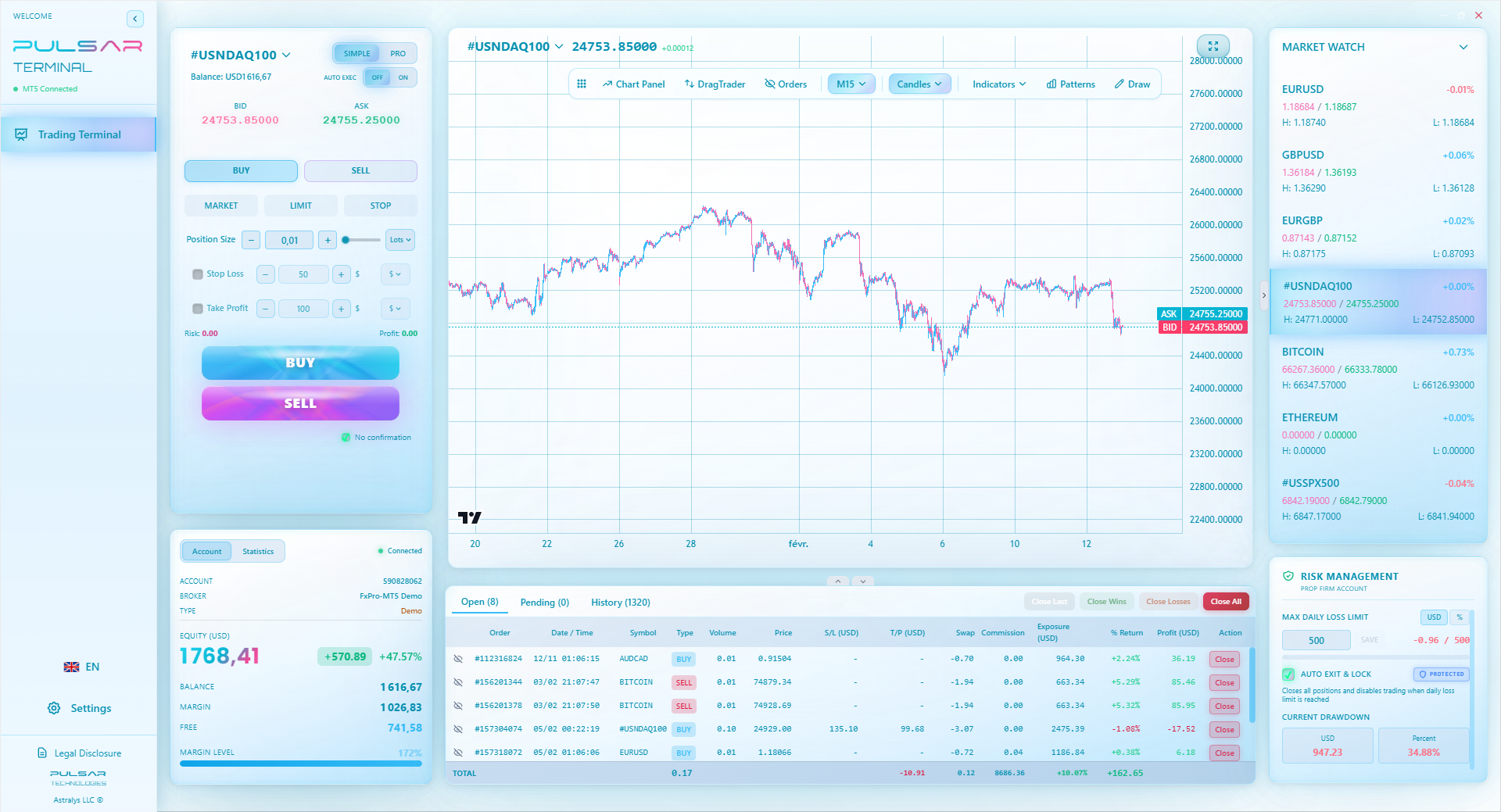
When you're ready to move from theory to disciplined practice, tools like Pulsar Terminal help you execute complex risk management rules, like setting multi-level take-profits or automated trailing stops, directly on your MT5 platform.
Pulsar Terminal
Универсальный инструмент для MT5: drag-and-drop ордера, мульти-TP/SL, трейлинг-стоп, грид-трейдинг, Volume Profile и защита для проп-фирм. Используется 1000+ трейдерами ежедневно.
“The real value comes from combining book knowledge with local market understanding.”
So you've read BabyPips, gone through some broker webinars, and paper traded for a few months. What now? This is where most traders stall.
Deepen Your Analysis: Move beyond basic indicators. Start studying price action and market structure in depth. There are advanced free charting resources online that teach about order blocks, liquidity pools, and fair value gaps. Learn to read basic economic calendars and understand what data (like Nigeria's external reserves reports) actually moves your chosen pairs.
Consider a Live Micro Account: This is the single most important educational step. Move from demo to live with real, but very small, money. The psychological shift is profound. Start with the minimum your broker allows - maybe $10 or ₦4,000. The goal isn't profit; it's to experience real spreads, potential slippage, and your own emotions without significant financial risk. My first live trade was a $1 risk on EUR/USD. My hands were still sweating.
Find a Community (Carefully): Engage with other serious Nigerian traders. Not the 'signal-sellers' on WhatsApp, but forums or groups focused on analysis and review. Share charts, get feedback on your trade ideas. Seeing how others analyze the same USD/NGN chart you're looking at is incredibly educational.
Specialize: You can't master everything. Do you prefer the fast pace of scalping a few pairs, or the patience of swing trading based on weekly trends? Your free education gave you a taste of everything. Now, choose a lane and become an expert in it. I realized I didn't have the temperament for scalping and was better suited for swing trades on the daily chart. That focus improved my results dramatically.
“Your trading journal is your most valuable book, and it's free to create.”
Let's be brutally honest about what's possible with free education, so you don't get discouraged (or overconfident).
Months 1-3 (The Learning Phase): All demo trading. Goal: understand platform mechanics, test basic strategies, learn to use a position size calculator. Don't expect consistency. I was still losing on demo in month three.
Months 4-6 (The Live Micro Phase): Fund a small live account ($50-$100). Goal: achieve breakeven or a small loss while maintaining strict risk management. If you can lose less than 10% of a micro account over three months while following your rules, that's a success. My first micro account swung between +5% and -8% for months.
Months 7-12 (The Refinement Phase): This is where you might start seeing slight consistency. You've found a setup or two that works for you, and you've survived your first margin call scare (you will have one). You're managing the 10% tax in your calculations. A realistic goal is single-digit percentage growth for the year. Anyone promising you more from a free-start foundation is lying.
Remember, the free forex trading books give you the map, but you have to walk the terrain yourself. The terrain in Nigeria has its own hills, valleys, and unexpected obstacles. Respect the process, manage your risk above all else, and understand that the real education happens one trade at a time.
FAQ
Q1Are free forex trading books illegal in Nigeria?
No, possessing or reading free forex trading books is not illegal. Forex education itself is completely legal. The regulations (like the ISA 2025) concern the operation of unregistered trading platforms and the act of trading, not the educational materials. However, be cautious of books that promise 'guaranteed secret strategies' as they're often scams.
Q2Can I really learn to trade successfully using only free materials?
You can learn the foundational knowledge, but 'successfully' depends on your definition. You can learn the mechanics, the terminology, and basic strategies for free. However, developing the discipline, psychological fortitude, and market-specific understanding (especially for the Nigerian context) requires real screen time, practice, and learning from your own mistakes, which has a cost in time and potentially some lost capital on a micro account.
Q3What is the single most important thing missing from free forex books for Nigerian traders?
Local market context. They don't teach you how CBN policies, changes in Nigeria's external reserves (which were $45.50 billion at the end of 2025), parallel market rates, or local liquidity patterns directly impact currency pairs. They also rarely cover the practicalities of funding accounts from Nigeria or the 10% capital gains tax on profits.
Q4How much money do I need to start trading after reading free books?
Technically, you can start with a broker's minimum deposit, which can be as low as $1 or ₦4,000. However, for practical education on a live micro account while implementing proper risk management, I recommend having at least $100 (roughly ₦143,000 at an official rate of N1,430/$ as of Jan 2026) that you are 100% prepared to lose. This allows you to trade small positions and learn without immediate financial pressure.
Q5Which free resource is best for a complete beginner in Nigeria?
Start with the BabyPips 'School of Pipsology.' It's free, structured from the ground up, and complete. The critical step for Nigerian traders is to actively adapt each lesson: when they talk about economic events, think about CBN announcements; when they analyze a chart, pull up USD/NGN on your demo platform and try to apply the same logic.
Q6Do I need to pay for a trading course or mentorship later?
Not necessarily. Many profitable traders are self-taught. Paid courses (which can cost ₦50,000 to ₦350,000+) can provide structure and mentorship, but they are not a guarantee of success. The vast majority of what you need can be found for free or through low-cost practice. Paying for education might save you time, but it won't replace the experience you gain from executing and managing your own trades.
Урок проф. Уинстона
Ключевые выводы:
- ✓Adapt every lesson to USD/NGN or GBP/NGN charts.
- ✓Immediately set aside 10% of profits for capital gains tax.
- ✓Demo trade for 3 months minimum before risking real money.
- ✓Master one simple setup before learning another.
- ✓Your first live account should be micro ($100 or less).
Насколько полезна эта статья?
Нажмите на звезду
Еженедельные торговые инсайты
Бесплатный еженедельный анализ и стратегии. Без спама.
Об авторе
Olumide Adeyemi
Пионер трейдинга в Западной Африке
Один из самых активных преподавателей форекс-трейдинга в Нигерии. 8 лет торгового опыта из Лагоса. Специализируется на стратегиях с малым капиталом и челленджах проп-фирм для африканских трейдеров.
Комментарии
Предупреждение о рисках
Торговля финансовыми инструментами сопряжена со значительным риском и может не подходить всем инвесторам. Прошлые результаты не гарантируют будущих доходов. Данный контент носит исключительно образовательный характер и не является инвестиционной рекомендацией. Всегда проводите собственное исследование перед торговлей.
Вам также может понравиться

Cara Trading Forex Sukses: 7 Prinsip dari Trader Profesional
Cara trading forex sukses dengan 7 prinsip trader pro: manajemen modal, disiplin, journal trading, backtest. Data nyata, bukan janji profit palsu.
Jam Trading Forex Terbaik untuk Trader Indonesia: Panduan Lengkap dengan Tabel Waktu
Panduan jam trading forex untuk trader Indonesia. Tabel 4 sesi dunia, jam emas 20:00-00:00, sesi mana yang harus dihindari. Data akurat + tips dari trader berpengalaman.
Top 5 Sàn Forex Uy Tín Nhất 2026: Review Jujur dari Trader Indonesia
Top 5 sàn forex uy tín 2026 untuk trader Indonesia. Review jujur: spread, deposit, withdraw, dukungan lokal. Exness, XM, IC Markets & lebih.
Скачать Pulsar Terminal
Все эти калькуляторы встроены в Pulsar Terminal с данными в реальном времени с вашего счёта MT5.
Скачать Pulsar Terminal