


Let's cut through the Instagram hype.

David van der Merwe
Трейдер развивающихся рынков ·  South Africa
☕ 9 мин чтения
Что вы узнаете:
- 1The South African Forex Reality Check
- 2Step 1: Education (Before You Deposit a Cent)
- 3Step 2: Choosing a Broker for ZAR Accounts
- 4Step 3: Your First Live Account and Risk Management
- 5Developing a Trading Plan That Works
- 6Tax Implications for South African Traders
- 7Common Pitfalls and How to Avoid Them
- 8The Path Forward: From Novice to Consistent
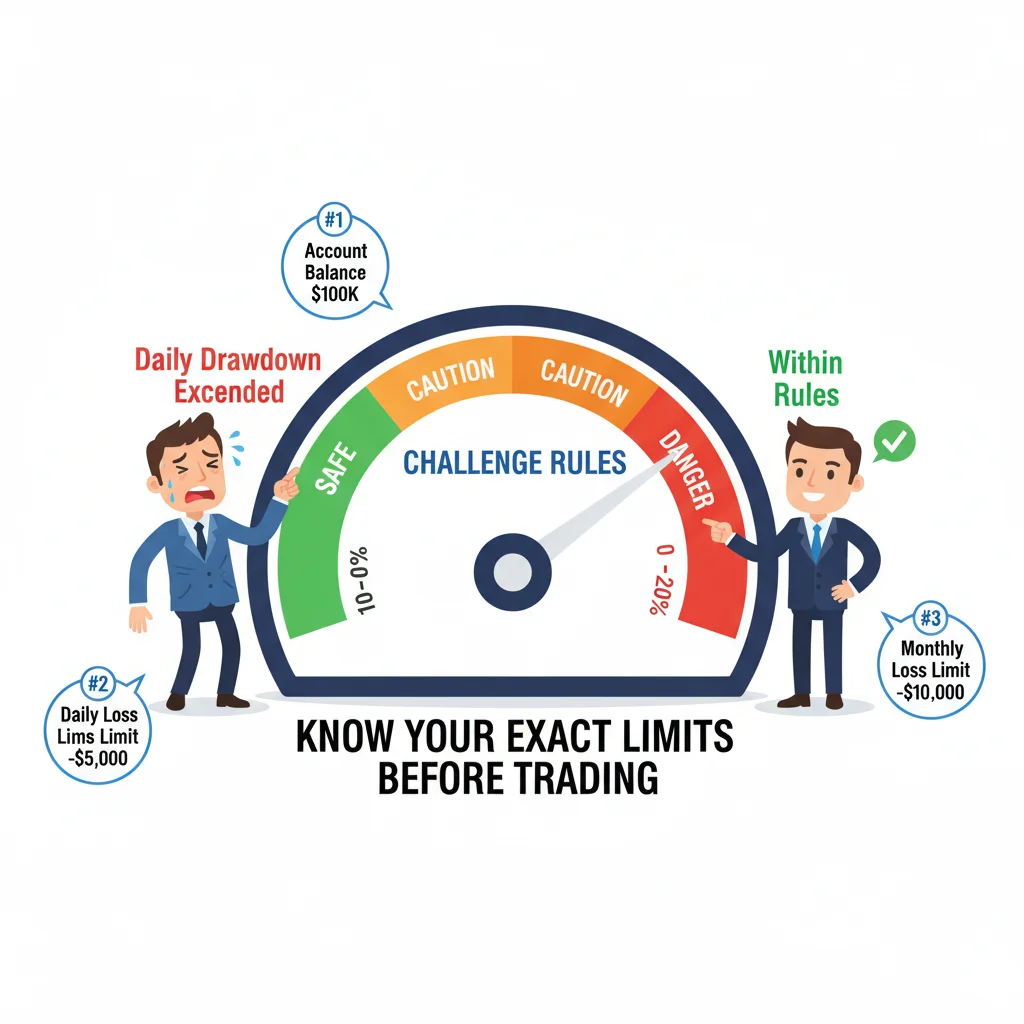
Let's cut through the Instagram hype. Becoming a profitable forex trader in South Africa isn't about buying a Lambo with your first R10,000 deposit. It's about surviving the ZAR's wild swings and not getting eaten alive by fees. I've seen more accounts blown on USD/ZAR volatility than I care to remember. This guide will show you the real path, from choosing a broker that won't screw you to understanding why your psychology matters more than any indicator. I'll prove that with the right foundation, you can build something real, not just another statistic.
Before you deposit a single cent, understand the arena. South Africa's financial market is sophisticated but volatile. The South African Rand (ZAR) is one of the most traded emerging market currencies, and pairs like USD/ZAR and EUR/ZAR can move hundreds of pips in a day. That's opportunity, but it's also a meat grinder for the unprepared.
The Financial Sector Conduct Authority (FSCA) is your watchdog. Any broker offering services to South Africans should be licensed by them. This isn't a nice-to-have; it's your first line of defense against scams. I learned this the hard way early on, trusting an 'offshore' broker that vanished with a few thousand Rand. Poof. Gone.
Then there's the cost of living. Trading with R5,000 while worrying about rent and electricity is a recipe for panic selling. Your trading capital should be money you can afford to lose completely. I'm not being dramatic. Your first R20,000 is tuition, not a ticket to wealth.

Warning: The 'get-rich-quick' forex ads targeting South Africans on social media are almost always scams. If a 'guru' promises guaranteed returns or a secret system, run. The only secret is disciplined work.
You wouldn't perform surgery after watching a YouTube tutorial. Don't trade live until you understand the mechanics. Start with the absolute basics: what is a pip definition, what is the spread definition, and what triggers a margin call.
The Demo Account Lifeline
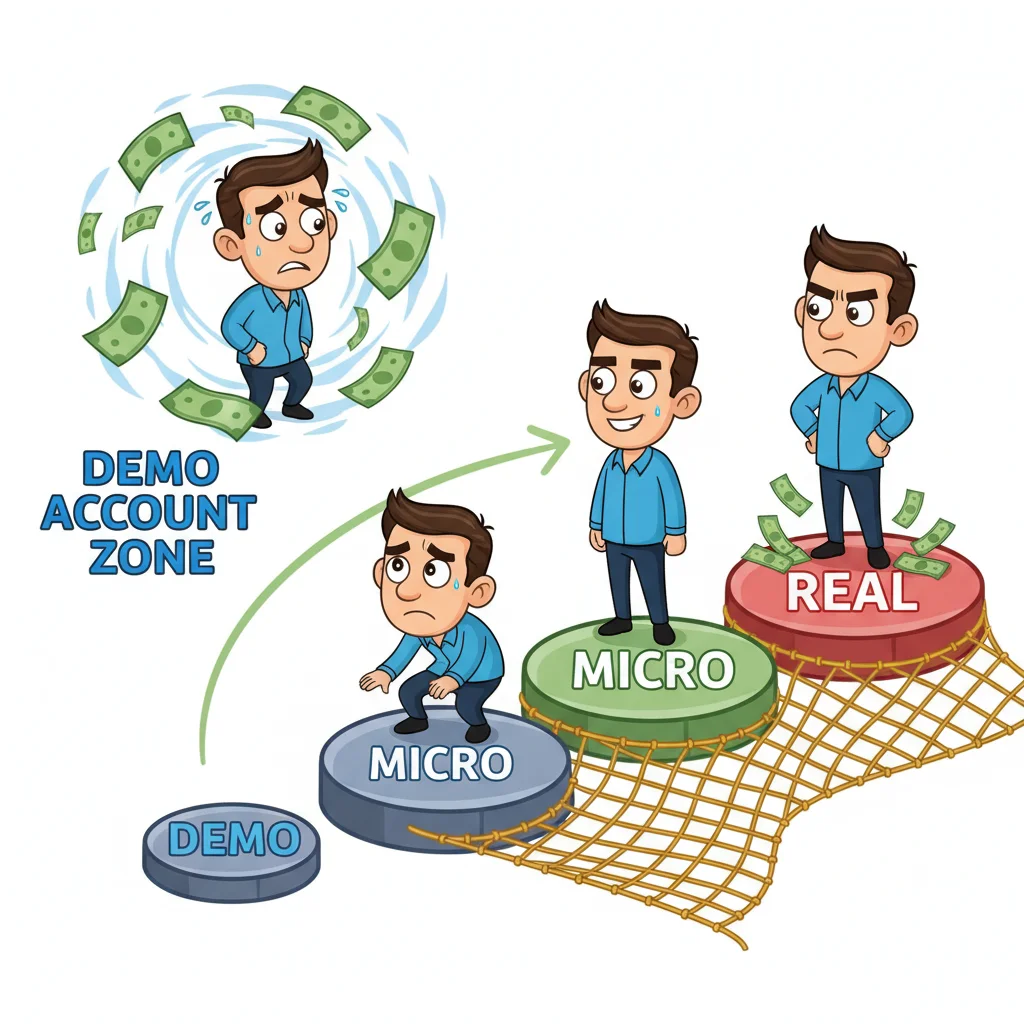
Every reputable broker offers a demo account. Use it for at least three months. Not a week. Three months. Trade through different market conditions - quiet ranges, high-volatility news events. Your goal isn't to make fake millions; it's to make every mistake possible with virtual money. I blew up three demo accounts before my first live trade. That humiliation saved me real cash.
Building Your Toolkit
Learn one or two strategies inside out. Don't collect 50 indicators. For me, price action and the MACD indicator for confluence formed my early edge. Maybe you'll gravitate towards a scalping strategy or swing trading. Test them relentlessly on your demo. Write down every trade: why you entered, your emotion, why you exited. This journal is your most valuable tool.

Pro Tip: Don't just watch tutorials. Read. Trading in the Zone by Mark Douglas is essential for the South African mindset. We have a unique relationship with risk and scarcity; this book helps reframe it.

💡 Совет Уинстона
Your first R20,000 is tuition fees, not investment capital. Expect to pay it to the market for your education. The goal is to keep the tuition as low as possible.
“The 1% risk rule isn't about being conservative; it's about surviving the inevitable losing streak.”
This is where most new traders get nickel-and-dimed to death. You need a broker that offers ZAR-denominated accounts to avoid brutal bank conversion fees. Look for three things: FSCA regulation (or a top-tier equivalent like ASIC), tight spreads on the majors, and reliable local deposit/withdrawal methods like Ozow, Instant EFT, or direct bank transfer.
I've traded with many. For raw spreads and execution speed, IC Markets review shows why they're a favorite for serious scalpers. Their Raw Spread account is legit. For beginners, XM review often has lower minimum deposits and great educational resources, which can be a gentler on-ramp.
The Spread & Commission Trap
Compare costs like your life depends on it. A broker offering 'zero spread' will charge a commission per lot. A broker with a wider spread has no commission. You need to calculate the total cost. Trading EUR/USD? A 0.6 pip spread with no commission might be cheaper than a 0.1 pip spread with a $7 commission. Use a position size calculator to model these costs before you sign up.
| Broker Type | Good For | Watch Out For |
|---|---|---|
| Global, FSCA-Regulated (e.g., Pepperstone, IC) | Tight spreads, professional tools. | Minimum deposits might be higher. |
| International with Local Office | Easier local support, ZAR accounts. | Sometimes higher overall costs. |
| CFD-Only Platforms | User-friendly, great for learning. | You don't own the underlying asset; costs can be opaque. |
Always check the broker's policy on slippage during South African market hours (when liquidity can be lower) and their news trading rules.
Okay, you've demo-traded, chosen a broker. Now, deposit the minimum amount you need to trade one micro lot (0.01) comfortably. If that's R2,000, start with R2,000. Not R50,000.
Your first live trade will feel nothing like demo trading. Your heart will pound. This is normal. Your rules are your anchor.
The 1% Rule is Not a Suggestion
Never, ever risk more than 1% of your account balance on a single trade. On a R10,000 account, that's R100. This isn't about being conservative; it's about surviving the inevitable losing streak. If you have ten losing trades in a row (it happens), you're down 10%, not 50%. You can recover from 10%.
Let me give you a real, painful example from my second year. I had a R50,000 account. I was confident on a USD/ZAR short. I broke my rule and risked 5% (R2,500). The trade went against me. I didn't have a stop-loss because I was 'sure.' I watched it bleed to a R8,000 loss before I puked out of the position. That one trade destroyed my confidence and my account for months. I broke two cardinal rules: my risk percentage and my stop-loss discipline. Don't be me.
Use your position size calculator for every single trade. Every. Single. One. Place your stop-loss order the moment you enter the trade. If you're trading something volatile like XAU/USD guide or EUR/USD guide, give it enough room so you're not stopped out by noise, but not so much that your 1% risk requires a tiny position size.
💡 Совет Уинстона
The spread isn't just a cost; it's the house edge. On volatile ZAR pairs, a wide spread means the market has to move significantly just for you to break even. Choose your broker and your pairs accordingly.
“Boredom is a killer. You don't get paid for how many trades you take.”
Your trading plan is your business plan. It's boring, but it's what separates the gamblers from the traders. Here's what must be in yours:
- Market Conditions: When do you trade? Only London/New York overlap? Avoid South African public holidays when liquidity dries up?
- Setup Criteria: What exactly must happen on the chart for you to take a trade? (e.g., "Price must retest the 4-hour EMA 50, with RSI divergence on the 1-hour chart.")
- Entry/Exit Rules: Your precise entry method. Your profit target (take-profit) levels. Will you use a trailing stop?
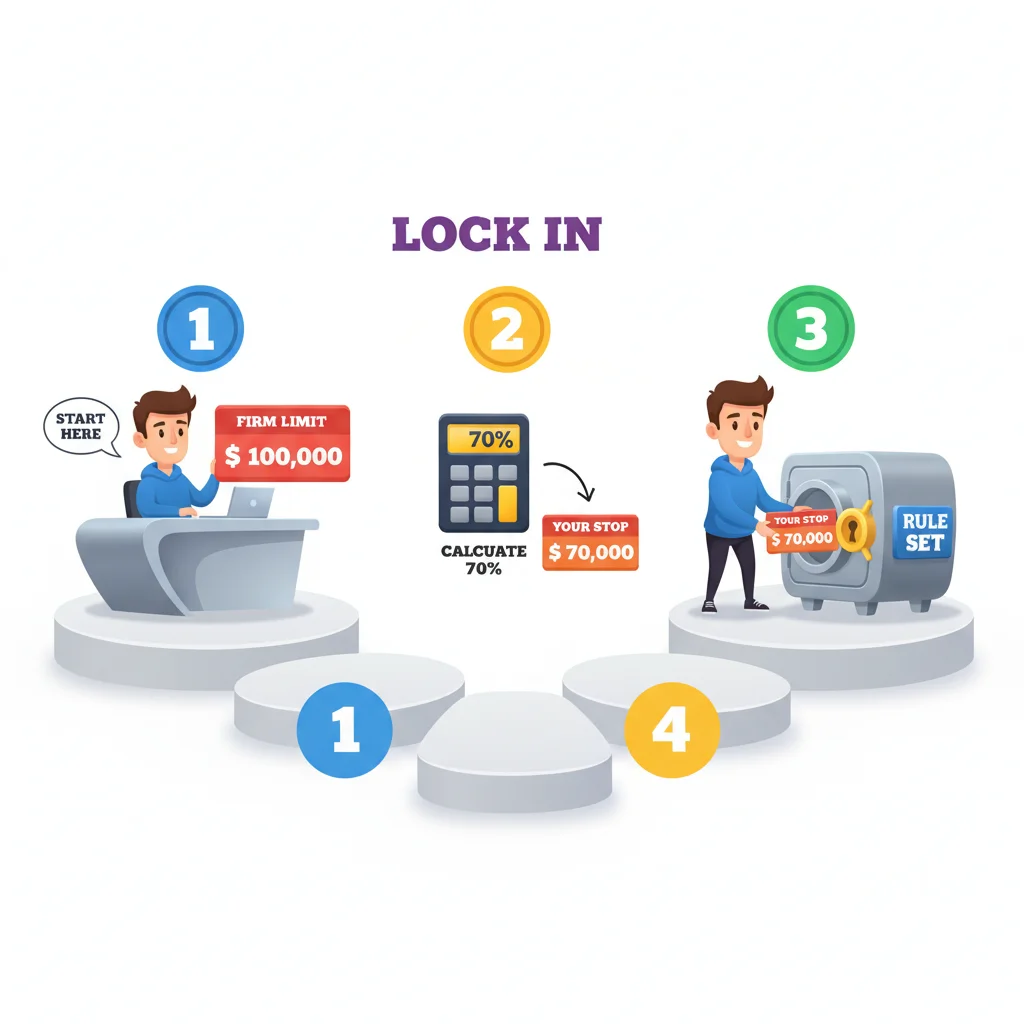
- Daily/Weekly Loss Limits: I have a hard rule: down 3% in a day, I'm done. Down 6% in a week, I'm done. This prevents revenge trading.
- Journal Review: Schedule a weekly review of your trades. No excuses.
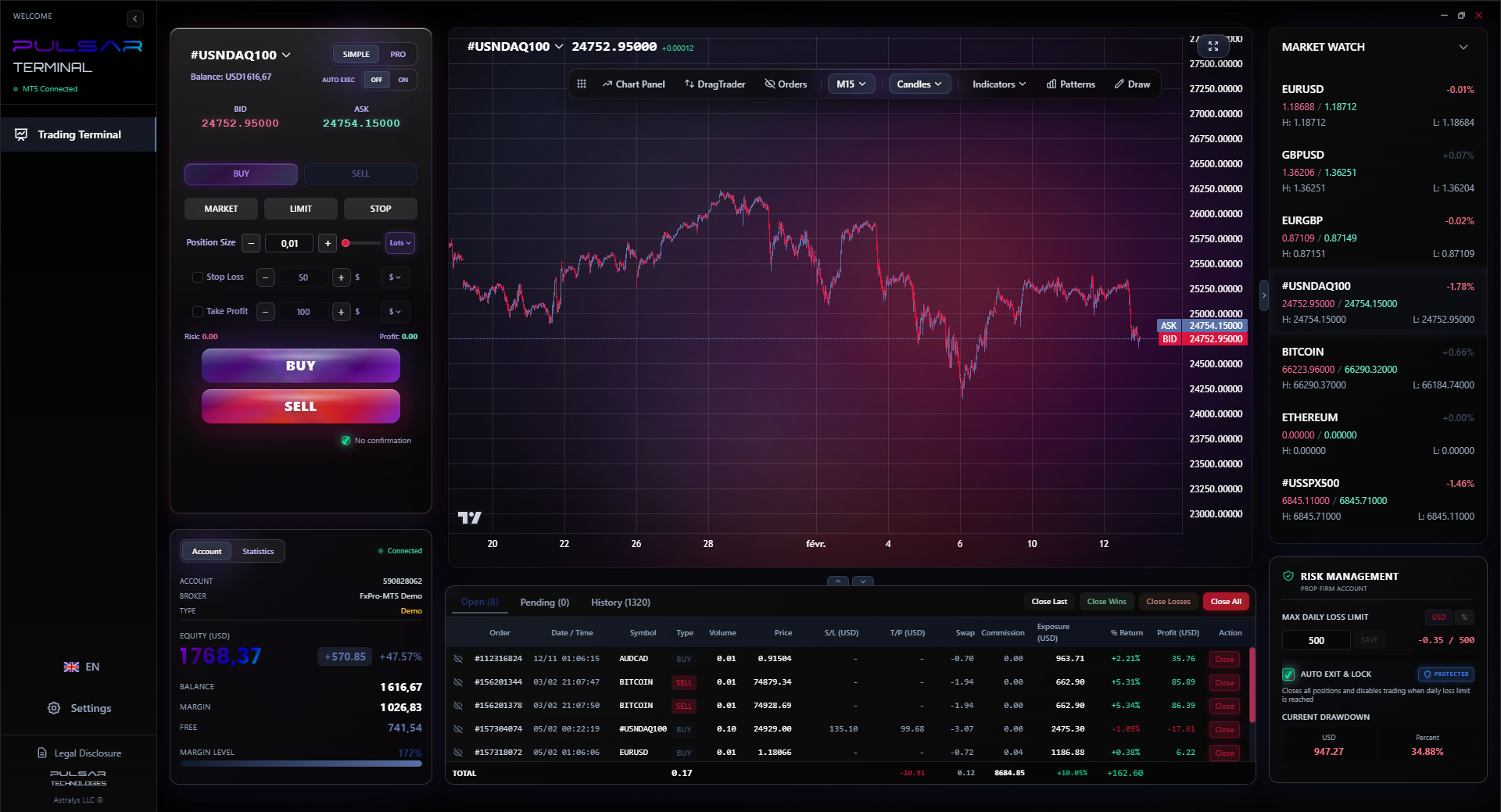
Automation is your friend here. Manually moving stop-losses to breakeven or trailing a stop is emotional. Tools that automate this based on your plan rules remove that weakness. This is where discipline is built into the process, not just hoped for.
Sticking to a trading plan with precise exit rules is hard, which is why automating tools like trailing stops and breakeven orders in Pulsar Terminal can be the difference between a plan on paper and a plan in practice.
Pulsar Terminal
Универсальный инструмент для MT5: drag-and-drop ордера, мульти-TP/SL, трейлинг-стоп, грид-трейдинг, Volume Profile и защита для проп-фирм. Используется 1000+ трейдерами ежедневно.
SARS will find you. Forex trading profits are not tax-free. The specific treatment depends on whether SARS views your activity as speculative (capital gains) or as a business (income).
If you're a casual trader, profits are likely subject to Capital Gains Tax (CGT). You have an annual exclusion (around R40,000). If you're trading frequently, with significant volume and treating it as a primary income source, SARS may classify it as a business, and your full profits would be taxable as income.
Keep. Impeccable. Records.
Log every trade: date, instrument, entry/exit price, profit/loss in ZAR. Keep all your broker statements. I use a simple spreadsheet that tracks everything and spits out a P&L summary for my accountant every tax year. The cost of a good accountant who understands trading is a business expense worth every rand. Trying to wing it with SARS is a trade with infinite downside risk.
“Consistency is the only goal. Profitability is a byproduct.”
Let's talk about the cliffs everyone walks off.
Overtrading: Boredom is a killer. You don't get paid for how many trades you take. You get paid for being right. If there's no setup, watch Netflix. Seriously.
Revenge Trading: You just took a loss. The urge to 'make it back immediately' is overwhelming. This is when you violate every rule in your plan. This is when you lose the car. Adhere to your daily loss limit and walk away.
Chasing 'Hot Tips': Your buddy at the braai has a 'sure thing' on the Rand. Ignore him. You have a plan. Stick to it. The market doesn't care about his cousin's friend at a bank.
Ignoring Global News: You're trading in SA, but your fate is decided in the US, EU, and China. Non-Farm Payrolls, ECB meetings, Chinese GDP - these events cause tsunamis. An economic calendar is your most important indicator. Trading EUR/USD guide without knowing the Fed's stance is like driving blindfolded.

Example: In 2020, I got caught in a GBP/JPY trade during a BoE announcement I'd forgotten about. The 5-minute candle moved 80 pips against me in seconds. My stop-loss was 20 pips away. I suffered massive slippage and a loss 4x bigger than planned. Lesson: Know when the big players are talking.
💡 Совет Уинстона
If you feel a strong emotion - excitement, fear, frustration - do not touch the trade button. Your physiology is telling you you're about to make a decision based on instinct, not your plan. Walk away.
Consistency is the only goal. Profitability is a byproduct. Your first year is about survival. Your second year is about refining your edge. Your third year is about scaling cautiously.
Consider prop firms as a potential path once you have a proven, documented track record. They provide capital, but the challenges are tough. You need iron-clad risk management, exactly the kind that tools are built for. Passing their tests requires you to not just be right, but to be disciplined under their specific rules.
Finally, find a community. Not a signal group, but a forum or a few serious traders where you can discuss ideas without the hype. Isolation leads to weird, unprofitable ideas festering. A sounding board is useful.
Remember, this is a marathon through the Karoo, not a sprint. The market will be here tomorrow. Your job is to make sure you are, too, with your capital intact and your mind clear. Now go build your plan.
FAQ
Q1How much money do I need to start forex trading in South Africa?
You can technically start with a few hundred Rand on a micro account, but realistically, you need enough to properly implement risk management. I'd say a minimum of R5,000-R10,000 is a more practical starting point to trade without excessive pressure and to absorb the inevitable learning-curve losses.
Q2Is forex trading legal and regulated in South Africa?
Yes, it is completely legal. It is regulated by the Financial Sector Conduct Authority (FSCA). You must ensure your broker is licensed by the FSCA or another reputable international regulator to ensure your funds are protected and you have legal recourse.
Q3What is the best forex trading strategy for beginners in SA?
There is no single 'best' strategy. However, beginners should focus on simplicity. Start with swing trading on higher timeframes (like 4-hour or daily charts) on major pairs like EUR/USD. It's less stressful than scalping and allows more time for analysis. Master one simple strategy based on support/resistance or a single indicator like the RSI indicator before adding complexity.
Q4How are my forex trading profits taxed?
It depends on the scale and frequency of your trading. For most individuals starting out, profits are likely subject to Capital Gains Tax (CGT), with an annual exclusion (approx. R40,000). If you trade very actively and it's your main income, SARS may view it as a business and tax profits as income. Always consult a tax professional and keep detailed records.
Q5Can I use international brokers like Pepperstone or Exness?
Absolutely, and many South Africans do. Brokers like Pepperstone review and Exness review are popular choices. The critical factor is that they must be properly regulated (e.g., by ASIC, FCA, CySEC) and offer convenient, low-cost ZAR deposit and withdrawal methods for South African clients.
Q6What's the biggest mistake new South African traders make?
Underestimating volatility, especially on ZAR pairs, and over-leveraging. They see a R10,000 account, use 1:500 use, and are suddenly controlling R5 million worth of currency. A small move against them wipes out the account. They also fail to account for the total cost of trading (spread + commission) which eats into thin margins.
Урок проф. Уинстона
Ключевые выводы:
- ✓Risk a maximum of 1% per trade to ensure survival.
- ✓Demo trade for 3+ months; it's free failure practice.
- ✓Choose an FSCA-regulated broker with ZAR accounts.
- ✓Keep flawless records for SARS from day one.
- ✓Your trading plan is non-negotiable; write it down.
Насколько полезна эта статья?
Нажмите на звезду
Еженедельные торговые инсайты
Бесплатный еженедельный анализ и стратегии. Без спама.
Об авторе
David van der Merwe
Трейдер развивающихся рынков
Трейдер из Йоханнесбурга с 11-летним опытом работы с валютами развивающихся рынков. Специализируется на ZAR-парах, торговле под регулированием FSCA и анализе южноафриканского рынка.
Комментарии
Предупреждение о рисках
Торговля финансовыми инструментами сопряжена со значительным риском и может не подходить всем инвесторам. Прошлые результаты не гарантируют будущих доходов. Данный контент носит исключительно образовательный характер и не является инвестиционной рекомендацией. Всегда проводите собственное исследование перед торговлей.
Вам также может понравиться

Cara Trading Forex Sukses: 7 Prinsip dari Trader Profesional
Cara trading forex sukses dengan 7 prinsip trader pro: manajemen modal, disiplin, journal trading, backtest. Data nyata, bukan janji profit palsu.
Jam Trading Forex Terbaik untuk Trader Indonesia: Panduan Lengkap dengan Tabel Waktu
Panduan jam trading forex untuk trader Indonesia. Tabel 4 sesi dunia, jam emas 20:00-00:00, sesi mana yang harus dihindari. Data akurat + tips dari trader berpengalaman.
Top 5 Sàn Forex Uy Tín Nhất 2026: Review Jujur dari Trader Indonesia
Top 5 sàn forex uy tín 2026 untuk trader Indonesia. Review jujur: spread, deposit, withdraw, dukungan lokal. Exness, XM, IC Markets & lebih.
Скачать Pulsar Terminal
Все эти калькуляторы встроены в Pulsar Terminal с данными в реальном времени с вашего счёта MT5.
Скачать Pulsar Terminal