


You've seen them.

Rajesh Sharma
นักวิเคราะห์ฟอเร็กซ์อาวุโส ·  India
India
☕ 11 นาทีอ่าน
สิ่งที่คุณจะได้เรียนรู้:
- 1The Legal Landscape: What the Ads Won't Tell You
- 2Decoding the Ad Playbook: From FOMO to Funding
- 3Real Costs vs. Advertised Costs
- 4How to Research a Forex Offer (The Right Way)
- 5The Education Trap: When the Ad Sells the Dream of Learning
- 6Recent Crackdowns and What They Mean for You
- 7Building Your Own Filter: A Trader's Mindset
You've seen them. The ads promising a Lamborghini in six months, showing a guy on a beach with three laptops, claiming you can turn ₹10,000 into ₹1 crore with their 'secret system.' Let me be blunt: 99% of forex trading ads targeting Indians are either misleading or outright illegal. I fell for a few early in my career, and it cost me. This guide isn't about bashing advertising; it's about giving you the filter to separate the rare legitimate opportunity from the ocean of noise designed to separate you from your money.
The most critical thing any forex trading ad in India should mention - but never does - is the law. It's boring, it's not sexy, but it's the foundation everything else is built on.
Forex trading in India is legal, but with massive, non-negotiable caveats. The Reserve Bank of India (RBI) and SEBI are the gatekeepers under the Foreign Exchange Management Act (FEMA). Here’s the reality they don't put in the ads:
- You can only trade INR pairs. This means USD/INR, EUR/INR, GBP/INR, JPY/INR. That's it. Those flashy ads showing EUR/USD or GBP/JPY charts? They're promoting something you, as an Indian resident, are prohibited from trading directly.
- You must use a SEBI-regulated broker on a recognized Indian exchange (NSE, BSE, MSE). Trading on an offshore platform like the ones heavily advertised by international brokers is a violation of FEMA. The RBI has been crystal clear: you cannot use the Liberalised Remittance Scheme (LRS) to fund speculative forex trading abroad.

Warning: If an ad is pushing an international broker without a single mention of Indian regulations, it's a giant red flag. They're either ignorant of the law (unlikely) or deliberately ignoring it to get your deposit.
So, what are those ads for Exness, IC Markets, or XM really offering? They're operating in a regulatory grey area, catering to Indians who choose to access global markets despite the rules. It's a personal risk calculation, but no ad will ever frame it that way. They'll just show the Lamborghini.
My early mistake? I funded an account with a Cyprus-regulated broker after seeing a compelling ad. I made some money, but the constant low-grade anxiety about the legality of moving funds back to India wasn't worth it. I eventually closed it and moved my trading entirely to the Indian exchanges. The peace of mind was a better return than any pip.

💡 เคล็ดลับจาก Winston
The most expensive lesson is the one you buy from someone selling certainty. The market offers only probabilities, never guarantees.
“99% of forex trading ads targeting Indians are either misleading or outright illegal.”
These ads follow a predictable script. Once you recognize the patterns, they lose their power.
The 'Lifestyle' Ad: This is the most common. It's pure aspiration. It's not selling trading; it's selling freedom from your 9-to-5. The props are always the same: luxury car, tropical backdrop, multiple screens. The message is emotional: "This could be you." It bypasses your logical brain entirely.
The 'Guru' Ad: This features a self-proclaimed expert, often with a dubious title like "Head Analyst" or "Master Trader." They'll speak with absolute certainty about market direction. "The USD/INR is guaranteed to hit 84.50 next week!" They're selling certainty in an inherently uncertain field. I paid ₹25,000 for a "signals service" from one such guru in 2018. His calls were no better than a coin flip, but his marketing was impeccable.
The 'System' or 'Robot' Ad: This preys on the desire for easy money. "Set it and forget it! Our AI-powered bot does the work for you." They'll show a backtested equity curve that goes straight up and to the right. What they don't show is the live account that blew up when market conditions changed. Real trading isn't automated that way. If their robot was that good, why would they sell it for ₹5,000?
The 'Broker' Ad: This looks more legitimate. It's just promoting a broker's low spreads or fast execution. The hook is often a crazy bonus or a contest. "Deposit $100 and get a $100 trading bonus!" Sounds great, right? Read the fine print. These bonuses almost always come with insane volume requirements (like trading 5 million lots before you can withdraw) that are designed to make you overtrade and blow your account. I learned this the hard way trying to chase a bonus on a now-defunct platform.

Pro Tip: If an ad creates a strong sense of urgency ("Offer ends tonight!") or uses the words "guaranteed," "risk-free," or "secret," close the tab. Legitimate trading education and services don't need high-pressure tactics.
“The 'zero spread' account is often more expensive once you find the hidden commission.”
Ads love to scream "Zero Commission!" or "Raw Spreads from 0.0 pips!" Let's translate that into what you'll actually pay.
For SEBI-Regulated Indian Brokers: The costs are transparent but different. You're not trading a spread in the same way. You pay brokerage per order. For example, Zerodha charges ₹20 per executed order for currency futures and options. There's no mystery. The ad might say "Lowest brokerage in India," which is probably true.
For International Brokers (The Grey Area): This is where the advertised numbers get slippery.
- The 'Zero Spread' Myth: A broker like IC Markets might advertise "Raw spreads from 0.0 pips." That's technically true on their Raw account. But they charge a commission per lot (e.g., $7 per 100k round turn). The ad shows the 0.0, but you have to dig to find the commission. Your total cost is spread + commission.
- The Hidden Markup: Other brokers, like XM on their Standard account, advertise no commission. Sounds cheaper? Not necessarily. Their average EUR/USD spread might be 2.0 pips. On a standard lot, that's a $20 cost built into your entry. Compare that to IC's 0.1 pip spread + $7 commission = ~$7.70 total cost. The "no commission" account is often more expensive.
- The Payment Gateway Trap: This is the silent killer for Indian traders. You deposit ₹83,000 ($1,000). The ad said "no deposit fees." But your credit card or PayPal hits you with a 4.4% forex markup. That's ₹3,652 gone before you place a single trade. Services like Skydo (RBI-licensed) offer flat fees, which can be far cheaper for larger amounts.
| Cost Type | Advertised Claim | Likely Reality for an Indian Trader |
|---|---|---|
| Spread | "From 0.0 pips!" | Plus a $3-$7 commission per lot. |
| Deposit Fee | "Free deposits!" | Your bank/PayPal charges 2-4% on currency conversion. |
| Bonus | "100% Deposit Bonus!" | Tied to impossible trading volume targets. A liability, not an asset. |
Understanding your true cost per trade is the first step in proper risk management. You can't calculate your position size accurately if you don't know your costs. I strongly recommend using a position size calculator that lets you input both spread and commission.
“The 'zero spread' account is often more expensive once you find the hidden commission.”
So an ad catches your eye. Before you even think about entering your email, follow this checklist.
Step 1: Regulatory Check.
- If it's for an Indian broker: Go directly to the SEBI website. Use their "SEBI Intermediaries" search tool. Is the broker listed? Check their registration number. This is non-negotiable.
- If it's for an international broker: Don't just trust the "Regulated by" logo on their site. Go to the regulator's website (FCA (UK), ASIC (Australia), CySEC (Cyprus) are common). Search for the broker's legal entity name. Check for any past disciplinary actions. A good Exness review or IC Markets review should do this legwork for you and highlight the regulatory standing.
Step 2: Read the Fine Print. Open the "Terms and Conditions," "Bonus Policy," and "Fees Schedule." I know, it's torture. But this is where the truth lives. Search for the words "withdrawal," "bonus," "rollover," and "inactivity."
Step 3: Find Independent Reviews. Search "[Broker Name] problems" or "[Broker Name] withdrawal." Look for patterns. A few complaints are normal. Dozens of people saying they can't get their money out is a screaming siren. Trustpilot and ForexPeaceArmy are good starting points, but be wary of fake reviews on both sides.
Step 4: Test Support. Open a live chat or send an email with a technical question. "What's your average spread on USD/INR during RBI intervention hours?" See how long they take to respond and if the answer is knowledgeable or a copy-paste script.
Step 5: Start Small. If you pass steps 1-4, deposit the absolute minimum. Don't throw in your life savings because of a slick ad. Make a few trades, then request a small withdrawal. Can you get your money back easily? This is the ultimate test. I do this with every new broker I test, even today.
💡 เคล็ดลับจาก Winston
When you see an ad, ask: 'What is the advertiser's incentive?' If the answer is 'to get my deposit or course fee,' view every claim through that lens.
“Your first line of defense is the regulator's own website, not the broker's promise.”
Some of the most pernicious ads aren't for brokers, but for "academies," "masterclasses," and "mentorship programs." They promise to transform you from a novice into a pro. For a fee, of course.
I'm not against paying for education. I've paid for courses that were worth every penny. The problem is the 95% that aren't.
Red Flags in Edu-Ads:
- Income Claims: "My students made ₹5 lakh last month!" This is likely cherry-picking their one successful student out of hundreds who failed.
- Vague Curriculum: "Learn the secrets of institutional trading!" What does that even mean? A real course outline will be specific: "Module 3: Market Structure and Liquidity Pools," "Module 4: Building a swing trading plan for Nifty."
- Pressure to Upgrade: The free webinar that's just a 2-hour sales pitch for the ₹50,000 "Gold" package. The real content is always behind the next paywall.
What Good Education Looks Like: It focuses on process, not profits. It teaches you about risk management, journaling, and psychology. It provides a clear, rules-based methodology you can test. The teacher should be transparent about their own trading, showing real statements (with losses included), not just screenshot wins.
The best trading education I ever got was from a book that cost me ₹500, not a ₹50,000 course. It taught me about the MACD indicator not as a magic bullet, but as a tool for understanding momentum within a broader context.
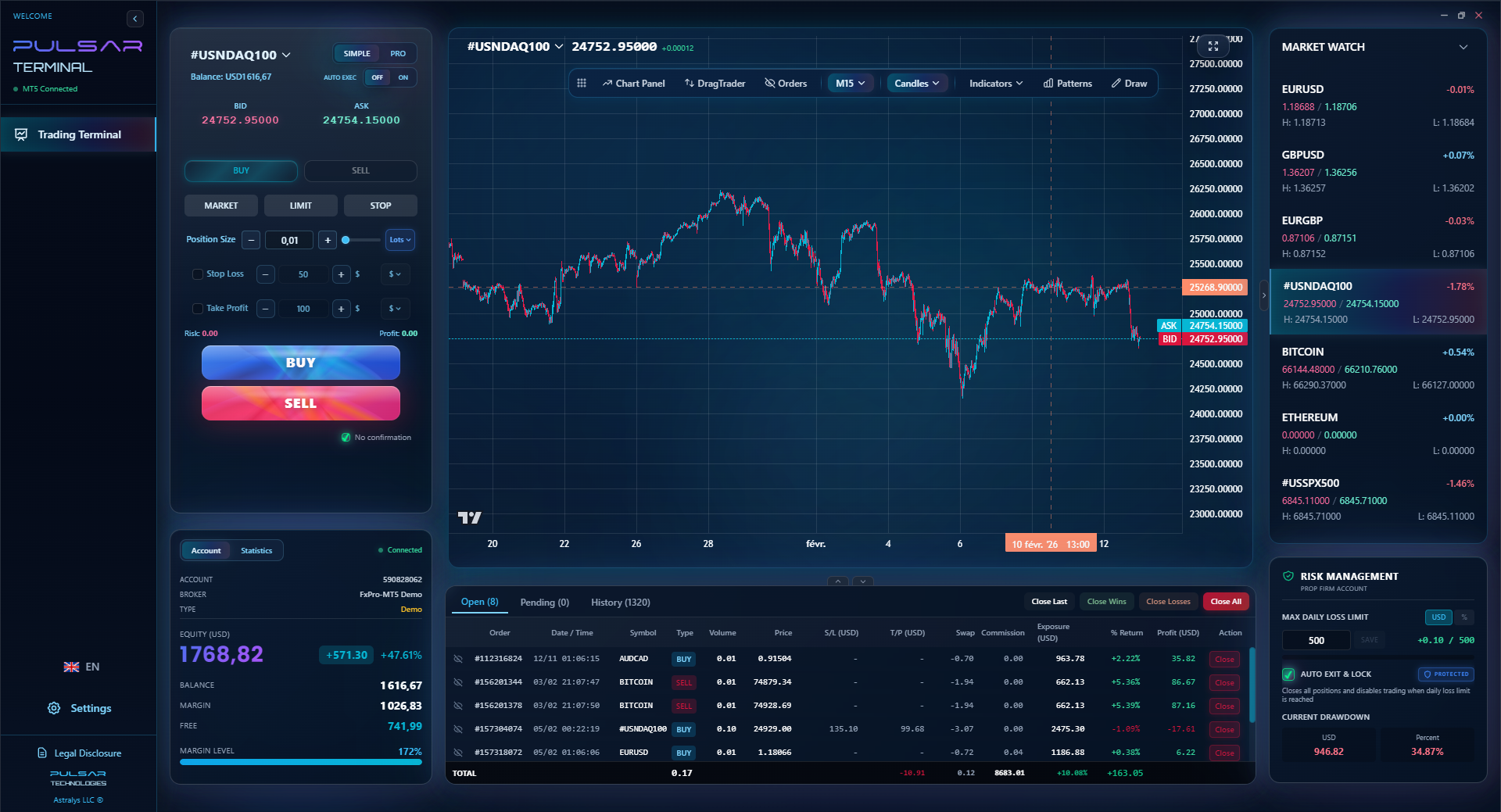
While ads sell fantasy, real trading requires precise tools; Pulsar Terminal brings advanced order management and charting directly to your MT5 platform, helping you execute your plan, not someone else's dream.
Pulsar Terminal
เครื่องมือ MT5 ครบวงจร: ลากวางคำสั่ง, multi-TP/SL, trailing stop, grid trading, Volume Profile และการป้องกัน prop firm ใช้งานโดยเทรดเดอร์กว่า 1,000 คนทุกวัน
“Your first line of defense is the regulator's own website, not the broker's promise.”
The regulatory environment in India has tightened dramatically. This changes the context of every forex trading ad you see.
The RBI's 2026 Measures: The RBI isn't messing around. By April 2026, they've mandated two huge changes to curb speculation:
- Ban on Rupee NDFs: Banks can't offer non-deliverable forward contracts involving the rupee. This was a popular offshore tool for speculation. It's being shut down.
- $100 Million Cap on Bank Positions: Banks must limit their net open rupee positions. This reduces liquidity and volatility in the official market, making it harder for large speculators to move prices.
What This Means: The regulators are systematically closing loopholes and forcing all rupee-related activity onto the regulated, transparent exchanges. This makes the offshore broker ads even riskier. The path for getting money out and back to India could become more scrutinized and difficult.
SEBI and RBI are also constantly issuing alerts against unauthorized platforms. If you see an ad for a platform you don't recognize, check these alert lists. Your first line of defense is the regulator's own website.
These moves protect the stability of the rupee, which is good for the economy. For the retail trader, it means the legal, domestic path is the only truly safe one. The ads promising easy access to global pairs are advertising a road that's increasingly filled with potholes and police checkpoints.
“The real edge in trading is boring. Any ad that makes it look exciting is selling a fantasy.”
After 12 years, here’s my personal filter. It’s saved me more money than any indicator.
1. Embrace the Boring. The real edge in trading is boring. It's consistency, discipline, and risk management. Any ad that makes trading look exciting and easy is selling you a fantasy. The most profitable traders I know have the most boring routines.
2. If It Sounds Too Good to Be True, It’s a Lie. This is the golden rule. A 90% win rate? A lie. Turning $100 into $10,000 in a month? A lie. Someone willing to give you their "secret" for a small fee? A lie. The market doesn't give away free money.
3. Value Transparency Over Glamour. I’d trust a broker or educator who openly discusses their drawbacks ("Our withdrawal processing is 24-48 hours") over one who only shows highlights. Read a Pepperstone review or XM review that talks about both strengths and weaknesses.
4. Your Goal is Survival, Not a Lamborghini. The ad sells the car. Your goal should be to not blow up your account. Focus on learning how to use a position size calculator religiously, understanding what a margin call is, and learning to read price action. The fancy car is a potential byproduct of years of survival, not a first-year target.
, the best response to a forex trading ad is a healthy dose of skepticism. Do your own research, understand the legal framework, and always, always prioritize capital preservation over chasing a dream sold to you in 30 seconds.
💡 เคล็ดลับจาก Winston
Your greatest asset isn't a secret indicator from an ad; it's your patience. The willingness to wait for the right setup, and to ignore the noise, is what separates survivors from casualties.
FAQ
Q1Is it illegal to click on forex trading ads for international brokers?
No, clicking an ad isn't illegal. However, using the advertised offshore platform to trade non-INR pairs (like EUR/USD) or funding an account with them violates RBI regulations under FEMA. The act of trading, not the viewing of the ad, is the legal issue.
Q2A famous influencer is promoting a forex trading course. Is it safe?
Influencer status is not a credential. Check if they are a SEBI-registered investment advisor. Most are not. They are often paid affiliates. Research the course independently using the checklist in this guide. Ask: Can they show verified, long-term trading results? Or are they just selling the dream?
Q3What is the single biggest lie in forex trading ads?
The implication that success is quick, easy, and guaranteed. The truth is that profitable trading requires significant time, education, emotional discipline, and the acceptance of frequent losses. The ads sell the destination and hide the arduous, risky journey.
Q4Can I legally trade gold (XAU/USD) from India?
Trading international gold pairs like XAU/USD through an offshore broker falls into the same prohibited grey area as forex pairs. For legal trading, you would need to explore gold-based instruments (like futures) offered on Indian commodity exchanges (MCX), which are regulated by SEBI. Our XAU/USD guide explains the instrument, but the onus is on you to ensure your access method is compliant.
Q5How do I report a suspicious or misleading forex trading ad?
You can report it to the Advertising Standards Council of India (ASCI) via their website. For ads promoting unauthorized trading platforms, you should also file a complaint with SEBI and the RBI, providing screenshots and links as evidence.
Q6Are demo accounts advertised by international brokers safe to use?
Yes, a demo account is generally safe as no real money is involved. It's a great tool to learn a platform like MT5. However, remember it's also a marketing tool to get you comfortable before depositing real funds. Use it to learn, but don't let the simulated profits fool you into thinking live trading will be the same.
บทเรียนจาก Prof. Winston
สรุปสาระสำคัญ:
- ✓Legal trading in India is INR pairs only, on SEBI brokers.
- ✓Ads sell emotion (FOMO, greed); you must trade with logic and rules.
- ✓True cost = Spread + Commission + Hidden Payment Fees.
- ✓Regulators are actively closing loopholes in 2024-2026.
- ✓Survival mindset beats get-rich-quick dreams every time.
บทความนี้มีประโยชน์แค่ไหน?
คลิกดาวเพื่อให้คะแนน
ข้อมูลเชิงลึกการเทรดรายสัปดาห์
การวิเคราะห์และกลยุทธ์รายสัปดาห์ฟรี ไม่มีสแปม
เกี่ยวกับผู้เขียน
Rajesh Sharma
นักวิเคราะห์ฟอเร็กซ์อาวุโส
ซื้อขายในตลาดอินเดียและเอเชียใต้มากกว่า 10 ปี เริ่มต้นจากอนุพันธ์สกุลเงินของ NSE ก่อนเข้าสู่ตลาดฟอเร็กซ์สากล เชี่ยวชาญคู่ USD/INR และคู่สกุลเงินตลาดเกิดใหม่
ความคิดเห็น
คำเตือนความเสี่ยง
การซื้อขายตราสารทางการเงินมีความเสี่ยงสูงและอาจไม่เหมาะสำหรับนักลงทุนทุกคน ผลการดำเนินงานในอดีตไม่ได้รับประกันผลลัพธ์ในอนาคต เนื้อหานี้มีวัตถุประสงค์เพื่อการศึกษาเท่านั้นและไม่ควรถือเป็นคำแนะนำในการลงทุน โปรดทำการวิจัยของคุณเองก่อนการซื้อขาย
คุณอาจชอบสิ่งนี้

Cara Trading Forex Sukses: 7 Prinsip dari Trader Profesional
Cara trading forex sukses dengan 7 prinsip trader pro: manajemen modal, disiplin, journal trading, backtest. Data nyata, bukan janji profit palsu.
Jam Trading Forex Terbaik untuk Trader Indonesia: Panduan Lengkap dengan Tabel Waktu
Panduan jam trading forex untuk trader Indonesia. Tabel 4 sesi dunia, jam emas 20:00-00:00, sesi mana yang harus dihindari. Data akurat + tips dari trader berpengalaman.
Top 5 Sàn Forex Uy Tín Nhất 2026: Review Jujur dari Trader Indonesia
Top 5 sàn forex uy tín 2026 untuk trader Indonesia. Review jujur: spread, deposit, withdraw, dukungan lokal. Exness, XM, IC Markets & lebih.
รับ Pulsar Terminal
เครื่องคำนวณทั้งหมดนี้ถูกสร้างไว้ใน Pulsar Terminal พร้อมข้อมูลเรียลไทม์จากบัญชี MT5 ของคุณ
รับ Pulsar Terminal