


Here's the biggest lie you'll hear about forex in Nigeria: 'It's easy money.' That single phrase has funded more frauds than I can count.

Olumide Adeyemi
ผู้บุกเบิกการเทรดในแอฟริกาตะวันตก ·  Nigeria
☕ 11 นาทีอ่าน
สิ่งที่คุณจะได้เรียนรู้:
- 1The Nigerian Forex Fraud Landscape: Why We're a Target
- 2Fake Forex Brokers & Bucket Shops
- 3Signal Seller & 'Educator' Scams
- 4Ponzi & HYIP Schemes Disguised as Forex
- 5Real vs. Fake Regulation: Your First Line of Defense
- 6Safe Funding & Withdrawal Practices in Nigeria
- 7What to Do If You've Been Scammed
- 8Building a Fraud-Resistant Trading Plan

Here's the biggest lie you'll hear about forex in Nigeria: 'It's easy money.' That single phrase has funded more frauds than I can count. The truth is, the lack of clear local regulation for retail brokers has created a playground for scammers, and they're getting smarter. I've seen traders lose six figures to schemes that sounded completely legitimate. This isn't about scaring you off trading; it's about giving you the blunt truth so you can protect your capital and trade with real brokers. Let's set the record straight on what's real, what's a scam, and how to keep your money safe.
You need to understand why Nigeria is particularly ripe for forex trading frauds. It's not just about greed; it's about structure. The Central Bank of Nigeria (CBN) regulates the official interbank market, but retail trading with international brokers? That's a massive grey area. There's no SEC license for a local 'forex broker' here. This regulatory vacuum is like blood in the water for sharks.
Scammers exploit two major things: the legitimate economic pressure many face, and the confusing regulatory picture. They position themselves as the 'local solution' you can trust, often using Nigerian brand names and offices to seem more legitimate than some faceless international company. I've had students show me 'brokers' operating out of fancy Lagos offices, offering 1:1000 use and 'guaranteed' profits. Every single one was a bucket shop - they were just betting against you.
The numbers are murky because people are ashamed to report losses, but the NDIC reported over ₦1.5 billion lost to financial fraud in a single year. A huge chunk of that is investment scams, with forex fronts being a favorite. When the Naira is volatile, the promises get louder.

Warning: If a 'broker' is only regulated by a 'body' you've never heard of, or claims to be 'registered with the CBN' for retail forex trading, run. The CBN does not license retail forex brokers. They regulate banks and BDCs for official transactions, not your EUR/USD trades.
This is the most direct theft. A bucket shop doesn't send your trades to the real market. They take the other side of your trade internally. If you win, they lose money, so they have every incentive to make you lose.
How to Spot a Fake Broker
First, check the regulator. Not the name on the website, but the actual license number. Go to the regulator's website (like the UK's FCA or Cyprus's CySEC) and search for it. I once reviewed a 'broker' for a student. FCA number on the site? Check. Looked legit. I went to the FCA register, typed it in, and found it belonged to a completely different company selling pet insurance. The scammer had just copied a real number.
Second, look at the promises. Any broker guaranteeing profits, offering 'risk-free' trades, or giving you a '100% bonus' on deposit is a major red flag. That bonus usually comes with impossible withdrawal conditions. They're just locking your money in.
Third, test the withdrawals early. Deposit a small amount, make a few trades, and try to withdraw your remaining balance. A legitimate broker like Exness or IC Markets processes this smoothly. A scammer will give you the runaround: 'Pay a tax first,' 'Your account needs verification (again),' 'The system is down.'
I learned this the hard way early on. I deposited $500 with a slick-looking platform. Made it grow to $800. Withdrawal request pending... for two weeks. Then, account closed. Poof. Gone. That $500 lesson was cheaper than what many pay.

Pro Tip: Always start with a minimum deposit, even with a reputable broker. Make a profit, then attempt a partial withdrawal. If you can't get your money out, nothing else matters. Your position size calculator and strategy are useless if the broker is fake.

💡 เคล็ดลับจาก Winston
A regulator's website ends in .gov.xx, .org.xx, or is a clear national authority (like fca.org.uk). If you're searching for 'FCA register' and end up on a .com site, you're probably on a clone site built by the scammer.
“If a return is guaranteed and passive, it's a Ponzi. Full stop.”
This one preys on your desire to learn. You see an Instagram page with screenshots of massive wins on XAU/USD or EUR/USD. Lambos, stacks of cash. They offer a 'masterclass' for ₦200,000 or weekly signals for ₦50k.
Here's the reality: if their trading was that consistently profitable, they wouldn't need your subscription fee. Managing a billion-dollar fund pays better than selling signals to 100 people. The screenshots are fake, often from a demo account or photoshopped.
I audited one of these 'gurus' for a community. He posted a 500-pip win on GBP/JPY. The time of the screenshot matched a major news event. I pulled up the actual chart. In that 5-minute window, the pair moved 40 pips total, not 500. He just edited the MT4 display.
The Prop Firm Front
A newer twist is the 'funded account' scam tied to fake education. They sell you an expensive course (₦300k+), promise you'll pass a prop firm challenge, and then 'manage' your funded account for a fee. The challenge rules are often impossible (like 1% max daily drawdown on a scalping strategy), ensuring you fail and have to buy the 'reset' fee. The firm itself might be fake.
Real education doesn't promise specific returns. It teaches you concepts: how to use the RSI indicator in context, how to manage risk with a position size calculator. It's boring, but it's real.
This is where people lose life-changing money. The scheme isn't even trading. It's a classic Ponzi structure wearing a forex mask.
How it works: You 'invest' a minimum, say ₦100,000. They promise 5-10% monthly returns 'from our expert forex trading.' You get a few payments, which are just money from new investors. They encourage you to reinvest and bring in friends. It looks solid for months. Then, when the inflow of new money can't cover the payouts, the website vanishes. The 'CEO' is unreachable.
They use forex jargon to sound legitimate: 'arbitrage,' 'AI trading bots,' 'liquidity pool integration.' I saw one that claimed to have a secret algorithm trading the 'interbank spread.' Nonsense. If a return is guaranteed and passive, it's a Ponzi. Full stop.
The emotional hook is powerful. Seeing your friend get that first 10% payout is the best marketing they have. You think, 'I'll just get in and out early.' But greed sets in, you reinvest, and you're left holding the bag. The SEC Nigeria issues warnings against these constantly, but new ones pop up weekly with different names.
💡 เคล็ดลับจาก Winston
The promise of 'secret strategies' is nonsense. The market doesn't care about your strategy. Price action, volume, and economic data are public. The edge is in your discipline and risk management, not a secret indicator.

“The lack of local regulation isn't an opportunity for you; it's an opportunity for them.”
This is the most important skill you can develop. Let's break down what real regulation means for you, a Nigerian trader.
You will almost certainly use an internationally regulated broker. There are no credible, locally regulated retail forex brokers in Nigeria. Any that claim to be are lying.
Reputable Regulators (Look for these):
- FCA (UK): Strong client money protection rules.
- ASIC (Australia): Tough standards, though use is now capped for retail.
- CySEC (Cyprus): Common EU regulation.
- FSCA (South Africa): Popular among brokers serving Africa.
The Verification Process:
- Find the broker's regulatory number on their 'About Us' or 'Legal' page.
- Go to the official website of the regulator (e.g., register.fca.org.uk).
- Search for the number. The listed company name and website MUST match exactly.
- Check the 'Permissions' or 'Status.' It should include something like 'Rolling spot forex contract trading.'
Fake Regulation Red Flags:
- Offshore havens: Regulation only in Mauritius, Saint Vincent, or the Comoros. These are often just registration mills with no oversight.
- 'Internationally Regulated': A meaningless phrase. Which nation?
- 'Registered with the SEC Nigeria': For retail forex? Impossible. The SEC warns against unregulated platforms; they don't license forex brokers.
A broker like Pepperstone (regulated by ASIC and FCA) or XM (regulated by multiple bodies including CySEC) has real oversight. Their terms might seem strict (like negative balance protection), but that's for your safety. A scam broker's terms are designed for their profit.
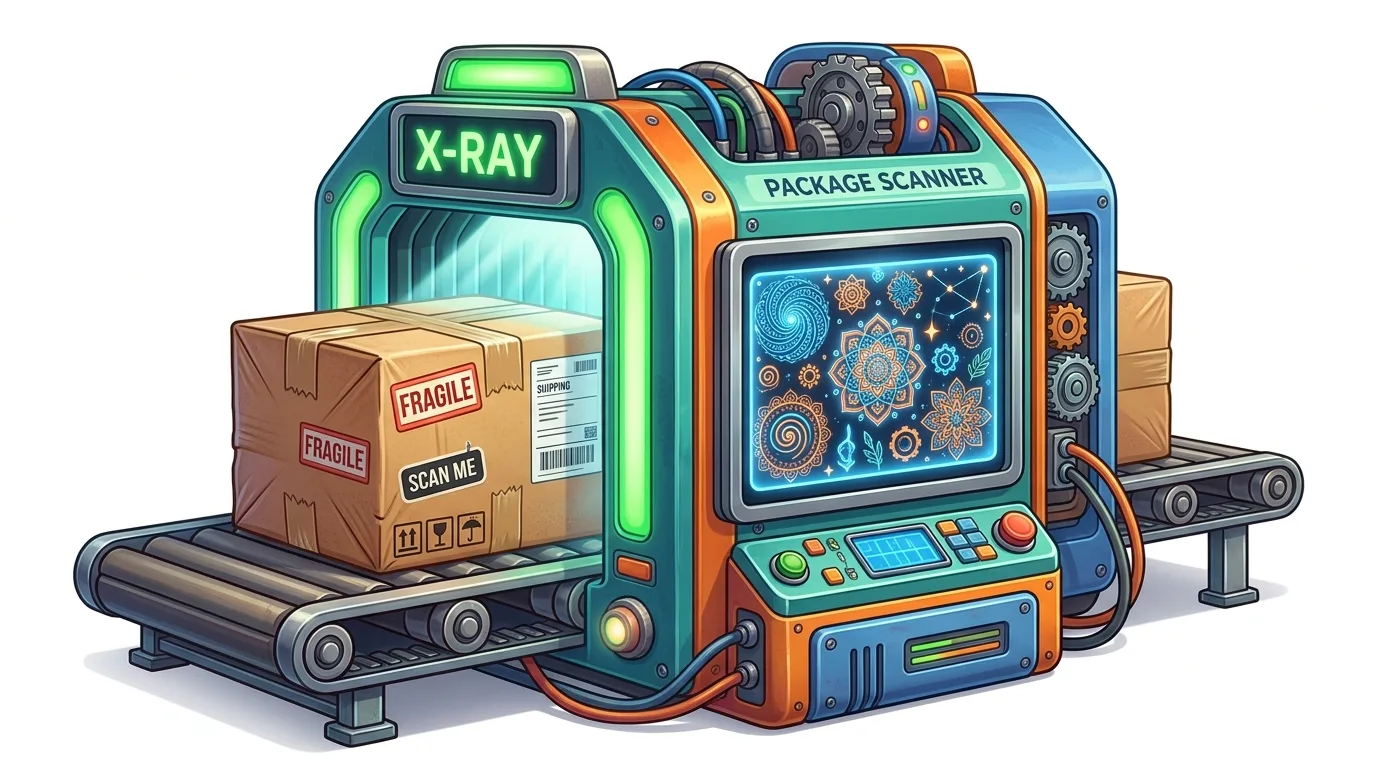
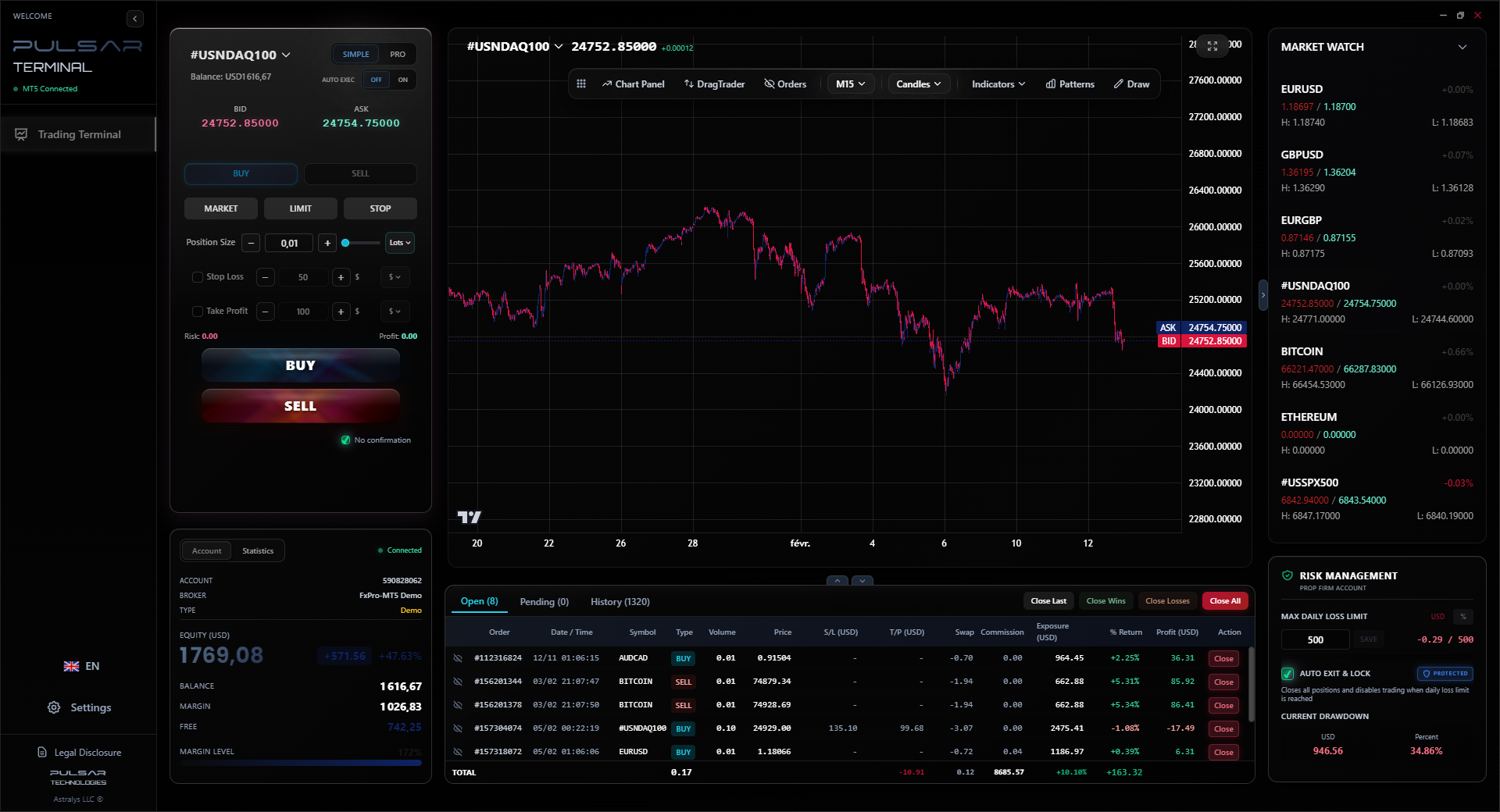
Managing a prop firm challenge requires iron-clad discipline on daily loss limits, something Pulsar Terminal can automate and enforce directly on your MT5 platform to keep you safe.
Pulsar Terminal
เครื่องมือ MT5 ครบวงจร: ลากวางคำสั่ง, multi-TP/SL, trailing stop, grid trading, Volume Profile และการป้องกัน prop firm ใช้งานโดยเทรดเดอร์กว่า 1,000 คนทุกวัน
How you move money is a fraud risk point. Scammers love complicated, irreversible payment methods.
Safe Methods (with established, regulated brokers):
- Bank Transfer: Direct to the broker's disclosed corporate bank account. Slow but traceable.
- Credit/Debit Cards: Visa/Mastercard. You have chargeback rights (usually within 120 days), which is a layer of protection.
- Trusted E-wallets: Skrill, Neteller, PayPal. They act as a buffer between your bank and the broker.
High-Risk Methods (favoured by scammers):
- Cryptocurrency (to private wallets): Once you send Bitcoin or USDT to a wallet they provide, it's gone forever. No chargebacks, no tracing. Legit brokers may offer crypto, but it's to their official, published corporate wallet.
- Direct transfers to personal accounts: 'Send money to John Doe's GTB account for fast processing.' Never, ever do this.
- Gift Cards: 'Pay with iTunes cards.' This is 100% a scam.
The Withdrawal Test: I make this a rule. After my first profitable month with any new broker, I withdraw my initial deposit. If the original capital comes back to my Nigerian bank account without drama, I know the cash flow works. Then I trade with the 'house money' (profits) left behind. If they fight you on getting your own deposit back, imagine trying to withdraw profits.
Payment processors can add fees, and currency conversion will hit you. That's the cost of doing business safely. Losing 2% on a transfer is better than losing 100% to a fraudster.
“Consider your first withdrawal your most important trade.”
First, don't be ashamed. It happens to smart people. The scammer's full-time job is deceiving you. Your job is trading, not forensic accounting. Here's the step-by-step, though be bluntly honest: recovery is very unlikely.
- Stop Sending Money: They will contact you with a story. 'Your account is flagged, pay a ₦150,000 compliance fee to unlock your ₦2 million.' This is the secondary scam. Do not pay anything.
- Gather Evidence: Screenshots of everything: website, chats, payment receipts, account statements, the broker's license claims.
- Report to Authorities:
- SEC Nigeria: Use their online complaint portal. They actively warn about these schemes.
- EFCC: For larger sums, you can file a report. Have all your evidence organized.
- Your Bank: If you paid via bank transfer, inform them immediately. They likely can't reverse it, but it creates a record.
- Report to Real Regulators: If the scammer claimed to be FCA regulated (but wasn't), report them to the actual FCA. They maintain warning lists.
- Manage Expectations: Consider the money gone. The primary goal of reporting is to potentially help shut them down and prevent others from losing money. Use it as the most expensive trading lesson you'll ever have. It reframes your entire approach to risk. That margin call from a real broker will feel trivial compared to this.
The emotional hit is real. I've coached traders who were scammed and wanted to quit. We used that anger to build a disciplined, skeptical, and more profitable approach. You learn to verify everything.
💡 เคล็ดลับจาก Winston
If you wouldn't walk into a random Lagos shop and hand them ₦500,000 to 'invest for you,' why would you do it online? Apply the same street sense to the internet.
Your best defense is a good offense: a plan so solid that 'get-rich-quick' schemes lose their appeal.
Your Plan's Foundation:
- Broker Due Diligence: This is non-negotiable. It's part of your business setup. No regulator, no trade. Start your search with verified international brokers like those we review (IC Markets, Exness).
- Realistic Goals: Aim for 5-15% per month, not 100%. If your plan can't work with conservative returns, it's gambling, not trading.
- Focus on Process, Not Payouts: Your edge comes from your system - your entry rules, your stop-loss placement, your swing trading rhythm. A scam sells you the destination (the Lambo). Real trading is about loving the drive.
- Independent Education: Learn from free, reputable sources first. Understand the MACD indicator, what a pip really costs. Then, if you pay for a course, you can judge its value because you have a baseline.
- Community Caution: Be wary of Telegram or WhatsApp groups pushing one specific broker or signal service. They are often run by the scammers themselves or affiliates getting kickbacks.
I built my career after my early loss by focusing entirely on what I could control: my risk per trade, my journaling, my emotional state. The flashy frauds lost their power because I was too busy executing my own boring, profitable plan. That's the ultimate protection.

FAQ
Q1Is forex trading legal in Nigeria?
Trading forex with internationally regulated brokers is a grey area, not explicitly illegal for individuals. However, operating as an unlicensed forex broker or investment scheme within Nigeria is illegal. The CBN regulates the official market for banks, not retail speculative trading. You are responsible for ensuring your broker is legitimately regulated abroad.
Q2What is the most common forex trading fraud in Nigeria?
Ponzi/HYIP schemes disguised as forex investment clubs are the most devastating. They promise fixed monthly returns (e.g., 10%), pay early investors with new investors' money, and collapse. They use forex jargon to sound legitimate but aren't executing any real trades.
Q3A signal seller showed me verified withdrawal proofs. Is that real?
Almost certainly not. These are easily faked using photo editing software, demo accounts, or by collaborating with a scam broker to generate fake statements. If they were consistently profitable enough to sell signals, they'd be trading with their own large capital, not chasing your subscription fee.
Q4Can the SEC Nigeria help me get my money back from a scam broker?
It's highly unlikely. The SEC's primary role is to issue public warnings and, if the entity is within Nigeria, potentially prosecute. However, most fraudulent forex operations are offshore. The SEC can add them to their warning list to protect others, but recovering lost funds from international scammers is extremely difficult and rare.
Q5Are prop firm challenges a scam?
Not inherently. Reputable prop firms (like FTMO, The5%ers) have transparent rules. However, many scams use the 'prop firm' model as a front. They sell overpriced courses with the promise of a funded account, then set impossible challenge rules (like a 1% max daily loss) so you fail and have to pay for resets. Always research the firm's reputation independently.
Q6Should I use a broker that accepts Bitcoin for deposits?
It depends. A legitimate, well-regulated broker offering crypto as a payment option is fine. However, if a broker only accepts cryptocurrency, especially to a private wallet, it's a massive red flag. Crypto transactions are irreversible, making it the perfect payment method for scammers.
Q7What's the one thing I should do before depositing with any broker?
Perform the withdrawal test. Deposit the absolute minimum. Do not trade, or make one small trade. Then immediately request a withdrawal of most of that deposit. If you encounter delays, fees not disclosed, or excuses, you've likely found a scam. A real broker will process it, even if slowly.
บทเรียนจาก Prof. Winston
สรุปสาระสำคัญ:
- ✓Verify regulators directly, never trust a website badge.
- ✓Test withdrawals before committing serious capital.
- ✓Guaranteed returns = 100% scam. Every time.
- ✓If it's pitched on social media with luxury cars, run.
บทความนี้มีประโยชน์แค่ไหน?
คลิกดาวเพื่อให้คะแนน
ข้อมูลเชิงลึกการเทรดรายสัปดาห์
การวิเคราะห์และกลยุทธ์รายสัปดาห์ฟรี ไม่มีสแปม
เกี่ยวกับผู้เขียน
Olumide Adeyemi
ผู้บุกเบิกการเทรดในแอฟริกาตะวันตก
หนึ่งในนักการศึกษาฟอเร็กซ์ที่กระตือรือร้นที่สุดของไนจีเรีย 8 ปีประสบการณ์เทรดจากลากอส เชี่ยวชาญกลยุทธ์ทุนต่ำและความท้าทาย prop firm สำหรับเทรดเดอร์ในแอฟริกา
ความคิดเห็น
คำเตือนความเสี่ยง
การซื้อขายตราสารทางการเงินมีความเสี่ยงสูงและอาจไม่เหมาะสำหรับนักลงทุนทุกคน ผลการดำเนินงานในอดีตไม่ได้รับประกันผลลัพธ์ในอนาคต เนื้อหานี้มีวัตถุประสงค์เพื่อการศึกษาเท่านั้นและไม่ควรถือเป็นคำแนะนำในการลงทุน โปรดทำการวิจัยของคุณเองก่อนการซื้อขาย
คุณอาจชอบสิ่งนี้

Cara Trading Forex Sukses: 7 Prinsip dari Trader Profesional
Cara trading forex sukses dengan 7 prinsip trader pro: manajemen modal, disiplin, journal trading, backtest. Data nyata, bukan janji profit palsu.
Jam Trading Forex Terbaik untuk Trader Indonesia: Panduan Lengkap dengan Tabel Waktu
Panduan jam trading forex untuk trader Indonesia. Tabel 4 sesi dunia, jam emas 20:00-00:00, sesi mana yang harus dihindari. Data akurat + tips dari trader berpengalaman.
Top 5 Sàn Forex Uy Tín Nhất 2026: Review Jujur dari Trader Indonesia
Top 5 sàn forex uy tín 2026 untuk trader Indonesia. Review jujur: spread, deposit, withdraw, dukungan lokal. Exness, XM, IC Markets & lebih.
รับ Pulsar Terminal
เครื่องคำนวณทั้งหมดนี้ถูกสร้างไว้ใน Pulsar Terminal พร้อมข้อมูลเรียลไทม์จากบัญชี MT5 ของคุณ
รับ Pulsar Terminal