


Most new traders think the forex market is a 24/7 free-for-all.

Daniel Harrington
หัวหน้าฝ่ายเนื้อหา
☕ 10 นาทีอ่าน
สิ่งที่คุณจะได้เรียนรู้:
Most new traders think the forex market is a 24/7 free-for-all. They log in whenever they feel like it, place a trade, and wonder why it goes nowhere or gets whipsawed to pieces. I made that exact mistake for my first six months, trading the LKR/USD pair at all hours and burning through capital. The truth is, the market has a heartbeat, a rhythm dictated by global sessions. If you're trading from Colombo, Galle, or Kandy, you need to sync your watch to it. Let's set the record straight on the real forex trading hours that matter for us.
This isn't about when the market is 'open'. It's about when it's alive. Liquidity, volatility, and spread costs change dramatically throughout the day. Trading during the wrong session is like fishing in a pond that's just been drained. You might see a few fish flopping around, but you're not going to catch anything worthwhile, and you'll probably get muddy.
My first major lesson came in 2015. I was trying to scalping strategy the AUD/JPY during the Asian afternoon (our time). The spreads were wide, the moves were tiny, and I was overtrading just to feel something. I turned a 50-pip profit target into a grind, taking 5-7 trades to get there and paying the spread definition on each one. The broker made more money than I did.

Warning: Low liquidity doesn't just mean slow markets. It means your stop-loss can be ignored. A news spike during a quiet period can trigger your stop at a terrible price, a phenomenon known as slippage. I've seen a 15-pip stop on EUR/CHF turn into a 40-pip loss in a blink during the Sydney/Asia overlap.
The core concept is this: price moves when big money moves. Big money moves when its traders are at their desks in London, New York, Tokyo, and Sydney. Your job is to be there when they are.
“Trading during the wrong session is like fishing in a pond that's just been drained.”
Forget GMT. We live on Sri Lanka Standard Time (SLST, UTC+5:30). This is your trading clock. The market's day is broken into four major sessions, but three are critical for volume.
The Asian Session (Tokyo)
Our Time: ~3:30 AM to ~12:30 PM This session kicks off the trading day. It's often the quietest of the three majors, but don't ignore it. Pairs like USD/JPY, AUD/USD, and NZD/USD see their most action here. It's a good session for range-bound strategies or setting up for the volatility to come. If you're an early riser in Colombo, you can catch the tail end of Tokyo and the open of Europe.
The European Session (London)
Our Time: ~12:30 PM to ~9:30 PM This is the engine room. London is the world's largest forex hub. Liquidity floods the market. This is when you'll see the cleanest trends and the most reliable technical breaks. All major pairs, especially the EUR/USD guide, come alive. This session overlaps with the end of Asia and the start of the US, creating the two most volatile windows of the day.
The US Session (New York)
Our Time: ~7:30 PM to ~4:30 AM (next day) New York provides the second massive liquidity injection. The first two hours (7:30 PM - 9:30 PM our time) overlap with London. This 2-hour window is the most volatile period of the entire 24-hour cycle. It's where big daily moves are often cemented. Economic data for the US (like NFP) drops during this session, causing instant, massive spikes.
Here’s a quick view of the overlaps, which are the power hours:
| Overlap Session | Colombo Time Window | Key Characteristics |
|---|---|---|
| Asia-Europe | ~12:30 PM - 2:30 PM | Rising volatility, good for EUR/JPY, GBP/JPY. |
| Europe-US | ~7:30 PM - 9:30 PM | PEAK VOLATILITY. Highest volume, tightest spreads, biggest trends. |

Pro Tip: Set an alarm for 7:25 PM SLST. Be at your charts, plans ready, for the London-New York overlap. This is not the time to be making dinner. Some of my most profitable swing trading entries are taken in this window.

💡 เคล็ดลับจาก Winston
Your most valuable trading tool is a clock, not an indicator. Sync your activity to the market's liquidity pulse, not your boredom.
“The London-New York overlap is not the time to be making dinner. It's the time to be making money.”
So, what's the ideal schedule for a Sri Lankan retail trader? It depends on your life and strategy, but here’s the honest breakdown.
If you have a day job (like most of us): Your golden hours are 6:00 PM to 10:30 PM SLST. You catch the back half of the pure London session and the entire London-New York overlap. This is a solid 4.5-hour block of high-probability trading. You can analyze during your lunch break (12:30-1:30 PM) when Europe is opening, then execute your plan in the evening.
If you're a full-time trader: You can structure a two-session day. Start around 11:00 AM to catch the Asia-Europe transition and trade through the London open until 3:00 PM. Take a long break. Return at 7:00 PM for the US open and trade the overlap until 9:30 or 10:00 PM. This captures the two main volatility injections without burning you out staring at screens all day.
The worst time to trade? Our late night, from about 1:00 AM to 4:00 AM SLST. This is the dead zone after New York closes and before Tokyo/Wellington really gets going. Spreads widen, and markets often chop in meaningless ranges. I learned this the hard way trading XAU/USD guide at 2 AM, watching it bounce in a $3 range for hours, just waiting to hit my stop.
A broker's platform matters here too. During these peak times, you need execution speed. I've had better experiences with brokers like IC Markets review and Pepperstone review during high volatility because of their raw spread accounts and fast execution.
“The London-New York overlap is not the time to be making dinner. It's the time to be making money.”
Let's talk numbers, because feelings don't pay for your next deposit. The forex market's volume isn't flat. According to the BIS Triennial Survey (the bible for this stuff), over 30% of all global forex volume happens during the London session. Another 20%+ happens in the New York session. The London-New York overlap alone accounts for a monstrous chunk of that.
What does this mean for you?
- Tighter Spreads: More competition among banks and liquidity providers means your cost of entry drops. The spread on EUR/USD might be 0.1 pip definition during the overlap, but 0.8 pips at 3 AM. On a standard lot, that's a $7 vs. a $70 difference just to get in the trade.
- Cleaner Price Action: High volume smooths out the noise. Those annoying little wicks and false breaks that happen in thin markets are less frequent. Support and resistance levels hold better because real money is defending them.
- Predictable News Impact: Major economic data is scheduled for these high-liquidity windows (e.g., US data at 7:30 PM SLST, EU data around 1:30 PM SLST). The market absorbs the news efficiently. Trying to trade a UK GDP print during the Asian session is a recipe for chaos.

Example: Let's say you trade one standard lot of GBP/USD. A typical spread might be 1.5 pips ($15) during Asia, 0.8 pips ($8) during London, and 0.6 pips ($6) during the overlap. Trade 5 times a week during the wrong session, and you're giving away an extra $35-$45 in pure costs. That's over $1,800 a year just in extra spread.
💡 เคล็ดลับจาก Winston
If you wouldn't open a shop in Colombo at 3 AM, don't open a forex trade then. The customers (liquidity) aren't there.
“Your most valuable trading tool is a clock, not an indicator.”
The market closes from about Friday 10 PM SLST (New York close) until Sunday 10 PM SLST (Sydney open). This 48-hour break is when global events accumulate, causing price gaps at the Sunday open.
The Sunday Open (10 PM SLST): This is a dangerous time. Liquidity is thin as only Sydney and some Asian centers are online. Gaps from weekend news are common. My rule: I do not place new trades for the first 60-90 minutes after the Sunday open. Let the market find its feet. I only manage existing positions if absolutely necessary.
Major News Events: These are the ultimate schedule disruptors. A Federal Reserve announcement at 11:30 PM SLST will blow up the normally quiet Asian session. You must know the economic calendar. If you can't be at your screen for a big event, either don't trade that pair or use guaranteed stop-loss orders (if your broker offers them), though they cost extra.
This is also where your risk management is tested. A sudden spike in volatility can lead to a margin call if you're over-leveraged. Always use a position size calculator and assume the worst possible spread and slippage during events. I once had a trade on USD/CAD during a BOC news event where the spread widened to 15 pips instantly. My calculated risk was based on a 2-pip spread. The math failed because I ignored the timing.
“Your most valuable trading tool is a clock, not an indicator.”
Knowledge is useless without a plan. Here’s how to build yours.
- Audit Your Life: Be honest. When can you consistently be focused and undisturbed? For me, that’s 7:30 PM to 10:00 PM. I protect that time like a meeting with the CEO.
- Match Strategy to Session: Don't try to scalp during the Asian lunch lull. Don't try to swing trade during the NY-London overlap (the noise will shake you out). Use indicators like the RSI indicator or MACD indicator on longer timeframes during high-volume times for better signals.
- Prepare in Advance: My analysis happens at 6:00 PM. I draw my levels, set alerts, and plan my trades. When 7:30 PM hits, I'm not thinking, I'm executing. Tools that automate parts of this process are useful.
- Respect the Close: Have a hard stop time. When your session ends, walk away. Chasing trades in the dead of our night is how you give back a week’s profits. I close all platforms and use a physical notebook to journal the day’s trades.
Your schedule is your framework. It creates discipline. It turns reactive gambling into proactive business. A good broker platform that allows for advanced order types can help you stick to this schedule. For setting multiple take-profits and complex stops, having the right tools is key.
💡 เคล็ดลับจาก Winston
Build your schedule around the London-New York overlap. Treat those two hours with the focus of a surgeon. The rest of the day is for planning and review.
Sticking to a disciplined schedule is one thing, but executing complex multi-take-profit orders during fast-moving sessions is another. Pulsar Terminal automates this directly on your MT5 platform, letting you manage trades to your plan even when volatility peaks.
Pulsar Terminal
เครื่องมือ MT5 ครบวงจร: ลากวางคำสั่ง, multi-TP/SL, trailing stop, grid trading, Volume Profile และการป้องกัน prop firm ใช้งานโดยเทรดเดอร์กว่า 1,000 คนทุกวัน
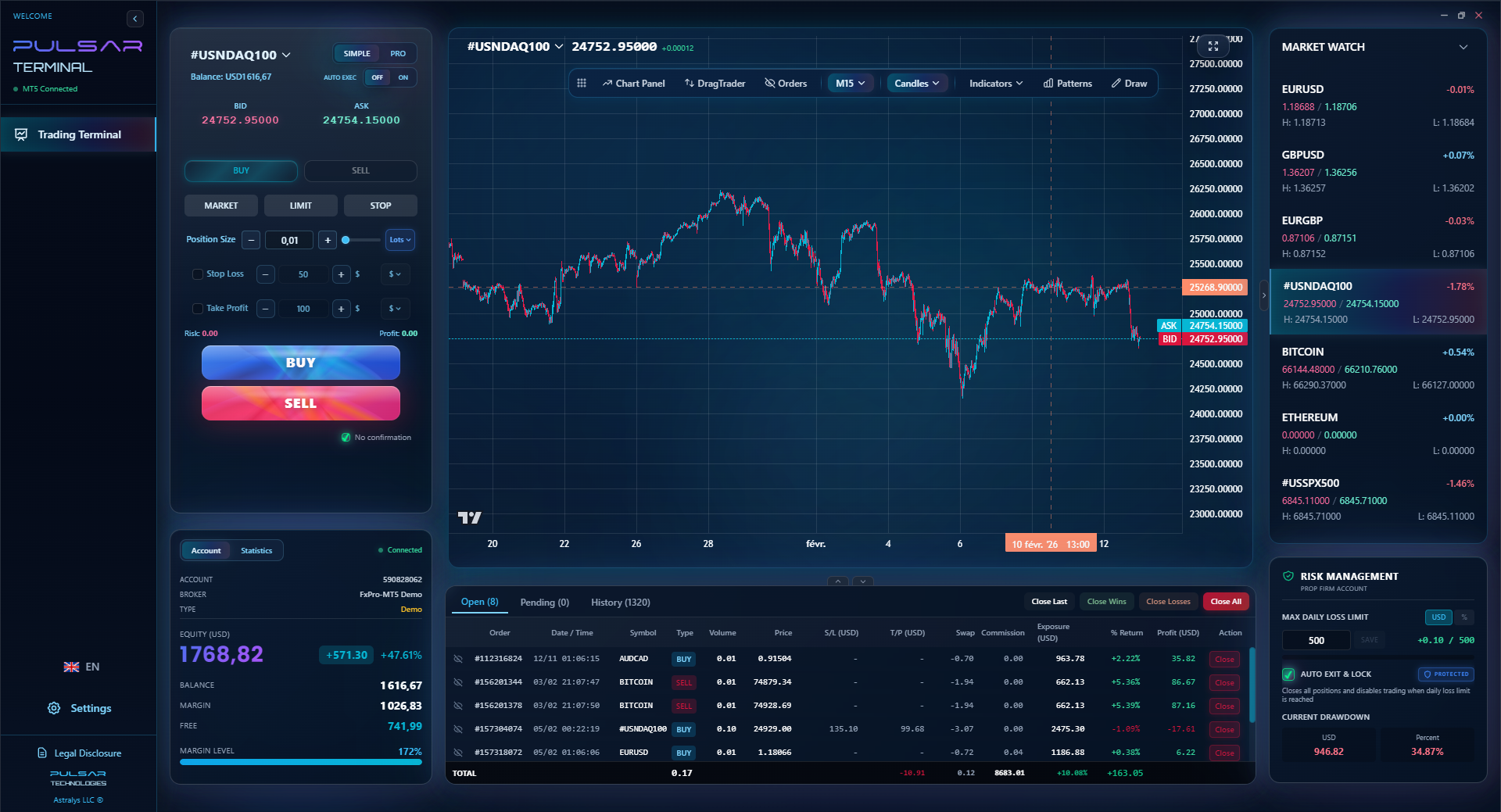
“Treat the market's schedule with more respect than your own. It doesn't care about your day.”
Let me save you some money and frustration.
Mistake 1: Trading the 'Dead Zone'. I’ve already mentioned it, but it’s the #1 account killer for insomniac traders. The urge to 'do something' is strong. Resist it. Read a book instead.
Mistake 2: Ignoring Session-Specific Pairs. Trading EUR/CHF during the Asian session is pointless. Trading AUD/NZD during the US session is often low-yield. Each pair has a 'home' session where its underlying economies are active. Stick to those.
Mistake 3: Forgetting About Daylight Saving Time (DST). This is crucial! The US and Europe switch to DST on different dates. For about two weeks in March and October, the session times shift by an hour relative to SLST (which doesn't observe DST). Mark these periods on your calendar. I once missed a perfect setup because I was an hour early, thinking London was open.
Mistake 4: Overtrading During Good Volatility. Just because the London-New York overlap is busy doesn't mean you should take every signal. The increased noise can generate false signals too. Stick to your A+ setups only. Quality over quantity.
The bottom line? Treat the market's schedule with more respect than your own. It doesn't care about your day. You have to care about its hours.
FAQ
Q1What is the best forex trading session for a beginner in Sri Lanka?
The early European session (starting around 12:30 PM SLST) is a great starting point. Volatility is rising but not insane like the overlap, and you can practice reading price action as liquidity increases. Avoid the London-New York overlap (7:30 PM) until you're very comfortable with fast moves.
Q2Can I trade forex 24 hours a day from Sri Lanka?
Technically, yes, the market is open 24 hours from Sunday 10 PM to Friday 10 PM SLST. But practically, no, you shouldn't. Trading during low-liquidity hours (like our 1 AM to 4 AM) is high-cost and high-risk due to wide spreads and unpredictable price jumps.
Q3How do Daylight Saving Time changes affect my trading schedule?
DST changes in the US and Europe will shift session times by one hour relative to Sri Lanka Time (SLST). When the US springs forward in March, the New York open moves from 7:30 PM to 8:30 PM SLST. Always check an economic calendar that shows session times in your local timezone, as they auto-adjust for DST.
Q4Is the Sunday market open good for trading?
Generally, no. The Sunday open (10 PM SLST) is notorious for low liquidity and price gaps from weekend news. It's wise to wait at least 60-90 minutes for volume to build and the initial volatility to settle before considering any new positions.
Q5Which forex pairs are most active during Sri Lankan evening hours?
During the London-New York overlap (7:30 PM - 9:30 PM SLST), all major pairs are extremely active. Focus on EUR/USD, GBP/USD, USD/JPY, and XAU/USD (gold). These have the deepest liquidity and most predictable behavior during peak volatility.
Q6Do forex brokers in Sri Lanka have different trading hours?
No, the trading hours are set by the global interbank market. However, some brokers may restrict trading on exotic pairs or have wider spreads during off-hours. It's always best to check your specific broker's terms. Regulated international brokers like those we review offer standard market hours.
บทเรียนจาก Prof. Winston
สรุปสาระสำคัญ:
- ✓Trade the London-New York overlap (7:30-9:30 PM SLST) for peak liquidity.
- ✓Avoid the dead zone (1:00-4:00 AM SLST) like a market plague.
- ✓Wide spreads in quiet hours can cost you over $1,800 yearly.
- ✓Always adjust your schedule for US/EU Daylight Saving Time shifts.
บทความนี้มีประโยชน์แค่ไหน?
คลิกดาวเพื่อให้คะแนน
ข้อมูลเชิงลึกการเทรดรายสัปดาห์
การวิเคราะห์และกลยุทธ์รายสัปดาห์ฟรี ไม่มีสแปม
เกี่ยวกับผู้เขียน
Daniel Harrington
หัวหน้าฝ่ายเนื้อหา
หัวหน้าฝ่ายเนื้อหาของ The Trading Mentor เทรดเดอร์มากประสบการณ์ที่หลงใหลในการทำให้แนวคิดการเทรดที่ซับซ้อนเข้าถึงได้ง่าย ครอบคลุมหัวข้อระดับโลก กลยุทธ์ และคู่มือแพลตฟอร์ม
ความคิดเห็น
คำเตือนความเสี่ยง
การซื้อขายตราสารทางการเงินมีความเสี่ยงสูงและอาจไม่เหมาะสำหรับนักลงทุนทุกคน ผลการดำเนินงานในอดีตไม่ได้รับประกันผลลัพธ์ในอนาคต เนื้อหานี้มีวัตถุประสงค์เพื่อการศึกษาเท่านั้นและไม่ควรถือเป็นคำแนะนำในการลงทุน โปรดทำการวิจัยของคุณเองก่อนการซื้อขาย
คุณอาจชอบสิ่งนี้

Cara Trading Forex Sukses: 7 Prinsip dari Trader Profesional
Cara trading forex sukses dengan 7 prinsip trader pro: manajemen modal, disiplin, journal trading, backtest. Data nyata, bukan janji profit palsu.
Jam Trading Forex Terbaik untuk Trader Indonesia: Panduan Lengkap dengan Tabel Waktu
Panduan jam trading forex untuk trader Indonesia. Tabel 4 sesi dunia, jam emas 20:00-00:00, sesi mana yang harus dihindari. Data akurat + tips dari trader berpengalaman.
Top 5 Sàn Forex Uy Tín Nhất 2026: Review Jujur dari Trader Indonesia
Top 5 sàn forex uy tín 2026 untuk trader Indonesia. Review jujur: spread, deposit, withdraw, dukungan lokal. Exness, XM, IC Markets & lebih.
รับ Pulsar Terminal
เครื่องคำนวณทั้งหมดนี้ถูกสร้างไว้ใน Pulsar Terminal พร้อมข้อมูลเรียลไทม์จากบัญชี MT5 ของคุณ
รับ Pulsar Terminal