


You're looking at futures trading, maybe Nifty or Bank Nifty, and wondering how to make it work without getting wiped out.

Rajesh Sharma
นักวิเคราะห์ฟอเร็กซ์อาวุโส ·  India
India
☕ 12 นาทีอ่าน
สิ่งที่คุณจะได้เรียนรู้:
- 1Futures in India: What You're Actually Trading
- 2The Three Core Approaches to Futures
- 3Popular Futures Trading Strategies, Deconstructed
- 4Risk Management: This Is How You Survive
- 5Adapting Your Strategy to New SEBI Rules (2024-2026)
- 6Putting It All Together: Your Trading Plan
- 7Classic Mistakes to Avoid at All Costs

You're looking at futures trading, maybe Nifty or Bank Nifty, and wondering how to make it work without getting wiped out. I get it. The use is tempting, but the stats are brutal - SEBI says 89% of individual F&O traders lost money last year. That's not a typo. It means most approaches are wrong. The game isn't about predicting the future; it's about managing risk with a clear plan. Let's talk about real futures trading strategies you can use on the NSE or MCX, how the new 2026 rules change everything, and how to avoid being part of that 89%.
Before we talk strategy, let's be crystal clear on what a futures contract is in our market. You're not buying a share of Reliance. You're entering a binding agreement to buy or sell a specific asset (like the Nifty 50 index, USD/INR, or crude oil) at a predetermined price on a future date. The profit or loss is the difference between your contract price and the settlement price.
The big draw, and the big danger, is use. You only need to put up a fraction of the contract's total value as margin. For a Nifty futures contract worth ₹15-20 lakhs, your margin might be around ₹1.2-1.5 lakh. This magnifies both gains and losses. A 2% move in the index can mean a 20-25% swing in your capital. That's the double-edged sword you're holding.

Warning: The SEBI-mandated increase in minimum contract size to ₹15-20 lakhs for index futures (since Nov 2024) is a game-changer for retail. It prices out smaller players and increases the absolute rupee risk per contract. Your position sizing just got more critical.
You'll trade these on exchanges like the NSE (for indices and stocks) or the MCX (for commodities). Every trade has a hard expiry date - usually the last Thursday of the month. You can't just buy and forget; you either close the position before expiry or roll it over to the next month's contract. Forgetting this is a classic, expensive mistake.

💡 เคล็ดลับจาก Winston
The market's job is to make you feel the most pain. Your stop-loss is the only thing that stops it from doing its job.
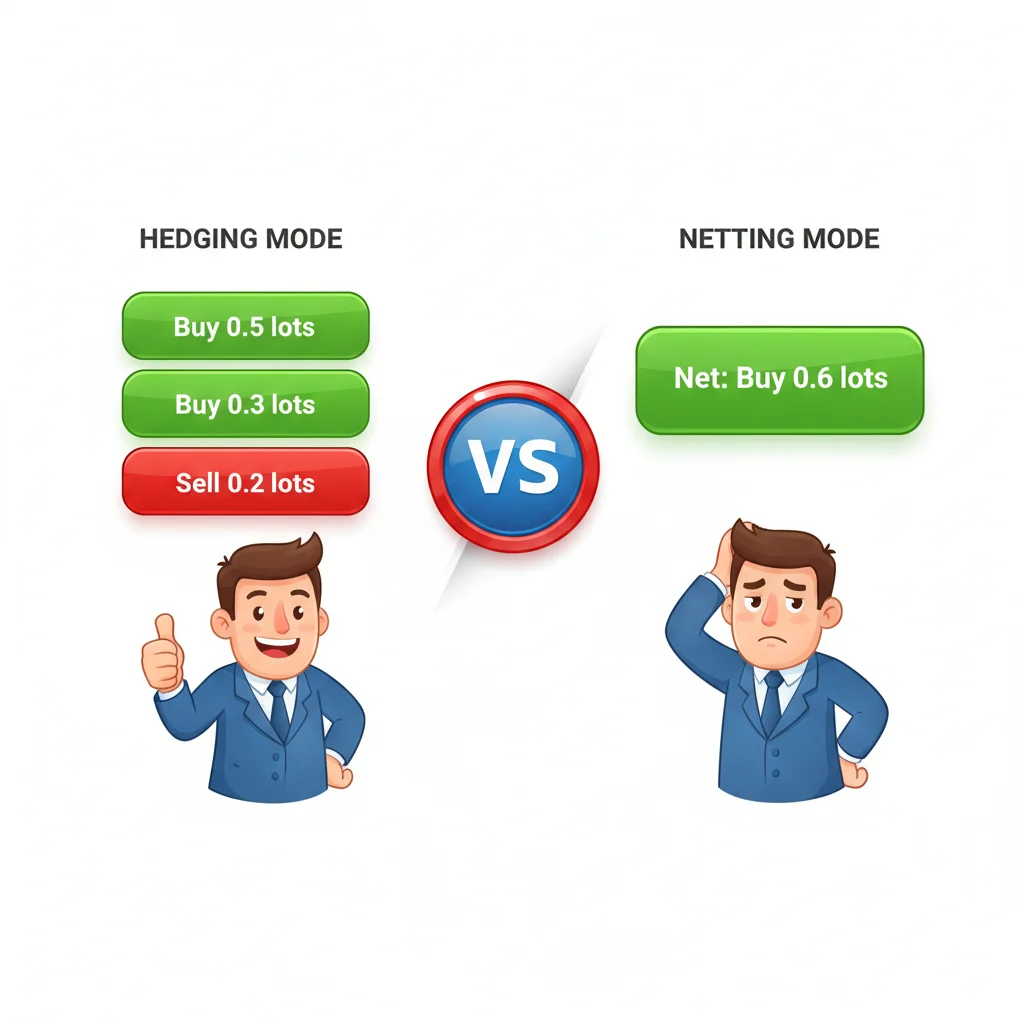
All futures trading strategies generally fall into one of three camps: speculation, hedging, or arbitrage. As a retail trader, you'll live in the first two.
Speculation: The Directional Bet
This is what most people think of. You're betting the market will go up (going long) or down (going short). Your entire profit comes from being right on the direction. It's straightforward but requires good timing and even better risk management. Most of the strategies we'll discuss later, like scalping or swing trading, are speculative.
Hedging: Your Insurance Policy
This is where futures show their sophistication. Imagine you hold a ₹10 lakh portfolio of Nifty stocks. You're bullish long-term but worried about a short-term correction. Instead of selling your stocks (and incurring taxes and exit costs), you can short an equivalent value of Nifty futures. If the market falls, your portfolio loses value, but your short futures position makes money, offsetting the loss. It's like paying a small premium (the margin) for portfolio insurance. I used this in early 2025 ahead of the budget. My portfolio dipped 4%, but my short Nifty futures gained 3.8%, nearly covering the loss and letting me sleep at night.
Arbitrage: The Complex Play
This involves exploiting tiny price differences between the futures contract and the underlying asset (or between two different contracts). It's theoretically risk-free but requires lightning-fast execution, massive capital, and is mostly the domain of institutions and algorithms. For us, it's good to understand, but rarely practical.

Pro Tip: Don't ignore hedging because it seems 'defensive.' Using a futures contract to protect your long-term equity investments is a sign of professional maturity, not a lack of courage. It turns you from a gambler into a portfolio manager.
“A mediocre strategy with excellent risk management will outlive a brilliant strategy with poor risk management. Every single time.”
Let's get into the nuts and bolts. These are frameworks, not holy grails. You have to adapt them to your personality and risk tolerance.
Scalping the Index
Scalping aims to capture tiny profits (5-10 points on Nifty) multiple times a day. It's intense. You're in and out in minutes, relying on Level 2 data, order flow, and 1 or 2-minute charts. The key is a positive risk-reward ratio. If you're aiming for 5 points, your stop-loss can't be 10 points. It must be tighter, maybe 3 points.
I tried pure scalping for three months in 2023. My win rate was high (around 70%), but brokerage, taxes, and one bad trade wiped out a week's profits. With the new 0.05% STT on sell-side futures (a 150% hike from 0.02%), the cost of doing business just went up dramatically. You need a broker with ultra-low latency and fees, like those reviewed in our Zerodha or Upstox guides. This isn't for beginners.
Swing Trading with Trends
This is my bread and butter. You hold positions for days or weeks, riding a trend. You use higher timeframes (like 1-hour or daily charts) and indicators like the MACD indicator or moving averages to identify the trend's direction and strength.
Here's a real example from last month: Bank Nifty was in a clear uptrend, making higher highs and higher lows. The 20-period EMA acted as support. I went long on a dip to the EMA around 48,200. My stop-loss was placed below the previous swing low at 47,950 (a 250-point risk). My target was the previous high near 49,000. The trade worked, netting 800 points. The key was letting the trend do the work and not getting shaken out by intraday noise.
Breakout Trading
This strategy waits for the price to move beyond a defined resistance or support level with increased volume. The idea is that a breakout signals the start of a new, strong move. You buy on a break above resistance or sell short on a break below support.
The trap? False breakouts. The market pokes above resistance, you jump in, and it immediately reverses. To filter these, I wait for the candle to close beyond the level, not just intraday spike. I also use the RSI indicator to check if the move is overbought or oversold. A breakout with an RSI already above 70 is suspect.
Mean Reversion (Fading the Move)
This is the contrarian approach. It assumes prices will revert to an average or a fair value. When Nifty makes an extreme move up, you look for signs of exhaustion to short, expecting a pullback.
This is dangerous in strong trending markets. You can get run over. I only use it in ranging markets. For instance, if Nifty has been bouncing between 18,000 and 18,500, I might sell near 18,450 with a stop above 18,550, aiming for 18,100. Your stop-loss is absolutely sacred here.
| Strategy | Typical Holding Time | Key Skill Required | Biggest Risk |
|---|---|---|---|
| Scalping | Seconds to Minutes | Discipline, Speed | Death by a thousand cuts (costs) |
| Swing Trading | Days to Weeks | Patience, Trend ID | Missing the trend reversal |
| Breakout Trading | Hours to Days | Timing, Filtering False Signals | Getting whipsawed in a range |
| Mean Reversion | Hours to Days | Contrarian Mindset, Precision | The trend continues without you |
This section is more important than any strategy. A mediocre strategy with excellent risk management will outlive a brilliant strategy with poor risk management. Every single time.
The 1% Rule: Never, ever risk more than 1% of your total trading capital on a single trade. If you have a ₹5 lakh account, your maximum loss per trade is ₹5,000. This is non-negotiable. Use a position size calculator religiously.
Let's do the math. Your Nifty trade has an entry at 22,100 and a stop-loss at 22,000. That's a 100-point risk. Nifty's point value is ₹50. So, 100 points x ₹50 = ₹5,000 potential loss. To adhere to the 1% rule (₹5,000 risk), this trade is at your maximum. If your stop was wider, you'd have to take fewer contracts.
Stop-Losses Are Your Best Friend: A stop-loss isn't a suggestion; it's an automated ejector seat. You must decide where it goes before you enter the trade. Base it on chart logic - a support/resistance break, not on how much money you're willing to lose. And never, ever move it further away because the trade is going against you. That's how a ₹5,000 loss becomes a ₹25,000 margin call.
The New Cost Reality: Factor in all costs. With STT at 0.05%, GST on brokerage, and exchange charges, your trade needs to move enough just to break even. On a ₹20 lakh Nifty contract, the STT on the sell side alone is now ₹1,000 (0.05% of 20 lakh). Your strategy's edge must be larger than this friction.
💡 เคล็ดลับจาก Winston
If you can't write down your exact entry, stop, and target before clicking 'buy', you're not trading. You're gambling.
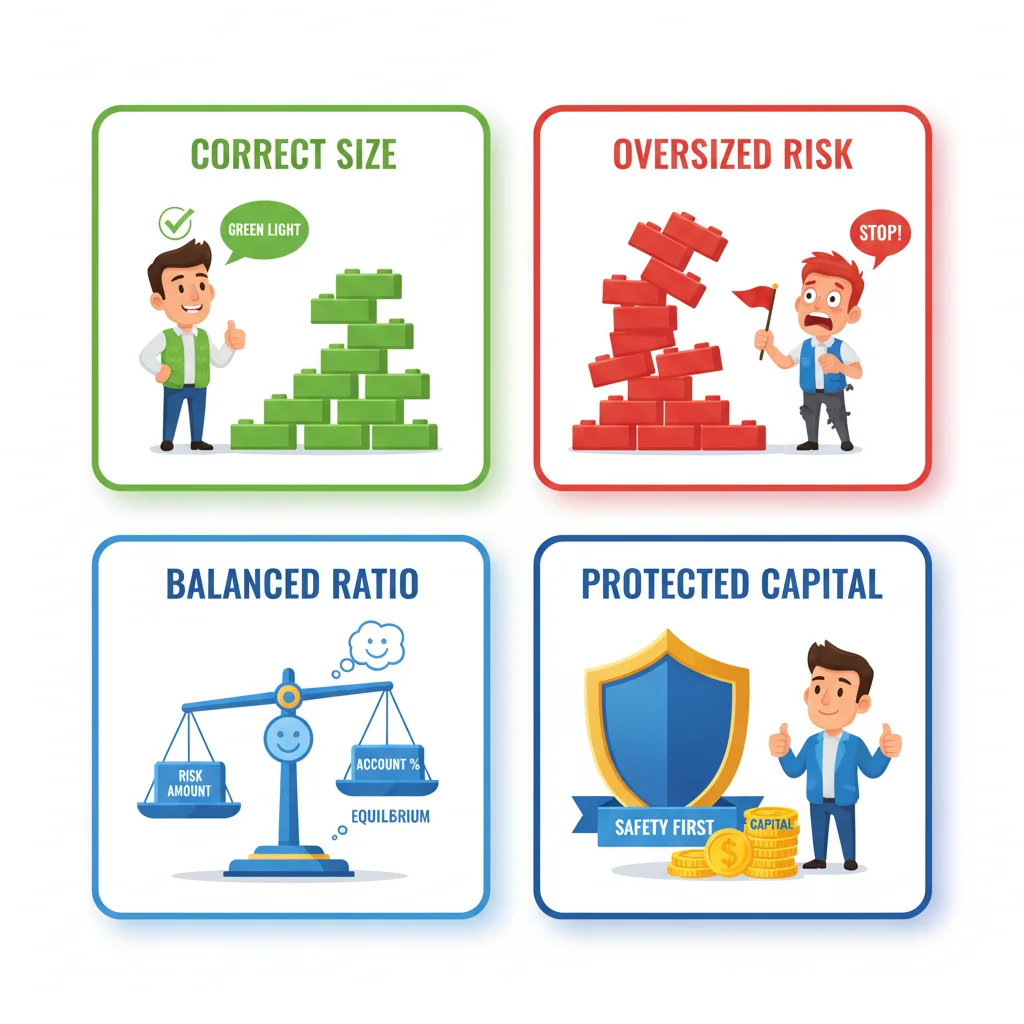
“Your first plan will be wrong. Mine was. The journal showed 80% of my losses came from impulsive trades that broke my own rules.”
The regulatory landscape has shifted. Ignoring this is trading suicide. Your futures trading strategies must adapt.
Higher Contract Values (₹15-20 Lakhs): This changes position sizing dramatically. You can't just "buy one lot" casually anymore. One standard lot is now a significant commitment. This forces better capital allocation and should discourage overtrading.
Upfront Premium for Options (From Feb 2025): While this directly hits options buyers, it affects futures too. Some strategies that used cheap options for protection (like buying a put as a stop-loss) are now more expensive. Your pure futures risk management (hard stops) becomes even more vital.
No More Calendar Spread Benefits (From Feb 2025): If you used to run futures rollover strategies that relied on lower margins for calendar spreads, that edge is gone. Your margin requirements for such positions are now higher, affecting your capital efficiency.
Intraday Position Monitoring (From April 2025): SEBI is now watching intraday limits, not just end-of-day. If you're a heavy volume trader, you can't fly under the radar by closing positions before the day's end. Your broker's platform must give you real-time margin and exposure updates.
The F&O Pre-Open Session (From Dec 2025): This 15-minute window (9:00-9:15 AM) is crucial. It helps establish a fairer opening price. Don't place market orders right at 9:15. Let the volatility settle. Watch the order build-up; it provides clues for the day's direction. Your opening gap strategies need revisiting.

Example: Old vs. New STT Impact. Selling one ₹20 lakh Nifty futures contract:
- Before April 2026: STT = 0.02% of 20,00,000 = ₹400
- After April 2026: STT = 0.05% of 20,00,000 = ₹1,000 That's an extra ₹600 gone from your profit (or added to your loss) on every single contract you sell. Your strategy's average profit per trade must account for this.
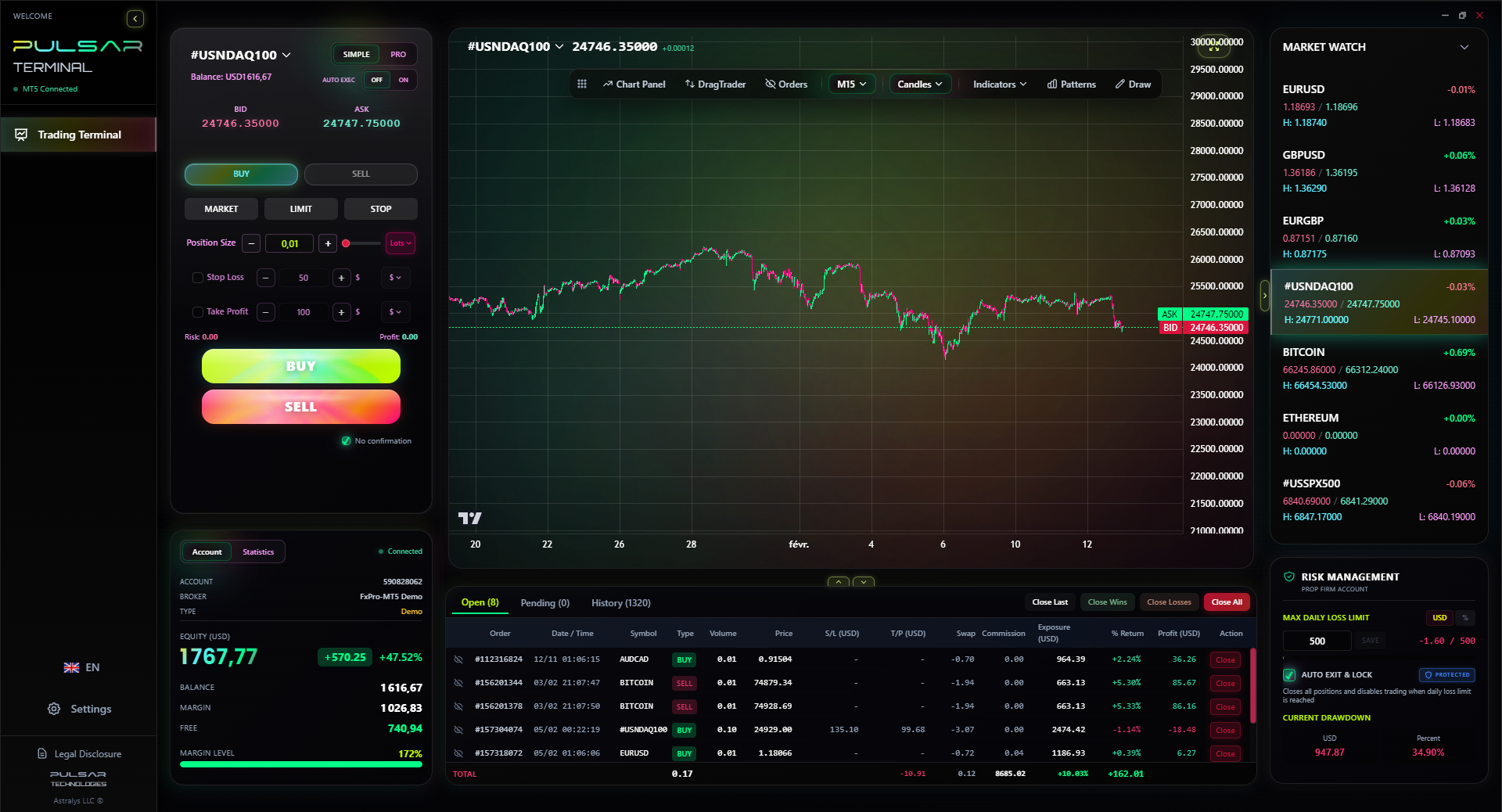
Manually moving stops and taking partial profits is where most emotional errors happen; a tool that automates multi-level exits and trailing stops directly on your MT5 chart can lock in your plan.
Pulsar Terminal
เครื่องมือ MT5 ครบวงจร: ลากวางคำสั่ง, multi-TP/SL, trailing stop, grid trading, Volume Profile และการป้องกัน prop firm ใช้งานโดยเทรดเดอร์กว่า 1,000 คนทุกวัน
A strategy is just an idea. A trading plan is the rulebook that makes it executable. Here’s what yours must have:
- Market Condition: Do you trade trends, ranges, or breakouts? Define the chart setup you will act on. (e.g., "I will only take long swing trades when the daily chart shows price above the 50 EMA and the MACD is above zero").
- Entry Trigger: Be painfully specific. Is it a candle close above a trendline? A specific MACD indicator crossover? Vague entries lead to emotional decisions.
- Exit Strategy (Two Parts):
- Stop-Loss: The exact price or condition where you admit the trade is wrong.
- Take-Profit: Your profit target. Will you take all at one level? Use a multi-level exit? Tools that allow for partial closures and trailing stops can automate this, removing emotion.
- Position Size: Linked directly to your 1% risk rule and your stop-loss distance. Calculate it every time.
- Trade Journal: This is your feedback loop. Record every trade: entry, exit, reason, P&L, and most importantly, how you felt. Did you panic? Did you break your rules? Review this weekly.
Your first plan will be wrong. Mine was. I thought I was a swing trader but kept jumping into scalps. My journal showed 80% of my losses came from these impulsive trades. I had to consciously block my 1-minute charts for a month to break the habit. The plan forces discipline, and discipline is the only thing separating you from that 89%.
💡 เคล็ดลับจาก Winston
The new ₹15-20 lakh lot size isn't a barrier. It's a filter. It's keeping undercapitalized and undisciplined traders off the battlefield. Use it to your advantage.
“The goal isn't to be right on every trade. The goal is to be profitable over a series of trades. That requires losing small and winning bigger.”
Let's learn from the collective (and expensive) errors of others.
Averaging Down a Losing Futures Position: This is the #1 account killer. You buy one Nifty lot at 22,000. It falls to 21,800. Instead of taking the stop-loss, you buy another lot "to bring your average down." Now you have double the exposure to a losing idea. The market doesn't care about your average. It can keep falling and wipe you out.
Trading Without a Stop-Loss: Equally fatal. You're "watching it closely." Then a news hit causes a 200-point gap against you. Your mental stop is vaporized, and you're frozen, hoping for a comeback that never comes. Always use a physical stop order.
Overleveraging: Just because you can trade 5 lots with your margin doesn't mean you should. use amplifies mistakes. Start with one contract. Get consistently profitable with that single lot before you even think about adding more.
Chasing the Market: You see Nifty rally 150 points and FOMO kicks in. You buy at the top just as the move exhausts. Good entries are patient, often waiting for a pullback in a trend. Bad entries are emotional reactions.
Ignoring Expiry: Futures expire. If you hold a contract into expiry, it will be settled at the final settlement price. You don't want to be at the mercy of that final hour's volatility. Plan your rollover or exit days in advance.
Remember, the goal isn't to be right on every trade. The goal is to be profitable over a series of trades. That requires losing small and winning bigger. It sounds simple, but it's the hardest thing to do when real money is on the line.
FAQ
Q1Which is the best futures trading strategy for beginners in India?
For beginners, simple swing trading on a higher timeframe (like the daily chart) is the most manageable. It doesn't require staring at screens all day, gives you time to think, and helps you learn trend identification. Start with index futures like Nifty, avoid commodities and currencies initially, and absolutely master the 1% risk rule before anything else.
Q2How much money do I need to start trading futures in India?
After the SEBI changes, you need enough for the margin plus a significant buffer. For one Nifty futures lot (now ~₹15-20 lakhs notional), the margin can be ₹1.2-1.8 lakhs. However, you should never use all your capital for margin. A realistic starting capital is at least ₹5 lakhs, allowing you to take a position while keeping 60-70% in reserve to manage risk and avoid a margin call. Starting with less is extremely risky.
Q3What's the difference between trading Nifty futures and Bank Nifty futures?
Nifty (50 stocks) is broader and generally less volatile than Bank Nifty (12 banking stocks). Bank Nifty moves faster and has larger daily ranges, offering more profit potential but also more risk. Its point value is also higher (₹25 vs. Nifty's ₹50). Beginners should stick to Nifty to get a feel for volatility. The strategies are similar, but your stop-losses in Bank Nifty need to be wider to account for the noise.
Q4How do the new 2026 STT rates affect my profitability?
Significantly. The STT on futures selling has increased 150% from 0.02% to 0.05%. This is a direct drag on returns. For a round-trip trade (buy and sell), the STT cost on the sell side has gone up by ₹600 per ₹20 lakh contract. You need your strategy's average win to be larger to overcome this increased friction. It makes high-frequency, low-profit-margin strategies like certain types of scalping much harder.
Q5Can I trade international futures (like Gold or Crude) from India?
Directly, no. SEBI-regulated brokers only offer futures on domestic exchanges (NSE, BSE, MCX, NCDEX). However, MCX offers crude oil and gold futures that track international prices. So you can trade Gold (XAU) and Crude Oil contracts on MCX in INR. The prices are highly correlated to global markets but are distinct contracts with their own spread and liquidity dynamics.
Q6Is hedging with futures a good idea for my stock portfolio?
Yes, it's one of the most professional uses of futures. If you have a large, long-term equity portfolio, shorting an appropriate amount of Nifty futures during periods of expected volatility (like elections, budgets) can protect your capital. It's not about making money on the hedge; it's about reducing downside risk. The cost is the margin money blocked and the potential upside you give up if the market rallies sharply.
Q7What time do futures markets open and close in India?
For equity and index futures on NSE/BSE: Normal market hours are 9:15 AM to 3:30 PM. Remember the new F&O Pre-Open session from 9:00 AM to 9:15 AM. For currency futures, trading is from 9:00 AM to 5:00 PM. For commodity futures on MCX, it varies; energy contracts often trade until 11:30 PM.
บทเรียนจาก Prof. Winston
สรุปสาระสำคัญ:
- ✓Risk a maximum of 1% of capital per trade, no exceptions.
- ✓STT is now 0.05%; factor ₹1000+ cost per ₹20L contract sold.
- ✓Higher lot sizes demand stricter position sizing.
- ✓Swing trading on daily charts is the best beginner path.
- ✓Hedging is a professional tool, not a defensive weakness.
บทความนี้มีประโยชน์แค่ไหน?
คลิกดาวเพื่อให้คะแนน
ข้อมูลเชิงลึกการเทรดรายสัปดาห์
การวิเคราะห์และกลยุทธ์รายสัปดาห์ฟรี ไม่มีสแปม
เกี่ยวกับผู้เขียน
Rajesh Sharma
นักวิเคราะห์ฟอเร็กซ์อาวุโส
ซื้อขายในตลาดอินเดียและเอเชียใต้มากกว่า 10 ปี เริ่มต้นจากอนุพันธ์สกุลเงินของ NSE ก่อนเข้าสู่ตลาดฟอเร็กซ์สากล เชี่ยวชาญคู่ USD/INR และคู่สกุลเงินตลาดเกิดใหม่
ความคิดเห็น
คำเตือนความเสี่ยง
การซื้อขายตราสารทางการเงินมีความเสี่ยงสูงและอาจไม่เหมาะสำหรับนักลงทุนทุกคน ผลการดำเนินงานในอดีตไม่ได้รับประกันผลลัพธ์ในอนาคต เนื้อหานี้มีวัตถุประสงค์เพื่อการศึกษาเท่านั้นและไม่ควรถือเป็นคำแนะนำในการลงทุน โปรดทำการวิจัยของคุณเองก่อนการซื้อขาย
คุณอาจชอบสิ่งนี้

Cara Trading Forex Sukses: 7 Prinsip dari Trader Profesional
Cara trading forex sukses dengan 7 prinsip trader pro: manajemen modal, disiplin, journal trading, backtest. Data nyata, bukan janji profit palsu.
Jam Trading Forex Terbaik untuk Trader Indonesia: Panduan Lengkap dengan Tabel Waktu
Panduan jam trading forex untuk trader Indonesia. Tabel 4 sesi dunia, jam emas 20:00-00:00, sesi mana yang harus dihindari. Data akurat + tips dari trader berpengalaman.
Top 5 Sàn Forex Uy Tín Nhất 2026: Review Jujur dari Trader Indonesia
Top 5 sàn forex uy tín 2026 untuk trader Indonesia. Review jujur: spread, deposit, withdraw, dukungan lokal. Exness, XM, IC Markets & lebih.
รับ Pulsar Terminal
เครื่องคำนวณทั้งหมดนี้ถูกสร้างไว้ใน Pulsar Terminal พร้อมข้อมูลเรียลไทม์จากบัญชี MT5 ของคุณ
รับ Pulsar Terminal