


Everyone's looking for the next big thing, the prop firm that's going to be easier, cheaper, and more generous than the established players.

James Mitchell
นักวิเคราะห์การเทรดอาวุโส
☕ 10 นาทีอ่าน
สิ่งที่คุณจะได้เรียนรู้:
- 1What Are 'Upcomers' Prop Firms? (And Why You're Drawn to Them)
- 2The 3 Biggest Risks With New Prop Firms (Beyond Just Blowing Your Fee)
- 3How to Review an Upcomer: The Red Flags Checklist
- 4Upcomers vs. The Giants: A Brutally Honest Comparison
- 5How to Make a Smart Choice (If You Still Want to Try One)
- 6The 5 Questions You Must Get Answered Before Paying a Dime
- 7The Final Verdict on Upcomers Prop Firm Reviews

Everyone's looking for the next big thing, the prop firm that's going to be easier, cheaper, and more generous than the established players. That's the promise of the 'upcomers.' Let me stop you right there. Chasing shiny new prop firms is one of the fastest ways to burn your evaluation fee money. I've done it, I've lost money on it, and I've watched students make the same dumb mistakes. This guide isn't about hyping the latest names. It's a reality check on what you're actually signing up for when you trust a new firm with your capital and your future.
In the prop trading world, 'upcomers' refers to the new firms that pop up seemingly every month. They're not the FTMOs or the Topsteps (yet). They're the fresh faces, often launched by ex-traders or marketing gurus, trying to carve out a slice of the multi-billion dollar evaluation fee pie.
Their appeal is obvious. They offer lower challenge prices, sometimes as low as $50. They promise 'more realistic' profit targets, like 8% instead of 10%. Their rules might seem looser - maybe they allow weekend holding or have a higher daily loss limit. The marketing is slick, filled with testimonials from 'traders' who just passed in record time. It feels like you've found a secret backdoor.
Here's the ugly truth I learned the hard way: that lower barrier to entry isn't for your benefit. It's a customer acquisition strategy. They need volume, and a low price point gets people in the door. I once blew $300 across three different new firms in a single month, lured by 'limited-time discounts.' The rules seemed great on paper, but the execution and support were nonexistent. The real cost isn't the evaluation fee; it's your time, your strategy's adjustment period, and your emotional capital.
“Chasing shiny new prop firms is one of the fastest ways to burn your evaluation fee money.”
Losing your evaluation fee is the most obvious risk, but it's honestly the least of your worries. The real dangers are more insidious and can wreck your trading career.
1. The Payout Vanishing Act
This is the nightmare scenario. You pass the challenge, you trade the funded account, you hit your first payout threshold. You submit your withdrawal request... and then nothing. Radio silence. The website goes down. The support email bounces. I'm not being paranoid; I've seen it happen. A student of mine in 2021 finally got a $2,800 payout approved from a then-popular new firm. The money never hit his bank account. Two weeks later, the firm's social media was deleted. Poof. Gone. Your profit is just a number on a dashboard until it's in your bank account.

Warning: A firm's ability to market itself has zero correlation with its ability to sustainably pay out profits. Always, always research their financial backing and payout history.
2. Rule Changes Mid-Game
Established firms have rulebooks carved in stone. New firms? Their terms of service are written in sand. I signed up for a firm that advertised 'no consistency rule' during its launch. Two months into my funded account, they emailed a 'policy update' introducing a brutal consistency rule that my swing trading style couldn't possibly meet. My account was effectively doomed by a rule that didn't exist when I paid them. There was no grandfather clause, no recourse.
3. Platform Instability & Slippage
New firms often partner with lesser-known or cheaper liquidity providers to keep costs down. The result? Platform crashes during high volatility, ridiculous spreads on news events, and slippage that turns a winning trade into a loser. You think you're battling the market, but you're really battling a broken bridge. One of my worst trades ever wasn't due to analysis; it was a 12-pip slippage on a EUR/USD entry with a new prop firm's platform that completely blew my risk for the day. I would have been stopped out for a 1% loss. Instead, I took a 3.5% hit instantly. You can learn more about this critical concept in our guide on spread definition.

💡 เคล็ดลับจาก Winston
Your first withdrawal request is your final exam for the prop firm. If it's a hassle, that's your answer. Don't give them a second chance.

“Your profit is just a number on a dashboard until it's in your bank account.”
Don't just read the sales page. You need to become a forensic analyst. Here’s what I look for now, after getting burned.
The Website & Legal Stuff:
- No Physical Address or Obvious PO Box: If you can't find where they're incorporated (Cyprus, UK, US, etc.), run.
- Vague 'About Us' Page: Teams should have named founders with LinkedIn profiles that check out. 'A team of veteran traders' isn't good enough.
- Overly Complex or Contradictory Rules: If you need a law degree to understand the drawdown calculation, it's designed to confuse you so you fail.
The Financials & Practicals:
- Payout Proof: They should show real, recent payout proofs from traders (with personal info blurred). Not just 'John M. made $5,000!'.
- Trading Platform: Is it a reputable platform like MetaTrader 5, or some white-label web trader you've never heard of? MT4/5 is a good sign.
- Community Sentiment: Search the firm's name + 'scam', 'payout', 'problem' on Twitter, Reddit (like r/Forex), and trading forums. Look for patterns, not just one complaint.

Pro Tip: The single best test? Contact their customer support with a detailed, technical question before you buy. Ask about their liquidity provider or their margin call policy. See how long they take to respond and if the answer makes sense. If it's a 24-hour+ wait for a copy-paste reply, imagine what payout support is like.
A firm's rules are its DNA. You must understand your margin call level inside and out before you place a single trade.
“Your profit is just a number on a dashboard until it's in your bank account.”
Let's put the hype aside and look at the cold, hard trade-offs. This table isn't about good vs. bad; it's about what you're prioritizing.
| Feature | The Upcomers (New Firms) | The Giants (FTMO, Topstep, etc.) |
|---|---|---|
| Cost of Entry | Lower. Often deep discounts to attract users. | Higher. You're paying for brand stability. |
| Rule Flexibility | Sometimes more flexible to stand out. | Strict, well-defined, and rarely change. |
| Payout Reliability | Major Risk. Unproven track record. | Proven. Years of consistent payout history. |
| Platform Stability | Risk of poor liquidity, slippage, downtime. | Generally excellent. Top-tier liquidity partners. |
| Customer Support | Often slow, inexperienced, or non-existent. | Established channels, though can be busy. |
| Community & Resources | Little to none. | Often extensive (webinars, analytics, communities). |
| Longevity Risk | High. May not exist in 12 months. | Low. Market leaders with sustainable models. |
My take? If you're still perfecting your strategy and view the challenge fee as a pure learning cost, a cheaper upcomer might be a cost-effective practice run. But the moment you're serious about actually making a funded account pay you a salary, the stability of a giant is worth every extra penny. The mental peace of knowing your payout will arrive is a trading edge you can't buy elsewhere. For a look at a top-tier established broker's structure, read our IC Markets review.
💡 เคล็ดลับจาก Winston
A firm's refund policy tells you everything. If they offer even a partial refund for failed challenges, it shows confidence. If it's strictly non-refundable, they're just selling lottery tickets.

“You are not a venture capitalist. Your job is to trade the market, not to bet on which startup prop firm will survive.”
Alright, you've read the warnings and you still want to roll the dice. Maybe you have a small amount of 'risk capital' specifically for this. Fine. Let's do it as smartly as possible.
1. Start with a Nano Account: If the firm offers a $10k or $25k account with a proportionally tiny fee (e.g., $50), start there. This isn't about the potential profit. It's a due diligence fee. Your goal is to test their systems, their support, and their payout process with the smallest possible investment. Passing a $50 challenge proves nothing. Getting a $500 payout from it proves everything.
2. Document Everything: Screenshot the rules the day you sign up. Save all email correspondence. Record your trade executions (platform time stamps) to compare against market prices if you suspect slippage.
3. Have a Payout-First Mindset: Your first objective in the funded account isn't to get rich. It's to trigger the smallest possible payout threshold and request it. Immediately. Until you see that money clear in your bank or crypto wallet, you have no proof the firm is legitimate.
4. Never Bet Your Strategy on Them: Don't change a winning scalping strategy or a solid swing trading approach to fit a new firm's quirky rules. If your strategy doesn't align cleanly with their rulebook, this firm is not for you. Period.
I applied this process in late 2023 with a firm that was getting some buzz. I passed their $49 nano challenge, traded conservatively to hit a $200 profit target, and requested a payout. It took 11 business days (a red flag), but it arrived. That single data point was more valuable than all their marketing combined. It meant they could pay. I still wouldn't risk a large account with them, but I now had verified information.
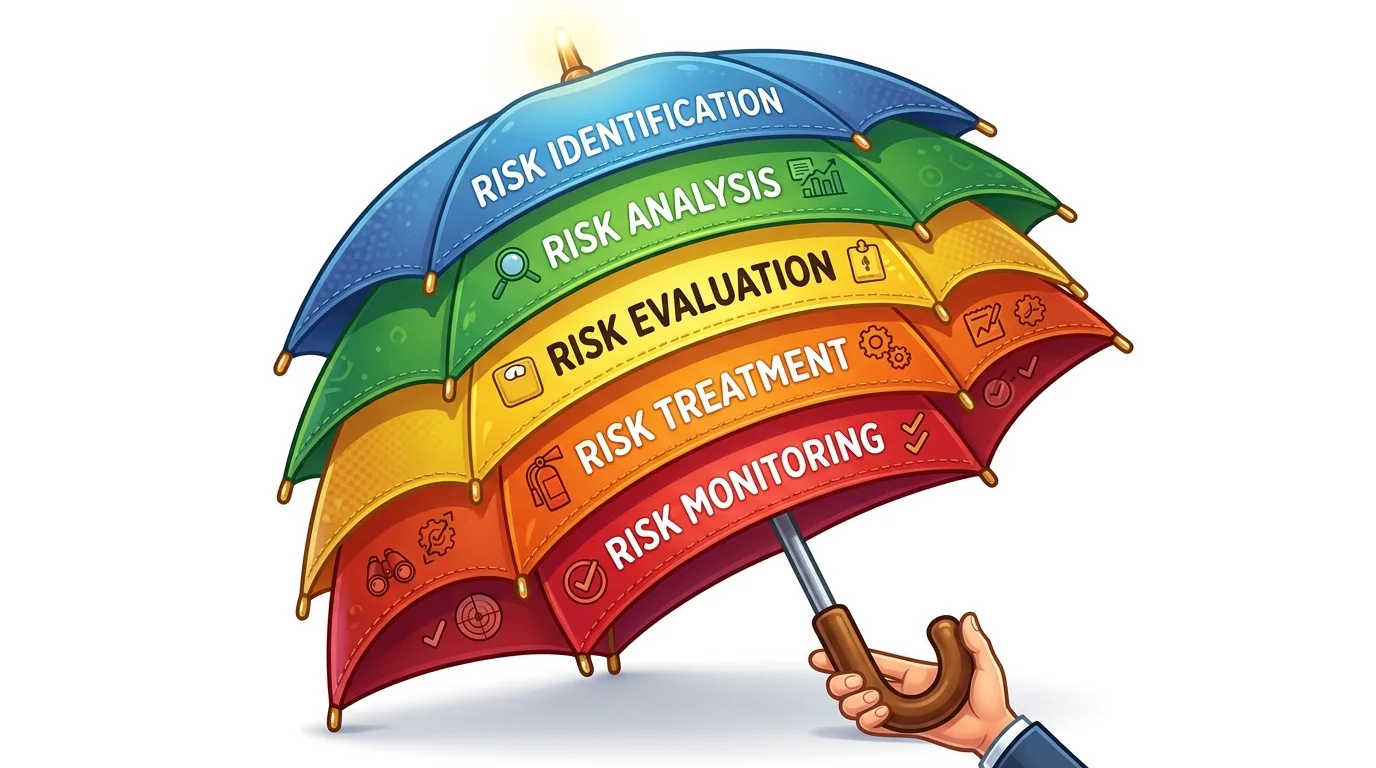
Managing the complex rules of a new prop firm's challenge is stressful enough without manual calculations; Pulsar Terminal automates your daily loss limits and breakeven triggers directly on your MT5 chart.
Pulsar Terminal
เครื่องมือ MT5 ครบวงจร: ลากวางคำสั่ง, multi-TP/SL, trailing stop, grid trading, Volume Profile และการป้องกัน prop firm ใช้งานโดยเทรดเดอร์กว่า 1,000 คนทุกวัน
“You are not a venture capitalist. Your job is to trade the market, not to bet on which startup prop firm will survive.”
If you can't get clear answers to these, close the tab.
- "What is your maximum slippage tolerance policy on news events? Can you show me the clause in your terms?" This exposes if they have a fair execution policy or will hang you out to dry.
- "Who is your primary liquidity provider or broker of record?" A legitimate firm will tell you (e.g., "We use a pooled account with Broker XYZ"). A shady one will dodge.
- "Can you show me three examples of recent payouts to traders in my region?" They should be able to anonymize and share proof.
- "Has your profit split or any core rule changed in the last 12 months? If yes, were existing funded accounts grandfathered?" Tests their stability and fairness.
- "What is the specific, step-by-step process for a payout, and what is the average processing time from request to funds received?" Vague answers like 'a few days' are unacceptable.
Getting these answers in writing (email) is part of your audit. It creates a paper trail.
💡 เคล็ดลับจาก Winston
The best research tool isn't a review site. It's the search bar on a public trading forum. Read the complaints, not the success stories.
“The few hundred dollars you might save with an upcomer is meaningless compared to the thousands in potential payouts you risk if they disappear.”
So, are upcomers prop firms a complete scam? Not all of them. Some are legitimate businesses trying to grow. The problem is you, the trader, are the guinea pig in their business model experiment. You're taking on 100% of the operational risk - the risk they can't pay, the risk they change rules, the risk they fold - for the privilege of maybe getting a funded account.
My blunt advice for most traders: You are not a venture capitalist. Your job is to trade the market, not to bet on which startup prop firm will survive. The 'discount' they offer is actually the premium you pay for massive uncertainty.
Invest in your education, backtest your strategy ruthlessly, and when you're ready, use a proven firm with a track record you can trust. The higher fee is your insurance policy. The few hundred dollars you might save with an upcomer is meaningless compared to the thousands in potential payouts you risk if they disappear. Let someone else be the 'early adopter' who gets burned. Your capital and your sanity are worth more than that.
Focus on what you can control: your psychology, your risk management, and your position size calculator. Let the prop firm landscape settle. The good upcomers will still be here in two years, and they'll have proven it. Then you can consider them. Until then, the best upcomers prop firm review is one that tells you to wait, watch, and let others do the beta testing.

FAQ
Q1What is the most common way traders get scammed by new prop firms?
It's not usually an outright 'take the fee and run' scam. The most common issue is the 'moving goalpost.' You pass under one set of rules, but by the time you're funded, the rules have subtly changed (tighter drawdown, new consistency rules) making it nearly impossible to succeed or withdraw, effectively voiding your earlier work without a refund.
Q2I see a new firm with a famous trader as a brand ambassador. Is that a good sign?
Not necessarily. It's a marketing expense. That trader is likely paid a flat fee or commission for the promotion and has zero insight into the firm's financial stability or operations. Do not outsource your due diligence to a celebrity endorsement.
Q3How long should a new prop firm be in business before I consider it 'safe'?
There's no magic number, but I wouldn't touch a firm with less than 18-24 months of verifiable, consistent payout history. That's enough time to see if they can survive a few market cycles and handle the operational load of paying traders. Look for firms that have been through a period of high market volatility and came out the other side.
Q4Are crypto-based prop firms riskier than traditional ones?
Yes, categorically. They operate in a far less regulated space. While they often offer faster crypto payouts, the risk of the entity disappearing is higher, and recovering funds is next to impossible. Treat them with extreme caution and an even smaller 'test' budget.
Q5What's a realistic profit split I should expect from a reputable new firm?
If a new firm is offering a profit split above 90%, be very skeptical. That's often a unsustainable customer acquisition tactic. Established firms sit at 70-90%. A new firm offering 80-85% is more plausible. If it sounds too good to be true (like 95/5), it almost always is. They can't pay that and build a sustainable business.
Q6Can I use my same EA or trading bot on a new prop firm?
You must check their rules carefully. New firms often have poorly coded platforms or specific rules against certain types of orders (like hedging) that can break your EA. Test it on their demo first, if available. Assume nothing.
บทเรียนจาก Prof. Winston
สรุปสาระสำคัญ:
- ✓Treat the first payout as a legitimacy test, not income.
- ✓Rule changes are the silent killer of new firm accounts.
- ✓Platform stability is a non-negotiable trading edge.
- ✓Never pay a firm you can't find a physical address for.
บทความนี้มีประโยชน์แค่ไหน?
คลิกดาวเพื่อให้คะแนน
ข้อมูลเชิงลึกการเทรดรายสัปดาห์
การวิเคราะห์และกลยุทธ์รายสัปดาห์ฟรี ไม่มีสแปม
เกี่ยวกับผู้เขียน
James Mitchell
นักวิเคราะห์การเทรดอาวุโส
ประจำอยู่ที่นิวยอร์ก มีประสบการณ์การเทรดมากกว่า 9 ปี เน้นคู่ USD หลัก ความท้าทายของ prop firm และกฎระเบียบการเงินของสหรัฐฯ
ความคิดเห็น
คำเตือนความเสี่ยง
การซื้อขายตราสารทางการเงินมีความเสี่ยงสูงและอาจไม่เหมาะสำหรับนักลงทุนทุกคน ผลการดำเนินงานในอดีตไม่ได้รับประกันผลลัพธ์ในอนาคต เนื้อหานี้มีวัตถุประสงค์เพื่อการศึกษาเท่านั้นและไม่ควรถือเป็นคำแนะนำในการลงทุน โปรดทำการวิจัยของคุณเองก่อนการซื้อขาย
คุณอาจชอบสิ่งนี้

Cara Trading Forex Sukses: 7 Prinsip dari Trader Profesional
Cara trading forex sukses dengan 7 prinsip trader pro: manajemen modal, disiplin, journal trading, backtest. Data nyata, bukan janji profit palsu.
Jam Trading Forex Terbaik untuk Trader Indonesia: Panduan Lengkap dengan Tabel Waktu
Panduan jam trading forex untuk trader Indonesia. Tabel 4 sesi dunia, jam emas 20:00-00:00, sesi mana yang harus dihindari. Data akurat + tips dari trader berpengalaman.
Top 5 Sàn Forex Uy Tín Nhất 2026: Review Jujur dari Trader Indonesia
Top 5 sàn forex uy tín 2026 untuk trader Indonesia. Review jujur: spread, deposit, withdraw, dukungan lokal. Exness, XM, IC Markets & lebih.
รับ Pulsar Terminal
เครื่องคำนวณทั้งหมดนี้ถูกสร้างไว้ใน Pulsar Terminal พร้อมข้อมูลเรียลไทม์จากบัญชี MT5 ของคุณ
รับ Pulsar Terminal