


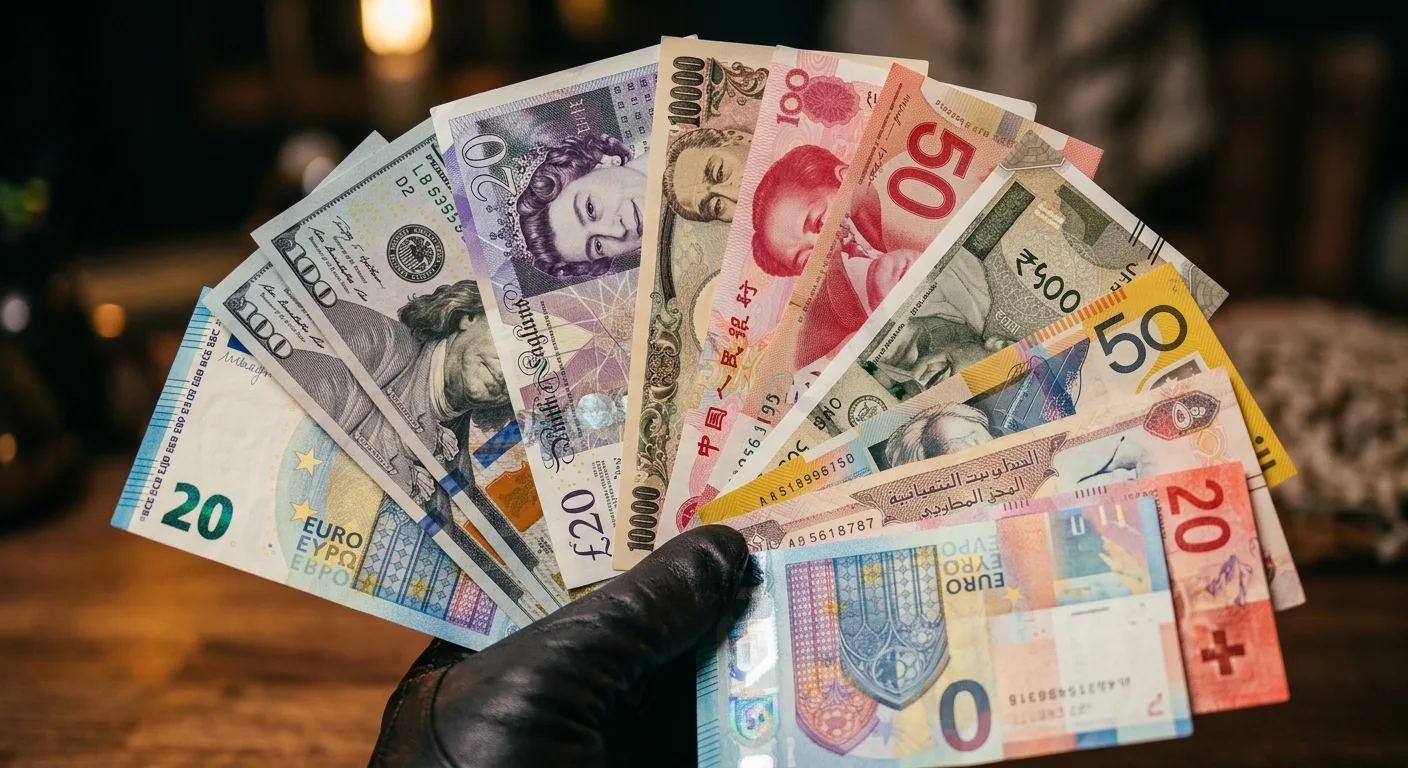
Here's a statistic that will sober you up: over 90% of the currency pairs you see advertised globally are illegal for an Indian resident to trade.

Rajesh Sharma
นักวิเคราะห์ฟอเร็กซ์อาวุโส ·  India
India
☕ 12 นาทีอ่าน
สิ่งที่คุณจะได้เรียนรู้:

Here's a statistic that will sober you up: over 90% of the currency pairs you see advertised globally are illegal for an Indian resident to trade. That's the starting point. The question of which broker is best for forex trading in India isn't about spreads or platforms first. It's about legality. I learned this the hard way years ago, receiving a notice from my bank questioning international transfers labelled 'forex trading'. This guide cuts through the noise. We'll look at the strict RBI/SEBI framework, the real costs on both legal and offshore paths, and what your trading life actually looks like depending on the route you choose.
Let's get the uncomfortable truth out first. Your search for which broker is best for forex trading in India is governed by the Foreign Exchange Management Act (FEMA) of 1999. Its goal isn't to help you trade, but to control capital flows and protect the rupee. I used to think these were just bureaucratic hurdles. I was wrong. They define everything.
The Permitted List (It's Very Short) You are legally allowed to trade currency derivatives, but only on Indian exchanges (NSE, BSE) and only in pairs where the Indian Rupee (INR) is one side. That means USD/INR, EUR/INR, GBP/INR, JPY/INR. That's it. Think of it as trading the rupee's value against other majors. All other pairs like EUR/USD, GBP/JPY, or even exotic crosses? Trading those from India with any broker, onshore or offshore, is a violation of FEMA.
The Forbidden Path (Where Most Ads Point) This is where it gets murky. Hundreds of international brokers like Exness, IC Markets, and Pepperstone happily accept Indian clients. They'll give you an account, often with high use. But legally, you are not allowed to use that account for forex trading. The RBI even publishes an 'Alert List' of unauthorized entities. Using the Liberalised Remittance Scheme (LRS) – your $250,000 annual overseas limit – for speculative forex trading is explicitly prohibited. I funded an offshore account years ago under the guise of 'investment'. It was a risk I didn't fully appreciate at the time.

Warning: The legal risk isn't typically on the broker. It's on you, the resident. Penalties can include fines, freezing of funds, or worse. The enforcement can be sporadic, but the law is clear.
So, your first decision isn't about a broker. It's about which rulebook you're willing to operate under: the strict, limited, but fully legal Indian framework, or the global, expansive, but legally grey offshore path. Your choice here dictates everything that follows.

💡 เคล็ดลับจาก Winston
Your first ₹50,000 in trading should be spent on education and small, legal trades to learn the mechanics. Don't chase use.

“Your search for the best broker isn't about spreads first. It's about legality.”
Based on that legal split, you have two completely different universes of brokers. Comparing them side-by-side is like comparing a domestic flight to a spaceship.
World 1: SEBI-Regulated Brokers (The Legal Route)
These are your stockbrokers. They give you access to the NSE's currency derivatives segment. You're not trading a forex pair in the traditional sense, you're trading futures and options contracts on those INR pairs.
| Feature | What It Means for You |
|---|---|
| Examples | Zerodha, Upstox, Angel One, ICICI Direct, HDFC Securities, 5Paisa |
| Platform | Typically their proprietary web/platform (Zerodha's Kite) or MetaTrader 5 for indices. Not MT4/5 for forex. |
| use | Very low. SEBI mandates maximum 10:1 or less for currency derivatives. This is a huge shock if you're used to hearing about 500:1. |
| Instrument | Futures & Options contracts on USD/INR, etc., with monthly expiry. Not spot forex. |
I opened a Zerodha account just to see the difference. The experience is smooth, professional, and utterly different from my main offshore MT5 terminal. The charts are for analyzing the contract, not the spot rate. It forces a more structured, expiry-based approach.
World 2: International Brokers (The Grey Route)
This is the world you see in YouTube ads. Brokers regulated by CySEC (Cyprus), ASIC (Australia), or the FCA (UK) that accept Indian clients.
| Feature | What It Means for You |
|---|---|
| Examples | XM, Exness, IC Markets, Pepperstone, FP Markets, Vantage |
| Platform | Full MetaTrader 4/5, cTrader. The global standard. |
| use | Can be extremely high (e.g., 1000:1 on majors with some brokers). This is their main attraction. |
| Instrument | Spot forex on 60+ pairs, metals, indices, commodities. The full global menu. |
The cognitive dissonance is real. You can have an account with a top-tier broker like IC Markets (regulated by ASIC) and still be technically breaking Indian law by placing a EUR/USD trade. The broker's regulation protects your funds with them, but not from Indian authorities.
Your choice of which broker is best for forex trading in india now has a massive asterisk. Best for legality? Or best for market access and conditions? They are mutually exclusive.

“The 10:1 use on Indian exchanges feels anemic, but it's a forced risk management tool that saves beginners from themselves.”
Let's talk numbers. The cost structure between the two paths is night and day, and it goes beyond the spread.
Trading on Indian Exchanges (SEBI Brokers) Costs are relatively straightforward but have hidden edges.
- Brokerage: Often a flat fee per lot or a percentage of turnover. Zerodha, for instance, charges ₹20 per executed order for futures, or 0.03% of turnover (whichever is lower).
- Exchange & Regulatory Charges: These add up. You pay a transaction tax (STT), SEBI turnover fee, GST on brokerage, and exchange charges. On a ₹10 lakh USD/INR futures position, these can easily add ₹200-400 in total costs.
- Spread: The bid-ask exists but isn't the primary cost driver. The liquidity is deep on major contracts.
- No Overnight Financing: You're trading futures, so there's no swap charge. The cost of carry is baked into the futures price.
The main 'cost' here is opportunity. You can't trade the ECB interest rate decision by shorting EUR/USD. You're tied to the rupee.
Trading with International Brokers This is where you need to become a spread and commission detective.
- Spreads: This is your primary cost. A 'Standard' account might have a spread of 1.5-2.0 pips on EUR/USD. An 'ECN' or 'Raw' account offers spreads from 0.0 pips, but you pay a commission. For example, a broker might charge $7 round turn (open and close) per standard lot on top of the raw spread.
- Commission Example: On a Raw account, if you trade 1 lot EUR/USD with a 0.1 pip spread and $7 commission, your total cost is (0.1 pip * $10) + $7 = $8. On a Standard account with a 1.5 pip spread and no commission, your cost is 1.5 pips * $10 = $15. The Raw account is cheaper for larger sizes. You must use a position size calculator to model this.
- Swap Charges: Holding a spot position overnight incurs a finance charge (swap). For a long EUR/USD position, you might pay $5 overnight per lot. This makes long-term swing trading strategies more expensive.
- Funding Costs: Depositing via credit card? Your bank will likely slap on a 3-5% international transaction fee plus forex markup. Net banking to a local agent? They might charge 2%. This is a silent killer of small accounts.
I once made a $500 profit on a XAU/USD trade, only to realize my deposit and withdrawal fees through an intermediary had cost me nearly $80. The trade was barely worth it. Always factor in the full cycle cost.
💡 เคล็ดลับจาก Winston
If you use an international broker, always calculate your true cost per trade: spread + commission + funding fee. A 'zero spread' account isn't free.
“The 10:1 use on Indian exchanges feels anemic, but it's a forced risk management tool that saves beginners from themselves.”
This is where the rubber meets the road. Your daily trading life will be utterly different.
The Indian Exchange Experience You'll use a platform like Zerodha's Kite or Upstox's Pro. They're excellent for what they do – clean, fast, integrated with your equity portfolio. But they are not MetaTrader. The charting is good for basic technical analysis, but advanced order types are limited. You're trading contracts with fixed expiry dates, which adds a time-decay element you must manage. The 10:1 use feels anemic if you're seeking high returns on small capital. It forces discipline, but also limits strategy. You won't be scalping the 1-minute chart here.
The International Broker Experience You get MT4/MT5. The full power, the endless custom indicators, the Expert Advisors for automation. The use is seductive. Seeing 500:1 on your screen changes your psychology. A $100 deposit can control $50,000. This is incredibly dangerous. I blew up my first $1,000 account in 2012 because of this. A few bad trades with huge use, and a margin call wipes you out.
The platform freedom is real, though. You can set complex trailing stops, use volume profile tools, and trade the 15-second chart if you want. But this freedom exists in a legal grey zone. The cognitive load of that shouldn't be underestimated. Every profit withdrawal is a moment where you wonder if the bank will flag it.

Pro Tip: If you go the international route, treat high use as a tool for reducing margin blockage, not for amplifying position size. Use a 500:1 account, but trade with the effective use of 10:1. It keeps your margin safe and your risk sane.

“Funding an offshore account is an obstacle course of third-party processors and hidden fees. Factor that into your profit targets.”
This is the most frustrating part of trading from India, and few talk about it honestly.
With SEBI brokers, it's seamless. Bank transfer via UPI or Net Banking to your trading account. Funds reflect in minutes. Withdrawals are back to your linked bank account in hours. It's brilliant.
With international brokers, it's an obstacle course. Direct credit/debit card deposits often fail due to RBI restrictions on international merchant codes for forex. Most traders use third-party payment processors or crypto.
- Third-Party Processors: The broker lists local Indian agents. You transfer INR to their HDFC/ICICI account, they convert and send USD/EUR to the broker. Sounds simple. The fees are high (2-4%), and you're trusting a middleman with your money. I've had delays of 48 hours during market volatility, missing a perfect entry.
- Cryptocurrency: A growing workaround. You buy USDT on a local exchange, send it to the broker's crypto address. It's faster and can be cheaper, but adds volatility risk during the transfer and another layer of regulatory uncertainty (crypto regulations in India).
- Withdrawals: The reverse journey. The broker sends to the processor or your crypto wallet, who then sends you INR. This can take 3-7 business days. You are never in direct control of the funds during transit.
This hassle alone makes frequent, small-scale trading almost impractical with offshore brokers. It pushes you towards larger, less frequent trades to justify the transfer costs. This changed my entire approach from scalping to higher-timeframe swing trading.
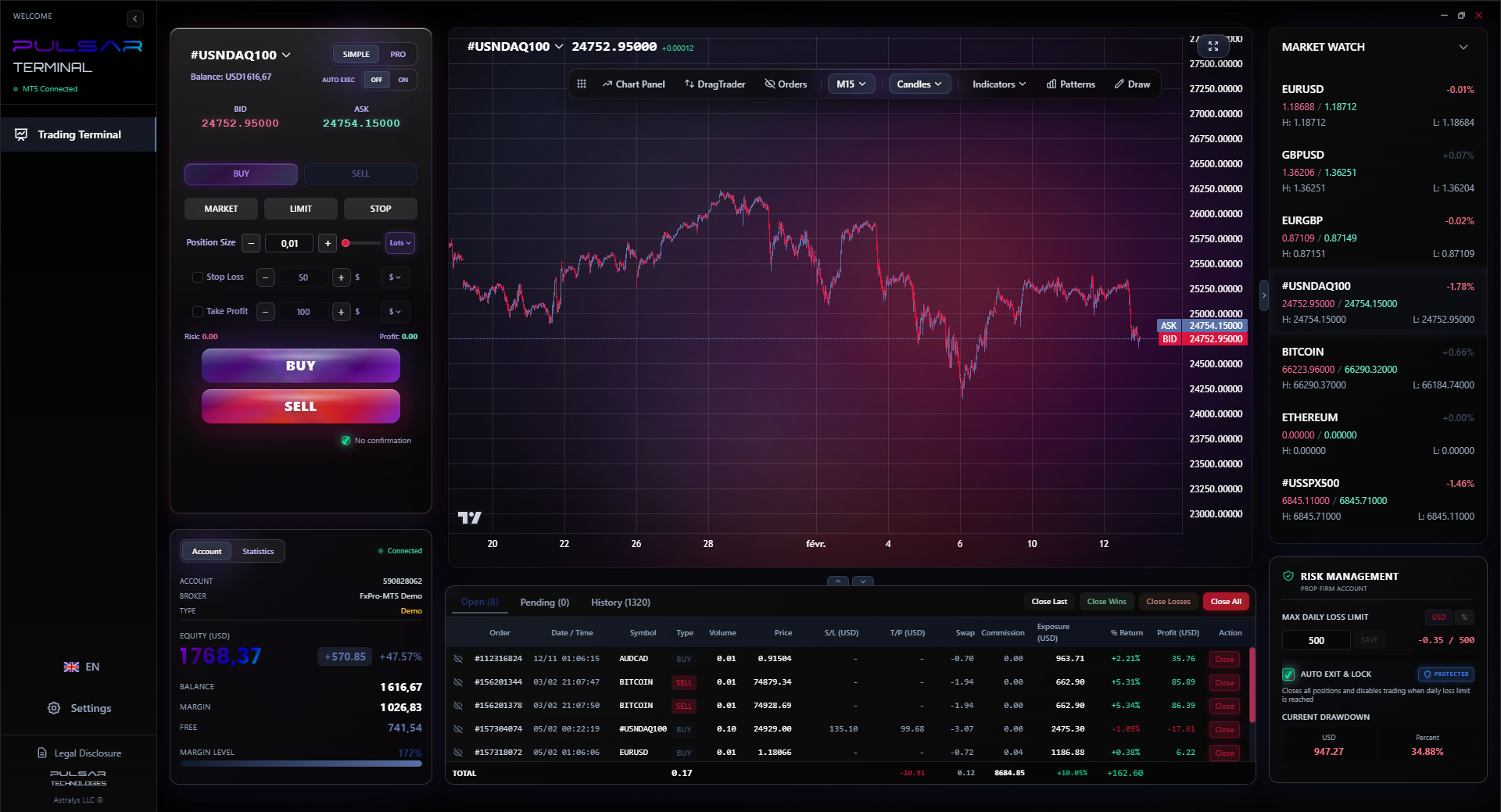
Managing complex trades and strict risk rules across different brokers is easier with a tool that brings advanced order types and loss protection to your MT5 terminal.
Pulsar Terminal
เครื่องมือ MT5 ครบวงจร: ลากวางคำสั่ง, multi-TP/SL, trailing stop, grid trading, Volume Profile และการป้องกัน prop firm ใช้งานโดยเทรดเดอร์กว่า 1,000 คนทุกวัน
“Funding an offshore account is an obstacle course of third-party processors and hidden fees. Factor that into your profit targets.”
So, after all that, which broker is best for forex trading in India? You have to answer these questions first.
Choose a SEBI-Regulated Broker IF:
- Your primary concern is 100% legal compliance and sleeping peacefully.
- You are content trading only USD/INR, EUR/INR and analyzing the Indian economy.
- You prefer lower use (10:1) which acts as a forced risk management tool.
- You want instant, low-cost funding/withdrawals.
- You are okay with a platform that's good, but not the global MetaTrader standard.
Start with Zerodha or Upstox. They are the leaders for a reason.
Choose an International Broker IF:
- You accept the legal grey area and its associated risks.
- You must trade global markets (EUR/USD, Gold, US30).
- You need MetaTrader and advanced order types to execute your strategy.
- You understand use and will use it responsibly as margin efficiency, not size amplification.
- You can tolerate higher, slower funding costs.
My shortlist for this path: For raw conditions, IC Markets or Pepperstone. For user-friendliness and support, XM. For very high use on small accounts, Exness. But remember, you're not just picking a broker. You're picking a logistical and legal pathway.
There's no perfect answer. I maintain two accounts: a Zerodha account for legal, longer-term INR-based views, and an international account for my main global strategy. It's more admin, but it compartmentalizes the risk. Your first trade shouldn't be EUR/USD. It should be a deep, honest assessment of your own risk tolerance – both financial and legal.
💡 เคล็ดลับจาก Winston
The best broker is the one whose rules you understand completely. Read the entire client agreement, especially the sections on withdrawals and force majeure.
“You're not just picking a broker. You're picking a logistical and legal pathway.”
If you're starting today, here's my blunt advice.
- Open a Demo Account on Both Sides. Get Zerodha's Kite demo. Then open an MT5 demo with IC Markets. Trade them for a month. Feel the difference in instruments, use, and platform. Which one fits your brain?
- Start Small and Local First. Seriously. Open a small live account with a SEBI broker. Trade one USD/INR futures contract. Learn the process of expiry, the brokerage charges, the P&L settlement. Get comfortable with the legal framework. Lose a small amount of money legally before you even consider the other path.
- If Going Offshore, Document Everything. Keep records of every deposit, withdrawal, trade statement, and communication with the payment processor. If your bank ever asks, you have a paper trail showing it's for trading/investment, not capital flight.
- Risk Management is Your Only Religion. On 10:1 use, a 10% move wipes you. On 500:1, a 0.2% move does the same. Your position size calculator is your most important tool. Use it on every single trade.
The search for which broker is best for forex trading in India is a search for your own profile as a trader. Are you a rule-follower or a boundary-pusher? Are you trading for incremental income or life-changing returns? The market doesn't care about your answer. But the regulators might. Choose with your eyes wide open, and always know the real cost of your next trade.
FAQ
Q1Is forex trading completely illegal in India?
No, it's not illegal, but it's highly restricted. Trading currency pairs involving the Indian Rupee (like USD/INR) on SEBI-regulated Indian exchanges (NSE, BSE) is perfectly legal. Trading international pairs like EUR/USD from India, with any broker, is not permitted under the Foreign Exchange Management Act (FEMA).
Q2Can I use international brokers like IC Markets or Exness legally?
You can open an account with them, as they accept Indian clients. However, using that account to trade forex (which is their primary offering) puts you in violation of Indian law. The legal risk falls on you, the resident trader, not the offshore broker. Many traders still do it, accepting the grey-area status.
Q3What is the maximum use I can get legally in India?
For legal forex trading on Indian exchanges (currency derivatives), SEBI mandates very low use, typically a maximum of 10:1 or even lower for some contracts. This is a stark contrast to the 500:1 or 1000:1 commonly advertised by international brokers.
Q4How do I deposit money into an international broker account from India?
Direct methods often fail. Most traders use one of two ways: 1) Through third-party payment processors partnered with the broker (you send INR to a local agent, they forward USD to the broker), which incurs fees of 2-4%. 2) Via Cryptocurrency (e.g., USDT), which is faster but adds volatility and another regulatory layer.
Q5Which SEBI-regulated broker is best for trading USD/INR?
Zerodha and Upstox are the most popular for their low costs, reliable platforms (Kite/Pro), and overall user experience. Angel One and 5Paisa are also strong contenders. The differences are often in brokerage fees and platform features, as they all provide access to the same NSE/BSE markets.
Q6What are the tax implications of forex trading profits in India?
For legal trading on Indian exchanges, profits from currency derivatives are treated as 'Business Income' or 'Speculative Business Income' and taxed according to your income slab. For trading with international brokers, the tax treatment is murkier, but you are still obligated to declare any income earned. Consult a CA familiar with forex.
Q7Can I trade gold (XAU/USD) legally from India?
Not through the legal forex channel. You can trade gold futures and options on Indian commodity exchanges (like MCX) in INR. Trading spot XAU/USD with an international broker falls into the same prohibited category as trading EUR/USD.
บทเรียนจาก Prof. Winston
สรุปสาระสำคัญ:
- ✓Legal trading in India is limited to INR pairs (USD/INR) on NSE/BSE.
- ✓International brokers offer global markets but operate in a legal grey area.
- ✓use is capped at 10:1 legally, but can be 500:1+ offshore.
- ✓Funding offshore accounts adds 2-5% in hidden transaction costs.
- ✓Your first account should be a SEBI-regulated demo to learn the rules.
บทความนี้มีประโยชน์แค่ไหน?
คลิกดาวเพื่อให้คะแนน
ข้อมูลเชิงลึกการเทรดรายสัปดาห์
การวิเคราะห์และกลยุทธ์รายสัปดาห์ฟรี ไม่มีสแปม
เกี่ยวกับผู้เขียน
Rajesh Sharma
นักวิเคราะห์ฟอเร็กซ์อาวุโส
ซื้อขายในตลาดอินเดียและเอเชียใต้มากกว่า 10 ปี เริ่มต้นจากอนุพันธ์สกุลเงินของ NSE ก่อนเข้าสู่ตลาดฟอเร็กซ์สากล เชี่ยวชาญคู่ USD/INR และคู่สกุลเงินตลาดเกิดใหม่
ความคิดเห็น
คำเตือนความเสี่ยง
การซื้อขายตราสารทางการเงินมีความเสี่ยงสูงและอาจไม่เหมาะสำหรับนักลงทุนทุกคน ผลการดำเนินงานในอดีตไม่ได้รับประกันผลลัพธ์ในอนาคต เนื้อหานี้มีวัตถุประสงค์เพื่อการศึกษาเท่านั้นและไม่ควรถือเป็นคำแนะนำในการลงทุน โปรดทำการวิจัยของคุณเองก่อนการซื้อขาย
คุณอาจชอบสิ่งนี้

Cara Trading Forex Sukses: 7 Prinsip dari Trader Profesional
Cara trading forex sukses dengan 7 prinsip trader pro: manajemen modal, disiplin, journal trading, backtest. Data nyata, bukan janji profit palsu.
Jam Trading Forex Terbaik untuk Trader Indonesia: Panduan Lengkap dengan Tabel Waktu
Panduan jam trading forex untuk trader Indonesia. Tabel 4 sesi dunia, jam emas 20:00-00:00, sesi mana yang harus dihindari. Data akurat + tips dari trader berpengalaman.
Top 5 Sàn Forex Uy Tín Nhất 2026: Review Jujur dari Trader Indonesia
Top 5 sàn forex uy tín 2026 untuk trader Indonesia. Review jujur: spread, deposit, withdraw, dukungan lokal. Exness, XM, IC Markets & lebih.
รับ Pulsar Terminal
เครื่องคำนวณทั้งหมดนี้ถูกสร้างไว้ใน Pulsar Terminal พร้อมข้อมูลเรียลไทม์จากบัญชี MT5 ของคุณ
รับ Pulsar Terminal