


Everyone's asking which broker is best for forex trading, and they're all looking for a magic name.

Olumide Adeyemi
ผู้บุกเบิกการเทรดในแอฟริกาตะวันตก ·  Nigeria
☕ 9 นาทีอ่าน
สิ่งที่คุณจะได้เรียนรู้:
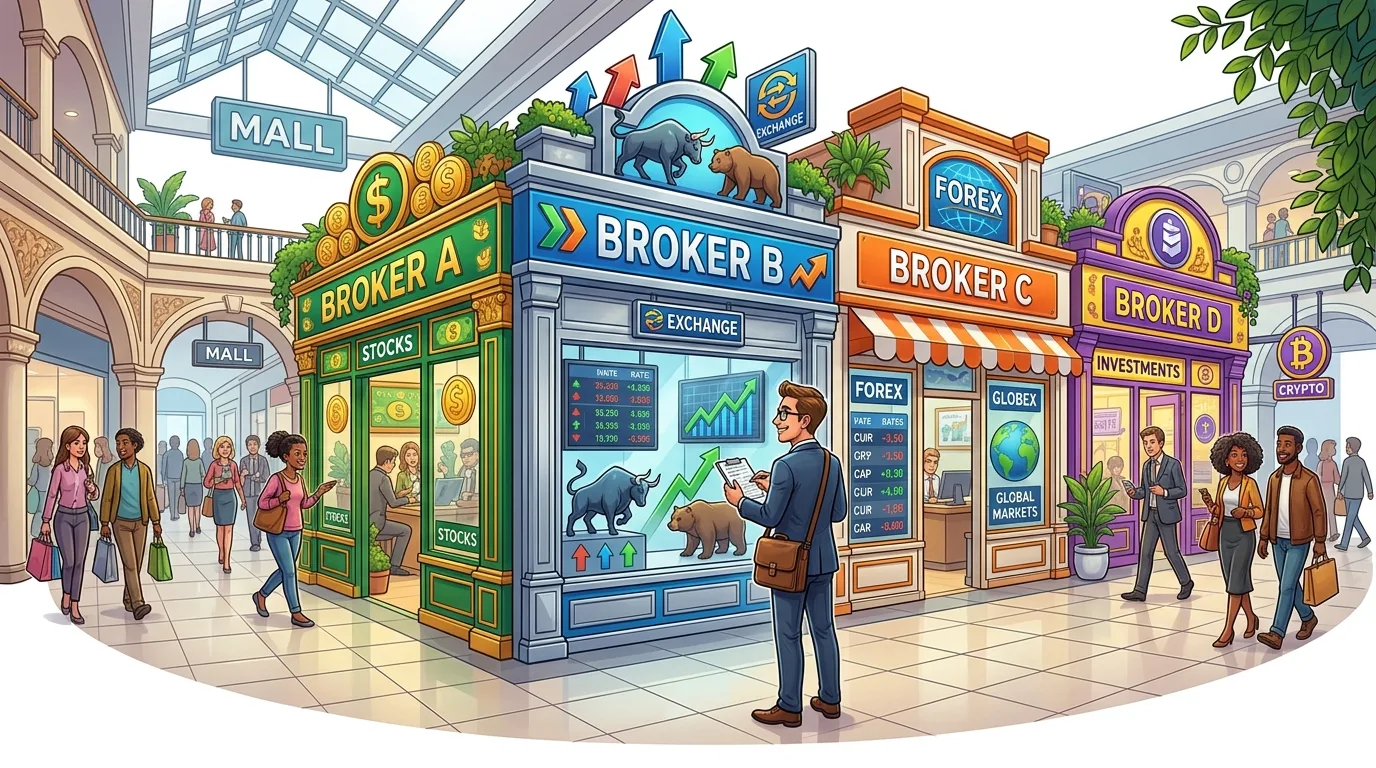
Everyone's asking which broker is best for forex trading, and they're all looking for a magic name. They want me to say 'Just use XYZ Broker and you'll be rich.' That's how you lose your money. The 'best' broker isn't a universal champion. It's the one that doesn't screw you over on the things that actually matter when your trade is live and your heart is pounding. Let's cut through the sponsored reviews and set the record straight on what to look for, right here in Naija.
The lie is that there's a single 'best' broker for everyone. A scalper in Lagos needs something completely different from a swing trader in Abuja. The guy funding with his bank card has different priorities from the one using crypto. Picking a broker because your friend uses it, or because they have the flashiest website, is a recipe for frustration.
I learned this the hard way early on. I signed up with a well-known international broker because everyone on the forums was talking about them. Their platform was slick. Then I tried to withdraw $500 of my profits. It took 17 days, three support tickets, and requests for utility bills I didn't have. The spread on EUR/NGN would widen to 50 pips during London open. They were 'best' for marketing, but terrible for my actual trading life.
The real question isn't 'which broker is best for forex trading?' It's 'which broker is best for MY specific way of trading?' Your strategy, your capital, and your location filter the list dramatically. Start by being brutally honest about what you need, not what you're sold.
“The 'best' broker isn't a universal champion. It's the one that doesn't screw you over when your trade is live.”
This is where most Nigerian traders get it twisted. They see 'regulated by CySEC' or 'FCA-regulated' and think their money is safe. That's only half the story. The critical part is: does that regulation actually protect YOU as a Nigerian resident?
Many top-tier regulators (FCA, ASIC) have strict rules about offering services to clients in countries like Nigeria. Some brokers with those licenses simply won't accept you. Others will accept you but under a different, offshore entity (like in St. Vincent or the Seychelles) that doesn't offer the same protection. Your money might be in a different place than you think.
What You Should Actually Check
First, can you even open an account? Don't waste time on brokers that will reject your application. Second, if they accept you, under which entity are you registered? This is in the terms and conditions. Look for brokers that are transparent about this. Some, like Exness, have built a specific operation for the African market that works. Others, like IC Markets, operate their global entity but are known to accept Nigerian clients reliably.
The safety of your deposit isn't about the fanciest license. It's about the broker's reputation for processing withdrawals without drama. Search for 'BrokerName withdrawal Nigeria' on Twitter and forums. That's more telling than any seal on their homepage.

Warning: If a broker's only 'regulation' is from an island you've never heard of, and they're promising you insane bonuses, run. Your deposit is likely just becoming their revenue. A proper broker makes money from your trading activity (spreads, commissions), not from pocketing your deposit.

💡 เคล็ดลับจาก Winston
Your first test of a broker isn't a trade. It's a withdrawal. If they make that hard with a small amount, imagine the fight for your profits.

“Safety of your deposit isn't about the fanciest license. It's about the broker's reputation for processing withdrawals without drama.”
The advertised spread is a trap. Brokers will show you a nice, tight 0.6 pip spread on EUR/USD on a quiet Sunday. What they don't show you is the spread when the US Non-Farm Payrolls data drops, or during the volatile Asian session when liquidity is thin for exotics. That's when your 1-pip stop-loss gets taken out by a 5-pip spike.
You need to understand the full cost structure:
| Cost Type | What It Is | Why It Matters in Nigeria |
|---|---|---|
| Spread | Difference between buy/sell price | The main cost for most. Check majors AND pairs like USD/NGN, GBP/NGN. |
| Commission | Fee per lot traded | Common on RAW/ECN accounts. Often cheaper overall than wide spreads. |
| Swap/Rollover | Fee for holding overnight | Can eat profits on long-term trades. Check if broker offers swap-free (Islamic) accounts. |
| Deposit/Withdrawal Fee | Cost to fund or pull money | Huge one! Some charge 2-3% on card deposits. Others charge flat $20-$50 on bank transfers. |
Here's a real example from my trading. I was swing trading GBP/USD and holding for a week. I was using a standard account with 'zero commission' but a 1.8 pip average spread. I switched to a RAW ECN account at Pepperstone with a 0.1 pip spread + $7 commission per round lot. For my 2-lot trade, the cost on the standard account was $36 (1.8 pips * 2 lots). On the RAW account, it was $14 (0.1 pips * 2 lots = $2, plus $7*2 = $14). I cut my transaction cost by over 60% just by choosing the right account type.
Always use a position size calculator that lets you input both spread and commission to see your true break-even point. The cheapest broker on paper can be the most expensive in execution.

“The advertised spread is a trap. You need to understand the full cost structure, especially during volatility.”
You might love the look of a broker's custom app, but if it can't run your strategy, it's useless. Most serious retail trading globally happens on MetaTrader 4 or MetaTrader 5. In Nigeria, MT4 is still the king. Any broker you're seriously considering must offer stable MT4/MT5 access.
The real differentiator isn't the platform itself, but the tools and conditions the broker provides ON that platform.
- Execution Speed & Slippage: Do market orders get filled at the price you see? During news, do you get massive slippage? This is a silent account killer.
- Minimum Trade Size: Can you start with 0.01 lots (a micro lot)? This is crucial for proper risk management when you're starting with a small account.
- Advanced Order Types: Does their MT4 server allow for trailing stops, breakeven stops, or multiple take-profit levels? Some brokers' servers limit these functions.
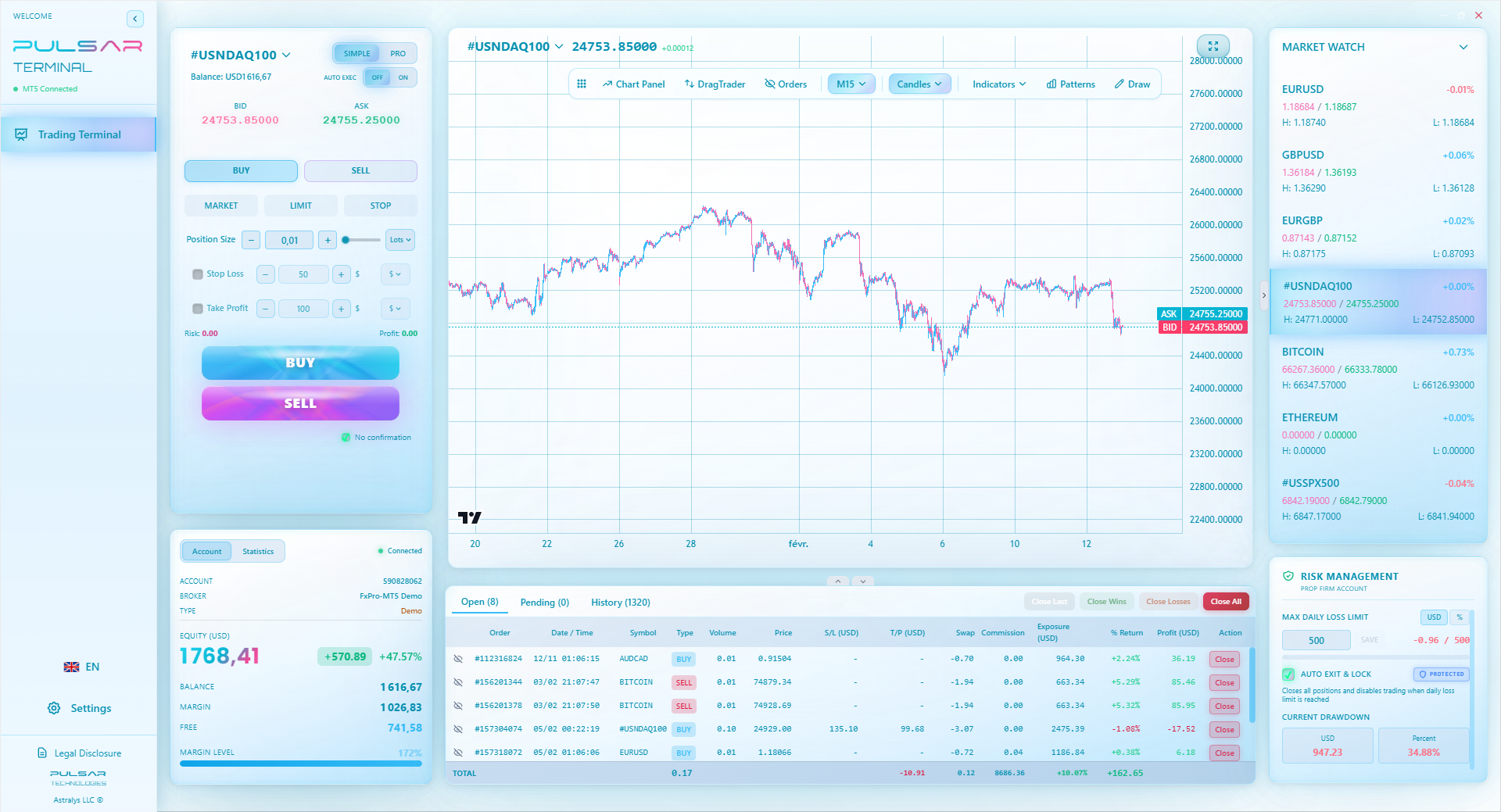
This is where a tool like Pulsar Terminal becomes a game-changer. It sits on top of your MT5, letting you drag-and-drop orders, set multi-level take-profits with partial closures, and automate trailing stops and breakeven moves. It turns the basic MT5 platform into a professional workstation. If your broker supports MT5, you can use it. I use it to manage my prop firm challenges because the daily loss protection feature is automated - I don't have to babysit the trade.

Pro Tip: Before depositing real money, open a demo account. Don't just watch the charts. Place market orders during a busy session (like London open). See how fast they fill. Try to set a trailing stop. Test the platform with the strategy you actually plan to use.
💡 เคล็ดลับจาก Winston
The spread you see on the website is for tourists. The spread during a news event is for residents. Always test the latter.

“The advertised spread is a trap. You need to understand the full cost structure, especially during volatility.”
This is the single biggest pain point for Nigerian traders and the most important part of answering 'which broker is best for forex trading' for us. All the fancy platforms mean nothing if you can't get your money in or out.
The Funding Problem: Direct Naira deposits to international brokers are often blocked by Nigerian banks. Card deposits (NGN or USD) can work but may attract high fees or be declined. This is why cryptocurrencies (USDT, Bitcoin) have become the default funding method for many savvy traders here. It's fast, relatively low-cost, and bypasses banking restrictions.
What to look for:
- Multiple Crypto Options: The broker should accept USDT (Tether) on multiple networks (TRC20, ERC20). TRC20 has lower fees.
- Local Bank Transfer Partners: Some brokers partner with local payment processors to accept Naira. Check the exchange rate they use - it can be terrible.
- Withdrawal Speed & Track Record: This is key. How long does a crypto withdrawal take? 24 hours? 2 hours? Read real user experiences. A broker like XM or Exness has historically been praised for fast crypto withdrawals in our region.
- No Hidden Conversion Fees: If you deposit USDT and trade USD pairs, fine. If you deposit Naira and it's converted to USD, check the markup.
I fund my main account with USDT. My last withdrawal to my crypto wallet was for $1,250. I requested it at 10:04 AM, and it was in my wallet by 10:47 AM the same day. That reliability is worth more than a 0.1 pip lower spread from a broker where withdrawals take a week.
Managing complex trades and prop firm rules manually is stressful; Pulsar Terminal automates it all on your MT5 platform.
Pulsar Terminal
เครื่องมือ MT5 ครบวงจร: ลากวางคำสั่ง, multi-TP/SL, trailing stop, grid trading, Volume Profile และการป้องกัน prop firm ใช้งานโดยเทรดเดอร์กว่า 1,000 คนทุกวัน
“All the fancy platforms mean nothing if you can't get your money in or out. This is the biggest pain point in Nigeria.”
Based on years of talking to traders here and my own experience, here are brokers that consistently come up for the right reasons in Nigeria. This isn't a ranking, but a starting point for your own research.
- Exness: Hugely popular across Africa. Known for very fast withdrawals (often instant for crypto), accepts Nigerian clients easily, and offers swap-free accounts. Their spreads can be competitive, especially on standard accounts for beginners. Some advanced traders find their raw spreads less competitive than dedicated ECN brokers.
- IC Markets: A favorite for serious traders using ECN models. Offers raw spreads, great execution speed on MT4/MT5, and accepts Nigerian clients. Their commission-based pricing is transparent. Withdrawals are generally reliable, though not always as instant as some.
- XM: Strong global presence with good local support. Offers a wide range of account types and is known for its educational resources. Generally reliable for deposits/withdrawals for Nigerian residents.
- Pepperstone: Another top-tier ECN broker known for excellent execution and low costs on their Razor account. They accept Nigerian clients and have a strong reputation. More geared towards experienced traders comfortable with commission-based pricing.
Your Final Decision Checklist:
- Open a Demo with your top 2 choices. Test execution during volatility.
- Contact Support with a question. See how fast and helpful they are.
- Do a Micro-Deposit. If possible, deposit the smallest amount allowed ($10-$50). Then immediately request a withdrawal of that same amount. This tests the entire funding/withdrawal pipeline with minimal risk. If they pass this test, you're likely in good hands.
Remember, the best broker is the one that gets out of your way. It lets you execute your scalping strategy or swing trading plan reliably, charges fair costs, and returns your profits without a fight. That's the only 'best' that matters.

FAQ
Q1Is Forex trading legal in Nigeria, and can I use international brokers?
Yes, forex trading is legal for individuals in Nigeria. Using international brokers is common and standard practice, as there are no major local retail forex brokers. The key is ensuring the broker you choose willingly accepts clients from Nigeria and has a reliable method for you to deposit and withdraw funds.
Q2Should I choose a broker that offers a welcome bonus?
Almost never. Bonuses almost always come with restrictive terms, like high trading volume requirements (lot targets) before you can withdraw your own money. They are a marketing tool to lock you in. It's better to choose a broker with transparent low costs and reliable service than one offering a 'bonus' that complicates your withdrawals.
Q3What is more important, low spreads or fast execution?
For most strategies, fast and reliable execution is more important. A broker with a 0.5 pip spread but slow execution that causes slippage will cost you more than a broker with a 1.0 pip spread and instant, precise fills. Slippage on entries and exits can destroy a strategy's profitability.
Q4Can I use my Nigerian bank account to fund my forex trading account?
It is increasingly difficult. Many Nigerian banks block international transfers to forex brokers. The most common and efficient methods now are cryptocurrency deposits (like USDT) or using local payment processors/partners that some brokers have integrated. Always check the broker's specific deposit options for Nigeria.
Q5What is an ECN broker, and do I need one?
An ECN (Electronic Communication Network) broker connects you directly to liquidity from banks and other institutions. They typically charge a commission but offer raw, interbank spreads. You don't necessarily 'need' one as a beginner, but as your trade sizes grow and you become more cost-conscious, an ECN model (like from IC Markets or Pepperstone) is often cheaper and offers more transparent execution.
Q6How do I know if a broker is trustworthy?
Look beyond their website. 1) Check their actual regulatory status for Nigerian clients. 2) Search for independent user reviews focusing on withdrawal experiences. 3) See how long they've been in business. 4) Perform the 'micro-deposit and withdrawal' test. A trustworthy broker makes it easy for you to take your money back.
บทเรียนจาก Prof. Winston
สรุปสาระสำคัญ:
- ✓Test withdrawals before large deposits.
- ✓Real cost = Spread + Commission + Slippage.
- ✓Crypto (USDT) is the default funding method in Nigeria.
- ✓Fast execution beats a low static spread.
- ✓The best broker gets out of your way.
บทความนี้มีประโยชน์แค่ไหน?
คลิกดาวเพื่อให้คะแนน
ข้อมูลเชิงลึกการเทรดรายสัปดาห์
การวิเคราะห์และกลยุทธ์รายสัปดาห์ฟรี ไม่มีสแปม
เกี่ยวกับผู้เขียน
Olumide Adeyemi
ผู้บุกเบิกการเทรดในแอฟริกาตะวันตก
หนึ่งในนักการศึกษาฟอเร็กซ์ที่กระตือรือร้นที่สุดของไนจีเรีย 8 ปีประสบการณ์เทรดจากลากอส เชี่ยวชาญกลยุทธ์ทุนต่ำและความท้าทาย prop firm สำหรับเทรดเดอร์ในแอฟริกา
ความคิดเห็น
คำเตือนความเสี่ยง
การซื้อขายตราสารทางการเงินมีความเสี่ยงสูงและอาจไม่เหมาะสำหรับนักลงทุนทุกคน ผลการดำเนินงานในอดีตไม่ได้รับประกันผลลัพธ์ในอนาคต เนื้อหานี้มีวัตถุประสงค์เพื่อการศึกษาเท่านั้นและไม่ควรถือเป็นคำแนะนำในการลงทุน โปรดทำการวิจัยของคุณเองก่อนการซื้อขาย
คุณอาจชอบสิ่งนี้

Cara Trading Forex Sukses: 7 Prinsip dari Trader Profesional
Cara trading forex sukses dengan 7 prinsip trader pro: manajemen modal, disiplin, journal trading, backtest. Data nyata, bukan janji profit palsu.
Jam Trading Forex Terbaik untuk Trader Indonesia: Panduan Lengkap dengan Tabel Waktu
Panduan jam trading forex untuk trader Indonesia. Tabel 4 sesi dunia, jam emas 20:00-00:00, sesi mana yang harus dihindari. Data akurat + tips dari trader berpengalaman.
Top 5 Sàn Forex Uy Tín Nhất 2026: Review Jujur dari Trader Indonesia
Top 5 sàn forex uy tín 2026 untuk trader Indonesia. Review jujur: spread, deposit, withdraw, dukungan lokal. Exness, XM, IC Markets & lebih.
รับ Pulsar Terminal
เครื่องคำนวณทั้งหมดนี้ถูกสร้างไว้ใน Pulsar Terminal พร้อมข้อมูลเรียลไทม์จากบัญชี MT5 ของคุณ
รับ Pulsar Terminal