


I stared at the screen, my stomach in knots.

Olumide Adeyemi
Batı Afrika Yatırım Öncüsü ·  Nigeria
☕ 11 dk okuma
Neler öğreneceksiniz:
- 1What Exactly Is an Engulfing Candle? (It's Not Just a Big Candle)
- 2Why Engulfing Candles Actually Work (The Market Psychology)
- 3Finding High-Probability Setups: Context is Everything
- 4Trading the Pattern: Entry, Stop Loss, and Take Profit Rules
- 5The 3 Costly Mistakes I Made (And How You Can Avoid Them)
- 6Boosting Your Edge: Combining Engulfing Candles with Other Tools
- 7Specific Advice for the Nigerian Trader

I stared at the screen, my stomach in knots. It was March 2023, and USD/NGN was making another violent move. A perfect-looking bullish engulfing candle had just printed on the 4-hour chart. I'd thrown 50,000 NGN into the trade, convinced it was the reversal signal I'd been waiting for. Two hours later, the market swallowed my stop loss and kept going. That loss, one of many early in my career, taught me a brutal lesson: not all engulfing candles are created equal. This guide is everything I wish I'd known back then.
Let's clear this up first. An engulfing candle isn't just a long green or red bar. It's a specific two-candle pattern that shows a sudden shift in control between buyers and sellers. I used to get this wrong, marking any big candle as 'engulfing' and losing money because of it.
Here's the textbook definition: The second candle's real body must completely 'engulf' the real body of the first candle. Shadows (the wicks) don't matter for the basic rule, though they give extra clues. The first candle goes with the old trend. The second candle opens in the direction of the old trend, then reverses hard to close beyond the first candle's open.
Bullish vs. Bearish Engulfing
A bullish engulfing candle forms in a downtrend. The first candle is red (bearish). The second candle opens at or below the first close, then rallies to close above the first candle's open. It screams, 'Sellers are exhausted, buyers just stormed in.'
A bearish engulfing candle is the opposite. It appears in an uptrend. The first candle is green (bullish). The second opens at or above the first close, then sells off to close below the first candle's open. It's the market saying, 'Buyers are done, sellers are taking over.'

Warning: The most common mistake I see? Calling a pattern an engulfing candle when the second body only engulfs the first body's shadow. That's a different, weaker signal. The real body must be consumed.
I learned this the hard way trading Gold (XAU/USD). A 'near' engulf on the hourly chart looked convincing. I entered, only for price to stall and reverse on me. The second candle had engulfed the wick but not the full body of the first. It was a fake. Now, I'm religious about the rule. If the bodies don't fully engulf, I don't take the trade. This simple filter saved me thousands of Naira last year alone.
Understanding this pattern is your first line of defense. It's the foundation. But to really profit from engulfing candle forex signals, you need to know where to look for them. That's where context comes in, which we'll get to next.

💡 Winston'ın İpucu
A true engulfing pattern requires the second candle's body to completely consume the first candle's body. Engulfing the wicks alone is a sign of weakness, not reversal.
This pattern works because it captures a moment of pure market panic and reversal. It's a visual story. Let me break down the psychology for a bullish engulfing candle in a downtrend.
The Setup: The market has been falling. Sellers are in control, feeling confident. The first red candle is just another down day.
The Shift: The next candle opens, maybe even gaps lower, continuing the bearish sentiment. Weak hands might even add to their short positions here. Then, something changes. Maybe a large buy order hits, or news breaks. Aggressive buyers step in.
The Engulfment: These new buyers overwhelm the sellers. They push the price up through yesterday's open, through yesterday's high, and close the candle strongly. Everyone who sold on that first candle or at the open of the second is now trapped in a losing position. This often forces them to buy back (cover), fueling the move higher.
The bearish version is the same story in reverse. It's a capitulation of buyers.
The key is that it represents a clear, decisive victory for one side. It's not a doji (indecision). It's not a small candle (continuation). It's a full-bodied reversal statement. When you see a true engulfing candle at a key level, you're seeing a battle that has just been decisively won. I use the RSI indicator or MACD indicator to help confirm this shift in momentum, but the candle itself is the primary signal.
“An engulfing candle in the middle of nowhere is just noise. An engulfing candle at a key market level is a potential goldmine.”
This is where I turned my results around. An engulfing candle in the middle of nowhere is just noise. An engulfing candle at a key market level is a potential goldmine.
Key Support and Resistance
This is your number one filter. An engulfing candle right at a major support or resistance zone has a much higher chance of working. Why? Because that's where the big players (banks, institutions) are likely to defend their positions or take profits.
I remember a trade on EUR/USD in late 2024. Price was approaching a strong support level that had held three times before. A bearish engulfing candle formed on the 1-hour chart right at a descending trendline resistance. The context made the signal. I entered short, set my stop above the candle's high, and rode it down for a 85-pip gain. The candle gave the entry; the context gave me the confidence to take it.
Trendline Breaks
An engulfing candle that forms as price breaks a clear trendline can signal the break is genuine, not a fakeout. It confirms the breakout.
After a Strong Move
Engulfing candles are reversal patterns. They make the most sense after a clear, sustained price move. A bullish engulfing after a 5-day downtrend is meaningful. A bullish engulfing after a sideways day is not.

Pro Tip: Don't just look at horizontal levels. Draw your trendlines. An engulfing candle that forms right on a rising trendline in an uptrend (a bearish one) can be a fantastic warning sign that the trend is weakening.
My biggest mistakes early on came from ignoring context. I'd see an engulfing candle and jump in, no matter where it was. I was pattern spotting, not trading. Now, I wait for the pattern to form in the right place. It cuts my trading frequency down but boosts my win rate significantly. This patience is a form of risk management, which you must master to survive. Using a position size calculator is non-negotiable for every single one of these trades.
💡 Winston'ın İpucu
The best engulfing signals are lazy. They sit at obvious support or resistance, waiting for you. Don't chase the obscure ones in no-man's-land.
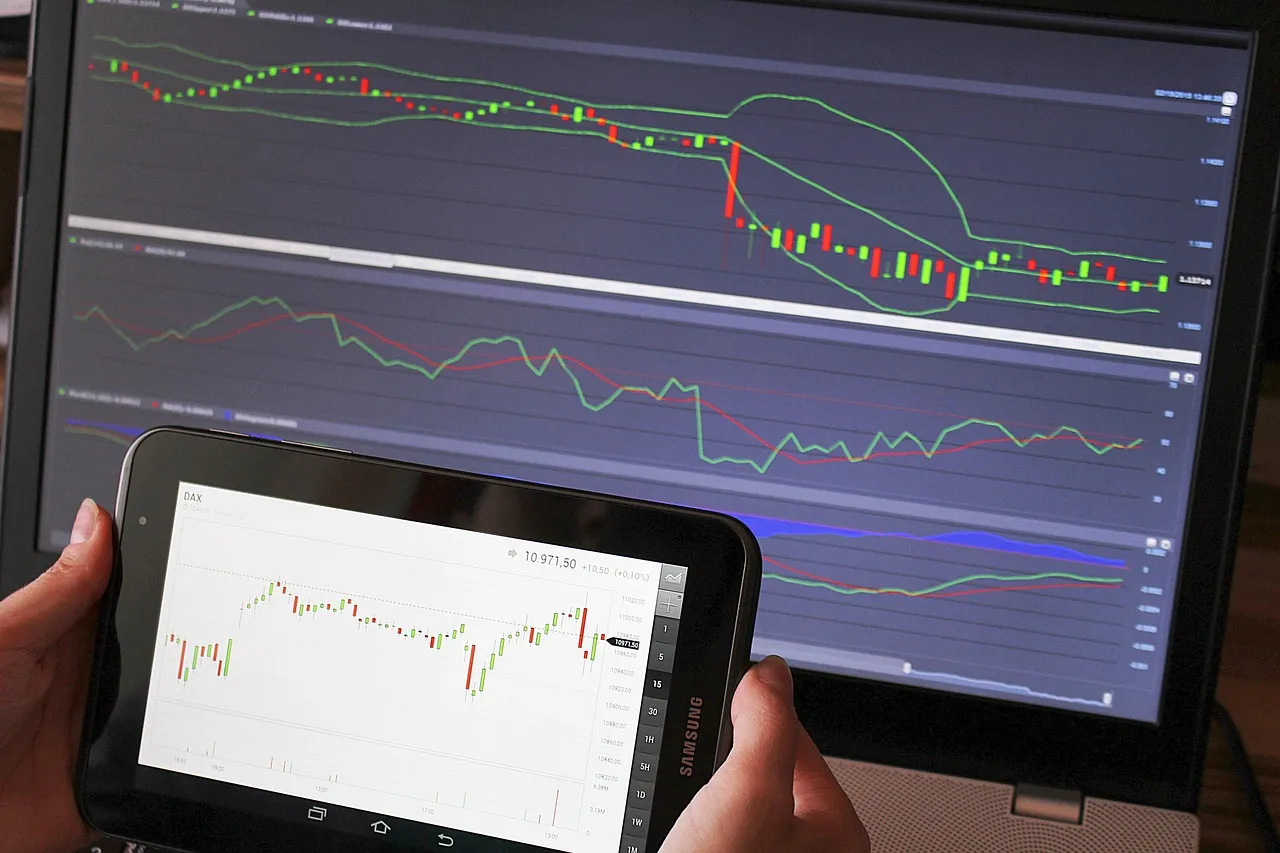
Okay, you've found a valid engulfing candle in a great context. Now what? Here's my exact process, refined over hundreds of trades.
1. Entry: I do NOT buy at the close of the engulfing candle. That's too eager. I wait for a confirmation candle. My rule: I enter on a break of the high (for bullish) or low (for bearish) of the engulfing candle. Sometimes this happens on the next candle, sometimes it takes a few. This confirmation step filters out false signals where the engulfing candle is a one-off anomaly.
2. Stop Loss: This is critical. Your stop loss MUST be placed beyond the opposite side of the engulfing pattern. For a bullish engulfing, place your stop loss below the low of the first (red) candle. For a bearish engulfing, place it above the high of the first (green) candle. This gives the trade room to breathe. If price moves beyond that point, the reversal story is broken.
3. Take Profit: I use a risk-reward ratio of at least 1:1.5. My first profit target is often the nearest significant support/resistance level. For a more advanced approach, I might use a multi-target strategy.

Example: Let's say you're trading USD/NGN with a broker like Exness or IC Markets. A bearish engulfing forms at resistance of 1600. The high of the first candle is 1605. The low of the engulfing candle is 1590.
- Entry: Sell at a break below 1590 (say, at 1589.5).
- Stop Loss: Place at 1606 (just above 1605).
- Risk: 16.5 points.
- Take Profit 1: Set at 1574 (for a 1:1 risk-reward, 15.5 point gain).
- Take Profit 2: Look for the next support level at 1560 for a larger move.
This structure turns a visual pattern into a mechanical trade plan. It removes emotion. Speaking of emotion, the hardest part is often managing the trade after entry, which is where tools for automation really help.
💡 Winston'ın İpucu
Your stop loss is not a suggestion. For a bullish engulfing, it goes below the low of the first candle. Period. This defines your risk before you even enter.
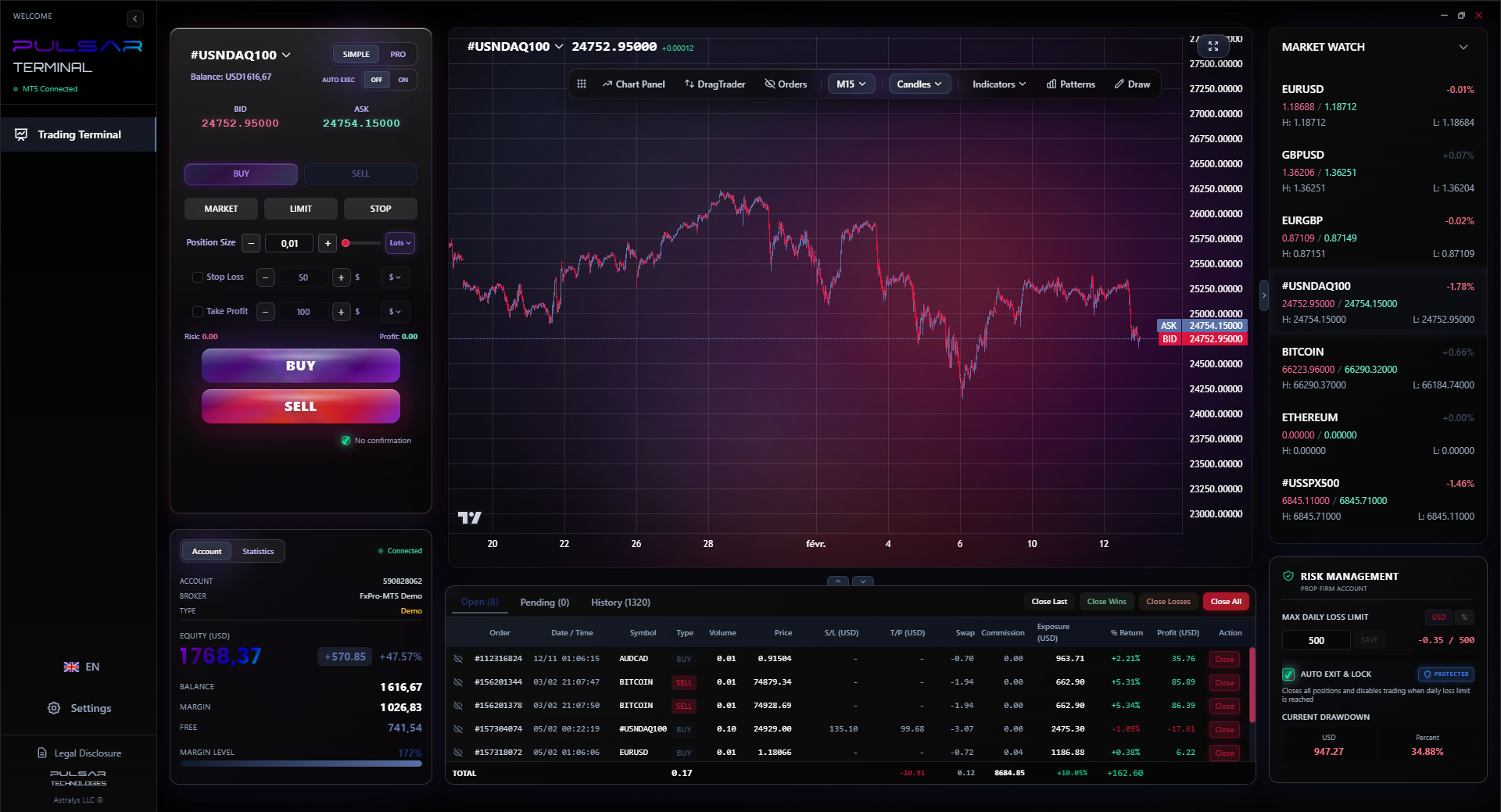
Managing multiple profit targets and a trailing stop on an engulfing candle trade is complex, but Pulsar Terminal automates it all directly within your MT5 platform.
Pulsar Terminal
Hepsi bir arada MT5 aracı: sürükle-bırak emirler, çoklu TP/SL, trailing stop, grid trading, Volume Profile ve prop firm koruması. Her gün 1.000'den fazla trader tarafından kullanılıyor.
“I used to get this wrong, marking any big candle as 'engulfing' and losing money because of it.”
Let me be brutally honest about where I lost money so you don't have to.
Mistake 1: Trading Engulfing Candles on Low Timeframes. I used to scalp the 1-minute and 5-minute charts. Engulfing candles are everywhere! But they're meaningless noise. The spread costs eat you alive, and the moves are rarely sustained. I blew up a 200,000 NGN account doing this in 2018. Now, I rarely go below the 1-hour chart for this pattern. The daily and 4-hour are my sweet spots.
Mistake 2: Ignoring the Overall Trend. 'The trend is your friend' is a cliché for a reason. A bullish engulfing candle in a strong, established downtrend is often just a pullback, not a reversal. It's called a 'continuation pattern' trap. I'd buy these 'reversals' against the trend, only to watch the dominant trend crush my position. Now, I only take engulfing signals that align with a higher-timeframe trend or at major reversal points.
Mistake 3: No Confirmation. Jumping in as the engulfing candle closes. This is gambling, not trading. The market needs to confirm the move by breaking the candle's high/low. Waiting for that confirmation saved me from countless losing trades. It means sometimes you miss the very first pip of a move, but it also means you avoid the many false starts that lead to a margin call.
Another subtle mistake is not understanding the broker's spread during volatile sessions. An engulfing candle forming during London open on GBP pairs might look perfect, but if you enter during a wide spread, your effective entry price is terrible. I always check the live spread before placing an order, especially with exotic pairs.
An engulfing candle is a powerful signal, but it's not a holy grail. Combining it with other analysis creates a confluence that massively increases your odds.
Volume: This is a huge one. An engulfing candle with significantly higher volume is a much stronger signal. It shows the move had broad participation. Many trading platforms have volume indicators. If you see a bullish engulfing on high volume at support, pay attention.
Key Indicators:
- RSI Divergence: If price makes a new low but the RSI makes a higher low (bullish divergence), and then a bullish engulfing candle forms... that's a dream setup. The indicator and the price action are telling the same story of weakening momentum and reversal.
- MACD Crossover: A bullish engulfing candle that forms just as the MACD histogram turns up or is about to cross can be a very timely entry.
Major Economic News: Be careful. An engulfing candle that forms right after a major news release (like US NFP or Nigerian inflation data) can be driven by pure volatility and panic. The context is chaotic, not technical. I often avoid these or use a much wider stop loss.
I use these combinations to grade my setups. A standalone engulfing candle is a 'C' grade setup. An engulfing candle at support, with high volume and RSI divergence? That's an 'A' grade. I'll allocate more capital to the 'A' trades. For a fast-paced style that uses these quick confirmations, some traders adapt this logic for a scalping strategy, though I prefer the patience of swing trading with these patterns.
“Waiting for confirmation saved me from countless losing trades. It means sometimes you miss the very first pip of a move, but it also means you avoid the many false starts.”
Trading from Nigeria comes with its own realities. Here’s how to apply engulfing candle forex strategies here.
Currency Pairs: Be mindful of the pairs you trade. USD/NGN is the obvious one, but its liquidity on international retail platforms can be poor, leading to huge spreads. This can wreck an otherwise good engulfing pattern setup. I focus on major pairs like EUR/USD, GBP/USD, and USD/JPY where spreads are tight and liquidity is deep. These provide cleaner, more reliable patterns. For commodity exposure, Gold (XAU/USD) often shows beautiful engulfing patterns.
Broker Choice: This is paramount. You need a broker with a solid reputation, tight spreads, and reliable execution. Slippage on your entry or stop loss can turn a winning trade into a loser. I've had good experiences with brokers like XM and Pepperstone for their consistent access and fair pricing. Always verify their regulation.
Internet & Power: We have to plan for instability. If you're in a trade based on an engulfing candle, use guaranteed stop losses if your broker offers them (may cost a small premium). Or, set mobile alerts for your stop and take profit levels so you're not caught off guard if the lights go out. Never leave a live trade unmanaged if you know your internet is shaky.
Mindset: The market doesn't care about your Naira. It treats 1 Naira the same as 1 USD or 1 GBP. Start small. Practice spotting and paper-trading engulfing candles on a demo account. When you transition to real money, use a position size that lets you sleep at night. A 10,000 NGN loss on a failed engulfing trade should be a lesson, not a catastrophe. Preserve your capital above all else. The patterns will repeat themselves next week, next month. Be there to trade them.
FAQ
Q1What is the success rate of engulfing candle patterns?
There's no single success rate. A random engulfing candle might work 50% of the time, barely better than a coin flip. But a high-probability engulfing candle - one at a key support/resistance level, with high volume, and in line with a higher-timeframe trend - can have a much higher win rate. In my own trading, my win rate on 'A-grade' engulfing setups is around 65-70%. The key is filtering for quality, not just counting every pattern.
Q2Can I use engulfing candles for scalping?
You can, but I don't recommend it, especially for beginners. On very low timeframes (1-min, 5-min), engulfing candles form constantly and are often just market noise. The transaction costs (spreads) will eat into your profits. If you do try it, use it on the 15-minute chart at the absolute lowest, and only during the most liquid market sessions (London or New York open). A proper scalping strategy requires much more than just spotting a single candle pattern.
Q3How do I know if an engulfing candle is fake?
A 'fake' engulfing usually fails its confirmation. The candle prints, but price immediately reverses and breaks the other side of the pattern. The best way to avoid fakes is to wait for confirmation (a break of the high/low) and to check the context. A bullish engulfing in the middle of a strong downtrend with no support nearby is highly suspect. Also, watch the next few candles. If they're small and show indecision (like dojis), the bullish momentum from the engulfing candle is already fading.
Q4Which time frame is best for trading engulfing candles?
I've found the 4-hour and daily charts to be the most reliable. The patterns carry more weight because they represent a longer period of market decision-making. They filter out a lot of the intraday noise. I use the 1-hour chart for finer entry timing, but I always check the pattern on the 4-hour and daily first for the bigger picture. Avoid the 1-minute and 5-minute charts for this strategy.
Q5Should the engulfing candle be larger than the previous candles?
It doesn't have to be the largest candle you've ever seen, but it should show conviction. A tiny second candle that just barely engulfs a tiny first candle is a weak signal. You want to see a clear and decisive body that shows one side overpowering the other. Relative size matters. A massive engulfing candle after a series of small candles is a very strong signal.
Q6Can I trade engulfing patterns on cryptocurrency?
Yes, the psychology is the same. Engulfing candles appear frequently on Bitcoin and Ethereum charts. However, crypto markets are more volatile and prone to sudden, news-driven moves. This means fakeouts are more common. Use wider stop losses, focus on higher timeframes (4-hour+), and be even more stringent about waiting for confirmation. The basic rules still apply, but respect the market's wild nature.
Prof. Winston'ın Dersi
Önemli Noktalar:
- ✓Always wait for a break of the engulfing candle's high/low before entering.
- ✓Place your stop loss beyond the opposite extreme of the two-candle pattern.
- ✓Only trade engulfing candles on the 1-hour chart or higher timeframes.
- ✓Combine the pattern with support/resistance for a 65%+ win rate.
- ✓A pattern without context is just a pretty picture, not a trade.
Bu makale ne kadar faydalıydı?
Bir yıldıza tıklayın
Haftalık Trading Analizleri
Ücretsiz haftalık analiz ve stratejiler. Spam yok.
Yazar hakkında
Olumide Adeyemi
Batı Afrika Yatırım Öncüsü
Nijerya'nın en aktif forex eğitmenlerinden biri. Lagos'tan 8 yıllık ticaret deneyimi. Afrika'lı trader'lar için düşük sermaye stratejileri ve prop firma yarışmaları uzmanı.
Yorumlar
Risk Uyarısı
Finansal araçlarla işlem yapmak önemli riskler taşır ve tüm yatırımcılar için uygun olmayabilir. Geçmiş performans gelecekteki sonuçları garanti etmez. Bu içerik yalnızca eğitim amaçlıdır ve yatırım tavsiyesi olarak değerlendirilmemelidir. İşlem yapmadan önce her zaman kendi araştırmanızı yapın.
Bunları da beğenebilirsiniz

Cara Trading Forex Sukses: 7 Prinsip dari Trader Profesional
Cara trading forex sukses dengan 7 prinsip trader pro: manajemen modal, disiplin, journal trading, backtest. Data nyata, bukan janji profit palsu.
Jam Trading Forex Terbaik untuk Trader Indonesia: Panduan Lengkap dengan Tabel Waktu
Panduan jam trading forex untuk trader Indonesia. Tabel 4 sesi dunia, jam emas 20:00-00:00, sesi mana yang harus dihindari. Data akurat + tips dari trader berpengalaman.
Top 5 Sàn Forex Uy Tín Nhất 2026: Review Jujur dari Trader Indonesia
Top 5 sàn forex uy tín 2026 untuk trader Indonesia. Review jujur: spread, deposit, withdraw, dukungan lokal. Exness, XM, IC Markets & lebih.
Pulsar Terminal'ı Edinin
Tüm bu hesaplayıcılar MT5 hesabınızdan gerçek zamanlı verilerle Pulsar Terminal'e entegredir.
Pulsar Terminal'ı Edinin