


Most trading advice you get about the US market is either outdated or flat-out wrong.
James Mitchell
Kıdemli Yatırım Analisti
☕ 11 dk okuma
Neler öğreneceksiniz:

Most trading advice you get about the US market is either outdated or flat-out wrong. The truth is, the strict regulatory framework here isn't a limitation - it's your biggest advantage if you know how to use it. I've watched traders blow accounts trying to fight rules like FIFO and use caps, while the pros quietly build consistent returns within the same system. This isn't about finding loopholes; it's about building a bulletproof strategy that works with the US framework, not against it. I'll show you exactly how to do that, with real numbers from my own trades and the specific guidelines that keep you in the game.
Let's get one thing straight: trading forex in the US is a different animal. The CFTC and NFA aren't just logos on a broker's website - they enforce rules that fundamentally change how you trade. Forget everything you've seen from traders in other countries using 500:1 use or hedging willy-nilly. That game doesn't exist here.
The core of the US forex trading framework is built on two pillars: protection and transparency. The 50:1 use cap on majors (and 20:1 on minors) is the big one. It feels restrictive at first, especially when you see others with more 'power.' But here's the professional secret: high use is a trap for the undisciplined. That cap forced me to get serious about position sizing. I had to use a position size calculator for every single trade, and my consistency improved overnight.
Then there's the FIFO rule (First-In, First-Out) and the no-hedging rule. You can't hold a buy and a sell on the same pair at the same time, and when you close, your oldest trade closes first. This kills a lot of fancy, complex strategies you see online. It forces simplicity. My biggest mistake early on was trying to manage a grid of EUR/USD trades like I saw others do. The FIFO rule turned my beautiful grid into a tangled mess when I tried to exit. I lost $1,200 learning that lesson the hard way. Now, I keep it clean: one clear direction per pair, with a solid plan.

Warning: If a 'broker' offers you higher use than 50:1 on majors in the US, run. They are not CFTC/NFA regulated, and your funds are not protected. Stick with the big names like Forex.com or OANDA.
These rules aren't walls; they're guardrails. The professional guideline is to build your entire strategy inside this box from day one. Don't waste energy wishing it were different.

💡 Winston'ın İpucu
The market's favorite trick is making you feel smart right before it takes your money. The FIFO rule is there to remind you that complexity is the enemy of clarity.

“High use is a trap for the undisciplined. The 50:1 cap forced me to get serious.”
So, you're stuck with 50:1 use and no hedging. Great. This is where you stop complaining and start building something that works. The key is adjusting your expectations and focusing on precision, not power.
Capital and Position Sizing is Everything
With capped use, you need more capital to move the needle, or you need to be incredibly patient. A $500 account isn't going to do much. The professional guideline is to start with a minimum of $2,000-$5,000 if you're serious. This isn't gatekeeping; it's math. At 50:1, a $5,000 account gives you $250,000 in buying power. A standard 1% risk on that account is $50. On a EUR/USD trade with a 1.5 pip stop loss (aggressive), that's a position size of roughly 3.3 mini lots. You can see the calculations in our position size calculator.
I learned this after blowing my first $1,000 account. I was risking 5% per trade trying to make it grow fast. Two losing trades and a margin call later, I was done. The use limit didn't save me from myself; my poor position sizing did me in.
Instrument Selection
Focus on the majors. With tighter spreads and the full 50:1 use, they're the most efficient vehicles. Pairs like EUR/USD and USD/JPY should be your bread and butter. I probably make 70% of my trades on just EUR/USD and XAU/USD (gold). Exotics are fun, but with use as low as 10:1 and wild spreads, they're a quick way to burn money on fees.
The Simplicity Mandate
FIFO and no-hedging mean your trade management must be straightforward. This is a blessing. Adopt a clear swing trading or trend-following approach. My most reliable setup is a simple swing trading strategy on the daily chart, using the MACD indicator for confluence. One entry, one stop loss, one or two take-profit levels. Clean. Boring. Profitable.

“These rules aren't walls; they're guardrails. Build your strategy inside this box from day one.”
Talking about profits is sexy. Talking about costs is not. But in the US framework, understanding every fee is a professional guideline. Your edge is often just a few pips, so costs matter.
Spreads are your main enemy. While some offshore brokers advertise 'zero spread,' US-regulated brokers make their money here. It's transparent. For example, on a standard account:
| Currency Pair | Typical Spread (pips) | Cost per Standard Lot ($) |
|---|---|---|
| EUR/USD | 1.0 - 1.5 | $10 - $15 |
| GBP/USD | 1.5 - 2.0 | $15 - $20 |
| USD/JPY | 1.2 - 1.7 | $12 - $17 |

Example: You buy 1 standard lot of EUR/USD at a 1.3 pip spread. The price needs to move 1.3 pips in your favor just to break even. That's $13 gone before the trade even starts. If your average profit per winning trade is only 8 pips ($80), the spread just ate 16% of your potential gain.
Some brokers, like OANDA with its Core Pricing, offer raw spreads plus a commission (e.g., $5 per $100,000 traded). This can be cheaper for high-volume traders. You need to do the math for your style. As a scalping strategy enthusiast early on, I found the commission model killed my edge. I was making 5-pip profits, but the round-trip commission was 2 pips. I switched to a broker with slightly wider but commission-free spreads for my scalps and saved my strategy.
There are no hidden fees, but the NFA requires brokers to clearly disclose all costs. Read that document. Know the exact spread definition and how it's calculated. Your profitability depends on it.
💡 Winston'ın İpucu
A 50:1 use limit isn't a cage, it's a measuring tape. It shows you exactly how much rope you have before you hang yourself. Most traders need far less.
“These rules aren't walls; they're guardrails. Build your strategy inside this box from day one.”
Your choice of broker in the US is more than just a platform pick; it's choosing your regulated partner. The list is short for a reason.
You have two main paths: the dedicated forex shops and the large investment firms.
- Dedicated Forex Brokers (OANDA, Forex.com, tastyfx): These are my go-to for active trading. They're built for this. Platforms are forex-focused, execution is fast, and research is tailored to currency markets. I use OANDA for its superb API and historical data for backtesting. Forex.com has a fantastic mobile app for monitoring trades on the go.
- Large Investment Firms (Interactive Brokers, Charles Schwab): These are powerhouses. IBKR is incredible for the serious trader who also trades futures, stocks, and options. The downside? They often require you to be classified as an 'Eligible Contract Participant' for the best forex rates, which usually means having over $10 million. For most retail traders, the forex-specific brokers are the better fit.
Platform choice is critical. MT4/MT5 are popular, but many US brokers also have excellent proprietary platforms. Don't get attached to one platform before you check if your broker offers it. I made the switch from MT4 to TradingView for analysis and my broker's proprietary platform for execution, and it streamlined my workflow massively.

Pro Tip: Open demo accounts with at least two brokers. Test execution speed during the NY open (8 AM EST) when spreads widen. See which one gives you the best fill. A half-pip difference on fills, over hundreds of trades, is real money.
“A professional guideline is to aim for consistent 1-3% returns per month. That's the shift from gambler to portfolio manager.”
This is the most underrated part of the professional guidelines. The US framework does a number on your head. You see a perfect setup, but you can't throw more use at it. You have a losing trade, but you can't just open an opposite hedge to 'pause' the pain. It feels frustrating.
You have to reframe it. These limits are your discipline enforcers. The use cap is a constant reminder of risk. It makes you ask, 'Is this trade really good enough for my precious capital?'
The FIFO rule teaches commitment. You enter a trade, and you manage that specific trade until it's done. No dodging, no fancy footwork. This builds accountability. I used to be a chronic 'hedger' on demo accounts overseas. When I switched to a US account, I was forced to make a decision: cut the loss or let the stop hit. It improved my judgment dramatically.
The biggest psychological hurdle is patience. With lower use, compounding takes longer. You won't get 100% returns in a month (and if you do, you're taking insane risk). A professional guideline is to aim for consistent 1-3% returns per month. That might sound small, but compounded over a year, it's serious growth. It requires a mindset shift from gambler to portfolio manager.
I keep a screenshot of my first margin call as my desktop background. It was a $2,800 lesson that the market doesn't care about my ambitions. The rules do.

Managing multiple trades under FIFO rules is simpler with tools that let you visualize and adjust all positions on one chart, like Pulsar Terminal's trade panel on MT5.
Pulsar Terminal
Hepsi bir arada MT5 aracı: sürükle-bırak emirler, çoklu TP/SL, trailing stop, grid trading, Volume Profile ve prop firm koruması. Her gün 1.000'den fazla trader tarafından kullanılıyor.
“A professional guideline is to aim for consistent 1-3% returns per month. That's the shift from gambler to portfolio manager.”
All the rules in the world won't save you from yourself. The final, most critical professional guideline is your personal risk framework. This is where you take the regulatory guardrails and build your own fence inside them.
The 1% Rule is Gospel: Never, ever risk more than 1% of your account equity on a single trade. With 50:1 use, risking 2% means a 50-pip move against you wipes out your entire account. I use the 1% rule as my absolute maximum; on most trades, I'm risking 0.5-0.7%. It feels slow, but it's sustainable.
Daily and Weekly Loss Limits: The pros have hard stops. Mine is a 3% daily loss limit. If my account is down 3% from the day's starting balance, I'm done. Close all trades, shut down the platform, walk away. Same for a 6% weekly loss. This is the single best habit I've ever adopted. It prevents the revenge trading spiral.
Use Your Tools: A stop-loss isn't a suggestion. It's an order. Trailing stops are your friend for locking in profits on longer swings. The beauty of the US framework's simplicity is that these basic tools are all you need. You don't need a complicated algorithm; you need the discipline to set them and leave them alone.
Let me give you a real example from last month. I was long GBP/USD, up 42 pips. I moved my stop to breakeven. The news hit, and it spiked down 60 pips in seconds, hitting my breakeven stop. I walked away with $0.00 profit. My old self would have been furious. My professional self was thrilled. I protected my capital and lived to trade another day. That's the win.
💡 Winston'ın İpucu
Your trading journal isn't for recording wins. It's for autopsying losses. The US framework gives you a clean, regulated environment to conduct those autopsies without hidden variables.
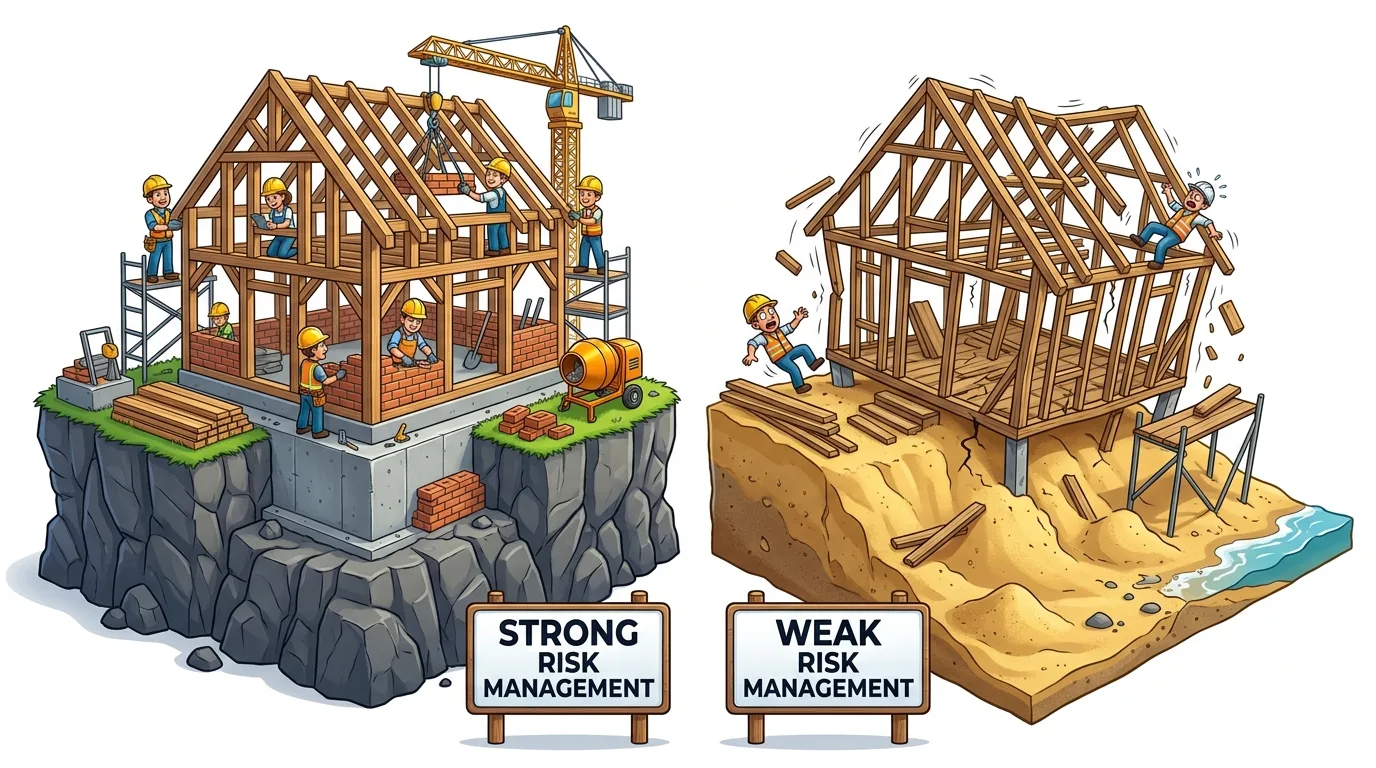
“I walked away with $0.00 profit. My professional self was thrilled. I protected my capital.”
A framework is useless without a routine. Here’s the daily professional guideline checklist I’ve used for the past five years:
- Pre-Market (7:00 AM EST): Check the economic calendar. Know what’s scheduled for the US, Eurozone, and UK sessions. No trading major news unless it’s part of a specific, tested strategy.
- Analysis (7:30 AM EST): Review the daily charts on my 3-5 core pairs. I’m looking for structure, not signals. Is price near a key support/resistance? What’s the overall trend? I use the RSI indicator here for overbought/oversold context.
- Plan the Trade (8:00 AM EST): If I see a setup, I write it down. Entry, stop loss, take profit. I calculate the position size using my 0.7% risk rule. I enter the orders as pending limits/stops.
- Execute & Walk Away: Once the orders are set, I minimize the platform. I might set a price alert. I do not watch the tick-by-tick movement. Emotional drift kills plans.
- End-of-Day Review (4:30 PM EST): I review all closed trades. Why did it win? Why did it lose? Was my stop too tight? I log the P&L and a one-sentence note in my journal. This takes 10 minutes.
This isn’t glamorous. It’s a job. The US forex trading framework, with all its rules, supports this methodical approach. It filters out the noise and the get-rich-quick dreamers. Your goal isn’t to beat the system; it’s to become so proficient within it that the rules become invisible, and all that’s left is your edge and your discipline.

FAQ
Q1Can I use a broker like Exness or IC Markets if I live in the US?
No, you cannot. Brokers like Exness and IC Markets are not registered with the CFTC/NFA and are prohibited from offering services to US residents. Using them would mean zero regulatory protection, no segregation of your funds, and you'd be breaking the law. Stick to the regulated list.
Q2Is the 50:1 use limit for all account types?
For retail traders, yes. The CFTC defines 'retail' broadly. There is a category called 'Eligible Contract Participant' (ECP) that can qualify for higher use, but the thresholds are extremely high (e.g., $10 million in assets). For 99.9% of traders, 50:1 on majors is the hard limit.
Q3What's the best platform for forex trading in the US?
There's no single 'best.' MetaTrader 4/5 is widely supported and excellent for automated strategies. Many US brokers like OANDA and Forex.com have their own powerful, user-friendly platforms. Thinkorswim (from Schwab) is fantastic for analysis. The best one is the one your chosen regulated broker offers that fits your workflow.
Q4How do I avoid the FIFO rule messing up my trades?
Don't fight it. Structure your trading so you never have multiple positions on the same pair that you'd want to close in a different order. Use one clear position per pair. If you want to add to a winner, consider it one larger position with an averaged entry, not separate trades. Simplify your approach.
Q5Why are there so few forex brokers in the US compared to other countries?
The capital requirements are massive ($20 million minimum), and the regulatory burden is heavy. This creates a huge barrier to entry, ensuring only large, well-capitalized firms can operate. It's a trade-off: fewer choices for much stronger consumer protection.
Q6Can I trade forex CFDs in the US?
No. Retail trading of Contracts for Difference (CFDs) on any asset class is prohibited in the United States. You can trade spot forex, forex futures (on the CME), and forex options, but not CFDs.
Q7What's a realistic return expectation trading forex in the US?
If you're a skilled, disciplined trader, aiming for 10-30% annually is a solid, professional target. Anyone promising you monthly returns like that is selling a fantasy. Focus on risk-adjusted returns and consistency. A 2% average monthly return, compounded, doubles your account in about 3 years.
Prof. Winston'ın Dersi
Önemli Noktalar:
- ✓use is a multiplier of discipline, not just capital.
- ✓The 1% risk rule is non-negotiable, always.
- ✓Simplicity thrives under FIFO; complexity dies.
- ✓Your broker's regulation is your first line of defense.
Bu makale ne kadar faydalıydı?
Bir yıldıza tıklayın
Haftalık Trading Analizleri
Ücretsiz haftalık analiz ve stratejiler. Spam yok.
Yazar hakkında
James Mitchell
Kıdemli Yatırım Analisti
New York merkezli, 9 yılı aşkın trading deneyimine sahip. Başlıca USD paritelerine, prop firma yarışmalarına ve ABD düzenleyici ortamına odaklanıyor.
Yorumlar
Risk Uyarısı
Finansal araçlarla işlem yapmak önemli riskler taşır ve tüm yatırımcılar için uygun olmayabilir. Geçmiş performans gelecekteki sonuçları garanti etmez. Bu içerik yalnızca eğitim amaçlıdır ve yatırım tavsiyesi olarak değerlendirilmemelidir. İşlem yapmadan önce her zaman kendi araştırmanızı yapın.
Bunları da beğenebilirsiniz

Cara Trading Forex Sukses: 7 Prinsip dari Trader Profesional
Cara trading forex sukses dengan 7 prinsip trader pro: manajemen modal, disiplin, journal trading, backtest. Data nyata, bukan janji profit palsu.
Jam Trading Forex Terbaik untuk Trader Indonesia: Panduan Lengkap dengan Tabel Waktu
Panduan jam trading forex untuk trader Indonesia. Tabel 4 sesi dunia, jam emas 20:00-00:00, sesi mana yang harus dihindari. Data akurat + tips dari trader berpengalaman.
Top 5 Sàn Forex Uy Tín Nhất 2026: Review Jujur dari Trader Indonesia
Top 5 sàn forex uy tín 2026 untuk trader Indonesia. Review jujur: spread, deposit, withdraw, dukungan lokal. Exness, XM, IC Markets & lebih.
Pulsar Terminal'ı Edinin
Tüm bu hesaplayıcılar MT5 hesabınızdan gerçek zamanlı verilerle Pulsar Terminal'e entegredir.
Pulsar Terminal'ı Edinin