


It was October 2023, and I was watching a live 'mentorship' session on YouTube.
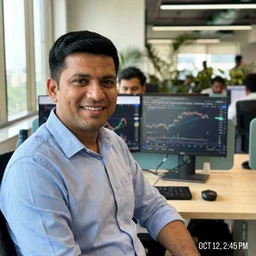
Rajesh Sharma
Kıdemli Forex Analisti ·  India
India
☕ 10 dk okuma
Neler öğreneceksiniz:
- 1What Even Is a Forex Trading Mentor? (And What They're Not)
- 2The Indian Regulatory Maze: Your Mentor Better Know This
- 3The Price Tag: From ₹500 to ₹4 Lakh – What Are You Buying?
- 4Spotting the Fakes: Red Flags & Green Lights
- 5The DIY Path: How to Be Your Own Best Mentor
- 6Invest in Tools, Not Just Talk
- 7The Final Verdict: Do You Need One?
It was October 2023, and I was watching a live 'mentorship' session on YouTube. The guru, all flashy graphics and rented Lamborghinis, was promising a 'guaranteed' 20-pip scalp on USD/INR. His students, mostly kids fresh out of college, were typing 'Yes sir!' in the chat, ready to throw their parents' money at the market. The setup was garbage - a basic moving average crossover on a 1-minute chart during low liquidity. I knew exactly how that trade would end. An hour later, the pair had chopped sideways, stopped out half the room, and the guru was blaming 'market manipulation.' That moment, watching thousands of rupees evaporate based on bad advice, is why we need to talk about forex trading mentors in India.
Let's cut through the marketing fluff. A real forex trading mentor is someone who has consistently traded profitably through multiple market cycles (bull runs, crashes, sideways slogs) and can teach you a repeatable process. They're not a fortune teller. They're more like a driving instructor for the world's most dangerous road.
In India, the term 'mentor' is completely unregulated. Any guy with a TradingView account and a microphone can call himself one. There's no SEBI license for mentorship. Some legit courses might boast 'SEBI-certified mentors,' but that usually means the person holds a certification for financial education, not that SEBI has approved their trading signals. It's a crucial distinction.
A real mentor focuses on process: your psychology, your risk management rules, your trade journal. A fake guru focuses on outcomes: the fancy car, the screenshot of a single winning trade, the promise of quick riches. I made every mistake in the book early on because I followed the latter. I once paid ₹45,000 for a 'masterclass' that was just a repackaged free YouTube strategy. The only thing I mastered was disappointment.

Warning: If a 'mentor' spends more time showing off his lifestyle than explaining his trade log, run. Profitability is quiet. Scams are loud.
If your potential mentor doesn't start here, fire them immediately. Trading in India isn't a free-for-all. The RBI and SEBI have built a wall around the rupee, and if you don't know the rules, you'll get fined or worse.
What You CAN Legally Trade
You're restricted to currency derivatives (futures & options) on Indian exchanges like the NSE or BSE. The main game is INR pairs: USD/INR, EUR/INR, GBP/INR, JPY/INR. Recently, they've allowed a few direct crosses like EUR/USD and GBP/USD on these exchanges, but that's it. Full stop.
The Big, Illegal Temptation
Every other pair - EUR/JPY, AUD/CAD, Gold (XAU/USD) - is off-limits unless you trade with an offshore, unregulated broker. And that's a FEMA violation. I've seen traders get their bank accounts frozen for moving money to these brokers. A good mentor will drill this into your head from day one and only teach strategies applicable to USD/INR or the permitted crosses. They'll recommend SEBI-regulated brokers like Zerodha, Upstox, or Angel One.
The Latest Wrinkle (April 2026)
The RBI just tightened the screws again. New rules curb speculative NDF contracts and slash banks' net open positions. This affects liquidity and volatility. A mentor worth his salt will be discussing how this changes the market structure for USD/INR, not ignoring it. If they're still teaching strategies from 2020, they're obsolete.

Pro Tip: Your first question to any mentor should be, 'Can you explain the RBI's April 2026 derivative norms?' If they stammer, you have your answer.

💡 Winston'ın İpucu
The most valuable thing a mentor can give you isn't a signal; it's a checklist. A pre-trade checklist of your rules that you must follow, no exceptions.
“A real mentor focuses on your process. A fake guru focuses on his lifestyle.”
The cost spectrum is insane, and it rarely correlates with value. Let's break down what you might actually get for your money.
| What You Pay | What You Might Get | The Reality Check |
|---|---|---|
| ₹500 - ₹5,000 (Online Course) | Pre-recorded videos, PDFs, basic indicator guides. | Often recycled, generic info. No personalization. Might teach illegal offshore trading. |
| ₹20,000 - ₹50,000 ('Mastery' Program) | 2-3 month program, maybe some live Q&A, a Discord community. | This is the sweet spot for scams. High-ticket marketing, medium value. The community is often an echo chamber of losing traders. |
| ₹30,000 - ₹60,000/month (1-on-1 Mentorship) | Direct access, portfolio review, live trade analysis. | This can be valuable IF the mentor is genuine. You're paying for their time and attention. Demand verified track records. |
| ₹3.9 Lakh+ (Institutes like OTA) | Classroom-style training, structured curriculum, certificates. | You're paying for brand name and structure. Good for absolute beginners who need hand-holding, but wildly expensive for the actual trading edge provided. |
I paid for a ₹25,000 'signal group' in 2019. The guru's 'proprietary algorithm' was just a default Stochastic RSI on MT4. The signals were late, and I lost about ₹80,000 following them before I wised up. The lesson? Price doesn't equal performance. A mentor teaching proper position size calculator use is worth more than a thousand flashy signals.
Remember, the most expensive cost isn't the mentorship fee; it's the capital you lose following bad advice. I'd rather you spend ₹10,000 on a few books and a XM review to understand broker mechanics (for educational purposes only, given the regulatory landscape) than ₹1 lakh on a empty promise.
After 12 years, you develop a sixth sense for this stuff. Here's your cheat sheet.
🚩 RED FLAGS (Run Away)
- 'Guaranteed' Profits or High Win Rates: The market guarantees nothing. Anyone promising 90% win rates is lying. Period.
- Focus on Offshore/CFD Trading: For an Indian resident, this is a giant red flag. They're leading you into illegal activity.
- No Discussion of Losses: If their feed is only winning trades, they're hiding the reality. Trading is about managing losses.
- Pressure to Join NOW: 'Discount ending tonight!' 'Only 5 spots left!' This is pure sales manipulation.
- Vague on Strategy: 'My secret institutional method.' If they can't explain the core concept simply, it doesn't exist.
✅ GREEN LIGHTS (Potential Keeper)
- Emphasizes Risk Management First: They talk about margin call avoidance, risk-per-trade (e.g., 1%), and stop losses before any indicator.
- Teaches Legal Framework: They ground everything in RBI/SEBI rules and legal INR pair trading.
- Transparent with Their Trades: Shows full trade journals, including losses, with clear entry/exit reasoning.
- Focuses on Psychology: Talks about dealing with greed, fear, and discipline. This is 80% of the game.
- Provides a Clear, Testable Process: Not random signals, but a full plan: how to analyze, enter, set stop-loss (a key component of risk), and exit.
A real mentor's goal is to make you independent, not dependent on their signals forever. If they want you hooked on their daily tips, they're a dealer, not a teacher.
💡 Winston'ın İpucu
If you wouldn't give them the keys to your bank account, don't give them the keys to your trading decisions. Mentors advise, you decide.
“The most expensive cost isn't the mentorship fee; it's the capital you lose following bad advice.”
Here's the unpopular truth: the best mentor you'll ever have is you, armed with the right tools and a brutal commitment to honesty. You can't outsource discipline. Here's how to build yourself.
1. Paper Trade Relentlessly: Don't touch real money for at least 3-6 months. Use a demo account on a platform like MT5. Your goal isn't profit; it's consistency in following your own rules.
2. Journal Like a Maniac: Every trade. Entry, exit, pip gain/loss, chart screenshot, and most importantly - YOUR EMOTIONAL STATE. Did you panic? Did you get greedy? This journal is your mirror.
3. Master One Pair: For Indians, that's USD/INR. Learn its personality - its average daily range, how it reacts to RBI news, its liquidity sessions. Forget the 50 pairs the gurus show. Become a specialist. Our EUR/USD guide explains the deep analysis needed for one major pair; apply that same focus to USD/INR.
4. Build a Simple System: Start with price action or one or two indicators like RSI or MACD. Backtest it on historical data. Does it have a positive expectancy over 100+ trades? If not, tweak it.
5. Find a Peer Group, Not a Guru: Join a community of fellow learners where you share trades and critique each other. This is infinitely more valuable than a one-way guru broadcast. You learn by explaining your reasoning.
I turned profitable only after I fired my last 'guru' and spent 8 months backtesting a simple swing trading strategy on USD/INR. My notebook had over 300 trades logged before I risked a single rupee. That notebook was my real mentor.
A true mentor will point you toward the right technology to execute your plan efficiently. In India's fast-moving currency derivative market, execution speed and order management are critical.
Think about it. A common beginner mistake is mismanaging a trade - not moving stops to breakeven, or failing to take partial profits. These are psychological errors, but they can be supported by technology. A strong trading terminal can help enforce the discipline a mentor preaches.
For instance, trading USD/INR futures on NSE through a platform like MT5 is common. A tool that integrates directly with MT5 to automate routine tasks - like setting a trailing stop, scaling out of a position with multiple take-profit levels, or instantly moving your stop to breakeven at a specified price - can be a game-saver. It removes emotion from the equation post-entry.
This is especially crucial if you're exploring more active styles like scalping, where milliseconds and precise order handling matter. The right software acts as a silent partner, ensuring your trading plan is followed to the letter, which is the ultimate lesson any good mentor tries to teach. Before paying a guru another rupee, ask if your current toolkit helps or hinders your discipline.
💡 Winston'ın İpucu
Your trading journal is your first mentor. It tells you the truth about yourself. Listen to it before you listen to anyone else.
Executing a trading plan without emotion is the final lesson, and tools like Pulsar Terminal automate critical risk management tasks—like trailing stops and partial closures—directly on your MT5 platform, enforcing the discipline a good mentor preaches.
Pulsar Terminal
Hepsi bir arada MT5 aracı: sürükle-bırak emirler, çoklu TP/SL, trailing stop, grid trading, Volume Profile ve prop firm koruması. Her gün 1.000'den fazla trader tarafından kullanılıyor.

“The market is the only mentor that matters. It will teach you brutal, expensive lessons.”
So, after all this, are forex trading mentors in India worth it?
The answer is a frustrating 'it depends.'
If you're a complete novice who needs structure and to avoid legal pitfalls, a legitimate, regulation-focused educational course can be a good starting point to learn the absolute basics. Think of it as paying for a curated syllabus.
If you've been trading for a year or two, have blown up an account or two, and are stuck in a cycle of small wins and big losses, a short-term, one-on-one coaching session with a verified professional might help you identify your one or two critical leaks. Pay for a few hours to review your journal and charts, not for a lifetime subscription.
For everyone else, the 'self-mentorship' path is not only viable but preferable. The information is all out there - often for free. The value of a paid mentor is acceleration and accountability. But you must provide 90% of the effort.
Invest the money you'd spend on a fancy course into your education (books, reputable webinars) and your trading infrastructure - a reliable internet connection, a good charting service like TradingView, and a journal. That's a better return on investment than most 'masterclasses' will ever give you.
, the market is the only mentor that matters. It will teach you brutal, expensive lessons. A good human mentor can help you learn those lessons with less capital on the line. A bad one will just take your capital and leave you with the lessons anyway. Choose wisely.
FAQ
Q1Is it legal to have a forex trading mentor in India?
Yes, paying someone for education and guidance is legal. However, the activity they teach must be legal. A legitimate mentor will only teach trading of SEBI-permitted INR pairs (like USD/INR) on Indian exchanges. If a mentor is teaching you to trade EUR/JPY CFDs with an offshore broker, they are guiding you into illegal activity under FEMA.
Q2What is a reasonable fee for a forex mentor in India?
There's no standard, but be extremely wary of programs costing ₹50,000 to ₹4 lakh promising 'mastery.' Short, focused one-on-one coaching sessions (a few hours) can range from ₹5,000 to ₹20,000 and provide specific feedback. Many foundational skills can be learned through books and disciplined self-study for a fraction of the cost.
Q3Can a mentor guarantee I will become a profitable trader?
Absolutely not. Anyone who guarantees profits is a scammer. Trading success depends on market conditions, your psychology, discipline, and risk management. A mentor can provide a map and point out pitfalls, but you have to drive the car. Your emotional control is the single biggest factor, and no one can guarantee that for you.
Q4What should I look for in a mentor's track record?
Demand transparency. A real track record isn't a few screenshot wins. It's a long-term, verifiable statement (like a broker statement or a verified myfxbook link) showing at least 2-3 years of consistent, real-money trading. It must include all trades, showing drawdowns and the risk parameters used. If they only show 'selected' trades, walk away.
Q5I'm a beginner. Should I start with a mentor or on my own?
Start on your own with the free, legal basics. Paper trade for months. Learn about RBI/SEBI rules, what a pip is, and how margin works. Once you have a basic understanding and a specific set of problems (e.g., 'I keep exiting trades too early'), then consider seeking targeted coaching. Paying a mentor when you don't know what you don't know is a waste of money.
Q6Are 'prop firm challenges' promoted by mentors a good idea?
They are high-risk, high-pressure evaluations. Some mentors partner with prop firms for referrals. The challenge rules (like daily loss limits) are strict. If you pursue this, understand it's a test of a fully-developed system under pressure, not a learning tool. Tools that help automate prop firm daily loss protection rules can be useful, but only after you have a solid, proven strategy.
Prof. Winston'ın Dersi
Önemli Noktalar:
- ✓Verify a mentor teaches only legal, INR-pair trading on SEBI platforms.
- ✓Demand a full, verifiable track record - not just winning trade screenshots.
- ✓Prioritize mentors who drill risk management above all else.
- ✓Invest in self-education and tools before expensive 'mastery' programs.
Bu makale ne kadar faydalıydı?
Bir yıldıza tıklayın
Haftalık Trading Analizleri
Ücretsiz haftalık analiz ve stratejiler. Spam yok.
Yazar hakkında
Rajesh Sharma
Kıdemli Forex Analisti
Hindistan ve Güney Asya piyasalarında 10 yılı aşkın deneyim. NSE döviz türevleriyle başlayıp uluslararası forex'e geçiş yaptı. USD/INR ve gelişmekte olan piyasa pariteleri uzmanı.
Yorumlar
Risk Uyarısı
Finansal araçlarla işlem yapmak önemli riskler taşır ve tüm yatırımcılar için uygun olmayabilir. Geçmiş performans gelecekteki sonuçları garanti etmez. Bu içerik yalnızca eğitim amaçlıdır ve yatırım tavsiyesi olarak değerlendirilmemelidir. İşlem yapmadan önce her zaman kendi araştırmanızı yapın.
Bunları da beğenebilirsiniz

Cara Trading Forex Sukses: 7 Prinsip dari Trader Profesional
Cara trading forex sukses dengan 7 prinsip trader pro: manajemen modal, disiplin, journal trading, backtest. Data nyata, bukan janji profit palsu.
Jam Trading Forex Terbaik untuk Trader Indonesia: Panduan Lengkap dengan Tabel Waktu
Panduan jam trading forex untuk trader Indonesia. Tabel 4 sesi dunia, jam emas 20:00-00:00, sesi mana yang harus dihindari. Data akurat + tips dari trader berpengalaman.
Top 5 Sàn Forex Uy Tín Nhất 2026: Review Jujur dari Trader Indonesia
Top 5 sàn forex uy tín 2026 untuk trader Indonesia. Review jujur: spread, deposit, withdraw, dukungan lokal. Exness, XM, IC Markets & lebih.
Pulsar Terminal'ı Edinin
Tüm bu hesaplayıcılar MT5 hesabınızdan gerçek zamanlı verilerle Pulsar Terminal'e entegredir.
Pulsar Terminal'ı Edinin