


Let's cut through the noise.

Daniel Harrington
İçerik Editörü
☕ 10 dk okuma
Neler öğreneceksiniz:
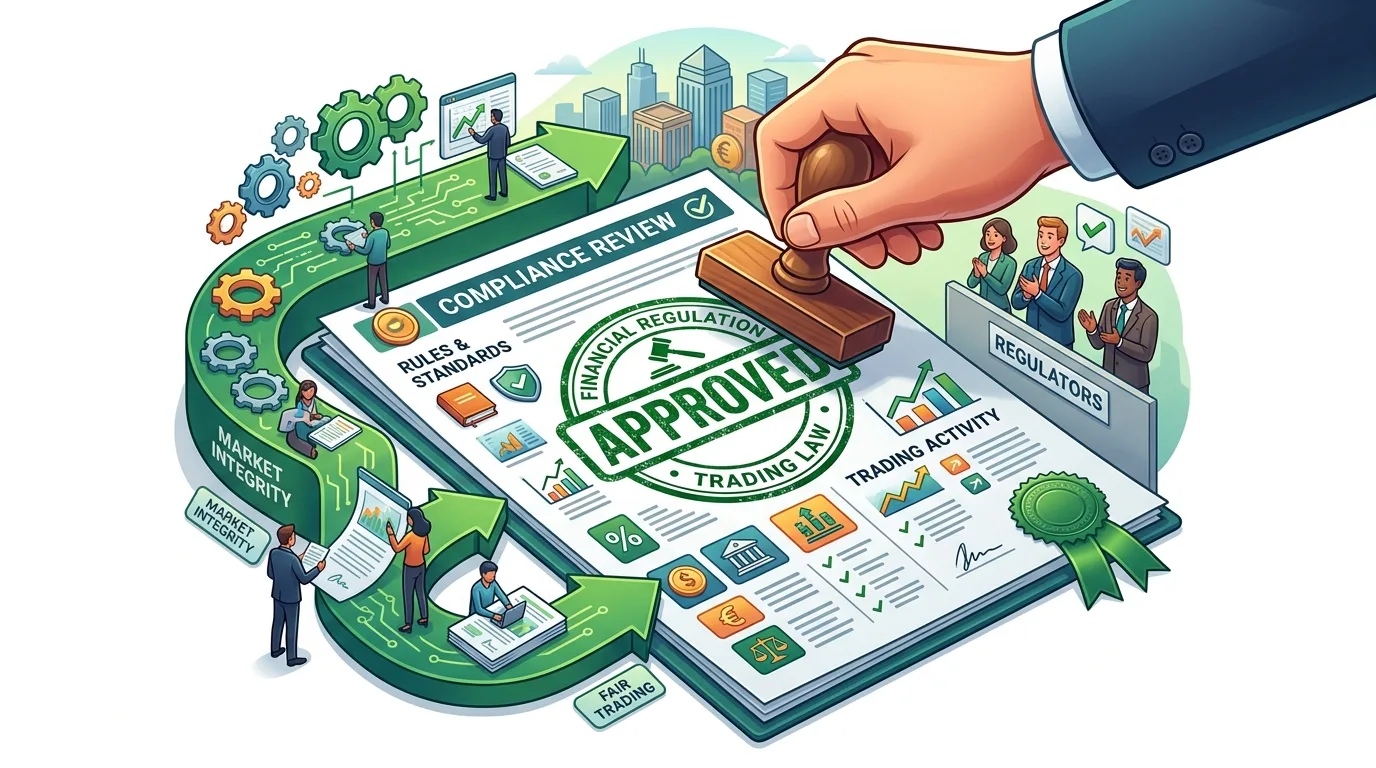
Let's cut through the noise. Every other forum post or 'guru' in Dhaka tells you forex trading is your golden ticket, a simple side hustle. They're selling you a dream, and it's dangerously incomplete. The first question you should be asking isn't about a magic indicator, but 'is forex trading legal in Bangladesh?' The answer is messy, nuanced, and ignoring it has wiped out more accounts than any bad trade. I've seen it happen to students who only focused on the charts. Today, we're setting the record straight on the legal landscape, the very real risks, and how you can operate with your eyes wide open.
Here's the core of it, straight from the source. The Bangladesh Bank (BB), which is our central bank, is the ultimate authority on foreign exchange. According to the Foreign Exchange Regulation Act (FERA) and subsequent guidelines, all foreign exchange transactions must be conducted through authorized dealers (banks) and money changers licensed by the BB.
Forex trading with international, offshore brokers? That's where you step into a massive grey area. The BB does not license or regulate any international forex brokers to offer speculative trading services to Bangladeshi residents. Therefore, sending money from your local bank account to an entity like Exness, IC Markets, or XM for the purpose of margin trading is technically not a sanctioned activity under BB rules.

Warning: This doesn't mean you'll get arrested for placing a trade. It means you have zero legal protection. If your offshore broker vanishes with your funds, the Bangladesh Bank or local courts will not be able to help you recover it. You're on your own.
The popular workaround? Using international payment gateways or cryptocurrencies to fund accounts. But let's be clear: this is a method to circumvent local banking restrictions, not a solution that makes the activity 'legal.' It just moves the point of friction. I had a student in 2023 who had his Skrill account frozen because his bank flagged the outbound transaction as 'forex trading,' and it took him months to sort it out. The hassle is real.
So, is forex trading legal in Bangladesh? For speculative, retail trading with use on international platforms, the answer is no, it is not officially permitted or regulated. The activity exists in a regulatory vacuum.
“Is forex trading legal in Bangladesh? For speculative trading with international brokers, the answer is no - it exists in a regulatory vacuum.”
Despite the official stance, trading is happening. A lot of it. Walk into any coffee shop in Banani or Dhanmondi and you'll hear talk of EUR/USD and gold. So how do people do it?
The Broker Choice
Traders overwhelmingly use large, internationally recognized brokers known for accepting clients from globally. Think Pepperstone, IC Markets, and XM. The logic is simple: these brokers have a reputation to uphold. While they operate in a grey area regarding Bangladeshi regulations, they are regulated elsewhere (like ASIC in Australia or CySEC in Cyprus). This offers some layer of security, though it's not enforceable here.
The sign-up process is straightforward. You'll use your Bangladeshi passport for verification. The tricky part is always funding.
The Funding Maze
This is the biggest operational headache. Direct bank transfers (TT/Telegraphic Transfer) in USD or EUR to a broker's bank account in another country will almost certainly be questioned or blocked by your local bank. They'll ask for supporting documents you cannot provide (like an import invoice).
Therefore, the standard practice involves a multi-step process:
- Digital Payment Processors: Using services like Skrill, Neteller, or even PayPal (where available) to act as a middleman. You fund your Skrill account via your local bank card or bKash/Nagad if linked, then transfer to the broker.
- Cryptocurrency: A growing number of traders buy USDT (Tether) from local crypto exchanges or peer-to-peer (P2P) platforms and then send it to a broker that accepts crypto deposits. This is the most discreet method, but adds volatility and complexity.

Pro Tip: Whatever method you choose, start small. Deposit just $50-100 first to test the entire pipeline - funding, trading, and, crucially, withdrawing - before committing serious capital. I learned this the hard way years ago when a $500 deposit got stuck for weeks.
The Withdrawal Test
This is the true test of your setup. Withdrawals typically come back via the same method you deposited. If you deposited with Skrill, you'll withdraw to Skrill. Always do a small withdrawal first to confirm the process works smoothly. Your profit is only real when it's back in a form you can spend in Bangladesh.

💡 Winston'ın İpucu
Your first profitable trade isn't when you close it. It's when the money is back in your local bank account, after all fees. Everything before that is just numbers on a screen.
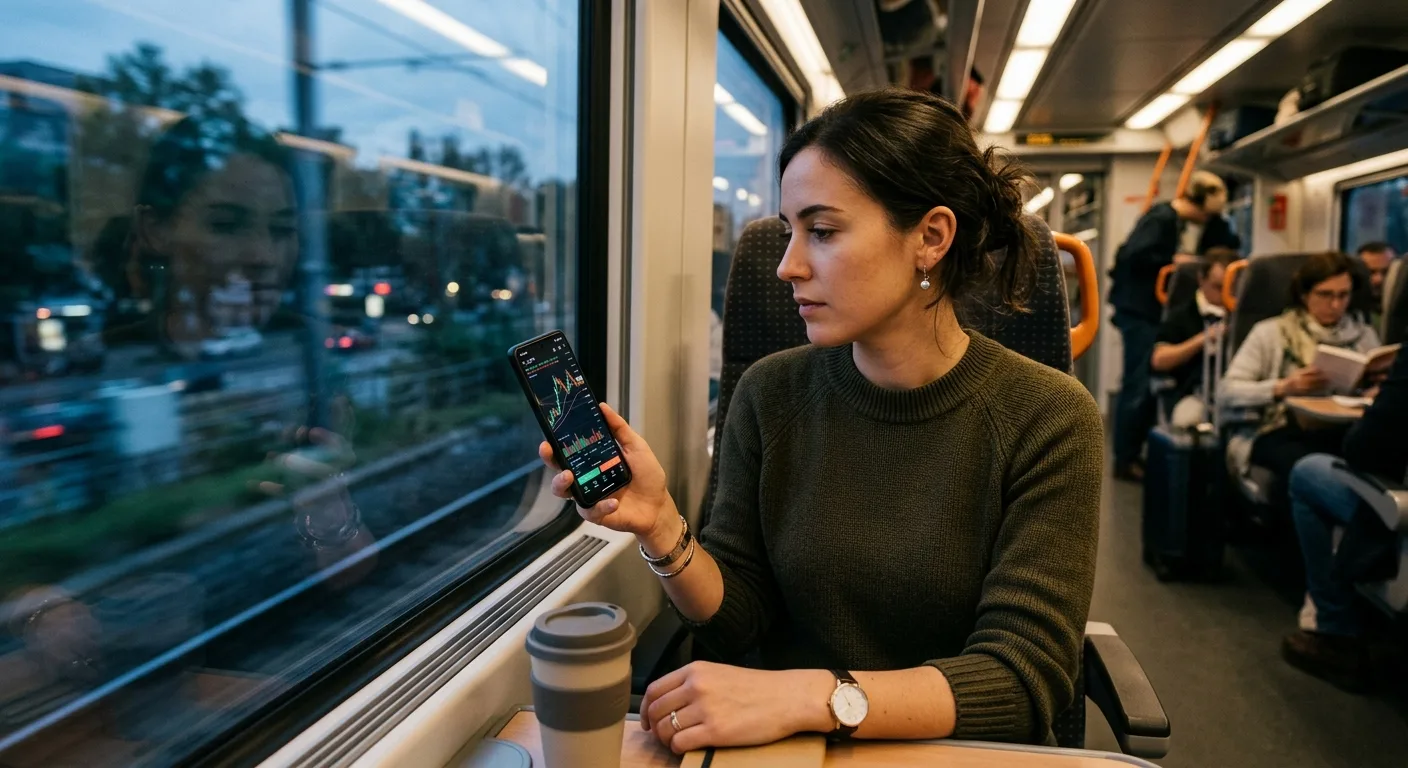
“Before you've even made a single pip of profit, you could be down 8% just moving money around. That's your first trade: against the banking system.”
You think the spread is your only cost? Think again. Trading from Bangladesh adds layers of financial friction that eat directly into your profits. If you don't account for these, your winning strategy on paper becomes a loser in reality.
Let's break down a typical $1,000 trade scenario, funding via Skrill:
| Cost Layer | Approximate Amount | Who Charges It | Notes |
|---|---|---|---|
| Bank/Card Fee to Load Skrill | 2.5% - 4% ($25 - $40) | Your Local Bank | Fee for international transaction/currency conversion. |
| Skrill FX Fee | 3.99% ($39.90) | Skrill | Their cut for converting BDT to USD/EUR. |
| Broker Spread (on EUR/USD) | 0.6 pips ($6) | Your Broker | This is the 'advertised' cost. Use our spread definition guide. |
| Skrill Withdrawal Fee | Fixed fee (~$5.50) | Skrill | To send profits back to your local bank. |
| Bank Receiving Fee | 0.5% - 1% (Variable) | Your Local Bank | Fee for receiving international funds. |
Total Friction Cost (Example): Before you've even made a single pip of profit, you could be down $76-$91 just moving money around. That's a 7.6%-9.1% loss on your $1,000. You need to make that back just to break even on the transfer.
This is why scalping with tiny profits is almost impossible to make work from here. The math doesn't add up. You need a strategy like swing trading that aims for larger moves (100+ pips) to absorb these overheads. My first major mistake was trying to scalp the GBP/JPY, thinking I was clever. I made 12 winning trades of 10-15 pips each, felt like a genius, and then realized the withdrawal process had wiped out all those gains and more. It was a brutal, expensive lesson in real-world economics.

“The most seductive risk is social. The 'success stories' you see are often fake. Comparing your journey to them is a direct path to blowing your account.”
Market risk is the same everywhere. The unique risks for a Bangladeshi trader are off the charts.
-
Zero Legal Recourse: This is the number one risk. If IC Markets or Exness (hypothetically) decided to block your account and keep your balance, you have no Bangladesh-based authority to file a complaint with. Your only option would be to pursue action in the broker's home country's courts - a prohibitively expensive and complex nightmare.
-
Payment Method Blacklisting: Services like Skrill and Neteller constantly monitor for activity that violates terms of service. If they determine you're using their platform primarily for speculative trading from a restricted jurisdiction, they can freeze your account and funds indefinitely. Getting it unlocked is a Kafkaesque process of submitting documents that don't exist.
-
Tax Ambiguity: The National Board of Revenue (NBR) has no clear public guideline on taxing income from international forex trading. Does it count as foreign income? Capital gains? It's a grey area. However, ambiguity is not safety. If you start withdrawing significant sums (think $10,000+), you must consult a local tax advisor. The lack of a rule today doesn't mean one won't be applied retroactively tomorrow.
-
The Prop Firm Trap: Many traders see prop firm challenges as a way to trade with 'house money.' But passing a challenge requires extreme discipline in daily loss limits. A tool like a position size calculator is non-negotiable. Even then, when you get a payout, you face the same withdrawal hurdles. I know two traders who passed challenges but then had their six-figure payouts held up for months in compliance checks related to their country of residence.
Warning: The most seductive risk is social. The 'success stories' you see on Facebook are often fake or funded by unsustainable deposits. Comparing your journey to them is a direct path to overtrading and blowing your account.
💡 Winston'ın İpucu
If you can't explain your trade setup, including your exact stop loss and take profit levels, in one simple sentence, you have no business entering it. Complexity is the enemy of the retail trader.

“The most seductive risk is social. The 'success stories' you see are often fake. Comparing your journey to them is a direct path to blowing your account.”
Look, I'm not your mom. I can't stop you from trading. If you've weighed the risks and still want to proceed, here’s how to do it with the least amount of stupidity.
Step 1: Treat it as High-Risk Venture Capital. Never trade with money meant for rent, tuition, or family. Assume the entire amount could vanish. Start with an amount so small that losing it wouldn't affect your life - $200, $500 max. This is your tuition fee to the market.
Step 2: Master One Thing. Don't jump between scalping strategy one day and gold swings the next. Pick one major pair, like the EUR/USD, and one simple strategy. Use the RSI indicator or MACD indicator consistently on a 4-hour chart. Paper trade for at least three months and keep a detailed journal. I didn't do this, and my first live account lasted 6 weeks.
Step 3: Build Your Banking Pipeline.
- Open a separate bank account if possible, just for this activity.
- Test your chosen funding method (e.g., Skrill) with a $50 deposit. Then immediately request a $20 withdrawal. If that $20 comes back to your local account within a week, you have a viable pipeline. If not, troubleshoot before adding more.
Step 4: Risk Management is Your Religion. Your number one job is to not blow up. Use a stop-loss on every single trade. Never risk more than 1% of your account on a trade. This isn't a suggestion; it's the rule that keeps you in the game. Understand what a margin call is so you never experience one.
Step 5: Withdraw Profits Religiously. This is critical. Don't let profits compound indefinitely in your broker account. Every time you hit a 20-30% gain on your starting capital, withdraw the profit. Get it back into your local economy. This secures your gains and constantly tests your withdrawal system.
Managing a prop firm challenge requires iron-clad discipline on daily loss limits, a task Pulsar Terminal automates by tracking and protecting your equity directly on your MT5 charts.
Pulsar Terminal
Hepsi bir arada MT5 aracı: sürükle-bırak emirler, çoklu TP/SL, trailing stop, grid trading, Volume Profile ve prop firm koruması. Her gün 1.000'den fazla trader tarafından kullanılıyor.

“Your number one job is to not blow up. Use a stop-loss on every single trade. This isn't a suggestion; it's the rule that keeps you in the game.”
Maybe after reading this, the offshore forex path seems too fraught. Good. That's smart risk assessment. Here are fully legal alternatives that build real financial skills.
-
The Bangladesh Stock Market (DSE): It's regulated, legal, and you can fund it directly from your bank. The learning curve is different (company analysis vs. chart patterns), but the principles of risk management, patience, and emotional control are identical. It's a fantastic training ground.
-
Mutual Funds (Asset Management Companies): Let professionals manage your money. Look for licensed AMCs in Bangladesh. It's boring, but it's a legitimate way to gain exposure to portfolios that may include foreign assets, all within the regulatory framework.
-
Digital Freelancing (Your Own Skills): This isn't trading, but it's the most reliable way to earn USD online from Bangladesh. Platforms like Upwork and Fiverr provide a clear, legal path to build a income stream in foreign currency. Use that income to then save and invest. The ROI on improving your own skills often dwarfs the average trader's returns, especially when you factor in the massive hidden costs we discussed.
The point is this: if your goal is to build wealth, don't get hypnotized by the forex charts. Look at the entire [landscape] of options available to you, with a clear understanding of which ones offer legal protection and which ones leave you exposed.
💡 Winston'ın İpucu
Spend 10 hours researching banking and withdrawal fees for every 1 hour you spend looking at a new trading indicator. The former will save you real money; the latter will just give you another excuse to lose.
FAQ
Q1Can I go to jail for forex trading in Bangladesh?
It's highly unlikely you'd face jail time for simply trading as an individual. The primary risk isn't criminal prosecution but financial loss with no recourse. The legal focus is on unauthorized money transfers and currency speculation outside banking channels, not on monitoring individual trading accounts.
Q2Which broker is best for Bangladeshi traders?
There is no 'best' broker, as none are officially sanctioned. Traders often use large international brokers like IC Markets, Pepperstone, or Exness for their global reputation and multiple deposit options. Your choice should prioritize a broker with a long track record and clear, tested withdrawal policies. Always read independent reviews like our XM review for insights.
Q3How do I withdraw trading profits to my Bangladeshi bank account?
Profits typically return via the method you deposited. If you used Skrill, you withdraw to Skrill, then from Skrill to your local bank card or account. Expect fees at each stage (Skrill withdrawal fee, bank receiving fee) and potential currency conversion costs. Always do a small test withdrawal first.
Q4Do I have to pay tax on forex trading income in Bangladesh?
The tax rules are ambiguous. The NBR has no specific, publicized guideline for taxing income from international margin trading. However, significant or regular withdrawals could potentially be scrutinized as foreign income. For any substantial profits, you must consult a qualified local tax advisor. Do not assume it's tax-free.
Q5Is trading gold (XAU/USD) different from forex legally?
No, not in the eyes of the regulation. The activity is the same: speculative trading on margin with an offshore broker. The instrument (forex pair, gold, oil) doesn't change the legal and banking challenges. All the same risks and costs apply. Check our XAU/USD guide for market-specific strategies.
Q6What is the minimum amount I need to start?
With the high friction costs, starting with less than $200 is almost pointless, as fees will eat a huge percentage. A more practical starting capital is $500-$1000, treating at least 10% of that as a likely cost for testing funding/withdrawal pipelines. Never start with money you can't afford to lose entirely.
Q7Are prop firm challenges a good idea for Bangladeshi traders?
They add another layer of complexity. While they offer larger capital, passing the challenge requires impeccable discipline with daily loss limits. Also,, prop firms conduct stringent know-your-customer (KYC) checks. Your residency in Bangladesh may trigger additional scrutiny or even rejection during the payout phase, despite being accepted for the challenge.
Prof. Winston'ın Dersi
Önemli Noktalar:
- ✓Forex with offshore brokers operates in a legal grey area with zero local protection.
- ✓Hidden funding/withdrawal fees can consume 8-10% of your capital before you trade.
- ✓Never risk more than 1% of your account on any single trade.
- ✓Withdraw profits regularly to test the pipeline and secure gains.
- ✓Consider fully regulated local alternatives like the DSE first.
Bu makale ne kadar faydalıydı?
Bir yıldıza tıklayın
Haftalık Trading Analizleri
Ücretsiz haftalık analiz ve stratejiler. Spam yok.
Yazar hakkında
Daniel Harrington
İçerik Editörü
The Trading Mentor içerik direktörü. Karmaşık ticaret kavramlarını anlaşılır kılma tutkusuna sahip deneyimli trader. Küresel konuları, stratejileri ve platform rehberlerini kapsar.
Yorumlar
Risk Uyarısı
Finansal araçlarla işlem yapmak önemli riskler taşır ve tüm yatırımcılar için uygun olmayabilir. Geçmiş performans gelecekteki sonuçları garanti etmez. Bu içerik yalnızca eğitim amaçlıdır ve yatırım tavsiyesi olarak değerlendirilmemelidir. İşlem yapmadan önce her zaman kendi araştırmanızı yapın.
Bunları da beğenebilirsiniz

Cara Trading Forex Sukses: 7 Prinsip dari Trader Profesional
Cara trading forex sukses dengan 7 prinsip trader pro: manajemen modal, disiplin, journal trading, backtest. Data nyata, bukan janji profit palsu.
Jam Trading Forex Terbaik untuk Trader Indonesia: Panduan Lengkap dengan Tabel Waktu
Panduan jam trading forex untuk trader Indonesia. Tabel 4 sesi dunia, jam emas 20:00-00:00, sesi mana yang harus dihindari. Data akurat + tips dari trader berpengalaman.
Top 5 Sàn Forex Uy Tín Nhất 2026: Review Jujur dari Trader Indonesia
Top 5 sàn forex uy tín 2026 untuk trader Indonesia. Review jujur: spread, deposit, withdraw, dukungan lokal. Exness, XM, IC Markets & lebih.
Pulsar Terminal'ı Edinin
Tüm bu hesaplayıcılar MT5 hesabınızdan gerçek zamanlı verilerle Pulsar Terminal'e entegredir.
Pulsar Terminal'ı Edinin