


You're probably wondering how to actually learn forex trading without getting scammed.

Olumide Adeyemi
West African Trading Pioneer ·  Nigeria
☕ 9 min read
What you'll learn:
You're probably wondering how to actually learn forex trading without getting scammed. I get it. Your WhatsApp is flooded with screenshots of Lambos and promises of turning ₦50,000 into ₦5 million in a month. The truth is, proper forex trading training isn't about shortcuts. It's about building a skill, like learning to be an electrician or a programmer. It takes time, the right materials, and a lot of practice. Let's cut through the noise and talk about what real training looks like here in Nigeria, from the legal stuff to the brokers that won't disappear with your money.
Forget the flashy Instagram ads. Real forex trading training is the process of learning how to analyze currency markets, manage risk, and execute trades with discipline. It's not a magic formula. It's a combination of knowledge (the 'what'), skill (the 'how'), and psychology (the 'why you won't panic').
In Nigeria, you have to be extra careful. The space is full of 'gurus' selling dreams. I learned this the hard way early on. I paid ₦120,000 for a 'signal group' that just copied trades from a free Telegram channel. The real training happens when you move from following signals to understanding why a trade might work.
The Three Pillars of Real Training
- Market Knowledge: This is the foundation. You need to understand what moves currencies. For Nigeria, that means knowing how the price of oil affects the USD/NGN pair, or how CBN policies can cause volatility. It's not just about lines on a chart.
- Technical Skill: This is where tools like the RSI indicator or MACD indicator come in. Training teaches you how to use them, not as crystal balls, but as tools for measuring market conditions.
- Mindset & Discipline: This is the most important part, and no video course can give it to you. It's about controlling fear and greed. It's learning to use a position size calculator for every single trade, so one loss doesn't blow up your account.

Warning: If a 'training' promises guaranteed returns or downplays risk, run. They are selling a fantasy, not education. The first lesson any real trader learns is that you will lose trades. A lot of them.

💡 Winston's Tip
The market's job is to make you feel stupid. Your job is to not act stupid. A trading plan is your script. Don't improvise.
Let's talk numbers. What does forex education actually cost in Nigeria, and what do you get for your money?
| Training Type | Typical Cost (₦) | What You Usually Get | Good For... |
|---|---|---|---|
| Free Online Resources | 0 | YouTube videos, blogs, broker webinars. | Absolute beginners testing the waters. Quality is wildly inconsistent. |
| Structured Online Course | 10,000 - 80,000 | Pre-recorded videos, PDFs, maybe a basic community. | Self-starters who need a curriculum. Look for courses that focus on risk management. |
| Live Workshop/Class | 50,000 - 300,000 | In-person or live online sessions, Q&A. | People who learn better with direct instruction and accountability. |
| One-on-One Mentorship | 100,000 - 500,000+ | Personalized coaching, trade review, direct access. | Serious traders who have the basics down but need guidance to become consistent. |
I've tried them all. My biggest leap came from a mentorship that cost me ₦250,000. It wasn't about getting secret indicators. It was the mentor sitting with me, reviewing my losing trades on EUR/USD, and pointing out where my emotion overruled my plan. That was worth more than any signal.

Pro Tip: Before paying for any premium course, exhaust the free material from reputable sources. Many top international brokers like IC Markets and Pepperstone have extensive, free educational hubs. If you can't learn from the free stuff, a paid course might not help either.
“The goal of your first live account is not to make money. The goal is to not lose money while applying your lessons under real emotional pressure.”
Any training worth its salt must cover these areas. If it skips them, it's incomplete.
1. Risk and Money Management: This is your survival kit. You must learn how to calculate your position size for every trade. Never risk more than 1-2% of your account on a single trade. You must understand what a margin call is and how to avoid it. This is more important than any trading strategy.
2. Fundamental Analysis (Especially for Naira Pairs): Why does the USD/NGN move? Often, it's Nigerian news. CBN announcements, oil price changes, inflation data. A good training will teach you how to track these events and understand their potential impact. Trading without this is like driving blindfolded.
3. Technical Analysis Foundations: Learn to read price action and key levels. Understand support and resistance. Then, learn one or two indicators deeply, like how to spot divergences with the RSI. Don't fall for the '10-indicator super system' trap. I did, and my chart was so cluttered I couldn't see the price anymore.
4. Trading Psychology & Journaling: You need to learn about your own brain. Why did you close that winning trade early? Why did you add to a losing position? A trading journal is your best teacher. Write down every trade, the reason for it, and your emotional state. Review it weekly.
5. Broker Mechanics: Know how your platform works. What's the spread on your account? How do you set a stop-loss? Practice this in a demo account until it's second nature. A mistake here can cost you real money.
💡 Winston's Tip
If you can't explain your trade setup in one simple sentence, you don't understand it. Complexity is the enemy of execution.
This might be the most valuable section for you. The Nigerian forex 'education' space has some brilliant marketers and very few actual traders. Here’s how to spot the fakes.
Red Flags:
- Guaranteed Profits: If it's guaranteed, it's a lie. Full stop.
- Fake Lifestyle Marketing: The rented Lambo in front of a hotel, the stacks of cash (usually $100 bills on top of newspaper). It's a script.
- Pressure to Pay NOW: 'Discount ends tonight!' 'Only 5 slots left!' This is classic sales manipulation.
- Vague on Details: They talk about 'my proprietary system' but never explain a single concrete rule. They can't, because it doesn't exist.
- Focus Only on Profits: They never, ever talk about risk management, losing trades, or drawdowns. Real traders talk about losses more than wins.
I once joined a group where the 'guru' posted a profit screenshot of +₦4.8 million on a gold trade. It looked amazing. Later, I reverse-engineered the math. To make that profit with the lot size he implied, his account would have needed over $500,000 in margin. But he was asking members for ₦30,000 deposits. The story didn't add up.
Warning: Be wary of 'funded account' schemes tied to training. Some are legitimate prop firm challenges, but many are just another layer of the scam where you pay to 'qualify' for an account they never intend to fund. Do deep research on any prop firm before paying.
“Consistency means following your plan, not necessarily being profitable every month. The discipline is the victory.”
Knowledge is useless without action. Here's a step-by-step plan to transition from training to actual trading.
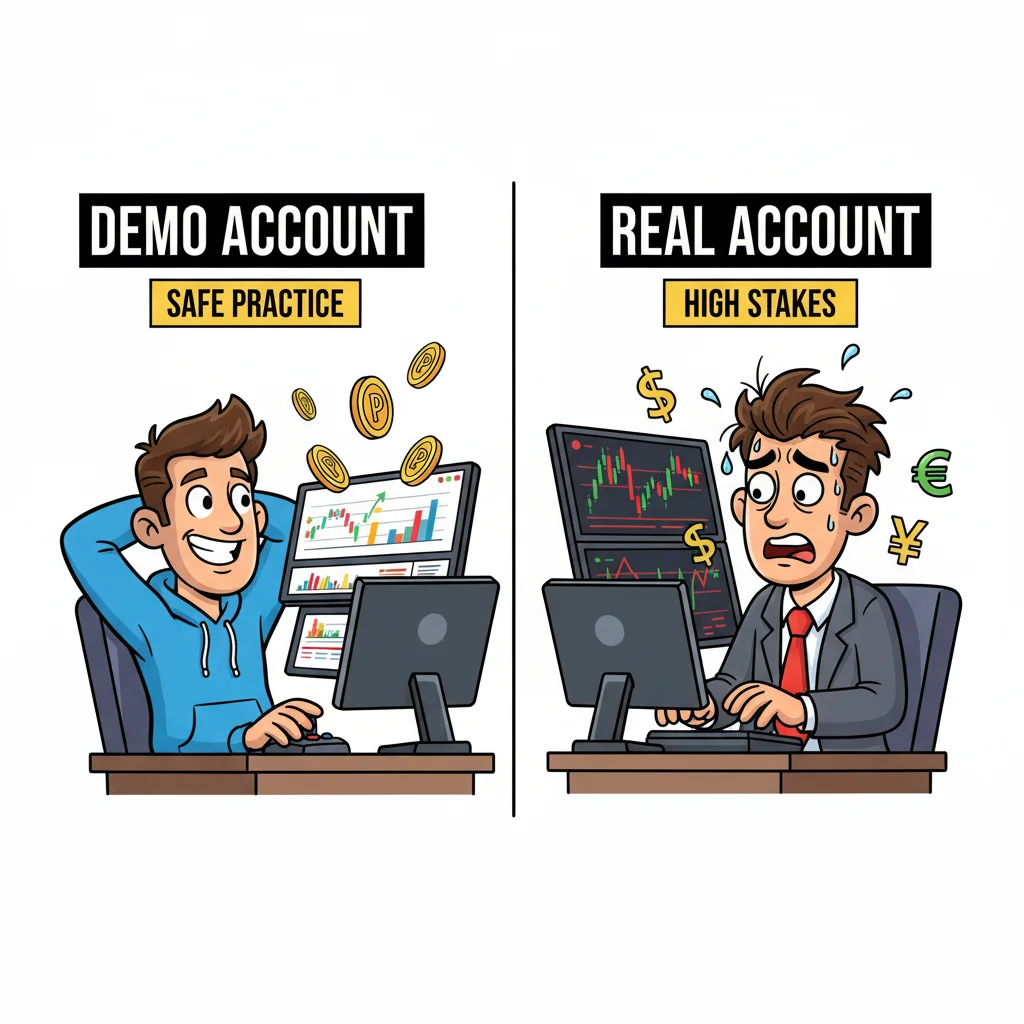
Step 1: Demo Trade (Seriously, Do It) Open a demo account with a broker like Exness or XM. Don't just mess around. Treat it like real money. Practice your risk management. Test one strategy at a time. Aim for consistency over 2-3 months, not huge profits.
Step 2: Start Microscopically Small When you go live, start with an amount you can truly afford to lose. For many, that's ₦20,000 - ₦50,000. The goal of your first live account is not to make money. The goal is to not lose money while applying your lessons under real emotional pressure. The spread and slippage you ignored in demo become very real here.
Step 3: Choose a Simple Strategy and Stick to It Will you be a scalping trader on the 5-minute chart, or a swing trading holding for days? Pick one. Master it. I wasted a year jumping between strategies every time I had a losing week.
Step 4: Journal and Review Relentlessly This is where training turns into skill. Every Sunday, review your journal. What patterns do you see in your losing trades? That's your personal edge waiting to be discovered.
Step 5: Scale Gradually Only add more capital when you have 3-6 months of consistent, disciplined trading on your small account. Consistency means following your plan, not necessarily being profitable every month. The discipline is the victory.
💡 Winston's Tip
Your first profit target should always be to break even. Moving your stop-loss to your entry price after a trade moves in your favor is a free trade. It's the only free thing in this business.

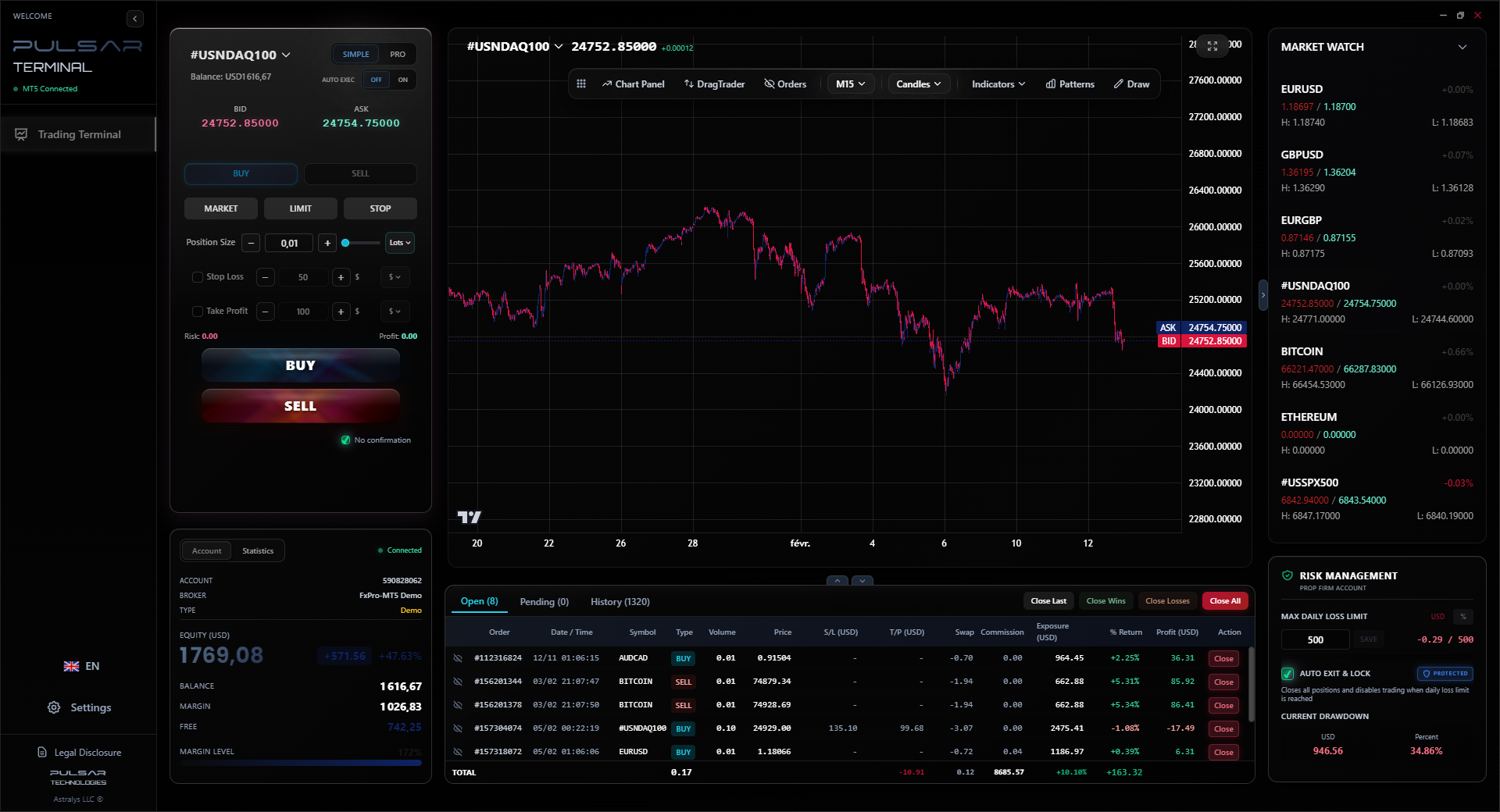
Executing your trading plan flawlessly requires the right tools, and Pulsar Terminal's drag-and-drop orders and one-click breakeven stops turn your strategy into disciplined action on MT5.
Pulsar Terminal
The all-in-one MT5 companion: drag-and-drop orders, multi-TP/SL, trailing stop, grid trading, Volume Profile, and prop firm protection. Used by 1,000+ traders daily.
Is forex trading illegal in Nigeria? No, it's legal for individuals. The Central Bank of Nigeria (CBN) restricts banks from facilitating forex transactions for trading, which is why you can't fund an international broker directly with your naira card sometimes. That's a banking rule, not a trading ban. You use payment processors or crypto instead.
How do I fund my trading account? Most Nigerian traders use intermediaries: payment gateways like Korapay or Buycoins, or stablecoins like USDT. Brokers like OctaFX and HFM have local naira deposit options. Never try to use your bank card for international forex brokers; it will likely be blocked.
Do I pay tax on forex profits? Technically, yes. Profits are subject to Capital Gains Tax (10%). In practice, for retail traders, enforcement is minimal. However, if you grow to a significant size, you should consult a local tax advisor. Keep your own records.
What's a realistic first-year goal? Survival. Then, aiming for a consistent 5-15% return per year is excellent. Anyone promising you monthly returns like that is lying. The global average is that most untrained traders lose money. Your training is what moves you from that majority into the minority.
Should I trade USD/NGN? It's tempting because you understand the fundamentals. But be careful. The spread can be very wide (sometimes 50-100 pips or more), and liquidity can dry up, making it hard to enter or exit. Many Nigerian professionals stick to major pairs like EUR/USD or XAU/USD (gold) where the costs are lower and markets are more predictable.
FAQ
Q1Can I really learn forex trading by myself for free in Nigeria?
Yes, you can learn the basics for free. There's a ton of free content from brokers and genuine educators on YouTube and websites. The challenge is curating it into a structured learning path and having the discipline to stick with it without a teacher. Most people benefit from some form of paid structure to save time and avoid bad information.
Q2How much money do I need to start trading after training?
You can technically start with as little as $10 (about ₦15,000) with some brokers. But realistically, to properly practice risk management and not get wiped out by a couple of losses, a starting capital of $100-$300 (₦150,000 - ₦450,000) is more practical. Remember, your first capital is the cost of your 'practical exam,' not your retirement fund.
Q3What is the biggest mistake new Nigerian traders make?
Two tied for first: 1) Not learning proper risk management. They trade too large and blow up their account on a few bad trades. 2) Chasing 'gurus' and signals instead of learning to analyze the market themselves. This creates dependency and you never develop your own skill.
Q4How long does it take to become a profitable trader?
This is a tough one. With dedicated, focused training and practice, you can grasp the basics in 3-6 months. But becoming consistently profitable - where you can survive any market condition - typically takes 1-3 years of live trading experience. It's a marathon, not a sprint.
Q5Are prop firm challenges good training?
They can be a good test of your training, but they are terrible substitutes for training. If you try a prop firm challenge (like FTMO or MyForexFunds) without solid skills and discipline, you'll just burn through challenge fees. Use them as a goal to work towards after you're consistently profitable on your own small account.
Q6Which trading style is best for beginners in Nigeria?
Swing trading is often more beginner-friendly. It happens on higher timeframes (like 4-hour or daily charts), so you don't have to stare at the screen all day. It gives you more time to analyze and is less stressful than scalping, which requires lightning-fast decisions and has higher transaction costs.
Prof. Winston's Lesson
Key Takeaways:
- ✓Risk 1-2% max per trade. Always.
- ✓Demo trade for 3 months minimum.
- ✓Master one strategy, not ten.
- ✓Journal every trade. No excuses.
- ✓A 10% annual return is professional-grade.
How useful was this article?
Click a star to rate
Weekly Trading Insights
Free weekly analysis & strategies. No spam.
About the Author
Olumide Adeyemi
West African Trading Pioneer
One of Nigeria's most active forex trading educators. 8 years of experience trading from Lagos. Specializes in low-capital strategies and prop firm challenges for African traders.
Comments
Risk Disclaimer
Trading financial instruments carries significant risk and may not be suitable for all investors. Past performance does not guarantee future results. This content is for educational purposes only and should not be considered investment advice. Always conduct your own research before trading.
You Might Also Like

Cara Trading Forex Sukses: 7 Prinsip dari Trader Profesional
Cara trading forex sukses dengan 7 prinsip trader pro: manajemen modal, disiplin, journal trading, backtest. Data nyata, bukan janji profit palsu.
Jam Trading Forex Terbaik untuk Trader Indonesia: Panduan Lengkap dengan Tabel Waktu
Panduan jam trading forex untuk trader Indonesia. Tabel 4 sesi dunia, jam emas 20:00-00:00, sesi mana yang harus dihindari. Data akurat + tips dari trader berpengalaman.
Top 5 Sàn Forex Uy Tín Nhất 2026: Review Jujur dari Trader Indonesia
Top 5 sàn forex uy tín 2026 untuk trader Indonesia. Review jujur: spread, deposit, withdraw, dukungan lokal. Exness, XM, IC Markets & lebih.
Get Pulsar Terminal
All these calculators are built into Pulsar Terminal with real-time data from your MT5 account. One-click position sizing, automatic risk management, and instant calculations.
Get Pulsar Terminal