


Here's a fact that should scare you: over 90% of new traders in Nigeria lose their first deposit within six months.

Olumide Adeyemi
West African Trading Pioneer ·  Nigeria
☕ 10 min read
What you'll learn:
- 1What Exactly Is a Pip? (It's Not What You Think)
- 2How to Calculate Pip Value in Naira (The Critical Math)
- 3Pips, Spreads, and the Real Cost of Trading in Nigeria
- 4Using Pips to Manage Risk (This Is How You Survive)
- 5Common Pip Mistakes That Wipe Out Nigerian Accounts
- 6Pips in Practice: Strategies for the Nigerian Market
- 7Brokers, Funding, and the Nigerian Reality
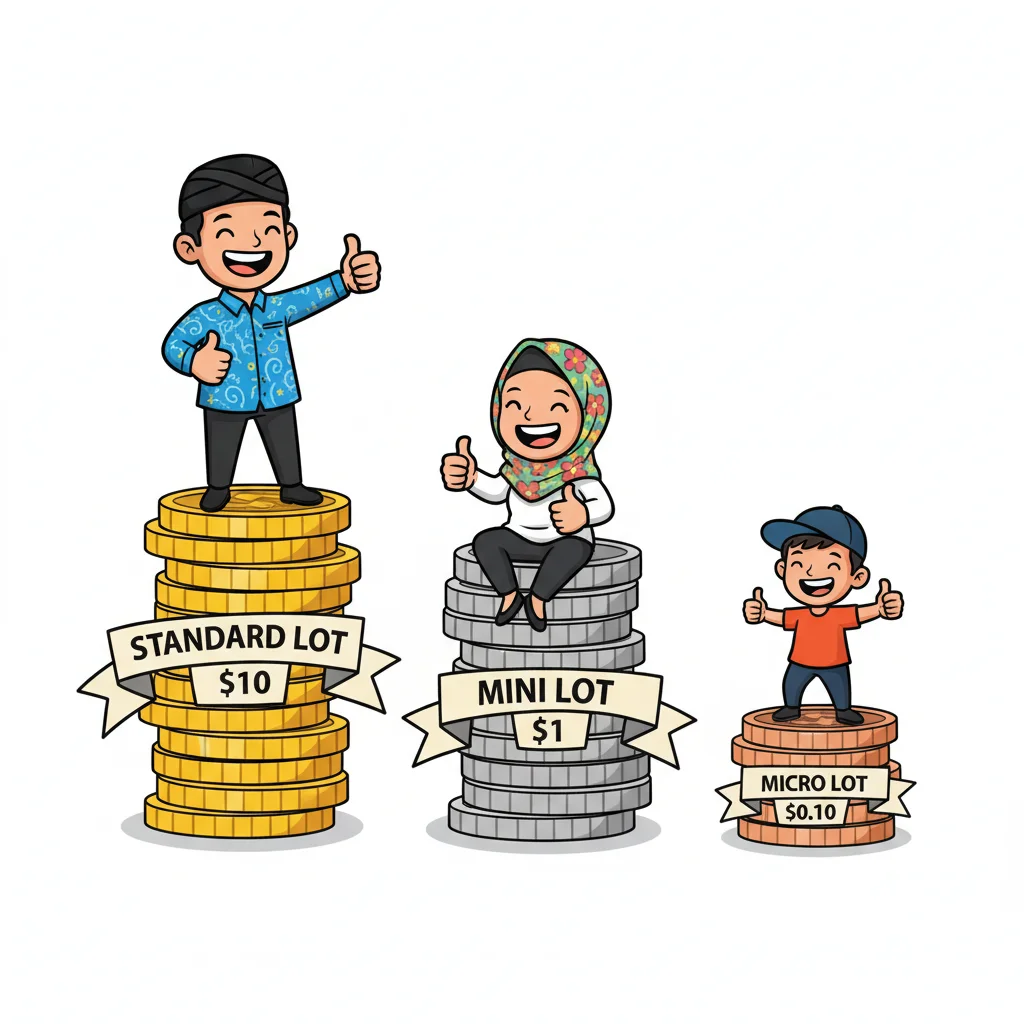
Here's a fact that should scare you: over 90% of new traders in Nigeria lose their first deposit within six months. The main reason isn't a bad strategy. It's a fundamental misunderstanding of the basic unit of trading: the pip. You can't manage what you can't measure. If you don't know exactly how much a pip is worth in your account, you're gambling, not trading. This guide breaks down pips forex for the Nigerian market, so you can finally calculate your risk like a professional.
A pip is the smallest price move a currency pair can make. For most pairs, like EUR/USD or GBP/USD, that's 0.0001. If EUR/USD moves from 1.1050 to 1.1051, it's moved one pip. For pairs with the Japanese Yen (JPY), like USD/JPY, a pip is 0.01. So a move from 151.50 to 151.51 is one pip.
But here's where Nigerian traders get tripped up. A pip isn't a fixed amount of money. Its cash value depends on three things: the currency pair you're trading, your trade size (lot size), and the quote currency. Thinking "one pip equals $10" is a shortcut that will wreck your account when you switch pairs.

Example: Let's say you trade a standard lot (100,000 units) of EUR/USD. One pip is typically worth $10. But if you trade a standard lot of USD/JPY, one pip is also roughly $10 only if the USD/JPY rate is near 100. If USD/JPY is at 150, the pip value is different. You must calculate it every time.
The real danger? When you move from a demo account (where numbers feel fake) to a live account with your hard-earned Naira, this abstract concept of a 'pip' suddenly has very real consequences. I've seen guys place a trade thinking a 50-pip stop-loss is "small," only to realize too late it was a 50,000 Naira loss.

💡 Winston's Tip
A pip is a unit of distance, not value. Knowing it's 30 pips to your stop is useless unless you know what that 30-pip journey costs in your local currency.
“You can't manage what you can't measure. If you don't know exactly how much a pip is worth in your account, you're gambling, not trading.”
This is the most important skill you'll learn today. You need to know what a pip movement means for your Nigerian bank account before you hit the buy button. Let's walk through it.
The Standard Formula
The basic formula is: Pip Value = (0.0001 / Exchange Rate) x Trade Size in Units. For JPY pairs, use 0.01 instead of 0.0001.
But you think in Naira, not dollars. So we need a Nigerian conversion. Let's use a real-world example from last month.
I was trading GBP/USD. The rate was 1.2650. I wanted to risk 0.5 lots (50,000 units).
- Pip Value in USD: (0.0001 / 1.2650) x 50,000 = $3.95. So each pip move was worth about $4.
- Convert to Naira: At that moment, the USD/NGN rate from my broker was about 1,480.
- Pip Value in NGN: $3.95 x 1,480 = 5,846 Naira per pip.
Suddenly, that "tight" 20-pip stop-loss I was considering meant a potential loss of nearly 117,000 Naira. I didn't take the trade. That calculation saved me a month's salary.

Warning: Never assume the USD/NGN rate is fixed. It fluctuates wildly. The pip value in Naira for your USD-denominated account changes every day with the official and parallel market rates. You must check the current rate at the time of your calculation. Using a static rate like 1,500 is a recipe for miscalculation.
For pairs where USD is the base currency (like USD/CAD), the calculation is simpler: Pip Value = (Trade Size in Units x 0.0001) in USD. Then convert that USD amount to Naira. Tools like a position size calculator are lifesavers, but you must understand the math behind them.
“Thinking 'one pip equals $10' is a shortcut that will wreck your account when you switch pairs.”
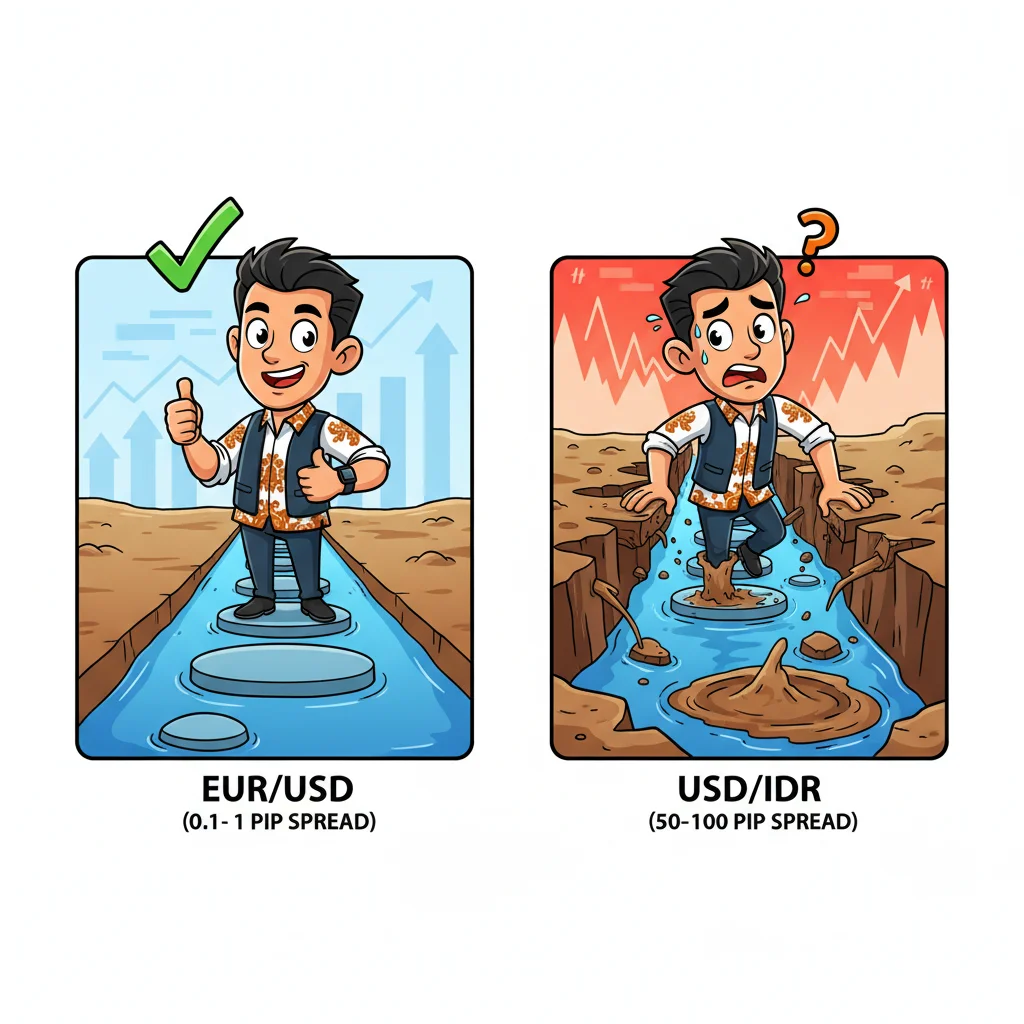
The spread is your first and most certain loss. It's the difference between the buy (ask) and sell (bid) price, measured in pips. If the EUR/USD bid is 1.1050 and the ask is 1.1052, the spread is 2 pips. You're down 2 pips the second you open a trade.
In Nigeria, with many international brokers, you'll encounter different account types:
| Account Type | Typical EUR/USD Spread | Commission | Best For |
|---|---|---|---|
| Standard/Commission-Free | 0.8 - 1.5 pips | None | Beginners, smaller accounts |
| Raw Spread/ECN | 0.0 - 0.3 pips | $3 - $7 per lot | Scalpers, high-volume traders |
Brokers like Exness and XM are popular here partly because of their low minimum deposits and competitive spreads on standard accounts. But "commission-free" doesn't mean free. That wider spread is how the broker gets paid.
Let's put this in Naira. Say you trade 1 standard lot (100,000 units) on a commission-free account with a 1.2 pip spread on EUR/USD.
- Pip Value in USD: ~$10
- Spread Cost in USD: 1.2 pips x $10 = $12
- Spread Cost in NGN (at ~1,480): 17,760 Naira
You need the market to move over 1.2 pips in your favor just to break even. For a scalping strategy targeting 5-10 pips, that's a massive 12-24% haircut off your potential profit before you even start. This is why understanding pips forex is non-negotiable for calculating your true breakeven point.
“Thinking 'one pip equals $10' is a shortcut that will wreck your account when you switch pairs.”
This is where pips stop being a theory topic and become your primary risk management tool. Your stop-loss (SL) and take-profit (TP) are set in pips, but they must be translated into money.
Here's my non-negotiable rule: Risk a maximum of 1-2% of your account balance on any single trade. Pips make this rule executable.
The 5-Step Risk Calculation:
- Determine Account Risk: 2% of a 500,000 Naira account is 10,000 Naira.
- Define Trade Risk in Pips: Analyze your chart. If you're buying EUR/USD at 1.1050, and your technical analysis says a logical stop-loss is at 1.1020, your risk is 30 pips.
- Find Pip Value in Naira: We need the pip value that makes 30 pips equal 10,000 Naira. 10,000 NGN / 30 pips = 333 Naira per pip.
- Calculate the Lot Size: From our earlier formula, we work backward. We know we need a pip value of 333 Naira. With USD/NGN at 1,480, that's about $0.225. Using the formula for EUR/USD: Trade Size = (Pip Value in USD) / (0.0001 / Exchange Rate). Plugging in the numbers gives us a trade size of roughly 2,800 units, or 0.03 lots.
- Set Your Orders: Place your SL at 1.1020 (30 pips away) and your TP based on your reward-to-risk ratio (e.g., 60 pips away for a 2:1 ratio).
I ignored this process early on. In 2019, I put a 50-pip stop on a gold (XAU/USD) trade without calculating. The pip value for gold is much larger. That 50-pip loss wiped out 8% of my account in minutes. It was a brutal, expensive lesson in why pips matter. Now, I never place a trade without knowing the exact Naira value of my stop-loss. Tools that help with multi-level take-profit and stop-loss orders are useful for managing this precisely.
💡 Winston's Tip
The most expensive pips you'll ever pay are the ones you lose because you didn't calculate their cost beforehand. Always do the math in Naira first.
“Your stop-loss (SL) and take-profit (TP) are set in pips, but they must be translated into money.”
I've made these. My friends have made these. Let's make sure you don't.
Mistake 1: Confusing Pips with Percentages. A 100-pip move on EUR/USD is less than 1% change. A 100-pip move on USD/JPY is an even smaller percentage move. But a 100-pip move on USD/NGN? That could be a 5-10% move. Volatility differs wildly. Trading Naira pairs requires a completely different risk scale.
Mistake 2: Not Adjusting for Lot Size. Doubling your lot size doubles your pip value. Going from 0.01 lots to 0.1 lots isn't a "small" increase. It's a 10x increase in your risk per pip. That excitement after a few winning trades is the most dangerous feeling in trading.
Mistake 3: Ignoring the Impact on Different Pairs. You develop a feel for risk on EUR/USD. Then you jump into XAU/USD (gold) without adjusting. Gold's pip value is variable and often significantly higher. A 20-pip stop on gold can cost the same as a 50-pip stop on EUR/USD. You get stopped out instantly and don't understand why.
Mistake 4: Forgetting About Slippage. You set a 20-pip stop. During high volatility (like during a CBN announcement), your order might fill at 23 or 25 pips. That extra 3-5 pips isn't the broker "cheating" you (usually). It's the market moving between the time your stop is triggered and the time it's executed. Your risk calculation must have a buffer.

Pro Tip: Before going live with a new pair or strategy, use a demo account to do this: Place ten trades only to practice setting stops and calculating the Naira loss before it happens. Write down the calculated risk and then the actual closed loss. This builds the muscle memory you need.

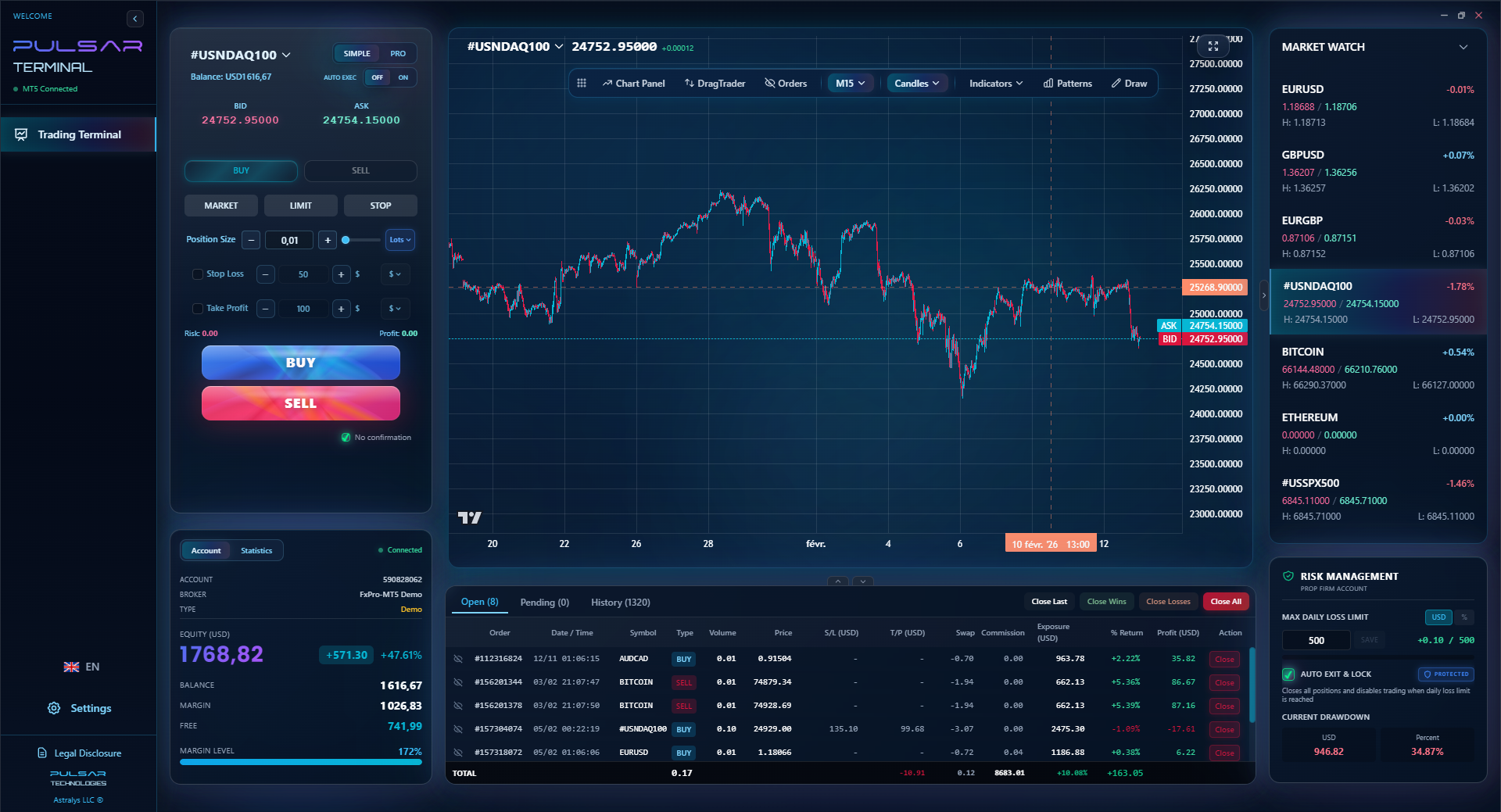
Manually calculating risk for every trade is tedious and error-prone; Pulsar Terminal automates position sizing and stop-loss placement directly on your MT5 chart, so your predefined risk in Naira is always locked in.
Pulsar Terminal
The all-in-one MT5 companion: drag-and-drop orders, multi-TP/SL, trailing stop, grid trading, Volume Profile, and prop firm protection. Used by 1,000+ traders daily.
“Your stop-loss (SL) and take-profit (TP) are set in pips, but they must be translated into money.”
How you use pips depends entirely on your trading style and the unique rhythms of the Nigerian trading environment.
For the Scalper: You're chasing 5-15 pips per trade. Here, the spread is your enemy. A 2-pip spread on a 5-pip target is a 40% tax. You must use a broker with raw spreads (0.0-0.3 pips) and low commissions, like IC Markets or Pepperstone. Your risk per trade might be tiny (3-5 pips), so your position size can be larger to make the profit meaningful, but the discipline must be surgical.
For the Swing Trader: You're aiming for 50-200 pips over days or weeks. Spreads matter less; your analysis matters more. A 2-pip spread on a 100-pip target is negligible. Your stop-losses are wider, so your position size must be proportionally smaller to keep your 1% risk rule. This style often suits the volatility of pairs like GBP/USD or during major economic events. Learn more about the mindset in our guide to swing trading.
Trading Naira Pairs (USD/NGN, GBP/NGN): This is a different beast. Volatility is high, and spreads can be enormous (50-100 pips isn't uncommon). A 100-pip stop on USD/NGN might be just a daily wiggle. You're not really trading pips here; you're trading much larger macroeconomic moves. Position sizing must be ultra-conservative. I treat Naira pairs with 10x the caution of a major pair.
Using Indicators with Pips: Don't use indicators in a vacuum. The RSI indicator might show oversold at 30, but that doesn't tell you where to place your stop. The MACD indicator might show a crossover, but you need to translate that signal into a precise entry and a pip-based stop. The indicator gives the direction; pips define the risk.
“That excitement after a few winning trades is the most dangerous feeling in trading.”
Let's talk logistics. You understand pips, but you need to get your Naira into a trading account.
Most reputable brokers serving Nigeria are internationally regulated (by FCA, ASIC, CySEC, FSCA). There are no strong local regulators for retail forex, which is a double-edged sword: more broker choice, but you must do your own due diligence to avoid scams.
Funding is your first hurdle. Due to CBN restrictions, direct bank transfers for speculative trading can be blocked. Here’s what works:
- Broker-Local Payment Partners: Many brokers partner with Nigerian payment gateways. You pay in Naira, they credit your USD account.
- Cryptocurrency: Increasingly popular. Fast, but remember the value of your crypto can change between the time you buy it and the time it's converted by the broker.
- E-wallets: Like PayPal, Skrill, Neteller. Reliable, but fees can add up.
The Key Takeaway: Factor funding costs and conversion rates into your pip calculations. If it costs you 2,000 Naira in fees to deposit 100,000 Naira, you're already down 2% before you trade a single pip. Your first job is to earn enough pips to cover your operational costs.
Choose a broker not just for low spreads, but for reliable, affordable deposit and withdrawal methods for Nigerians. Read reviews like our Exness review to see how they handle Naira transactions. Your profitability starts with getting your money on and off the platform smoothly.
💡 Winston's Tip
If you can't instantly state the Naira value of your stop-loss before entering a trade, you have no business being in that trade. Period.
FAQ
Q1How much is 1 pip in Naira?
There's no single answer. The value of 1 pip in Naira depends on the currency pair, your trade size (lot size), and the current USD/NGN exchange rate. For example, trading 0.1 lots of EUR/USD with USD/NGN at 1,480 might make 1 pip worth approximately 1,500 Naira. You must calculate it for each trade.
Q2Is forex trading legal in Nigeria?
Yes, it is legal for individuals to trade forex with their own capital through internationally regulated brokers. However, the local online retail forex market is not specifically regulated by Nigerian authorities like the SEC for spot trading. The Central Bank of Nigeria (CBN) prohibits local financial institutions from facilitating speculative forex trades, which is why Nigerians use international brokers and alternative payment methods.
Q3What is a good pip spread for a beginner in Nigeria?
For a beginner with a smaller account, a commission-free account with a spread of 0.8 to 1.5 pips on major pairs like EUR/USD is acceptable. Your focus should be on learning, not minimizing costs. As your volume and skills grow, you can move to raw spread accounts with lower spreads but a commission per trade.
Q4How many pips should I aim for per day?
This is the wrong question. You should aim for consistent risk management, not a pip target. Chasing a daily pip goal leads to overtrading and forcing bad setups. Focus on the quality of your setups and your risk-to-reward ratio. Some days you make 0 pips, some days you make 50. It averages out over time.
Q5Why is my profit/loss different from my pip calculation?
Three common reasons: 1) You forgot the spread (you start the trade at a loss). 2) The pip value for the pair is different than you assumed (common with JPY and exotic pairs). 3) Slippage during volatile news events caused your order to fill at a worse price than your stop or limit.
Q6Do I pay tax on my forex profits in Nigeria?
Yes. Profits from forex trading are considered capital gains and are subject to a 10% Capital Gains Tax in Nigeria. You are responsible for declaring this income and paying the tax to the Federal Inland Revenue Service (FIRS), even if your broker is based overseas.
Q7Can I trade with Naira directly without converting to USD?
A few brokers offer Naira-denominated accounts, but they are rare. In almost all cases, your trading account will be in USD, EUR, or GBP. You deposit Naira, it's converted at the broker's rate, and you trade in the account currency. Your profit/loss is then converted back to Naira when you withdraw.
Prof. Winston's Lesson
Key Takeaways:
- ✓A pip's value in Naira is dynamic; calculate it for every trade.
- ✓Never risk more than 2% of your account on a single trade.
- ✓The spread is your first loss; factor it into your breakeven.
- ✓Volatility differs per pair; a 50-pip stop on EUR/USD is not the same as on USD/NGN.
- ✓Funding costs and taxes eat into your pip profits; account for them.
How useful was this article?
Click a star to rate
Weekly Trading Insights
Free weekly analysis & strategies. No spam.
About the Author
Olumide Adeyemi
West African Trading Pioneer
One of Nigeria's most active forex trading educators. 8 years of experience trading from Lagos. Specializes in low-capital strategies and prop firm challenges for African traders.
Comments
Risk Disclaimer
Trading financial instruments carries significant risk and may not be suitable for all investors. Past performance does not guarantee future results. This content is for educational purposes only and should not be considered investment advice. Always conduct your own research before trading.
You Might Also Like

Cara Trading Forex Sukses: 7 Prinsip dari Trader Profesional
Cara trading forex sukses dengan 7 prinsip trader pro: manajemen modal, disiplin, journal trading, backtest. Data nyata, bukan janji profit palsu.
Jam Trading Forex Terbaik untuk Trader Indonesia: Panduan Lengkap dengan Tabel Waktu
Panduan jam trading forex untuk trader Indonesia. Tabel 4 sesi dunia, jam emas 20:00-00:00, sesi mana yang harus dihindari. Data akurat + tips dari trader berpengalaman.
Top 5 Sàn Forex Uy Tín Nhất 2026: Review Jujur dari Trader Indonesia
Top 5 sàn forex uy tín 2026 untuk trader Indonesia. Review jujur: spread, deposit, withdraw, dukungan lokal. Exness, XM, IC Markets & lebih.
Get Pulsar Terminal
All these calculators are built into Pulsar Terminal with real-time data from your MT5 account. One-click position sizing, automatic risk management, and instant calculations.
Get Pulsar Terminal