


I lost $1,200 in 2018 not to a bad trade, but to a broker that simply vanished.

Olumide Adeyemi
West African Trading Pioneer ·  Nigeria
☕ 10 min read
What you'll learn:
- 1The Nigerian Forex Reality: No Local Safety Net
- 2What Actually Makes a Broker Reliable?
- 3Broker Breakdown: Who Actually Serves Nigeria Well?
- 4Deposits & Withdrawals: Getting Your Naira In and Out
- 5Red Flags & Scams to Avoid Like the Plague
- 6Taxes and Record Keeping: Don't Get Surprised
- 7Your Action Plan: Getting Started Safely
I lost $1,200 in 2018 not to a bad trade, but to a broker that simply vanished. One day the platform worked, the next it was gone, and my emails bounced. That's the Nigerian reality. You can nail your scalping strategy and still get wiped out by a platform that isn't what it claims to be. This guide isn't about picking winners; it's about avoiding the outright losers and finding brokers that won't steal your money. Let's cut through the noise.
Here's the uncomfortable truth you need to swallow first. Forex trading is legal here, but Nigeria's regulatory bodies - the Central Bank of Nigeria (CBN) and the Securities and Exchange Commission (SEC) - don't specifically regulate online retail forex brokers. They're focused on banks and the institutional market. That $8.6 billion turnover in 2025? That's the big players, not you and me on MT5.
This creates a vacuum. It means there's no Nigerian 'FCA' checking if a broker's books are in order or if they're actually holding your client funds securely. When you sign up with an international broker, you're relying entirely on their home country's regulations. There's no local ombudsman to call if things go south. Your first line of defense is understanding that you're operating in an offshore space, legally.

Warning: Any broker claiming to be 'fully regulated by the CBN' for retail forex is lying. The CBN licenses Bureaux de Change (BDCs), not online CFD brokers. This is a massive red flag.
Profits are taxed, though. The Federal Inland Revenue Service (FIRS) wants 10% of your capital gains. Keep clean records; that's one local rule you can't ignore.
Forget flashy ads with Lamborghinis. Reliability is boring. It's about safety, fair prices, and not making your life difficult when you want your money.
The Regulation Litmus Test
This is non-negotiable. A reliable forex broker for a Nigerian trader must be regulated by a reputable international authority. Top-tier includes the UK's Financial Conduct Authority (FCA) and the Australian Securities and Investments Commission (ASIC). These guys have strict rules on client fund segregation (your money is kept separate from the broker's operating cash) and capital requirements.
Good second-tier options include Cyprus's CySEC and South Africa's FSCA. Many brokers also have entities in places like Seychelles (FSA) or Belize (IFSC) to offer higher use. That's okay, but you must know which entity you're signing up with. Always check the regulator's website directly using the license number the broker provides.
The Withdrawal Test
A broker is only as good as its payout process. I judge this by two things: speed and lack of hidden fees. A reliable broker processes withdrawals in 1-3 business days. If it takes weeks, or they bombard you with requests for 'additional verification' you've already provided, that's a problem. Look for brokers with a clear 'no withdrawal fee' policy. They make their money on the spread, not by nickel-and-diming you on cashouts.
Execution & Slippage
This is where the rubber meets the road. A broker might be 'regulated' but still give you terrible trade execution during news events. Reliable brokers have transparent execution policies. They show you the spread history. They don't routinely reject stop-loss orders or slip you 5 pips on a market order. You can test this with a small live account. Place trades during London open or a major news release. If your executed price is consistently worse than you expected, walk away.

Example: On a volatile day, I entered a buy stop on GBP/USD at 1.2800 with Broker A. The order filled at 1.2807. Same trade with Broker B filled at 1.2802. That 0.5 pip difference is the hidden cost of poor execution. Over 100 trades, that's real money.

💡 Winston's Tip
A broker's reliability is proven on withdrawal, not deposit. Test the exit before you commit serious capital.
“Your broker should be like electricity: you only notice it when it doesn't work.”
Based on regulation, local support, and my own experience, here are the standouts. Remember, 'accepting Nigerian clients' is different from 'serving them well.'
| Broker | Key Regulation for NG Clients | Why It's Relevant for Nigeria | My Personal Note |
|---|---|---|---|
| Exness | FSA (Seychelles), CySEC | Raw spreads (0.1 pips on EUR/USD), NGN accounts, unlimited use. Local deposits/withdrawals are very smooth. | Their support team actually understands Nigerian bank transfers. I've withdrawn over $5k in NGN multiple times with no issues, usually within 24hrs. Exness review. |
| XM | IFSC, FSA (SC) | $5 min deposit, offers NGN accounts, $30 no-deposit bonus (good for testing). Strong local marketing. | The platform is solid for beginners. I used them early on. Spreads are higher than 'raw' accounts but predictable. XM review. |
| Pepperstone | ASIC, CMA (Kenya) | Top-tier regulation with ASIC, but Nigerian clients often onboard via their Kenyan entity for use up to 1:400. Razor-sharp execution. | My go-to for serious swing trading. The Razor account with commission is worth it for the execution quality. Withdrawals to my Nigerian card were flawless. |
| IC Markets | ASIC | Consistently low spreads, great for EAs and scalpers. Deep liquidity. | Used them for a scalping strategy bot. The raw spread + commission model is honest. No funny business on stop-outs. IC Markets review. |
| HFM (HotForex) | FSCA, CySEC | Has a physical office in Lagos. NGN accounts, local seminars. Max use up to 1:2000. | The local presence is a big psychological comfort for many. Spreads are competitive, not the absolute lowest, but service is reliable. |
AvaTrade and FBS are also popular here. AvaTrade has a Nigerian phone line, which is rare. FBS offers crazy high use (1:3000), which is a double-edged sword - it can lead to a margin call faster than you can blink.
This is the daily struggle. A broker can be perfect on paper, but if funding your account is a war, it's useless.
Best Payment Methods:
- Local Bank Transfer: The most common. Brokers like Exness and XM have local Nigerian banking partners. You transfer Naira to a local account, and it's converted and credited. Usually takes a few hours.
- Credit/Debit Cards (Visa/Mastercard): Instant. But, your Nigerian bank might block the international transaction. You'll likely need to call your bank to pre-approve forex trading transactions. Withdrawals back to the card work well.
- Cryptocurrency (USDT): Becoming the fastest and most reliable method. Deposit/withdraw in USDT on the TRC-20 or ERC-20 network. Fees are low, and it bypasses the banking system entirely. Almost every major broker accepts crypto now.
- E-wallets (Skrill, Neteller): Good, but funding these e-wallets from Nigeria can be its own challenge.

Pro Tip: Always deposit the exact amount the broker specifies. If they say deposit 50,000 NGN, send 50,000 NGN, not 50,500. The extra 500 NGN can cause a reconciliation delay that holds up your funds for days.
Withdrawals are the real test. Stick to the same method you deposited with. If you deposited by card, withdraw to the same card. This simplifies anti-money laundering checks. The first withdrawal is always the slowest due to verification. After that, it should be smooth.
💡 Winston's Tip
If a broker's offer seems too good to be true for the Nigerian market, it is. We are not a special exception to financial physics.
“A broker's reliability is proven on withdrawal, not deposit.”
I've seen it all. Here's what screams 'scam' or 'terrible broker' in our market.
- 'CBN Regulated' Claims: As stated, this is false. Run.
- Guaranteed Profits or 'Signals' Services Pushing a Broker: If a Telegram channel guaranteeing 80% wins is telling you to sign up with 'XYZBroker,' they're getting a kickback. The broker is likely a bucket shop.
- Outrageous Bonuses (200% Deposit Bonus): This is a classic lock-in tactic. The bonus comes with impossible withdrawal terms (trade 10 million lots before you can withdraw your own money). It's a trap.
- Difficulty Contacting Support: If the only contact is a WhatsApp number or a generic email, avoid. A reliable broker has live chat, phone, and email.
- Pressure to Deposit More After a Loss: A 'account manager' calls you saying you need to deposit more to 'recover' your losses. This is predatory. A real broker doesn't care if you win or lose; they just execute your trades.
- Platform Manipulation: If your stop-loss is constantly being hit by a single pip spike that doesn't appear on any other chart, the broker is likely trading against you. This is more common with completely unregulated 'offshore' entities.
I fell for #3 early on. A 100% bonus sounded great. I turned $500 into $900. When I tried to withdraw $400, I was told I had to trade over $50,000 in volume first. I lost it all trying to hit that target. The bonus wasn't a gift; it was a leash.
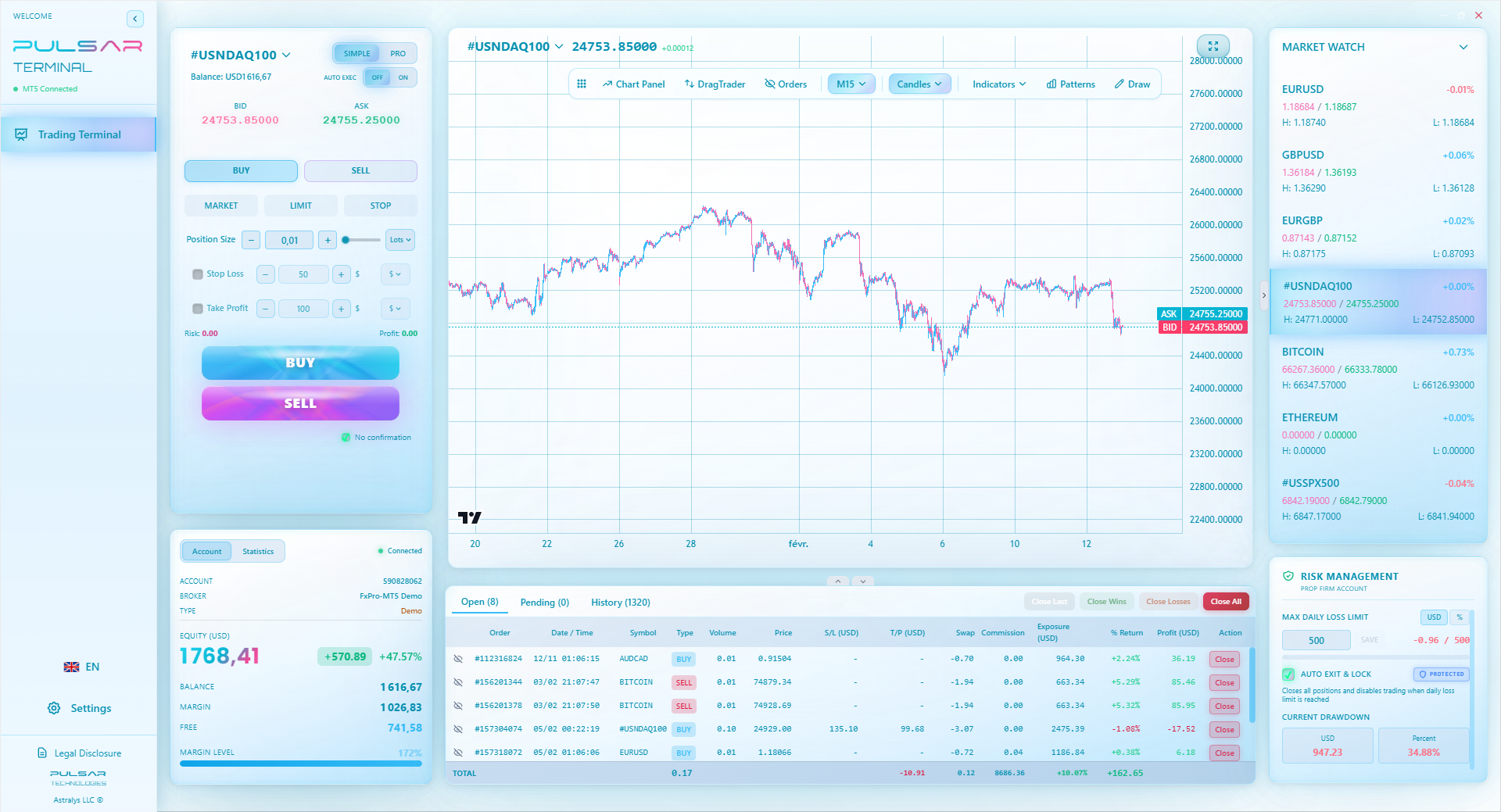
When you're focused on avoiding broker scams, you need a trading terminal that just works reliably; Pulsar Terminal's advanced order management on MT5 lets you focus on your strategy, not platform worries.
Pulsar Terminal
The all-in-one MT5 companion: drag-and-drop orders, multi-TP/SL, trailing stop, grid trading, Volume Profile, and prop firm protection. Used by 1,000+ traders daily.
The FIRS wants its 10%. It's that simple. You're liable for Capital Gains Tax on your net profitable trades for the year.
How to prepare:
- Keep every statement. Download monthly account statements from your broker. They are your source of truth.
- Track your net profit. At year-end (December 31), calculate your total gains minus total losses. That's your taxable amount.
- File a return. You must file a tax return with the FIRS within 90 days after the year ends (by March 31). You can do this through a tax consultant or, increasingly, online.
- Pay 10%. Pay 10% of your net profit.
If you trade with multiple brokers, you need to consolidate the statements. It's a hassle, but it's part of being a professional. Think of it as a business expense. The good news? Losses can be carried forward to offset future profits, potentially reducing next year's tax bill.
Ignoring this is risky. While enforcement on retail traders has been spotty, the system is digitizing. It's better to be clean and sleep well at night.
💡 Winston's Tip
Your annual broker statement is your bible for taxes. Download it every January 1st before you even think about trading.
“The 10% tax is the only certain Nigerian regulation you'll face as a retail forex trader.”
Don't just jump in. Follow this checklist.
Phase 1: Research & Demo
- Pick 2-3 brokers from the reliable list above.
- Open a demo account with each. Test the platform (MT4/MT5 is standard). Get a feel for the spreads, especially during your preferred trading hours.
- Test their customer support. Ask a dumb question via live chat. See how fast and helpful they are.
Phase 2: Small Live Testing
- Fund your chosen broker with the minimum possible amount. For many, that's $10-$50. This is not to make money. This is to test the real process.
- Make a few small trades. Practice depositing and, crucially, practice withdrawing. Withdraw a portion of your money back to your bank account or card. If this process is smooth, you have a winner.
- Use a position size calculator religiously, even with tiny amounts. Build the habit.
Phase 3: Scale Up
- Only after a successful withdrawal should you consider funding your account with more serious capital.
- Stick to your strategy. The broker is now a solved problem - your focus should be on your trading, not on platform fears.
Your broker should be like electricity: you only notice it when it doesn't work. Your mental energy should be spent on analyzing the EUR/USD guide or the XAU/USD guide, not wondering if your profits will ever reach your bank account.
FAQ
Q1Is forex trading legal in Nigeria?
Yes, forex trading is legal. However, there are no specific Nigerian regulations for online retail forex brokers. You are legally allowed to trade with internationally regulated brokers.
Q2Which is the best forex broker in Nigeria?
There's no single 'best.' For raw spreads and smooth NGN transactions, Exness is strong. For top-tier regulation and execution, Pepperstone via its ASIC or Kenyan entity is excellent. For beginners with a tiny budget, XM's $5 minimum works. It depends on your needs.
Q3How do I withdraw money from a forex broker in Nigeria?
Use the same method you deposited with. For bank transfers, the broker will convert your balance to NGN and send it to your local bank account. For card withdrawals, it goes back to your card. Cryptocurrency (USDT) withdrawals are often the fastest. Always complete full verification first to avoid delays.
Q4What is the minimum amount to start forex trading in Nigeria?
You can start with as little as $1 (FBS) or $5 (XM). However, I recommend starting with at least $50-$100 on a proper cent or standard account to give yourself room to breathe and practice proper position size management.
Q5Do I pay tax on forex trading profits in Nigeria?
Yes. The Federal Inland Revenue Service (FIRS) charges a 10% Capital Gains Tax on your net annual profits from forex trading. You are required to file a tax return.
Q6Can I use MT4 or MT5 in Nigeria?
Absolutely. MetaTrader 4 and MetaTrader 5 are the most widely used platforms here. All the reliable brokers I've listed offer them. They are stable, familiar, and support a vast library of indicators like the RSI indicator and MACD indicator.
Q7What use is safe for a beginner in Nigeria?
Ignore the maximum offered (like 1:2000). It's a trap. For a beginner, I wouldn't go above 1:10 or 1:20. It forces you to learn proper capital allocation and drastically reduces your risk of a margin call. High use amplifies losses as fast as it amplifies gains.
Prof. Winston's Lesson
Key Takeaways:
- ✓No CBN regulation for retail forex brokers exists.
- ✓Test withdrawals with minimum deposit first.
- ✓10% Capital Gains Tax applies to net profits.
- ✓International regulation (FCA, ASIC) is your safety net.
- ✓Avoid bonuses over 50%; they're lock-in traps.
How useful was this article?
Click a star to rate
Weekly Trading Insights
Free weekly analysis & strategies. No spam.
About the Author
Olumide Adeyemi
West African Trading Pioneer
One of Nigeria's most active forex trading educators. 8 years of experience trading from Lagos. Specializes in low-capital strategies and prop firm challenges for African traders.
Comments
Risk Disclaimer
Trading financial instruments carries significant risk and may not be suitable for all investors. Past performance does not guarantee future results. This content is for educational purposes only and should not be considered investment advice. Always conduct your own research before trading.
You Might Also Like

Cara Trading Forex Sukses: 7 Prinsip dari Trader Profesional
Cara trading forex sukses dengan 7 prinsip trader pro: manajemen modal, disiplin, journal trading, backtest. Data nyata, bukan janji profit palsu.
Jam Trading Forex Terbaik untuk Trader Indonesia: Panduan Lengkap dengan Tabel Waktu
Panduan jam trading forex untuk trader Indonesia. Tabel 4 sesi dunia, jam emas 20:00-00:00, sesi mana yang harus dihindari. Data akurat + tips dari trader berpengalaman.
Top 5 Sàn Forex Uy Tín Nhất 2026: Review Jujur dari Trader Indonesia
Top 5 sàn forex uy tín 2026 untuk trader Indonesia. Review jujur: spread, deposit, withdraw, dukungan lokal. Exness, XM, IC Markets & lebih.
Get Pulsar Terminal
All these calculators are built into Pulsar Terminal with real-time data from your MT5 account. One-click position sizing, automatic risk management, and instant calculations.
Get Pulsar Terminal