


I lost NGN 85,000 in about 15 minutes back in 2017.

Olumide Adeyemi
West African Trading Pioneer ·  Nigeria
☕ 10 min read
What you'll learn:
I lost NGN 85,000 in about 15 minutes back in 2017. It wasn't a bad trade, technically. I'd spotted a clean setup on GBP/USD, entered, and was up a decent 25 pips. Then my screen froze. The entire trading site just... stopped. By the time I could reload, my stop-loss had been blown through and my account was nearly empty. The 'broker' blamed my internet. That was my expensive introduction to the wild west of unregulated forex trading sites. It taught me that in Nigeria, picking where you trade is more important than what you trade.
When we say 'forex trading sites,' we're really talking about two different things, and confusing them is a rookie mistake that costs money.
First, you have the broker's website. This is where you sign up, deposit your Naira, and manage your account. Think of it as the bank's lobby. Second, you have the trading platform itself - like MetaTrader 4, MetaTrader 5, or cTrader. This is the trading floor where you actually execute trades. A good broker provides a stable bridge between the two.
A common trap is a flashy, smooth website that hides a terrible trading platform with constant requotes and slippage. I've been there. I once signed up with a broker because their site had amazing Naira deposit tutorials. Their MT4 platform, however, had an average spread of 3.5 pips on EUR/USD (when most were at 1.2) and would disconnect during news events. The website is the storefront; the trading terminal is the product. Never judge one by the other.

Warning: If a site's main selling point is 'instant Naira withdrawals' or 'sign-up bonuses' but has zero clear info on who regulates them, walk away. They're marketing to impatience, not professional traders.
Regulation & Safety of Funds
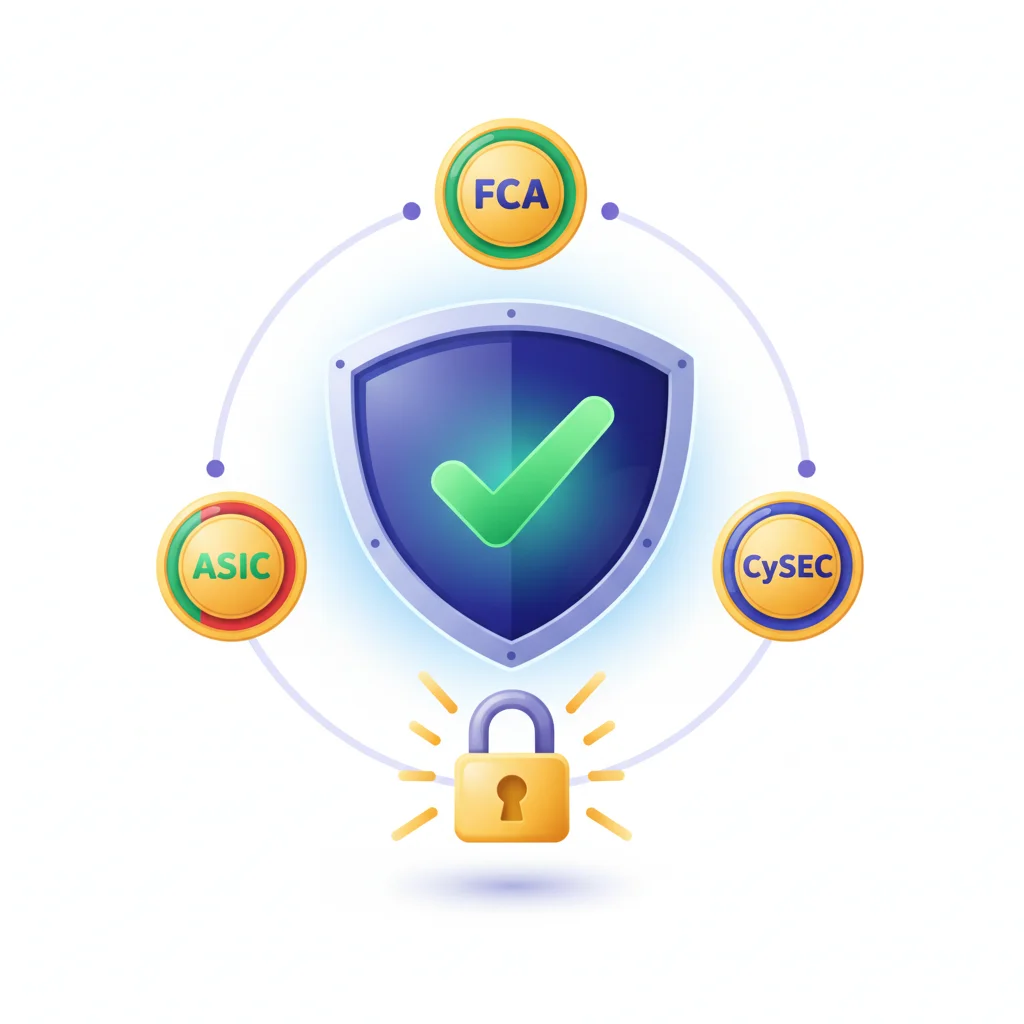
This is the bedrock. Your broker must be regulated by a reputable authority. For us in Nigeria, this means looking outside. The FMDQ in Nigeria deals with institutional markets, not retail forex brokers. You want to see licenses from bodies like the Cyprus Securities and Exchange Commission (CySEC), the Financial Conduct Authority (FCA) in the UK, or the Australian Securities and Investments Commission (ASIC).
Why? Because these regulators enforce client money protection rules. Your funds should be held in segregated accounts at top-tier banks. This means if the broker goes bust, your money isn't used to pay their debts. I only trade with brokers that have this, like the ones reviewed in our Pepperstone review and IC Markets review. It's not glamorous, but it stops you from becoming a creditor in a bankruptcy hearing.
Naira-Friendly Operations
A perfect international broker is useless if you can't fund your account. The site must support local payment channels.
- Deposits/Withdrawals: Direct bank transfers, USSD, and reliable debit card processing are essential. Look for clear guides on their site.
- Fees: Understand the costs. Some brokers absorb deposit fees, others don't. A withdrawal might cost a flat $20 or 1%. Factor this into your position size calculator.
- Customer Support: Can you call a Lagos number? Do they have live chat that operates during your trading hours? Test this before you deposit.
Trading Conditions That Don't Cripple You
This is where you read the fine print on the 'Accounts' page.
- Spreads: For major pairs like EUR/USD, look for raw spreads averaging 0.1-1.2 pips on a standard account. Anything consistently above 1.5 is eating your profits. Check our spread definition guide to understand why this matters so much.
- Commissions: If spreads are super low, there's often a commission per trade. Calculate the total cost (spread + commission) to compare brokers fairly.
- Minimum Deposit: It should be reasonable. If a site demands $500 or NGN 500,000 to start, they're targeting over-leveraged dreamers. $100-$200 is a common, sensible range.
- Execution Type: 'Market Execution' is generally faster and better than 'Instant Execution,' which can involve requotes.

Example: Let's say you trade one standard lot of EUR/USD. A 1.5 pip spread costs you $15 just to enter the trade. A 0.8 pip spread costs $8. That $7 saved on every entry adds up to thousands over a year. It directly impacts your bottom line.

💡 Winston's Tip
A broker's customer service is best tested when you have a problem. Try asking a slightly complex question about swap rates on a Friday afternoon. The response time and clarity tell you more than any marketing material.
“In Nigeria, picking where you trade is more important than what you trade.”
The broker's website is where you visit. The trading platform is where you live. Most serious forex trading sites offer MetaTrader 4 (MT4) or MetaTrader 5 (MT5). Here's what you need to test:
Stability: Does it crash during the London open (8 AM GMT) or Non-Farm Payrolls? A demo account is useless for this test - you need some real volatility. I funded a $50 account with a new broker once just to test platform stability during high impact news. It choked, and I lost the $50. I considered it a cheap education.
Tools & Charts: Can you easily draw trendlines, use Fibonacci retracements, and add indicators like the RSI indicator or MACD indicator? The default charts should be clean and customizable.
Order Execution: Place a market order on your demo. Is it filled instantly at the price you see, or does a pop-up ask you to 'accept' a worse price (a requote)? Requotes are the enemy of any fast-moving strategy, like scalping strategy.
Your broker's site should provide a seamless download for the platform and clear server details for setup. If this process is confusing or buggy, it's a red flag for their entire operation.
We have our own unique environment of nonsense here. Stay vigilant.
- The 'Fund Manager' or 'Signal Seller' Who is Also the Broker: This is a massive conflict of interest. If the same entity providing trading signals is also executing your trades, they can manipulate your results. They profit whether you win or lose.
- Guaranteed Profits: Any site, WhatsApp broadcast, or Instagram ad promising '20% monthly returns guaranteed' is a Ponzi scheme. Full stop. They use new deposits to pay 'profits' to earlier clients until the whole thing collapses.
- Unusually High Bonuses: 'Deposit NGN 100,000 and get NGN 200,000 bonus!' This is a classic trap. The bonus comes with impossible withdrawal conditions (like trading 10,000 lots) designed to make you blow your account. Your capital is just use for them.
- Pressure to Deposit More After a Loss: Legitimate brokers don't care if you win or lose on a trade. A 'account manager' calling you to say 'I have a sure trade, just deposit more to recover your loss' is a scammer.
- Fake Regulation or Address: Check the regulator's website directly. I've seen sites copy the logo of the FCA but list a license number that belongs to a different, defunct company. Also, a 'London office' that's just a PO Box is suspicious.
My rule? If it's advertised heavily on billboards in Lagos with smiling people next to luxury cars, be deeply, deeply skeptical. Real trading isn't marketed like a lottery.
💡 Winston's Tip
Your first withdrawal is more important than your first deposit. If a broker makes it difficult or slow to get a small amount of your money out, they will be a nightmare when you have real profits.
“The website is the storefront; the trading terminal is the product. Never judge one by the other.”
Here's exactly what I do when checking out a new forex trading site. It takes an hour, but it has saved me countless headaches.
Step 1: The Regulatory Sniff Test. I go straight to the footer of their website. I find their regulatory license number (e.g., CySEC 123/456). I then open a new tab, go to the official website of CySEC, FCA, or ASIC, and use their 'register search' tool. I input the number. Does it match the broker's company name? Is the license active? This step alone filters out 80% of bad actors.
Step 2: The Naira Practicality Check. I look for their 'Deposit' or 'Payment Methods' page. Do they list Nigerian banks, GTB, Zenith, etc.? I check their FAQ for withdrawal processing times. If it says '3-5 business days for bank transfer,' that's normal. If it says 'instant,' I dig deeper to see if there are limits or hidden fees.
Step 3: Demo Account Torture Test. I open a demo account. I don't just look at the charts. I do this:
- Spam market orders during a quiet market period to check for requotes.
- Set a pending order and see if it's triggered accurately.
- Try to withdraw from the demo (if possible) to see the process.
- Check the available currency pairs. Do they have USD/NGN? Often, they don't, which is fine, but good to know.
Step 4: Small Live Test. If all looks good, I make the smallest possible deposit. For me, that's never more than $100 or its Naira equivalent. I execute a few real trades to feel the execution, test the live customer support, and most importantly, make a small withdrawal. If I can deposit NGN 50,000 and smoothly withdraw NGN 48,000 (after a small loss), I have proof the plumbing works. This is more valuable than any review.

Pro Tip: When you do your small live test, intentionally place a trade that would trigger a margin call. Do this with a tiny position size! See how the platform handles it. Does it close you out cleanly at the expected level, or does it slip you 20 pips past your stop? This tells you everything about their risk management and fairness.
Once you've found a reliable broker with MT5, managing complex trades and protecting your capital from daily loss limits (crucial for prop firm challenges) becomes infinitely easier with tools that automate the process.
Pulsar Terminal
The all-in-one MT5 companion: drag-and-drop orders, multi-TP/SL, trailing stop, grid trading, Volume Profile, and prop firm protection. Used by 1,000+ traders daily.

I read broker reviews, including our own like the Exness review and XM review, but I treat them as a starting point, not a final answer. Why? Because conditions change. A broker with great conditions in 2023 might have new ownership and terrible execution in 2025.
My approach is to use reviews to create a shortlist of 3-4 brokers that consistently get mentioned for good regulation and Naira support. Then, I apply my own 4-step test from the previous section to each one. The 'best' broker is the one that passes your practical tests for your specific trading style.
For example, if you're a swing trading enthusiast holding trades for weeks, you care less about ultra-tight spreads and more about swap rates (overnight financing costs). You'd check the broker's site for their detailed swap/rollover rate sheet. If you're trading gold, you'd immediately check their spreads and conditions on XAU/USD guide compared to others.
Never outsource the decision of where to park your hard-earned Naira to a single review or a friend's tip. Your verification is your security.
“Your verification is your security. Never outsource the decision of where to park your hard-earned Naira.”
A professional trader's environment involves more than just a broker's site. These are the other bookmarks in my browser:
Economic Calendars: ForexFactory.com and Investing.com. I check these every morning without fail. They tell me what news is coming that could move the market.
Charting & Analysis Platforms: While MT4/5 is for execution, I sometimes use TradingView for advanced charting and idea generation. Their social features let you see what others are thinking (take it with a mountain of salt).
Education & Community: Reputable sites like Babypips.com for the absolute basics. Then, I look for niche forums or Discord communities focused on a specific strategy, not on pumping signals.
Your Trading Journal: This is the most important 'site' of all. It can be a simple Google Sheet or a dedicated platform. Every trade, every rationale, every outcome gets logged here. This is where you move from guessing to analyzing your own performance. The broker's site gives you a trade history, but your journal tells you why you took those trades. Without it, you're just spinning your wheels.
FAQ
Q1Is forex trading legal in Nigeria?
Yes, forex trading is legal for individuals in Nigeria. However, the official foreign exchange market is regulated by the Central Bank of Nigeria (CBN) for specific purposes. Retail speculative forex trading is done through international brokers who are regulated outside Nigeria. The key is to use a reputable, internationally regulated broker, not an unlicensed local platform promising unrealistic returns.
Q2What is the minimum amount I need to start trading forex in Nigeria?
You can start with a very small amount. Many reputable international brokers allow you to open an account with as little as $50-$100 (roughly NGN 70,000 - 140,000). I strongly recommend starting at this micro level. The goal of your first deposit isn't to get rich, but to safely test the broker's platform, execution, and withdrawal process without risking significant capital.
Q3Which is better for Nigerians, MT4 or MT5?
It depends on what you trade. MT4 was built for forex and is simpler, with tons of custom indicators. MT5 can handle more asset types (like stocks) and has a better economic calendar built-in. For pure forex trading, MT4 is still the king and is universally supported. Start with MT4. You can always switch to MT5 later if you need its specific features.
Q4How do I know if a forex trading site is regulated?
Don't just look for a logo on their site. Go to the 'About Us' or 'Legal' section, find their regulatory license number (e.g., ASIC 417727), and then independently visit the website of that regulator (like asic.gov.au). Use the regulator's official search tool to verify the license is active and matches the broker's company name. This is the only way to be sure.
Q5Why can't I just use a broker with a Nigerian office?
You can, but you must check their international regulation. A local office is convenient for customer service, but it doesn't mean they are a safe broker. The critical protection - like segregated client funds - comes from being regulated by a major international authority like CySEC or FCA. A Nigerian office of a CySEC-regulated broker is ideal. A Nigerian-only 'broker' with no external oversight is extremely high-risk.
Q6How long do withdrawals to my Nigerian bank account take?
With a properly regulated international broker, bank transfer withdrawals typically take 2-5 business days. The broker processes it in 1-2 days, then it goes through the international banking system. 'Instant' withdrawals are usually only for e-wallets or might involve high fees. Always check the broker's withdrawal policy before depositing.
Prof. Winston's Lesson
Key Takeaways:
- ✓Verify regulation directly on the regulator's official website.
- ✓Test withdrawals with your smallest possible deposit first.
- ✓Requotes during news events signal a broker to avoid.
- ✓A flashy local ad campaign is often a red flag, not a credential.
How useful was this article?
Click a star to rate
Weekly Trading Insights
Free weekly analysis & strategies. No spam.
About the Author
Olumide Adeyemi
West African Trading Pioneer
One of Nigeria's most active forex trading educators. 8 years of experience trading from Lagos. Specializes in low-capital strategies and prop firm challenges for African traders.
Comments
Risk Disclaimer
Trading financial instruments carries significant risk and may not be suitable for all investors. Past performance does not guarantee future results. This content is for educational purposes only and should not be considered investment advice. Always conduct your own research before trading.
You Might Also Like

Cara Trading Forex Sukses: 7 Prinsip dari Trader Profesional
Cara trading forex sukses dengan 7 prinsip trader pro: manajemen modal, disiplin, journal trading, backtest. Data nyata, bukan janji profit palsu.
Jam Trading Forex Terbaik untuk Trader Indonesia: Panduan Lengkap dengan Tabel Waktu
Panduan jam trading forex untuk trader Indonesia. Tabel 4 sesi dunia, jam emas 20:00-00:00, sesi mana yang harus dihindari. Data akurat + tips dari trader berpengalaman.
Top 5 Sàn Forex Uy Tín Nhất 2026: Review Jujur dari Trader Indonesia
Top 5 sàn forex uy tín 2026 untuk trader Indonesia. Review jujur: spread, deposit, withdraw, dukungan lokal. Exness, XM, IC Markets & lebih.
Get Pulsar Terminal
All these calculators are built into Pulsar Terminal with real-time data from your MT5 account. One-click position sizing, automatic risk management, and instant calculations.
Get Pulsar Terminal